
Today’s song of the day should be stuck in everyone’s head for Groundhog Day.
Sing it, Sonny!
And Cher.
Today’s song of the day should be stuck in everyone’s head for Groundhog Day.
Sing it, Sonny!
And Cher.
Happy Groundhog Day!
In the spirit of the day, it is time for me to share this scene that I love from the movie Groundhog Day… again!
As some of our regular readers undoubtedly know, I am involved in hosting a few weekly live tweets on twitter and occasionally Mastodon. I host #FridayNightFlix every Friday, I co-host #ScarySocial on Saturday, and I am one of the five hosts of Mastodon’s #MondayActionMovie! Every week, we get together. We watch a movie. We snark our way through it.
Tonight, for #MondayActionMovie, the film will be 1989’s Millennium!
It should make for a night of fun viewing and I invite all of you to join in. If you want to join the live tweets, just hop onto Mastodon, find the movie on YouTube and hit play at 8 pm et, and use the #MondayActionMovie hashtag! The watch party community is a friendly group and welcoming of newcomers so don’t be shy.
See you soon!
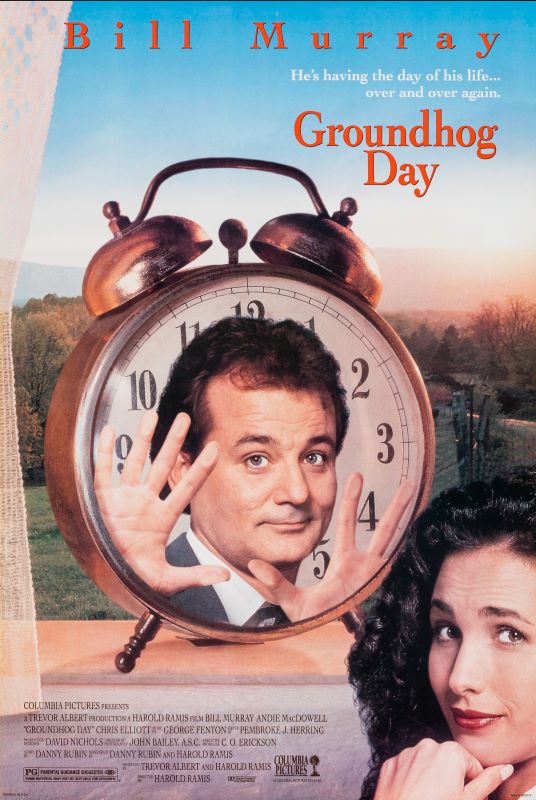
Artist Unknown
Happy Groundhog Day!
In today’s music video of the day, we visit the Church of the Ramones, where the band is energizing the congregation with a cover of The Chambers Brothers’s Time Has Come Today.
And indeed the time has come. It’s Groundhog Day! For the first time this year, someone is going to tell the future!
ENJOY!
Welcome to Late Night Retro Television Reviews, a feature where we review some of our favorite and least favorite shows of the past! On Sunday, I will be reviewing the Canadian series, Degrassi: The Next Generation, which aired from 2001 to 2015! The series can be streamed on YouTube and Tubi.
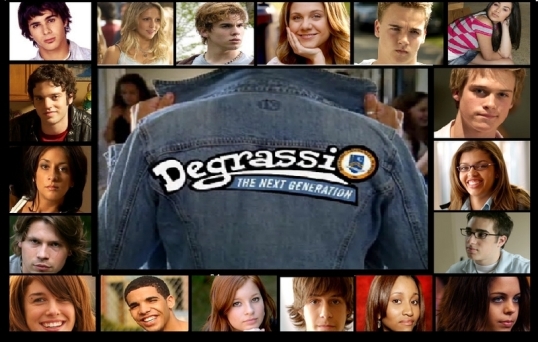
This week, several important characters make their first appearances!
Episode 2.4 “Karma Chameleon”
(Dir by Stefan Sciani, originally aired on October 21st, 2002)
This week, Ellie makes her first appearance!
Though she doesn’t do much in this episode, Ellie Nash (Stacey Farber) would go on to become one of the most important characters on Degrassi: The Next Generation. (And Farber herself would go on to have one of the more-successful post-Degrassi careers of the show’s regulars.) When I first watched Degrassi, I related to Ellie, largely because we both had red hair, we both tended to wear black, and we both had a weakness for Craig Manning. (There was another reason why I related to Ellie but I won’t go into that until we reach season 3.) Now that I’ve gotten older, I can see that, in high school, I actually had more in common with the overly dramatic Ashley Kerwin than I did with Ellie but still, Ellie is one of Degrassi’s best characters.
In her first appearance, Ellie refuses to move to another computer, despite Paige ordering her to so that Paige can sit next to Hazel. Later, she provides some sarcastic comfort to Ashley after Ashley’s latest poorly conceived plan blows up in her face. “That went well,” Ellie says and yes, it’s a little bit snarky but that’s what made Ellie so cool. As I said, Ellie doesn’t do much in this episode. (Stacey Farber wouldn’t become a regular until the third season.) But she definitely makes an impression.
As for Ashley, she spends this episode trying to get back into everyone’s good graces. Following Terri’s suggestion, Ashley swallows her pride and apologizes to Paige, Jimmy, and Sean. Everyone seems to be willing to forgive Ashley, except for Paige. Paige continually warns everyone that Ashley is just being manipulative. Jimmy, however, wants to restart his romantic relationship with Ashley. But when Sean calls Ashley and asks her on a date, Ashley happily accepts. Terri says that Ashley is going to hurt Jimmy if she goes out with Sean because Jimmy thinks that he and Ashley are about to get back together.
Ashley rolls her eyes, explains that she’s single, and then tells Terri that “Ter, one day when a guy likes you, you’ll understand how this works.”
AGCK!
I mean, actually, Ashley’s right. She didn’t tell Jimmy that she wanted to get back together again. (She did say that she missed having Jimmy around and I would say that Ashley should have been able to guess how Jimmy would interpret that, given their past relationship.) And there’s no reason why she shouldn’t date Sean Cameron if she wants to. And, for that matter, no one likes Terri.
(At least not yet. Eventually, Terri’s first boyfriend will end putting her in a coma and then shooting up the school but that’s a while off….)
But Ashley definitely could have put things a bit more diplomatically. One reason why I cringe so much watching this is because I can remember saying similar stuff when I was a teenage and not understanding why people got offended until many years later. Ellie never would have said something like that.
Meanwhile, Toby has a girlfriend! Kendra Mason (Katie Lai) loves anime even more than Toby! The only problem is that …. KENDRA IS SPINNER’S ADOPTED SISTER! At first, Toby is terrified to talk to Kendra because of Spinner. But Toby finally finds the courage to stand up to Spinner and tell him that he’s going to talk to Kendra whether Spinner likes it or not. Spinner says that he will disembowel Toby is Toby hurts his sister. Toby says he’s prepared for that. (Toby, never prepare for something like that.) It’s nice that Toby has a girlfriend and can presumably stop whining about Emma liking Seasn. It’s just too bad that Kendra’s going to vanish after this season and never be mentioned again, not even by her protective older brother.
Also, all the boys in school are in love with the new science teacher, Ms. Hatzilakos (Melissa DiMarco). This was Hatzilakos’s first appearance. It’s only one scene of Spinner and Jimmy drooling at their desks. Of course, Ms. Hatzilakos is destined to eventually become principal of Degrassi and her son Peter will eventually enroll as a student, break a lot of hearts and law, and write the deathless song House Arrest.
Anyway, Jimmy gets mad at Ashley. Sean gets mad at Ashley and calls off their date. Paige tells Terri that she has to make a choice between four years of being popular or four years of being an outcast and Terri decides to be popular. Ashley breaks down crying as her school picture is taken. So ends another happy episode of Degrassi!
Oh, this episode. It’s actually pretty good for an Ashley episode. And the freeze frame of Ashley getting her school picture taken as a tear sloppily rolls down her face? That’s image pretty much sums up Degrassi perfectly.
Next week, Spinner is a part of a science experiment and …. well, this would never happen on American television.
Welcome to Retro Television Reviews, a feature where we review some of our favorite and least favorite shows of the past! On Sundays, I will be reviewing Homicide: Life On The Street, which aired from 1993 to 1999, on NBC! It can be viewed on Peacock.
This week …. someone’s getting married!
Episode 4.20 “The Wedding”
(Dir by Alan Taylor, originally aired on May 10th, 1996)
Kevin Lungo, a Baltimore radio host, is found dead. The previous day, he announced on his program that he was not only in favor of abortion but he was in favor of requiring any pregnant woman with an IQ of less than 100 to have one. Did that comment lead to him being gunned down in a parking lot?
(When this episode aired, 100 was considered to be an “average” IQ. Now, the average IQ is considered to be 90. That’s not a good thing.)
We never really find out. The case is handled by Giardello and Kay and, while Kay has never heard of Lungo, it turns out that Giardello used to enjoy listening to him. (Hopefully, Giardello disagreed with Lungo’s pro-eugenics stance.) When the radio station offers a $5,000 reward for any tips, someone calls in and give the name of the “killer.” When Giardello and Kay follow-up on the tip, the suspect pulls a gun and is shot dead by Giardello.
Giardello feels guilty about the shooting. He tells that Kay that, when he was younger, he was able to shoot well-enough that he could simply wound a suspect, instead of killing him. Making it even worse is that the dead man has an alibi. The call was just a practical joke between friends. “Why did you have to kill him!?” the dead man’s friend wails.
Back at the squad room, Lewis shocks everyone by announcing that he’s getting married to a woman that they’ve never heard of. While he doesn’t invite any of his co-workers to the wedding, he does ask them to attend a reception at the Belvedere Hotel. He tells Pembleton to order and pay for the flowers. He asks Russert to arrange for the band and an open bar and asks if she would be willing to cover the cost. (“Until my next paycheck,” Lewis assures her.) Munch assumes that Lewis is lying. Most of the squad room suspects that Lewis is lying. But they give him the benefit of the doubt and show up for the reception.
Also going to the reception is Carrie, the very glamorous sister of Kay Howard. Carrie is visiting from Florence and soon, both Kellerman and Bayliss are shamelessly flirting with her. An actress named “Margaret May” is credited as playing Carrie. Of course, Margaret May is actually Melissa Leo.
With the exception of Giardello and Kay (who are still working the Lungo murder), all of Lewis’s colleagues show up at the ballroom. Even the crusty forensics examiner, Scheiner (Ralph Tabakin), shows up. “Do you want to dance?” he asks Russert’s daughter. “NO!” she replies.
But where’s Lewis? Lewis is missing. Was Munch right? Pembleton, who is there with his very pregnant wife, is not amused. As Brodie films him, Pembleton announces that he is going to kill Lewis and he will never get caught because of his experience as a homicide detective….
Fortunately, Lewis shows up before Pembleton gets his gun. And accompanying Lewis is his new wife, Barbara Shivers (Karen Williams)! The reception is a huge success. The band plays. Kellerman and Bayliss both try to hold onto Carrie’s attention. Scheiner watches as Russert’s daughter proceeds to dance with everyone but him. Finally, Giardello and Kay show up. Kay warns Bayliss that Carrie is dangerous. Bayliss asks why. Kay says that Carrie likes to play game and she just does whatever feels good. Bayliss looks intrigued….
Mary Pembleton’s water breaks on the dance floor as she goes into labor! (In a nice twist, Mary Pembleton was played by Andre Braugher’s real-life wife, Ami Brabson.) As the episode ends, even Giardello smiles. For all the ugliness in the world, there is still hope.
I loved this episode! Homicide’s greatest strength was its ensemble and here, everyone gets a chance to show off. Yaphet Kotto reminds us of what an imposing actor he truly was, though my favorite Giardello moments continue to be the times when he allows himself to get amused by the absurdity of it all. What really made this episode was for me was that, even with the wedding reception and Mary going into labor, the episode never allowed itself to be sentimental. For most of the episode, everyone is skeptical about Lewis getting married and, having watched Meldrick Lewis for four season, I was skeptical too! In the end, the episode earned its right to emotionally satisfying through smart storytelling and good acting.
4 (or more) Shots From 4 (or more) Films is just what it says it is, 4 (or more) shots from 4 (or more) of our favorite films. As opposed to the reviews and recaps that we usually post, 4 (or more) Shots From 4 (or more) Films lets the visuals do the talking.
John Ford was born 132 years ago today, in Maine. Seeing as how John Ford is one of the most influential and important directors of all time, it was pretty much guaranteed that we were going to share a few shots from his filmography on the Shattered Lens.
In honor of John Ford, here are….
6 Shots From 6 Films: Special John Ford Edition
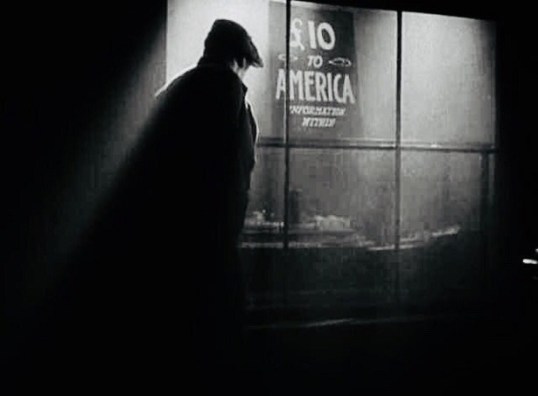
The Informer (1935, dir by John Ford, DP: Joseph August)
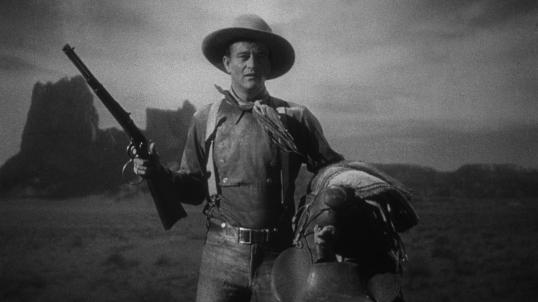
Stagecoach (1939, dir by John Ford, DP: Bert Glennon)
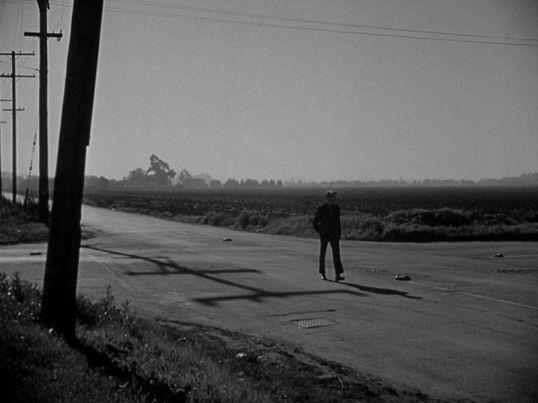
The Grapes of Wrath (1940, dir by John Ford. DP: Gregg Toland)

My Darling Clementine (1946, dir by John Ford, DP: Joseph MacDonald)
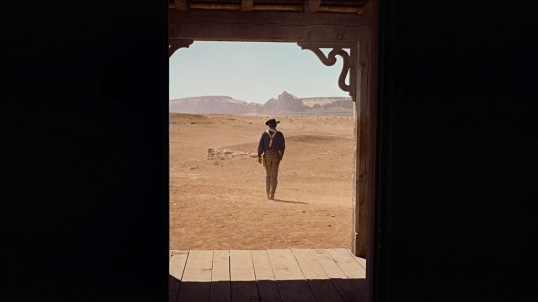
The Searchers (1956, dir by John Ford, DP: Winston C. Hoch)
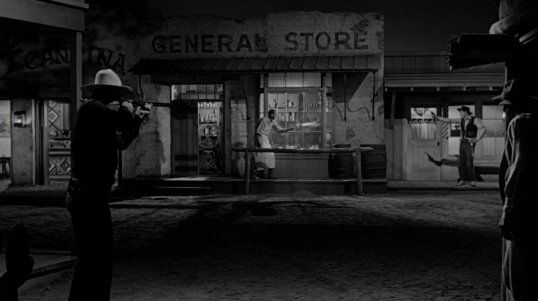
The Man Who Shot Liberty Valance (1962, dir by John Ford. DP: William H. Clothier)
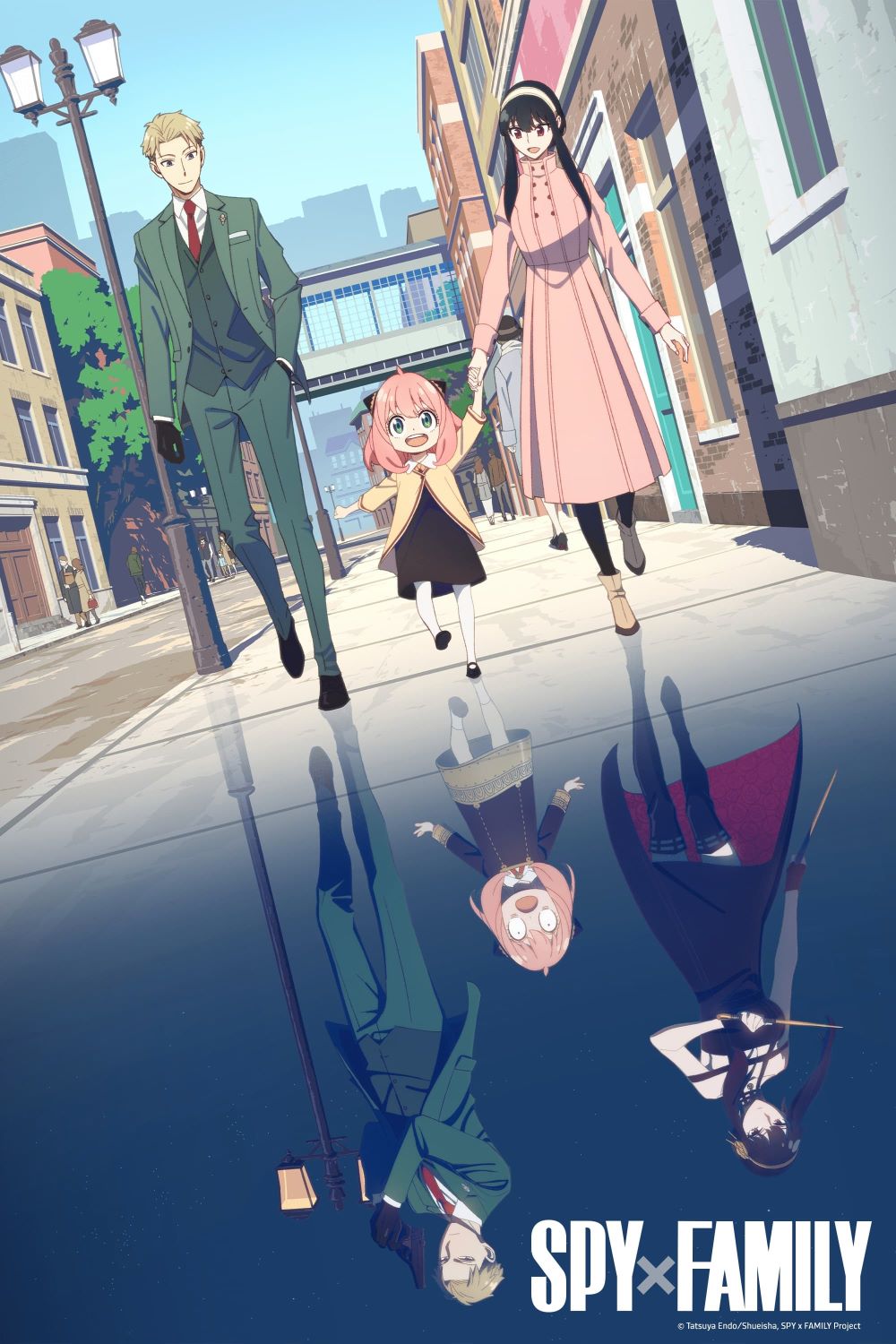
Sometimes, an anime comes along that doesn’t just entertain — it charms, disarms, and quietly becomes everyone’s go-to comfort watch. Spy x Family is that kind of series. On paper, it sounds like something stitched together from wildly different genres — a spy thriller, a rom-com, a slice-of-life comedy, and an action series — yet somehow, across three seasons and a feature-length film, it balances them all perfectly. What starts as an undercover mission turns into a story about love, belonging, and the odd little family that holds it all together. Whether you’re new to anime or already knee-deep in your watchlist, Spy x Family is absolutely worth your time.
The setup is simple but brilliant. In an uneasy Cold-War-style world, Westalis’s top agent, codenamed Twilight, must go undercover to prevent the outbreak of war. His mission requires him to get close to an influential political figure, but the only way to do that is by enrolling a “child” into the exclusive Eden Academy — which only accepts the offspring of established, respectable families. And so, Twilight builds one from scratch. Under the alias “Loid Forger,” he adopts a six-year-old orphan named Anya and enters into a marriage of convenience with Yor Briar, a sweet but mysterious city hall worker. What Loid doesn’t know is that Yor moonlights as a deadly assassin, and his quiet new daughter happens to be a telepath who can read everyone’s minds.
That’s the hook, and it’s beautifully absurd. But what makes Spy x Family (based on Tatsuya Endo’s manga and its accompanying light novel adaptations) so appealing is how effortlessly the absurd premise gives way to genuine heart. The anime adaptation — skillfully brought to life through a joint production by Wit Studio (Attack on Titan, Vinland Saga) and CloverWorks (The Promised Neverland, Horimiya) — masterfully captures the manga’s mix of elegant spy-world detail and exaggerated comedic charm. From the first season’s pilot to the explosive third season finale, the animation maintains a crisp polish that perfectly walks the line between cinematic and cartoonish fun.
Season one laid the foundation. It showed us the logistical nightmare of Loid trying to maintain his cover while juggling his secret missions, parenting duties, and the increasing chaos that Anya brings into his life. The tone lands somewhere between Mission: Impossible and My Neighbor Totoro — fast-paced but softhearted. Every episode delivered something different: stealth missions, emotional bonding, laugh-out-loud domestic failures. Yor’s awkward attempts at cooking, Anya’s disastrous adventures at school, and Loid’s obliviously perfectionist approach to “family life” all came together to prove that the show’s greatest strength wasn’t just its clever story — it was its heart.
By season two, the world of Spy x Family expanded, and so did its drama. The writing matured without ever turning grim, deepening both the espionage angle and the emotional relationships at home. Anya’s telepathic insights became more than comic relief; they offered a perspective that grounded the story in empathy. Loid was forced to confront the emotional toll of a double life, and Yor’s violent profession clashed hilariously (and sometimes poignantly) with her desire to protect and nurture her newfound family. The season’s standout arc — the Cruise Adventure — gave Yor her most intense focus yet, crafting an action sequence that justified every bit of Wit and CloverWorks’ collaboration. The fight choreography, the lighting, the flow of Yor’s combat scenes — every frame had purpose and weight, showing how seriously the anime treats even its most outlandish story beats.
And then came season three, the capstone of what’s been an almost-uninterrupted high run for the series. With the family now firmly established, the emphasis shifted from introductions to evolution. The show explored Loid’s moral conflict with unusual tenderness: can a man who’s built a life on lies still find real happiness? Yor’s arc moved beyond secrecy into subtle self-awareness — she’s no longer just pretending to be a wife and mother; she’s realizing that’s what she truly wants to be. Meanwhile, Anya, still the chaotic heart of the Forger family, grew more self-assured while remaining the series’ comedic backbone. Her misadventures at Eden Academy became a microcosm of the show’s central theme: that no one truly fits the mold of “normal,” and that being imperfect doesn’t make you any less worthy of love.
What’s remarkable about Spy x Family is its ability to keep that emotional balance intact while evolving tonally. By the third season, it has developed a comfortable rhythm — equal parts spy intrigue, domestic mishaps, and heartwarming chaos. The humor never feels stale, largely because the writing never forgets that humor comes from truth. Loid’s mission, for instance, may start as professional necessity, but his determination to remain the “perfect father” — even if it means memorizing bedtime stories like they’re classified intel — feels both ridiculous and deeply relatable. Yor’s mix of lethal grace and anxious vulnerability gives her layers rarely afforded to “action mom” archetypes. And Anya — let’s face it — remains one of the most perfectly written kids in anime, her expressive face practically carrying half the show’s comedy on its own.
Then there’s the movie, Spy x Family Code: White, which acts as an extended, film-length episode with blockbuster scale. Set between the second and third seasons, it takes the Forger family on what’s supposed to be a peaceful winter vacation — until international conspiracies, toxic desserts, and a handful of assassins upend their plans. The film doesn’t reinvent the wheel, but it doesn’t need to; it’s a self-contained joyride that amplifies everything people love about the series. The animation quality gets a cinematic upgrade — lush lighting, more fluid action, and stunning color work that gives the film its own visual identity. Both Wit Studio and CloverWorks pushed their production quality to a new peak here, making Code: White not just a companion piece but a genuine event film that delivers a big-screen version of the show’s charm. Fans got the edge-of-your-seat spy action and tear-worthy family moments they love — plus even more Anya faces to meme forever.
Animation aside, the sound design and music remain just as crucial to Spy x Family’s atmosphere. The jazzy, upbeat openings and lush, emotional ending themes reflect the dual nature of the world — equal parts espionage and emotion. The soundtrack carries subtle motifs for each character: Loid’s themes balance tension and meticulous order; Yor’s melodies pair elegance with hidden volatility; and Anya’s cues swing between whimsy and mischief. It’s yet another element that shows how much care has gone into aligning every layer of the production with the story’s emotional rhythms.
But all the polish in the world wouldn’t matter without the show’s soul. Beneath the disguises and absurd premises, Spy x Family is a show about honesty in unlikely places. It’s about people pretending to be something they’re not, only to realize that, through those roles, they’ve stumbled into genuine connection. It’s about an assassin learning gentleness, a spy learning love, and a child who already knows far too much learning that her broken family is still something worth protecting. That sincerity gives the comedy weight. Each laugh — Yor’s overreactions, Loid’s calculated stress, Anya’s mangled “Waku Waku!” enthusiasm — lands because we care about these people. Underneath the disguises and double-crosses, they’re just a family trying their best.
The beauty of Spy x Family is that it rarely rushes to make big statements. Its storytelling prefers warmth over melodrama, pacing itself with the easy confidence of a show that knows its characters can carry anything. Even when new spies, assassins, or political threads appear, the focus always slides back to the Forgers’ living room — dinner conversations, laughter, awkward silences. It’s there, in the small moments, that Spy x Family becomes more than entertainment. It becomes a reflection of what it means to connect, to care, and to find pieces of yourself in others, even when everything begins as a lie.
Three seasons and a movie later, it’s clear why Spy x Family stands out in modern anime. It doesn’t rely on shock twists or brute spectacle to hold attention — it wins you over with its heart. The collaboration between Wit Studio and CloverWorks has resulted in a show that feels both cinematic and cozy, polished yet endlessly rewatchable. Tatsuya Endo’s world is captured with fidelity and personality: richly detailed, emotionally grounded, and irresistibly funny.
If you’re on the fence about starting it, here’s the honest truth: you’ll go in expecting a clever spy comedy, but you’ll stay because it becomes something warmer, deeper, and unforgettable. Spy x Family might be about secret lives and pretend relationships, but the feelings it evokes are absolutely real. At a time when so many shows chase intensity, this one wins through sincerity. And that alone makes it one mission you don’t want to miss.
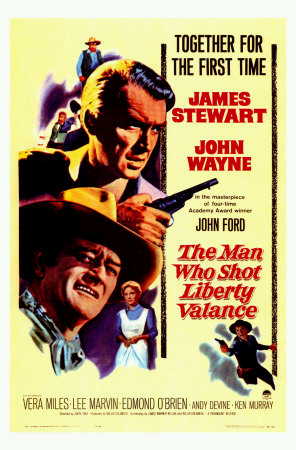
The legendary director John Ford was born 132 years ago today, in Maine of all places. He may have been born in New England but few directors have done a better job of capturing, on film, the forces that shaped America.
He also directed one of my favorite films, The Man Who Shot Liberty Valance. Today’s scene that I love comes from the end of that 1962 film and it features a line that would become a classic. “Print the legend.” That was a line that Ford clearly understood and I imagine it’s one that all great filmmakers eventually come to appreciate.
 Through the Shattered Lens