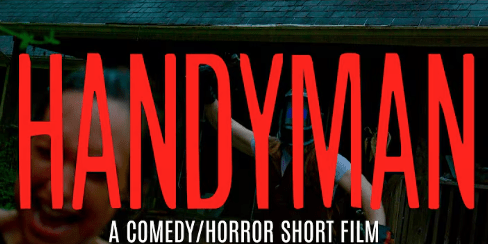
The short is a fun watch. Adult children go home to split inheritance and the middle-child goes bonkers starts killing everyone.
The film is not listed on imdb, but I will provide a link.
The middle child daughter is arguing with her older brother who wants his new wife to get a share of the inheritance. However, this really doesn’t happen because you have to follow the will and unless the brother’s wife were listed to inherit, she’s not getting anything. However, the movie has to happen; so, let’s ignore that.
There is a beginning, middle, and an end. The film has a strong pacific northwest vibe. It is over the top and fun because of it. If you can get past the legal fiction related to the inheritance and I am assuming that you likely don’t care, this short will thoroughly entertain.
“Violence is a language written in blood; it tells the story of those who refuse to be silenced.”
Coralie Fargeat’s 2017 film Revenge is an intense and striking blend of horror and thriller that refreshes the rape-revenge genre with a strong emphasis on female empowerment and resistance. At its core, the film follows Jen, a young woman who is brutally assaulted and left for dead in a desert. Against all odds, she survives and seeks brutal revenge on her attackers. What makes Revenge stand out is its blend of graphic, realistic violence and a striking, highly stylized visual approach, resulting in a film that is both visceral and symbolic.
Revenge sits within a long tradition of rape-revenge films that includes both grindhouse exploitation and serious art films. One of the earliest and most influential films in this tradition is Ingmar Bergman’s The Virgin Spring (1960), a somber and moral exploration of a father’s response to his daughter’s rape and murder in medieval Sweden. Bergman’s film inspired many later works, including Wes Craven’s famously brutal The Last House on the Left (1972), which reinterprets the same story through the lens of exploitation horror. Other notorious examples include I Spit on Your Grave (1978), known for its graphic depiction of sexual violence and violent retaliation. More recent films like Jennifer Kent’s The Nightingale (2018) revisit these narrative themes with psychological and political depth. Fargeat’s Revenge draws on this history, combining symbolic storytelling and thematic depth with the raw brutality and energy of grindhouse exploitation.
The narrative structure of Revenge is familiar: Jen, introduced as the mistress of a wealthy man, is assaulted by his friends. Her lover Richard tries to silence her by pushing her off a cliff, but Jen survives, severely injured and impaled on a tree. Her journey is one of intense physical suffering, but also resurrection and fierce empowerment. The film’s use of bright, vivid colors such as hot pinks and blues shifts the story into a surreal, symbolic space where gender roles are exaggerated and the desert becomes a mythic battleground where Jen fights to reclaim control.
Fargeat depicts Jen’s trauma and physical recovery through graphic and detailed body horror—not simply for shock, but as a visual metaphor for reclaiming agency. For example, Jen’s self-treatment of her impalement wound with a hot beer can brands her skin and symbolizes her rebirth and determination. These elements mark a clear departure from earlier rape-revenge films that sensationalized female suffering, shifting the focus to the survivor’s power and autonomy.
Cinematographer Robrecht Heyvaert’s work enhances this dynamic, contrasting the bright, harsh desert landscape with the cold, sterile luxury of Richard’s home. This contrast symbolizes the clash between raw survival and social control. The violence throughout the film is explicit and often hard to watch, but it is deeply rooted in the reality of trauma rather than fantasy.
Matilda Lutz’s performance as Jen is a key strength of the film. She transforms from a vulnerable, objectified figure into a fierce, focused avenger. The male antagonists are less developed, serving as archetypes of toxic male dominance—entitlement, violence, and cowardice—and their downfall reflects the collapse of that social order.
While Revenge maintains the fast pace and suspense of a thriller, its focus on graphic body horror and trauma places it firmly within the horror genre, aligning with the French Extremity movement known for its intense depictions of suffering and transgression. The source of horror here is not supernatural but very much rooted in the physical and psychological impact of violence.
The film has been praised for its technical skill and its focus on female resistance and empowerment. Instead of exploiting female suffering, it forces audiences to confront violence and trauma in a way that centers strength and rage. This is a clear reimagining of the revenge narrative through a modern lens that highlights resilience.
Revenge stands as both a tribute and a reinvention within its genre. It nods respectfully to the moral complexity of Bergman’s The Virgin Spring, the shock tactics of grindhouse staples like The Last House on the Left and I Spit on Your Grave, and the psychological depth of The Nightingale. Yet it simultaneously reinterprets these influences, making a statement that is both timely and provocative.
Coralie Fargeat’s Revenge is a powerful and contemporary entry into the rape-revenge genre, blending horror and thriller conventions with a focus on survival and agency. The film explores the physical and emotional effects of trauma and the possibility of reclaiming power through violence. Its vivid visuals, symbolism, and intense violence challenge audiences to rethink assumptions about gender, justice, and survival. It is a film that provokes strong reactions while delivering a deeply felt story of empowerment and resilience.
I love the 1959 film, Attack of the Giant Leeches.
The set up is a classic one. In the humid bayous, a sweaty and unappealing store owner (Bruno VeSota) discovers that his much younger wife (the great Yvette Vickers) has been cheating on him. In one scene, he forces his wife and her lover to enter the swamp. It’s terrifying because the swamp is full of …. GIANT LEECHES! I’m a Southern girl. I’ve spent some time in the bayous. Let me tell you, swamps are creepy enough without the addition of giant leeches.
Full of sultry melodrama and bayou atmosphere, Attack of the Giant Leeches is one of the best of the giant monster films of the 50s. It’s amazing was radiation can do!
As some of our regular readers undoubtedly know, I am involved in a few weekly watch parties. On Twitter, I host #FridayNightFlix every Friday and I co-host #ScarySocial on Saturday. On Mastodon, I am one of the five hosts of #MondayActionMovie! Every week, we get together. We watch a movie. We tweet our way through it.
Tonight, at 10 pm et, I will be hosting #FridayNightFlix! The movie? Planes, Trains, and Automobiles!
If you want to join us this Friday, just hop onto twitter, find Planes, Trains, and Automobiles on Prime, start the movie at 10 pm et, and use the #FridayNightFlix hashtag! I’ll be there happily tweeting. It’s a friendly group and welcoming of newcomers so don’t be shy.
2006’s The Moment After 2 picks up where The Moment After ended.
In the days after the Rapture, the Global Alliance has taken over the world. The government seeks to control everything. Paper money is becoming a thing of the past and instead, everyone is expected to pay via a chip that’s been implanted in their hand. Not having a chip means going to prison and probably being executed for being a subversive. The Global forces, led by the sadistic Commander Fredericks (Monte Rex Perlin), are hunting down dissidents. People are being reeducated. It’s the type of world that, in reality, a lot of people want, even if they hide it behind a bunch of class struggle rhetoric.
Former FBI agent Adam Riley (David A.R. White) is on Death Row but he gets a chance for freedom when the prison transport is attacked by a rebel group. When the other prisoners ask Adam to come with them, Adam takes one look at all the bodies of the people killed during the attack and refuses. He’s not a follower of Global but he doesn’t want any part of the rebel militia’s demand of “an eye for an eye.” Instead, Adam wanders through the desert until he finds a community of Christians. He’s reunited with the Rev. Jacob Krause (Brad Heller), from the first film. He also meets Carissa (Andrea Logan White), a woman with whom he is in love. However, she’s married to Richard (Mark Atteberry) and we all know what the Bible says about adultery. Of course, the world is now a dangerous place and, with Fredericks executing every Christian he finds, maybe Adam will still get his chance. Adultery may be a sin but moving in on a new widow is not.
Meanwhile, Adam’s former partner and friend, Charles Baker (Kevin Downes), is recruited to track Adam down. If Charles captures Adam, maybe Charles’s wife Rebecca (Deanne Morre) will be releases from prison. Or maybe not. You really can’t trust the Global Alliance.
One thing that I appreciated about this film is that Adam, despite plenty of opportunities to give into temptation, stayed true to the commandment that “Thou Shalt Not Kill.” A lot of faith-based, apocalypse films tend to use the end times setting as an excuse to turn its characters into quip-ready action heroes, gunning down the forces of the world government and blowing up buildings without a second thought. This film, though, is smart enough to say, “Hold on, the whole anti-killing thing still applies, regardless of how bad things get.”
As for the rest of the film, it’s well-made and the cast is decent. That may sound like faint praise but, after you’ve watched enough low-budget faith-based productions, you come to appreciate the ones that at least feature a steady camera, a clean soundtrack, and actors who can at least show a modicum of emotion. As tempting as it may be to laugh at the heavy-handedness of the Global Alliance, those of us who remember the COVID lockdowns will never forget some of the suggestions that were made for dealing with people who were judged to be noncompliant because they didn’t want to observe curfew or close their businesses. Much like the first film, The Moment After 2 is a decent thriller, one that works nicely for our paranoid times.
Welcome to Late Night Retro Television Reviews, a feature where we review some of our favorite and least favorite shows of the past! On Thursdays, I will be reviewing Highway to Heaven, which aired on NBC from 1984 to 1989. The entire show is currently streaming on Tubi and several other services!
This week’s episode is massively confusing.
Episode 4.18 “We Have Forever: Part Two”
(Dir by Michael Landon, originally aired on February 17th, 1988)
Picking up from last week, an embittered Jonathan is no longer an angel. Instead, he’s a mortal man who can’t get a job because he doesn’t have any references. (The idea is that Jonathan can’t explain that he’s spent the last 40 years working for God. But, over the past four and a half seasons, he’s had numerous jobs where he helped people out. Couldn’t he have listed some of those people are references?) However, Jonathan is happy because he’s fallen in love with Jennifer (Leann Hunley), the woman that he saved from drowning last week.
Meanwhile, Mark is actually making an effort to help people by working at the camp for the blind where he and Jonathan worked earlier in the season. (Actually, why couldn’t Jonathan ask for a job at the camp? The more I think about it, Jonathan not being able to get a job makes less and less sense.)
Jennifer, however, has a secret of her own. At the end of the episode, she leaves Jonathan a note, in which she explains that she’s actually Joan, Jonathan’s late wife. Jonathan was upset because he felt God was keeping him from seeing Joan in Heaven. Instead, it turns out that Joan — like Jonathan — has been assigned to work on Earth as an angel. So, the two months that Jonathan spent with Jennifer was actually God giving Jonathan a chance to spend time with Joan but, for some reason, no one told Jonathan that was what was happening so Jonathan got mad and walked out on God. But then, Jonathan changes his mind after learning that Joan is Jennifer but instead of asking to work with Joan/Jennifer, Jonathan goes back to working with Mark.
Seriously, I’m having a hard time following some of the logic here.
That said, despite all the lapses in logic, this episode still made me cry. Admittedly, I’ve been feeling under the weather today so maybe that’s why I was so emotionally susceptible to this episode. Or maybe it’s just the fact that Highway to Heaven is such an overwhelmingly earnest and sincere show that even the episodes that shouldn’t work somehow do. All I know is that I was sobbing by the end of this episode.
The important thing is that, at the end of the episode, Jonathan and Mark have a new assignment and drive off. Wait, I thought Mark had a job. Way to abandon all those blind children, Mark!
Perhaps it’s best not to think too hard about this episode and just accept it for being the tear jerker that it was.
You know producer Buck Houghton had high hopes for the opening episode of Season 3 of THE TWILIGHT ZONE when it aired on September 15, 1961. It stars up and coming actors of the time, Charles Bronson and Elizabeth Montgomery, who were all over TV screens in the 50’s and early 60’s, with Bronson emerging as a strong character actor in movies as well. The two would be major stars within a few years, but they weren’t quite there yet.
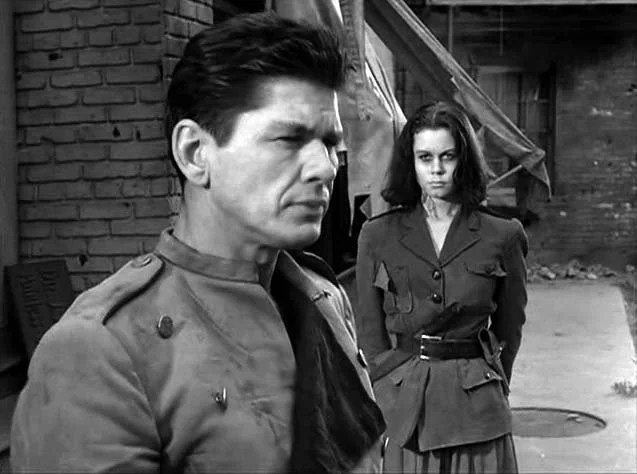
This episode, titled “Two,” opens with “The Woman” (Elizabeth Montgomery), who is wearing a tattered dark military uniform, wandering into a bombed out, deserted city, and spotting the remains of a restaurant. Tired and hungry, she goes in and digs around until she finds an old can of chicken. As she’s opening the can, “The Man” (Charles Bronson), who’s wearing a tattered, light-colored uniform, walks in on her. Immediately attacking him with a combination of meat cleavers, bottles, pots and pans, The Man tries to hold her off until if becomes clear that he’s going to have to subdue her, which he does with one vicious punch that knocks her out cold. At this point it’s clear that these are the last two remaining survivors of a devastating war, on opposing sides no less, that completely destroyed the world. When The Man wakes The Woman up by dumping a pot of cold water on her face, he gives her back her chicken and tells her that there is no reason to fight anymore, as everyone else is dead. She doesn’t understand what he is saying so he walks off in frustration. The Woman doesn’t trust The Man, but she begrudgingly starts to follow him around to keep an eye on him. Will they kill each other? Will they join forces to survive? Could they even fall in love? Writer-Director Montgomery Pittman answers all of these questions over the course of the episode’s brisk 25 minutes.
The allegorical “Two” was a bold choice to open the popular TV show’s third season with its minimalist production set in a few sections of a single bombed-out town and featuring only two characters who barely even speak, especially Montgomery, who says two words throughout the entire episode. Not that much really happens either, so it’s the type of episode that lives or dies based on the performances of the lead actors, and Bronson and Montgomery both deliver outstanding work. Bronson, a dependable character actor at this point in his career, is especially good as The Man. His square-jawed stoicism unravels enough to reveal a weary vulnerability and desire for a connection with another person, even when they’re supposed to be mortal enemies. It’s ultimately a romantic part and Bronson kills it. For those who mostly know Bronson from his post DEATH WISH action star roles, parts like this are a revelation. Montgomery, still a few years away from beginning her iconic portrayal of Samantha in BEWITCHED, is quite beautiful even when she’s this grimy. Her performance as The Woman is even more challenging as it’s almost completely a physical performance, and she shines as her character transforms over the course of the episode.
Ultimately, “Two” may resolve its setup a little too quickly to be realistic, but I still enjoyed it immensely. The performances are outstanding and its hopeful denouement left me with a smile on my face.
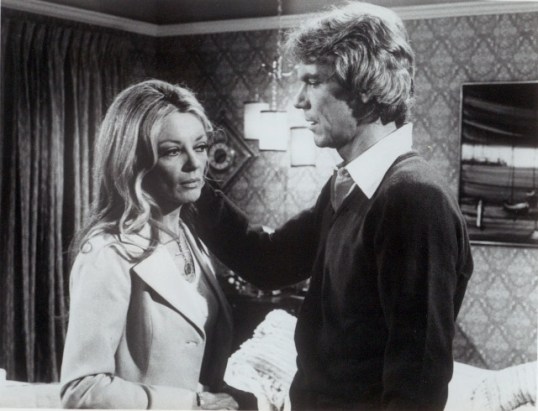
Tonight’s televised horror is The Cloning of Clifford Swimmer. Peter Haskell stars as Clifford Swimmer, an angry jerk who is unhappy with his marriage. He’s come up with a plan, though. He’s going to have himself cloned and then, after leaving his clone with his family, he’ll be free to live his life. However, Swimmer discovers that things never work that simply when it comes to creating a clone. This is a clever story with a great twist at the end.
It originally aired on November 1st, 1974 as a part of ABC’s The Wide World of Mystery. Unfortunately, whoever uploaded this film to YouTube has disabled playback so you’ll have to click on the link to watch it!



 Through the Shattered Lens