Who said a song from a horror film had to be horrific. Some songs just attaches it’s hooks into you and won’t let go and one such song that one wouldn’t associate with the horror film genre just does that with the latest “Song of the Day”.
In 2006, a little horror-comedy film came out directed by James Gunn called Slither. There’s a repeating gag in the film that both highlights the film’s horror and comedy. It’s scored by a classic Air Supply ballad by the title of “Every Woman In the World”. It’s the love song of Grant Grant (played Merle Dixon himself, Michael Rooker) and his loyal and faithful wife, Starla (played with earnestness by Elizabeth Banks). It comes on whenever the two share a tender moment even when things get thick and slithery.
Every time this song plays on the radio now I can’t help but think back to Slither.
Every Woman In the World
Overnight scenes dinner and wine Saturday girls I was never in love, never had the time In my hustle and hurried world Laughing my self to sleep, waking up lonely I need someone to hold me, oh
It’s such a crazy home town It can drag you down Till you run out of dreams So you party all night to the music and lights But you don’t know what happiness means I was dancing in the dark with strangers No love around me When suddenly you found me, oh
(Chorus) Girl, you’re every woman in the world to me You’re my fantasy, you’re my reality Girl, you’re every woman in the world to me You’re everything I need, you’re everything to me Oh girl
Everything good, everything fine That’s what you are So put your hand in mine and together we’ll climb As high as the highest star I’m living the lifetime in every minute That we’re together And I’m staying right here forever, oh
(Chorus) Girl, you’re every woman in the world to me You’re my fantasy, you’re my reality Girl, you’re every woman in the world to me You’re everything I need, you’re everything to me Oh girl (5x)
The previous “Song of the Day” was Polymorphia and comes courtesy of one Krzystof Penderecki. Why stop a good thing and go with someone else for the latest one when Penderecki continues to bring in the horror.
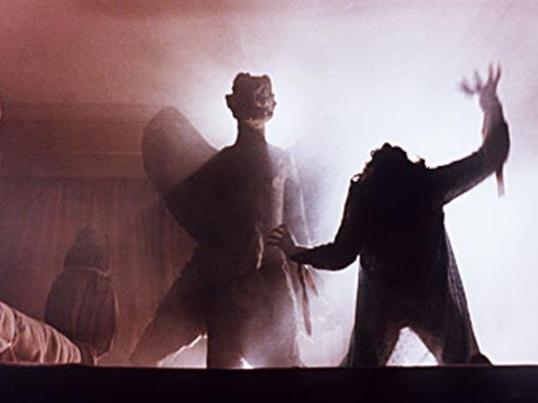
“Kanon For Orchestra and Tape” was also used in William Friedkin’s The Exorcist and one could tell just from listening to it that it fit perfectly. Like Polymorphia, this particular piece uses the string section to help create that encroaching dread and horror while adding some nontraditional sounds to keep the listener off-balance.
Just listening to this piece one could be made to believe that there is a Hell and the Devil’s just waiting to get out and play.
A couple weeks ago site music writer necromoonyeti wrote up quite an article about what just makes a piece of music a “horror music”.
Using some of what necromoonyeti wrote about I decided to look at some horror and non-horror films with music that evokes that sense of terror and horror that sometimes come from music that we wouldn’t associate with such emotions. It’s a much more difficult task than one would think. Yet, while I didn’t find one of those non-traditional pieces of horror music I did come across one that I should’ve used in this segment a long time ago.
The latest “Song of the Day” is a piece of disturbing music titled “Polymorphia” by Polish composer Krzysztof Penderecki.
This musical composition has been used in two classic horror films (some would say some of the best in their genre) to help build the sense of horror and dread for the audience. The two films in question would be William Friedkin’s The Exorcist and Stanley Kubrick’s The Shining. I know that in the former it more than added to that film’s creeping dread from the moment the song came on. It made one feel like Hell itself was about to break through the screen. It’s that sense that one’s skin was sensing something evil was afoot.
I found a particular youtube video that used this song and the chosen imagery to great effect. I dare anyone to watch the video, listen to the music in a dark room and in the middle of the night while alone.
For the first horror “Song of the Day” I couldn’t decide on which theme from Clive Barker’s Hellraiser I should use.
Fans of the film should know well the original theme composed by Christopher Young for the film. It’s a more orchestral theme that gives the film a sort of grand guignol grandeur. It’s an epic piece that would get used time and time again for each successive sequel. There might be some minute changes to the theme with each new film, but the basic composition remains. It’s a theme that helps one visualize forbidden texts and grimoires laying in wait for the ones brave or foolish enough to turn the page.
Then there’s the unreleased and unused theme that Barker had originally wanted to use from the industrial band Coil. This theme for the film was more about discordant melodies that harkens back to the more disturbing musical composition used for The Exorcist. It’s a theme that brings up images of the sublime and exquisite pain that Pinhead promises to those solve the Lament Configuration.
Some fans prefer the original Christopher Young suite while others have grown to love and prefer the more disturbing piece from Coil. I, for one, think both could’ve been used in the film though if I had to pick one to use as the main theme then I would go with Christopher Young’s composition.
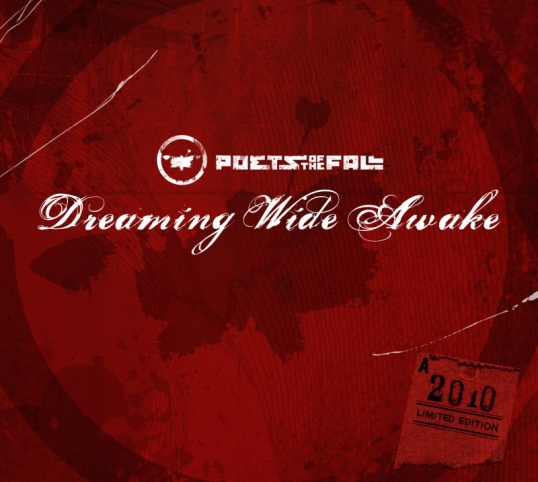
The latest “Song of the Day” comes from the Finnish rock band Poets of the Fall.
“Dreaming Wide Awake” is such a cinematic-sounding song. From the vivid imagery brought up by the songs lyrics to the band’s frontman Marko Saaresto’s singing full of emotional power. I was first introduced to this song when I came across one of my favorite anime music videos almost three years ago now in Chiikaboom’s “Against All Odds”.
The song is about one’s inability to cope and move past the loss of a loved one. How one tragedy could compound another as one loses their grip on reality in an attempt to try and return their dead loved one to them. While this is an extreme version of such an experience I’m sure everyone has felt a similar feeling when one has gone through a very emotional break-up with someone they care about for a very long time.
For a song that sounds wistful and somewhat full of hope in reality this song is actually quite dark.
Dreaming Wide Awake
Too late, the melody is over The joke seems to be on me cos I’m the one not laughing Down here on the floor
Deflate, the mystery of living In the most heartless fashion I could ever Imagine No pretense of decor
Another place and time, without a great divide And we could be flying deadly high I’ll sell my soul to dream you wide awake
Another place and time, without a warning sign And we could be dying angel style I’ll sell my soul to dream you wide awake
I’ll dream you… wide awake
With me, disaster finds a playfield Love seems to draw dark, twisted pleasure tearing at me Cos I can’t let you go
Mercy, like water in a desert Shine through my memory like jewelry in the sun Where are you now
Another place and time, without a great divide And we could be flying deadly high I’ll sell my soul to dream you wide awake
Another place and time, without a warning sign And we could be dying angel style I’ll sell my soul to dream you wide awake
I’ll dream you… wide awake
It’s like I’m racing to the sun, blindly face the blazing gun Cos I’m afraid I will be left here without you Like I’m racing not to run, give more when I have none Cos I’m afraid I will be left here without you… wide awake
Another place and time, without a great divide And we could be flying deadly high I’ll sell my soul to dream you wide awake
Another place and time, without a warning sign And we could be dying angel style I’ll sell my soul to dream you wide awake
Finishing off my Pacific Rim soundtrack trifecta is the Mako Mori theme by Ramin Djawadi.
The first two parts of this trio were the theme to Pacific Rim and the theme to Gipsy Danger. Both were composed by Ramin Djawadi (the film’s composer) and featured lead guitar work by Tom Morello of Rage Against the Machine. My third choice and latest “Song of the Day” was simply titled “Mako”. This part of the soundtrack occurs primarily during a Drift sequence in the film that becomes the unifying thread to the relationship between Rinko Kikuchi’s Mako Mori character and IDris Elba’s Stacker Pentecost role. Ramin Djawadi has singer and songwriter PRiscilla Ahn join him in this song as we see an important backstory play out within the Drift. It’s Mako’s past history with the kaiju and Stacker and why she’s so determined to become a jaeger pilot despite her adopted father’s reservations.
With this track we see that Djawadi can handle emotional musical pieces as well as the more hard rock and chest-thumping sections of the film’s score. It helps to have Priscilla Ahn’s melodic harmonizing backing up Djawadi’s composition which starts off gradually and dream-like before it transitions into a soaring string movement that Djawadi’s mentor, Hans Zimmer, wished he could pull off.
To say that the Pacific Rim soundtrack was just as awesome as the film it was composed for would be an understatement. These three choices were just my personal favorites. There were more throughout the 25-track soundtrack and each and everyone of them fits the film perfectly.
On my way out of James Wan’s “The Conjuring” last night, I noticed Ryan Gosling’s name in the credits. A bit of curiosity led me to his band, Dead Man’s Bones. I wasn’t aware he sung, but he’s pretty good at it. Feeling like a mix of The Doors & Roy Orbison, this song really matches with some of the creepiness of the film. Here, the band plays “In The Room Where You Sleep” , with kids as the background vocals. Enjoy.
This latest “Song of the Day” will be the second of what will be a trifecta of my favorite tracks from the Pacific Rim soundtrack by composer Ramin Djawadi. The first one was the main theme from the film and featured Rage Against the Machine lead guitarist Tom Morello providing lead guitar work. This second track I’ve chosen is siply titled “Gipsy Danger”.
Where the main theme has been everyone’s favorite in the entire soundtrack it’s difficult not to enjoy the motif for the main character of the film. Let’s be honest and just admit to ourselves that the main character in Pacific Rim is the jaeger christened Gipsy Danger. The track which introduces her theme in the film actually precedes the main theme. We actually hear the “Gipsy Danger” theme right from the start of the film. It combines some of the hard rock melodies and chords from the film’s main theme, but also expanding on the deep bass tone (sounding like a fog horn blowing) that punctuates throughout this theme more than it did in the main theme. This deep sound I always thought of as the “monster arriving” musical cue. It appears not just when Gipsy Danger makes her initial appearance but also whenever a kaiju emerges from the ocean and makes landfall to cause destruction. It’s a sound cue similar to classic giant monster flicks from Japan that announces either Godzilla or one of his kaiju brethren which was followed-up by the iconic monster scream.
We get both the rock and roll and heroic sound from the main theme combined with the more ominous musical cue in this chosen track. It pretty much focuses on one of the film’s taglines about creating monsters to fight monsters. The Gipsy Danger jaeger is a monster in her own right. But then she’s our monster and we always have a fondness for monsters as long as it’s our own.
For those of you who have yet to get the memo, music industry giants in 2013 decided that it was time for the 1990s to be cool again. I’m pretty goddamn stoked about it myself, and I hope the sort of neo-grunge/alternative that’s going to be really popular 3-4 years from now inspires a lot of talented musicians to crawl out of the woodwork and start producing quality uncastrated rock again. In the meantime, I’ve been dusting off my neigh-forgotten guitar and revisiting a lot of the bands from my high school days to see if they were really as great as I remembered. (Alice in Chains? Check. Rage Against the Machine? Holy mother of Check. Sublime? Bzzzz, back to the “nostalgia” m3u and dusty jewel case with you.)
There have been a few 90s bands that never really left my playlist all this time. Smashing Pumpkins’ catalog from Siamese Dream though Machina kept on rolling like they were all just released yesterday. Pearl Jam and Nirvana still found their way into Winamp from time to time. And I never quit listening to Tool. My Tool selection for the past decade though has consisted almost exclusively of the Opiate EP and Undertow–those nostalgic recordings that were inevitably rolling in the background every time I ever skipped school to play paintball, experimented with a new drug (I haven’t done any “drugs” since high school, but I must say tripping on shrooms completely changed my perspective on life in a positive way), or got drunk when it was still a novel experience.
When I was a teenager though, it was never Opiate or Undertow that I listened to at home. They were the party albums that all of my friends would play ad pleasant nauseam. In private, I listened to Ænima. I’d all but forgotten about it until a week ago. I’ve kept it on repeat while engaging in the oh-so-rebellious task of remodeling my kitchen, and wow… Fast-forward from having naively experienced a few hundred mass-marketed bands to having researched and intelligently engaged thousands of different acts, I have to say Ænima remains one of the greatest recordings I have ever heard.
Right now I’m peaking on Pushit. It was, alongside Jimmy and Third Eye, one of the tracks I pretty much ignored as a kid, and I’m now hearing it in a new light as one of the most overwhelming tracks on the album. I want to showcase H. though, because it was my favorite Tool song prior to the release of Lateralus (the way I connected with the lyrics to Lateralus’ title track at the time is difficult to describe and sadly lost to me now), and because I do still regard it as my favorite track on the album (Ænema comes pretty close).
The way Maynard’s vocals interplay with the instrumentation is absolutely beautiful; I think Ænima represents Tool’s peak as innovative song-writers, bridging the gap between their earlier edginess and their later brooding experimentalism, and no song captures that quite so extensively as H. The crushing chorus acts as cement to piece together Maynard’s vocals and Adam’s guitar at their most mutually fragile peak. The lyrics present a simple clash between emotions and wisdom under a veil so deliciously esoteric that it might feel personally and uniquely relevant to each individual listener in a legitimately different way:
What’s coming through is a lie.
What’s holding up is a mirror.
What’s singing songs is a snake,
Looking to turn my piss to wine.
They’re both totally void of hate,
But killing me just he same.
The snake behind me hisses what my damage could have been.
My blood before me begs me, open up my heart again.
And I feel this coming over like a storm again.
Venomous voice tempts me, drains me, bleeds me,
Leaves me cracked and empty,
Drags me down like some sweet gravity.
The snake behind me hisses what my damage could have been.
My blood before me begs me open up my heart again.
And I feel this coming over like a storm again.
I am too connected to you to slip away, fade away.
Days away I still feel you, touching me, changing me,
Considerately killing me.
Without the skin,
Here beneath the storm,
Under these tears,
The walls came down.
At last the snake has drowned,
And as I look in his eyes,
My fears begin to fade,
Recalling all of the times
I could have cried then.
I should have cried then.
As the walls come down,
And as I look in your eyes,
My fear begins to fade,
Recalling all of the times
I have died,
and will die.
It’s alright.
I don’t mind.
I am too connected to you to slip away, fade away.
Days away I still feel you, touching me, changing me,
And considerately killing me.
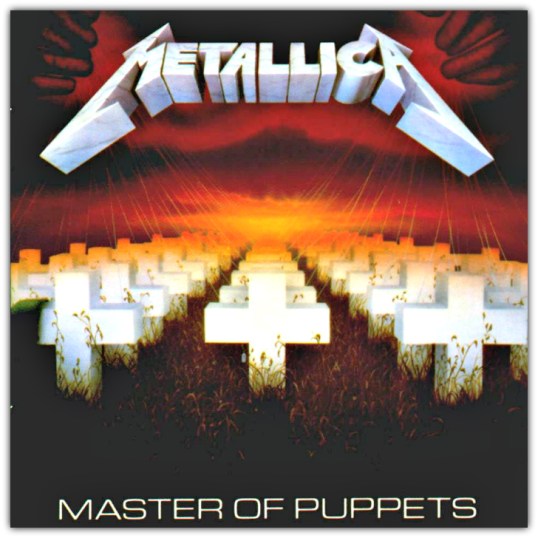
Been more than a bit listless and tired of late so what do I do to fix that than listening to some classic metal. One can’t get any more classic metal than one of the best metal instrumentals ever: Metallica’s “Orion” off of their Master of Puppets full-length album.
“Orion” would mark one of the the last great works by Metallica’s great bassist, Cliff Burton. He would pass away while on tour to promoting this album. Details of his passing could be read anywhere so will bypass that to instead celebrate one of his great achievements with this extended instrumental which just showed how great a metal bass player he was, but also just one of the greatest metal musicians of his time.
Fans of metal always wonder just how much more he could’ve contributed to Metallica’s success if he had lived. Would their later albums have been up and down in quality? Would he have gone along with the changes wrought by the band’s producer after his death, Bob Rock, whoguided the band out from their thrash metal roots and into a more pop-friendly hard rock sound. Metal will never know the answer to these questions, but if Burton had lived and remained with the band it’s more than likely that Metallica wouldn’t be the one we know now after their many stylistic changes, but probably still considered by their early, loyal fans as being pure thrash.
One thing for sure, we probably would’ve been given more extended instrumentals like “Orion”.



 Through the Shattered Lens