Ah, Schism. This has to be the most posted music video I have ever seen. You want to watch it on YouTube? You can. Vimeo? Absolutely. Dailymotion? Of course. There is even at least one reaction video to this music video. Even though I never got into Tool, this song and music video have stuck with me 15+ years later. My reaction at the time was that this is one weird video and I love the song. I still think that. If you’ve never seen this, then do so now.
The video was directed by their guitarist, Adam Jones.
I have to admit that until recently, I didn’t know any song by Golden Earring other than Radar Love. I didn’t even realize I had heard this song till I clicked on the video. They are good. They also put a lot of effort into their videos from the get-go with MTV.
This must have been something to see back in 1982 when this was far from the norm. Oh, and if you thought they might tone this down for later videos, then you’d be wrong. They only upped the ante. Turn The World Around has people in a concentration camp, people who have been hung, people being tortured, a black man being perpetually being beaten by cops, Jesus being crowned while Hitler is in the foreground snapping his fingers to the song, and much like this video, it has two different dimensions–the one in which the dark stuff is going on, and a bright, colorful, and otherworldly one. These videos remind me of Italian Comedy like Seven Beauties (1975). The dancers look like they belong in The Damned (1969) or The Night Porter (1974).
Here’s one tiny tangent since I mentioned Seven Beauties. I really hope Nathaniel R of The Film Experience is just ignorant of Italian Comedy and Lina Wertmüller because otherwise, getting a chance to see Seven Beauties is a “rare opportunity,” as he wrote in a recent blog post. If true, it’s a sad world when that film is a rare thing to see. That’s supposed to be reserved for things like Out 1: Spectre (1972), The Art Of Vision (1965), Douce (1943), and Rocker (1972), to name more mainstream films.
If you didn’t already know who Golden Earring is, then you might have guessed that they are from the Netherlands based on the name of the director. You’d be right. That means they did work with Anton Corbijn on a music video. It was for the song Quiet Eyes. Corbijn being the one who took credit for the singing ravens on the crucifix in the video for Heart-Shaped Box by Nirvana. He chalked it up to “Dutch humor.” I took a class in college on the history of the Netherlands. I don’t remember a section on Dutch humor.
Then again, I probably should have known, seeing as Turkish Delight (1973) has Rutger Hauer wear a pubic hair mustache and The Dark Room Of Damocles (1963) has the lowly shop merchant dragged off as a traitor to his people after WWII even though he may or may not have been led into doing missions he thought would help his people by a secret agent–who is seen at the end living the high-life. Also, Water Power (1976) didn’t have to be edited for its release in the Netherlands, whereas it was in the United States. I guess it shouldn’t come as an surprise to me that these are the kind of videos a Dutch band would make.
Nevertheless, I’m impressed. And yes, the topless nudity was censored at the time. If Wikipedia is to be believed, then the injection scene was also censored. My favorite scene is when the little girl turns toward the camera and stares at you for awhile. It’s a nice little touch.
The song itself was apparently not inspired by the TV Show. It was based off of Robert Ludum’s book The Bourne Identity. That would explain the spy storyline.
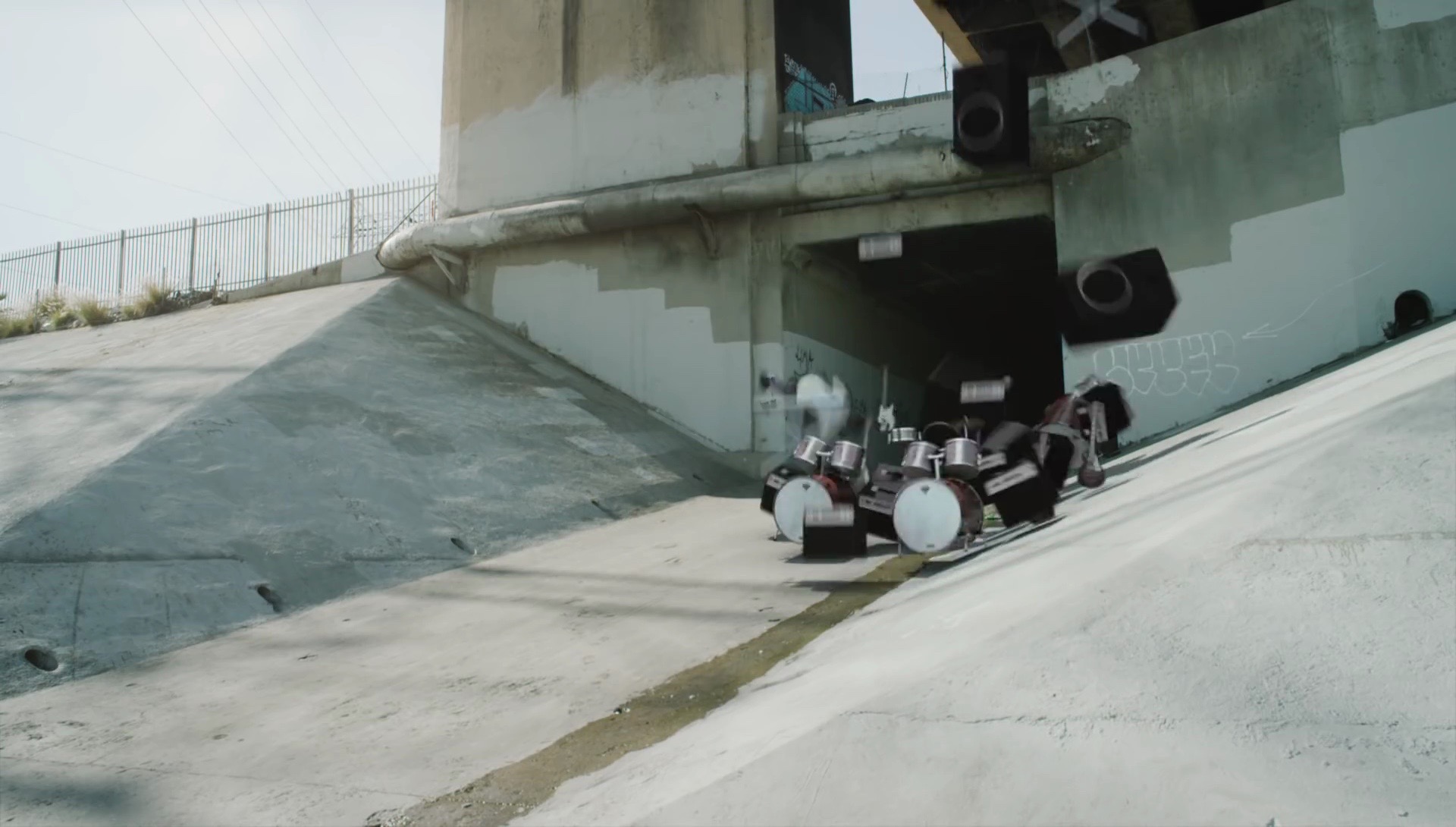
I sat through a near hour long interview with Joywave–primarily with lead-singer Daniel Armbruster–and I couldn’t gleam any information about this music video. I did find out that the mustache exists because his father has a great mustache, which led him to grow what little one he could. He said that the rest of his face just doesn’t grow facial hair. I bring it up because after a couple of times through this video a particular shot caught my eye, which lead me to look more carefully at the video. That shot, is the one below.
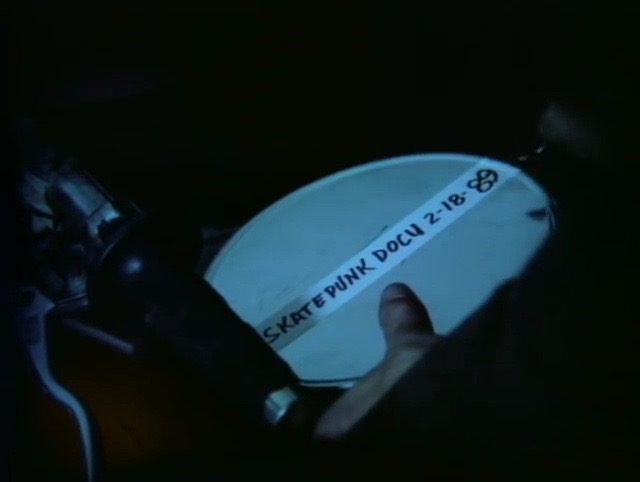
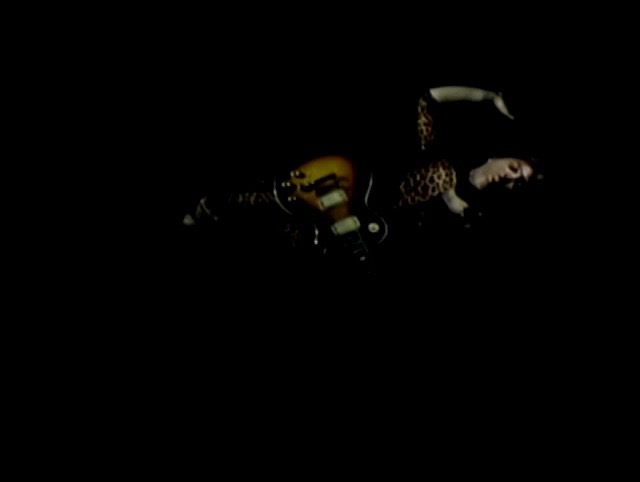
The reason is that I’m quite sure that is not only the same spot they filmed Burnin’ For You by Blue Öyster Cult, but also that those are roughly the same instruments.
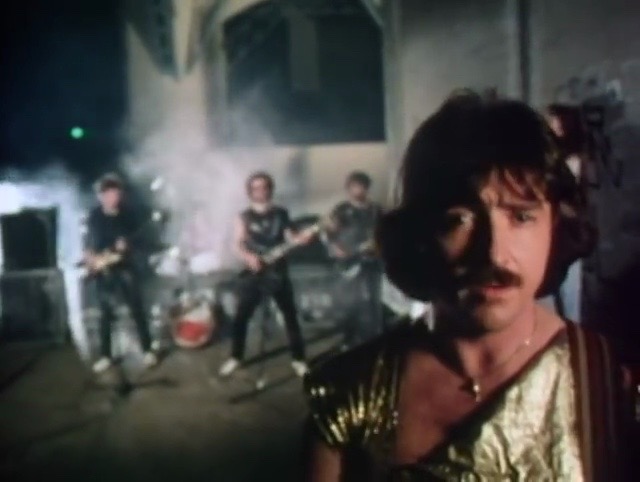
Burnin’ For You by Blue Öyster Cult (1981)
I thought that was just a one-off thing with this video, but I started to notice other things. One of the most recognizable things about Armbruster is his mustache. It’s a little thinner. Still, here’s Buck Dharma’s mustache:
Burnin’ For You by Blue Öyster Cult (1981)
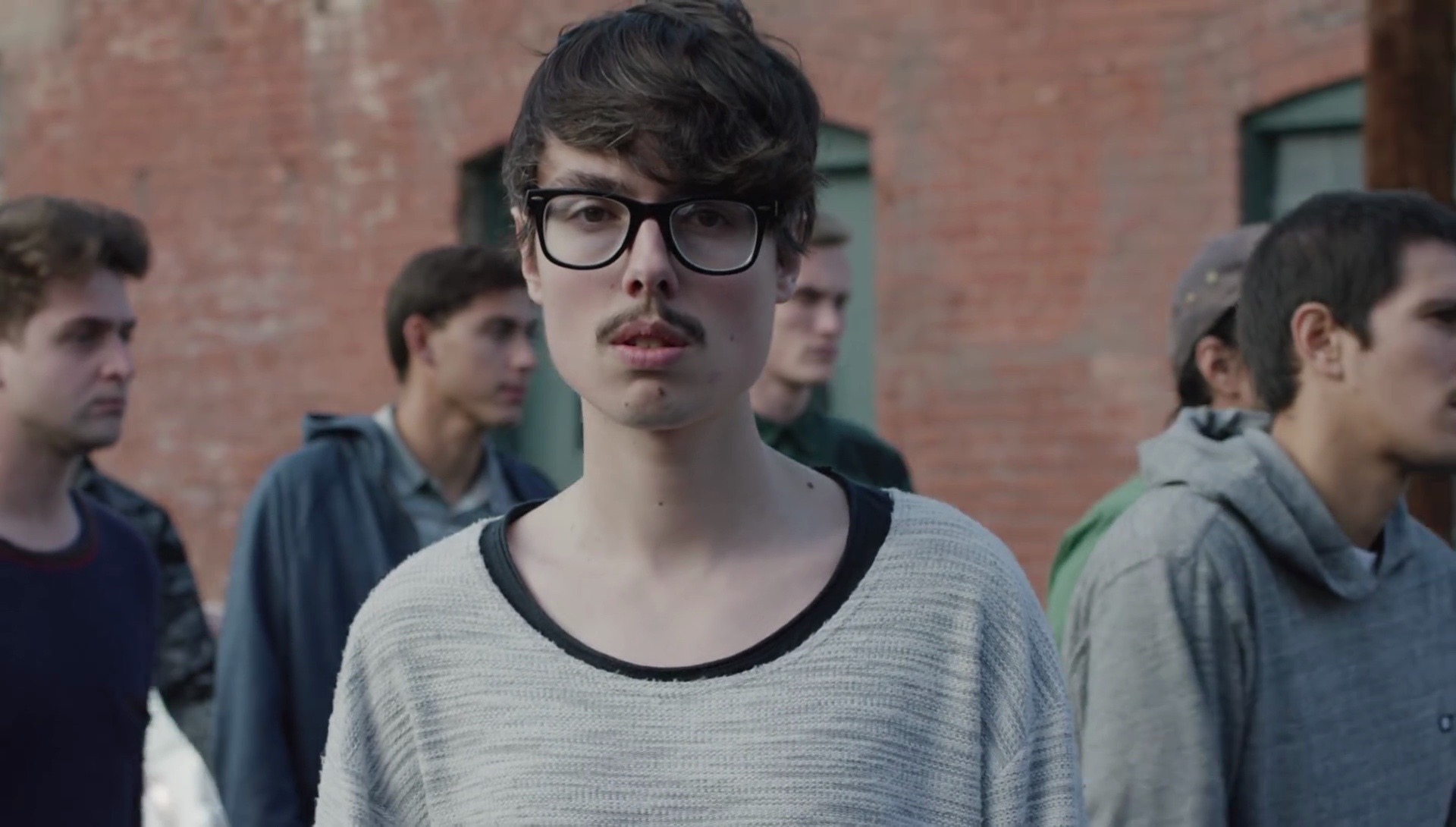
Here’s Armbruster’s mustache:
I was really hoping the interview would tie the two together. Still, there are three more similarities.
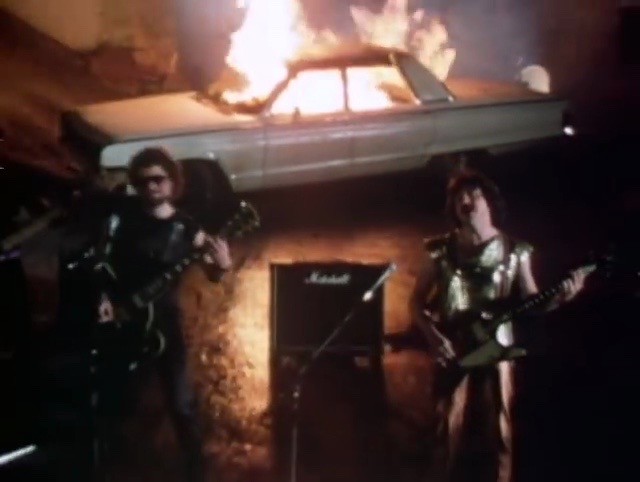
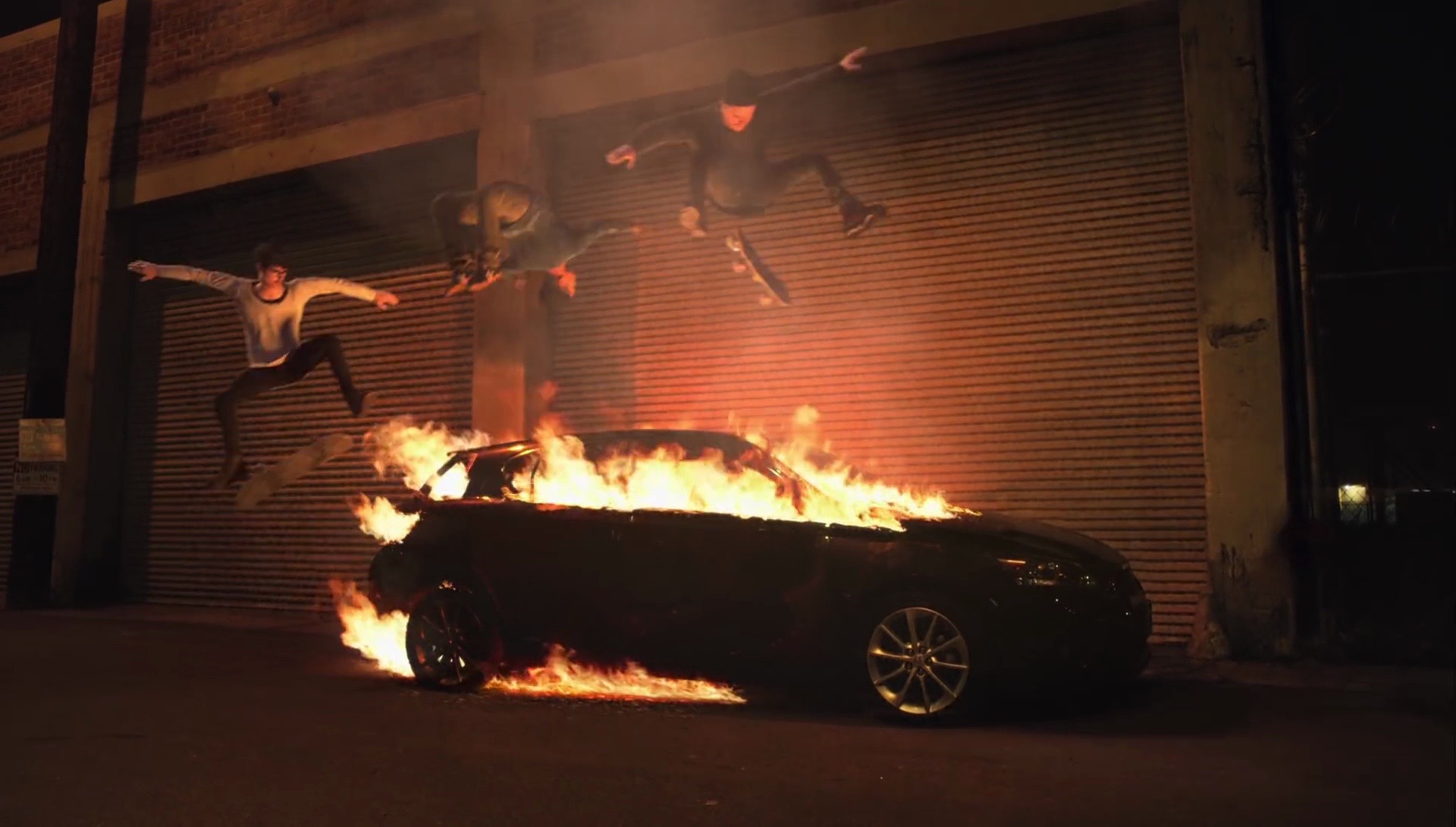
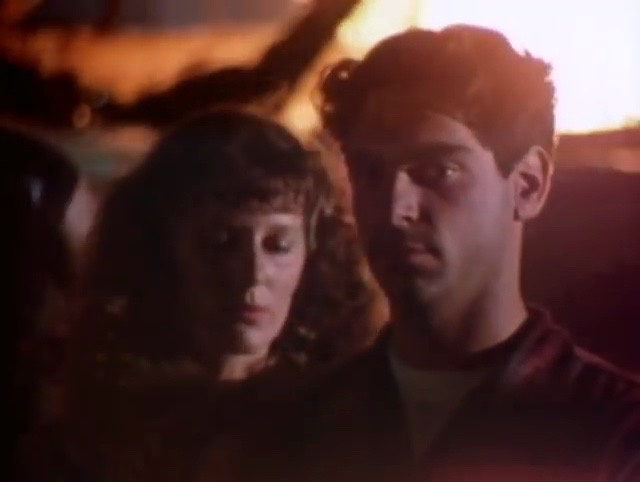
The burning car:
Burnin’ For You by Blue Öyster Cult (1981)
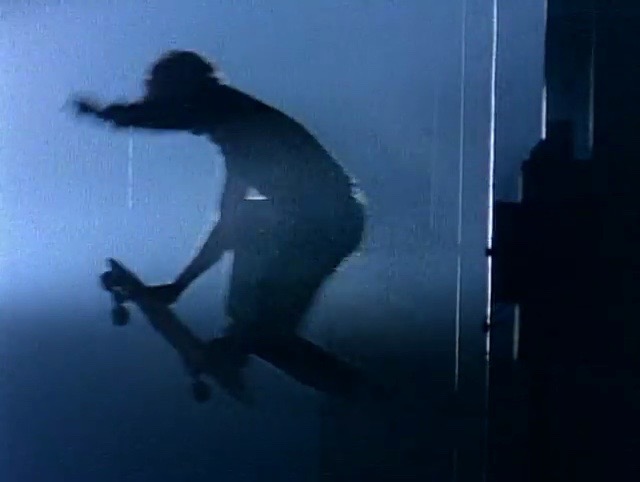
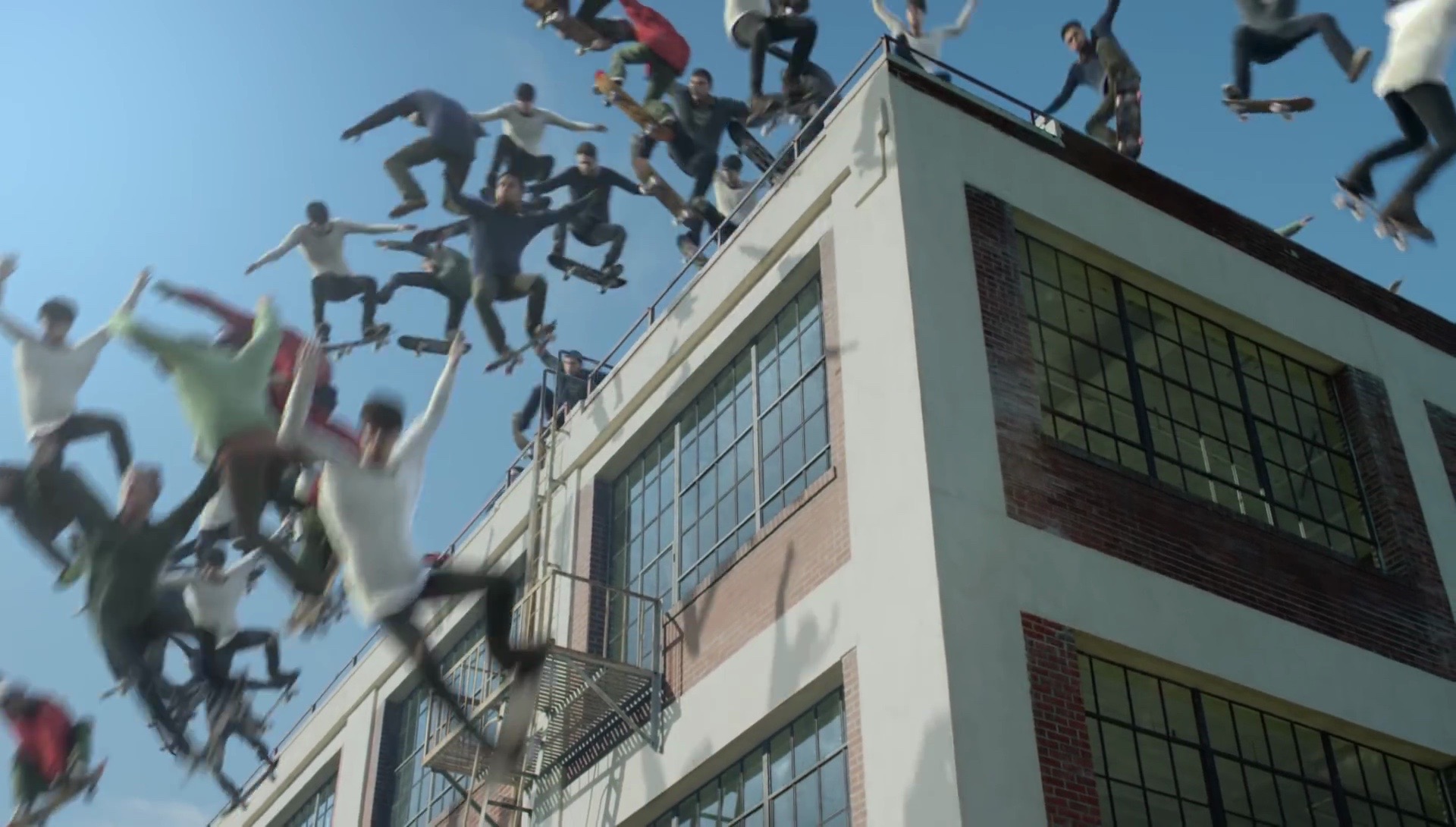
Hopping from Burnin’ For You to Dancin’ In The Ruins, and you get the skateboarders.
Dancin’ In The Ruins by Blue Öyster Cult (1986)
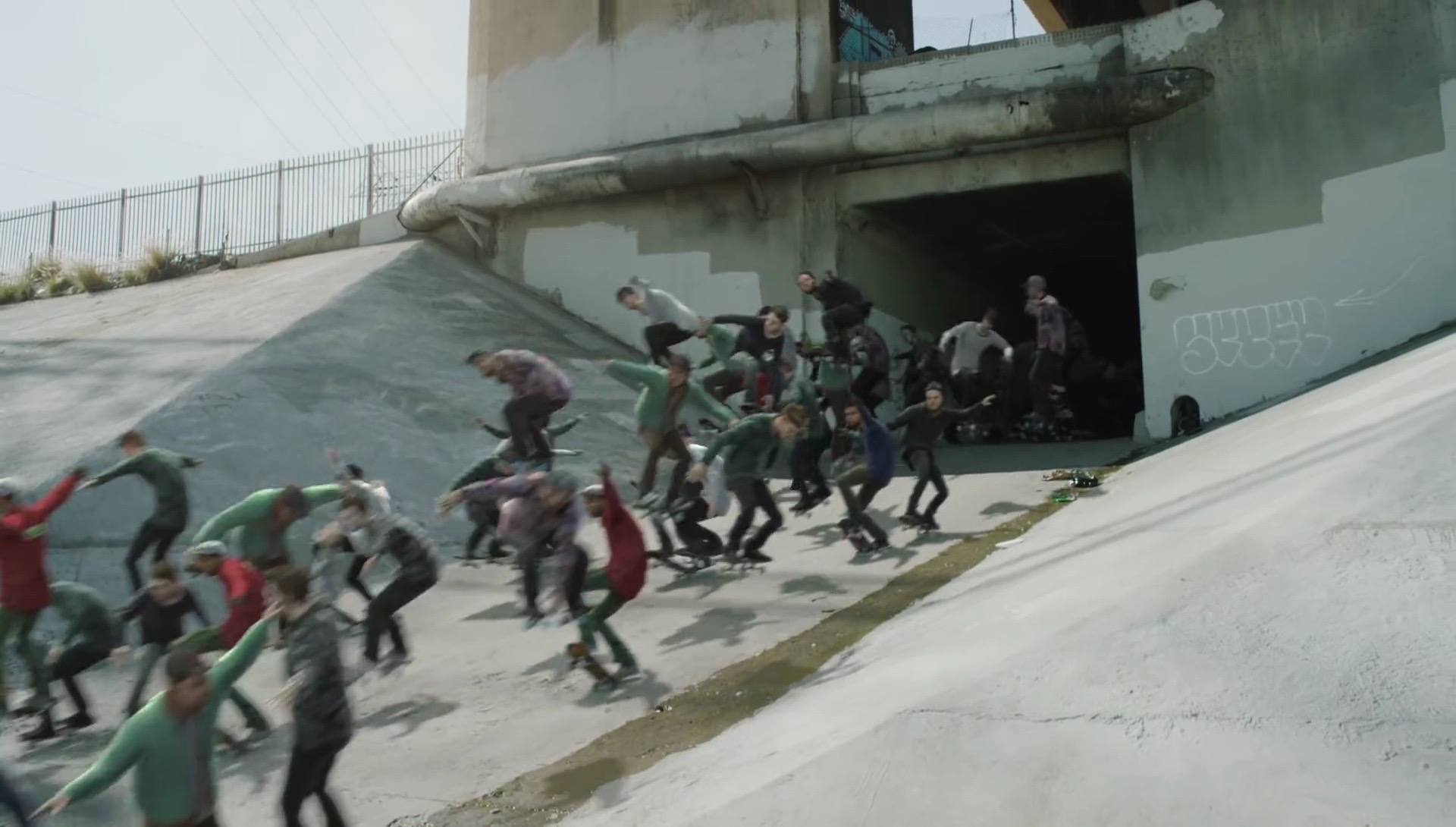
Dancin’ In The Ruins by Blue Öyster Cult (1986)
Of course they couldn’t do the effects, like the following, back then:
Finally, there’s a bunch of people in both videos that just seem to be around without a whole lot of emotion to them.
Burnin’ For You by Blue Öyster Cult (1981)
You could take this a step further, and chalk up the glitching to what director Richard Casey–who directed Burnin’ For You–did for the video for Fantasy by Aldo Nova.
Fantasy by Aldo Nova (1982)
Fantasy by Aldo Nova (1982)
Whether any of this was intentional or not, I don’t know. I do know that Joywave’s videos are generally interesting, such as the grindhouse video for Tongues. I’ve taken a look at other Schofield videos, and they are equally interesting.
I have to bring up some confusion I have about the director (???). Almost everywhere I look, I find Keith Schofield referred to as a director–singular. However, there is a video over on the Keith Schofield YouTube account that says otherwise.
If that’s to be believed, then Keith Schofield is actually three people named Keith Haverbrooks, Eric Schoman, and Jeff Mayfield. Seeing as that was the only place I could find with that information, I just thought it was worth mentioning rather than including it in the title of the post.
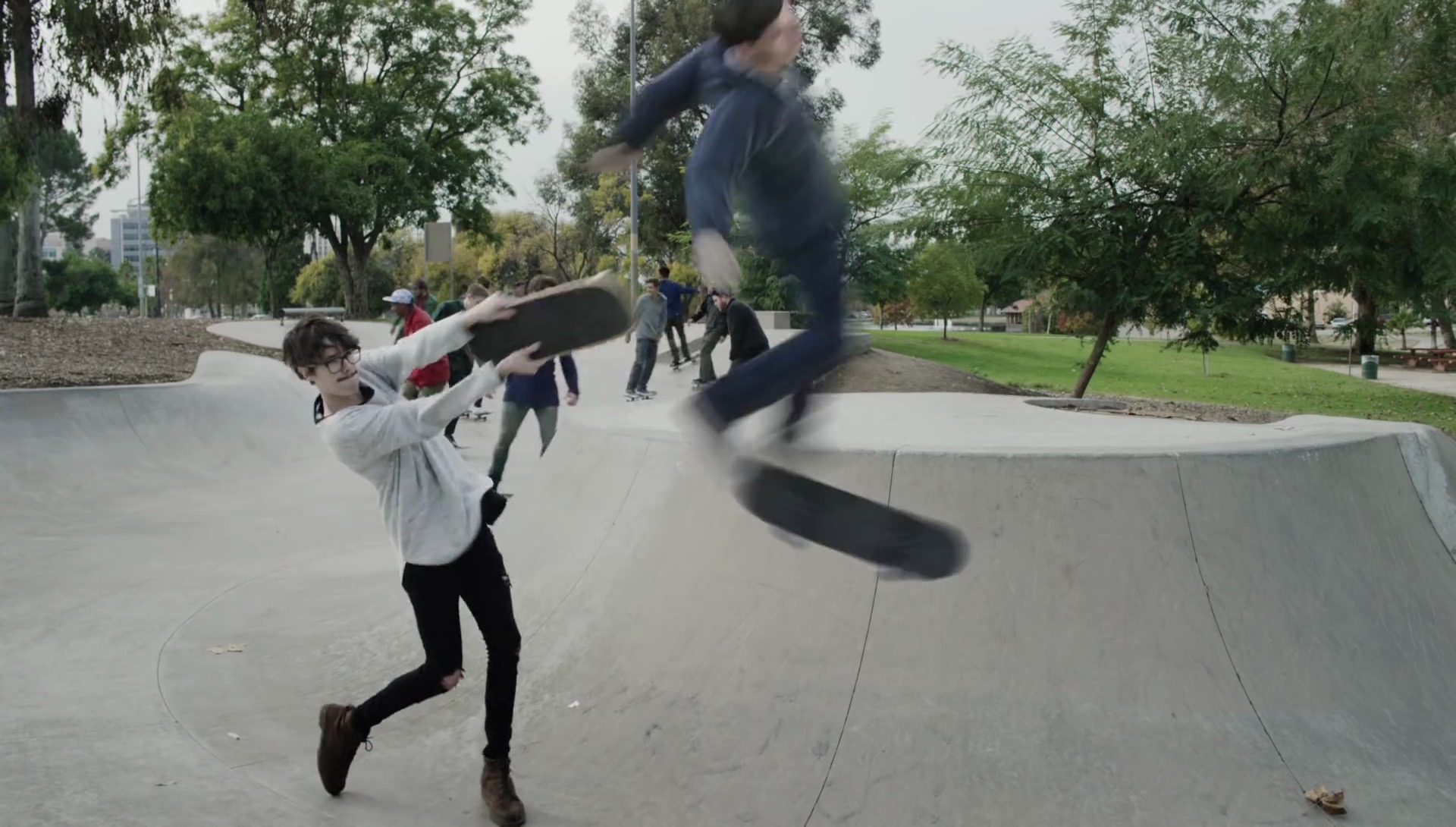
I’ll end this post on my favorite shot in the video. Daniel Armbruster launching somebody into the air with a skateboard.
But behind the scenes, it was more like Face Without Eyes. I’m not abridging this story. Thank you Rob Tannenbaum and Craig Marks for writing the book I Want My MTV. Also, thank you John Diaz and Billy Idol for sharing this story.
John Diaz: On “Eyes Without a Face,” I brought in Tony Mitchell as DP–that was one of the first videos he shot. David Mallet directed, and David always shot in 16mm. I said, “I don’t care what else you do, but we have to shoot this in 35mm and Billy has to look like a beauty queen.”
Billy Idol: The video was super-important because we had large hopes for “Eyes Without a Face.” We poured into it not only ideas, but also money and time. For three days, I didn’t see anything but dry ice, smoke, fire, and naked bodies. We hardly slept.
John Diaz: Bill Aucoin brought some new contact lenses for Billy. I said, “You can’t give them to Billy, they might redden his eyes during the shoot.” Well, he gave them to Billy. David Mallet liked to use lots of dry ice in videos. So Billy was laying in dry ice for quite some time, and he was really tired, and his eyes dried out. The contact lenses fused to his eyeballs.
Billy Idol: We’d been up all night finishing the video and got straight on a plane to do a gig in Arizona. It was boiling hot so I laid down on the grass outside the venue, and when I woke up, a sheriff was standing with his gun drawn. I’d never really had a gun barrel in my face.
I almost couldn’t think because of the pain in my eyes. I’d fallen asleep with my contact lenses in, and they were dried from being on set, then on an airplane. I said, “I’m with the band that’s sound-checking inside that building.” My eyes were tearing, pouring water. So we go inside and the sheriff made my road crew line up. He said, “Who is this?” And they said, in unison, “The boss.” So he left me alone. Then they had to take me the hospital because I’d scraped the cornea so badly. I had my eyes bandaged for three days, until the cornea grew back. It was stupid, really. But I wasn’t thinking too much, I was just trying to get the video done.
According to the authors of I Want My MTV, during this period, “the average budget had been $30,000 to $40,000, but videos now became more sleek and elaborate–and so grueling that three different people went temporarily blind.” This wasn’t even the only time somebody went temporarily blind on a Billy Idol video.
Stories like this are something to keep in mind the next time you see a music video you love that isn’t in IMDb. People temporarily lost the ability to see in order to get these made. So, submit.
First things first, this is directed by Brian Grant, and not Julien Temple. The other version of this that is listed on mvdbase is from the ABC film Mantrap (1983).
Mantrap (1983, dir. Julien Temple)
If you enjoy ABC, then I recommend the film. It’s basically an extended music video for the album The Lexicon Of Love that comes complete with Martin Fry fighting his doppelgänger.
From the book I Want My MTV:
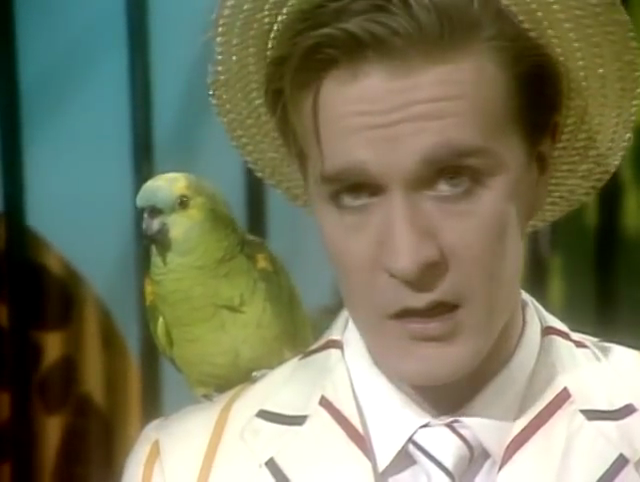
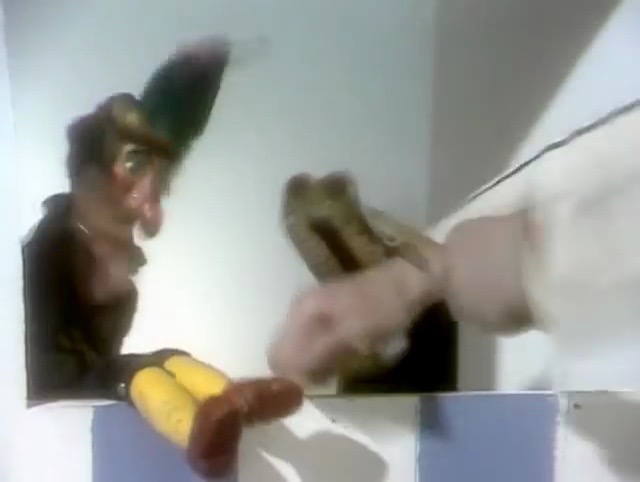
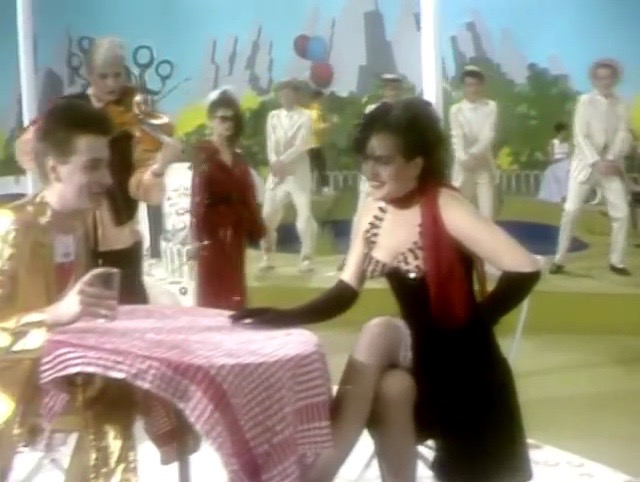
Martin Fry: The record companies weren’t pressuring anyone to look a certain way. That came later. For “The Look of Love” we wanted to cross the visual style of Benny Hill, a really crude slapstick comedian, with An American In Paris. I don’t think Kurt Cobain would have ever put on a striped blazer and sung to a wooden crocodile. There’s a parrot on my shoulder at one point. We were pushing it to the limit, seeing how embarrassed we could get. Art is what you get away with.
I wouldn’t have put it past him. Also, you weren’t so much singing to the crocodile as you were trying to beat it to death.
Brian Grant: Martin Fry and I both loved old Hollywood movies. There was no Look at us, we’re a serious rock band. They just wanted to have fun.
I picked up on that from the end of Mantrap.
Mantrap (1983, dir. Julien Temple)
There’s one more quote following the one from Grant, and then we get one from Sir Mix-A-Lot.
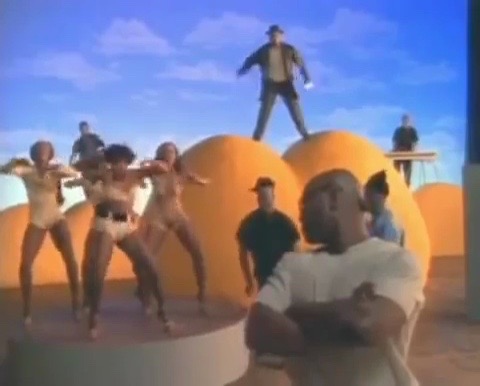
Sir Mix-A-Lot, artist: Devo, Gary Numan, the Fixx–I liked all the new wave bands. But I didn’t like any of ’em so much that I tried to style my hair like the guy from A Flock Of Seagulls. And I never tried to hold one key on a synthesizer for as long as he did in “I Ran.”
I’ll never look at Baby Got Back the same way again.
Baby Got Back by Sir Mix-A-Lot (1992)
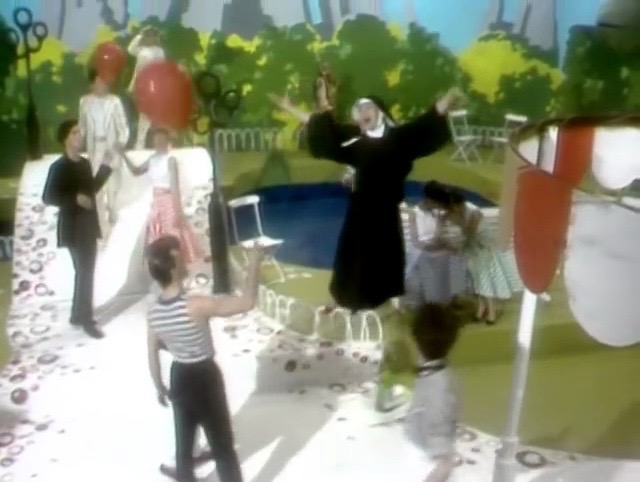
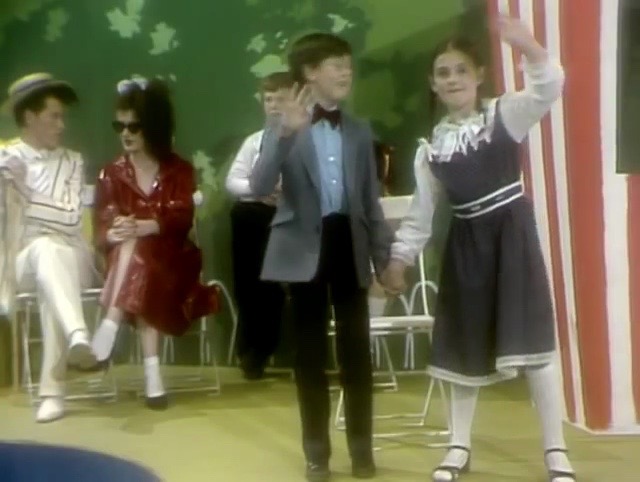
There are the obvious parts like what I assume is a reference to the beginning of 8½ (1963).
The flying nun.
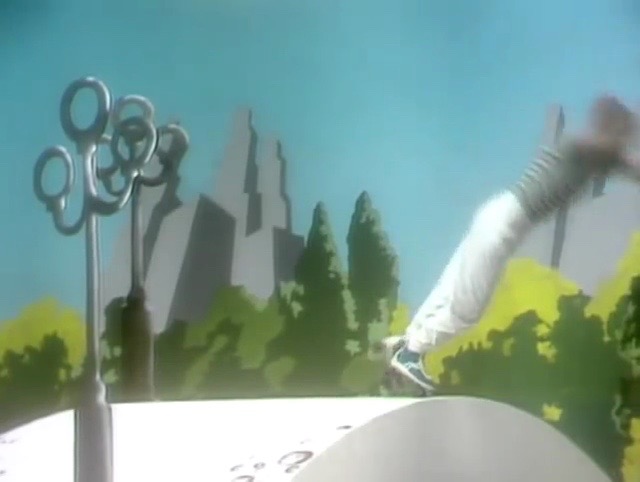
The skater who falls off the bridge.
However, each time I watch this video, I seem to spot something else going on.
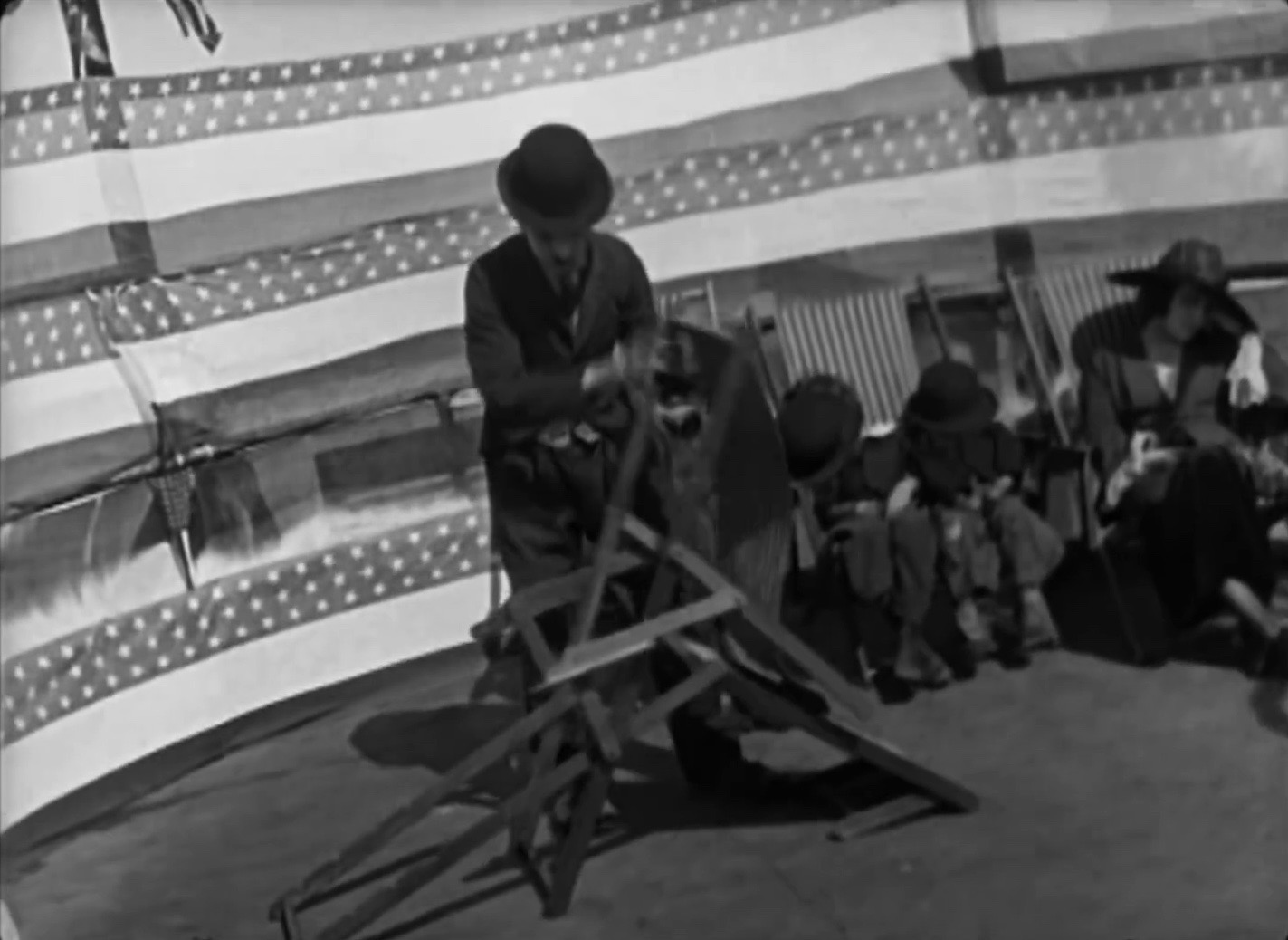
This guy looks like he should be in the background of a Jacques Tati film as he does his routine from A Day’s Pleasure (1919).
A Day’s Pleasure (1919, dir. Charlie Chaplin)
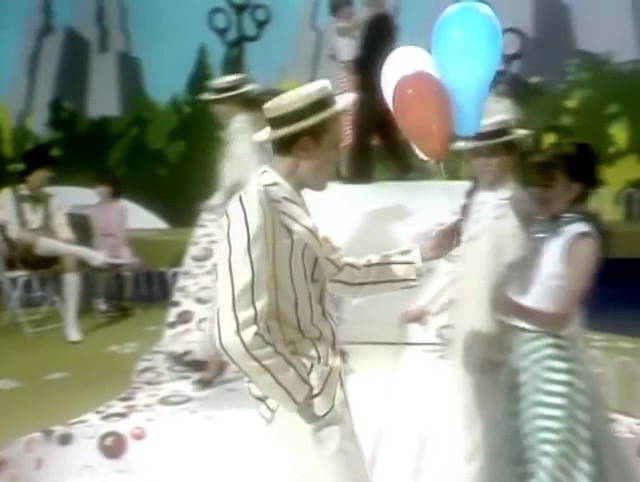
Is that his kid back there?
There’s a lower level on the set way back there. Why?
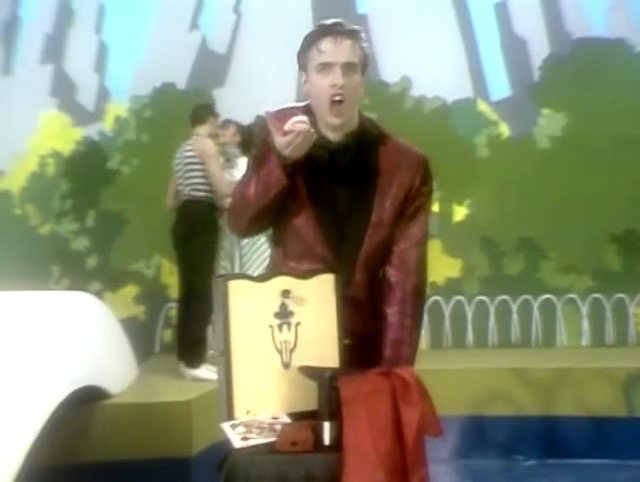
Why does this guy have a giant playing card in addition to everything else?
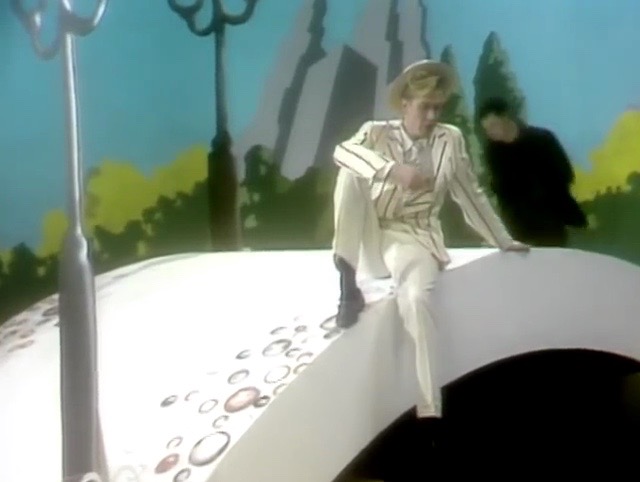
Who is this man in black that crosses the bridge behind Fry?
I guess we needed at least one eighties person in this video.
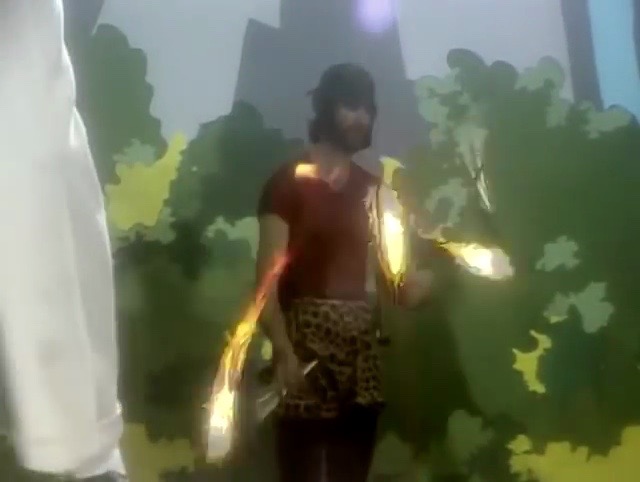
Tarzan Boy?
A fire-thrower wearing a leopard print skirt. Sure.
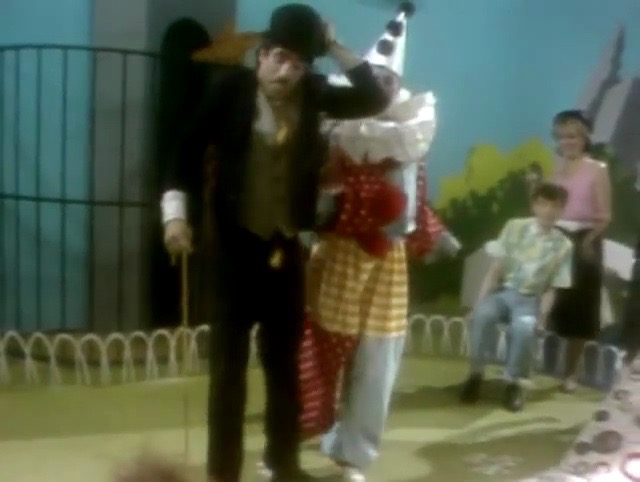
Charlie Chaplin dating a clown. Of course that’s in here.
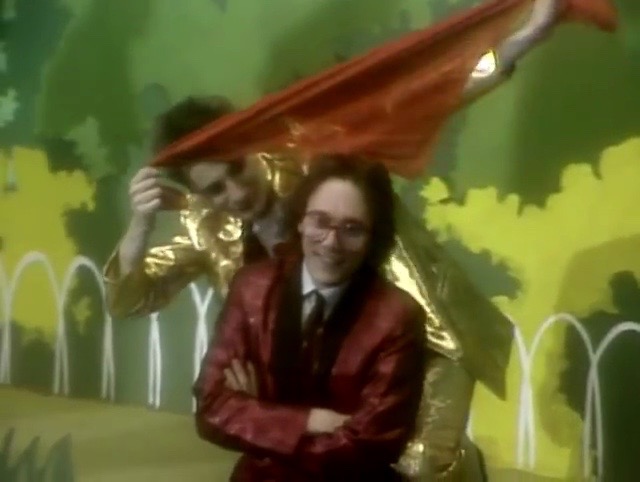
I don’t know what this guy wearing Martin Fry’s costume from Poison Arrow is doing here or what exactly he’s even doing.
Director Brian Grant has done around 180 music videos.
I love this video. Enjoy! And remember to watch out for plugs in spaghetti.
No, this is not the more well-known version that I think was made because someone thought the music video for Run To You needed a direct sequel. This is the one where Bryan Adams falls asleep in front of a television and dreams about playing with a band on televisions to an audience of people on televisions which was then put on television so that people could watch Bryan Adams performing to other people watching him through televisions. That’s weird.
It was shot in London. It was produced by Simon Fields. It was directed by Steve Barron, which I guess explains the meta-nature of the video since he also directed Money For Nothing by Dire Straits.
I swear that thumbnail used to be Branigan sitting with the three drag queens. I would say that sex sells, but it’s Laura Branigan. For her, this doesn’t look out of place at all.
Watching this music video now is bittersweet because to the best of my knowledge, it was her last. After doing this video for her cover of Donna Summer’s Dim All The Lights, she retired to take care of her husband who had been diagnosed with cancer. He passed away in 1996.
The more and more I read from the book I Want My MTV, the more and more director Marty Callner seems to be quite the character. It makes me want to hear the story of how he ended up directing Branigan’s early videos. Was he cutting his teeth like David Fincher did with Rick Springfield and Loverboy? Were they friends? I can’t find any mention of it in the book. Callner comes up mainly in the discussion of hair metal bands since, if nothing else, he is credited, along with Tawny Kitaen, for really kicking off Whitesnake’s career.
This time Lynn Spinnato directed a video for Branigan. I can only find three music video credits. She does have a bio on her website that says she worked with numerous other artists than the three I can find documented.
The video contains at least three drag queens: Miss Understood, Hedda Lettuce, and Vivacious. You might have seen them at some point over the years since they have made appearances in both film and television. The oddest thing I came across is that if Wikipedia is to be believed, then Miss Understood performed at “Blaine Trump’s Valentine’s Day dinner.” Blaine used to be married to Donald’s brother Robert. There’s a connection I can’t say I expected to come across when I picked out this music video to spotlight.
I brought it up when I talked about Get It On (Bang A Gong). This is the actual video that features model Caroline Cossey. Cossey is both intersex and transgender. One doesn’t equate to the other–or lesbian, gay, or bisexual. She just happens to be both intersex and transgender. The intersex part is a bit complicated, but for that, I refer you to the Wikipedia article on her. She was in For Your Eyes Only (1981) as an extra. After For Your Eyes Only, the tabloid News Of The World published an article about her being transgender.
The video is probably more remembered for the song, animation, bright colors, and use in both National Lampoon’s European Vacation (1985) and the Family Guy episode called It’s A Trap. However, once you know about Cossey, it does change the way you view this music video. In particular, the shaving cream on the face, which is followed by a reveal of Cossey’s breasts.
Sometimes I remember a special day or month, and sometimes I forget. When I noticed it was Pride Month, I thought I should deliberately put in a couple in that area. I’m glad I remembered this one specifically because much like special times, I always forget that I have Joe Jackson music in my collection.
Technically, my first exposure to Jackson’s music was when I saw There’s Something About Mary (1998). It featured the song Is She Really Going Out With Him? I was really introduced to Jackson’s work by way of the album Strange Little Girls by Tori Amos. I liked the song, found out it was a cover, and sought it out. Cut to a few years later, and I got to see the video for the first time. In fact, I’m quite sure that the version I’ve embedded here is the exact airing of it that I saw.
Back in the early to mid-2000s, VH1 Classic used to do this thing where they would play two songs that would have some connection to each other. I’m pretty sure the pairs would have some connection to each other as well. I don’t remember them ever telling the audience that. I just recall noticing that they played this song along with I Don’t Like Mondays by Boomtown Rats. That song was covered by Amos on the same album. I picked up on a couple of other connections, and figured that’s what they were doing.
If you look around online, then you’ll find plenty of other people who have already written out their opinions on the song and video.
This is one of those that has some material from the book I Want My MTV:
Jeff Ayeroff [former creative director at Warner Bros. Records and the co-chairman of Virgin Records America]: Joe Jackson ended up selling many more records than Elvis Costello did, mainly because of his videos he did with Steve Barron.
Joe Jackson: Music videos weren’t even discussed when I made my first album in 1979. By 1982, there’d been a distinct shift. I made videos with Steve Barron for “Real Men” and “Steppin’ Out,” and by the time we got to “Breaking Us In Two,” I said to the label, “I don’t think this song should have a video.” I was told I had to made a video, whether I liked it or not. “Breaking Us In Two” was a crappy video. I was embarrassed. So I decided in my great wisdom that not only would I no longer make videos, but I would write an anti-video editorial for Billboard magazine. I mean, I’m not such a miserable bastard that I won’t admit that some videos are great fun. But I believed MTV was beginning to have a negative effect on music.
I’m well aware that refusing to make videos accomplished nothing whatsoever except–how should I put this?–to make my next record less successful. It damaged my career and it never fully recovered.
I like Breaking Us In Two. I see where he’s coming from on that one though. Out of the three Steve Barron videos, Steppin’ Out is the best. You can tell from all three of those videos that Barron was trying to craft a reusable formula for his songs. They have all have a similar visual style. Most importantly, Barron found a good place for Jackson. Yes, I’m aware he does more than just play the piano. I’m referring to the idea of each video being a short film that happens to have Jackson pop in, not as a the star, but as the story teller. Kind of like a holographic musical narrator.
Jackson didn’t completely leave music videos. He came back with other ones, which includes getting the Propaganda Films treatment for his song Nineteen Forever. You might know a couple of the people who worked or founded Propaganda Films, such as Nigel Dick, David Fincher, Michael Bay, Mark Romanek, and in the case of Nineteen Forever, Jackson got Alex Proyas.
Despite the 1979 comment, you can find several music videos from 1979. I guess they were done just for fun rather than something that he was obligated to make and weren’t taken so seriously. You can see the second one in the video for his song I’m The Man.
As for this video, it’s pretty basic all things considered. You have the kid who doesn’t like seeing a girl getting pushed around. Then you have the same kid going to put on some powder in a mirror with an American flag in the lower right. He decides against it, and instead goes and watches Red River (1948). Then you get some of the typical gay imagery with bikers and our main character who has grown up to be James Dean. He has trouble with girls and isn’t sure if it’s just that he isn’t good with them or if it’s something else. Jackson pops up occasionally, but isn’t the main focus.
The best part of the video is how it cuts back to footage from earlier in the video as you approach the tragic ending. I especially like the part where it implies that the kid who shot at the girl may or may not be straight himself. They also pair the two guys hitting it off with each other with him not being able to kiss the girl he’s with because she pulls away.
Despite the content of the song and video, it appears to have done well on early-MTV. If there’s one thing I’ve learned from doing these posts, it’s that music video history is distorted. For awhile, early Bon Jovi music videos, like the one for Runaway, were not to be played because it conflicted with the current image of the band.
Wow! I have no idea what the story behind this video is, but for some reason, four years after Stan Ridgway left Wall Of Voodoo, they covered The Beach Boys’ song Do It Again, and Brian Wilson is in the video. The only information I can find is in the YouTube comment sections on postings of this video. One says that Wilson and Wall Of Voodoo had a good time putting this together despite the content and where Wilson was at this time in his life. Another says that the group was probably forced by their record company to do something pop friendly, yet dark, in order to survive as a group. Other comments are just about the quality of the song or taking jabs at Eugene Landy–played by Paul Giamatti in the film Love & Mercy (2014).
Sit back and take in the weird. This is like a post-apocalyptic look at the vision of California The Beach Boys created while also being prophetic about their own group breaking up the next year.






 Through the Shattered Lens