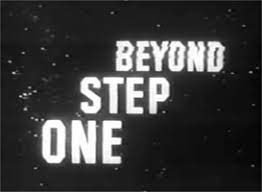
Horror on TV: One Step Beyond 2.4 “Doomsday” (dir by John Newland)


Tonight’s episode of One Step Beyond deals with that classic horror theme, the curse of a dying witch.  In this case, a woman burned at the stake in Scotland curses the family of her wealthy persecutor, saying that the eldest son will be destined to always die before his father.

I swear, witch’s curses are always so complicated!

The episode aired on October 13th, 1959.

In the words of Criswell, “Can you prove it didn’t happen?”

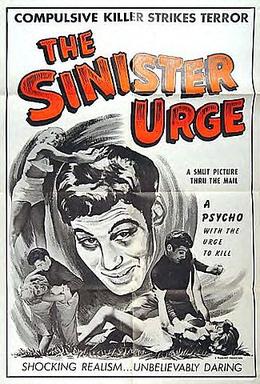
The TSL Horror Grindhouse: The Sinister Urge (dir by Edward D. Wood, Jr.)


1960’s The Sinister Urge opens with a shot of a blonde woman running down a highway while clad only her underwear.

As I watched this scene unfold, I was reminded of a chapter in Hollywood Rat Race, a non-fiction book about the sordidness of the film industry that was written by Edward D. Wood, Jr.  The chapter takes the form of a letter to aspiring young actresses who come to Hollywood, convinced that they’ll become stars.  In the chapter, Wood asks what the innocent young ingenue will do if a director tries to force her to film a scene in just her underwear.  Will you give in, Wood asks, or will you stick true to your values?  Wood seems to suggest that the actress should say no, no matter how much pressure the director puts on her.  Of course, Wood himself was a director, as well as a writer.  In fact, he directed The Sinister Urge.

The Sinister Urge is about the dark side of the film industry.  Police Lt. Matt Carson (Kenne Duncan) and Sgt. Randy Stone (Duke Moore) are investigating a series of murders.  The victims have all been women and they’ve all been killed in the same park.  Carson and Stone suspect that the murders might be connected.  Gee, guys, ya think so?

The murders are being committed by Dirk Williams (Dino Fantini), a knife-wielding teenager who works for the local pornographic filmmakers, Johnny (Carl Anthony) and Gloria (Jean Fontaine).  Dirk has become addicted to viewing pornography and it’s driven him crazy.  Johnny, who laments that he was once a serious filmmaker before he found himself reduced to directing and distributing “smut” to make money, is full of guilt and self-loathing.  Gloria doesn’t care about anything other than making money through selling smutty pictures and movies.  She doesn’t care that she’s helping to produce a product that is inspiring the sinister urge that drives Dirk to kill.

Can Dirk be stopped before he attacks innocent Mary Smith (Jeanne Willardson), who has fallen into the clutches of Gloria’s smut syndicate?  (That’s a great band name, by the way.)  And how will Dirk react when he learns that both Johnny and Gloria are thinking about sacrificing him for the greater good of their evil organization?

The Sinister Urge is an over-the-top melodrama that is clearly an Ed Wood production.  (Posters for Plan 9 From Outer Space and Bride of the Monster appear in Johnny’s office.)  Some of the actors deliver their lines stiffly.  Some of them delvier their lines with just a little bit too much emotion.  The hard-boiled dialogue is full of cliches.  The action sometimes comes to a complete stop so that the cops can discuss the threat of adult films.  The film may be sordid but it’s all presented with such an earnest DIY style that it becomes rather fascinating to watch.  At one point, Wood spliced in footage from a totally different film because why not?  Wood had the footage.  The Sinister Urge was running short.  Why not pad out the length with something totally unrelated?  That never surrender spirit is why Ed Wood remains a beloved figure 100 years after he was born in Poughkeepsie.

Sadly enough, this was Wood’s final “mainstream” film.  After this film, he could only find work writing adult novels and writing and directing the same type of movies that are criticized in The Sinister Urge.  (One has to wonder if The Sinister Urge was Wood’s attempt to satirize the moral panic of the time.)  Sadly, Wood sank into alcoholism and died 17 years after this film was released.  He was 54 years old.  His films, however, live on.

Flight of the Living Dead: Outbreak On A Plane (2007, directed by Scott Thomas)


Bad news!  There’s a zombie outbreak on a 747 jumbo jet!  That’s what you get for trying to transport a scientist who has been infected with a “super warrior” virus on a commercial flight.  It’s fine as long as she’s in her container but it just takes a little turbulence for her to get free and start infecting everyone.

This movie was advertised as being the first movie about a zombie outbreak on a plane and yes, it came out the same time as Snakes on a PlaneFlight of the Living Dead makes good use of its limited setting.  Not only do the handful of uninfected passengers have to maneuver around the undead in a tight space but they have to figure out how to get off the plane before it either runs out of fuel or gets blown up by the fighter jets that are following it.  The plane setting also reveals a new way to dispose of zombies, though it also means disposing of many of the living as well.

Flight of the Living Dead was better than I expected.  The characters are all cardboard but the action is fast and furious and that it was all happening the air did bring a new element of suspense to the familiar story.  Zombie movies are dime a dozen but this one’s not bad.  The next time I have to fly anywhere, I’m going to make sure I’m seated as far to the back of the plane as possible.

Horror Film Review: Godzilla vs Mechagodzilla II (dir by Takao Okaware)


Mechagodzilla is back!

Well, not quite.  While 1993’s Godzilla vs Mechagodzilla II does indeed feature a giant robotic Godzilla who gets into a battle with the real Godzilla, this Mechagodzilla is not the same Mechagodzilla who appeared in the previous Mechagodzilla film.  (Maybe I just like typing Mechagodzilla, who knows?)  Instead, this Mechagodzilla is a robot that was built by G-Force, the military branch of United Nations Godzilla Countermeasures Center.  (Booo!  Thanks for wasting our tax money, UN!)  This Mechagodzilla has been built out of parts left over from Mechaghidorah and it exists not to conquer the world but to protect it.

Wow, that was an exhausting paragraph to write.  On the one hand, I appreciate the fact that the Heisei era Godzilla films actually made an attempt to maintain a consistent continuity.  On the other hand, it’s difficult to keep track of all of these different monsters and robots.  I have to admit that trying to follow the plots of these movies always tends to make my ADD go crazy.  Really, the important thing is that Godzilla fights a giant robot version of himself and Rodan helps out!

That’s right.  Everyone’s favorite Pterodactyl shows up  in this film.  (The previous film in the franchise reunited Godzilla with Mothra so it just makes sense that Rodan would eventually return.)  Godzilla gets upset when he discovers that Rodan has a Baby Godzilla egg in her nest and, after an absolutely adorable mini-Godzilla hatches from the egg, the two of them fight over him.  However, Godzilla and Rodan later team up to battle Mechagodzilla.  The monsters may not like each other but they get even more annoyed with robot versions of themselves.  One thing that I really appreciate about the Godzilla films of the 80s and 90s is that they show just how exhausting it is for these monsters to constantly have to fight each other.  Godzilla and Rodan are both exhausted towards the end of this movie.  At one point, it appears that Rodan makes the ultimate sacrifice to save Godzilla and I have to admit that I got surprisingly emotional at that point.  But then I remembered that Rodan was going to show up in a later movie and immediately start fighting Godzilla again.  Seriously, monsters are like cats when it comes to showing each other appreciation.

Anyway, the main attraction here is Baby Godzilla, who is absolutely adorable in a way that horrific-looking Son of Godzilla never was.  It helps that Baby actually looks like Godzilla as opposed to looking like the bastard monster child of Godzilla’s mailman.  There’s an awe inspiring scene where Baby Godzilla runs up to Godzilla and we see that Baby Godzilla is barely the size of grown Godzilla’s big toe.  It’s both a cute scene and a reminder that Godzilla is beyond huge.

This was an entertaining entry in the Godzilla franchise.  The plot is less important than the battles and the cuteness of Baby Godzilla.  Try all you want, G-Force.  WE LOVE GODZILLA!

Previous Godzilla Reviews:

  1. Godzilla, King of the Monsters (1958)
  2. Godzilla Raids Again (1958)
  3. King Kong vs Godzilla (1962)
  4. Mothra vs. Godzilla (1964)
  5. Ghidorah: The Three-Headed Monster (1964)
  6. Invasion of the Astro-Monster (1965)
  7. Godzilla vs. The Sea Monster (1966)
  8. Son of Godzilla (1967)
  9. Destroy All Monsters (1968)
  10. All Monsters Attack (1969)
  11. Godzilla vs Hedorah (1971)
  12. Godzilla vs Gigan (1972)
  13. Godzilla vs Megalon (1973)
  14. Godzilla vs Mechagodzilla (1974)
  15. The Terror of Mechagodzilla (1975)
  16. Cozilla (1977)
  17. Godzilla 1985 (1985)
  18. Godzilla vs. Biollante (1989)
  19. Godzilla vs King Ghidorah (1992)
  20. Godzilla vs. Mothra (1992)
  21. Godzilla vs. Destoroyah (1995)
  22. Godzilla, Mothra, and King Ghidorah: Giant Monsters All-Out Attack (2001)
  23. Godzilla (2014)
  24. Godzilla: Planet of the Monsters (2017)
  25. Godzilla, King of the Monsters (2019)
  26. Godzilla vs Kong (2021)
  27. Godzilla Minus One (2023)

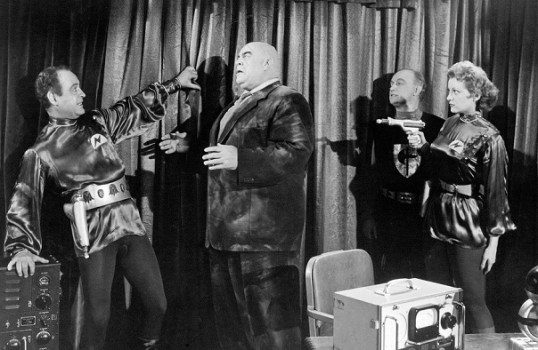
Horror Scenes I Love: Eros Explains Solarnite From Edward D. Wood’s Plan 9 From Outer Space


In this scene from the classic Ed Wood film, Plan 9 From Outer Space, Eros the Alien (Dudley Manlove) explains that he and his comrades had no choice but to invade Earth and raise the dead because mankind’s scientists have created …. SOLARNITE!

What is Solarnite?

Don’t worry, Eros will explain it to us and it will all make total sense….

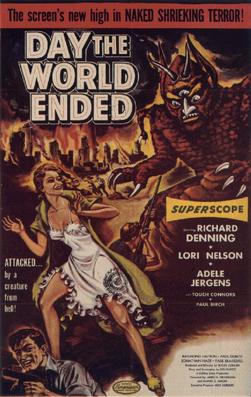
Horror Film Review: Day The World Ended (dir by Roger Corman)


“You finally did it!  You blew it up! …. Goddamn you to Hell!”

That’s right.  Just as how the original Planet of the Apes showed us what the world would look like centuries after a nuclear war, 1957’s Day The World Ended shows us what things would be like in  the weeks afterwards.  And guess what?  It wouldn’t be a lot of fun.

Day The World Ended starts with the bombs dropping and mushroom clouds forming in all of their fearsome glory.  (Oppenheimer may have hated his greatest achievement but aesthetically, the atomic bomb is still an impressive invention.)  Jim Maddison (Paul Birch) and his daughter, Louise (Lori Nelson), manage to survive by camping out in a steel bunker that Maddison built especially for the moment.  As a former Navy commander, Maddison understood that the world was on the verge of nuclear war and he also understood that only those with discipline would survive.  He’s filled with bomb shelter with supplies and he’s told Louise that only the two of them can use the shelter.  Anyone else is out of luck.

Unfortunately, people keep showing up at the shelter and asking to come in.  And while Maddison is prepared to leave them outside with the fallout and the mutants that have started to roam the desert, Louise just can’t stand the thought of leaving anyone to die.  Reluctantly, Maddison starts to allow people to join him and his daughter.  Some of them, like geologist Rick (Richard Denning), are a good addition to the group,  Rick is actually an expert in uranium mining and a potential husband for Louise.  (Louise has a fiancé but he’s missing.  She keeps his picture by her bed.  The picture, of course, is actually a photo of director Roger Corman.)  Unfortunately, not everyone is as likable and well-intentioned as Rick.  Lowlife hood Tony (Mike Connors) and his girlfriend, Ruby (Adele Jergens) show up and continue to act as if they’ve got the police after them even though the police were probably atomized with the rest of civilization.  And finally, there’s a man (Jonathan Haze) who is transforming into a mutant and who develops a strange mental connection to Louise.

No one said the end of the world would be easy!

Day The World Ended was Corman’s fourth film as a director and it was also his first film in the horror genre.  (It’s actually a mix of science fiction and horror but whatever.)  The film was enough of a box office success that it inspired Corman to do more films in the genre.  Seen today, it’s obviously an early directorial effort.  It lacks the humor that distinguished Corman’s later films.  In fact, the film is actually a little bit boring.  Watching a film like this really drives home just how important Vincent Price and his energy were to Corman’s later films.  This film doesn’t have an actor like Vincent Price or Boris Karloff or even Dick Miller, someone who could energize a film just through the power of their own eccentricities.  Instead, Mike Connors, Paul Birch, and Richard Denning all give dull performances as the survivors.  This is a historically important film because, without its box office success, Corman probably would have stuck with doing B-westerns and gangster films.  Filmgoers should be happy that audiences in the 50s were drawn in by the film’s title and their own paranoia about nuclear war.  It’s a film that one appreciates as a piece of history, even if it doesn’t quite stand up to the test of time.

4 Shots From 4 Films: Special Edward D. Wood Edition


4 Shots From 4 Films is just what it says it is, 4 shots from 4 of our favorite films. As opposed to the reviews and recaps that we usually post, 4 Shots From 4 Films lets the visuals do the talking!

Today, on what would have been his 100th birthday, we take time to honor Edward D. Wood, Jr.

4 Shots From From 4 Ed Wood Films

Bride of The Monster (1955, dir by Edward D. Wood, Jr., DP: Ted Allan and William Thompson)

Plan 9 From Outer Space (1957, dir by Edward D. Wood, Jr., DP: William C. Thompson)

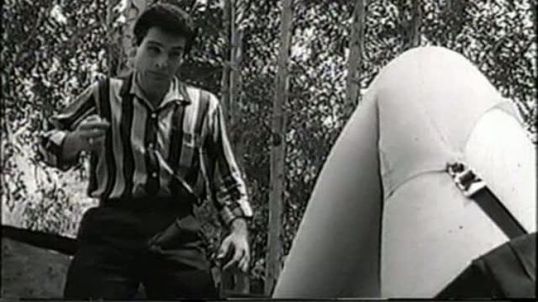
The Sinister Urge (1960, dir by Edward D. Wood, Jr., DP: William C. Thompson)

Necromania (1971, dir by Edward D. Wood, Jr.)

Icarus File No. 15: Glen or Glenda (dir by Edward D. Wood, Jr.)


Today is the 100th birthday of Edward D. Wood, Jr., the director who is often referred to as being “the worst director of all time.”  Personally, I’ve never really agreed with that title.  Ed Wood had a long career in Hollywood and yes, he may have worked exclusively in B-movies and yes, he eventually turned to softcore and then hardcore porn to pay the bills and yes, his life ended under rather tragic circumstances.  But, unlike most truly bad directors, his films are still being watched today and, again unlike most bad directors, his style is immediately recognizable.  You don’t need to see his name in the credits to know when a film was directed by Ed Wood.  You just have to keep an eye out for stock footage, a few familiar actors, and a lot of angora.

If anything, Ed Wood was a director whose ambitions far outweighed the money that he could usually raise for his films.  On the one hand, Plan 9 From Outer Space was a film where the strings holding the flying saucers were clearly visible and where a shower curtain was used to represent the door into an airplane’s cockpit.  On the other hand, it was also a very sincere plea for world peace and a lament that humans would rather blow themselves up with Solarnite than work out their differences.

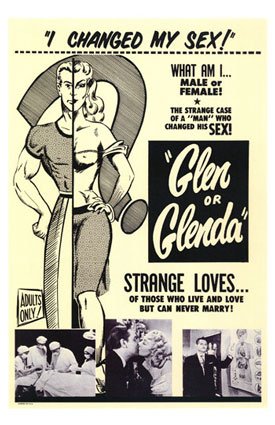
Or you take a film like 1953‘s Glen or Glenda.  Ed Wood, who identified as a heterosexual and who was considered, by his friends, to be quite a womanizer (and it should be noted that young Ed Wood was strikingly handsome, though he was subsequently very badly aged by alcoholism and homelessness), also preferred to wear clothing designed for women and was open about it at a time when American culture was even more conformist-minded than usual.  In Glen or Glenda, Wood plays the autobiographical role of Glen, who struggles to tell his fiancée (played by Wood’s real-life girlfriend, Delores Fuller) that he dreams of being able to wear her angora sweater.  Glen’s story is told by a psychiatrist (Timothy Farrell) who is talking to a cop (veteran Hollywood character actor Lyle Talbot) who is investigating the death of a transvestite.  Among other things, Glen or Glenda is known for its bad acting, stiffly delivered dialogue, and its occasional digressions about why men go bald while women do not.  (It’s the tight-fitting hats, which cut-off blood flow to the head and not only cause men to lose their hair but also develop the Solarnite bomb.)  But, at the same time, it’s a film in which Wood attempts to handle, with sensitivity and empathy, a subject that most films in the 50s would have either ridiculed or portrayed as being a threat to the American way of life.  All of Wood’s films are sympathetic to those who are considered to be outsiders by conventional society.  This is especially true of Glen or Glenda.

Of course, Glen or Glenda is also known for Bela Lugosi randomly appearing in a laboratory and shouting things like, “Pull ze string!  Pull ze string!”  As far as I can tell, Lugosi is supposed to be playing the creator, who is not portrayed as being a stereotypical God but instead as being a mad scientist who rants and raves in his library and his laboratory.  And while it’s obvious that Bela was probably added to the film at the last minute and, more or less, allowed to do whatever the Hell he wanted, his presence adds a wonderfully bizarre touch to film’s dry style.  (I would compare him to the mysterious burned man who appears at the start of David Lynch’s Eraserhead.)  Whenever the film starts to get a bit too much like an educational film, Lugosi pops up and starts to literally shout at the audiences, frantically issuing a bunch of commands and nursery school rhymes that don’t really made any sense.  It reminds one of H.P. Lovecraft’s insistence that the universe was created by a blind idiot God who had no idea that he was actually creating anything.  The presence of Lugosi and a lengthy and increasingly surreal dream sequence in which Glen imagines himself being tormented by both his fiancée and the devil all suggest that, under different circumstances, Ed Wood could have been the American Buñuel.

Sadly, it was not to be.  Ed Wood died in alcoholic poverty and was reportedly pretty miserable during the final years of his life.  There was nothing pleasant about the end of Wood’s life.  But, on his birthday, I think the least we can do is remove the title of “worst director” from his legacy.  He was nothing of the sort.

Previous Icarus Files:

  1. Cloud Atlas
  2. Maximum Overdrive
  3. Glass
  4. Captive State
  5. Mother!
  6. The Man Who Killed Don Quixote
  7. Last Days
  8. Plan 9 From Outer Space
  9. The Last Movie
  10. 88
  11. The Bonfire of the Vanities
  12. Birdemic
  13. Birdemic 2: The Resurrection 
  14. Last Exit To Brooklyn

Horror on the Lens: Night of the Ghouls (dir by Edward D. Wood, Jr.)


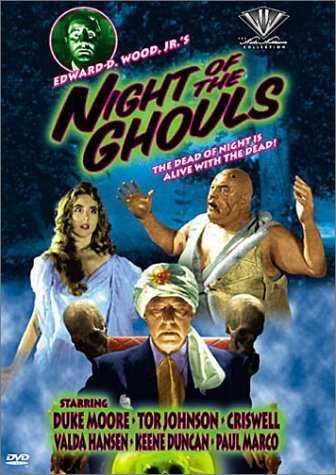
GhoulsdvdToday we celebrate Ed Wood’s 100th birthday with his sequel to Bride of the Monsters.  In Night of the Ghouls, con man Dr. Alcula (Kenne Duncan) moves into Bela Lugosi’s old mansion and pretends to talk to the dead.  What Alcula doesn’t realize is that the house is actually haunted (by Tor Johnson’s Lobo, among others) and real ghosts don’t appreciate pretend ghosts.

What can you say about a film like of Night of the Ghouls?  It’s an Ed Wood film, with all that suggests.  However, how can you resist a film that starts with Criswell sitting up in his coffin and providing commentary?

The role of Dr. Alcula was originally written for Bela Lugosi.  After Lugosi’s death, veteran actor and longtime Wood friend Kenne Duncan got the role instead.  Also of note, Wood appears twice in this film.  Not only does his picture appear on a wanted poster in the police station but Wood also plays one of the ghouls.