Doctor Who — Robot (1974-1975, directed by Christopher Barry)


Robot, the first serial of Doctor Who‘s 12th season, introduced us to a new Doctor.  The Third Doctor has regenerated and in his place is a slightly younger and more eccentric man.  Robot was the first regeneration story to introduce the idea of the Doctor being disorientated after regenerating.  The Fourth Doctor (Tom Baker) wakes up without the Third Doctor’s pressing concern for Earth or the goings-on at UNIT.  At first, at least, he has the wanderlust of the First Doctor without the Third Doctor’s sense of duty.  He wants to get in his TARDIS and explore the universe.

The only thing that stops him from leaving are his companion, Sarah jane Smith (Elisabeth Sladen), and the Brigadier (Nicholas Courtney).  When they tell him that there have been some technology thefts and that they need his help to investigate, the Doctor agrees to stick around and help out.  Of course, before he investigates, he changes his costume.  Out are the Edwardian clothes that the Third Doctor favored.  In are wide-brimmed hats, trenchcoats, and scarves.  Very, very long scarves.

(His scarf in Robot is nowhere near as long as it would eventually get.)

When he was cast as the Doctor, Tom Baker was a character actor who has found some success (even receiving a Golden Globe nomination for his performance as Rasputin in Nicholas and Alexandra) but not enough to give up his part-time job as a construction worker.  When he wrote to the BBC asking for a job, the letter was forwarded to Doctor Who producer Barry Letts.  Letts, who was struggling to find someone to replace the popular Jon Pertwee, hired Baker for the role after watching Baker play a villain in The Golden Voyage of Sinbad.  (There’s a movie I might have to review before the month is over.)  Tom Baker would go on to have the longest run of any actor as the Doctor and, for years, he was consistently voted the most popular of the actors who have played the Doctor.  That’s not bad for someone who, before receiving the role, was tauntingly called “Sir Laurence” by his co-workers at the construction site.

Tom Baker was also the first Doctor that many Americans experienced.  When I was a kid and my local PBS station first started showing Doctor Who, they started with the Tom Baker years.  For many American, Tom Baker was the one who introduced them to things like the TARDIS, Daleks, and Cybermen.  Tom Baker’s Doctor, with the scarf and the sneaky smile and the eccentric humor, became an iconic figure the world over.

Considering how important Tom Baker would be to the show, it’s interesting that his first serial is nothing special.  The thefts are the work of a group of humans who want to construct a robot out of “living metal” so that they can steal Britain’s nuclear command codes and hold the world hostage.  An attempt to shoot the robot with a disintegrator gun causes the robot grows to supersize.  It develops a crush on Sarah Jane, and is destroyed by an early computer virus.  The giant robot special effects rival the dinosaurs from Invasion of the Dinosaurs for ineptitude.  The episode ends with asking Sarah Jane and UNIT’s Dr. Harry Sullivan (Ian Marter) to accompany him on a trip in the TARDIS.

The only thing that really stands out about this episode is Tom Baker’s performance as the Doctor.  I hesitate to say that anyone was ever destined to play a role but Baker is so confident from the start and seems like such a natural while interacting with veteran cast members like Nicholas Courtney, Elisabeth Sladen, and John Levene that it’s hard to believe that anyone other than Tom Baker was ever considered for the role of The Fourth Doctor.  From the start, Tom Baker just seems like be belongs there.

Robot may not have been classic Doctor Who but Tom Baker was the classic Doctor.

The Saga of the Viking Women and Their Voyage to the Waters of the Great Sea Serpent (1958, directed by Roger Corman)


The Saga of the Viking Women and Their Voyage to the Waters of the Great Sea Serpent.  That’s the title of this one and it’s far too long for a 67-minute drive-in feature.  Maybe Roger Corman thought he could fool people into thinking the movie was better than it was by giving it a pompous sounding title.

A group of Viking men leave on a voyage and never come back.  After waiting nearly a year, the remaining Viking women vote to set sail and look for them.  Leading them is Desir (Abby Dalton) and she even welcomes the bad-tempted Enger (Susan Cabot) onto their boat.  The last remaining male Viking, Ottar (Jonathan Haze), also joins the quest.

The Viking women (and Ottar) have barely set sail when a “giant” sea serpent rises out of the water and strands them on an island.  The Viking women discover that their men are being held prisoner on the island.  Even if they can rescue their men from King Stark (Richard Devon), the sea serpent still waits for them to try to return.

The Saga of the Viking Women and yadda yadda yadda is a remarkably cheap-looking epic.  A major film about the Vikings was scheduled to be released by United Artists and Corman, determined to get his movie into theaters first, shot the film in ten days and for $65,000.  Irving Block and Jack Rabin, two special effects experts, promised Corman an amazing sea serpent and instead delivered what appeared to be a water-proof puppet.  The Sea Serpent only appears in two scenes and Corman doesn’t allow us a very good view of it.  It looks like something you could have picked up at Toys ‘R Us back in the day.

There’s nothing convincing about the movie, from the costumes to the combat to the serpent.  This was one of Roger Corman’s early misfires though, released on a double bill with the Astounding She-Monster, it still made money.  People love Vikings.


October True Crime: Manson: Summer of Blood (dir by Brad Osborne)


Charles Manson was a bore.

That was one of the first thoughts I had while watching 2024’s Manson: Summer of Blood.  The film opens with Charles Manson (Wes Gillum) sitting in a prison cell, with his long scraggly hair and his gray beard.  (Actor Wes Gillum doesn’t really look like Manson but he does possess a certain resemblance to Josh Brolin.)  Manson is being interviewed about his crimes by an almost unnaturally calm man named Jacob Cohen (Joseph Boehm).

Manson goes through the usual facts of his early life.  He talks about not knowing who his father was.  He talks about spending the majority of his life in prison.  Even before he became famous as the leader of the Family, Manson was a career criminal.  Manson talks about trying to pursue a musical career in Los Angeles.  He kisses Dennis Wilson’s feet.  He gets angry when he feels that record producer Terry Melcher (Chad Bozarth) cheated him out of a record deal.  He talks about picking up hitchhikers and making them a part of the Family.  And, as he speaks, he uses all of the familiar phrases.  He talks about how the members of the Family are “your children.”  Blah blah blah blah.

For all the attention that Charles Manson was given over the course of his life, he was essentially a third-rate intellect who picked up a few key phrases in the 50s and 60s and repeated them ad nauseum.  Manson’s words and justifications meant nothing but, because he said them so often and they were slightly more poetic than the usual career criminal blathering, there were people got into their heads that Manson was some sort of rebel philosopher.  The truth of the matter was that the only people dumber than Manson were the ones who decided to live with him at Spahn Ranch.

Unfortunately, dumb people can still hurt people.  That was certainly the case with Charles Manson.  The film depicts the murders of Gary Hinman, Sharon Tate, Jay Sebring, Abigail Folger, Voytek Frykowski, and, to a lesser extent, Leno and Rosemary LaBianca.  It’s difficult to watch and that’s the way it should be.  I remember, when Once Upon A Time In Hollywood came out, there were a lot of people who objected to Rick Dalton setting “Sadie” on fire in his pool.  If those people knew even the slightest details of what Sadie — real name: Susan Atkins — actually did and said to Sharon Tate and her unborn child, they would understand why she got exactly what she deserved in Tarantino’s reimagining of that terrible night.

As for Manson: Summer of Blood, my initial reaction while I was watching it was that it was another movie that exploited a real life tragedy.  I found myself wondering why we should care what Charles Manson had to say about himself and his crimes.  But that was before the final ten minutes of the film.  The final ten minutes of the film features a wonderful twist, one that truly gave that old bore Manson the ending that he deserved.  I’m still not sure that we needed another film about Charles Manson and his crimes but I do know it would be nice if most serial killer films ended the same way was Manson: Summer of Blood.

4 Shots From 4 Horror Films: 1940s Part 2


This October, I’m going to be doing something a little bit different with my contribution to 4 Shots From 4 Films.  I’m going to be taking a little chronological tour of the history of horror cinema, moving from decade to decade.

Today, we continue our look at the 1940s.

4 Shots From 4 Horror Films

House of Frankenstein (1944, dir by Erle C. Kenton)

House of Frankenstein (1944, dir by Erle C. Kenton)

The Uninvited (1944, dir by Lewis Allen)

The Uninvited (1944, dir by Lewis Allen)

House of Dracula (1945, dir by Erle C. Kenton)

House of Dracula (1945, dir by Erle C. Kenton)

The Picture of Dorian Gray (1945, dir by Albert Lewin)

The Picture of Dorian Gray (1945, dir by Albert Lewin)

Horror Film Review: Eegah! (dir by Arch Hall, Sr.)


First released in 1962, Eegah! has a reputation for being one of the worst films ever made.

Usually, whenever I come across a film with that type of reputation, my natural instinct is to be a contrarian and to argue that the film is not so much bad as its just misunderstood.  I can’t really do that with Eegah!  Eegah! is a legitimately bad movie, though I don’t know if I’d call it one of the worst.  It’s a low budget vanity project and, quite frankly, I think snarkiness is better directed at big budget vanity projects.  Eegah! is bad but it’s also bad enough to be entertaining in a train wreck sort of way and there’s something to be said for that.

While driving at night, 30 year-old teenager Roxy Miller (Marilyn Miller) runs over Eegah (Richard Kiel), a giant caveman who has somehow gone unnoticed up until that moment.  Eegah runs off into the desert.  Roxy tells her boyfriend, Tom (Arch Hall, Jr.) and Tom’s father, Robert (Arch Hall, Sr., who also directed) about her encounter.  While Tom plays his guitar and sings a sappy ballad, Robert goes into the desert in search of Eegah.  When Robert doesn’t return, Tom and Roxy grab a dune buddy and head into the desert.

Roxy finds Eegah and Robert first.  Eegah grabs Roxy and takes her to a nearby cave, where Robert is waiting for them.  Eegah can’t speak and does most of his communication by swinging around a club and being a bit too handsy.  (There’s one painting on the wall of his cave but it’s not very good.)  Eegah, despite his fearsome appearance, seems to actually be pretty amiable.  But then he falls in love with Roxy and becomes rather possessive.  When Roxy gives Robert a shave, the bearded Eegah demands a shave as well.  He’s fairly handsome without the beard but still, it’s hard not to get grossed out by the way he tries to lick up the thick shaving cream that’s covering his face.

Eventually, Tom rescues Roxy and Robert and not a minute too soon!  There’s a party in town and Tom and his band are scheduled to play!  Eegah, upset that Roxy has left him, picks up his club, puts on his best animal skin, and heads into town on a rampage!

Eegah (and, yes, I’m dropping the exclamation point) was produced and directed by Arch Hall, Sr.  (He receives a story credit as well.)  It was actually one of many movies that Hall Sr. made, all in an effort to make his son into a film star.  In Eegah, Arch Hall, Jr. performs two songs and dances with Roxy.  The film positions him as a teen idol but Hall, Jr. doesn’t seem to be particularly comfortable with the role.  Of course, it doesn’t help that he’s working with an absolutely terrible script.

I do, however, appreciate the performance of Richard Kiel as Eegah.  Kiel does the best that anyone could with the role, playing him as being  giant who simply doesn’t understand that you can’t walk around with the a club in public without someone calling the police.  Poor Eegah!  He doesn’t even know what the police are.

Eegah! (yeah, I’ll return it’s exclamation point for the next-to-last paragraph) is a film that is so ineptly done and poorly written that it becomes rather fascinating to watch.  It’s boring only if you’re the type who can’t appreciate terrible dialogue, terrible camera placement, and the type of acting that can only be found in a film that was directed, produced, and essentially written by one guy trying to make his reluctant son into a star.

Arch Hall, Jr. was far less interested in being a star and instead became a pilot and pursued his love of flying.  As for Richard Kiel, he went on to play Jaws, one the greatest of the James Bond henchmen.

Horror On The Lens: Plan 9 From Outer Space (dir by Edward D. Wood, Jr.)


Today, we pay respect to Edward D. Wood, Jr. on the date of his birth.  He was born 101 years ago today.

Some films need no introduction and that’s certainly the case with Wood’s 1957 masterpiece, Plan 9 From Outer Space.

Plan 9 is a film like no other, a film that mixes UFOs with zombies and which ends with a rather sincere plea for world peace.  When Eros the Alien explains that the Solarnite bomb could destroy the entire universe, the film’s hero, airline pilot Jeff, doesn’t point out that Eros’s logic doesn’t make sense.  Instead, he just says that he’s glad that America is the one that has the bomb.  “You’re stupid!  Stupid minds!” Eros shouts before Jeff flattens him with one punch.  Go Jeff!  Don’t take any backtalk from that judgmental alien!

From Criswell’s introduction to Tor Johnson’s rise from the dead to Lyle Talbot casually standing with his hands in his pockets while a UFO explodes above him, Plan 9 is a true classic of some sort.

Can you prove it didn’t happen?

6 Edward D. Wood Jr. Trailers For Horrorthon


Since today would have been the 101st birthday of director Edward D. Wood, Jr., it seems appropriate to dedicate this week’s edition of Lisa Marie’s Favorite Grindhouse Trailers to him!

Below …. can you handle six trailers for six Ed Wood films!?

Watch, if you dare!

  1. Glen or Glenda (1953)

2. Jail Bait (1954)

3. Bride of the Monster (1955)

4. Plan 9 From Outer Space (1957)

5. Night of the Ghouls (1958)

6. The Sinister Urge (1960)

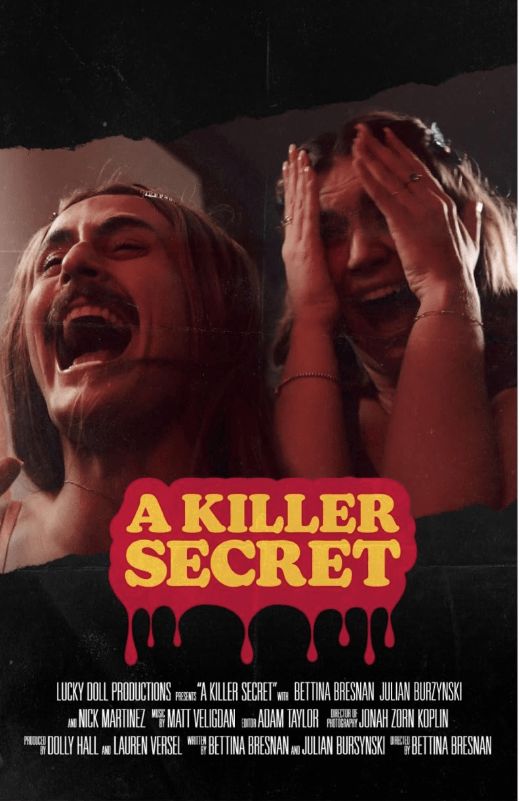
A Killer Secret, Short Film Review by Case Wright


A girl and her gay friend are watching cheesy scary movies together. He reminded me of my sister’s gay best friend in college. It’ll be difficult for me to hate this because of pleasant nostalgia; so again, my fingers are crossed.

They get a threatening phone call and run panicked through the house. They hide in the bathroom tub and begin confessing the worst things that they did to each other. Then, it turns out they were not being stalked.
What worked? I liked the camera work. The plot was good and it had a clear storyline and resolution. It’s not the greatest short that I have ever seen, but it was entertaining.
What didn’t work? I didn’t get the costume change at the end, but it was … fine. See it below!

20 Horror Movies For The Weekend (10/10/25)


It’s time for another round of movie recommendations for the Halloween season!

Universal Horror On Prime

It’s the Halloween season and I am happy to say that Prime has a few classic, old school horror films.  I know that they probably take some getting used to for modern audiences but I personally love the old horror movie.

Dracula (1931), for instance, has a reputation for being rather stagey and that reputation is actually justified.  It was based less on Bram Stoker’s classic novel and more on the subsequent stage play.  That said, years of bad imitations have not diminished the strength of Bela Lugosi’s performance as Dracula.  Though this film is, understandably, dominated by Lugosi, I’ve always appreciated the performances of Dwight Frye and Edward Van Sloan as well.  Dracula is on Prime.

Frankenstein (1932) also features Edward Van Sloan and Dwight Frye, along with Mae Clarke as Elizabeth, Colin Clive as Henry Frankenstein, and Boris Karloff as the Monster.  Nowhere near as campy as its reputation would seem to suggest, Frankenstein is actually a thoughtful and rather sad horror film.  Karloff’s performance as the Monster has never been equaled and the scene where he unknowingly tosses the little girl in the lake to see if she will float is a classic moment of Universal horror.  Frankenstein is on Prime.

Needless to say, any viewing of Frankenstein should be immediately be followed by the second part of the story, Bride of Frankenstein (1935).  Bride of Frankenstein opens with Elsa Lanchester (as Mary Shelley) revealing that there is more to her story than revealed in the first film.  Lanchester returns towards the end of the film, playing the title character.  Her reaction to being brought to life is heart-breaking.  Boris Karloff is even better in this film than he was in the first one.  Of the old Universal horror films, this is the best.  It can be viewed on Prime.

The Invisible Man (1933) is often overlooked when it comes to discussing the classic Universal horror films but I’ve always enjoyed.  The special effects are effective to this day and Claude Rains gives an excellent performance as the title character.  The Invisible Man can be viewed on Prime.

Finally, I have to mention one of my personal favorites.  Creature From The Black Lagoon (1953) may have come out 20 years after the first wave of Universal horror films but it’s still an undeniable classic.  The scenes of the Creature and Julia Adams swimming underwater are like a surreal and beautiful ballet.  The Creature itself remains one of the best of Universal’s monsters.  It can be viewed on Prime.  (We’ll be watching it tomorrow for #ScarySocial!)

British Horror Online

In the 1950s, Britain’s Hammer Studios made their own version of the classic horror tales.  Hammer’s films were in color and featured a combination of blood and cleavage that made them very popular with audiences in both the U.K. and the U.S.  Even more importantly, they featured actors like Peter Cushing and Christopher Lee.

Curse of Frankenstein (1957) featured Peter Cushing as the Baron and Christopher Lee as the monster.  If the first Frankenstein presented the scientist as being misguided but ultimately well-intentioned, the Hammer version presents Baron von Frankenstein as being a man who is all-too eager to play God, mostly for the sake of his own ego.  Lee is an effective Monster but the true monster here is Cushing’s mad scientist.  Curse of Frankenstein can be viewed on Tubi.

Horror of Dracula (1958) was the first of many Hammer films to feature Christopher Lee as Dracula and Peter Cushing as Van Helsing.  (Somewhat sweetly, the two actors were best friends off-screen.)  Lee eventually grew bored with the Hammer Dracula films but, in the first one, he gives an intense and almost feral performance as the blood-thirsty vampire.  I’ve always preferred Cushing’s kindly Van Helsing to his cruel Frankenstein.  Horror of Dracula can be viewed on Tubi.

Hammer was not the only British studio creating memorable horror films.  Amicus Productions was responsible for some classic films of their own.  One of my favorites is Scream and Scream Again (1970), which manages to be a horror film, a science fiction film, and a conspiracy thriller all in one.  Christopher Lee and Peter Cushing appear in small roles while Vincent Price plays the scientist at the heart of the thriller.  The late Michael Gothard plays a killer who, when handcuffed to a car, simply rips off his hand in order to make his escape.  Scream and Scream Again can be viewed on Tubi.

In Death Line (1972), Donald Pleasence gives one of his best performances as an alcoholic cop who is investigating a series of disappearances in London’s underground.  Hugh Armstrong plays the rather pathetic cannibal who is only capable of saying, “Mind the gap….” Christopher Lee has a cameo.  Death Line can be viewed on Prime.

Finally, I have to recommend something from the underrated director Pete Walker.  The Flesh and Blood Show (1972) is a fun and macabre little horror story about actors rehearsing a play in an isolated theater.  Needless to say, they aren’t alone.  It can be viewed on Tubi.

Italian Horror Online

With this upcoming Monday being Columbus Day, here are some Italian horror recommendations.

Of course, any discussion Italian horror has to start with Mario Bava.  Black Sabbath (1963) is one of Bava’s best films, an anthology film that features three classic tales.  Boris Karloff appears in the second story, playing a patriarch who has been transformed into a vampire.  All three of the stories are wonderfully scary and entertaining and they all reveal Bava as a true master of horror.  Black Sabbath can be viewed on Tubi.

Baron Blood (1972) deals with a mansion, a curse, and an ancient evil.  The great Joseph Cotten stars.  Remember that story about the hole in Russia from which you could supposedly hear the screams of the people in Hell?  The “screams’ were even recorded.  It was later determined that the screams in question had been lifted from this very film.  Baron Blood can be viewed on Tubi.

Mario Bava’s Lisa and the Devil (1973) is a surreal mix of giallo mystery and demonic horror.  Elke Sommer plays Lisa (hey!) who finds herself stranded in a mansion and experiencing what may or may not be a dream.  Telly Savalas plays the mysterious Leandro, who may or may not be the other title character.  The film can be viewed on Tubi.

Bava’s final film as a director was 1977’s Shock, a brilliant and frightening ghost story starring Daria Nicolodi and John Steiner.  Nicolodi gives an intense and riveting performance as a mental fragile woman who may or may not be haunted by her ex-lover’s ghost.  The hallway scene is horrifying.  It can be viewed on Tubi.

Mario Bava’s son, Lamberto Bava, has gone on to have a directorial career of his own.  He is perhaps best-known for directing the Dario Argento-produced Demons (1985), in which the audience of horror movie is transformed into a collection of blood-thirsty demons.  It’s a wonderfully over-the-top horror film and it can be viewed on Tubi.

Lamberto Bava also directed A Blade In The Dark (1983), an excellent giallo about a film composer who is on a deadline but still finds time to get caught up in the brutal murders that all seem to be occurring around his duplex.  This was one of the first giallo films that I ever saw and I was pretty much hooked from the beginning.  The murder scene that takes place over the sink still freaks me out.  It can be viewed on Tubi.

Finally, I have to recommend a few films from Lucio Fulci, the genius who was responsible for some of the most visually stunning (albeit narratively incoherent) Italian horror films of all time.

First off, any discussion of Fulci’s horror work has to start with Zombi 2 (1979).  Though the film was sold as being a “sequel” to Dawn of the Dead, Zombi 2 is actually a separate story and a horror classic in its own right.  As opposed to the gray-skinned members of the undead that populated Romero’s films, Fulci’s zombies truly do look as if they’ve spent the last decade buried underground and they attack with a disturbing relentlessness.  One zombie battles a shark underwater.  A conquistador zombie digs its way out of the ground, in a scene that is actually shown from the zombie’s point of view!  The final scene is a classic and was apparently shot without bothering to get any permits ahead of time.  Zombi 2 is on Tubi.

Finally, any discussion of Fulci has to include his masterwork, The Beyond trilogy.  These three films, which are loosely-connected, are about as surreal and dream-like as they come, as narrative coherence is sacrificed for nightmarish visuals that truly do stick with the viewer.

In the first part of the trilogy, City of the Living Dead (1980), Christopher George and Catriona MacColl visit a small New England town where a priest’s suicide has opened a portal to Hell.  The great Giovanni Lombardo Radice makes his film debut as Bob the Pervert, who has a bad experience with a drill to the head but who still returns to get a measure of revenge.  City of the Living Dead can be viewed on Pluto TV.

The second part of the trilogy, The Beyond (1981), takes place in New Orleans.  Catriona MacColl plays a different character here, a woman trying to reopen a hotel where, decades ago, a painter was lynched.  The charming David Warbeck plays a doctor who has to deal with the dead coming back to life.  Cinzia Monreale plays the beautiful, blind, and enigmatic Emily.  The Beyond is about as close as the Italian horror industry ever got to capturing the feel of classic H.P. Lovecraft story.  The ending will stick with you.  It can be viewed on Tubi.

Finally, The House By The Cemetery (1981) features Catriona MacColl as yet another new character.  This time, she and her husband and their son move into a house in New England, little realizing that the house’s previous inhabitant, Dr. Fruedstein, is still in the basement.  This bloody film was apparently Fulci’s biggest hit in the States.  Dr. Fruedstein is a terrifying creation and the film ends on a note of haunting ambiguity.  This film can be viewed on Tubi.

That’s all I have room for in this entry but I imagine I’ll be writing about a lot more about Italian horror as the month progresses!

Click here for last week’s recommendations.