Cleaning out the DVR: Anna to the Infinite Power (dir by Robert Wiemer)


Curious film, this one.

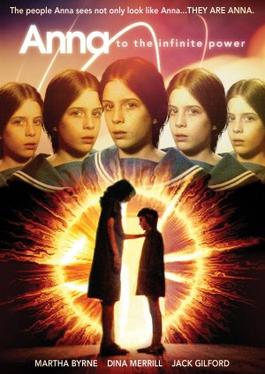
In this 1983 film (which was based on a book), Anna Hart (played by Martha Byrne, a child actress who later grew up to star on a few soap operas) is a 12 year-old musical prodigy who has a hard time fitting in with normal children. She suffers from frequent headaches, especially whenever she’s near an open flame. She loses her temper quickly. She has disturbing nightmares about World War II, an event that occurred long before she was even born. Perhaps most alarmingly, she’s a compulsive shoplifter.  (Admittedly, when I was in high school, it was rare that I paid for all of the makeup that I slipped into my purse whenever I skipped school at Target.  But, then again, I was kind of a brat….) When a music teacher named Michaela DuPont (Donna Mitchell) moves in next door, she takes a curiously intense interest in Anna. She starts to give Anna lessons

Anna just happens to see a story on the news about another 12 year-old musical prodigy. She’s named Anna Smithson and, like Anna Hart, she’s the daughter of a musician and a scientist. Anna Smithson also just happens to look just like Anna Hart!

Can we say cloning?

It turns out that Anna Hart is one of five Annas, a part of an experiment to clone Anna Zimmerman. Anna Zimmerman was a musical prodigy who spent her childhood in a Nazi concentration camp and who died in a mysterious fire 20 years earlier. All five of the Annas are being raised by similar families and under similar circumstances, all in an attempt to bring Anna Zimmerman back to life. Shocked by the news, Anna struggles to figure out who she is — is she Anna Hart or is destined to grow up to be Anna Zimmerman? And, if she decides that she wants to live her own life, will she allowed to do so? How far will the scientist who cloned Anna go to protect their secrets?  And why was Anna cloned to begin with?

Anna To The Infinite Power is an odd little film. It has got more than enough conspiracies and traumatic flashbacks to qualify as a hybrid of the horror and science fiction genres but it’s also a rather unconventional coming-of-age story. Anna has to decide whether or not she’s okay with the idea of her entire life having been plotted out for her. Can Anna escape destiny?  Even if she can escape it, should she do it? It is an intriguing question and the film’s intelligent script quickly grabs your interest.

Unfortunately, the film’s direction is not as strong as the script. Visually, Anna to the Infinite Power has a bland and rather flat look. It would be easy to mistake it for a special, extended episode of an 80s television show.  (In fact, I assumed that the movie was a pilot until I looked it up on the imdb.) Still, Martha Byrne is sympathetic as the multiple Annas while character actor Jack Gilford does a good job as the scientist responsible for the experiment. It’s an intriguing film and one to keep an eye out for.
Music Video of the Day: Don’t Cry by Guns ‘N Roses (1991, directed by Andy Morohan)


This is the video where Slash murders his girlfriend and then laughs about it.

Sure, there’s a lot of things that could be said about this video.  It’s the first part of an unofficial trilogy of videos in which Axl Rose struggles to come to terms with the loss of his girlfriend (who, in the video, is played by Stephanie Seymour).  Axl said that the scene with the gun was inspired by something that actually occurred between him and his ex-wife, Erin Everly.  Everyone remembers the scene where the three Axls confront each other and also the epic girl fight at the piano bar.  This video is also remembered for the sign reading, “Where’s Izzy?”  Izzy Stradlin felt that the music videos were a waste of money and declined to show up on the day of filming.  He would soon leave Guns N’ Roses.

But, in the end, this will always be the video where Slash drives over a cliff.  As the guitar solo proves, Slash managed to get out of the car but apparently, his girlfriend wasn’t so lucky.  It’s a weird scene but it’s also a fair portrayal as to how many people viewed Slash and Axl Rose within the context of Guns N’ Roses.  Axl was the frontman who could sing everything but who also wore his vulnerability and instability on his sleeve for all the world to see.  Slash was rock ‘n’ roll.  Nothing got to him as long as he could keep on playing.

The older I get, the more I appreciate Guns N’ Roses.  Say what you will about the self-indulgent nature of some of their albums and videos, Axl can sing and Slash can sure as Hell play.

Enjoy!

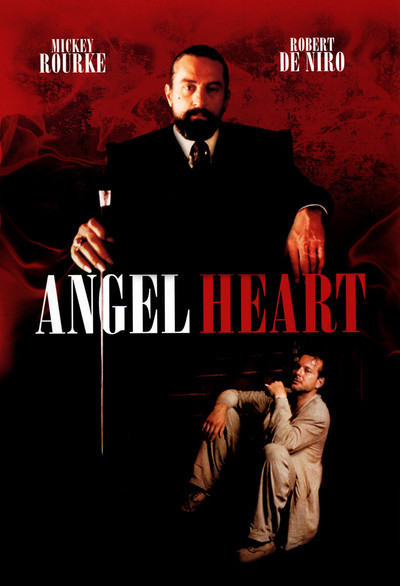
Horror Film Review: Angel Heart (dir by Alan Parker)


First released in 1987 and set in 1955, Angel Heart tells the story of Harry Angel (Mickey Rourke).

With a name like Harry Angel, it’s perhaps not surprising that Harry is a private investigator.  Harry operates out of New York.  He’s got a shabby apartment.  He wears wrinkled clothes.  He rarely shaves.  He smokes almost constantly.  (In a rare moment of comedy, the camera catches Harry blithely emptying a full ashtray in the middle of the street.)  Harry looks like he reeks of tobacco, beer, sweat, and lost dreams.  And yet, it’s difficult not to like Harry.  He’s got a charming smile, even if his face is often bruised from his latest beating.  He speaks in a low whisper and it’s hard not to get the feeling that Harry is actually kind of shy.  He’s incredibly sleazy but there’s something about him that just makes the viewer want to take care of him.

Harry is hired by a mysterious man named Louis Cyphere (Robert De Niro, cheerfully overacting).  Louis wants Harry to track down a singer named Johnny Favor.  As Cyphere explains it, he did a favor for Johnny and Johnny has yet to pay Cyphere what he owes.  Johnny has been suffering from PTSD ever since he served in World War II.  When last seen, Johnny was receiving electroshock treatment in an upstate hospital.

Harry’s search for Johnny leads him into an increasingly complex and disturbing conspiracy.  He meets a doctor who is addicted to morphine and, when the doctor turns up dead, Harry coolly uses the dead man’s shoe to light his match.  Eventually, Harry’s investigation leads him to New Orleans, where he meets both Johnny’s wife (Charlotte Rampling) and Johnny’s unacknowledged daughter, Epiphany (Lisa Bonet).  As Harry searches for Johnny, he deals with strange visions of his own mysterious past.  He sees himself wandering around Times Square shortly after the attack on Pearl Harbor.  Harry also finds himself having to deal with the fact that almost everyone that he talks to ends up being brutally murdered.  Every time that Harry tries to quit the case, Cyphere offers him more money.  (Cyphere tends to show up whenever Harry finds himself on the verge of abandoning his search.)

Angel Heart moves at its own deliberate pace.  In fact, the first hour can feel a bit slow but that first hour definitely pays off during the second half of the film.  By the time that Harry starts to truly uncover what has happened to Johnny, the audience actually cares about Harry and is actually worried about what’s going to happen to him when he reaches the end of the case.  Mickey Rourke was (and is) an eccentric actor but he’s at his most effective in Angel Heart.  A lesser actor would have just played Harry as being a typical hardboiled detective.  Rourke plays Harry as being a lost soul, a vulnerable man who is often as confused and scared as the people that he’s looking for.  By the end of the film, Harry realizes that the answer to the mystery was right in front of them and his look of despair is surprisingly powerful.  If De Niro gives a good performance that is almost totally on the surface, Rourke gives the type of performance that allows the audience to explore what’s going on beneath the surface of a character who many would initially view as being a cliché.  Mickey Rourke’s Harry Angel is right up there with Bogart’s Sam Spade and Jack Nicholson’s Jake Gittes.  He’s a familiar character who also seems to be a human being.

Full of sex, violence, and increasingly disturbing imagery, Angel Heart is not for everyone.  Alan Parker’s direction emphasizes the darkness of Harry’s world and the bleakness of his situation.  The film ends with a twist that may not be totally unexpected but which is still undeniably disturbing.  The more you think about it, the most disturbing it gets.  Angel Heart is an atmospheric and intelligent chiller.  It’s existential horror at its most nightmarish.

AMV Of the Day: Another (Scary Song)


Halloween is almost here!  And to celebrate, here is an AMV Of The Day!

Anime: Another

Song: Scary Song (by Nightcore)

Creator: Animemixedit (please subscribe to this creator’s channel)

Past AMVs of the Day

Horror on TV: Halloween Is Grinch Night (dir by Gerard Baldwin)


So, we all know that the Grinch once tried to steal to Christmas and then his heart grew a few sizes but did you know that apparently, the Grinch also tried to steal Halloween?

Until a few years ago, I did not.  I was going through YouTube, searching for horror films that I could share here on the Shattered Lens, and guess what I came across?

A TV special from 1977 entitled Halloween is Grinch Night!

Unlike How The Grinch Stole Christmas, Halloween is Grinch Night apparently never became a holiday classic.  Perhaps that’s because Halloween is Grinch Night is not exactly the most heart-warming of holiday specials.  Whereas How The Grinch Stole Christmas tells us about how the Grinch learned the true meaning of Christmas, Halloween is Grinch Night gives us a Grinch who has no redeeming features.  There is no hope for this Grinch.  This Grinch will steal your soul and probably drink your blood.  This Grinch is pure Grinchy evil.

This is the Grinch of our nightmares.

Check out Halloween is Grinch Night below and hope the Grinch doesn’t capture you this Halloween….

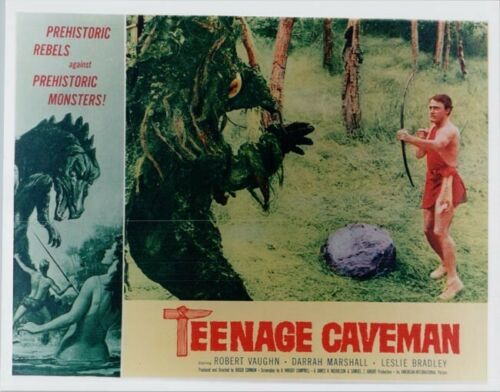
The TSL’s Horror Grindhouse: Teenage Caveman (dir by Roger Corman)


Who is the Teenage Caveman?

Believe it or not, he’s Robert Vaughn.  Vaughn, who would later go on to appear in The Magnificent Seven, The Man From UNCLE, Bullitt, The Towering Inferno, and Hustle, was 26 years old when he played a nameless caveman in Roger Corman’s 1958 film, Teenage Caveman.  At the age of 26, Vaughn looked like he was closer to 35 and he certainly didn’t resemble a teenager.  Despite wearing a loin cloth, he also didn’t appear to be a caveman.  If he was a caveman than he was certainly a well-groomed caveman and perhaps the only caveman to understand how to use hairspray.  Seriously, his hair is perfect in this film.

As for the film itself, it’s about a primitive tribe of people who live in a rocky wasteland.  However, just across the river, there’s a land that’s full of plants and animals.  It would obviously be a much better place to live and Vaughn’s teenage caveman is totally annoyed that the older folks on the tribe refuse to cross the river.  They claim that a monster lives in the river and that it will kill anyone who tries to cross.  Being a rebellious teenager, Vaughn decides to cross the river anyway.  He convinces a group of friends to go with him.  When they reach the river, they meet and fight the monster and they also discover that the monster was doing more than just guarding the river.  It all leads to a plot twist that feels as if it was added at the last possible second.

In a later interview, Robert Vaughn referred to Teenage Caveman as being the worst film in which he ever appeared.  He went on to suggest that it was the worst film ever made.  Those are bold words coming from someone who appeared in as many bad films as Robert Vaughn did.  That said, I do think that Vaughn was being a bit too hard on Teenage Caveman.  For what it is — an extremely low-budget film that barely runs over an hour — Teenage Caveman is entertaining if you’re in the right mood for it.  It’s hard not to smile at the cavepeople, with their modern haircuts and their very American accents.  As well, the film features the same stock footage of dinosaurs fighting that appeared in countless other B-movies of the time and, again, it’s hard not to smile at the actors valiantly trying to pretend that there are dinosaurs fighting just a few feet away from them.  And while that final plot twist may come out of nowhere, it’s just random enough to be interesting.  Worst film of all time?  With all respect to the teenage caveman, I have to disagree.  It’s a B-movie and, if you enjoy B-movies, you’ll enjoy this one.  And let’s give some credit to Robert Vaughn.  He gives an earnest performance, even though he later said that he felt foolish every time he stepped out on the set.  Add to that, his hair is perfect.

Claws (1977, directed by Richard Bansbach and Robert E. Pearson)


After a group of hunters wound a grizzly bear in Alaska, the bear mauls a logger named Jason Monroe (Jason Evers).  Both the bear and Jason survive their initial meeting.  For the next six years, the bear attacks people in the woods and Jason tries to move on from his experience.  The indigenous people call the grizzly, “Satan Bear” and it seems like no one can stop it.  But when Satan Bear dares to attack a group of boy scouts (including Jason’s son), Jason decides that it’s time to enter the woods and track down the bear.

Claws is like Jaws except the monster has claws.  Actually, despite the similarity of their names, Claws isn’t really a rip-off of Jaws as much as it’s a rip-off of Grizzly, which was a rip-off of JawsClaws is a rip-off of a rip-off, complete with the all the usual characters who appear in revenge of nature films.  Jason is the grizzled hunter.  There’s an idealistic college student who knows all about bears.  There’s a wise old native man who talks about spirit animals.  What sets Claws apart from both Jaws and Grizzly is its heavy use of badly tinted stock footage and all of the flashbacks.  The movie starts with a group of hunters shooting at two bears but it’s obvious that the actors playing the hunters were nowhere near the two bears that are featured in the stock footage.  The flashbacks are used to fill in everyone’s backstory but none of them have anything to do with the bear so I’m not sure what the point of them was supposed to be.  The movie would not be exciting even if it only focused on the bear attacks but adding all those dull flashbacks transforms Claws from being merely mediocre to a real challenge to sit through.

Claws was a flop when it was first released but, a year later, it found success when it was rereleased and retitled Grizzly 2.  I guess the film’s distributor figured that they should just go ahead and admit it.

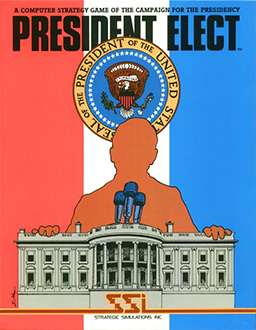
President Elect: Nixon vs Frankenstein’s Monster


Yesterday, I used the old President Elect simulator to determine who would win a presidential election between Frankenstein’s Monster, Dracula, and The Mummy.  Dracula crushed both of his opponents, mostly because neither Frankenstein nor The Mummy could really speak.

Today, I decided to see if Frankenstein’s Monster would have had better luck if the Democrats had nominated him to run against Richard M. Nixon in 1960.  In the real world, John F. Kennedy narrowly defeated Nixon, despite the popularity of Dwight Eisenhower.  (Kennedy had some extra help in Illinois.)  Nixon had the experience and the depth of policy knowledge but Kennedy had the charisma that Nixon lacked.  After logging into President Elect, I imagined a situation in which the Democrats of 1960 turned not to Kennedy but to Frankenstein’s Monster.  Just as he had with Dracula, I imagined that Frankenstein would run on a largely non-partisan platform that put strong emphasis on fire prevention.  As well, I had to give Frankenstein low scores on his speaking ability and his ability to stay cool under pressure.  But he did get a high personal magnetism score because people have been interested in him for over 200 years.  Would that be enough to beat the similarly challenged Nixon?

No, it would not.

Just as with the campaign against Dracula, it was obvious who was going to win from the start.  Frankenstein’s Monster barely campaigned and, unlike Kennedy, he refused to debate Nixon.

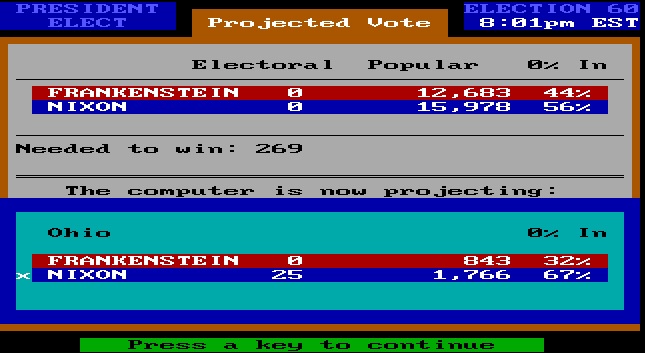
On election night, the first result told the story.

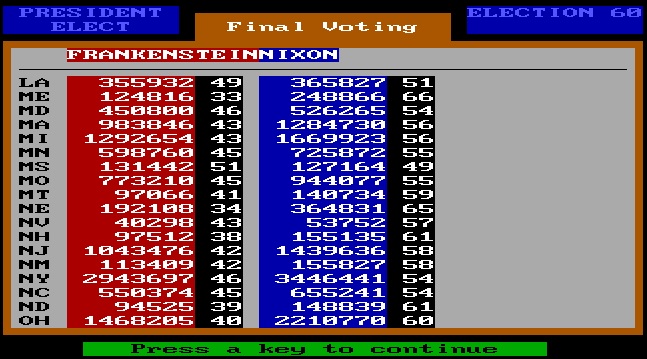
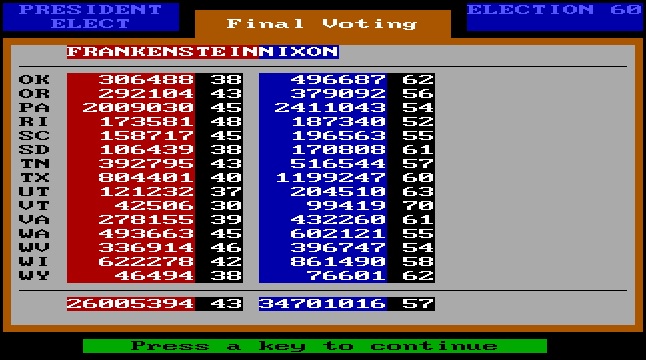
The good news is that, unlike when he ran against Dracula, Frankenstein’s Monster actually did manage carry a state.  In fact, he carried two.  He won both Mississippi and Georgia, receiving 51% of the vote in both.  Every other state, he lost to Nixon.

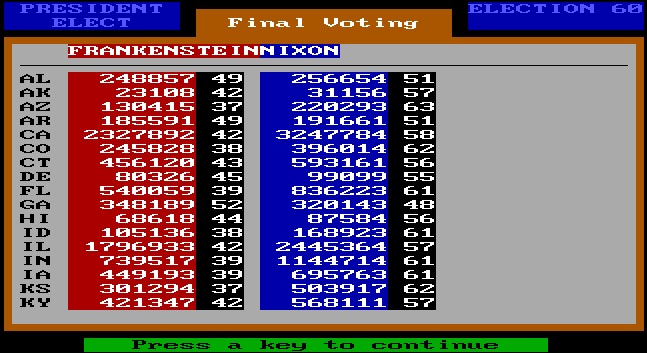
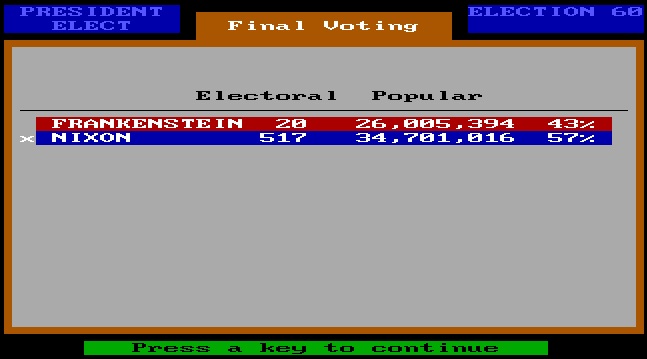
The final vote tally:

Managing to win 43% of the vote while being unable to speak or be around fire is actually pretty impressive.  But Frankenstein’s Monster still could not beat Richard Nixon.

Book Review: Truth or Dare by R.L. Stine


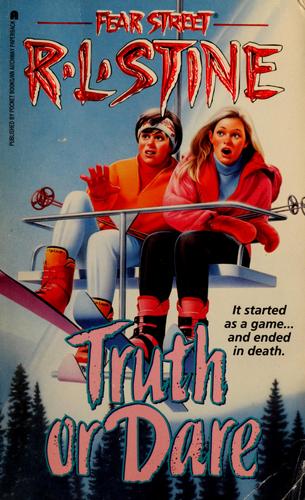
In this 1995 book from R.L. Stine, a group of wealthy teenagers decide to take a vacation from Fear Street and Shadyside High.  They decide to spend the weekend skiing but, once they reach their mountain lodge, they end up getting hit by a blizzard.  They’re going to be trapped inside for a day or two.  Because the storm took out all the phone lines (and since this book is from the age when everyone was dependent on a landline), they are cut off from the world.  If anything bad happens in the cabin, there will be no way to get help.  If anyone is driven to kill someone else, there will be no way to call the police.

Now, if I was in that situation, I would probably try to pass the time in the safest and least dramatic way possible.  I mean, if you’re going to be stuck with a group of people for a day or two, you should probably try not to do anything that could cause anyone to lose their temper.  The best thing to do is try to have fun and not obsess on the situation.  However, since this is an R.L. Stine book, everyone decides to play Truth or Dare.

Great idea!  Nothing bad has ever happened as a result of playing Truth or Dare!

Though I played it a few times and I always managed to survive, Truth or Dare is still a strange game to me.  First off, why wouldn’t you just automatically take the dare?  But, beyond that, there’s this weird assumption that everyone is just automatically obligated to follow the rules of Truth or Dare, even if it means hurting someone.  Inevitably, anyone playing Truth or Dare is going to have at least one deep dark secret that they are going to get asked about, something like: “Did you cheat on your partner?”  And instead of just saying, “No,” even if the answer is “Yes,” they always reply, “I’ll take a dare instead.”  Well, just the fact that you took a dare at that point is pretty much the same thing as answering yes.  There’s really no way to win this game, other than to lie whenever you’re asked a question that could potentially lead to you being murdered.  But that would mean breaking the rules of Truth or Dare!  It would apparently be better to die.  I guess it’s all about ethics.

Anyway, not surprisingly, the game of Truth or  Dare does lead to someone being murdered.  They get a hatchet in the back and the killer leaves it there to be discovered by the rest of the group.  AGCK!  This killer isn’t messing around.  Anyway, you can probably guess where all this leads.  The initial suspect looks guilty but is actually innocent.  The killer is the person that most people would least expect.  Stine mentions that chair lift enough times that you just know it’s going to be the setting for the climax of the story.  It’s a typical R.L. Stine novel but it is one that teaches an important lesson.  For the love of all things good and decent, do not play Truth or Dare!