This October, I’m going to be doing something a little bit different with my contribution to 4 Shots From 4 Films. I’m going to be taking a little chronological tour of the history of horror cinema, moving from decade to decade.
Today, we bring our history of horror to a conclusion …. for now.
With Halloween approaching, the Shattered Lens presents to you a recording of the 2015 West End production of The Rocky Horror Show, featuring Richard O’Brien, Emma Bunton, Stephen Fry, Anthony Head, Ben Forster, Haley Flaherty, and David Bedella.
The film is so popular that I think some people tend to overlook Rocky Horror‘s theatrical origins. Personally, I prefer this energetic stage version to the film.
Happy Halloween! I see A LOT of terrible movies for your pleasure. It’s a really weird relationship we have. However, I am glad to do it because there are some gems, not from AI because that’s pretty much the worst. “The Mountains of Madness” AI short wasn’t terrible, but maybe I have trouble seeing it now because I have been so mentally hurt….for you. I have seen so many ham-fisted AI slops this month that you’d think that I worked in a deli! Unlike the usual dreck I watch for you, this short is a treasure and I am almost thinking I won’t review any other shorts because I want to end on a high note or maybe I’ll go all in and end on a very low note.
A couple escaped their home where a demon they summoned called “The Choir” has killed all of their friends. One problem: they forgot the cat- Mr Whiskers; so, they have to re-enter the house of horrors to save their pet. There is a recurring song the couple wrote to get the cat to play: “Littlest Man” … it’s cute. As they struggle to rescue their cat, we learn that they are an unhappy couple.
The unhappy duo must fight “The Choir” demon to get the cat. The demon’s only weakness is loud noises and being stabbed. The couple’s relationship is like The Choir demon because they have endless awkward silences, which has destroyed their relationship. The cat was used by the couple to avoid their awkward silences; in fact, the cat was the only glue in their relationship.
By fighting the demon and rescuing their cat, they healed their relationship… a little. I still think that they will break up, but it is ok because the cat is safe and I got to review something good! It’s weird to be able to look a film up on IMDB again because AI films are excluded as far as I am able to ascertain. I recommend this short and I really do believe that you will like it! Enjoy the rest of Halloween!
It feels strange to actually watch The Rocky Horror Picture Show without an audience.
I say this because the film is actually far better known for its fans than anything else. First released in 1975 to middling reviews and, at first, anemic box office returns, The Rocky Horror Picture Show went on to become the first great cult film. It’s literally been playing in theaters for 25 years, which has to be some sort of record. When one sees Rocky Horror Picture Show in a theater, one does not merely sit back and watch in a state of suspended animation. Instead, most of the audience becomes a part of the show. They yell, they dance, and many of them return night-after-night. I have been to two midnight showings of the Rocky Horror Picture Show and I have to admit that it was actually pretty intimidating both times. The people in the audience — the veterans who knew every line and knew exactly what to do — were, more or less, friendly. I’ve read some online horror stories about people who felt like they weren’t welcome the first time they attended a showing. I had the opposite experience. No one was rude, no one glared. It was definitely a cliquey group but I felt as if they had earned the right to be in their clique. No one seemed to be bothered by the fact that I was mostly there just to observe. (I should also mention that neither showing that I attended demanded that the first-time watchers stand up or go to the front of the theater or anything like that. Apparently, there’s quite a few people online who got upset over being singled-out as “virgins” and never got over it.) But it was intimidating in much the same way as meeting a friend of a friend is intimidating or exploring a new town is intimidating. I was surrounded by people who had a deep connection with each other, one that had been forged by sharing the same experience for years. It was a communal experience that was actually touching to see, even if I never stopped feeling like an outsider.
It’s interesting to compare the midnight showings of The Rocky Horror Picture Show to the midnight showings of The Room. I attended several midnight showings of The Room and I have to admit that I eventually soured on them as it became clear that many people were showing up to taunt the film as opposed to enjoying it for the odd, communal experience that it was. The last few The Room showings that I attended were filled with a hostility that left me feeling a bit uncomfortable. Whereas The Room’s cult has often felt a bit mean-spirited (as if everyone had gathered together to laugh at Tommy Wiseau for thinking he could make a movie), The Rocky Horror Picture Show‘s cult is based on a genuine love for the film.
As for the film itself, I watched it last month without an audience and I judged it solely as a film. The pacing is a bit off and, without the group experience, it’s a lot easier to notice that the film’s storyline doesn’t make a bit of sense, though that was undoubtedly deliberate on the part of the filmmakers. That said, Tim Curry’s performance still gives the film a jolt of energy, recapturing your attention and holding it until the film comes to a close. (The genius of Curry’s performance as that, as flamboyant as it is, he still plays Dr. Frank-n-Furter as being an actual characters with feelings and emotions. He doesn’t just coast on attitude. One need only compare him to Laverne Cox in the 2016 TV production to see how strong Curry’s performance is.) Susan Sarandon brings some depth to her performance as Janet and, if Barry Bostwick is a little on the dull side of Brad …. well, the heroes who appeared in the film that Rocky Horror sends up were rarely that exciting. I enjoyed the snarky humor of Richard O’Brien’s performance and the energy that Meat Loaf brought to the production. Charles Gray, in the role of the Criminologist, really doesn’t get enough credit for holding the film’s disparate parts together.
In the end, when viewed as a film as opposed to a communal experience, The Rocky Horror Picture Show is undoubtedly flawed but it’s still energetic enough to work. The love for the old sic-fi films comes through and Tim Curry’s uninhibited performance works with or without an audience. The Rocky Horror Picture Show is a film that brings people together and I hope it continues to do so.
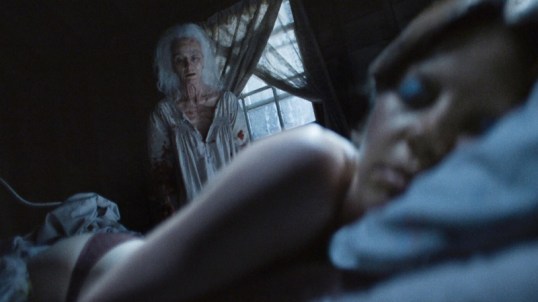
Johnny was perfectly happy being dead until some obnoxious college friends decided to take a camping trip and came across a locket hanging off of a fire tower. The locket was what kept Johnny’s soul at rest. When one of the group decided to take the locket so that he could give it to his girlfriend, Johnny came back to life.
Already haunted by the tragic memories of his life and how a bunch of bullies murdered him by tricking him into falling off of the tower, Johnny is determined to retrieve the locket. Slowly and methodically, he walks through the wilderness, killing everyone that he encounters as he searches for the one thing that will….
Well, it’s a slasher movie! You know how these things go!
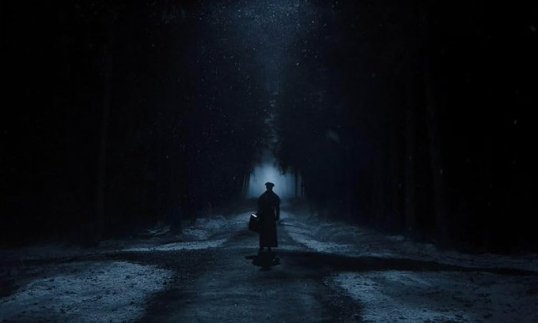
Released in 2024 and directed by Chris Nash, In A Violent Nature‘s plot may be typical slasher stuff but the way the story is told makes the film unique. Nash tells the story almost totally from the point of view of the undead Johnny. The camera follows Johnny as he makes his way through the woods and what we learn about him and his motivations largely comes from the snippets of conversations that we hear from people in the distance. Johnny’s victims largely appear in the distance, having typical slasher film conversations but we only hear them in passing, like fragments from a half-remembered dream or movie. We’re learning with Johnny.
As such, this is the rare slasher movie that requires that one actually pay attention to what is being said. It’s also a rare slasher movie that requires a good deal of patience on the part of the viewers. Johnny moves slowly and so does the movie. Though the kills are certainly bloody and there are plenty of genuinely frightening moments, the film is ultimately more about the sight of hulking, single-minded Johnny walking through the woods and through fields of brilliantly green grass than anything else. If Terence Malick made a slasher movie, it would look a lot like In A Violent Nature. Would Terence Malick have included the yoga kill? Perhaps. I think he would have included a voice-over though about nature, though. (Speaking of the yoga kill, it’s notable that this non-traditional slasher movie features one of the bloodiest killings of the genre, as if the director wanted to make sure that we understood he didn’t consider his film to be too good for the genre. I appreciated that.)
A film like this is great if you’re a fan of both Malick and horror, as I am. If you prefer your slasher films to be a bit less self-consciously esoteric in their approach, you might wonder what all of the hype was about. In A Violent Nature is one of those films that the viewer will either love or the viewer will give up on after several minutes of watching Johnny staring out at the lake. It’s an experimental film and, like all experimental films, it’s not for everyone. That said, if you have the patience for it, it’s an engrossing and off-beat slasher flick.
“When there’s no more room in hell, the dead will walk the earth.” — Peter
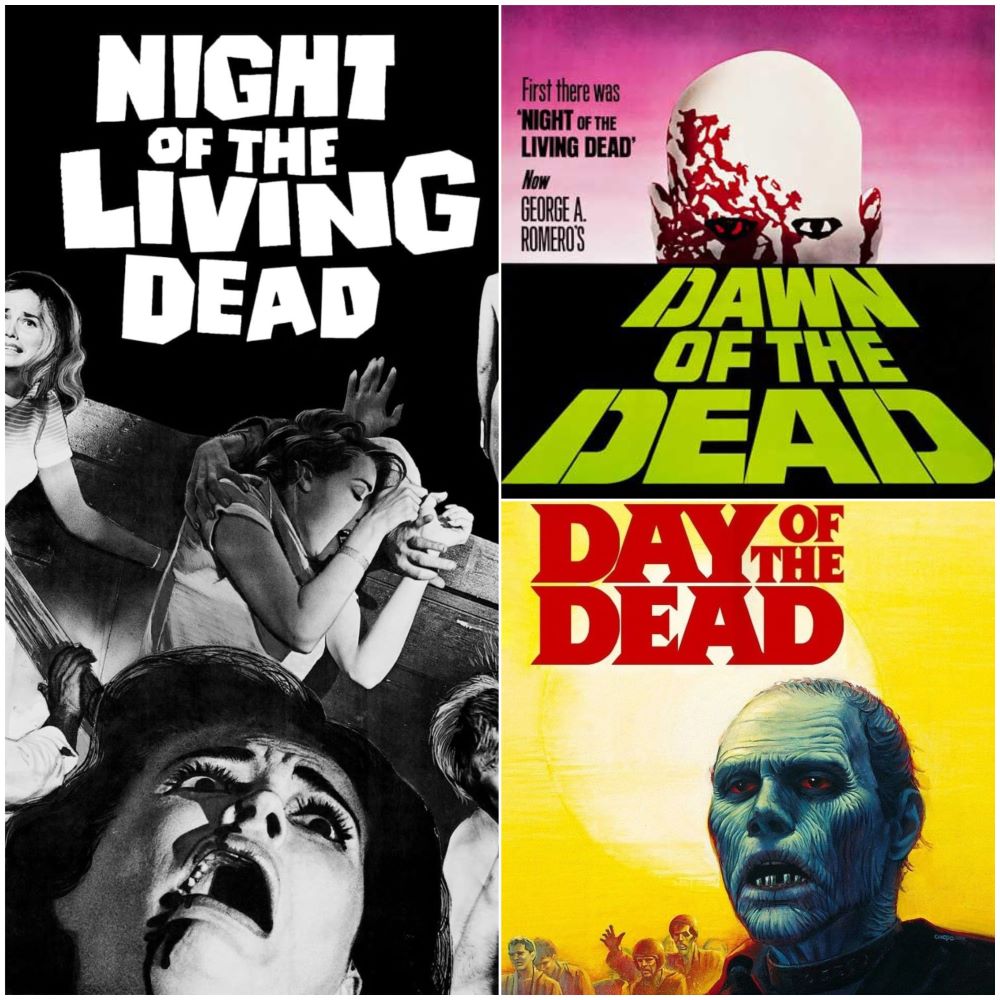
George A. Romero’s zombie trilogy—Night of the Living Dead (1968), Dawn of the Dead (1978), and Day of the Dead (1985)—stands as a landmark achievement in horror cinema, weaving the evolution of the zombie genre with a profound commentary on human nature and societal collapse. Emerging during periods of significant social and political upheaval, each film reflects the anxieties, tensions, and cultural dynamics of its decade. Romero’s zombies were not merely monsters to instill fear but mirrors reflecting society’s darkest fears, prejudices, and failures. The trilogy explores pressing questions about survival, morality, racial and class structures, and the fragility of human relationships when civilization breaks down, making these films persistently relevant beyond their gore and suspense.
What makes Romero’s trilogy particularly striking is its layered richness—each installment presents a standalone narrative that deepens the conversation about humanity’s response to apocalypse while encapsulating the spirit of its era. Night of the Living Dead confronts issues of race, violence, and distrust within a claustrophobic haven; Dawn of the Dead takes viewers to a sprawling shopping mall, a metaphor for 1970s consumer culture’s hollow comforts and social alienation; and Day of the Dead delves into the psychological and ideological fractures under extreme duress in a military bunker, highlighting themes of authoritarianism, scientific ethics, and the struggle for hope in despair. Together, these films form a powerful, intergenerational critique that resonates with viewers as much for their social insights as for their seminal contributions to the horror genre.
The Real Threat: Humans Versus Zombies
In Romero’s trilogy, the zombies provide relentless external pressure, but it is human flaws that become the dominant threat. Night of the Living Dead introduces the idea that fear, selfishness, and mistrust within small groups erode their chances of survival. The movie’s confined setting in a rural farmhouse encapsulates a microcosm of society teetering on the brink. Ben, played by Duane Jones, stands out not just for his calm leadership but also for the racial and social tensions his presence introduces—especially in conflict with Harry, whose obsession with control echoes real-world social divides. The film’s infamous ending, where Ben is killed by a white posse, resonates as a powerful allegory for racial violence, underscoring that the apocalypse in Romero’s world is as much a societal failure as a supernatural event.
Moving to Dawn of the Dead, the threat shifts toward a metaphorical critique of consumer culture. The survivors’ refuge in a shopping mall represents a modern temple of capitalism, filled with distractions and material goods that provide temporary relief but ultimately expose human weakness. The zombies’ endless wandering in this retail environment ridicule our real-world repetitive consumption, blurring lines between life and death. Human conflicts intensify as greed and recklessness among the survivors hasten their downfall. The bikers’ violent intrusion and consequent chaos symbolize how societal fractures and selfishness can undo fragile pockets of order. Here the zombies are a mirror to humanity’s brainless rituals, and the real menace is people’s inability to rise above base instincts.
In Day of the Dead, the human threat turns authoritarian and fractured. Set in a cramped underground bunker, the story mines the clash between military pragmatism and scientific inquiry. Soldiers and scientists represent ideologies that fail to reconcile, leading to paranoia, cruelty, and betrayal. Dr. Logan’s work with Bub—the zombie who exhibits flickers of memory and humanity—raises ethical questions, while Captain Rhodes’ hardline attitude embodies the brutal will to survive at any cost. The psychological breakdowns and mounting violence illustrate Romero’s grim thesis: when order and communication collapse, humanity itself becomes the deadliest monster. Romero’s zombies evolve here beyond simple horror fodder into symbolic reflections of humanity’s tragic failures.
Reflecting the Decades
Night of the Living Dead uses black-and-white cinematography to invoke a stark, documentary-like immediacy. This choice grounds the horror in a realism that intensifies dread, making the threat palpable and the social commentary more haunting. The film’s sound design—ambient crickets, creaking homes, radio reports—immerses viewers in a palpable tension. The limited setting and raw performances engage the audience emotionally, resembling a tragic stage play with themes of mistrust and panic spiraling out of control.
Dawn of the Dead shifts dramatically in visual and tonal approach. Its vibrant color palette contrasts the black-and-white predecessor, reflecting the mall’s artificial glow and the pop culture that it satirizes. The film balances broad dark humor with shocking gore, crafting an atmosphere that is surreal yet recognizably familiar. Tom Savini’s makeup and effects render the zombies grotesquely vivid, framing the film’s critique of capitalism with visceral impact. The pacing is more expansive, covering diverse spaces and character arcs as the survivors roam the mall’s labyrinthine insides, a metaphor for society’s complex detours and distractions.
Day of the Dead reverts to a darker, claustrophobic visual style in shadowy tunnels and corridors. The lighting is grim, reflecting the emotional suffocation and moral decay of its characters. Savini’s effects reach a gruesome peak here; every bite, wound, and decomposing corpse is rendered with intense anatomical detail. The film’s soundscape—filled with eerie silence punctuated by horrific violence—places viewers deep in the bunker’s oppressive atmosphere. Its pacing allows tension to build relentlessly, mirroring the psychological disintegration on screen. The film’s tone is unyieldingly bleak, underscoring an apocalypse not just of bodies but of hope and humanity.
The Films as Cultural Mirrors
Romero’s films serve as powerful cultural artifacts, each embodying concerns of its time.
Night of the Living Dead arrived in the late 1960s amid civil rights movements and the Vietnam War. The casting of Duane Jones as Ben was revolutionary, providing an implicit challenge to racial norms without overt political messaging. The film’s stark rural setting underscores isolation and vulnerability, while the tense, fractured group dynamics mirror societal conflicts over race, power, and distrust. The film’s haunting finale, with Ben’s death at the hands of a white mob, connects it powerfully to ongoing real-world violence against African Americans and demands reflection on humanity’s darkest impulses.
In contrast, Dawn of the Dead reflects the 1970s’ explosion of consumer and mass culture. Adventure into a shopping mall—a temple of capitalist excess—becomes a metaphor for societal malaise. Romero critiques consumerism’s seductive yet dehumanizing effects, suggesting that even amid an apocalypse, humans cannot escape compulsions to buy, hoard, and consume. The characters’ indulgence in the mall’s resources reveals social and moral exhaustion, and their downfall exposes the fragility beneath the comfortable facade of consumer society. The film’s biting humor and grotesque shocks harbor an underlying sadness about alienation and decay.
Day of the Dead encapsulates 1980s political anxieties around militarism, institutional authority, and distrust. The bunker setting becomes a suffocating arena where ideological conflicts tear apart what little society remains. This film foregrounds questions around science versus brute force, morality versus survival, and communication breakdown as symbolic of a society fracturing under Reagan-era pressures. The mental breakdowns and spiraling violence illustrate a grim view that humanity might be beyond redemption when stripped of trust and compassion. Its darkness reflects the decade’s cultural cynicism and fears of social disintegration.
Microcosms of Society
Romero’s stories unfold through tight-knit groups whose conflicts illuminate broader social themes.
In Night, Ben’s calm and tactical leadership contrasts sharply with Harry Cooper’s selfishness and paranoia. Their tensions reflect generational and racial divides. Ben strives for unity while Harry clings to control, highlighting a central question of cooperation versus individualism in survival. The other characters, including the traumatized Barbara and the fragile family unit, represent varying responses to fear, illustrating fractured human connections intensified by crisis.
Dawn enlarges the survivor group and diversifies personality types: news reporter Francine, biker gang members, military-like figures, and civilians who each represent different social attitudes. Their conflicts—between indulgence and survival, hope and despair—reflect their inability to fully commit to collective welfare. The chaotic intrusion of bikers on the mall roof, desperate to claim resources, accelerates the internal collapse, demonstrating the fragility of constructed order amid human greed.
Day uses a sharply divided group between scientists and soldiers, emphasizing ideological conflict. Dr. Logan embodies scientific curiosity and empathy, while Captain Rhodes champions military control and harsh pragmatism. Their clash catalyzes the group’s disintegration. Supporting characters like Miguel display mental fragility brought on by isolation and stress. Bub, the experimental zombie, emerges as a surprising figure of sympathy and ethical ambiguity, challenging simplistic notions of life and death. The bunker thus becomes a pressure cooker for the darkest human and philosophical dilemmas.
Evolution of the Undead as Symbol
Zombies are initially mindless monsters but become more layered symbols throughout the trilogy.
In Night, zombies are terrifying yet simple threats. Their inexplicable transformation turns death into relentless hunger, symbolizing uncontrollable social forces and fears of decay.
In Dawn, zombies’ repetitive behavior in the mall symbolizes consumerism’s zombification of society—mindless consumption, ritual, and alienation repeated beyond death. They act as dark reflections of the living’s mechanical habits.
Day transforms zombies into tragic figures represented by Bub, whose flickers of memory and social responsiveness invite empathy. This evolution raises moral questions about identity, consciousness, and the possibility of redemption or understanding within terror. The zombies become mirrors not only of societal collapse but of humanity’s potential for both cruelty and compassion.
Legacy and Impact
Romero’s trilogy didn’t merely redefine zombies but transformed horror into a powerful vehicle for social commentary, intertwining visceral storytelling with sharp critiques of society’s deep flaws and fears. Each film uses the undead not only as monsters but as metaphors reflecting the social and political issues of its time, making the horror resonate beyond the screen.
Night of the Living Dead broke ground by embedding racial and societal tensions into the horror narrative during a turbulent period of the 1960s civil rights movement and political unrest. The black lead character’s fate and the film’s stark depiction of fear and mistrust captured fractured American society—highlighting systemic racial violence, distrust, and the breakdown of community bonds. The zombies, once mindless folk creatures, became symbols of societal collapse, indiscriminate and relentless, emphasizing the idea that the real destruction comes from within human systems and relationships.
Dawn of the Dead advanced Romero’s social critique by targeting consumerism and capitalist excess. The setting of the shopping mall as a sanctuary turned trap was a brilliant allegory for how materialism numbs society, creating cycles of empty consumption akin to the zombies’ repetitive wandering. The film studied societal emptiness beneath the comforts of consumer culture, exploring how greed, self-interest, and a loss of empathy undermine collective survival. Notably, Romero touched on economic and racial inequalities, reflecting real struggles faced by minority and marginalized communities, such as urban violence and police brutality, though these themes are more coded than in Night.
Day of the Dead delivers a bleak critique of institutional failure and authoritarianism amid the 1980s political climate. The bunker’s contained setting represents a society strangled by mistrust between military power and scientific inquiry. As paranoia grows, ethical boundaries and communication collapse, showing a dystopia where humanity’s darkest traits rise to the surface. Characters personify ideological conflicts, illustrating the futility of survival without unity or compassion. The ethical complexity introduced through Bub, the almost-human zombie, forces deeper reflection on humanity and monstrosity. The film presciently portrays societal fragmentation, authoritarian impulses, and mental health crises as ongoing threats to civilization, deepening Romero’s grim message that humanity’s greatest dangers lie within itself.
Romero’s films continue to influence horror and popular culture by demonstrating how genre cinema can engage with pressing social issues. They laid the groundwork for zombie stories as allegories for everything from capitalism and consumerism to racial injustice and political dysfunction. Examples of films and shows influenced by Romero’s Dead trilogy are numerous and diverse. The 2004 remake of Dawn of the Dead by Zack Snyder revitalized zombie cinema for a modern audience while keeping the core social commentary, inspiring other fast-paced, action-oriented zombie films. The television series The Walking Dead drew heavily from Romero’s depiction of the undead apocalypse and the struggles of survivors, exploring themes of community, morality, and leadership in a broken world. Films like 28 Days Later introduced a new breed of zombies with ultra-fast infection rates, yet owe a thematic debt to Romero’s human-centric apocalyptic narratives. The video game series Resident Evil incorporates survival themes and social breakdown, reflecting the fractured human relationships Romero explored. Even non-zombie films like The Road invoke similar bleak atmospheres and moral complexities in post-apocalyptic settings. Romero’s influence also extends to comics, literature, and other media, making his trilogy a foundational pillar in modern horror and pop culture.
In sum, Romero’s trilogy remains a vital cultural touchstone. Each film captures the zeitgeist of its era while addressing timeless questions about human nature, survival, and society under crisis. The powerful fusion of gore, suspense, and social commentary in these movies gives them lasting relevance and impact far beyond the horror genre. They compel audiences to confront the monsters outside and the darker forces within themselves and their communities.
For the record, you can count me amongst those who thinks that Ben got everyone killed. We root for Ben because he’s the more likable character but, in the end, Harry was right and Ben ended up becoming a cold-blooded murderer. These are the type of things that make Night of the Living Dead the scariest zombie film ever made. The living are just as terrifying as the dead.
I should also note that, for all the criticism the character gets, Barbara has one of the most totally realistic reactions that I’ve ever seen in a horror movie. She’s in shock and denial. I would probably have the same reaction.
And now, here is the greatest zombie film ever made!
Happy Halloween! This is the end to an awesome horrorthon! I will have some more posts today. I will try to find at least one good thing to review for Halloween. It’s not easy and will likely NOT be done by AI because they’re terrible.
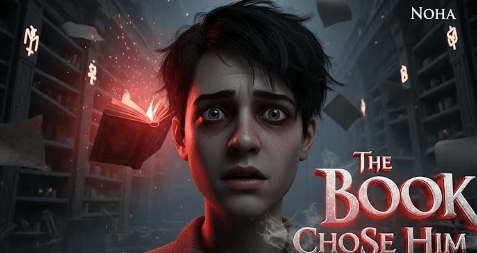
The Book Chose Him answers the question: What if Harry Potter sucked and was ninety seconds long?
The film opens with a realistic teenager in a library and magical glowing book starts to open in front of him. I suppose this is the whole “choosing him thing.” Why though? Why stick around to look at a radioactive book? Then, the main character becomes a cartoon, but race swaps from Indian teenager to a eight year old white kid. Why couldn’t he have been Indian the time? It’s confusing and unnecessary.
The protagonist is walking around a fancy library library with glowing candles that are an obvious fire hazard and he switches nationalities 6 more times from white to Indian and back again. It’s super weird. Was there another kid in the library? The protagonist goes to another world where gravity is just not “in” anymore. This is just horrible in every way. This creator should go to the sharks! This is the worst. Don’t even bother.
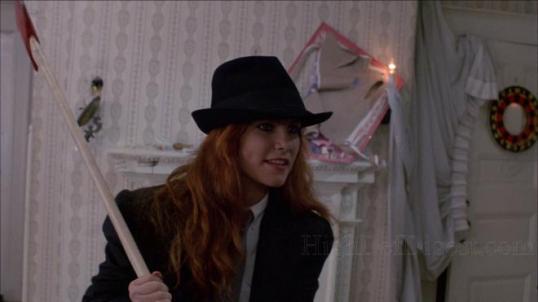
Witchboard (1986, dir by Kevin S. Tenney, DP: Roy Wanger)
As some of our regular readers undoubtedly know, I am involved in a few weekly watch parties. On Twitter, I host #FridayNightFlix every Friday and I co-host #ScarySocial on Saturday. On Mastodon, I am one of the five hosts of #MondayActionMovie! Every week, we get together. We watch a movie. We tweet our way through it.
Tonight, at 10 pm et, I will be hosting #FridayNightFlix! The movie? 1986’s Witchboard!
If you want to join us this Friday, just hop onto twitter, find Witchboard on Prime, start the movie at 10 pm et, and use the #FridayNightFlix hashtag! I’ll be there happily tweeting. It’s a friendly group and welcoming of newcomers so don’t be shy.




 Through the Shattered Lens