4 Shots From 4 Films is just what it says it is, 4 shots from 4 of our favorite films. As opposed to the reviews and recaps that we usually post, 4 Shots From 4 Films lets the visuals do the talking!
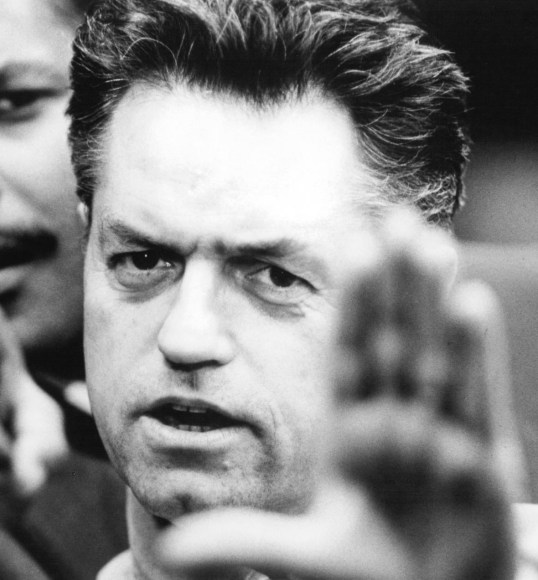
The late, great director Jonathan Demme was born 82 years ago today. It’s time for….
4 Shots From 4 Jonathan Demme Films
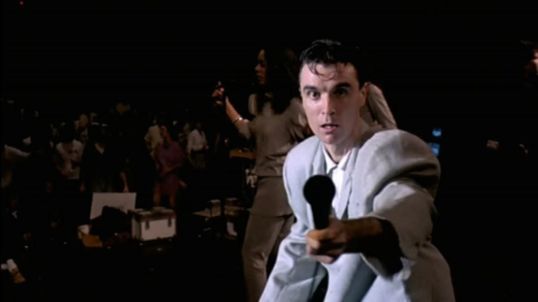
Stop Making Sense (1984, dir by Jonathan Demme, DP: Jordan Cronenweth)
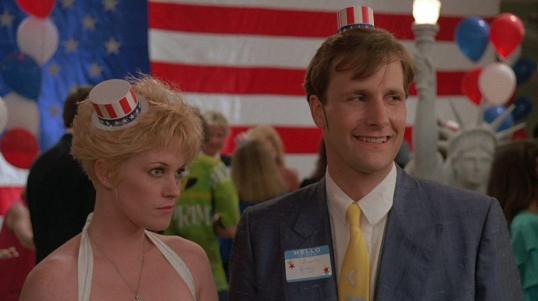
Something Wild (1986, dir by Jonathan Demme, DP: Tak Fujimoto)
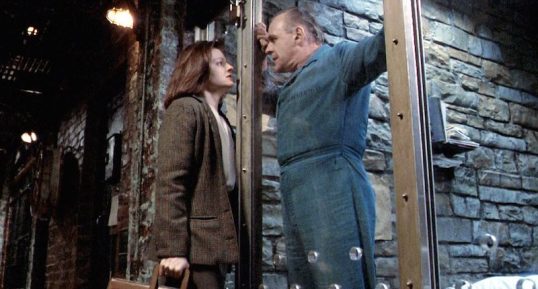
The Silence Of The Lambs (1991, dir by Jonathan Demme, DP: Tak Fujimoto)
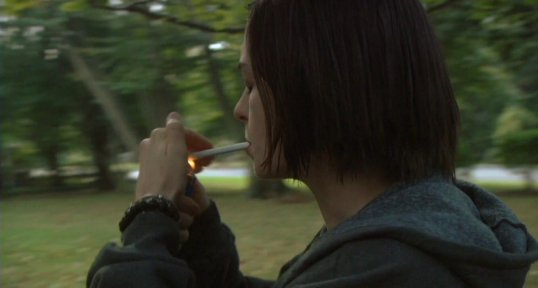
Rachel Getting Married (2008, dir by Jonathan Demme, DP: Declan Quinn)
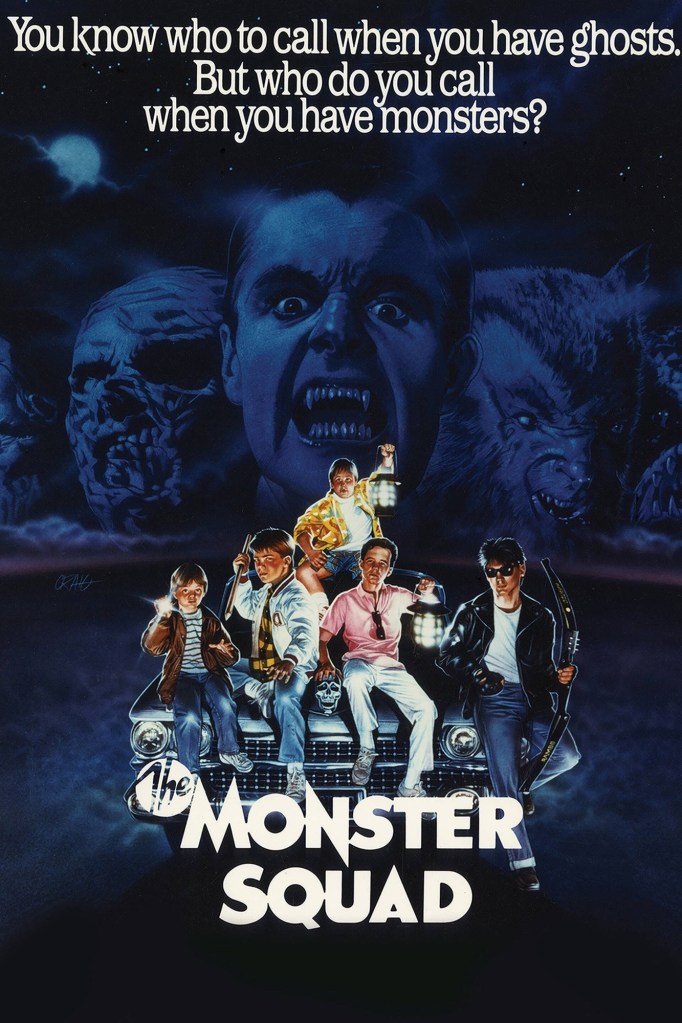
Released in 1987, The Monster Squad has lived one of those strange afterlives that cult films sometimes enjoy—ignored or even ridiculed upon release, only to become a beloved artifact for the generation that found it later on VHS. Directed by Fred Dekker and co-written with Shane Black, the movie occupies an awkward but endearing space between horror, comedy, and kids’ adventure. It never fully settles into one tone, and that’s part of both its charm and its problem. Watching it today, the film feels like The Goonies took a detour through a drive-in double feature of Dracula and The Wolf Man. It’s clunky, funny, occasionally mean-spirited, and loaded with enthusiasm—qualities that make it a thoroughly guilty pleasure for fans of ’80s genre mashups.
The story wastes no time getting into its madcap premise. A group of suburban preteens calling themselves “The Monster Squad” find that the classic Universal-style monsters are real, and worse, they’ve come to town. Count Dracula has a plan to plunge the world into darkness using an ancient amulet, and to succeed he enlists a roster of familiar faces: Frankenstein’s Monster, the Mummy, the Gill-Man, and the Wolf Man. This roster is fan-service before fan-service was a marketing term—a kid’s monster toybox brought to life. The squad, of course, must stop them, armed with comic-book knowledge, wooden stakes, and a blend of reckless courage and youthful sarcasm.
Dekker’s direction and tone play like a movie made for kids but smuggled in some heavy teenage energy. There’s violence, crude jokes, and occasional language that Hollywood would never let slip into a PG-friendly franchise today. Yet that rough edge is part of why The Monster Squad aged into cult status. It’s unapologetically of its time, operating on the belief that kids can handle scares as long as they’re fun and that suburban fantasy can, for a while at least, coexist with real danger. The movie’s depiction of childhood feels filtered through a stack of comic books and Creepshow issues—hyper absurd but still emotionally grounded in a way only ’80s adventure films seemed to pull off.
The kids themselves are a mixed bunch of believable archetypes. There’s Sean (André Gower), the de facto leader with a bedroom plastered in monster movie posters; Patrick (Robby Kiger), his wisecracking sidekick; Rudy (Ryan Lambert), the too-cool-for-school older kid who smokes, rides a bike, and somehow becomes the squad’s weapons specialist; and Eugene (Michael Faustino), the youngest, who still sleeps with his dog and writes letters to the Army for backup. They’re joined by Horace, nicknamed “Fat Kid,” played with surprising vulnerability by Brent Chalem. Each character is drawn broadly but memorably, and even when the dialogue veers into dated humor, there’s an underlying sincerity. You can tell Dekker and Black really liked these kids. They might use slingshots and one-liners, but what unites them is their intense sense of loyalty to one another—the kind of friendship that survives both bullies and broomstick-wielding vampires.
If there’s an emotional anchor, oddly enough, it’s the relationship between the squad and Frankenstein’s Monster, played by Tom Noonan in an unexpectedly gentle performance. When the creature befriends the kids, particularly little Phoebe (Ashley Bank), the film shifts momentarily from wisecracks to something close to tenderness. Noonan gives the character a shy uncertainty, a weary loneliness that offsets the visual absurdity of the rubbery monsters around him. There’s even a tinge of tragedy in his final act, which echoes Frankenstein’s literary roots—a moment of real feeling buried inside an otherwise loud and gleefully messy creature romp.
The monsters themselves, created by legendary effects artist Stan Winston, are among the film’s biggest draws. Each design feels like a loving upgrade to the old Universal look—recognizable but more feral, angular, and rooted in late-’80s aesthetics. The Wolf Man, for example, looks simultaneously comic and menacing, while the Gill-Man costume still impresses for its texture and movement decades later. The decision not to rely on stop motion or heavy opticals gives the monsters a tactile presence that CGI could never capture. There’s something about watching full-bodied suits and prosthetics move in real space that makes the threats feel tangible even when the stakes are goofy. These creatures are fun to look at, even when the script doesn’t give them much to do beyond roar and stalk across smoke-filled sets.
Shane Black’s fingerprints are all over the dialogue—the sardonic banter, the genre in-jokes, the affection for both pulp tropes and subverting them. But perhaps because the film was marketed partly as family adventure and partly as horror spoof, it often can’t decide whether to play sincere or ironic. Some scenes lean heavily on nostalgic affection for monster movies, while others feel almost mean in their mockery of small-town innocence. The tone whiplash means The Monster Squad doesn’t build much consistent momentum; one minute it’s heartfelt, the next it’s a barrage of sarcastic one-liners. Still, its rough tonal juggling has a ragtag energy that keeps it lively, and the sheer commitment to blending genres is endearing.
When it comes to pacing, the movie flies by in under 80 minutes, which turns out to be both blessing and curse. On one hand, there’s no filler—every scene moves briskly to the next piece of monster mayhem. On the other, the movie’s emotional beats and mythology barely have time to breathe. We get glimmers of backstory (like Dracula’s cryptic hunt for the amulet and Van Helsing’s prologue battle) that hint at a larger world that the film never really explores. You sense that Dekker and Black were operating under the fantasy logic of childlike storytelling: don’t explain too much, just move fast enough that no one questions it. It works, more or less, because of the film’s sheer enthusiasm, but it leaves you imagining a richer version of this story that never quite made it onscreen.
Looking back from today’s lens, some parts of The Monster Squad show their age more harshly. Certain lines and stereotypes that went unnoticed in the ’80s now feel jarring, even uncomfortable, and the film’s cavalier tone sometimes undercuts moments that should feel more innocent. Yet despite that, most viewers who revisit it with awareness of its era find themselves disarmed by its sense of fun. There’s no cynicism driving it—it’s pure genre love, messy and sincere, like a handmade Halloween costume that’s somehow cooler precisely because it’s imperfect. The film represents a time when kids’ movies were allowed to have teeth, blood, and a few scary moments, trusting that a young audience could handle being spooked without needing everything smoothed over.
For many fans, The Monster Squad works less as a polished film and more as an experience—a flashback to VHS sleepovers, bad pizza, and rewinding favorite scenes. The movie’s newfound appreciation, fueled by screenings and documentaries like Wolfman’s Got Nards, speaks to that nostalgic bond. It’s less about objective greatness and more about the feeling it preserves. Sure, some of the jokes fall flat, and the plot functions mostly as connective tissue between monster gags, but few movies embody the gleeful chaos of late-’80s pop horror as affectionately as this one does.
The Monster Squad earns its title. It’s not a flawless film, nor even a particularly coherent one, but it’s deeply fun, carried by the conviction that monsters—real or imaginary—are made to be fought with courage, humor, and friends who have your back. Watching it now is like flipping through an old comic book you used to love: you can see every crease and faded color, but that doesn’t make it any less special. And in a cinematic era saturated with irony and nostalgia pastiche, The Monster Squad still feels refreshingly earnest about its own weirdness. Maybe that’s its secret power.
I should get an academy award for reviewing this film without spoiling it. It is so hard. I won’t post a spoiler review, until the Shattered Lens staff tells me that they’ve seen it.
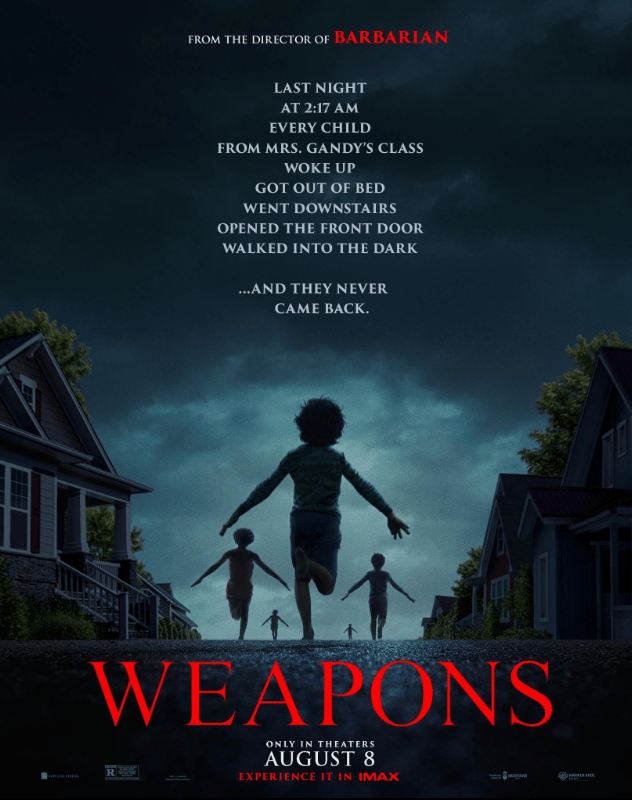
I know, I know… Case, Weapons came out a while ago! What gives?! In my defense, it’s Oscar nominated; so, I’m not late until April. Take that!
Zach Cregger presents his story through six different perspectives: Justine a teacher/alcoholic, Archer a self-loathing father, Paul an alcholic/cheater cop, James a drug addict, Marcus the school principal who wants to be good, and Alex the crux of the plot. Cregger uses these different perspectives to force you to pay close attention to discern the subtle plot points. One thing that stood out to me was that he told the story through cinematography (showing not telling) to such a degree that the scenes with dialogue could be counted.
The film is clearly rooted in the storytelling of Fulci. There is plot and dialogue, but the vast majority of the story is told visually with unique Americana. Just as The Beyond had to be filmed in New Orleans, Weapons had to be filmed in summertime Suburbia. The setting succeeded in bringing additional tension to the story where the visuals were the storyteller.
He filmed it so that the suburban setting is a character itself. There are scenes where characters are quickly isolated by going from a backyard into the woods. I am certain that this was intentional to show that all normal civilized society is immediately adjacent to an untamed wild forest that can consume us whole. The theme of line crossing both physical and metaphorical is woven throughout the entire story. Lines are crossed that are professional, societal, relationship-based, and actual physical lines. The line crossing is another element that induces a cringe-suspense that ratchets the tension continually.
The score shares the circulatory system with the setting and story so that it is used as a stand-in for dialogue. There are entire scenes without a single word spoken; so, the music and cinematography fill that vacuum, which pulls us in deeper and deeper into Zach Cregger’s world. What makes the story more challenging is that it is a world we know: the suburbs. The music is both congruous and incongruous depending on what part of the story is told.
I believe that I have succeeded in reviewed this film without spoiling it. Normally, I DO NOT CARE, but this film is so well done and rooted in the Fulci storytelling that I can’t do that to the staff and especially not Lisa. I hope that you all watch it soon or we schedule a watch party.
4 Or More Shots From 4 Or More Films is just what it says it is, 4 shots from 4 of our favorite films. As opposed to the reviews and recaps that we usually post, 4 Shots From 4 Films lets the visuals do the talking!
Today would have been Sam Peckinpah’s 101st birthday. Here are 4 shots from 4 of my favorite Peckinpah films.
4 Shots From 4 Sam Peckinpah Films
The Wild Bunch (1969, directed by Sam Peckinpah, Cinematography by Lucien Ballard)
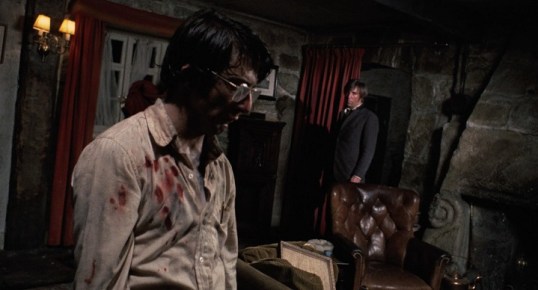
Straw Dogs (1971, directed by Sam Peckinpah, Cinematography by John Coquillon)
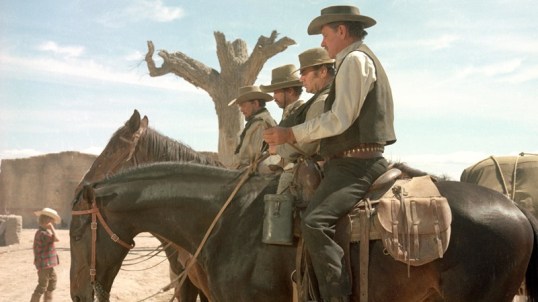
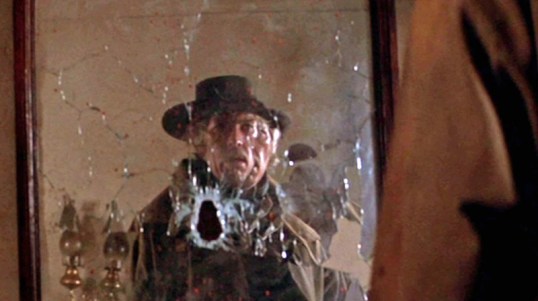
Pat Garrett and Billy The Kid (1973, directed by Sam Peckinpah, cinematograph by John Coquillon)
Bring Me The Head of Alfredo Garcia (1974, directed by Sam Peckinpah, Cinematography by Alex Phillips, Jr.)
As some of our regular readers undoubtedly know, I am involved in a few weekly live tweets on twitter. I host #FridayNightFlix every Friday, I co-host #ScarySocial on Saturday, and I am one of the five hosts of #MondayActionMovie! Every week, we get together. We watch a movie. We tweet our way through it.
Tonight, for #ScarySocial, I will be hosting 1990’s The First Power!
If you want to join us on Saturday night, just hop onto twitter, start the film at 9 pm et, and use the #ScarySocial hashtag! The film is available on Prime and Tubi! I’ll be there co-hosting and I imagine some other members of the TSL Crew will be there as well. It’s a friendly group and welcoming of newcomers so don’t be shy!
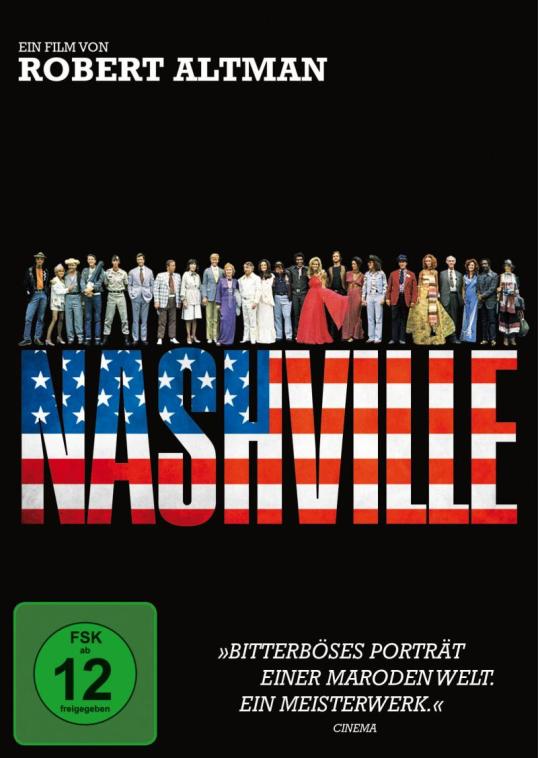
In this scene from Robert Altman’s 1975 masterpiece, Nashville, Julie Christie plays herself as a famous visitor to the city for which the film is named. She is introduced to Haven Hamilton (Henry Gibson), Haven’s lawyer, Delbert Reese (Ned Beatty), political advance man John Triplette (Michael Murphy), and country music star Connie White (Karen Black). Julie Christie may be a star in Hollywood but Connie is the star of Nashville.
Karen Black improvised her dismissive line about Julie Christine not even being able to comb her hair. It was a moment that reportedly shocked the rest of the cast and the crew but it was also a line that perfectly summed up both Connie as a character and Altman’s version of Nashville.
“I have been a man. I have loved women. I have enjoyed power.” — Father Urbain Grandier
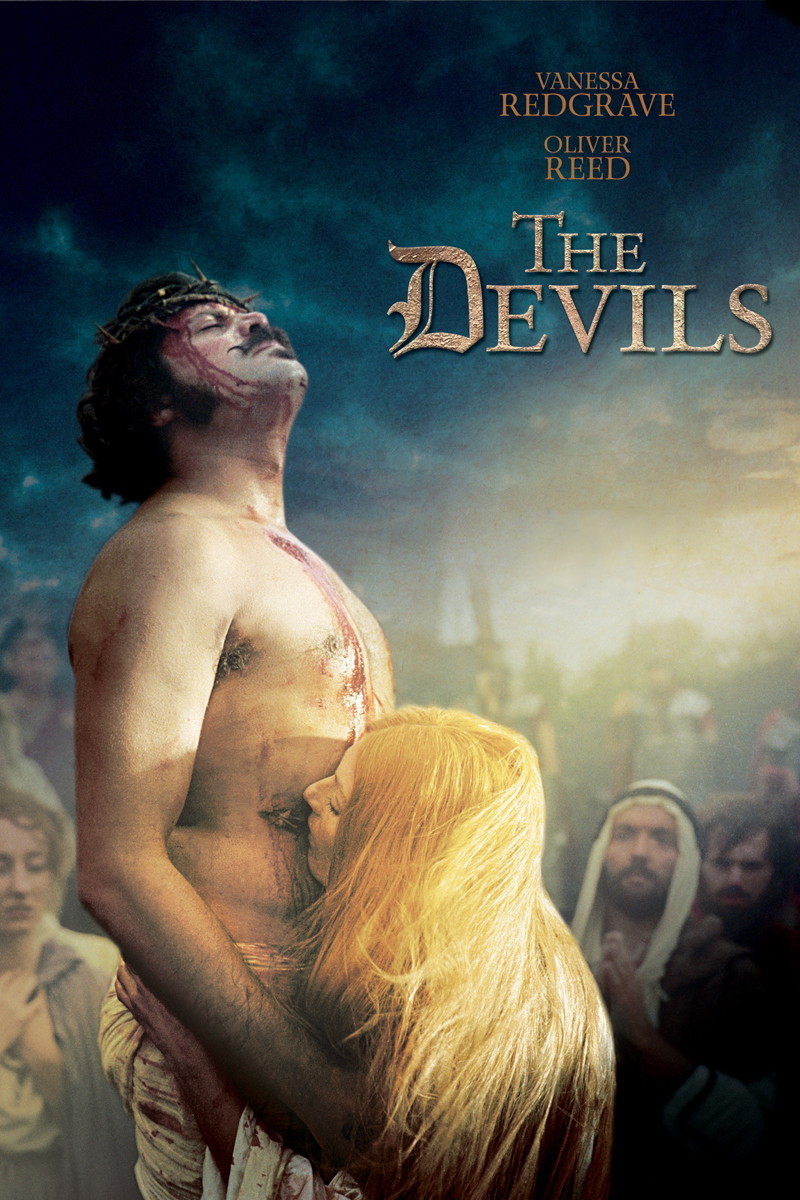
Ken Russell’s The Devils (1971) stands as one of the most provocative and polarizing films in cinema history, a visceral plunge into the hysteria of religious fanaticism and political intrigue set against the backdrop of 17th-century France. Adapted loosely from Aldous Huxley’s historical account The Devils of Loudun and John Whiting’s play The Devils, the film dramatizes the real-life case of Father Urbain Grandier, a charismatic priest accused of witchcraft amid a scandal of supposed demonic possessions at a Loudun convent. Directed with unbridled fervor by Russell, who infuses every frame with operatic excess, the movie challenges viewers to confront the grotesque intersections of faith, sexuality, power, and repression. While its boldness earns admiration for unflinching social commentary, its stylistic indulgences can overwhelm, making it a work that demands both endurance and reflection.
The story unfolds in the walled city of Loudun, a Protestant stronghold under threat from Catholic forces led by the cunning Cardinal Richelieu. Oliver Reed delivers a towering performance as Grandier, portraying him not as a saintly martyr but as a flawed, hedonistic figure—a womanizer who preaches liberty while bedding Madeleine (Gemma Jones), a young Protestant whose quiet devotion contrasts sharply with the surrounding debauchery. Grandier’s defiance of Richelieu’s edict to demolish the city’s walls marks him as a target, but his downfall accelerates through the hysterical claims of Sister Jeanne (Vanessa Redgrave), the hunchbacked prioress of the Ursuline convent. Twisted by unrequited lust for Grandier, Jeanne accuses him of sorcery, sparking a wave of mass possession among the nuns that spirals into public spectacle. Russell draws from historical records to depict these events, emphasizing how personal pathologies fueled institutional corruption.
Visually, The Devils is a tour de force of baroque horror, with production designer Derek Jarman crafting sets that evoke a pristine white monastery defiled by filth and frenzy. Cinematographer David Watkin employs distorted wide-angle lenses and frenetic camera movements to mirror the characters’ unraveling psyches, turning sacred spaces into nightmarish arenas. The infamous “nunsploitation” sequences—where possessed sisters writhe in orgiastic fits, desecrate crucifixes, and simulate blasphemous acts—remain shocking even today, not merely for their explicitness but for their raw psychological intensity. These scenes serve Russell’s thesis: repressed desires, when twisted by authority figures like the witch-hunting Father Barre and Father Mignon, erupt into collective madness. Fairly assessed, these choices underscore Russell’s intent: to expose how power structures weaponize female hysteria, a theme resonant in historical witch hunts and modern reckonings with abuse.
Russell’s direction amplifies this through rhythmic editing and a pounding score by Peter Maxwell Davies, which blends liturgical chants with dissonant percussion to evoke a descent into hell. The film’s opening, with its ritualistic execution of a wise woman amid fireworks and folk rituals, sets a tone of pagan vitality clashing against ecclesiastical oppression. Midway, hallucinatory visions plague Grandier, blurring reality and delusion in a style reminiscent of Russell’s later explorations of ecstatic breakdown. The film unflinchingly depicts torture scenes—a burning at the stake, an afternoon in the rack, headscrews, a douche with boiling water—highlighting its raw confrontation with human cruelty. However, this excess risks tipping into self-parody; moments like the nuns’ simulated levitations or Jeanne’s contortions can strain credulity, prompting questions of balance between provocation and restraint.
Performances anchor the chaos, with Reed’s Grandier embodying defiant charisma undercut by hubris. His courtroom defiance and final quartering—nailed alive to a burning cross—culminate in a crucifixion scene of harrowing power, rivaling traditional passion narratives in emotional weight. Redgrave’s Jeanne is a revelation, her physical deformity symbolizing inner torment; she veers from pitiable to monstrous without caricature. Supporting turns shine too: Dudley Sutton as the impish Baron de Laubardemont, scheming for Richelieu; Max Adrian as the syphilitic priest whose decaying face mirrors moral rot; and Christopher Logue as the predatory Cardinal, whose urbane cruelty chills. The ensemble’s conviction elevates the material, ensuring characters feel flesh-and-blood rather than allegorical pawns.
Thematically, The Devils indicts institutional religion not as anti-faith but as a critique of its perversion by human ambition. Russell draws parallels to scandals where church power intertwines with politics, arguing that true devilry lies in hypocrisy. The film posits sexuality as a battleground: Grandier’s libertinism versus Jeanne’s repression, with the church exploiting both for control. This aligns with Huxley’s original thesis, expanded by Russell into a broader assault on authoritarianism. Politically, it skewers absolutism; Richelieu’s agents manipulate “possessions” for territorial gain, much as witchfinders historically profited from purges. Balanced against this, the film acknowledges Grandier’s flaws—he fathers a child out of wedlock and mocks piety—preventing hagiography. Upon release, it faced cuts in various countries, its controversial rating reflecting discomfort with its uncompromised vision.
Stylistically, Russell risks the “ridiculous” for the sublime. The white-tiled convent, pristine yet prone to vomit and excrement, symbolizes false purity; smashing it in the finale cathartically liberates Loudun from fanaticism. Influences from montage masters appear in crowd scenes, synthesized into a singular fever dream. Pacing falters in the trial’s verbosity, and some anachronistic flourishes—like Louis XIII’s cross-dressing ballet—inject campy levity, diluting gravity at times. Yet these quirks humanize the director’s bombast, reminding us of cinema’s power to provoke laughter amid horror. Compared to Russell’s Women in Love or Tommy, The Devils stands as his most structurally coherent assault on repression.
Historically contextualized, the Loudun possessions of 1634 involved Urbain Grandier, executed for allegedly bewitching Ursuline nuns via a pact with Satan. Huxley documented the hysteria, linking it to political machinations under Richelieu, who sought to crush Huguenot resistance. Russell amplifies the carnality for dramatic effect, prioritizing emotional truth over literalism. Restored versions reveal its full ferocity, influencing not just cinema but broader media, including comics like Argentinian artist Ignacio Noé’s The Convent of Hell, which echoes its themes of convent-based depravity and demonic intrigue in vivid, explicit sequential art.
Ultimately, The Devils endures as a lightning rod: a moral film cloaked in immorality, pro-religion by exposing its distortions. Its ugliness—filth-smeared faces, ruptured bodies—serves illumination, urging viewers toward wisdom. For every viewer repulsed by its excesses, another finds genius in its candor. Russell’s gamble pays off; in risking the absurd, he achieves a sublime confrontation with our shadowed souls. At around 109 minutes in its uncut form, it repays multiple viewings, rewarding the brave with insights into faith’s fragility and power’s perils. Not flawless—its hysteria occasionally exhausts—yet undeniably vital, The Devils remains essential cinema, a shattered lens on humanity’s eternal dance with darkness.
Since today would have been Robert Altman’s 101st birthday, it only seems right that today’s song of the day should come from his best film. In this scene from 1975’s Nashville, Keith Carradine sings I’m Easy as Altman’s camera finds each of his lovers in the audience, all convinced that Carradine is singing expressly to them.
This song won Nashville it’s only Oscar. It also made Keith, who wrote the song, the only Oscar winner amongst the fabled Carradine family.

 Through the Shattered Lens