After the runaway success of A BETTER TOMORROW, John Woo quickly released a sequel. A BETTER TOMORROW II isn’t as good as the original, but the emotions and action are ramped up dramatically. Check out this trailer from the Hong Kong Legends DVD release!
Category Archives: Film
I Killed Wild Bill Hickok (1956, directed by Richard Talmadge)
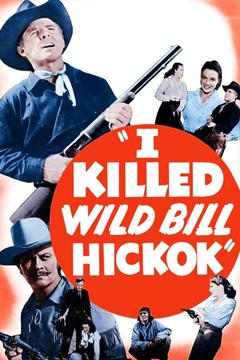 Not that Wild Bill Hickok!
This low-budget western programmer tries to draw viewers in by using the name of an icon of the old west but it doesn’t take place in Deadwood, there’s no poker game, no dead man’s hand, and Wild Bill (Tom Brown) is presented as being a corrupt sheriff who works for evil businessman Jim Bailey (Denver Pyle). Denver Pyle, we all know him best as Uncle Jesse on the Dukes of Hazzard. He’s a bad guy here, the film’s Boss Hogg.
Our hero and the man who kills Wild Bill Hickok is a horse trader Johnny Rebel, who tells his story in flashback and who is often called “Mr. Rebel.” Johnny Rebel is played by Johnny Carpenter, no relation to the director. This Johnny Carpenter was a stunt man who took control of his career and wrote and played lead in a series of forgettable B-westerns, like this one. Carpenter probably could have been quite the hero in the Poverty Row days, when fast-paced westerns were being released on a weekly basis and directors and actors knew exactly what a matinee audience wanted. By the time I Killed Wild Bill Hickok came out, westerns had started to grow up.
There’s the usual amount of stock footage. Director Richard Talmadge was himself a former stunt man so he does get a few good stunts into the last 15 minutes of the movie. Before the final gun battle, this movie about Wild Bill Hickok is nowhere near wild enough.
Scenes That I Love: A Conversation From Roberto Rossellini’s Rome, Open City
Today’s scene that I love comes from Rome, Open City:
Filmed in 1945, Roberto Rossellini’s Rome, Open City was one of the first films to be made about life under the Nazis. What set this film apart from others is that the majority of the cast actually had lived under the occupation. While there were a few professional amongst the cast, Rossellini also used many nonprofessional actors, who brought a weary authenticity to their roles and their portrayal of life in occupied Rome.
4 Shots From 4 Films: Special Roberto Rossellini Edition
4 Shots From 4 Films is just what it says it is, 4 shots from 4 of our favorite films. As opposed to the reviews and recaps that we usually post, 4 Shots From 4 Films lets the visuals do the talking!
119 years ago, on this date, the great Italian neorealist director (and husband of Ingrid Bergman and father of Isabella Rossellini), Roberto Rossellini was born in Rome. It’s time for….
4 Shots From 4 Roberto Rossellini Films

Rome, Open City (1945, dir by Roberto Rossellini, DP: Ubaldo Arata)
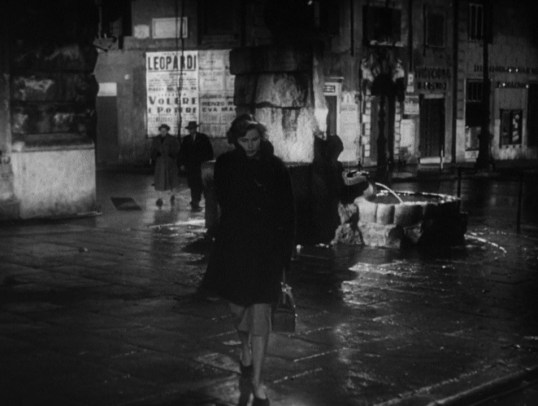
Europe ’51 (1952, dir by Roberto Rossellini, DP: Aldo Tonti)
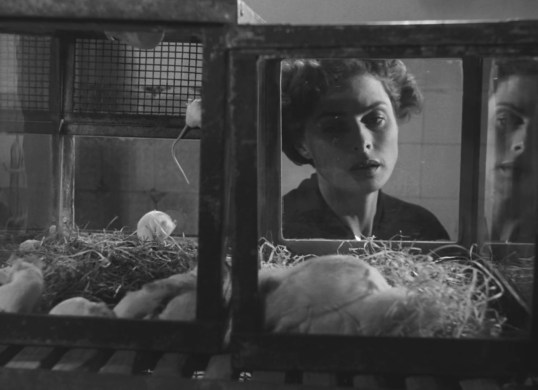
Fear (1954, dir by Roberto Rossellini, DP: Carlo Carlini, DP: Heinz Schnackertz)

Journey to Italy, (1954, dir by Roberto Rossellini, DP: Enzo Serafin)
Shadows of Death (1945, directed by Sam Newfield)
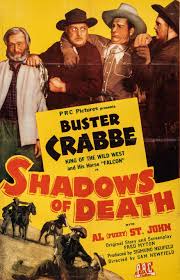 After a railroad agent is murdered and his map of the future locations of the railroad is stolen, Billy Carson (Buster Crabbe) rides into a frontier town and searches for the guilty party. Fortunately, for Billy, his best Fuzzy Q. Jones is the mayor, the sheriff, and the town barber! Unfortunately, local gunslinger Clay Kincaid (Eddie Hall) wants to make a name for himself by taking on the famous Billy Carson. Corrupt businessman Landreau (Charles King) encourages Clay by lying to him and telling him that Bully is planning on stealing Clay’s girl, Babs (Dona Dax).
A standard Poverty Row western, Shadows of Death was made by the same crew and cast who were involved with most of Buster Crabbe’s Billy The Kid films. I’m not sure if Billy Carson is meant to be the same character as Billy the Kid, though. Billy the Kid always had bounty hunters after him but Billy Carson works for the railroad. However, it would be strange if Fuzzy Q. Jones just happened to be the favored sidekick of two gunslingers who just happen to both be named Billy. Along with Fuzzy’s vaudeville style comedy, one thing that audiences could always take for granted was that Charles King would play the villain in these movies and Frank Ellis would always be his henchman. I always wonder if audiences in the 40s noticed that Charles King’s businessman and Frank Ellis’s gunslinger always returned from the dead with every B-western that came out.
My favorite scene in this one is Billy bursting into Landreau’s office, just for Landreau to say that he expects visitors to knock. Billy pauses long enough to knock on the door before getting down to the business of frontier justice.
4 Shots From 4 Films: Special Ruggero Deodato Edition
4 Shots From 4 Films is just what it says it is, 4 shots from 4 of our favorite films. As opposed to the reviews and recaps that we usually post, 4 Shots From 4 Films lets the visuals do the talking!
Today would have been the 86th birthday of the great Italian director, Ruggero Deodato! And that, of course, means that it’s time for….
4 Shots From 4 Films
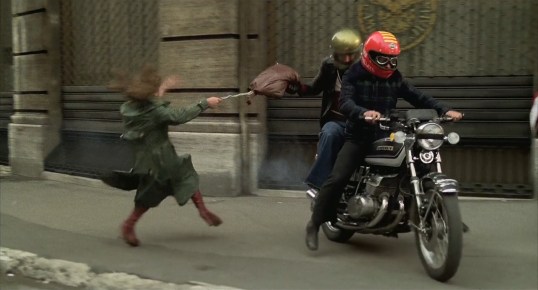
Live Like A Cop, Die Like A Man (1976, dir by Ruggero Deodato, DP: Guglielmo Mancori)
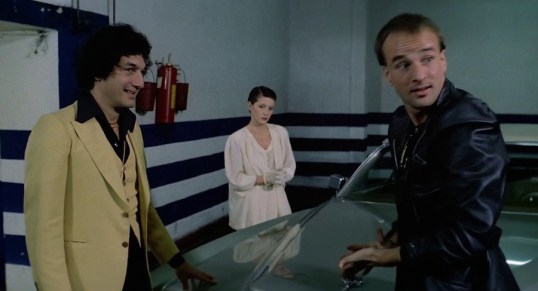
The House On The Edge of the Park (1980, dir by Ruggero Deodato, DP: Sergio D’Offizi)
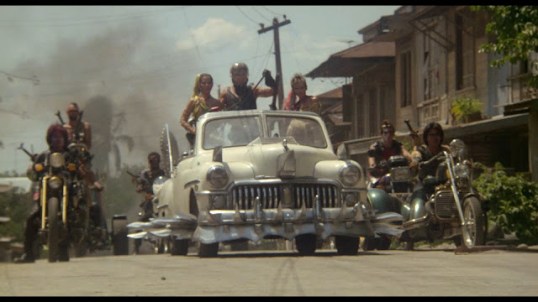
Raiders of Atlantis (1983, dir by Ruggero Deodato, DP: Robert D’Ettore Piazzoli)
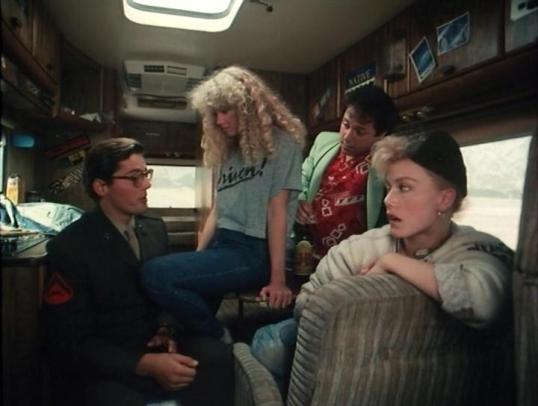
Body Count (1986, dir by Ruggero Deodato, DP: Emilio Loffredo)
Scenes That I Love: The First Two Minutes of Fast Times At Ridgemont High
Today, the Shattered Lens wishes a happy birthday to director Amy Heckerling!
Today’s scene that I love comes from Amy Heckerling’s feature debut, 1982’s Fast Times At Ridgemont High. In just two minutes, Heckerling introduces us to almost all of the major characters, establishes the mall as the center of Ridgemont High culture, and leaves us with little doubt that we’ve entered a time machine and found ourselves in the 80s. Look at all the future stars. Look at Mike Damone, future mobster. My heart always breaks for Stacy and her brother Brad. They have no idea what’s waiting for them this year.
Here is today’s scene that I love:
The Unnominated #15: Touch of Evil (dir by Orson Welles)
Though the Academy of Motion Picture Arts and Sciences claim that the Oscars honor the best of the year, we all know that there are always worthy films and performances that end up getting overlooked. Sometimes, it’s because the competition too fierce. Sometimes, it’s because the film itself was too controversial. Often, it’s just a case of a film’s quality not being fully recognized until years after its initial released. This series of reviews takes a look at the films and performances that should have been nominated but were, for whatever reason, overlooked. These are the Unnominated.
I come here to defend Charlton Heston.
1994’s Ed Wood is a great film that has one unfortunate line. Towards the end of the film, director Ed Wood (Johnny Depp) meets his hero, Orson Welles (Vincent D’Onoforio), in a bar. They talk about the difficulties of directing a film. Wood talks about the trouble that he’s having with Plan 9 From Outer Space. Welles says that he can understand what Wood is going through because the studio is forcing him to cast Charlton Heston as a Mexican in his next movie.
And look, I get it. It is true that Charlton Heston does play a Mexican prosecutor named Mike Vargas in Welles’s 1958 film, Touch of Evil. And it is true that Heston is not the most convincing Mexican to ever appear in a film. And I understand that there are people who enjoy taking cheap shots at Charlton Heston because he did have a tendency to come across as being a bit full of himself and he was a conservative in a industry dominated by Leftists. There are people who actually think Michael Moore doesn’t come across like a self-righteous prick when he confronts Heaton in Bowling for Columbine. I get the joke.
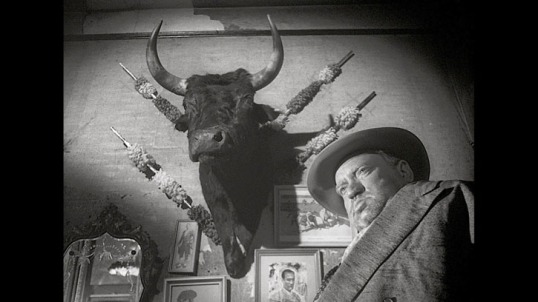
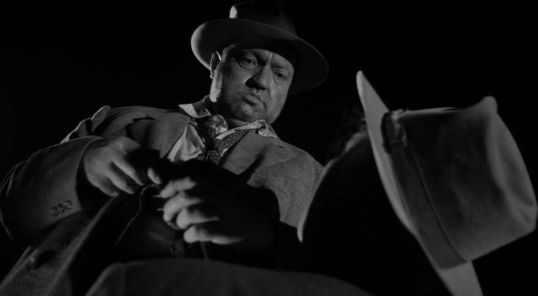
But it’s not true and it’s not fair. When Touch of Evil was first put into production by Universal, Welles was not hired to direct. He was hired to play Hank Quinlan, the formerly honest cop with a habit of planting evidence on those who he believed to be guilty. When Charlton Heston was offered the role of Vargas, he asked who had been hired to direct. When he was told that a director hadn’t been selected, Heston was the one who suggested Welles be given the job. When, as often happened with Welles’s film, the studio decided to take the film out of Welles’s hands, Heston argued for Welles’s vision while Welles was off trying to set up his long-dreamed of film of Don Quixote. Say what you will about Charlton Heston’s career, he fought for Orson Welles, just as he later fought for Sam Peckinpah during the making of Major Dundee. Heston may not have agreed with either Welles or Peckinpah politically but he fought for them when few people were willing to do so.
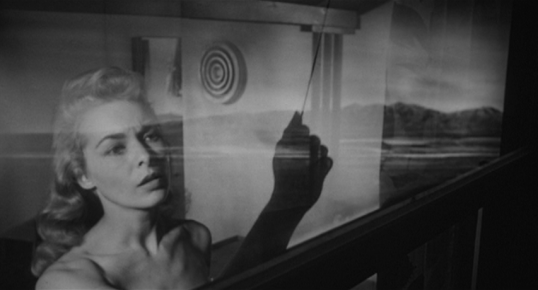
That Touch of Evil is a brilliant film is pretty much entirely due to Welles’s directorial vision. The story is pure pulp. While investigating the murder of an American businessman in Mexico, Vargas comes to believe that Quinlan is attempting to frame a young Mexican for the crime. While Vargas watches Quinlan, his wife Susie (Janet Leigh) is menaced by the crime lord Joe Grandi (Akim Tamiroff), who has his own issues with both Vargas and Quinlan. The plot may be the stuff of a B-programmer but, as directed by Welles, Touch of Evil plays out like a surreal nightmare, a journey into the heart of darkness that is full of eccentric characters, shadowy images, memorably askew camera angles, and lively dialogue. Welles and cinematographer Russell Metty create a world that feels alien despite being familiar. Just as he did with Gregg Toland in Citizen Kane, Welles shapes a film that shows us what’s happening in the shadows that most people try to ignore.
There’s really not a boring character to be found in Touch of Evil and the cast is full of old colleagues and friends of Welles. Marlene Dietrich shows up as Quinlan’s former lover. Mercedes McCambridge plays a leather-clad gang leader. Dennis Weaver is the creepy owner of a remote motel. (Two years before Psycho, Touch of Evil featured Janet Leigh being menaced in a motel. Mort Mills, who played Psycho’s frightening highway patrolman, plays a member of law enforcement here as well.) Zsa Zsa Gabor shows up for a few brief seconds and it makes a strange sort of sense. Why shouldn’t she be here? Everyone else is. Joseph Cotten plays a coroner. Ray Collins plays a local official. In the film’s skewered world, Charlton Heston as Mike Vargas works. His upright performance grounds this film and keeps it from getting buried in its own idiosyncrasies. Big personalites are everywhere and yet the film is stolen by Joseph Calleia, playing Quinlan’s quiet but observant partner. Calleia’s performance is the heart of the film.
Touch of Evil was not nominated for a single Oscar and that’s not surprising. It’s not really the type of film that was noticed by the Academy in the 50s. It was too pulpy and surreal and, with its story of a crooked cop framing someone who might very well be guilty anyway, it was probably too subversive for the Academy of the 1950s. It would take a while for Touch of Evil to be recognized for being the noir masterpiece that it is. In a perfect world, Welles would have been nominated for directing and for his larger-than-life performance as Quinlan. Joseph Calleia would have been nominated for Supporting Actor and perhaps both Janet Leigh and Marlene Dietrtich would have been mentioned for Supporting Actress. That didn’t happen but it would have been nice if it had.
Previous entries in The Unnominated:
Brad’s “Scene of the Day” – The Restaurant Shootout – from A BETTER TOMORROW (1986)!
One of the most influential scenes in action movie history, the restaurant shootout from A BETTER TOMORROW still packs a punch. I watched HAVOC (2025) from director Gareth Evans recently and he used the music from this scene in his movie. It felt like a love note to fans of Hong Kong cinema like me, and it made me want to revisit this movie again immediately. Chow Yun-Fat is amazingly badass, and John Woo himself even shows up at the end.
Enjoy, my friends!
A BETTER TOMORROW (1986) – John Woo and Chow Yun-Fat change action movies forever!
As I continue my celebration of Chow Yun-Fat, who turns 70 years old on May 18, 2025, I decided to revisit the film that made him a star, the Hong Kong classic A BETTER TOMORROW (1986).
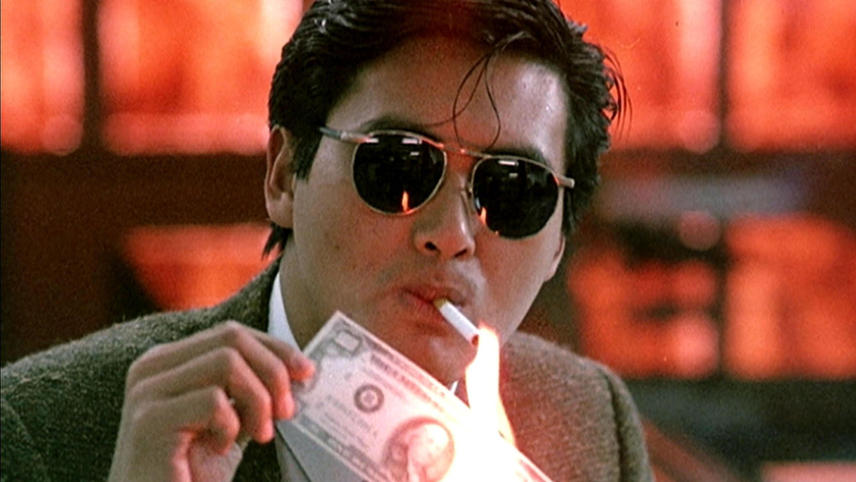
This undisputed action movie classic opens with Ho (Ti Lung) and his partner and best friend, Mark (Chow Yun-Fat) going about a normal workday. Except these two men are part of a triad organization that manufactures counterfeit American dollars. Ho seems serious while Mark appears to be the fun, cool guy, with his trench coat, Alain Delon sunglasses, and huge smile. They stroll through their organization’s offices, play with piles of fake money, and Mark even lights his cigarette with a $100 bill. They seem to have the world by a string when their boss asks Ho to take an up and coming guy in the organization named Shing (Waise Lee) along on their next deal in Taiwan. Before heading to Taiwan, Ho goes to see his dad in the hospital where he sees his younger brother Kit (Leslie Cheung), who has entered the Hong Kong police academy and is completely unaware that Ho is part of a criminal organization. Ho’s dad doesn’t want to see his sons on the opposite side of the law, so he asks him to leave his life of crime behind. Ho decides that the job in Taiwan will be his last, but unfortunately, the deal quickly goes awry, turning into a big shootout, with Ho and Shing barely escaping with their lives. They are tracked down by the police where Ho turns himself in, allowing Shing to escape. When the triad bosses find out that Ho has been arrested, they send a big henchman to kidnap his dad, who is now at Kit’s house, as leverage to make sure Ho doesn’t talk to the police. Kit, his girlfriend and his dad all fight the huge henchman, but dad is eventually stabbed to death. Cut to Mark reading the paper and seeing that his best friend has been arrested. He finds the betrayer in the Fung Lim restaurant and proceeds to take his revenge, in slow motion and with two guns no less. On his way out though, he takes a couple of rounds to his right knee.
Cut to three years later and Ho is getting out of prison. Kit doesn’t want to have anything to do with him and blames him for their father’s death. Distraught, but knowing he needs to work, he goes to a taxi company run by Ken (Kenneth Tsang) and is able to land a job. While working his shift, he goes by their old office building and sees Mark, who’s now a cripple with a limp and a leg brace. Shing, now a boss, walks out of the building surrounded by his bodyguards and throws cash on the ground at Mark’s feet, treating him like nothing more than a beggar. Ho goes to talk to Mark and the two men embrace. Mark wants to join forces with Ho and retake the underworld by storm. Ho wants to steer clear of his old life and try to reconnect with a completely uninterested Kit. Everything comes to a head when Kit is set up by Shing to be shot and Mark is viciously beaten. Determined to relive his old glory days, and now having given up on Ho for help, Mark breaks into the triad’s offices and steals the plate that is used to create the phony money. Ho has decided he can no longer sit on the sidelines. He and Mark use the plate as an excuse to lure Shing and his men to the docks where they engage in an apocalyptic shootout that will change all of their lives forever.
It’s hard to know where to start when talking about a movie like A BETTER TOMORROW. I’m not going to do a normal review where I discuss the various pros and cons of the film. Why, you ask? Because it’s a great movie, but it’s so much more than just that. A BETTER TOMORROW would change action filmmaking forever, and eventually turn Director John Woo and actor Chow Yun-Fat into worldwide stars. It would become the highest grossing film in Hong Kong cinema history. It would create a trenchcoat fad in tropical Hong Kong that would find its way across the world entrapping movie nerds like a young Quentin Tarantino. It would create the heroic bloodshed film genre, a genre that would become a staple of Hong Kong cinema for years to come. It would mix balletic action and raw emotion in a way that had never been done before. And the whole world would eat it up. John Woo may have even made better action films in the ensuing years with movies like THE KILLER and HARD-BOILED, but they were all inspired by the greatness and success of A BETTER TOMORROW. It’s quite simply one of the most influential movies of all time, and it’s still influencing later generations of filmmakers. I watched Gareth Evans’ new film HAVOC (2025) a few days ago, and it clearly pays homage to this amazing film through its use of music from a key scene.
I did want to talk a little bit about the main stars of the film. Ti Lung, who plays Ho, was one of the great stars of the Shaw Brothers kung fu films from the 70’s. He’s excellent in the lead role, so much so that the he would win the Taiwan Golden Horse award as best actor for his performance. Leslie Cheung, who plays the younger brother Kit, was a huge pop star in Hong Kong. He sings the memorable tune that plays over the film’s closing credits. I’ll admit that his portrayal of Kit gets on my nerves, though. While I can understand his feelings of anger towards his brother, he often comes off as whiney, acting more like a petulant child than a serious adult. He would become a very good actor over time, but I don’t think he’s very good here. On a sad note, on April 1st, 2003, suffering from depression, Cheung would commit suicide by jumping off the 24th floor of the Mandarin Hotel in Hong Kong. It was a tragic end for a great Hong Kong artist. It’s hard to believe now, but prior to A BETTER TOMORROW, Chow Yun-Fat was considered “box office poison.” He had been a TV star in Hong Kong, but his movies would never do very well. That would all change with A BETTER TOMORROW. Even though he was more of a supporting character in the film, he became the undisputed breakout star and he would capture the hearts of the people of Hong Kong and all of Asia from that point forward. His charismatic performance became the personification of the flawed, emotional, heroic, super-badass. Women loved him and men wanted to be like him, and he made it all look so easy. I’ve said before that he’s one of the great international movie stars of the last 40 years. It all began with A BETTER TOMORROW.
Finally, I wanted to take a moment to discuss the Director of A BETTER TOMORROW, John Woo. Woo had been kicking around the Hong Kong film industry for many years, having directed quite a few martial arts films and comedies in the 70’s and early 80’s. By the time of A BETTER TOMORROW, he was considered past his prime. He wanted to make films like his heroes Jean-Pierre Melville and Martin Scorsese, but was considered too much of a risk by most of the local industry. Luckily for him, Tsui Hark and Cinema City would give him a chance to make the movie he wanted to make, even if it came with a tight budget, and a cast that included a fading martial arts star and the human equivalent of box office poison. Woo would take this opportunity and change what action movies looked like forever. Good for him, and us, as we’d get so many great films, including one of my all time favorites, FACE/OFF (1997) with John Travolta and Nicolas Cage. I said all of this about the stars because before A BETTER TOMORROW came out, it looked like a project that would go nowhere fast. Instead it changed the world of cinema. It also changed the world of a movie nerd from Toad Suck, Arkansas, with the aftermath of its success providing so many hours of entertainment in my own life. It’s truly amazing what one great film can do.
 Through the Shattered Lens