Harrow Alley, A Film That Never Was


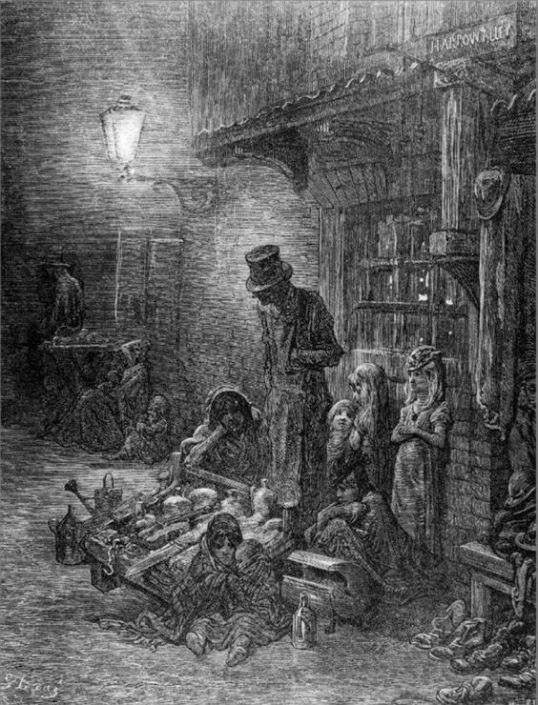
Harrow Alley (1880, Gustave Dore)

Originally, I was thinking that, since it’s April Fools Day, I would write a 2,000-word review of an “obscure” Italian horror film and then, after I gotten everyone all enthused about tracking down this masterpiece, I would go “April Fools!”

But you know what?

I freaking hate it when people do stuff like that.  Seriously, that’s a really awful way to treat your loyal readers.  If any of the blogs that you follow pull anything like that on you today, I suggest you unfollow them and instead, switch your allegiance over to us.  We love you.

But anyway!  Since I won’t be writing about a fictional film, I thought I might take this opportunity  to tell you about Harrow Alley, a screenplay that has frequently been described as the best script to never be produced.

(Now, I should admit that one of the people who said that was a writer for The Huffington Post and usually, disagreeing with The Huffington Post is point of honor for me.  But, seriously, Harrow Alley sounds so intriguing that I’m willing to make an exception to this rule.)

Harrow Alley was written, in 1970, by a screenwriter named Walter Brown Newman.  It’s a historical film, one that is set in the 17th century.  The Bubonic Plague is ravaging London but the citizens of the Harrow Alley neighborhood are simply trying to survive from day-to-day without sacrificing their humanity.  Harry is a well-meaning alderman who, after every other official flees the city, finds himself as the unofficial leader of Harrow Alley.  He’s an optimist who provides strength to the entire neighborhood but the demands of being positive in the face of death start to wear on him.  His wife is pregnant and, much like Rick Grimes in The Walking Dead, he has to wonder whether it’s right to bring a child into this Hellish world.  As the film progresses, he watches as his friends and neighbors die of the plague.  He’s even forced to kill his beloved dog.

Harry befriends Ratsey, a thief who survived the plague when he was a child.  With everyone wrongly convinced that Ratsey is now immune to the plague, the former thief becomes one of the most respected men in the neighborhood.  (Because of his “immunity,” he is also one of the few people who can help dispose of the dead.)  With Harry as his mentor, Ratsey becomes respectable.  Ratsey starts out as a cynical opportunist but, in the middle of the Great Plague of London, he discovers his humanity.  Even when Ratsey learns that no one is immune to the plague, even if they’ve had it before, he does not flee.  He continues to help dispose of the dead.

But even as Ratsey becomes stronger, Harry grows weaker.  When his wife and child die, Harry vanishes.  Ratsey steps into his place.  Ratsey becomes the new leader of Harrow Alley.  And, months later, when Ratsey arrests a beggar who has just killed a man, he is shocked to discover that the beggar is Harry.

And so the film ends.

Sounds like a really happy movie, doesn’t it?

And did I mention that the script is apparently 180 pages, which would translate to three hours of screen time?

It’s easy to see why Harrow Alley has never been produced.  Can you imagine being the advertising genius who has to make a three-hour film about the Bubonic Plague into a box office success?  That said, the film still sounds incredibly intriguing to me.  Maybe it’s because I’m a history nerd, but the story just fascinates me.  From what I’ve heard, this is a script that literally has everything: tragedy, romance, and even a little dark comedy.

Interestingly enough, Harrow Alley apparently came close to being produced in the 80s.  In this projected version, Harry would have been played by George C. Scott while a young Mel Gibson would have played Ratsey.  It sounds like brilliant casting to me.
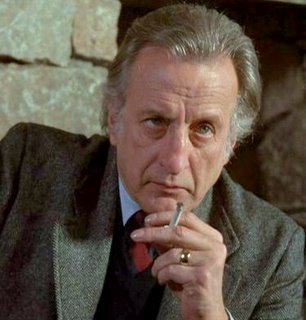
Harry?
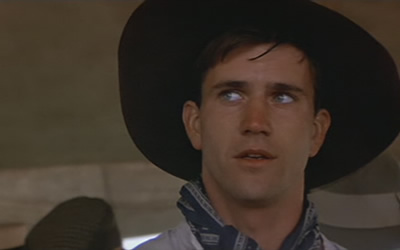
Ratsey?

If they produced the film today, I could just easily imagine Gibson in the role of Harry and maybe Tom Hardy as Ratsey.

(Bring the Mad Maxes together!)

Harry?

Ratsey?

Though Walter Brown Newman died in 1993, his script is still out there.  Maybe, someday, it will be produced.  If it is, I’ll definitely be there to watch it.

All three hours of it.
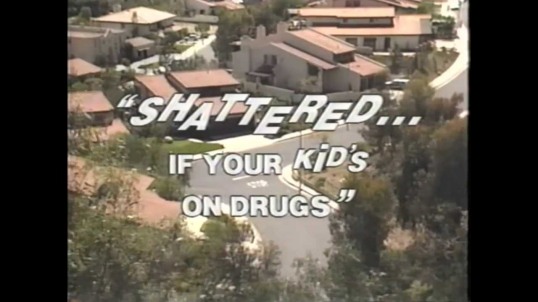
A Movie A Day #83: Shattered: If Your Kid’s On Drugs (1986, directed by Burr Smidt)


Shattered: If Your Kid’s On Drugs is a typical anti-drug video from the 1980s.  The story is familiar after school special material.  Kim (Megan Follows) and Rick (Rick Segall) are upper middle class kids who live in the suburbs.  Rick is a track star.  Kim is at the top of her class.  That all changes when they start hanging out with the local drug dealer (Dermot Mulroney), who gets Rick hooked on marijuana and Kim hooked on cocaine.  Kim gets an F on her report card.  Rick can no longer jump the hurdles.  Eventually, their parents stop drinking and taking valium long enough to force them into rehab.  The message is that tough love is the only solution.

The only thing that makes Shattered: If Your Kid’s On Drugs noteworthy is the strange and unexpected presence of Burt Reynolds and Judd Nelson, playing themselves and commenting on the action.  The first scene in the video is Burt and Judd driving their pickup truck through the suburbs, talking about how nice it is.  “Lot of nice restaurants,” Burt says.  “Are you going to buy me lunch?” Judd asks.  “Lot of nice restaurants,” Burt replies.  “This town is the American Dream,” Judd says.  “Or the American nightmare,” Burt adds.  When Kim and Rick are getting high in Dermot Mulroney’s chartreuse microbus, Burt and Judd sit on a picket fence and shoot the crap.  Burt can’t understand why teens would use drugs and Judd reminds him that it has been a while since he was a teenager. Rumor has it that both Burt and Judd appeared in this video to fulfill court-ordered community service.

Everything works out in the end.  If you have any doubt, just look at Burt giving us a thumbs up before the final credits roll.

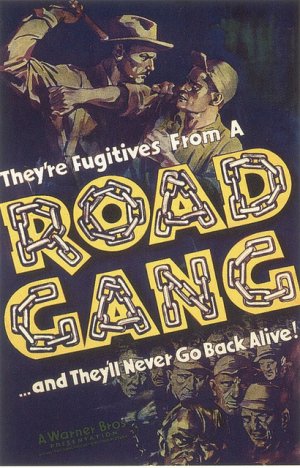
Lisa Cleans Out The DVR: Road Gang (dir by Louis King)


I was going to start this review with a quote from Gandhi: “A nation’s greatness is measured by how it treats its prisoners.”  That was something that I first heard from a perpetually stoned ex-seminarian who used to live in a trailer park in Lake Dallas.  I always figured that, being as stoned as he usually was, he probably knew what he was talking about but, upon doing research for this review, I have discovered that Gandhi actually didn’t say that.  What Gandhi said was, “A nation’s greatness is measured by how it treats its weakest members.”  Fortunately, it’s the same basic idea and, regardless of how you phrase it, it’s a quote that perfectly encapsulates the message of the 1936 film, Road Gang.

Road Gang tells the story of Jim (Donald Woods) and Bob (Carlyle Moore, Jr.).  Bob is fun-loving.  Jim is more serious and engaged to marry heiress Barbara Winston (Kay Linaker).  Jim and Bob live in an unnamed Southern state (though I’m going to assume that the state is supposed to be Georgia, just because).  Jim has just written an article that exposes the corruption of political boss, J.W. Moett (Joe King).  The article is so good that both Jim and Bob have been offered jobs in Chicago!  There’s a lot of corrupt political figures who can be exposed in Chicago!

However, while driving up north, Jim and Bob are arrested on trumped-up charges.  At first, Jim and Bob laugh off Moett’s desperation but, unfortunately, another criminal happens to be breaking out of jail at the same time that Jim and Bob arrives for booking.  That criminal kills the arresting officer and then forces Jim and Bob to drive him across the state.  Eventually, the police recapture the three of them.  However, the escaping criminal is killed and Jim and Bob are arrested as accessories.  Under the advice of their lawyer, Mr. Dudley (Edward Van Sloan), they plead guilty and accept a deal.  What they don’t know is that Dudley works for Moett and that, as a result of pleading guilty, they are going to be sentenced to five years in a prison camp.

Okay, so the film gets off to a pretty melodramatic start.  And, to be honest, the entire film is extremely melodramatic.  A lot of time is devoted to Barbara trying find evidence that Jim and Bob were set up, something that is made difficult by the fact that Barbara’s father, like Mr. Dudley, works for Moett.  Fast-paced and not-always-logical, this is a B-movie, in every sense of the term.

And yet, as melodramatic as it is, Road Gang is deadly serious when it comes to portraying the brutality of the prison camp.  From the minute that Bob and Jim arrive, they find themselves at the mercy of the corrupt warden and his sadistic guards.  The prisoners are largely used as slave labor and subjected to punishments that are often arbitrary and extreme.

Road Gang doesn’t flinch when it comes to portraying why prison often not only fails to rehabilitate but also helps to transform minor offenders into hardened criminals.  There’s a disturbing scene in which Jim, Bob, and the other prisoners are forced to listen as another prisoner is whipped.  The crack of the whip and his howls of agony explode across the soundtrack in a symphony of pain and sadism.  Jim and Bob have two very different reactions to being in prison.  One survives.  One allows himself to be killed rather than take one more day in confinement.

Road Gang is often compared to I Am A Fugitive From A Chain Gang.  Actually, beyond the theme of a fatally compromised justice system, there is no comparison.  The angry and fact-based I Am A Fugitive From A Chain Gang is a hundred times better and, quite frankly, Donald Woods was no Paul Muni.  However, Road Gang still has its moments of power.  Decades after it was made, the issues it raises continue to be relevant.  Do we send people to prison to rehabilitate them or to punish them and are the two goals mutually exclusive?  And how can we say that someone has “paid his debt to society” when, even after a prisoner serves his time, the stigma of having been imprisoned closes and locks most doors of opportunity?

Road Gang shows up occasionally on TCM.  There’s where I recorded it on January 23rd of this year.

A Movie A Day #82: Sweetgrass (2009, directed by Ilisa Barbash and Lucien Castaing-Taylor)


101 minutes of sheep and mountains.

That’s the best description that I can give of Sweetgrass.  Sweetgrass is a documentary about shepherds in Montana who take a herd of sheep across the Beartooth Mountains.  There is no real plot.  The shepherds are not interviewed and very little is revealed about who they are.  They are men of few words so mostly the only sound heard is the constant baas of the sheep.  One of the shepherds does yell at the sheep, usually to curse at them for wandering off.  It is only at the end of the documentary that it is revealed that this was the last time that the shepherds herded their sheep and that their ranch, after 104 years of operation, closed the following year.

The scenery is often amazing and the documentary works as a record of and a tribute to a dying way of life.  Sweetgrass does not attempt to explain why these men do the work that they do or why the ranch is finally having to close.  It is a pure documentary, with no outside commentary, making it both enlightening and frustrating.  How much you enjoy Sweetgrass will depend on how much patience you have for baaing sheep.

A Movie A Day #81: The Great White Hype (1996, directed by Reginald Hudlin)


The Rev. Fred Sultan (Samuel L. Jackson) has a problem.  He is the richest and the best known fight promoter in America but the current (and undefeated) heavyweight champion is just too good.  No one is paying to watch James “The Grim Reaper” Roper (Damon Wayans) fight because Roper always wins.  Sultan has a plan, though.  Before Roper turned professional, he lost a fight to Terry Conklin (Peter Berg).  Conklin has long since retired from boxing and is now a heavy metal, progressive musician.  Sultan convinces Conklin to come out of retirement and face Roper in a rematch.  Since Conklin is white and Roper is black, Sultan stands to make a killing as white boxing fans get swept up in all the hype about Conklin being the latest “great white hope.”

In the days leading up to the fight, crusading journalist Mitchell Kane (Jeff Goldblum) attempts to expose the crooked Sultan before getting seduced into his inner circle.  Meanwhile, boxer Marvin Shabazz (Michael Jace) and his manager, Hassan El Rukk’n (Jamie Foxx), unsuccessfully pursue a match with Roper.  Conklin gets back into shape while Roper eats ice cream and watches Dolemite.

In its attempt to satirize boxing, The Great White Hype runs into a huge problem.  The fight game is already so shady that it is beyond satire.  This was especially true in the 90s, when the The Great White Hype was first released.  (Even more than the famous Larry Holmes/Gerry Cooney title fight, The Great White Hype’s obvious inspiration was the heavily promoted, two-minute fight between Mike Tyson and Peter McNeeley.)  The Great White Hype is a very busy film but nothing in it can match Oliver McCall’s mental breakdown in the middle of his fight with Lennox Lewis, Andrew Golota twice fighting Riddick Bowe and twice getting disqualified for low blows, or Mike Tyson biting off Evander Holyfield’s ear.

The Great White Hype has an only in the 90s supporting cast, featuring everyone from Jon Lovitz to Cheech Marin to, for some reason, Corbin Bernsen.  Damon Wayans is the least convincing heavyweight champion since Tommy Morrison essentially played himself in Rocky V.  The Rev. Sultan was meant to be a take on Don King and Samuel L. Jackson was a good pick for the role but the real Don King is so openly corrupt and flamboyant that he’s almost immune to parody.

When it comes to trying to take down Don King, I think Duke puts it best.

Lisa Cleans Out Her DVR: Girls Night Out (dir by Philippe Gagnon)


Last night, before I went to bed, I continued to clean out my DVR by watching a Lifetime film, Girls Night Out.  I recorded Girls Night Out off of the Lifetime Movie Network on January 22nd.  It was the earliest recording on my DVR.

Girls Night Out tells the story of McKenzie (MacKenzie Mauzy) and three of her closest friends.  They’ve been close since college.  They were all in the same sorority.  They have a long history laughs, pranks, fun, and barely concealed resentment.  Now, they have all graduated and they’ve all found individual success.  McKenzie is marrying Reese (Cody Ray Thompson), who is nice but kind of boring.

While her friends take McKenzie out to celebrate, Reese runs into a guy at a bar.  Brandon (Jacob Blair) seems nice but he’s not!  In college, Brandon used to date McKenzie.  But, one night, after getting her drunk, Brandon raped McKenzie.  When McKenzie reported him, Brandon was kicked out of school.  He lost all of his friends at his fraternity.  He lost his chance to play in the NFL.  Brandon wants revenge and that revenge starts with kidnapping Reese.

Brandon announces that, unless McKenzie and her friends follow his every order, he will kill Reese.  He divides the four of them into two teams and then has them recreate extreme versions of some of the pranks they played in college.  One team is sent searching for thrown-away food and used condoms.  One team is ordered to sneak into a morgue and kiss a corpse.  One friend has to strip down to her underwear while her teammate writes on her with a marker.  Meanwhile, the other two friends have to go buy crack.  And that’s only the beginning…

Girl’s Night Out is a film that asks, “How far would you go for your friends?”  That’s the question that I found myself wondering as I watched.  I never joined a sorority but, when I was in college, I had a group of friends who were like sisters to me.  I called us the SBS, which stands for Sexy Bitch Squad.  My friend Lea used to call us the BNC, which stood for Big Nose Crew, which I think was her sweet way of trying to make me feel better about my own nose.  But regardless of what we were called, we were and are extremely close.  So, I could definitely relate to the scenes involving the bachelorette party and the male strippers.

But, I asked myself, if someone’s fiancée was being held prisoner and being threatened with murder, would I go to the same lengths as the characters in Girls Night Out?

Probably not.

I mean, seriously — climbing into the dumpster and looking for a used condom?  Ewwww.  Kiss a corpse?  No way!  But, luckily, I know that none of the members of SBS (or the BNC) would ever ask me to.  They know me well enough to know better.  That’s the great thing about friendship.  You don’t have to pretend like you’d wear high heels in a crack house just to keep your friend’s boyfriend from being murdered.  You can be yourself, flaws and all.

As for the rest of Girls Night Out … well, it took it a while but it won me over.  At first, everyone in the film seemed so shallow that I had a hard time imagining how I could ever have any sympathy for them.  But then Brandon showed up and was such a hateful character (and Jacob Blair did such a good job of bringing this loathsome jerk to life) that I found myself really looking forward to seeing him get his comeuppance.  Let’s face it — we’ve all had a Brandon in our lives and our greatest regret is that we never go a chance to witness him getting repeatedly kicked in his genitals.  Knowing that Brandon would eventually get his ass kicked was more than enough to keep me watching the film.

It took a while but seeing Brandon get what he deserved made the film more than worth watchiing.

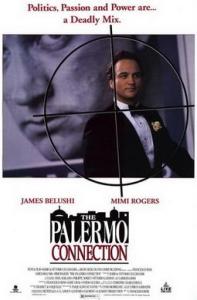
A Movie A Day #80: The Palermo Connection (1990, directed by Francesco Rosi)


Carmine Bonavia (James Belushi) is an idealistic New York City councilman who wants to be mayor.  Despite an easily understood slogan — “Make A Difference!” — his reform campaign is running behind in the polls.  Having nothing to lose, Carmine announces that he supports the legalization of drugs.  By taking out the profit motive, the Sicilian Mafia will no longer have any incentive to sell drugs in the inner city.  Carmine shoots to top of the polls.  Now leading by 11%, Carmine marries his campaign manager (Mimi Rogers) and returns to his ancestral home of Sicily for a combination honeymoon and fact-finding tour.  The Mafia, realizing that Carmine is serious about legalizing drugs, conspires to frame him for the murder of a flower boy.  If that doesn’t work, they are willing to resort to other, more permanent, methods to prevent Carmine from ever becoming mayor.
The Palermo Connection is an unfairly overlooked film from Francesco Rosi, an Italian director who specialized in political controversy.  Though The Palermo Connection was sold as a thriller, Rosi was more interested in showing how organized crime, big business, government corruption, the war on drugs, and the poverty of the inner cities are all intricately connected.  When Carmine arrives in Palermo, Rosi contrasts the outer beauty of Sicily with the desperate lives of the junkies living there.  The pace may be too slow for action movie fans but Rosi gives the audience much to think about.  This is probably the last film you would ever expect to star James Belushi but he gives a strong and committed performance as Carmine.

The Palermo Connection, which was co-written by Gore Vidal, is a good film that predates The Wire in its examination of how greed, drugs, poverty, and racism all come together to victimize the most marginalized members of society.

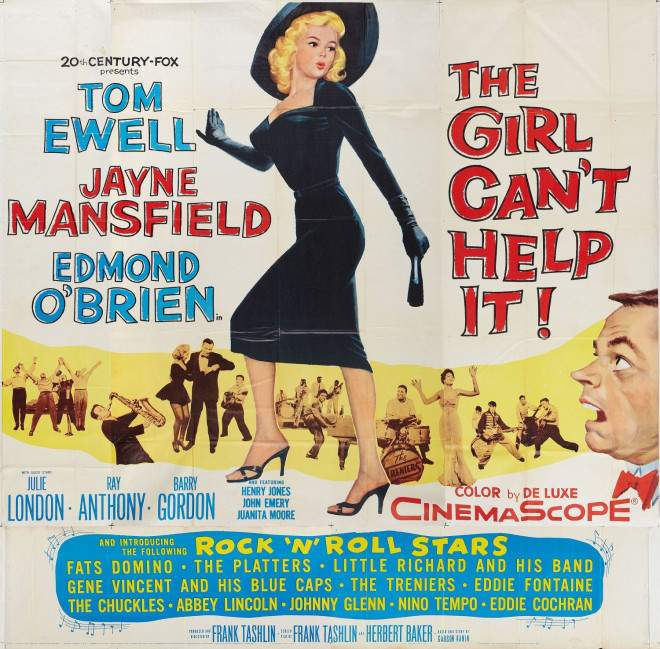
Rockin’ in the Film World #10: THE GIRL CAN’T HELP IT (20th Century Fox 1956)


gary loggins's avatarcracked rear viewer

Frank Tashlin  combines two of 50’s America’s favorite obsessions, sex & rock’n’roll, in THE GIRL CAN’T HELP IT, Jayne Mansfield’s first headlight headlining role. When Jayne sashays across the screen, turning heads, melting ice, boiling milk, and cracking eyeglasses a star is born, in CinemaScope and gorgeous DeLuxe color. But the film is stacked with more than just Jayne’s Twin Peaks; it features performances from rock royalty like Little Richard, Fats Domino, Eddie Cochran, Gene Vincent, The Platters, and a host of others.

The plot is very simple (and very familiar): a goony gangster (broadly played by a hilarious Edmond O’Brien ) hires a down-on-his-luck agent (Tom Ewell of THE SEVEN YEAR ITCH) to make a singing star out of his honey (our girl Jayne). Only problem is, Jayne can’t carry a tune in a bucket, shattering lightbulbs whenever she starts to warble. Seems she doesn’t want to be a star…

View original post 468 more words

Trailer: Spider-Man: Homecoming


Marvel released the 2nd full trailer for Spider-Man: Homecoming, which is looking pretty good. It seems that having proved himself to Tony Stark (Robert Downey Jr.), Peter Parker (Tom Holland) has received some cool upgrades to his Spider-Man suit. While Peter appears to want to join the Avengers, Stark would have him just keep an eye on New York City and some of the more low-level stuff. When The Vulture (Michael Keaton) threatens the city, Spider-Man may be the only one to stop him. Then again, it does look like there’s an Iron-Man team up here, which is sweet. This trailer is feeling like some of Brian Michael Bendis’ Ultimate Spider-Man line.

The film comes out on July 7th. Enjoy.