Film Review: Boot Camp (dir by Christian Duguay)


Occasionally, if you’re lucky, you come across a film that so totally and completely conforms to your own worldview that you’re forced to wonder if maybe you wrote the script and then somehow forgot about it.

That was certainly the case, for me, when I recently watched 2008’s Boot Camp, a teen melodrama with an anti-authoritarian subtext.  Check out the trailer:

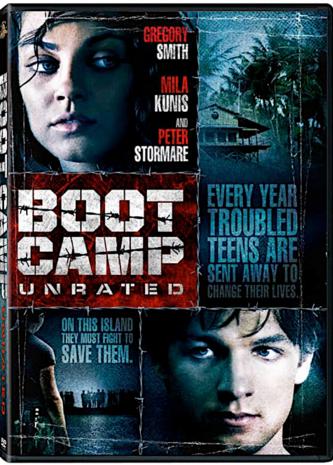
In Boot Camp, Mila Kunis plays Sophie.  Sophie is rich and, in the eyes of her parents, out of control.  She talks back.  She sneaks out of the house.  She hangs out at all the wrong clubs and with all the wrong people.  You know the story.  We’ve all seen the talk shows.  Sophie’s parents are convinced that the only way that they can get Sophie under control is to exile her to what the film calls a “tough love boot camp.”

The boot camp is located on an island, just a few miles away from a luxurious resort.  From the minute Sophie arrives, she is told that escape is impossible and she can only leave after the facility’s founder, Dr. Arthur Hall (Peter Stomare), says that she can.  Some people have been at the camp for years, waiting for Dr. Hall to announce that they’re rehabilitated.

The rest of the film follows Sophie and several other inmates as they try to survive boot camp without surrendering their free will.  It’s not easy.  Though he is more than happy to take their money, Dr. Hall resents the parents and his program is mostly designed to brainwash the inmates into thinking of him as being their new father figure.  The camp is staffed with brutes, sadists, and rapists.  When one inmate drowns, the staff tries to cover up his death.  Eventually, like the inhabitants of the Island of Dr. Moreau, Sophie and the other inmates have no choice but to rise up in rebellion against their masters.

“Tough love boot camps” are a real thing.  They used to be hugely popular with daytime talk show audiences and I know that Dr. Phil still has a ranch to which he sends “out of control” teens.  (I put “out of control” in quotes because, often times, it seems that “out of control” is code for “thinking for yourself.”)  The idea is that rebellious teenagers are sent to the camp, where they get yelled at until they agree to stop being so rebellious.  Over the years, there’s been a lot of debate over whether boot camps actually work.  If I had been sent to a boot camp, I think I would have just lied about my feelings and put on a repentant good girl act just to get the yelling to stop.  I’d be perfectly humble and contrite for three months and then, as soon as I got out of the camp, I’d go back to sneaking out of the house, skipping school, shoplifting, doing drugs, and whatever else got me sent to the camp in the first place.  From what I’ve seen of the whole boot camp experience, it seems to be more about brainwashing than anything else.  What’s the point of having well-behaved children if they can’t think for themselves?

But, then again, boot camps have never really been about  helping the teenagers sent to them.  Instead, they’ve always been about making lousy parents feel better about themselves.  Parents who have spent the last 14 years totally fucking up their children get to pat themselves on the back because they sent their kids to boot camp.  Other adults, bitter over having lost their youth, get to say, “It’s time to teach those ungrateful children to respect authority.”  As for the people who run the boot camps, it’s less about the inmates and more about power and money.

That’s certainly the message of Boot Camp.  In fact, I was taken by surprise to discover just how much Boot Camp conformed to my own thinking on … well, on just about everything.  Make no mistake, Boot Camp is a flawed film.  There’s nothing subtle about Christian Duguay’s direction and, with the exception of Mila Kunis, none of the performances are as memorable as you might hope that they would be.  Peter Stomare is way too obvious in his villainy, giving a performance that belongs in the Overacting Hall Of Fame.  (You’ll find Stomare’s Dr. Hall in the villain wing, right next to Christoph Waltz in SPECTRE.)

But, even with all that in mind, it was impossible for me not to get excited when Sophie and her fellow out-of-control teens finally made their move against their tormentors.  The final third of Boot Camp turns into a celebration of disobedience and rebellion and it was impossible for me not to be thrilled by it.  Considering the increasingly Orwellian nature of American culture, we need more movies that celebrate revolution and individual freedom.  At a time when we’re being told that we “have to do this” or “have to do that,” Boot Camp says, “Nobody has to do anything, beyond what they choose.”

It’s an important message and one that people need to start heeding.
 

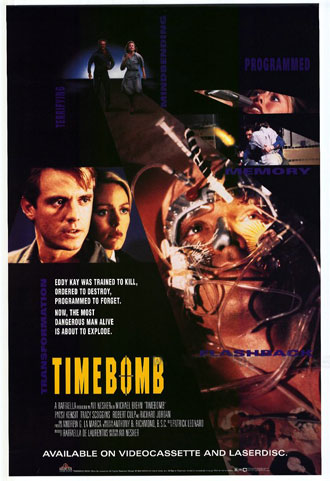
A Movie A Day #199: Timebomb (1991, directed by Avi Nesher)


Recall Total Recall?

If you do, Timebomb will seem very familiar.

Michael Biehn is a mild-mannered watchmaker who surprises himself when he fearlessly rushes into a burning building and saves a mother and her baby.  After he shows up on the evening news and is hailed as being a hero, he is attacked by an assassin (martial arts legend Billy Blanks) and discovers that he instinctively know how to defend himself.  When he starts having disturbing nightmares and strange flashbacks, he sees a psychiatrist (Patsy Kensit).  They discover that Biehn’s problems go back to when he was a part of a military brainwashing experiment.  The man behind the experiment (Richard Jordan) now wants Biehn dead.  Pursued by another brainwashed assassin (Tracy Scoggins), Biehn and Kensit go on the run.

Like many action movies from the early 90s, Timebomb has an extremely cool premise but lacks the budget necessary to make the most of it.  After a good start and some surreal moments (including a scene where Biehn and Kensit visit the lab where Biehn was “created”), Timebomb ends up just being another shoot ’em up.

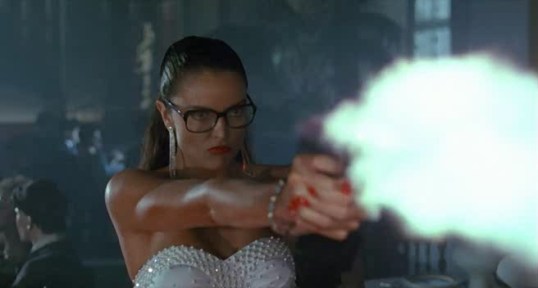
Luckily, Timebomb has a really good cast.  Richard Jordan is an effective villain and old pro Robert Culp has a small role as one of Jordan’s collaborators.  The always underrated Michael Biehn is a great hero, precisely because he’s not some huge, indestructible guy.  He’s not Stallone or Schwarzenegger or even Jean-Claude Van Damme.  (Timebomb was originally envisioned as a Van Damme vehicle.)  In Timebomb, Michael Biehn is the everyman action hero.  Plus, any movie that features Tracy Scoggins as a gun-toting assassin is going to be worth watching.

Fast & Furious Hitchcock: THE 39 STEPS (Gaumont-British 1935)


gary loggins's avatarcracked rear viewer

The chase is on – and on – as Robert Donat and Madeleine Carroll are pursued by cops and spies while pursuing a deadly secret in Alfred Hitchcock’s THE 39 STEPS. The “double chase”, first used by Hitch in his silent THE LODGER (1927), playfully keeps the film’s motor running in high gear, and introduces us to two of his soon-to-be famous tropes, the “McGuffin” and the ice blonde. It’s certainly an important film for Hitchcock, as it caught the eye of Hollywood producer David O. Selznick, who would bring Hitch to America’s shores five years later.

Donat, later an Oscar winner for 1939’s GOODBYE MR. CHIPS, plays Richard Hannay, trapped in circumstances beyond his control. The film begins in one of Hitchcock’s favorite places, a crowded public landmark, in this case a music hall (the marquee reminiscent of the shot of Anna Ondry walking past “A New Comedy” in BLACKMAIL ), as Hannay watches…

View original post 622 more words

A Movie A Day #198: Men of Respect (1990, directed by William Reilly)


That Bill Shakespeare really gets around.
Men of Respect comes to us disguised as a gangster movie but it is actually a modern-day version of MacBeth.  Mike Battaglia (John Turturro) is one of Charlie D’Amico’s (Rod Steiger) top lieutenants but he is upset because D’Amico has announced that his successor will be Bankie Como (Dennis Farina).  When Mike stumbles across a fortune teller, he is told that not only will he soon be in charge of the D’Amico crime family but that he will hold the position until the stars fall from the sky and that he will never be harmed by a “man of woman born.”  At the instigation of his ambitious wife, Ruthie Battaglia (played by Turturro’s real-life wife, Katherine Borowitz), Mike murders Charlie, Bankie, and everyone else who is standing in his way.  Even as D’Amico’s son (Stanley Tucci) starts to recruit soldiers for an all out war, Mike remains confident.  Even when one of this soldiers sees a fireworks show and says, “Jeez, it looks like stars from falling from the sky,” Mike remains cocky.  When his wife starts to complain that she can not get the blood stains (“the spot”) out of the linen, Mike is not concerned.  Why not?  “All these guys were born of a woman,” Mike says, “they can’t do shit to me.”

Turning MacBeth (or any of Shakespeare’s tragedies) into a Mafia film is not a bad idea but Men of Respect‘s attempt to translate Shakespeare’s language to 20th century gangster talk leads to some memorably awkward line readings from an otherwise talented cast.  By the time Matt Duffy (Peter Boyle) announced, in his Noo Yawk accent, that he was delivered via caesarean section, I could not stop laughing.  Even the scenes of gangland mayhem feel like second-rate Scorsese.  The idea behind the film is intriguing and there are a lot of recognizable faces in the cast but Men of Respect gets bogged down as both a Shakespearean adaptation and a gangster film.

A Movie A Day #197: Scissors (1991, directed by Frank De Felitta)


This is another dumb movie starring Sharon Stone.

In this one, Stone plays Angela Anderson.  Angela is a sexually repressed artist who is obsessed with scissors.  When she is attacked in an elevator by a man with a red beard, her neighbor, Alex (Steve Railsback), comes to her rescue.  Alex is an actor who lives with his twin brother, the bitter and wheelchair-bound Cole (Steve Railsback, again.)  When Angela finds herself locked in an apartment with a dead man (who has been stabbed with a pair of scissors and who has a red beard), who is responsible?  According to the dead man’s pet raven, it’s Angela.  But could it also have something to do with Angela’s obviously evil psychiatrist (Ronny Cox) and his politician wife (Michelle Phillips)?

This extremely ill-thought attempt at Hitchcockian suspense came out after Total Recall increased Sharon Stone’s profile but before Basic Instinct made her (briefly) a superstar.  Scissors, much like the later Intersection, is a film where Sharon Stone attempts to show that she has range by playing a frigid character.  Instead, Scissors just reveals how limited Sharon Stone’s range was.  For all of the film’s attempts to duplicate Repulsion, Stone is never believable as someone on the verge of losing her mind.  To her credit, Stone does try really hard, which is more than can be said for anyone else in the cast.  Railsback, normally a good actor, can barely summon up enough interest in the material to play one character, let alone two.  To buy what Scissors selling, it is necessary to believe that someone would come up with an elaborate scheme to drive Angela crazy but would still be careless enough to accidentally leave a door open at a key moment.

Dumb.  Just dumb.

Look At Me Look At You: Alfred Hitchcock’s REAR WINDOW (Paramount 1954)


gary loggins's avatarcracked rear viewer

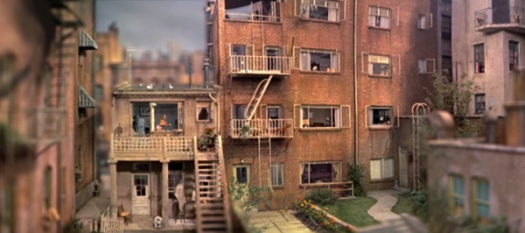
When you go out to the neighborhood cinema, you’re indulging in a voyeuristic experience, watching the lives of people unfold before you on the screen. The theme of viewer as voyeur, peeping in on the privacy of total strangers, has never been done better than in Alfred Hitchcock’s REAR WINDOW, nor more entertainingly. Like James Stewart’s protagonist L.B. Jeffries, we the audience are the voyeurs in the shadows watching from afar, stumbling onto things not meant for our eyes, and powerless to stop them without outside assistance. Hitchcock is not only the Master of Suspense, but a master of audience manipulation, and this dazzling piece of moviemaking is not only a hell of a thrill ride but a technical marvel as well.

The world of globetrotting photojournalist Jeffries has been boiled down to the view of the courtyard outside his apartment window, just as the audience’s world is now focused on…

View original post 856 more words

A Movie A Day #196: Mercenary Fighters (1988, directed by Riki Shelach Nissimoff)


Everyone’s favorite hippie action hero, Peter Fonda, plays Virelli, a long-haired Vietnam vet turned mercenary who is hired by a corrupt African general (Robert Doqui) to protect the construction of a dam that will result in the flooding of a native village.  Got all that?  Though Fonda is top-billed, he is not the star of the film.  The star is Reb Brown, who plays T.J. Christian.  T.J. starts out as a member of Fonda’s team but then he falls in love with a nurse (Joanna Weinberg) and he switches sides.  The villagers need someone to lead their revolution and all it takes is hearing Reb Brown do one of his trademarks power yells to know that he’s the man for the job.  Reb Brown was famous for yelling whenever he did anything and he yells a lot in Mercenary Fighters, even more than he yelled in Space Mutiny.
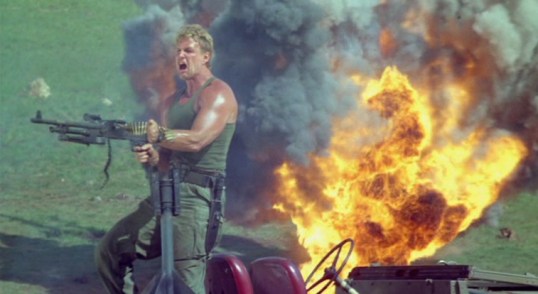
Mercenary Fighters is a typical Cannon film from the late 80s.  Like many of Cannon’s mercenary movies, it was covertly filmed in South Africa, at a time when apartheid was still being enforced and Nelson Mandela was still sitting in a prison cell.  (Cannon was not the only film company to secretly make movies in South Africa during the Apartheid Era.  They were just the most blatant about it.)  Richard Kiel apparently turned down Peter Fonda’s role.  It’s hard to imagine Kiel in the role but perhaps that’s because Virelli is a quintessential Peter Fonda-in-the-80s role.   Fonda glides through the film, delivering his lines like a California surfer who just smoked the kine bud.  The presence of Ron “Superfly” O’Neal and James “son of Robert” Mitchum serves to elevate the film’s cool factor while Robert Doqui brings some “I’ve worked with both Robert Altman and Paul Verhoeven” credibility to his one-note role.  Mercenary Fighters is good for anyone who is into either mindless Cannon action movies or Reb Brown yelling while shit blows up behind him.

Film Review: Cutter’s Way (dir by Ivan Passer)


Yesterday, after it was announced that actor John Heard had been found dead in a Palo Alto hotel room, I lost track of how many people declared that Cutter’s Way, a 1981 film in which Heard co-starred with Jeff Bridges, was one of their favorite movies of all time.  (That includes quite a few people who write for this very site.)  In fact, people were so enthusiastic about Cutter’s Way that I quickly decided that this was a film that I needed to watch for myself.  So, last night, after watching All About Eve on TCM and My Science Project with the Late Night Movie Gang, I curled up on the couch and I watched Cutter’s Way.

Technically, Cutter’s Way is a murder mystery but it’s actually a lot more.  In the grand noir tradition, the mystery is less important than the milieu in which it occurs.  Cutter’s Way takes place in Santa Barbara, California, which the film presents as being a microcosm of America.  It’s place where the rich are extremely rich and the poor are pushed to the side and expected not to complain.  The Santa Barbara of Cutter’s Way is controlled by new money and haunted by old sins.  It’s a world that is perfectly captured, by director Ivan Passer and cinematographer Jordan Cronenweth, in the film’s haunting opening scene:

John Heard plays Alex Cutter.  Years ago, Cutter served in Vietnam and returned with one less eye, one less arm, and one less leg.  An angry alcoholic, the type who always looks like he’s in desperate need of a shower and a shave, Cutter exists on the fringes of society.  Like many alcoholics, Cutter is a master manipulator.  When he has to, he can turn on the charm.  When the police are called after a drunken Cutter purposefully destroys his neighbor’s car, we suddenly see a totally different Alex Cutter.  He’s polite and apologetic, explaining that he was merely swerving to avoid something in the road and, by the way, he served his country in Vietnam.  As soon as the police leave, the real Cutter comes out.  He gets his bottle and starts to rant about how much the world owes him.  Watching the film, you find yourself understanding why some people might want to push this one-legged, one-armed, one-eyed veteran down a flight of stairs, that’s how obnoxious Alex Cutter can be.

And yet, there are people who love Alex Cutter.  There’s his long-suffering wife, Mo (Lisa Eichhorn).  Mo lives in squalor with Cutter, taking care of him and putting up with his bitterness.  There’s the local bar owner, who could probably put his kids through college on Cutter’s bar tab.  (He even drives Cutter home in the morning, after everyone else has deserted him.)  And finally, there’s Richard Bone (Jeff Bridges).

Bone is Cutter’s best friend.  Whereas Cutter is perpetually pissed off, Bone is almost always laid back.  Whereas Cutter feels that everything is his business, Bone prefers to remain detached from the world.  Mention is made of Bone being a graduate of the Ivy League but he spends most of his time giving tennis lessons and sleeping with wealthy women.  Bone takes care of Cutter, though their friendship is occasionally hard to figure out.  Why does Bone stick with Cutter despite all of Cutter’s abuse?  Perhaps Bone feels guilty because he avoided being drafted while Cutter lost half of his limbs in Vietnam.  Or maybe it’s because Bone is in love with Mo.

One night, when Bone is leaving a hotel, he sees a man in an alley.  The man appears to be hiding something in a dumpster.  Later, when the body of a woman is found in that same dumpster, Bone realizes that he probably saw the murderer.  Even more so, Bone thinks that the man resembled J.J. Cord (Stephen Elliott), one of the richest men in Santa Barbara.

Bone, however, isn’t sure that Cord’s the murderer.  Even more so, even if Cord was the murderer, Bone prefers to not get involved.  However, Cutter is sure that Cord’s the killer.  To Cutter, it makes perfect sense.  If men like Cord were willing to send boys to Vietnam and then refuse to take care of them when they returned both physically and mentally maimed by the experience, then why wouldn’t they also think that they could get away with murdering some hitchhiker?

Soon, Cutter has met the dead girl’s sister, Valerie (Ann Dusenberry).  Cutter says that his plan is to blackmail Cord.  He badgers the reluctant Bone into working with him.  It quickly becomes obvious, however, that Cutter is after more than money.  He is obsessed with proving that this rich and powerful man is a murderer.  And he’s not going to let anyone stand in his way.  Not even a stuffed animal:

As I said, Cutter’s Way is about much more than just a murder.  It’s a film about class differences, with even the otherwise slick Bone discovering how difficult it is to infiltrate Cord’s wealthy world.  It’s a film about disillusionment, cynicism, and the fleeting promise of happiness.  As angry as Cutter is, he still ultimately possesses the idealism that both Bone and Mo have lost.  He still believes in right and wrong.  While that angry idealism may make Cutter a pain in the ass, it’s also his redeeming feature.  As the youngest of them, Valerie is still an optimist but she is also the least prepared to deal with the sordid reality of the world around her.  Bone and Mo, meanwhile, both appear to have surrendered their belief that the world can be and should be a better place.  Ultimately, Cutter’s Way is a film that forces you to consider what you would do if you were in the same situation.  Cutter’s Way is not a great title, largely because it makes the film sound like a CW western, but it’s an appropriate one.  The entire film is about Cutter’s way of viewing the world and whether or not Bone will follow Cutter or if he’ll continue to refuse to get involved.

(The novel that the film’s based on was called Cutter and Bone.  According to Wikipedia, the title was changed because audiences thought the movie was a comedy about surgeons.)

I have to agree with those who have called Cutter’s Way a great film.  Not only is it gorgeous to look at but it’s one of the best acted films that I’ve ever seen, from the stars all the way down to the most minor of roles.  John Heard dominates the film, giving a performance of almost demonic energy but he’s perfectly matched by Jeff Bridges.  Bridges, back in his incredibly handsome younger days, gives a subtle and powerful performance as a man struggling with his conscience.  In the role of J.J. Cord, Stephen Elliott doesn’t get much screen time but he makes the most of it.  When he first see him, he’s riding a white horse and rather haughtily looking down on the world around him.  When he last see him, he delivers a line of such incredible arrogance that it literally left me stunned.  Though, when compared to Bridges and Heard, their roles are underwritten, both Lisa Eichhorn and Ann Dusenberry more than hold their own, providing able and poignant support.

Cutter’s Way is a great film and one that everyone should watch if they haven’t.


A Movie A Day #195: Best Revenge (1984, directed by John Trent)


Damn … John Heard died.

I know that almost everyone knows John Heard as either the father from Home Alone or as the detective on The Sopranos or maybe even the executive in Big.  Over the course of his long career, John Heard played a lot of neglectful fathers, greedy businessmen, and corrupt politicians.  Heard was good in all of those roles but he was capable of so much more.  Though he did not get many chances to do so, he could play heroes just as well as villains.

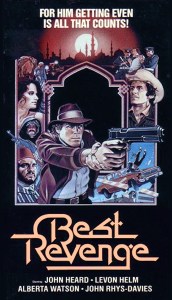
One of his best performances is also one of his least seen.  In Best Revenge, he plays Charlie.  Charlie is a laid back drug dealer, someone who would probably hate and be hated by most of the authority figures that Heard was best known for playing.  Charlie is the ultimate mellow dude, without a care in the world.  All he wants to do is play his harmonica and spend time with his girlfriend (Alberta Watson).  However, an old friend (Stephen McHattie) wants Charlie to help smuggle 500 keys of hash from Tangiers to America.  Charlie wants nothing to do with it but then he finds out that the Mafia will kill his friend unless the drugs make it across the ocean.  Charlie and his friend Bo (Levon Helm of The Band) fly over to Morocco but are betrayed.  Charlie ends up in a prison cell, from which he has to escape so that he can rescue Bo, smuggle the drugs, and get revenge on those who betrayed him.

Because of the prison aspect and the fact that Charlie wears a fedora, Best Revenge was sold as being a combination of Midnight Express and Raiders of the Lost Ark but actually it is a character study disguised as an action film.  Despite the title, Best Revenge is more interested in the real-life logistics and hassles of being an international drug dealer than in any sort of revenge.  Though it is a role far different from the ones he may be best known for, John Heard was perfectly cast as a small-time drug dealer who suddenly finds himself in over his head.  Heard gives such a good  and sympathetic performance that this film, along with his work in Cutter’s Way and Chilly Scenes of Winter, shows what a mistake was made when Heard became typecast as the bad guy.

Best Revenge was filmed in 1980 but not released until four years later.  Along with appreciating Heard’s performance, keep an eye out for Michael Ironside in an early, blink-and-you’ll-miss-it role.

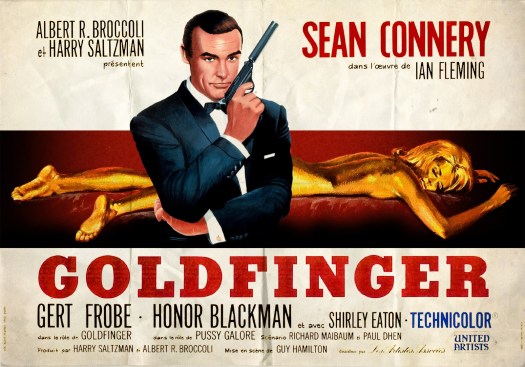
My Favorite Spy: Sean Connery as James Bond in GOLDFINGER (United Artists 1964)


gary loggins's avatarcracked rear viewer

For my money, GOLDFINGER is the ultimate James Bond movie, serving as the blueprint for spy sagas to come. The action begins right off the rip as a scuba diving 007 infiltrates an oil refinery in an unnamed Latin American country, plants some plastique explosives, and changes into a tux as the whole shebang blows, then attends to some “unfinished business” with a beautiful Latina who sets him up to be killed by a bad guy, electrocuting his foe in a tub and wittily remarking “shocking, positively shocking” – all before the opening credits roll and Shirley Bassey belts out the immortal title tune by Anthony Newley and Leslie Bricusse!

Our Man Bond is then off to Miami to meet with his CIA pal Felix Leiter. He’s put on the trail of one Auric Goldfinger, a legit gold bullion dealer suspected of illegal activities. The avaricious Goldfinger isn’t above running…

View original post 607 more words