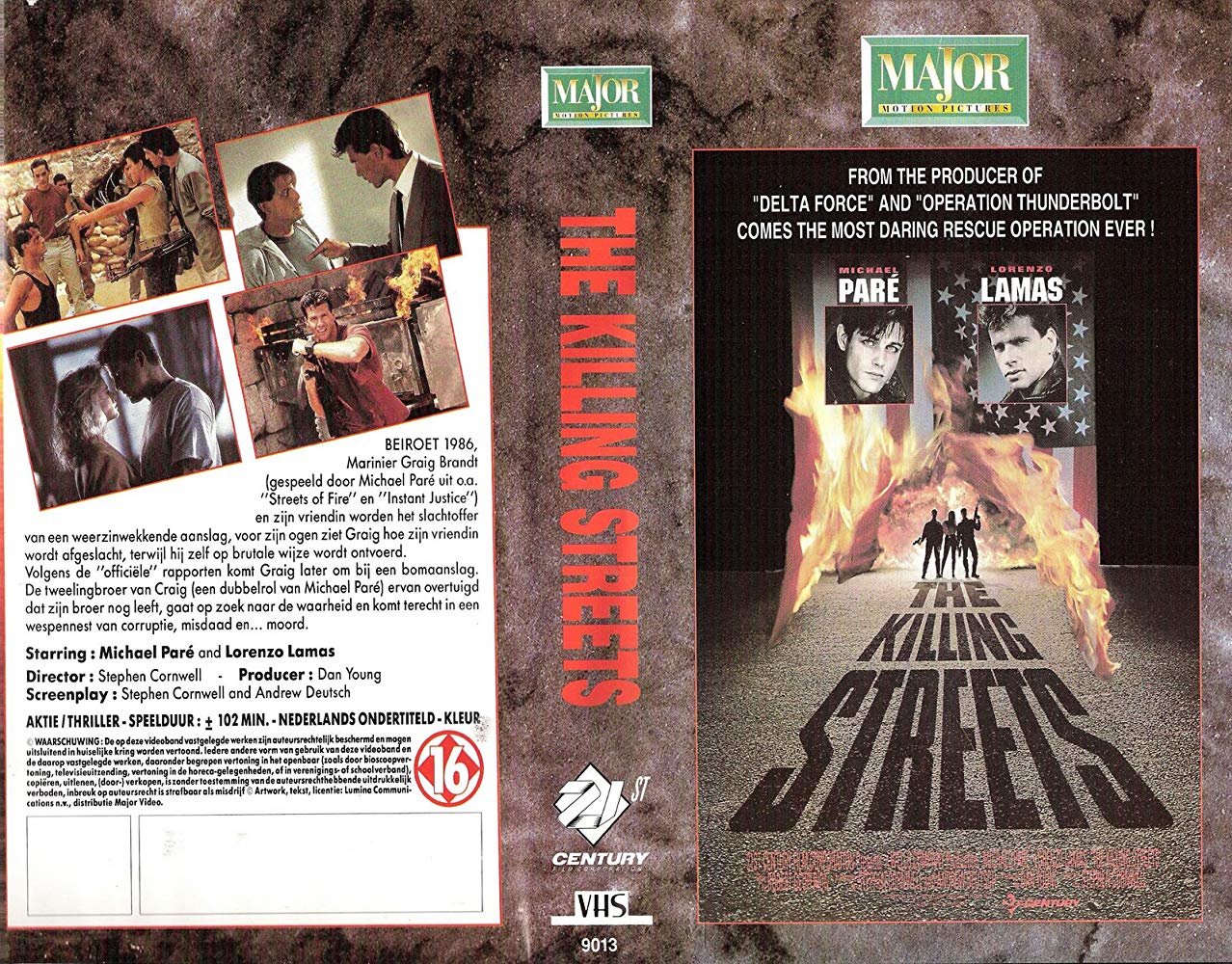
Cinemax Friday: Killing Streets (1991, directed by Stephen Cornwell)


Most of the time, late night Cinemax was dominated by noirish films starring Shannon Tweed but, occasionally, the network did slip in a low-budget action flick.  Killing Streets is a typical example of one of those films.

A Marine named Craig Brandt (Michael Pare) has disappeared in Beirut so his twin brother Chris (also played by Michael Pare) flies all the way over from Dayton, Ohio to search for him.  Even though everyone says that Craig’s dead, Chris knows that it isn’t true because, as a twin, he and Craig have a psychic connection.  It turns out, of course, that Chris is right.  Craig is being held prisoner by terrorist leader Abdel (Alon Aboutboul).  Chris is determined to rescue Craig, even though Charles (Lorenzo Lamas), an official at the American embassy, orders him to leave the country.  Chris may just be a high school basketball coach but that doesn’t stop him from going all Jack Bauer on every terrorist that he meets.  With the help of diplomat Sandra Ross (Jennifer Runyon) and Gilad (Gabi Amrani), the Middle East’s most helpful taxi driver, Chris sets out to rescue his brother.

When I started watching Killing Streets, I was excited because, according to the opening credits, it starred Lorenzo Lamas and it was produced by Menahem Golan.  Unfortunately, for the most of the movie, Lamas doesn’t get to do much other than bark out orders in one of the least convincing Southern accents that I’ve ever heard.  Instead, the first part of the movie is all about Michael Pare.  Michael Pare usually isn’t capable of showing enough emotion to be convincing as one character.  Now, imagine him playing two characters.  While one Michael Pare is walking around Beirut and searching for clues, the other Michael Pare is sitting in a cell and getting beaten and, since they both always have the same blank expression on their face, the only way you can tell which Michael Pare is which is by paying attention to who has more blood on them.  The whole time, you just want Lorenzo Lamas to show up and start showing off his Renegade skills but instead, he’s stuck telling one of the Michael Pares that he better get on the next plane back home.

Luckily, towards the end of the movie, the two Michael Pares team up with Lorenzo Lamas and they spend about ten minutes shooting guns and blowing stuff up and doing all of the other things that we want to see happen in a film like this.  It just takes a while to get there and while Menahem Golan may have produced this film, he didn’t direct it so, even though the ending is exciting, most people will probably lose interest before they get there.  As far as action films about rescuing hostages in the Middle East are concerned, this is no Delta Force.
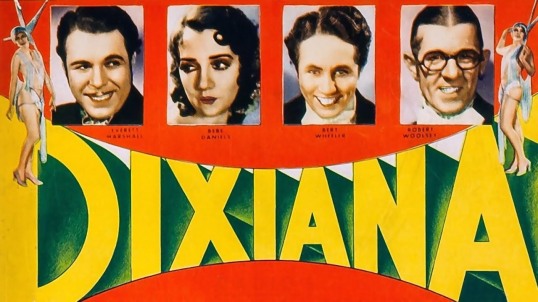
Mardi Gras Film Review: Dixiana (dir by Luther Reed)


Mardi Gras in New Orleans has always been a legendary party.

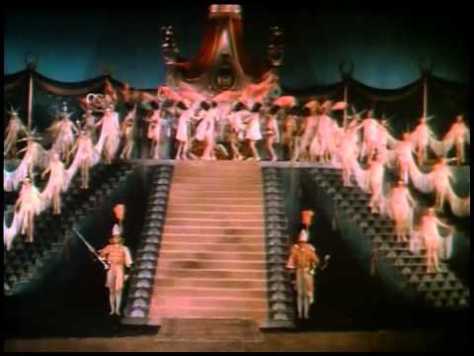
If you doubt me on this, just watch the 1930 film, Dixiana.  Dixiana is all about Mardi Gras.  I mean, there is a plot of sorts but it’s pretty easy to guess that, for audiences in 1930, the promise of a spectacular Madi Gras finale (filmed in technicolor, I might add) was the main appeal of this film.  Dixiana itself takes place in the 1840s so there you have it.  90 years ago, RKO Pictures made a lavish movie about a Mardi Gras celebration that had happened nearly 100 years earlier.  That’s quite a legendary party, no?

As with many pre-Code films about the Antebellum South, it can be a bit awkward to watch Dixiana today.  This is a film that opens on a plantation, with Cornelius Van Horn (Joseph Cawthorn) and his son, Carl (Everett Marshall), discussing how much they enjoy listening to the slaves sing about the Mississippi River.  They’re amazed that the slaves can sing so beautifully about water.  (It doesn’t occur to them that the song was actually about going up the river and finding freedom.)  Cornelius and Carl, we discover, are actually from Pennsylvania.  Cornelius has recently remarried, to the snobbish Birdie (Jobnya Howland) and both he and his son have only recently moved down to her native Louisiana.  Carl and Cornelius are still getting used to life in and the customs of the South.  Cornelius, for instance, explains that he regularly frees some of his slaves and he imagines that’s why they’re always so happy.  But if he really wants them all to be happy why doesn’t he just free them all and maybe stop buying slaves all together?  Let’s just say that Dixiana is not the film to watch if you’re looking for an honest look at American life before the Civil War.

Anyway, if you’re still interested in seeing the film after reading all of that, the majority of Dixiana takes place in New Orleans.  Carl goes into town, does some gambling, and sees a show.  He is immediately smitten with a performer named Dixiana (Bebe Daniels) and he asks her to marry him.  Even though her two best friends, Peewee and Ginger (played by the comedy team of Wheeler and Woolsey), are weary, Dixiana accepts his proposal.  Carl takes Dixiana back to the plantation with him.  Unfortunately, he also takes Peewee and Ginger and they soon let slip that they’re all circus performers.  Birdie is scandalized.  There’s no way her stepson is going to bring shame on the family by marrying a circus performer!

So, Dixiana and her friends head back to New Orleans.  The circus no longer wants her so Dixiana is forced to work in a gambling hall that’s owned by smarmy Royal Montague (Ralf Harolde).  Montague has his own personal interest in Dixiana but she’s still in love with Carl.  So, Royal plots to not only have Dixiana crowned as the Queen of Mardi Gras but also to trick Carl into accept a duel with him.  Montague, of course, plans to pull an Aaron Burr and cheat.  Meanwhile, Peewee and Ginger steal money, kick each other in the backside, and fight a duel of their own….

And really, none of that matters.  In the end, the film’s storyline is mostly just busywork.  The main reason that anyone would want to see this film is for the final 20 minutes, which is when the grainy black-and-white cinematography is replaced by gloriously vibrant technicolor and the Mardi Gras celebrations begin.  There’s singing.  There’s dancing.  There’s even Bill “Bojangles” Robinson, making his film debut and dancing up a storm.  Seriously, 1840s Mardi Gras looked like it would have been fun to attend, even if it does sometimes seem more like a lively cotillion as opposed to the orgy of alcohol poisoning that everyone knows and loves today.

Dixiana is one of those films that’s fallen into the public domain and, as such, it tends to turn up in a lot of cheap DVD boxsets.  There’s quite a few prints out that are completely in black-and-white and which don’t feature the sudden change to color.  That’s a shame because, whatever flaws this film may have, it does make good use of that technicolor during the final 20 minutes.  It’s big and lavish and gorgeous to look at and it’s easy to imagine the valuable escape that it provided for audiences at the start of the Depression.

Today, Dixiana is probably most interesting as a historical document.  It’s not quite as racy as one might expect from a pre-code film but it’s a good example of the type of lavish musicals that were popular among audiences who, in the 30s, used the film as a way to escape from the grimness of reality.  And, if nothing else, it’s proof that Mardi Gras in New Orleans has always been a big deal.

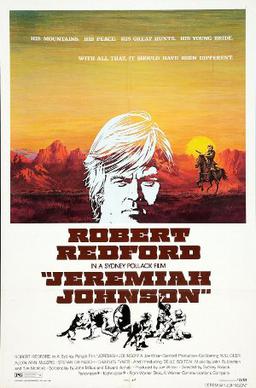
Jeremiah Johnson (1972, directed by Sydney Pollack)


In the 1840s, Jeremiah Johnson (Robert Redford) is a veteran of the Mexican War who wants to get away from civilization.  He sets up an isolated life for himself in the Rocky Mountains and looks to support himself by working as a trapper.  At first, he struggles but eventually he gets some much-needed help from a veteran trapped named Chris Lapp (Will Geer).  Along the way, Johnson discovers that life in the mountains can be harsh and violent.  He adopts a mute boy named Caleb, whose family has been killed by Blackfoot warriors.  Later, the chief of the local Flathead tribe “gives” Jeremiah his daughter.  Despite the language barrier between him and his new wife, Jeremiah is soon the head of a happy family.

One day, when the U.S. Calvary shows up and requests that Jeremiah guide them through the mountains so that they can rescue some starving missionaries, Jeremiah reluctantly leaves behind his family and helps them.  However, Lt. Mulvey (Jack Colvin) insists that Jeremiah lead them through a sacred Crow burial ground.  The Crow retaliate by killing Jeremiah’s family.  Driven mad by grief, Jeremiah sets out to kill every Crow that he can find.

Jeremiah Johnson is really two movies in one.  The story starts out with Jeremiah as a proto-hippie who wants to get away from the hypocrisy and violence of modern society.  Jeremiah takes care of the land, makes friends with other outcasts, and makes a good life for himself.  After Jeremiah’s family is killed, the movie turns into a Death Wish-style revenge thriller, with Jeremiah losing himself in his rage and killing almost everyone that he sees.  Redford is surprisingly convincing as the insane, murderous Jeremiah and the sudden outbursts of violence provide a strong contrast to the relatively peaceful first half of the film.

Jeremiah is a like a lot of the early American settlers.  He wants to get away from the world and start an entirely new life for himself.  He’s seen what the civilization has to offer and he would rather just build a cabin in the mountains and pretend that the rest of the world doesn’t exist.  If Jeremiah had been born earlier, he probably could have pulled it off.  But, by the time Jeremiah tries to go off the grid, it’s already too late.  Society is growing too fast for him to escape from it.  Jeremiah discovers that it’s impossible to truly cut yourself off from humanity. In the end, he’s much like the Crow Indians that he’s declared war upon.  His way of life is ending, whether he’s ready for it or not.  When he and the Crow chief greet each other with a raised open hand (meaning that they come in peace), they are both acknowledging that they are bonded as men whose time is coming to an end.

Jeremiah Johnson was the second of Robert Redford’s many collaborations with director Sydney Pollack and it’s one of their best.  This may be an epic film but it never loses its humanity and, for once, Redford plays someone who isn’t a cut-and-dried hero.  Jeremiah Johnson has recently been rediscovered because of a popular meme of a bearded Redford looking at the camera and nodding but people should know that it’s also a damn fine film on its own.


Love on the Shattered Lens: Coffy (dir by Jack Hill)


It may seem odd to describe Coffy as being a love story.

After all, this is a film that is perhaps best known for a scene in which Pam Grier (as Nurse Coffin, a.k.a. Coffy) shoots her lying boyfriend in the balls.  Coffy is often described as being the epitome of 70s grindhouse, a film in which Pam Grier takes on drug dealers, the Mafia, and a corrupt political establishment with a combination of shotguns and shanks.  Coffy is perhaps Grier’s best-known films and it features one of her best performances.  There’s nothing more empowering than watching Pam Grier take down some of the most corrupt, arrogant, and disgusting men to ever appear in a movie.  It’s a violent and gritty film, one that opens with a drug dealer’s head literally exploding and never letting up afterwards.  There are many different ways to describe Coffy but it’s rarely called a love story.

But here’s the thing.  A film about love doesn’t necessarily have to center around romantic love.  Coffy is about love but it’s not about any love that Coffy may have for her boyfriend, the duplicitous politician Howard Brunswick (Booker Bradshaw).  Instead, the love at the center of this film is the love that Coffy has for her sister, who died from a heroin overdose.  It’s her sister’s death that leads to Coffy first seeking revenge but that’s not the only love that motivates Coffy.  There’s also the love that Coffy feels for her community.  Throughout the film, we hear about how the black community is being destroyed by the drugs that are being pushed into their neighborhoods by white mafia dons like Arturo Vitronia (Allan Arbus, who was once married to the iconic photographer, Diane Arbus).  It’s not a random thing that, for all of Coffy’s anger, she saves her most savage revenge for the members of her community who are working with the white mobsters, men like the pimp, King George (Robert DoQui), and her own boyfriend, Howard.

Throughout the film, Coffy says that she feels like she’s “in a dream” and Pam Grier gives an intelligent performance that suggests that, even after her mission is complete, Coffy will never be the same.  She’s not a natural killer.  She’s a nurse and it’s her job to save lives.  But when she sets out to get revenge on those who killed her sister and who are destroying her community, Coffy shows no mercy.  When she violently interrogates another victim of the drug trade, Coffy shows the junkie no sympathy because sympathy isn’t going to solve the problem.  Coffy is determined and the reason why she succeeds is because none of her victims realize just how serious she is.  Coffy uses her beauty to distract them and then, when they aren’t looking, she strikes.  By the end of the film, she’s walking alone on the beach and the viewer is left to wonder what’s going on inside of her head.  After all the people that Coffy has killed, can she ever go back to simply working the night shift at the ER?  After you’ve seen life and death at its most extreme, can things ever go back to the way that they once were?

And listen, I’m generally a pacifist and I’m not a huge fan of real-life vigilante justice and I’ve signed many petitions against the death penalty but it’s impossible not to cheer for Coffy.  Pam Grier gives such a committed performance that it’s impossible not to get sucked into her mission.  (It helps, of course, that most of the people who she targets are legitimately terrible human beings.)  The brilliance of Grier’s performance comes in the quiet moments.  Yes, she’s convincing when she has to shoot a gun and she delivers vengeful one-liners with the best of them.  But the film’s best moments are the ones were Grier thinks about how her life has become a dream of violent retribution and where she allows us to see the love for her sister and her community, the same love that is motivating all of the bloodshed.

Coffy is a rightfully celebrated film.  For once, a cult film actually deserves its cult.  It’s one of the best of the old grindhouse films and, in fact, to call it merely an exploitation film actually does a disservice to how effective a film Coffy actually is.  It’s just a great film period.

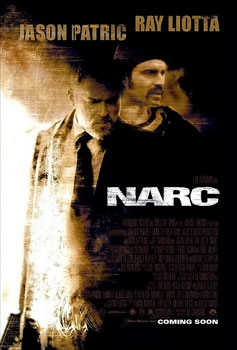
Narc (2002, directed by Joe Carnahan)


Nick Tellis (Jason Patric) is an undercover narcotics agent who has spent the last year under investigation for a shooting that went wrong.  Nick was firing his gun at a fleeing drug dealer but he hit a pregnant woman instead.  After 18 months of being caught in administrative limbo, Nick is made an offer.  It’s thought that, with his knowledge of Detroit’s crime and drug scene, that he might be uniquely suited to investigate the murder of another undercover agent, Michael Calvess.  Nick agrees but, in return, he wants a desk job.  He’s got a wife and a baby and he’s tired of putting his life on the line for nothing.  Nick also wants to work with Detective Henry Oak (Ray Liotta).  Oak was one of the original investigators of Calvess’s murder.  Nick is warned that Oak has a reputation for being unstable and out-of-control.  Nick isn’t fazed because he has the same reputation.

Oak turns out to be more than just out of control.  He is the epitome of a bad cop, beating suspects and thinking nothing of threatening to kill a man unless he confesses.  However, Oak gets results.  Oak suggests that you can’t fight crime in Detroit if you play by the rules and Narc is the type of grim and gritty film that doesn’t give you any reason to think that Oak is incorrect.  Oak and Nick investigate Calvess’s death and both of them discover that the department would rather just sweep the case under the rug than actually discover what really happened.  The department just wants someone that they can pin the crime on, not the truth.  Even after the case is officially declared as being closed, Nick and Oak continue their investigation.  Nick, however, starts to suspect that Oak knows more about Calvess’s death than he’s willing to admit.

Narc opens with an amazingly shot chase scene that will leave you breathless and then it just keeps going without once letting up on the intensity.  Narc is a grim and violent film about two damaged men trying to solve a case that no one else cares about.  Jason Patric has never been better than he was in Narc and, while Ray Liotta has played his share of unstable cops, he takes things to whole other level with Narc.  Director Joe Carnahan does such a good job of capturing the decay and desperation of life in Detroit that, even while you’re worried that both Nick and Oak are going to end up going too far in their pursuit of what they consider to be justice, you still can’t help but feel that they’ve both got a point.  Who plays by the rules when the world’s on fire?

Love On The Shattered Lens: The Path of the Wind (dir by Doug Hufnagle)


The 2009 film, The Path of the Wind, begins with a man being released from prison and discovering that living in the real world can be just as confining.

Lee Ferguson (Joe Rowley) has spent the last few years locked up, convicted of killing a man.  It was a spontaneous fight and Lee didn’t intend for the man to die but that doesn’t change the fact that Lee is responsible for taking another man’s life.  He was a model prisoner and he intends to be a model citizen.  Fortunately, he’s inherited a nice house and a good deal of money from his father.  He’s also got a job waiting for him, as the well-meaning manager of the local grocery store has agreed to give Lee a chance.

From the minute he leaves the prison, Lee feels out-of-place in the world.  He’s still struggling to control his temper and, because of his past, he’s hesitant about letting anyone get too close to him.  He knows that if he tries to get close to anyone, he’ll eventually have to tell them why, despite his obvious intelligence and education, he’s currently working as a stocker in a grocery store.  And, after he tells them that he’s been in prison, he’ll then have to explain what he did to find himself in that situation.

Still, on his first night of working at the grocery store, he meets a young woman named Katie (Liz DuChez).  When he first sees her, Katie is being harassed by her violent ex-husband.  Lee chases the man off.  It turns out that Katie runs the local video store and she thanks Lee by offering him all of the free movies that he wants.  Eventually, Lee works up the courage to go to the video store and gets a bunch of western DVDs.  Later, he reveals that he not only doesn’t have a DVD player but he’s not totally sure what a DVD player is.  I guess Lee was in prison for a while.

It takes a while but Lee and Katie finally start to date.  Katie opens up about her past as a stripper and Lee finally tells her about the time that he spent in prison.  (It turns out that Katie already knew.)  They fall in love but there are still problems.  For one thing, Katie is rather religious whereas Lee is a committed agnostic.  Secondly, Katie refuses to have sex unless she’s married.  Lee, meanwhile, really, really wants to get laid….

Of course, that’s not all that’s going on in The Path of the Wind.  There’s about a different dozen storylines running through The Path of the Wind and the film doesn’t do a particularly good job of juggling all of them.  Along with having to deal with Katie’s psycho ex-husband, Lee also has to deal with not one but two evil coworkers and his bitter sister.  This is one of those films where a lot of plot points are raised but then mysterious abandoned.  There is one effective scene, in which Wilford Brimley shows up as the father of the man that Lee killed.  Brimley’s only in the film for a few minutes but he brings so much natural authority to his role that he basically takes over the entire movie for the limited amount of time that he’s on screen.

The film’s a bit of a mess but there’s a low-key sincerity to it that’s kind of likable.  According to the imdb, it was made for a budget of $100,000 and, with the exception of Wilford Brimley, the cast is largely made up of amateurs.  That said, both Joe Rowley and Liz DuChez have enough screen presence to be watchable and, even if the dialogue sometimes sounds a bit awkward, they have a likable chemistry and you can believe them as a couple.  Add to that, the film does attempt to deal with a very real issue, the difficulty that ex-cons face trying to rejoin a society that often values punishment and revenge over forgiveness and rehabilitation.  This is an amateur film but it may hold your interest.

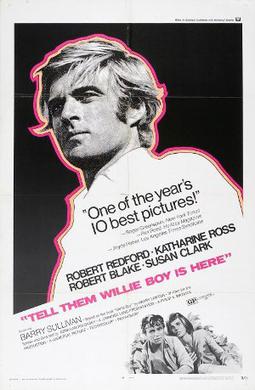
Tell Them Willie Boy Is Here (1969, directed by Abraham Polonsky)


In 1908, a Paiute Indian named Willie (Robert Blake) has fallen in love with a white woman named Lola (Katharine Ross).  After Lola’s father discovers Willie and Lola together, Willie shoots him.  Willie claims that the shooting was in self-defense while the white citizens of California insist that it was cold-blooded murder, motivated by a tribal custom that would allow Willie to claim Lola as his wife upon the death of her father.  Willie and Lola go on the run, trying to escape through the Morongo Valley.

Because President Taft is scheduled to make a trip to the area, the locals are eager for Willie Boy to either be captured or killed.  Several posses form, all intent on tracking Willie down.  A humane deputy sheriff named Cooper (Robert Redford) reluctantly leads the search for Willie.  Cooper’s occasional lover is a school teacher named Elizabeth (Susan Clark) who insists that Cooper rescue Lola from Willie.  The only problem is that Lola doesn’t want to be rescued and Willie would rather die than surrender to the white men.

Tell Them Willie Boy Is Here is one of those revisionist westerns that were all the rage in the late 60s and the early 70s.  (The same year that he led a posse in Tell Them Willie Boy Is Here, Robert Redford also tried to outrun a posse in Butch Cassidy and the Sundance Kid.Willie Boy gets off to a good start, showing how Willie has to spend almost every hour of the day dealing with prejudice and racism.  The film does a good job of showing that even “liberal” whites, like Elizabeth, are capable of being prejudiced.  There are hints that Cooper and Willie share a mutual respect and both Blake and Redford do a good job portraying the weary respect that the lawman and the outlaw have for each other.

Things start to fall apart when Willie shoots Lola’s father.  The scene is shot so confusingly that it’s hard to know what exactly happened and it feels like a cop out.  Rather than definitely saying whether Willie had no choice but to shoot Lola’s father or that Willie intentionally committed murder, the scene tries to have it both ways and it doesn’t work.  Once the chase begins, the movie is equally split between Cooper and the posse and Willie and Lola and the end result is that the two main characters end up getting short changed.

Tell Them Willie Boy Is Here was directed by Abraham Polonsky, a screenwriter who was blacklisted during the McCarthy era.  While this is definitely a film made from a left-wing perspective, its actual message still feels muddled.  Willie is the driving force behind the plot but the film seems to be more interested in the less intriguing Cooper.  The film ends on a note of ambiguity, which perhaps felt daring in 1969 but today, just feels like another cop out.  Despite a great performance from Blake and a better-than-usual one from Redford, Tell Them Willie Boy Is Here is an unfortunate misfire.

Love on the Shattered Lens: Blue Crush (dir by John Stockwell)


Released in 2002, Blue Crush tells the story of Anne Marie Chadwick (Kate Bosworth).

Anne Marie lives in Hawaii and she’s got a lot going on in her life.  Because her mother recently abandoned her daughters so that she could run off to Las Vegas with her good-for-nothing boyfriend, Anne Marie is practically raising her 14 year-old sister, Penny (Mike Boorem).  Anne Marie is also working as a maid at a beach-side hotel, where she and her two best friends, Eden (Michelle Rodriguez) and Lena (Sanoe Lake), spend their time cleaning up messes and trying on the guests’s clothes.  I have to admit that, if I was a maid, I’d probably try on the clothes too.  However, after watching Blue Crush several times, I can tell you that the last thing I would ever want to do would be to work as a hotel maid.  Seriously, some of the messes that Anne Marie, Eden, and Lena had to deal with were so disgusting that I had to look away from the screen.  Bleh!

Anne Marie and her two friends are also surfers!  In fact, surfing is pretty much what their lives revolve around.  Anne Marie has been invited to compete in an upcoming competition but she’s haunted by an incident that occurred several years before, an extreme wipe-out that nearly caused her to drown.  (Despite all of the beautiful surfing footage, this film does little to alleviate my own extreme drowning phobia.)  Despite Eden’s encouragement, Anne Marie isn’t sure that she has what it takes to get back into the competition circuit.

Unfortunately, there’s a group of NFL players staying at the hotel and they totally trash their room and leave a huge mess for the maids to clean up.  (At one point, Lena finds a used condom stuck to the bottom of her shoe and totally freaks out.  I would have to.  I once moved into an apartment that was already inhabited by several friends of mine and, while I was cleaning, I came across like nearly a hundred used condoms hidden in every nook and cranny of the place.  I mean, I was happy that everyone was having sex but seriously, don’t just leave your condom on the floor after it’s been used.  Pick up after yourself!  Anyway, where was I?)  Fortunately, however, one of the players is a totally hot quarterback named Matt (Matthew Davis).  Matt and his fellow players hire Anne Marie and her friends to teach them how to surf.  Matt and Anne Marie end up falling in love, mostly because they’re the two best-looking people on the beach.  With Matt’s support, will Anne Marie be able to conquer her fears and compete in the competition?  It would be a really depressing movie if she didn’t.


So, let’s see.  What do you we have here?

We’ve got lots of pretty shots of pretty people running along the beach in slow motion.

We’ve got a soft-focus love scene between the best-looking people in the movie.

We’ve got a ton of exciting surfing footage.

We’ve got a thoroughly predictable plot that still kind of works because everyone involved is so good-looking.

Yep, this must be a John Stockwell film.

Seriously, John Stockwell is one of my favorite directors because he always delivers exactly what he promises.  He makes films about beautiful people in beautiful places and if that’s not enough for you, too bad.  He’s a genre director and makes no apologies for it.  There’s a refreshing lack of pretension when it comes to John Stockwell’s filmography and it’s hard not to appreciate the universe that he creates in films like Crazy/Beautiful, Into the Deep, In the Blood, and this one.  It’s a universe where everyone knows that they’re in a genre movie and they behave accordingly.  It’s a world where the scenery is beautiful, the people are attractive, and nearly every problem can be solved by a kiss or the proper one-liner.

You could probably make the argument that the storyline of Blue Crush is shallow and a bit obvious.  I wouldn’t necessarily disagree with you.  But who cares?  Kate Bosworth and Matthew Davis have a tone of chemistry, the Hawaiian scenery is gorgeous, and well, I just kind of love this movie.


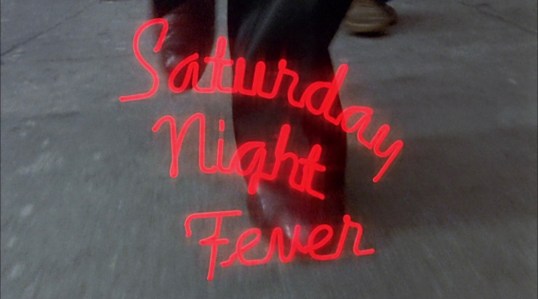
Scenes That I Love: The Opening Credits of Saturday Night Fever


Saturday Night Fever (1977, dir. John Badham)

Today is John Travolta’s birthday!

In honor of this day, here’s a scene that I love, the opening credits of Saturday Night Fever.  Watch as John Travolta, playing the role of Tony Manero, walks down the streets of Brooklyn, not letting the fact that he’s carrying two cans of paint do anything to lessen his strut.  Watch as Tony puts a down payment on a pair of shoes!  Thrill as Tony buys two slices of pizza!  Cringe as Tony bothers a woman who wants absolutely nothing to do with him!

This is one of the greatest introductions in film history.  Not only does it set Tony up as an exemplar of cool but it also subverts our expectations by revealing just how little being an exemplar of cool really means.  I always relate to the woman who gets annoyed with Tony and tells him to go away.  I know exactly how she feels, as does any woman who has ever been stopped in the middle of the street by some guy who thinks she has an obligation to talk him.  It doesn’t matter how handsome he is or how much time he obviously spent working on his hair.  He’s still just some guy carrying two buckets of paint and acting like she should be flattered that he spent half a minute staring at her ass before chasing after her.  For all of his carefully constructed attitude, Tony comes across as being a rather ludicrous figure in this introduction.  He carries those cans of paint like he’s going to war and you secretly get the feeling that he knows how silly he looks carrying them but he’s not going to allow anything to get in the way of his strut.

The rest of the film, of course, is about presenting who Tony actually is underneath the disco facade and it’s not always a pretty picture.  I actually discussed this with some friends this weekend while we were listening to combination of disco and punk music.  Saturday Night Fever has a reputation for being a fun dance movie but actually, it’s an extremely dark and rather depressing movie.  The opening song isn’t lying when it says that “I’m going nowhere.”  Tony is lost and, despite what happens in the sequel, he’s probably never going to escape his circumstances.  Even though he clearly wants to be a better person, you’re never quite convinced that he has what it takes to truly do that.  At least he can strut a little while waiting for the world to end.  It takes guts to give an honest performance when you’re playing as imperfect a character as Tony Manero but Travolta pulls it off.  (We won’t talk about some of the films that he made in the years immediately after this one.  Eventually, he did make a comeback with Pulp Fiction and spent several years again appearing in good films.  And then somehow, last year, he ended up starring in The Fanatic.  Oh well.  66 is not that old and I’m sure Travolta has more than one comeback within him.)

Anyway, happy birthday to John Travolta!  And here is today’s scene that I love:

I Escaped From Devil’s Island (1973, directed by William Whitney)


The year is 1918 and the French penal colony, Devil’s Island, is renowned as the world’s most brutal prison.  Hidden away from mainland Europe, it is populated by the worst of the worst.  The prisoners have been sentenced to either spend their life on the island or to die at the blade of guillotine and the guards are all sadists.  Le Bras (Jim Brown) has been sentenced to die but he impresses his fellow inmates by putting up a fight on his way to have his head chopped off.  He doesn’t succeed in escaping but, fortunately for him, the death penalty is abolished mere moments before the blade falls.

Le Bras is alive but he’s still been condemned to spend the rest of his life on Devil’s Island, under the sadistic eye of the head guard, Maj. Marteau (Paul Richards).  However, Le Bras has no intention of being anyone’s prisoner.  He teams up with two other prisoners, a pacifist named Davert (Christopher George) and Jo-Jo (Richard Ely), who, because he is gay, is abused by both the guards and the other prisoners.  The three of them manage to escape from the prison but they still have to make their way through the jungle.  Along the way, they visit a leper colony and Le Bras takes some time to get busy with a native woman.  Meanwhile, Marteau remains hot behind them, determined to capture them and send them back to the prison.

If I Escaped From Devil’s Island sounds familiar, that may be because you’ve seen Steve McQueen and Dustin Hoffman in Papillon.  Papillon was a major studio production with big stars, a huge budget, and an epic running time.  I Escaped From Devil’s Island was a low-budget film starring B-movie stars and with a 90-minute running time that was the exact opposite of epic.  Roger Corman produced I Escaped From Devil’s Island to capitalize on the expected success of Papillon and he started production early enough that I Escaped From Devil’s Island actually beat Papillon to theaters by a matter of weeks.  Corman originally tried to hire Martin Scorsese to direct I Escaped From Devil’s Island.  When Scorsese decided to follow John Cassavetes’s advice and do a personal film instead, Corman ended up hiring William Whitney to direct.  (Scorsese’s personal film turned out to be Mean Streets, so he probably made the right decision.)

I Escaped From Devil’s Island is an entertaining B-movie.  It doesn’t have the epic sweep of Papillon but it does have a fun cast and all the action that you would expect from a 70s Corman production.  Jim Brown was never a great actor but he never claimed to be.  What Brown had was a tremendous physical presence and a confident movie star charisma and both of those are put to good use in I Escaped From Devil’s Island.  Whether he was playing football or beating up bad guys, Jim Brown was always the epitome of cool and that’s especially true in this film.  Christopher George has some good scenes as a pacifist who believes in non-violent resistance and Paul Richards is a great villain but this is a movie that you watch for Jim Brown and he doesn’t disappoint.

As of today, Jim Brown is 84 years old.  As anyone who has seen him interviewed recently can tell you, Jim Brown is still the epitome of cool.  When Jim Brown speaks, whether people agree with him or not, they still shut up and listen.  Happy birthday, Jim Brown!