Because he’s immature and unpatriotic, Cheng (Michael Chan Wai Man) is kicked out of the local kung fu school and exiled from China. Before leaving, he promises his teacher that he will go to Malaysia and change his ways. Instead, he goes to Malaysia and sets himself as a local crime lord. Along with extorting businesses, running a gambling den, and kidnapping female tourists, Chen also trains a group of gorillas to serve as his own persona army. Realizing that Chen needs to be brought back to the school, three men head to Malaysia to take him down. Bruce Li, the most successful of the Bruce Lee imitators to spring up after Lee’s death, plays Yo Fung, one of them three men. According to the film’s title, he’s invincible. Personally, I like the idea of naming a movie after its star. Would Once Upon A Time In Hollywood have won more Oscars if it had been called Brad Pitt The Indestructible? I think we all know that it would have.
Even by the standards of 70s Bruceploitation, Bruce Li The Invincible is incoherent. According to the imdb, Bruce Li The Invincible has a running time of 92 minutes. The version I saw was badly dubbed into English and only ran for 84 minutes so it seems probable that, like a lot of kung fu films, this one was re-edited for distribution in the U.S. Maybe the full 92 version explains how Cheng became so powerful so quickly or why Bruce Li and his allies end up having to fight two well-trained gorillas when they arrive in Malaysia. The film never makes it clear whether the gorillas are supposed to be actual gorillas or if they’re supposed to be goons who chose to put on gorilla costumes before attacking their targets.
Luckily, even if the plot doesn’t make any sense, the fight scenes are pretty good. That includes the fights with the gorillas. In fact, the gorilla fights are the main reason to see this movie. Just when you think that you’ve seen everything that Bruceploitation genre has to offer, Bruce Li is suddenly getting jumped by a man wearing a gorilla costume. That was more than worth the 84 minutes that I spent watching this movie. Though this movie may be frequently confusing, the gorillas are pretty damn cool.
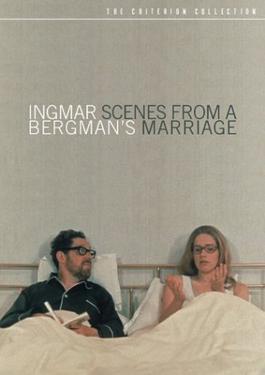
The 1973 film, Scenes From A Marriage, is a real endurance test.
That, in itself, shouldn’t be surprising. It’s an Ingmar Bergman film, after all. Bergman was one of the world’s great directors but the majority of his films did not exactly focus on happy themes. Scenes From A Marriage is a nearly three-hour film in which two people — who start out as married and eventually end up as divorced — talk and talk and talk and talk. They talk about work. They talk about their relationship. They talk about their married friends who are trapped in a loveless marriage. They talk about their unsatisfactory sex life. They occasionally mention their never-seen daughter. The conversations are usually friendly and semi-affectionate but there’s a hint of tension running through every single one of them. Whenever this couple talks about anything, it’s under a cloud of disatisaction and repressed anger. Violence always seems like it could break out at any time and, at one point, it does. (Of course, if 167 minutes seems like a long time to watch a marriage collapse, just consider that the film was an edited version of a four-and-a-half hour miniseries that originally aired on Swedish television.)
Scenes From A Marriage is regularly cited as being one of the best films about marriage ever made and also as one Bergman’s best films. Personally, I think it’s a bit overrated but still, no one can deny the skill with which the film was made. Though it may ultimately just be a reflection of the film’s roots as a television series, the film is full of probing close-ups. When Marianne (Liv Ullmann) and Johan (Erland Josephson) discuss their life, the camera gives them no escape. There’s no sudden jump cuts or fade outs to bring the conversation to an end and, as talky as the film may be, the awkward silences often tell us even more about what’s going on between these two. Ullmann and Josephson both give excellent performances. There’s an honesty to their anger and their disillusionment that will often leave you cringing but unable to look away. When Marianne and Johan discuss why they’ve never had a satisfactory sex life, it’s a crushingly honest scene and neither Ullmann nor Josephson hold anything back. When one of their conversations suddenly erupts into a violent fight, it’s scary, heart-breaking, and expected all at the same time. We’ve spent so much time with these two characters that we feel as if we know them. We can see what’s coming, even if they can’t.
If I’m not as enthusiastic for Scenes From A Marriage as some, it’s because I didn’t particularly like either Marianne or Johan. I understood them. I felt as if I knew them. By the end of the film’s first scene, I could confidently tell you that Johan would probably vote for Mike Bloomberg while Marianne would send money to both Elizabeth Warren and Amy Klobuchar while joking about how, if it was good enough for The New York Times, it was good enough for her. But ultimately, both Johan and Marianne come across as being a bit too smug and safely bourgeois, even after they realize that they’re “perfect” marriage isn’t perfect at all. This is actually something that I’ve noticed about most films about divorce. It’s rare that you ever seen a film centered around a working class divorce. Instead, it’s almost always the members of the middle and upper classes, people who are relatively stable financially and who have a support system of liberal and sophisticated friends and family to fall back on. In films like this, divorce is an issue where the concerns and sufferings are almost exclusively emotional. I think a lot of this is because most films about divorce are made by directors who have just gone through their own divorce and they basically end up telling their own side of the story under the guise of fiction. Ingmar Bergman admitted as much when he said that Scenes From A Marriage was based on both his two failed marriages and his own relationship with Ullman. (Just last year, we had another example of this with Noah Baumbach’s Marriage Story, a film that owes more than a little debt to Bergman’s film.) For all of the film’s technical skill and good performances, Scenes From A Marriage is still just two and a half hours of watching two less than likable people get a divorce. By the end of the film, you’re just happy to be away from them.
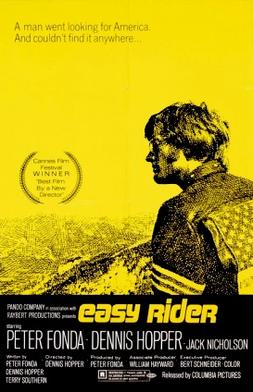
If you are among those who wanted to celebrate Mardi Gras today but couldn’t make it down to New Orleans, fear not! There is a solution to your problem. You can always just watch 1969 counterculture classic, Easy Rider.
Easy Rider features one of the most famous Mardi Gras scenes of all time and adding to the scene’s authenticity is the fact that it was actually shot in New Orleans during the celebration. If you watch the Mardi Gras sequence carefully, you’ll notice that several people on the streets of the French Quarter actually stop and stare directly at the camera. It reminds you that you’re watching a movie but, at the same time, it also reminds you that you’re seeing something authentic. Those weren’t just professional extras pretending to get drunk and glaring at Dennis Hopper and Peter Fonda. Those were people who were actually in the French Quarter for Mardi Gras and who just happened to end up getting included in one of the biggest cult films of all time. If you want to know what Mardi Gras was like in the late 60s, this is the film to watch.
At the same time, after watching Easy Rider, you may be find yourself happy to not be in New Orleans today. As with almost everything else in Easy Rider, Mardi Gras starts out as something exciting and full of promise but it ends as something dark and full of death. One minute, Peter Fonda, Dennis Hopper, Karen Black, and Toni Basil are walking down the streets of New Orleans and having what appears to be a good time. The next thing you know, they’re in a cemetery and Peter Fonda’s sobbing and talking about his mother’s suicide while Toni Basil and Karen Black are freaking out. Of the four of them, only Dennis Hopper appears to not be having a bad trip but then again, Hopper is so naturally spacey in Easy Rider that it’s kind of hard to tell.
The next morning, Fonda and Hopper leave New Orleans on their motorcycles and promptly get blown away by two shotgun-toting rednecks in a pickup truck. It seems a fitting conclusion to a film that celebrates the beauty of the American landscape while, at the same time, suggesting that almost everyone who lives there is a complete and total prick.
Of course, the whole Mardi Gras sequence doesn’t occur until the very end of the film. The majority of the film deals with the journey to New Orleans. Billy (Dennis Hopper) and Wyatt (Peter Fonda) are two motorcycle-riding drug dealers who have just made a small fortune off of selling cocaine to Phil Spector. Billy and Wyatt are heading to New Orleans to celebrate and visit a famous brothel. Wyatt is cool and stoic and always seems to be thinking about something. Billy is Dennis Hopper. Easy Rider is often referred to as being a hippie film but neither Billy nor Wyatt is really a hippie. They’re outsiders and they like to smoke weed but they’re also largely apolitical. They just want to enjoy the open road. If anything, they’re beatniks who were born a year or two too late.
As they ride from California to New Mexico, Billy and Wyatt meet plenty of people along the way. They stop off at a hippie commune and then later, they get harassed by a bunch of rednecks in a diner. The rednecks are menacing while the hippies are annoying. The rednecks throw Wyatt and Billy in jail for “parading without a permit.” The hippies have a mime troupe. The rednecks drive around with shotguns. The hippies try to grow crops in the desert. (I’m enough of a country girl to know that Billy’s right when he scornfully says that nothing that they’re planting is going to actually grow.) The rednecks are ignorant. The hippies are smug. None of them really seem like people that you would want to spend too much time around.
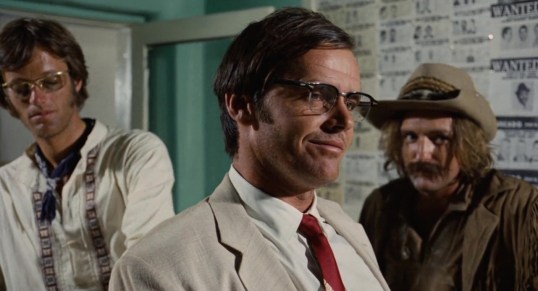
Along the way, Wyatt and Billy temporarily travel with two others. The hitchhiker is played by Luke Askew. We never learn his name but he does play a key role in the film when he gives Wyatt the tab of acid that will eventually ruin Mardi Gras. Meanwhile, George Hanson is an alcoholic lawyer and he’s played by Jack Nicholson. At the time that the film was shot, Nicholson was on the verge of retiring from acting so he could concentrate on directing and writing. He took the role and expected, as almost everyone did, that Easy Rider would just be another biker film. Instead, Easy Rider became a hit and a cultural milestone that not only won Nicholson his first Academy Award nomination but also made him a star.
Interestingly enough, Jack Nicholson is not really that good in Easy Rider. His attempt at a Texas accent is terrible and you never believe him as someone who has never smoked weed before. If anything, Luke Askew gives a far better performance than Nicholson and he actually has more screen time as well. However, I think Nicholson benefited from the fact that George is probably the most likable character in the film. (Depending on how you feel about Billy and Wyatt, you could argue that he’s the only likable character in the film.) He’s not a smug hippie nor is he a murderous redneck. Unlike Wyatt and Billy, he has a job that doesn’t involve selling cocaine to Phil Spector. Whereas Luke Askew’s Hitchhiker seems like the type of guy who would just love to lecture you about why Vietnam is all your fault, George comes across as being a gentle soul. George is a character that viewers can feel safe identifying with, even if Nicholson is never quite convincing as someone so naive that he fears he’ll freak out after taking one hit off of a joint.
Easy Rider‘s critical reputation tends to go up and down, depending on who you’re reading or talking to. There’s a tendency, among many critics, to complain that Fonda acted too little while Hopper acted too much. Personally, I think there’s a lot of hidden wit to be found in Hopper’s performance and I love how annoyed he gets when they’re at the hippie compound. As for Peter Fonda, he may not have been the most expressive actor but he did capture a certain feeling of ennui. For most of the film, it’s hard to tell whether there’s anything actually going on in Wyatt’s head. Then, we follow Wyatt and Billy to that cemetery in New Orleans and we discover that there’s actually quite a bit going on behind Wyatt’s wall of stoicism. After watching Wyatt curse at a statue while sobbing, we understand why he keeps so much hidden.
When it was released in 1969, Easy Rider was a huge box office success and it inspired every major studio to try to duplicate it’s success with a counter culture film of its own. (Hopper was given several million dollars and sent down to Peru to make a follow-up to Easy Rider. The result was The Last Movie, a legendary disaster that temporarily ended Hopper’s career as a director.) Seen today, Easy Rider is undeniably pretentious but always watchable. The scenery is beautiful and the Mardi Gras sequence sets the standard by which all other bad trips should be judged. Most importantly, the film works as a historical document. Everything about it — from the music to the cultural attitudes to even Hopper’s attempts to imitate Jean-Luc Godard in his direction — makes this film into a time capsule. Until they invent a time machine that works, Easy Rider is as close as some of us will ever get to experiencing the end of the 60s.
And finally, it’s the ultimate Mardi Gras film, even if it’s main message seems to be that everyone needs to stay the Hell away from Mardi Gras. Or, at the very least, don’t accept LSD from a scruffy hitchhiker before rolling into New Orleans. Seriously, the more you know….
One of the more surprising things about the 1987 film, The Big Easy, is that there aren’t any big Mardi Gras scenes.
Don’t get me wrong. Several characters in the film mention Mardi Gras, usually in a semi-mocking way. And there is a scene in a warehouse where Ellen Barkin and Ned Beatty walk past some fearsome looking floats which Beatty says are being stored there until Mardi Gras. But that’s pretty much it.
Despite not having any huge Mardi Gras scenes, The Big Easy is essentially a cinematic love letter to New Orleans. (In fact, one could probably argue that the film is so in love with New Orleans that, by not including any big Mardi Gras scenes, the film is saying, “There’s more to this wonderful city than just beads, boobs, and people throwing up i the streets!”) While the film does have a plot — technically, it’s both a romantic comedy and a crime drama — the plot is ultimately less important than the city where it takes place. The Big Easy was shot on location in New Orleans and the camera loves every single street, building, and bridge to be found in the Crescent City. The Big Easy loves the distinctive music and dialect of New Orleans. Even more importantly, The Big Easy loves the attitude of New Orleans. This is perhaps one of the most laid back and nonjudgmental crime films to have ever been made.
Dennis Quaid plays Remy McSwain, a Cajun police detective with a nonstop grin and a cheerfully corrupt nature. Today, we tend to associate Dennis Quaid with playing grim-faced authority figures and serving as the commercial spokesman for Esurance so it’s interesting to see him here, playing a lovable, charismatic, and undeniably sexy rogue. Remy may be corrupt but he doesn’t mean any harm. For the most part, he just takes the occasional bribe and sometimes looks the other way when it comes to certain crimes. He used at least some of the money to put his younger brother through college so really, how can you hold his lack of ethics against him?
Ellen Barkin plays Anne Osborne, a state district attorney who has been sent to New Orleans to investigate allegations of police corruption. Anne is serious about doing her job and exposing corruption. At the same time, she also finds herself falling for Remy, even when she has to prosecute him on charges of taking bribes. It doesn’t take them long to become lovers.
Together, they have great sex and solve crimes!
Actually, in this case, they really do. The film opens with the murder of a local mafia boss. (“We call them wise guys,” Remy says, at one point.) When more drug dealers start to turn up dead, Remy’s boss, Captain Kellom (Ned Beatty), suspects that a gang war has broken out. (Two of the drug dealers are found with their hearts missing from their bodies, which leads to a lot of talk about how one of the city’s biggest drug kingpins is into voodoo. It’s not a New Orleans films without a little voodoo.) Remy, however, has reason to believe that the murderers could be cops!
As I said before, the film’s plot is less important than the city where it takes place and the people who live in that city. Director Jim McBride and screenwriter Daniel Petrie, Jr. do a good enough job with the crime plot but it’s obvious that they’re most interested in taking Remy and Anne and surrounding them with a host of eccentric, identifiable New Orleans characters. As a result, the film is full of memorable performances from character performers like Ned Beatty, John Goodman, Lisa Jane Persky, and Grace Zabriskie. Even Jim Garrison, the former New Orleans district attorney whose attempt to frame an innocent man for the murder of John F. Kennedy inspired Oliver Stone’s JFK, makes an appearance as himself.
Even without any big Mardi Gras scenes, The Big Easy is an entertainingly laid back tribute to New Orleans.
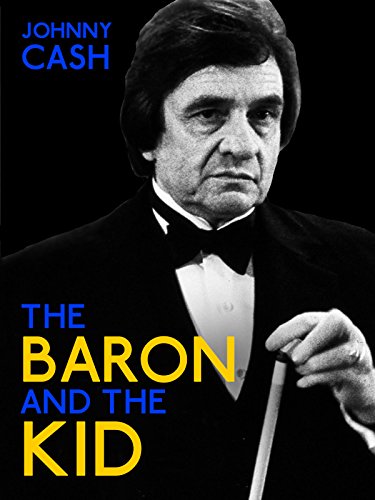
Ever wonder what The Color of Money would have been like if it starred Johnny Cash and featured less Eric Clapton but more country and western on the soundtrack? The Baron and the Kid is here to satisfy your curiosity.
Johnny Cash is Will Addington, better known as The Baron. Back in the day, The Baron was the meanest and the most ruthless pool hustler around. He’d cheat people out of their money without even giving it a second thought. He drank. He doped. He womanized. He abused his wife, Dee Dee (June Carter Cash). After the Baron became the 9-ball world champion, Dee Dee left him and the Baron changed his ways. Now, years later, he only plays exhibition games for charity and the strongest thing that he drinks is grapefruit juice.
When a young hustler who calls himself the Cajun Kid (Greg Webb) challenges the Baron to a game, the Baron wins easily but he still recognizes that the Kid has a natural talent. When the Cajun Kid attempts to put up his mother’s wedding ring as stakes for another game, the Baron recognizes the ring as the one that Dee Dee used to wear on her finger. After talking to Dee Dee, the Baron discovers that the Kid is actually his son.
The Baron takes the Kid under his wing, hoping to train him to become a champion while, at the same time, getting to know his son. The Kid proves to be a difficult student. He’s cocky and, like the Baron did in his youth, he has a temper. He also has a manager, a good-for-nothing con artist named Jack Steamer (Darren McGavin). Steamer doesn’t want to lose the money that the Kid brings in and he plots to to keep him away from his father. The Baron, though, is determined to prevent the Kid from making the same mistakes that he made. However, when the Baron and the Kid both find themselves competing in the same championship, the Baron finds himself being tempted by his old demons.
The Baron and the Kid is okay for a made-for-tv movie. It’s predictable but Johnny Cash has such a formidable screen presence that it doesn’t matter that he was sometimes a stiff actor. The Baron’s past of booze and drugs mirrors Cash’s own past and when Cash, as the Baron, talks about how he’s trying to keep the Kid from making the sames mistakes, there’s little doubt that he knows what he’s talking about. Some of the pool sequences are creatively shot and Richard Roundtree has a great cameo as a cocaine dealer named Frosty. There’s nothing surprising about The Baron and the Kid but fans of Cash and the game of pool should enjoy it.
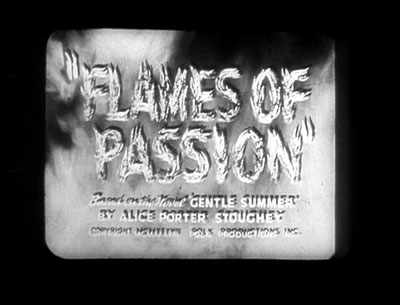
Flames of Passion is a British film from 1938. I’ve seen the trailer but I’ve never actually seen the film and that’s kind of a shame because it’s a really good trailer. Not only does it feature romance and adventure but it’s apparently based on a novel called Gentle Summer. As someone who is fascinated by the power of a good title, I have to give credit to whoever changed that one. Flames of Passion is far more intriguing than Gentle Summer.
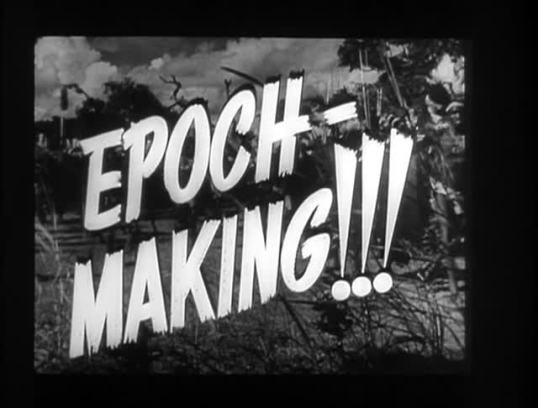
Another reason that I want to see Flames of Passion is because it was apparently “Epoch-Making!!!” In fact, they say so right in the trailer:
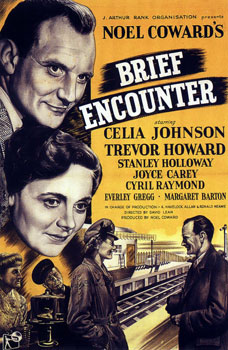
Unfortunately, I’ll never get a chance to actually see Flames of Passion. As you probably already guessed, it’s a fictional film. (I’m going to guess that “Epoch-Making” gave it away.) It’s a fake film that plays a very important role in real film, the 1945 classic Brief Encounter.
Taking place in Britain shortly before the start of World War II, Brief Encounter tells the story of two people. Laura Jesson (Celia Johnson) is respectable, middle class, and middle aged. Every Thursday, she takes the train into a nearby town where she does the shopping and catches a matinee. Alec Harvey (Trevor Howard) is a doctor who rides the train every Thursday so that he can help out at a local hospital. Dr. Harvey volunteers at the hospital because that’s the type of person that he is. He also volunteers, one Thursday, to help Laura get a piece of dirt out of her eye.
The next Thursday, Laura and Alec run into each other again. They have coffee. A week later, they have lunch. A week after that, they go to the movies and they see the trailer for Flames of Passion. Laura and Alec enjoy each other’s company and they quickly find themselves growing very close to one another. The only problem is that, occasionally, Laura’s friends see the two of them together. Laura knows how quickly gossip can be spread.
Actually, that’s not the only problem. There’s actually an even bigger problem that neither Laura nor Alec know how to deal with. Both of them are married and both of them have children. In fact, Laura would appear to have the type of life that a lot of people would envy. She has a nice home. She has wonderful children. She has a husband named Fred (Cyril Raymond) and there’s no doubt that Fred loves her. Fred’s a good man but he’s boring, safe, and set-in-his-ways. He’s the type who, when Laura mentions that she’s made a male friend and that she goes to the movies with him, barely looks up from the newspaper.
What is Laura to do? She soon finds that her life is now centered around those Thursday meetings with Alec but are they worth the risk of losing her family? And when Alec tells her that he’s been offered a job in South Africa, Laura realizes that she will soon no longer even have Thursday to which to look forward.
Brief Encounter is an interesting film. From the minute that Alec and Laura meet, you know that they’re destined to fall for each other but nothing else about the film plays out in the way that you would expect it to. As much as being a love story, it’s also a story about two people who have reached a point in their lives where they’ve reached the halfway mark of their lives and now they’re asking, “Is this it?” It’s not just that Laura is attracted to Alec, though she certainly is. It’s also that she knows that Alec represents what is probably her last chance to do something grand and romantic with her life. Once Alec leaves, it’ll mean accepting her life as it is, with the good and the bad things that go along with it.
The film’s dialogue is as erudite and witty as you would expect from a cinematic adaptation of a Noel Coward play and David Lean keep the action moving along at a brisk pace. Celia Johnson and Trevor Howard are absolutely perfect as the two would-be lovers, with Johnson especially giving a powerful and sympathetic performance. (If you don’t tear up during Laura’s final scene with Alec, you may want to check to see if you have a heart.) It helps that neither one of them was a traditionally glamorous movie star. (Trevor Howard may have been handsome but he was no Cary Grant.) They come across as being very real people and it’s easy to imagine them being very happy together. They’re such decent people that they even feel guilty for walking out on Flames of Passion, which Laura apparently did not feel was a particularly good movie. Watching Brief Encounter, you wish that Alec and Laura could have met earlier but you are happy that they at least had their Thursdays.
Are you currently heading to New Orleans for Mardi Gras? Or are you already in New Orleans, getting drunk and dreaming about how many beads you’ll end up with by the end of Tuesday night? If that’s the case, have fun but be careful. New Orleans is a town that’s full of ghosts and voodoo.
At least, that’s what the movies would have you believe. Whenever you see a horror film that’s set in New Orleans, you know that voodoo is going to somehow play into it. The other thing that you can usually count on is that there will be at least one scene set during Mardi Gras. Really, that’s not surprising. Mardi Gras in New Orleans is not only a great party but it’s also uniquely cinematic in a way that Mardi Gras in Dallas never is.
(Yes, we celebrate Mardi Gras in Dallas. It’s nothing to get too excited about.)
The 2018 film, Gothic Harvest, is all about Mardi Gras and voodoo. When four college students head down to New Orleans for the party of the year, they have no idea that they’re about to get sucked into a centuries old curse. When Hope (Abbie Gayle) meets the handsome and enigmatic Gar (Ashley Hamilton, who also directed the film), she goes off with him without bothering to tell her friends where she’s going. That turns out to be a mistake because it turns out that Gar is a member of a cursed family. The family is immortal but that immortality comes with a price. Every year, they have to find and sacrifice a young woman in order to stay alive. It’s all because the family, centuries ago, ran afoul the queen of New Orleans voodoo, Marie Laveau (Janee Michelle).
Hope’s friends are concerned about her disappearance but they can’t get anyone to help them out. After all, it’s Mardi Gras and the entire city is full of people who are probably going to wake up in a strange bed with a hangover on Wednesday morning. However, Hope’s friends do eventually run into an undercover cop named Detective Hollis (Bill Moseley). Hollis has an impressive beard and brags about how his favorite band is Pantera. He seems to be a bit strange but he agrees to help the girls look for Hope.
Hope, meanwhile, has now met the cursed and immortal Boudine family and, not surprisingly, they’re an interesting group of characters. What distinguished them from other cursed immortals is that they all seem to be hate being stuck with each other but they hate the idea of dying even more. So, they keep doing what they have to do even though it makes them all miserable. The family matriarch is Griselda (Lin Shayne) while her daughter, Amelia (Sofia Mattson), is a self-styled dominatrix. And then there’s Dolly (Ciara Rizzo), who is obsessed with dolls.
Gothic Harvest is a bit of a strange viewing experience. This was Ashley Hamilton’s directorial debut and the film itself can be confusing upon first viewing. The timeline jumps back and forth, from the past to the present, and it can often be hard to keep track of just who is doing what or why. It’s hard not to feel that the film might have worked better if it had dropped the modern storyline and instead just concentrated on telling the story of how the family came to be cursed. That said, Gothic Harvest does occasionally achieve a dream-like intensity and Hamilton makes good use of New Orleans’s spooky atmosphere. This is a flawed film that doesn’t really work but I would still be interested in seeing what Hamilton directs next.
The cast is a bit of a mixed bag. Hope and her friends are not particularly memorable but Bill Moseley and Lin Shaye are both ideally cast. Moseley, in particular, appears to be having fun and there’s a great scene where he sits in a truck and recites some of the worst pick-up lines ever. Finally, Janee Michelle goes totally over the top as Marie Laveau but that’s exactly the right approach to take to the character. The Queen of New Orleans Voodoo isn’t going to be a quiet or a reserved character.
For those of you celebrating, have fun but use your common sense. If someone says that he needs to sacrifice you so that his family can continue to live forever, don’t go off with him regardless of how many beads he offers.
15 year-old Matthew Miller (Daniel Magder) is the grandson of a great boxer and would love to follow in his grandfather’s footsteps but his mother (Janet Kidder) would rather that Matthew become a doctor or a lawyer. Looking at Matthew, who is out-of-shape and wears glasses, it is hard not to think that his mother might have the right idea.
When Matthew transfers to a new school, he’s picked on by a group of bullies led by Hector (Jaren Brandt Bartlett). Matthew is lucky enough to find a group of fellow outcasts to hang out with but he still feels like something is missing from his high school experience. He decides to break his mother’s heart and join the school’s boxing club. The only problem is that Matthew doesn’t know how to throw a punch and Hector is the school’s boxing champion.
It’s a good thing that Dan, the school’s janitor, is both an ex-boxer and that he happens to be played by Stone Cold Steve Austin. Dan could have been a champion but he retired from professional boxing because he grew tired of the sport’s violent nature. Now, he’s just a high school janitor who looks out for the bullied and the oppressed. Dan takes Matthew under his wing and teaches Matthew not only how to throw a punch but how to take one as well.
One of the things that I loved about this movie is that whenever Dan would see Matthew being picked on and he would tell the bullies to stop, the bullies would laugh and say something like, “You’re just the janitor!” or “Shouldn’t you be mopping something up?” Yes, Dan is just the janitor but he still looks like Steve Austin. I don’t think even the worst teenage bully is going to look at someone who could obviously crush him without breaking a sweat and say, “Why don’t you take out the trash!?” When Dan steps up and tosses one of the bullies away from Matthew, everyone is shocked but again, haven’t they looked at him? He’s Steve Austin. He’s huge!
If you can suspend your skepticism about anyone outside of professional wrestling talking smack to Steve Austin, Knockout is a predictable but likable movie with a big heart. Nothing, and I mean nothing, about this movie will take you by surprise. But the actors are all good and the film wins points from me for having Matthew fall for one of his fellow outcasts instead of having him trying to win over a cheerleader-type. Plus, you got Steve Austin doing what he does best. That’s pretty cool.
Almost everyone knows that one scene from the 1982 film, An Officer and a Gentleman. You can probably guess which scene it is that I’m talking about. It’s been parodied and imitated in so many other shows and movies that it’s one of those pop cultural moments that everyone has “seen” even they haven’t actually watched it. It’s the scene where….
I AIN’T GOT NOWHERE ELSE TO GO!
What?
I AIN’T GOT NOWHERE ELSE TO GO!
I know, Mayo, I’m getting to that! Let me tell everyone about the iconic factory scene first, okay?
I AIN’T GOT NOWHERE ELSE TO GO!
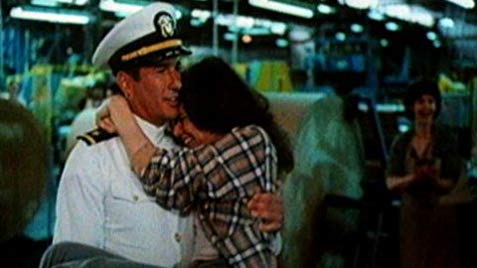
Uhmmm …. right. Where was I? Oh yeah, it’s the scene where Debra Winger is working in a factory and a youngish Richard Gere suddenly shows up and he’s wearing a white uniform and he picks her up and carries her out of the factory while all of her coworkers cheer. Meanwhile, that Up Where We Belong song starts to play on the soundtrack. Even though, up until recently, I had never actually sat down and watched An Officer and a Gentleman, I certainly knew that scene.
Last Friday, I noticed that I had An Officer and a Gentleman saved on the DVR and I thought to myself, “Well, I might as well go ahead and watch it and find out what else happens in the movie.” Add to that, I only had three hours of recording space left on the DVR so I figured I could watch the movie and then delete it and free up some space….
I AIN’T GOT NOWHERE ELSE TO GO!
Goddammit, Mayo, be quiet! I’m getting to it!
Anyway, I watched the film and I discovered that it’s actually about a lot more than just Richard Gere getting Debra Winger fired from her job at the factory. It’s also about how Zack Mayo (the character played by Richard Gere) hopes to make something of himself by graduating from Aviation Officer Candidate School so that he can become not only a Navy pilot but also an officer and a gentleman. His father (Robert Loggia) is an alcoholic, his mother committed suicide when Mayo was a child and Mayo …. well, I’ll let him tell you himself.
I AIN’T GOT NOWHERE ELSE TO GO!
That’s right. Mayo has not got anywhere else to go.
I AIN’T GOT NOWHERE ELSE TO GO!
Ain’t is not a word, Mayo.
As you may have already guessed, we know that Mayo doesn’t have anywhere else to go because there’s a scene where he continually yells, “I ain’t got nowhere else to go!” over and over again. He yells it after being forced to do a thousand push-ups and sit-ups by his drill sergeant, Foley (Louis Gossett, Jr.) Foley thinks that Mayo doesn’t have the right attitude to be either an officer or a gentleman. Mayo is determined to prove him wrong.
I AIN’T GOT–
Oh give it a rest, Mayo!
Debra Winger plays Paula. Paula is a townie. She lives in a dilapidated house with her parents. Her friend, Lynette (Lisa Blount), dreams of marrying a Naval officer and getting to travel the world. Lynette gets involved with Mayo’s friend, Sid Worley (David Keith). Foley warns both Sid and Mayo to stay away from the townie girls because they’re not to be trusted. That turns out to be true in Lynette’s case but Paula’s love provides Mayo with the strength that he needs to believe in something more than just himself.
I AIN’T–
Yes, you do have some place to go, Mayo! That’s the point of the whole goddamn movie!
Anyway, watching An Officer and a Gentleman, I was kind of surprised to discover that it’s actually two movies in one. It’s a traditional army training film, one in which Richard Gere is whipped into shape by a tough drill sergeant. It’s also a film about life in an economically depressed small town, where the only hope of escape comes from marrying the right aviation officer candidate. As a military film it’s predictable if occasionally effective. As a film about small town life, it’s surprisingly poignant. An Officer And A Gentleman doesn’t pull any punches when it comes to depicting just how little life in the town has to offer to people like Paula and Lynette. They have spent their entire lives being told they can either work in a factory for minimum wage and get drunk on the weekend or they can land a man who will hopefully take them away from all that and give them something more to look forward to than cirrhosis of the liver. Lynette has accepted that as being her only option. While Paula dreams of escape, she dreams of escaping on her terms. She may fall in love with Mayo but she’s not going to pretend to be someone that she’s not just to keep him around.
Though he’s evolved into a good character actor, Richard Gere was remarkably blank-faced when he was younger and his performance as Mayo alternates between being bland and shrill. However, Debra Winger brings a welcome edge to her role. She plays Paula as someone who knows she’s stuck in a dead end existence. She’s not happy about it but, at the same time, she’s not going to surrender her principles in order to escape. She holds onto her ideals, even though she appears to be stuck in a crappy situation and that’s something that Mayo learns from her. In the end, Paula saves Mayo just as surely as the Navy does. And, just as Paula saves Mayo, Winger saves the movie.
I AIN’T GOT NOWHERE ELSE TO GO!
Oh, shut the Hell up, Mayo. Go pick up Paula and carry her off to a better life….
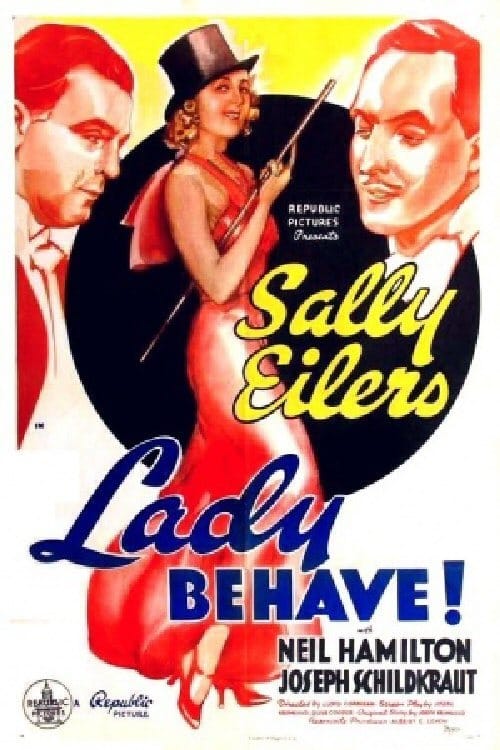
The 1938 film, Lady Behave!, begins with a woman named Clarice (Patricia Farr) getting ready to go out and celebrate Mardi Gras. Even though Clarice invites her older sister, Paula (Sally Eilers), to come with her, Paula refuses. Paula has work to do at home. It’s pretty obvious that this is the way that it’s always been between the two sisters. Clarice has fun while Paula stays home and waits for her to return.
Fortunately, Clarice does return in the morning. As she tells Paula, she had a great time during Mardi Gras. In fact, she had such a great time that she ended up getting married! She married a wealthy northerner named Stephen Cormack (Neil Hamilton). The only problem is that Clarice is already married! She’s totally forgotten that she only recently became the wife of a dissolute playboy named Michael Andrews (Joseph Schildkraut). By getting married a second time, Clarice has committed bigamy! She could go to prison for 10 years!
Whatever is Paula to do?
Well, what if she arranges for Clarice to leave the country?
What if she tries to bribe Michael into accepting an annulment?
What if Paula goes up to New York and pretends to be Clarice (because, after all, Stephen was pretty drunk when he married her)?
What is she does all three!?
Of course, when Paula goes up to New York, she discovers that Stephen is out of the country. She moves into his mansion, where she discovers that his two children — Patricia (Marcia Mae Jones) and Hank (George Ernest) — are convinced that she’s just a gold digger who only wants to steal their father’s money (and, it should be noted, also their inheritance). When Michael shows up at Stephen’s mansion, he explains to Paula that he needs $10,000 for a horse and he’ll only agree to an annulment if he gets the money. However, when he meets Patricia and Hank, he tells them that if they pay him $30,000, he’ll help to break up the marriage between Stephen and Paula (who, of course, everyone but Michael thinks is actually Clarice).
Eventually, Stephen shows up and he assumes that Paula actually is Clarice. Paula and Stephen quickly fall in love and it turns out that Stephen is very serious about his new marriage. He even wants to take Paula on a honeymoon. Of course, he thinks Paula is Clarice and Paula is freaking out because they’re not actually married but she wishes that they were. But, if they did actually get married, Stephen would be guilty of bigamy and then he’d have to leave the country like Clarice and….
Yes, this is one of those somewhat busy screwball comedies where almost every action is motivated by a misunderstanding and where all of the dialogue is extremely snappy. To be honest, it’s all a bit too hyper. Though the film originally had a running time of 70 minutes, most of the existing prints are only 57 minutes long. This film has a lot of plot for only 57 minutes and it’s often difficult to keep track of what’s happening from one scene to the next. That wouldn’t be a problem if this film starred someone like William Powell and Carole Lombard (or, for that matter, Cary Grant and Myrna Loy) but instead, this film features Sally Eilers and Neil Hamilton, who are likable performers but not quite likable enough to carry the film over it’s rough edges.
On the plus side, Joseph Schildkraut has some very funny scenes as the flamboyant Michael. And Marcia Mae Jones and George Ernest both do a great work as Stephen’s paranoid children. They consistently made me laugh. Otherwise, Lady Behave! is a bit too frantic for its own good.








 Through the Shattered Lens