Spring Breakdown: 7 Deadly Sins (dir by Glenn Plummer)


Before I really get started on this review, I think I should make clear two things:

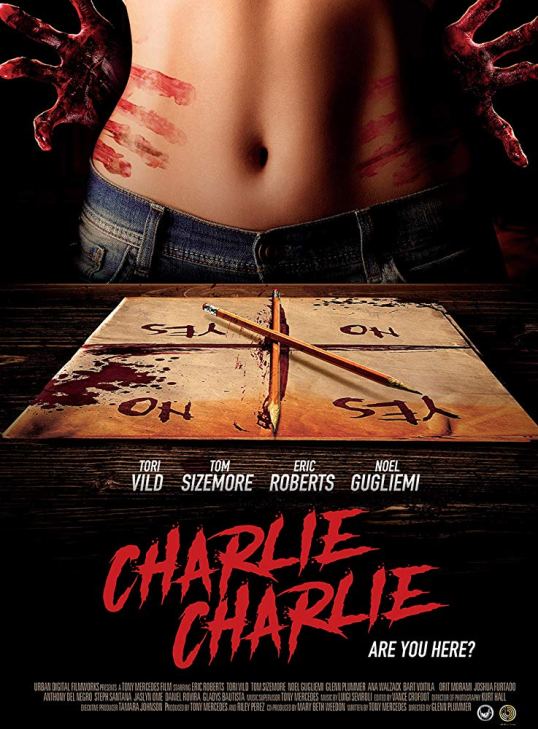
First off, this film can be found, for free, on Amazon Prime under the title 7 Deadly Sins.  That’s also the title under which it’s listed on the imdb.  However, all of the poster art that I’ve found for this film indicates that this film was originally entitled Charlie Charlie.  It makes sense, as the whole point of the film is that 7 idiots play a game called “Charlie Charlie,” where the point is to talk to some dead guy who never went to church and was therefore never cleansed of his sins.  Apparently, playing Charlie Charlie gets you killed.  Who would have guessed contacting an evil spirit would have such dire consequences.

Secondly, I tend to be forgiving of low budget horror films.  Some of my favorite films are low-budget horror films.  I respect any director who can create a frightening scene or maintain an ominous atmosphere on a low budget.  If you can make the paranormal seem real even when you can’t afford CGI, I have a tremendous amount of respect for your filmmaking skills.  My point is that when I tell you that this is not a good film and that it’s actually one of the worst horror films that I’ve seen in  while, I’m not just saying that because of the low budget.  I’m saying it because the movie freaking sucks.

7 Deadly Sins takes place at a Spring Break house party being thrown by the least likable teenagers on the planet.  Most of them are celebrating because it’s their last Spring Break before college.  Jamal (Steph Santana), on the other hand, is celebrating because it’s his last weekend before he starts a five year prison sentence.  At the start of Spring Break, Jamal was pulled over by a cop who discovered a huge amount of weed in the trunk of his car.  Apparently, in the world of 7 Deadly Sins, the justice system moves a lot quicker than it does in the real world because it only takes Jamal a few days to be found guilty and sentenced to prison.

Jamal’s girlfriend, Kim (Tori Vild), was in the car as well.  However, because she’s rich and she’s white, she’s only sentenced to a few months of house arrest.  She has to wear an ankle bracelet and listen to her racist mom and her pervy stepfather complain about her boyfriend. Kim swears to Jamal that she’ll wait for him to get out of prison.  Jamal suggests a threesome to help him prepare for life behind bars.  Kim kicks him out of her room.  It’s that type of party.

Sara (Gladys Bautista) has been hired, by Kim’s stepfather, to keep an eye on Kim for the weekend.  Kim is upset because Sara is Mexican and they’re both the same age.  Sara is upset because everyone screwed up the Charlie Charlie game.  “You have to play the game,” she repeats, “You have to repent your sins.”

“Shit’s fucked up,” Jamal says at one point and he’s probably right.

Anyway, 7 Deadly Sins is one of those films that tries to be both a horror film and a comedy but it doesn’t work as either, largely because the characters aren’t sympathetic enough to care about and none of the actors are particularly comedic.  You don’t care when they die and it’s hard to be amused when someone says that Sara should be selling oranges along the freeway.

7 Deadly Sins does feature two semi-celebrity cameos.  Tom Sizemore plays a dude in an mental hospital while Eric Roberts plays the judge who sentences Jamal and Kim.  Eric Roberts has a lot of fun with his role, railing about how much he hates drug dealers and marijuana.  Unfortunately, Roberts only gets one scene and then he’s out of the film.

Anyway, 7 Deadly Sins is pretty dumb.  It takes forever to get to the “Charlie Charlie” game and it doesn’t do anything particularly creative with any of the sins.  (At one point, we see written in blood: “Envy is a sin.”  Well, no shit.)  As far as Spring Break horror films go, you could just go down to Galveston and shoot your own and the end results would probably be superior to this one.
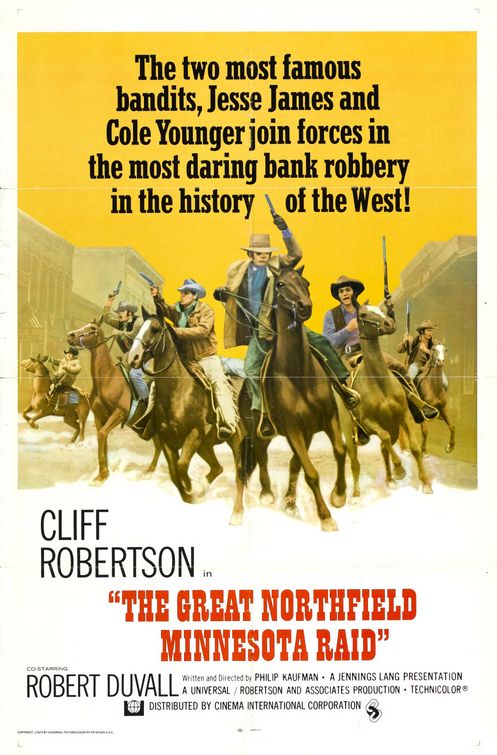
The Great Northfield Minnesota Raid (1972, directed by Philip Kaufman)


Despite having received pardons from the Missouri legislature in recognition of their military service to the Confederacy, Jesse James (Robert Duvall) and Cole Younger (Cliff Robertson) simply cannot stop robbing banks.  The James-Younger Gang has set their sights on the bank in Northfield, Minnesota, which is said to be the biggest bank west of the Mississippi.  Cole arrives in Northfield before the rest of the gang and scouts the location.  What he discovers is that most of the town’s citizens aren’t putting their money in the bank because they all assume that it will eventually be robbed.  With Jesse determined to pull off the crime of the century, Cole and Jesse have to figure out not only how to escape after the robbery but also how to get the people to deposit their money in the bank’s vault in the first place.

Philip Kaufman is a director who made a career out of reinterpreting history (his best known film is The Right Stuff) and, when it was first released in 1972, The Great Northfield Minnesota Raid was a revisionist western that mixed moments of comedy with moments of brutal violence.  Today, of course, presenting Jesse James and Cole Younger as being ruthless outlaws is no longer that daring of a narrative choice.  In The Great Northfield Minnesota Raid, Robert Duvall plays Jesse as being the western equivalent of a corrupt businessman, sending others to do his dirty work and not accepting any of the consequences for his own bad decisions.  Robertson plays Cole as being more a free spirit, an outlaw who is determined to enjoy himself.  Both of them give interesting performances but they also seem to be too contemporary for the characters that they’re playing.

Like most revisionist westerns of the early 70s, the film is full of hints that the old west and the time of the outlaws is coming to an end.  There’s a steam engine sitting outside of the bank and Kaufman spends almost as much time focusing on people reacting to that as he does on the planning and execution of the robbery.  When the robbery does finally occur, it’s not an easy robbery like you might find a 1940s western.  Instead, it’s a violent comedy of errors that leaves much of the film’s characters dead or wounded in the streets of Northfield.  The contrast between the quirky comedy of the first part of the film and the violence of the robbery is occasionally interesting but it often feels forced.  Sometimes, Kaufman seems like he’s trying too hard to be Sam Peckinpah.  In the end, Kaufman often doesn’t seem to be sure what he’s trying to say with this film.  He seems to be suggesting that Jesse and Cole are soon to be relics of a bygone era but why then cast Duvall and Robertson in the roles and have them play the roles like two mid-level hoodlums in 20th Century New York?

It’s an interesting but muddled film that never quite works.  For the definitive film about the James/Younger Gang, check out Walter Hill’s The Long Riders.

Film Review: Spenser Confidential (dir by Peter Berg)


Spenser Confidential, which is currently streaming on Netflix, is the latest Mark Wahlberg/Peter Berg collaboration.

It’s a crime film and it’s set in Boston and it will probably remind you every other Boston-set crime film that you’ve ever seen.  It’s got all the usual ingredients.  People sing Sweet Caroline.  A fat gangster wears a tracksuit.  We get a long overhead shot of the streets of Southie and there’s a scene set in an Irish bar.  One of the film’s big scenes takes place at what appears to be a deserted racing track.  (I’ve never been to Boston but, just from the movies, I know that the city is basically made up of Harvard, Southie, and hundreds of deserted race tracks.)  The Red Sox get a shout-out.  And, of course, the movie stars Mr. Boston himself, Mark Wahlberg.  Seriously, if your Boston movie doesn’t feature Mark Wahlberg or an Affleck brother, it might as well just be a St. Louis movie.

In this one, Mark Wahlberg plays Spenser.  Spenser was a cop until a gangster in a tracksuit murdered someone from the neighborhood and the head of homicide tried to bury the case.  This led to an angry Spenser beating the man up in front of his own house.  Spenser was sent to prison, where he served five years as an ex-cop in the general population.  That’s right!  He wasn’t even put in protective custody but somehow, he survived.  Right before Spenser is released from prison, he’s attacked by a Neo-Nazi who is played by Post Malone.  It’s not really that relevant to the overall plot but it does give viewers a chance to say, “Wait a minute …. is that Post Malone?”

Anyway, once he gets out of prison, Spenser moves in with his mentor and former boxing coach, Henry Cimoli (Alan Arkin).  He also gets a new roommate, an aspiring MMA fighter named Hawk (Winston Duke).  After Captain Boylan,  the head of homicide — yes, the same guy that Spenser beat up five years ago, is decapitated by 20 sword-carrying assailants, Spenser is the number one suspect.  Fortunately, for Spenser, another cop commits suicide and it’s quickly announced that the cop who killed himself also killed Boylan.  It’s a murder/suicide!  So, Spenser’s off the hook and I guess the movie’s over, right?

Nope, it doesn’t work like that.  It turns out that Spenser has his doubts about the whole story and he wants to investigate because he has “a strong moral code.”  Unfortunately, as a convicted felon, Spenser is not allowed to become a private investigator.  So, Spenser and Hawk conduct an unofficial investigation, which largely amounts to talking to Spenser’s former partner, Driscoll (Bokeem Woodbine) and getting into a brawl while Sweet Caroline plays in the background.

It’s a Boston thing.

The mystery are the heart of the film pretty much leads exactly where you think it’s going to lead.  For a 2-hour crime thriller, there aren’t exactly a lot of twists and turns to be found in Spenser Confidential, which is a problem.  The mystery’s solution is so obvious that it’s hard not to resent the fact that Spenser is apparently too stupid to figure it out on his own.  There’s an extended scene where he gets attacked by a dog and you know what?  That would have never happened to any other movie detective because every other detective would have figured out who the murderer was long before getting attacked by that dog.

On the plus side, Peter Berg knows how to stage a fight scene and he also knows how to make the best use of Wahlberg’s mix of sensitivity and working class arrogance.  Unfortunately, the rest of the cast is let down by a script that doesn’t give them much to do.  Winston Duke is physically imposing as Hawk but he spends too much of the film standing around and waiting for Spenser to take the lead.  Alan Arkin appears to be having fun in the role of Henry but again, his character is underwritten.  About the only person, other than Wahlberg, who gets to make much of an impression is Iliza Shlesinger, who is cast as Spenser’s ex-girlfriend.  Shlesinger may be playing a stereotype (she’s loud, crude, and has a thick Boston accent) but she fully embraces the character and makes her seem like the only person in the film who actually has a life beyond what’s happening onscreen at any given moment.

Anyway, Spenser Confidential isn’t terrible as much as it’s just forgettable.  It’s a generic Boston crime film and you can probably safely watch it if you’re not looking for something to which you would actually have to pay attention.  Some of the action scenes are well-shot.  If you liked Mark Wahlberg in other films, you’ll probably like him in this.  Whether you enjoy it or not, you’ll probably forget about this film about an hour after watching it.

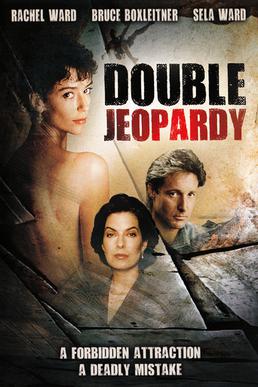
Double Jeopardy (1992, directed by Lawrence Schiller)


Salt Lake City is riveted by the sensational murder trial of mountain climber Lisa Burns Donnelly (Rachel Ward).  Lisa killed her ex-boyfriend, Eddie.  She says that she did it in self-defense after Eddie raped her.  The prosecution claims that she murdered Eddie after he caught her cheating on him with another man.  Lisa’s lawyer, Karen Hart (Sela Ward), is up for a judgeship.  Her husband, Jack (Bruce Boxleitner) is Lisa’s ex-boyfriend.  What Karen doesn’t know is that, other than Lisa, Jack is the only person who witnessed what happened the night of the murder because, just moments before, he and Lisa had been committing PG-13-rated adultery in her shower.

One of the interesting things — in fact, maybe the only interesting thing — about Double Jeopardy is that several online sellers claim that the film stars Aaron Eckhart.  It is true that Eckhart is in the movie.  It was shot in Salt Lake City while he was a student at BYU and it was his film debut.  However, Eckhart has about a minute of screen time and about five lines.  He plays a Marine named Dwayne who someone meets in an airport.  His big line is, “Semper Fi, babe!”

As for the film, since it’s set in Salt Lake City, there’s a lot of talk about how Lisa is being unfairly judged for her unconventional (read: non-Mormon) life style and there’s a heavy-handed subplot about Jack trying to put on a production of The Crucible but it doesn’t add up too much.  It would probably have been easier for the movie to make a point about religious and moral persecution if Lisa wasn’t actually guilty of murdering Eddie.  Instead, the movie leaves you thinking, “Maybe those Mormons have a point.”

Double Jeopardy tries hard to be something more than your standard legal thriller but it’s pretty forgettable.  Rachel Ward was always a great femme fatale and Sally Kirkland gives a good performance as the cop who sees through both Lisa and Jack.  The film was produced for Showtime at a time when cable was still trying to prove that it could provide original content worth paying for so there’s some cursing and sideboob tossed in, as if to say, “See?  You don’t get this on NBC!”  Otherwise, this is a by-the-numbers made-for-TV movie.

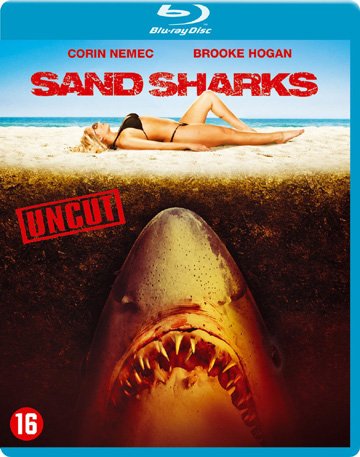
Spring Breakdown: Sand Sharks (dir by Mark Atkins)


“There ain’t no party like a Sandman party!” Jimmy Green (played by Corin Nemec) announces in the 2012 film, Sand Sharks, and he’s right.

Jimmy is infamous for throwing (or, at least, attempting to throw) big parties and organizing wild festivals.  This movie was made before the Fyre Festival but watching Jimmy as he runs around and assures everyone that he’s about to put together the greatest music festival that the world has ever seen, it’s hard not to be reminded of the determined and incompetent people who were behind that legendary disaster.  Then again, no one was eaten by a shark during the Fyre Festival.  Jimmy can’t make the same claim about his parties.

In fact, when we first meet Jimmy, he’s trying to rebuild his reputation after his previous party ended in tragedy.  Apparently, 15 people died at that party and, though we don’t get all the details, it’s insinuated that they were eaten by sharks.  Jimmy isn’t one to let shark-related tragedy get him down, however.  Instead, he’s doing to put on another Sandman Festival and this time, he’ll keep everyone on the beach and out of the water!  Fortunately, for Jimmy, his father just happens to be the mayor of a beachside community.

Unfortunately, it turns out that sharks aren’t just in the ocean.  There’s also on the beach, swimming underneath the sand.  They’re sand hharks!  Now, the movie does provide an explanation for why all of those sharks are moving around underneath the sand but it’s really not important.  The important thing is that they’re out and they’re eating just about everyone that they meet.  That’s going to be a problem as far as the Sandman Festival is concerned.  Fortunately, Jimmy and the authorities are able to kill one sand shark.  However, when Jimmy discovers that there’s more than one sand shark, he keeps that news to himself.  The show must go on!

You can probably guess what happens next….

The sand sharks are a lot of fun and this SyFy film provides plenty of spring break mayhem as festival goers are yanked under the sand but, for me, the main attraction of this film is seeing Corin Nemec just unleashed like a force of nature.  Nemec starts the film going at about 100 miles per hour and he doesn’t slow down for a single second.  As played by Nemec, Jimmy never stop talking and he never stops hustling and he’s so committed to putting on the greatest festival ever that it’s impossible not to like him, even if his actions do end up getting a lot of people killed.  Nemec seems to be having a lot of fun with the role of Jimmy and it’s just as much fun to watch him.

Of course, Jimmy isn’t the only character in the film.  Brooke Hogan plays Dr. Sandy Powers, who is a shark expert.  At one point, Sandy looks out at the beach and tells Sheriff John Stone (Eric Scott Woods) that “We’re stuck between a rock and a shark place,” and if you don’t cheer for that line, I worry about you and your sense of humor.  As that line indicates, Sand Sharks is a film that cheerfully embraces the ludicrousness of it’s storyline.  It doesn’t take itself too seriously and neither should you.  This is the type of film where people often snap, “Bite me!” right before a shark leaps out of the sand and does just that.  This is pure entertainment and, if you’re a fan of SyFy shark films, Sand Sharks is a lot of fun.  Between the sand sharks and Corin Nemec playing the hipster-from-Hell, what more could you want?

Cinemax Friday: The Hit List (1993, directed by William Webb)


Charlie Pike (Jeff Fahey) is an assassin with a conscience.  He learned how to kill while serving in the military and now, he uses his skills to help out the Committee, a shadowy organization of lawyers who are determined to take out the leaders of organized crime.  When Charlie announces that he has decided to retire from the killing game, the Committee’s Peter Mayhew (James Coburn!) asks him to take on one more job as a personal favor to him.

Mayhew puts Charlie in contact with the beautiful and alluring Jordan (Yancy Butler, making her film debut).  Jordan is the widow of a businessman who was murdered by the mob.  Jordan asks Charlie to kill the man who killed her husband.  Charlie agrees but, after he does the job, he discovers that the man he killed was actually a government informant who was scheduled to testify to Congress!  Someone double-crossed Charlie and now, Charlie’s got both the police and another group of assassins trying to track him down.  Jordan claims that Mayhew told her that the informant was responsible for her husband’s death.  Mayhew denies it and says that Jordan must have set Charlie up.  Charlie has to figure out who to trust before it’s too late.  Complicating matters is that Charlie and Jordan have become lovers.

The Hit List is essentially a 40s film noir reinterpreted for the direct-to-video age.  Jeff Fahey has the Alan Ladd role while Yancy Butler does her best imitation of Lana Turner.  Fahey was one of the best actors to routinely star in the neo-noirs that used to populate late night Cinemax and The Hit List features one of his best performances.  Fahey is a convincing killer but he still brings enough humanity to the role that you believe Charlie could find himself falling for Jordan.  Yancy Butler is a sultry and sexy femme fatale and James Coburn is James Coburn, supercool, slick, and always in control.  It shouldn’t be too hard to figure out which one of the two is betraying Fahey but all three commit to their roles and give enjoyable performances.  I especially liked the scene where Mayhew accuses Jordan of double-crossing Charlie and James Coburn grins like he’s having the time of his life.  James Coburn was one of those actors who could liven up and improve any scene in any movie and he proves that here.

The Hit List is a well-made B-noir that’s elevated by its cast and which will leave you nostalgic for Cinemax in the 90s.

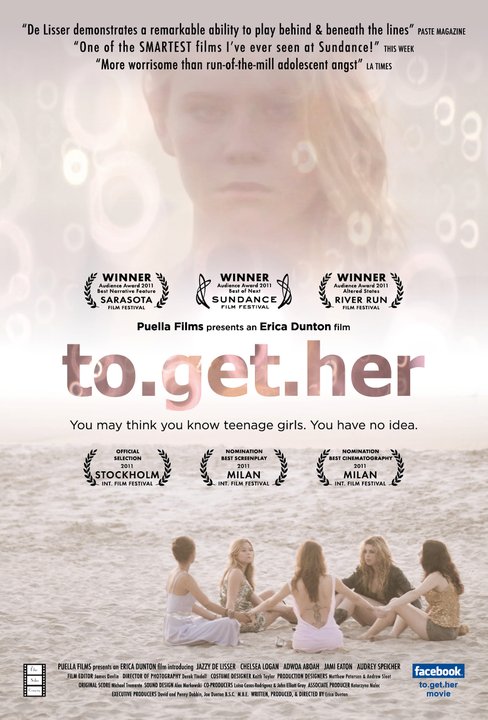
Spring Breakdown: The Spring Break Murders (a.k.a. To.Get.Her) (dir by Erica Dunton)


“It’s a weekend of no consequences.”

That’s a phrase that is uttered many times over the course of the 2011 film, The Spring Break Murders (which is also known as To.Get.Her.)  In fact, it’s a phrase that’s uttered so many times that I actually started to get sick of hearing it.  Initially, I thought that it was evidence of lazy writing and that the film’s director and screenwriter, Erica Dunton, was so oddly proud of the phrase that she was determined to push it on us whether it actually meant anything or not.

By the end of the film, my opinion had changed.  There’s a big twist in The Spring Break Murders, one that took me totally by surprise and which I’m still thinking about as I write up this review.  Needless to say, I can’t reveal the twist here in this review.  But I can say that it’s a good one and it’s worth the wait and, by the end of it, you’ll understand why the characters were so fixated on that phrase.  By the end of the film, “It’s a weekend of no consequences” goes from being a cliche to a truly brilliant piece of dialogue.

The Spring Break Murders tells the story of five friends and one eventful weekend.  At the start of the movie, a voice-over informs us that, by the end of the weekend, only one of the friends will still be alive and the four others will be dead at the hands of one man.  The five friends have flown in from all over so that they can spend the weekend at a beach house owned by the mother of Ana Frost (Jazzy de Liser).  Ana is apparently a bit of a problem child.  Haunted by her father’s suicide, she hates her mother’s fiancee, Robert (Ed Wagenseller), and is secretly paying for the entire weekend with his credit card.  (She even bought everyone’s plane tickets.)  Robert is supposed to be staying at the beach house with Ana while Ana’s mother has a weekend to herself but Ana sharply informs him that he will be spending the weekend at a hotel.  Though angered, Robert agrees.  At first, it’s tempting to assume that Ana is just a spoiled brat but, as with everything in this movie, there’s more to it than that and nothing is what it first seems.

All five of the friends have their own issues that they’re dealing with.  One of them has just discovered that she won’t be attending Oxford.  Another one blames herself for death of her sister.  The token religious girl is scared to come out to her parents while the pregnant girl has been dumped by her boyfriend and has been overly medicated by her family.  And, at first, it’s easy to roll your eyes at the fact that everyone has at least one dramatic problem.  As I watched these five friends acting miserable in a nightclub, I found myself wondering if I really wanted to watch a movie about the type of depressing and overly dramatic people who I usually mute on twitter.  But I kept watching because I suspected there was more to the story than was immediately apparent.

And it turned out that I was right.  There’s a lot more to the story.  Unfortunately, I can’t tell you what it is without spoiling the film.  What I can tell you is that this is a film that worth sticking with.  During the film’s first half (which can seem unfocused before you learn the film’s twist), you may be tempted to stop watching but stick with it because almost everything that initially seems self-indulgent pays off in the end.  Though both of this film’s titles — To.Get.Her and The Spring Break Murders — might make it sound like a generic horror film, it’s actually an intriguing mystery with a clever twist.  It’s a movie that sicks with you.  I imagine that I’ll be thinking about it for days to come.

That said, it’s not a perfect film.  There’s a subplot about Ana’s mother cheating on Robert that never really makes much sense and the pace lags whenever the attention is taken away from the friends and given to any of the film’s other characters.  There are also a few flashbacks that, occasionally, feel a bit awkward, as if they’ve been forced into the action.  As one might expect from a low-budget independent film, some of the actors are better than others.  Jazzy de Lisser is a stand-out and she gets good support from Chelsea Logan, who plays the pregnant friend.  The rest of the cast is a bit more uneven.  In the end, though, this is an effectively clever little film and one that will reward repeat viewings.

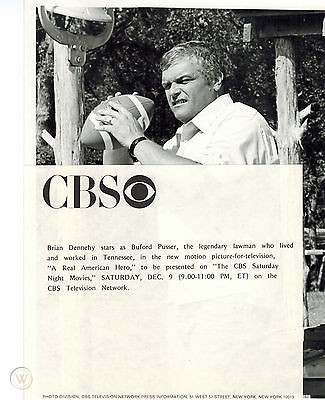
A Real American Hero (1978, directed by Lou Antonio)


Based on the title, you might think this made-for-TV movie is about G.I. Joe but instead it’s about Buford Pusser, the club-wielding sheriff who battled bootleggers in Tennessee and who might have been murdered by them.  While he was still alive, Pusser was played by Joe Don Baker in the original Walking Tall.  After Pusser’s mysterious death, Bo Svenson took over the role for two sequels and a Walking Tall television series in 1981.  Meanwhile, in A Real American Hero, the role is played by Brian Dennehy.

Though Pusser may be played by a different actor than in the original movies, A Real American Hero finds him still dealing with same threats.  As a result of getting some bad moonshine at the Dixie Disco, two teenagers are dead and two are blind.  Buford is determined to take down the owner of the Disco, Danny Boy Mitchell (Ken Howard).  Unfortunately for Buford, Danny Boy has a mole in the sheriff’s department and always manages to clean up his club before Buford arrives.  When Buford does arrest Danny, the case is thrown out of court because Buford didn’t have probable cause or any real evidence beyond hearsay.

Buford’s solution is to start enforcing every single law on the books, even the ones that haven’t been relevant for over a century.  Buford knows that stopping Danny Boy for a misdemeanor would give him probable cause to search him for any evidence of smuggling moonshine.  For instance, Buford pulls Danny Boy over because he’s driving a vehicle but, in violation of a law written in 1908, he doesn’t have a man walking in front of the car and waving a red flag.  Another time, he gives Danny Boy a ticket because, in violation of a law from 1888, he never ties his carriage to a hitching post and a law written in 1910 legally defines all cars as being carriages.

The problem is that, if Buford only enforces the law against Danny Boy, he could be accused of police harassment.  So, everyone in the country has to be held to the same standard, which means that everyone in town is soon getting ticketed and jailed for the minor offenses as Danny Boy and his associates.  Everyone gets angry with Buford but, after Danny Boy tries to assassinate the sheriff while he’s got his kids in the car, they change their minds and support being overpoliced.

A Real American Hero was obviously an early attempt at a pilot for a Buford Pusser TV series.  Bulky Brian Dennehy is physically right for Buford but he’s never as convincing a redneck as Joe Don Baker was in the role.  Plus, it’s impossible to watch Dennehy hauling people into court for not hitching their “horseless carriages” without being reminded of Dennehy harassing Sylvester Stallone at the start of First Blood.  Despite a subplot where Pusser tries to help a former prostitute re-enter society, Buford comes across more like a jerk than a real American hero.  Meanwhile, Ken Howard does his best but Danny Boy is still just a generic television bad guy.  If he wasn’t selling moonshine in Buford’s county, he’d probably be further down south, trying to frame the Duke boys for a bank robbery.

This one is for Walking Tall completists only.

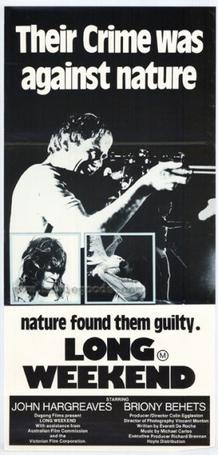
Spring Breakdown: Long Weekend (dir by Colin Eggleston)


The 1978 Australian film, Long Weekend, is about what happens when two unlikable humans decide to spend the weekend with nature.  Nature, it turns out, doesn’t really like the company and decides to kill them.

Or does it?  From what I’ve read, the screenwriter for Long Weekend, Everett De Roche, did intend this to be a nature’s revenge type of film.  The idea behind the film is that these two city dwellers aren’t respectful of nature when they go camping and, as a result, all of the plants and the animals decide to get revenge.  But the film is shot in such a way that your interpretation may vary.  Are the humans really being targeted by nature?  Or are the humans themselves just so paranoid and craven that they don’t even realize that they’re destroying themselves?  For instance, when one of them gets attacked by a possum, is it because the possum has been sent on a search-and-destroy mission or was it just because someone was stupid enough to stick their hand in a possum’s face?  I mean, you can really only expect any animal to put up with so much, regardless of whether they’re a member of an organized army or not.  Whether or not it was intentional on the part of the filmmakers or just the result of having to adjust to working with a low budget, Long Weekend is actually a rather ambiguous film and it’s all the more effective for it.

Long Weekend opens with Peter (John Hargreaves) and Marcia (Briony Behets) driving through the rain.  They’re heading off to an isolated beach camping spot that Peter has discovered.  Peter considers himself to be a great outdoorsman and is very proud of the hunting rifle that he’s bringing with him.  Marcia is a self-described “city girl” and is considerably less enthused about the prospect about spending the weekend in the rough.  (I immediately identified with Marcia because I have always hated the idea of camping.)  Marcia and Peter spend half of their time talking about how much they love each other and the other half talking about how much they hate each other.  Marcia’s also having an affair and Peter might know about it.  (When Peter first brings his new rifle home, he points it directly at Marcia.  Is he just testing the sight or is he fantasizing about murdering his wife?  The film leaves it up to us to decide.)  Along the way, Peter runs over a kangaroo while driving to the campsite but neither he nor Marcia seem to notice.

Once they’re camping, Peter and Marcia only get more obnoxious. Marcia complains about nature. Peter litters the ground with cigarette butts and he kills a manatee.  He also shoots a tree with a spear gun.  He claims it was an accident, though it’s hard not to notice how close the spear comes to hitting Marcia.

The surroundings start to grow more ominous.  The wind howls.  The skies grow dark.  Eagles attack.  Possums attack.  A dog attacks.  Marcia wants to leave and eventually, even stubborn old Peter agrees but it turns out that leaving is not going to be as easy as they think….

Long Weekend takes a while to really get going but, if you stick with it, your patience will be rewarded.  The time taken to reveal who Peter and Marcia are and to show us how their relationship works definitely pays off in the end.  Shot on location in the Australian bush, this is one of those horror films that creates a perfectly ominous atmosphere and then doesn’t let up until the end credits roll.  Peter and Marcia are so unlikable that you don’t really mind seeing them being tormented but, by the end of the film, it’s impossible not to share their desperation as they try to figure out how to escape the wrath of a seriously pissed off planet.  The film ends on a rather abrupt yet totally perfect note.

As I mentioned at the start of this review, one of the things that makes Long Weekend so effective is that it does maintain a certain ambiguity as to what’s happening.  There are hints throughout that whats happening might not just be isolated to that campsite and that Peter and Marcia aren’t the only ones who have gotten on the bad side of nature this weekend.  At the same time, it’s also possible to interpret the film as being less about nature’s revenge and more about an unhappy couple who lets their own paranoia get the better of them.  Are they really victims of nature or are they just two people being driven mad by their own dysfunctional relationship?  While the filmmakers are on record as saying that they meant for it to be the former, the film itself leaves it up to you decide.

Long Weekend is an intense and effective horror film.  If you’re tempted to go camping this Spring Break, be sure to watch this film first.

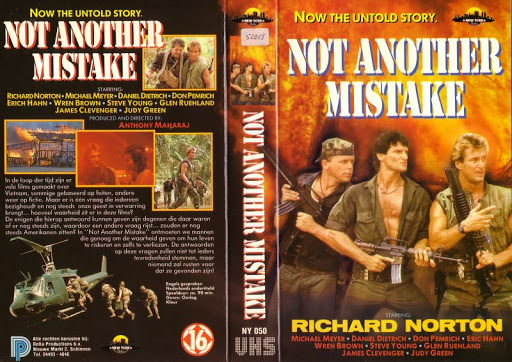
Not Another Mistake (1989, directed by Anthony Maharaj)


Not

Another

Mistake

As the title indicates, this is another Nam film, where a veteran reenters the jungle and finally rescues the POWs who were left behind when the United States fled Saigon.  With Sylvester Stallone, Chuck Norris, and even Gene Hackman leading the way, these films were all the rage during the 80s.  They provided American audiences with a chance to go back and win the only war that, up to that point, America had lost.  Not only did they provide wish-fulfillment for audiences but they also confirmed what several suspected, that the only reason the U.S. lost in Vietnam was because our soldiers’s hands were tied by generals and Washington pencil pushers.  If we had just let our men go in and fight the VC guerrilla-style, these films say, Saigon never would have fallen.

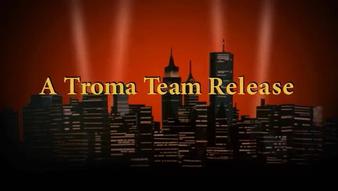
Not Another Mistake came out towards the end of the cycle and you know what type of film you’re about to get into as soon as the “A Troma Team Release” skyline appears at the start of it.

Don’t let that skyline scare you off.  Not Another Mistake is slightly better than the average Troma film.  Admittedly, that’s not exactly a high bar to clear.

Richard Norton plays Richard Straker, who served in a special ops unit during Vietnam and who was a key part of Operation Black Thunder.  In other words, he’s a badass.  After the war ended, Straker raised a family and found success as a businessman.  One night, he returns home and interrupts a home invasion.  He kills the thugs but not before his wife and daughter each suffer a slow motion death.  (Straker has Vietnam flashbacks while shooting the thugs.)  Straker spends a year drinking and then goes to Vietnam to lead a raid on a POW camp.  What’s interesting is that Straker’s family being murdered doesn’t really figure into the rest of the plot.  He never brings up his tragic past nor does it appear to have made him more willing to take crazy risks or anything else you’d expect it to do.  Instead, his family is gunned down because I guess the movie had to start in some way.

Once Straker is sent to Vietnam, he’s given a ragtag group of soldiers to command.  None of the soldiers have any personality but then again, neither do any of the POWs or the camp guards or anyone else in the movie, other than Straker.  Richard Norton has appeared in a lot of movies like this and his appeal has always been that he seems like he could probably do everything that he does on film in real life.  Norton is convincing in the action scenes and he does okay in the big dramatic scenes, like when he rescues an old friend, just to discover that, after years in a POW camp, the man is nearly dead.

It takes a while for Not Another Mistake to really get going.  There’s a lot of extremely dark jungle scenes where you can’t really see what’s going on.  Things pick up once they get to the POW camp and the rescue operation leads to some exciting action scenes.  There’s a good chase scene on a train and this film features some of my favorite example of one man being able to blow up gigantic buildings with just one grenade launcher.  One thing that I appreciated about the film is that it attempted to be honest about what type of state a person would be in after spending 20 years in a POW camp.  This isn’t one of those films where the POWs can pick up a discarded machine gun and immediately follow Chuck Norris into battle.  Also, as easy as it is compare Not Another Mistake to the other POW rescue films of the 80s, it has a surprisingly dark and abrupt ending, which suggests that maybe the film was meant to be more than just an exercise in jingoistic wish fulfillment.  It’s the type of sober ending that you never would have seen happen to Norris or Sylvester Stallone but Richard Norton handles it like a champ.

Too long by at least 30 minutes and severely hampered by a low budget, Not Another Mistake still has enough surprises and enough Richard Norton to stand out from the rest of the POW rescue genre.  If you’re a fan of the genre, watching this won’t be another mistake.