International Horror Film Review: #Alive (dir by Cho Il-hyung)


My feelings on the zombie genre are so mixed.

On the one hand, zombies are scary and zombie movies, when done well, can be genuinely disturbing.  Zombie movies deal with the inevitably of death.  Whenever someone dies, we always say that they’re at peace.  “At least, they’re not suffering anymore,” we say.  Zombie movies suggest that there is no peace after death.  Instead, the suffering of life is just replaced with nonstop hunger and savagery of death.  Meanwhile, the living don’t even get a chance to mourn their dead before they’re forced to kill them again.  Zombies are relentless and they used to be our friends and family.  That’s one reason why zombies haunt us in a way that certain other monsters never will.

At the same time, when it comes to zombie movies, there’s just so many of them!  Seriously, it seems like there must be at least a hundred zombie movies released every year.  We’ve seen so many scenes of the dead running through empty city streets that it’s hard not to get cynical.  The first time you see a reanimated corpse eat its parents, it’s disturbing.  But, by the hundredth time you’ve seen it, it’s just expected.  We now live in an age where every disaster is compared to a “zombie apocalypse.”  Even non-horror fans know about zombies.  The days of zombies being obscure are over.  They’re now firmly a part of pop culture and, as a result, they’ve become a bit annoying.

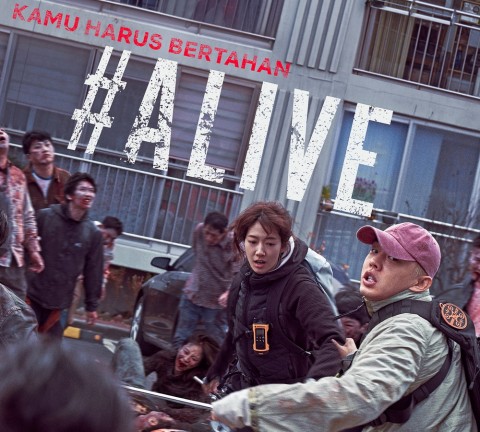
I say all this because, in many ways, #Alive is a standard zombie film.  This South Korean film opens with Joon-woo
(Yoo Ah-in) in his apartment, playing video games.  When reports come in of something strange happening in the streets of Seoul, Joon-woo goes out to his balcony to see what’s happening.  What he sees is a world gone mad, one in which hordes of growling people run through the streets, biting down and feeding on anyone who gets to close to them.  Yes, the zombie apocalypse has begun and Seoul is apparently right in the middle of it.

And don’t get me wrong.  The zombies are indeed frightening and there’s an exciting sequence where Joon-woo has to force one out of his apartment.  It’s all very well-directed and well-acted by Yoo Ah-in but it’s not anything that we haven’t seen before.  At this point, audiences have seen so many zombie rampages that if a real one ever breaks out, the uninfected will probably start bitching about how different it is from what the movies led them to expect.

What sets #Alive apart is the way it captures the feeling of being totally isolated and alone.  Trapped in his apartment with only a limited amount of food and with no way of knowing whether or not his family is still alive, Joon-woo tries to maintain his sanity.  Joon-woo is isolated from the outside world.  He’s quarantied himself.  Occasionally, he steps out on the balcony and sees if the zombies are still outside.  (They are.)  Occasionally, he checks the news to see if there’s an end in sight.  (There’s not.)  As the days pass, Joon-woo finds himself tempted to surrender to his despair.

But what if Joon-woo isn’t the only person left alive in his apartment complex?  What if, on the other side of the complex, there’s a woman named Kim Yoo-bin (Park Shin-hye) who is trying to catch Joon-woo’s attention so that he’ll know that he’s not alone and that she’s willing to help?  And just how much of a risk is Joon-woo willing to take to end his isolation?

That’s a question that feels especially relevant today, at a time when so many people are isolated, either voluntarily or by doctor’s orders.  When a newscaster describes the zombies as being infected, it’s impossible not to think about what’s currently going on in the world.  When Joon-woo discovers how truly difficult it is to be alone and unable to leave your home …. well, that’s the way many people have felt this entire year.  Though #Alive was filmed before the pandemic lock-downs, it feels like a movie about our current times.  As such, it has a power to it that it might not have had if it had been released at a different time.  Like everyone, Joon-woo struggles with fear and despair.  But, at the same time, he never allows himself to forget that he’s not dead yet.  He’s still alive and there’s still hope.

#Alive is a film about how difficult it can be to live while everyone around you is obsessing on death but it’s also a film that encourages its viewers to embrace life, no matter how difficult or frightening the situation.  It’s a film about the dead that ultimately has a lot to say about what it means to be alive.
Horror Film Review: Host (dir by Rob Savage)


Host tells the story of the Zoom meeting from Hell.

Actually, that description is a case of me being a bit too glib.  Though this hour-long film, which can currently be viewed on Shudder, has received a lot of attention for its Zoom call format, there’s a good deal more going on in Host.  It’s the first film of the COVID-19 era and, when this era finally ends, it’s a film that will remind viewers of what it was like to be locked down and afraid that, even behind closed door and with a mask ready to go, there was truly no escape from the virus.

Host is a British film about six friends, one psychic medium, and one very destructive spirit.  Locked down due to COVID, the friends have weekly Zoom meetings.  Some of them drink wine during the meetings.  One of them smokes a good deal of weed.  The important thing that they’re staying in contact and not allowing the separation to drive them apart.  As so many others have done over the course of 2020, they’ve tried to find some sort of normalcy in a situation that is anything but.  Even though the viewer only spends an hour with these characters, it’s impossible not to relate to what they’re going through.

For this week’s meeting, a medium named Seylan (Seylan Baxter) had been hired to lead the friends in an online séance.  Everyone has a different reaction to Seylan, which I liked.  Jemma (Jemma Moore) seems to be struggling not to laugh as Seylan tells everyone to light their candles.  (I related to Jemma, as I probably would have had the same reaction.)  Emma (Emma Louise Webb) and Caroline (Caroline Ward) are both obviously taking the séance a bit more seriously and are concerned about what will happen when they contact the other side.  Haley (Haley Bishop) tries to keep the group focused while Radina (Radina Drandova) and Teddy (Edward Linard) deal with interruptions from their significant others.

Well, needless to say, the séance doesn’t exactly lead to the best of results.  That doesn’t count as a spoiler because first off, this film is on Shudder and secondly, since when has it ever been a good idea to try to contact the dead?  If there’s anything that I’ve learned from the movies, it’s that the dead are extremely touchy and prone to violence.

Host makes great use of its format.  Every time someone drops out of the meeting, we’re left to wonder if they’ve just temporarily lost their connection or if they’ve been attacked by something from beyond.  When we watch the interaction between the six friends — who feel like a group of real friends, though I don’t know how well everyone knew each other before production began — we find ourselves constantly looking over everyone’s shoulder, searching for any sign of an unexpected presence.  Sometimes, we think we see something just to then discover that it was just our overactive imagination.  Sometimes, we think we something and …. well, we actually do.

Host works because it’s a horror film to which everyone can relate.  It gets to a truth that gets beyond the usual horror movie mechanics.  There’s an interesting scene where one of the zoom participants is forced to flee from her flat.  Even with an evil presence chasing her, she still makes sure to mask up before leaving.  If it’s not the demons waiting to get you while you’re in quarantine, it’s the COVID waiting to get you as soon as you exit.  The greatest fear that many people have had over the past few months is that, even if you isolate and wear your mask and stay inside, the disease is still going to somehow get you.  Much like a demon from the other side, the coronavirus can’t be seen but it could be anywhere.  The evil spirit in Host is not named COVID but it might as well be.

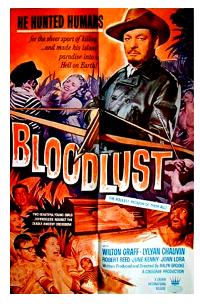
Horror on the Lens: Bloodlust! (dir by Ralph Booker)


In this 1961 version of The Most Dangerous Game, two vacationing couples find themselves trapped on a tropical island and hunted by the insane Dr. Albert Balleau (Wilton Graf).  Dr. Balleau loves to hunt people.  Why, you could even say that Dr. Balleau has a …. BLOODLUST!

Anyway, this is an undeniably low-budget film and it’s kind of silly but that’s actually what makes it watchable.  There’s a thousand different versions of The Most Dangerous Game out there but this is the only one to feature Robert Reed, the dad from The Brady Bunch, being hunted through the jungle.  If you’re like me and you think that Mike Brady was an authoritarian fascist, this film is for you.

Enjoy!

The TSL’s Horror Grindhouse: Die Cheerleader Die! (dir by Jerry Patterson)


Hey, what do you think this film is about?

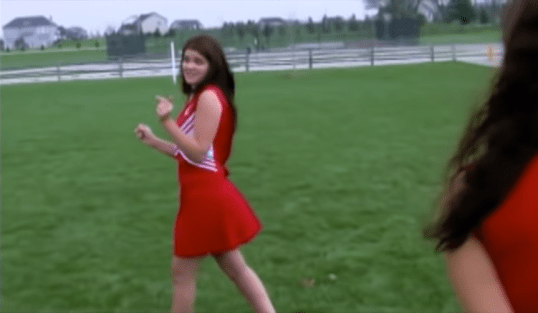
Die Cheerleader Die! is a film that was first released in 2008. It’s an independent film out of Chicago and it’s about cheerleaders. It’s also about someone who is murdering all of the cheerleaders at a …. well, I’m not sure if they were supposed to be in high school or college. All of the cheerleaders appeared to be grad student age but all the classrooms looked like they belonged in a high school.

Anyway, Tiffany (Inga Draper) is in charge of the cheerleading squad at this high school or college and she basically runs it like a dictator. She tells everyone what they can and cannot do. For instance, she orders Robin (Maria Perez) to starve herself, even though Robin is not overweight at all. Robin finds herself being tempted away from the cheerleaders by a group of body acceptance activists who are referred to as being “Pretty Intelligent Girls” or …. well, you can figure out the acronym for yourself. When cheerleaders start to turn up dead, the Pretty Intelligent Girls are the number one suspects but could it be someone else?

Who knows? This film is a difficult one to sit through, largely because it was shot on video with amateur actors, fluorescent lighting, and natural sound. That’s another way of saying that Die Cheerleader Die is essentially a 90-minute YouTube video and it’s perhaps appropriate that that’s where I saw it. There’s no suspense, the kills aren’t particularly interesting, and the whole thing just gets kinda boring pretty quickly.  As I always do whenever watching a horror film about cheerleaders, I forced my sister to watch it with me so that I could get her thoughts on whether or not the film accurately captured the high school cheerleader experience.  Erin abandoned the film after about seven minutes but I stuck with it because I though it might turn out to be a Coen Brothers-style commentary on high school films.  It wasn’t.

But, I don’t like being totally negative in any review so I am going to point out two good things. Number one, Inga Draper gave a pretty good performance as Tiffany. She was like every aspiring dictator that you ever knew in high school. Secondly, regardless of whether the film is any good or not, you can’t deny that it actually got made. The filmmakers may have made some poor production choices but they still got their film made and, 11 years later, it’s still being watched and reviewed. That’s more than most people who have, at some point, said, “I’m going to make a movie!” have accomplished.

Finally, cheerleaders always seem to be at a disadvantage in horror movies. I’ve always found that pretty strange because most of the cheerleaders that I’ve known were tough-as-nails athletes who, because they were constantly having to deal with snarky comments and pervy flirtation, knew how to take care of themselves. In a real life horror movie, the cheerleaders would probably be the only ones to survive.

Trust me, when the apocalypse hits and the world is burning all around you, you’re going to be looking to the cheerleaders to not only keep up your spirits but save the world as well.

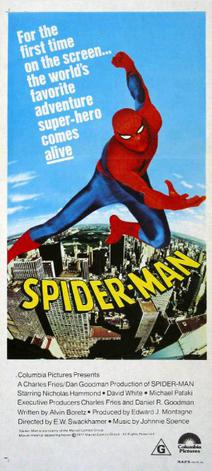
Spider-Man (1977, directed by E.W. Swackhemer)


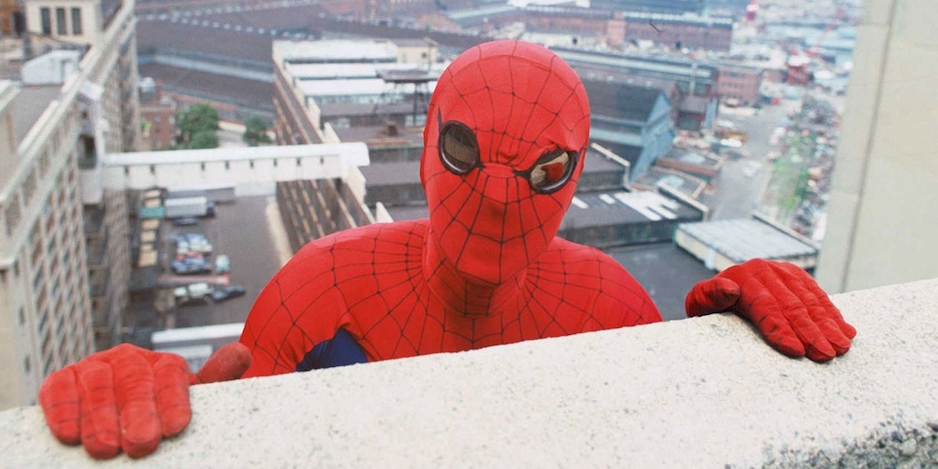
When a college student named Peter Parker (Nicholas Hammond) is bitten by a radioactive spider, he’s stunned to discover that he can now do everything that a spider can.  He can climb walls.  He has super strength.  He has super senses.  And, once he invents a sticky web serum, he can shoot webs and swing around the city!  All he has to now is sew himself a red and blue costume and he’ll be ready to fight crime in New York City!

It’s not a minute too soon because New York is dealing with a crime wave that only Spider-Man can deal with.  Seemingly ordinary people are suddenly going into hypnotic trances, stealing money and committing suicide.  An extortionist sends words that, unless he’s paid a lot of money, he’s going to unleash a wave hypnotic chaos on the city.  Could it have anything to do with a sinister New Age guru and hypnotist named Edward Byron (Thayer David)?

Though it was released theatrically in Europe, Spider-Man was produced for television and it served as the pilot for a short-lived CBS television series.  Along with The Incredible Hulk, this was one of the first attempts to build a television series around one of Marvel’s characters.  Unfortunately, the series only last 14 episodes before being canceled.  Though it can be hard to believe nowadays with the nonstop hype around every single comic book movie, there was a time when television and film executives were actually weary about trying to bring super heroes like Spider-Man and Captain America to life.  According to Stan Lee (who served as a consultant on Spider-Man), CBS wanted to distance their version of Spider-Man from its comic book origins.  While both the pilot and the series features Peter Parker crawling up walls and shooting webs, there’s no Uncle Ben.  There’s no talk about how with great power comes great responsibility.  Worst of all, there are no members of Spider-Man’s famed rogue’s gallery.  No Electro, no Sandman, no Green Goblin, and certainly no Dr. Octopus.  CBS wanted the show to feature down-to-Earth villains, which is an interesting strategy for a show about a grad student who can climb walls.

The television version of Peter Parker isn’t as insecure and angsty as either the comic book version or even the movie versions.  Hammond is likable and sincere in the role but he is also almost too self-assured as Parker, proof that CBS didn’t understand that a huge part of Spider-Man’s appeal was that he was never as confident as Superman or Captain America.  Instead, much like many of the people who read his comic, Peter was frequently worried and consumed with self-doubt.  The comic book version of Spider-Man was always wracked with guilt for not stopping the thief who eventually killed Ben.  The television version was more worried about selling enough selfies to The Daily Bugle to be able to go on a date with his professor’s daughter.

At least the pilot film featured a villain who wouldn’t have felt out of place in an issue of The Amazing Spider-Man, though he probably would have had a cool villain name, like the Mesmerizer, if he had appeared in the comic.  Thayer David played a lot of smug villains in the 70s, not to mention the fight promoter in Rocky.  In Spider-Man, David goes all in as the villain and he’s got the perfect posh accent for delivering threats and sarcastic put-downs.  Unfortunately, this version of Peter Parker is not the wise-cracking machine that he was in the comic books and he never really gets a chance to verbally put Byron in his place.

If you can overlook its deviations from the comic book, the pilot isn’t a bad made-for-TV adventure.  Though miscast and playing a far different version of Peter Parker than we’re used to, Nicholas Hammond does his best to make Peter and his transformation credible.  Thayer David, as always, is a good villain and the story, with ordinary people suddenly turning into ruthless criminals, isn’t bad.  Though there are a few convincing shots of Spider-Man web-slinging, most of the special effects are lousy but they’re really not any worse than what you would expect to see in a 70s made-for-TV movie.  Though the series ultimately didn’t work, the pilot is still an enjoyable precursor to what, decades later, would become the Marvel Cinematic Universe.

The Watcher in the Woods (1980) Review by Case Wright


The Watcher in the Woods is one of those films that scares you, but you see it in your youth and it first introduces you horror. It’s like a horror movie kiddie pool. I watched this today with my daughters, which makes a really bad dad or a really awesome dad. Not sure.

My Daughter’s – Half Scary, Half weird.

I would agree with that assessment. There’s possession and I think aliens, but they don’t burst out of your chest.

The Curtis family moves into a Good Value house rental in England next door to Mrs. Aylwood (Bette Davis). Right away, poor Jan (Lynn-Holly Johnson) starts seeing weird things all around the property like laser beams. Yes, laser beams. After a lot of strange things, we learn that Mrs. Alywood’s daughter disappeared. The middle-aged townsfolk are somehow responsible….dun dun dun.

There are a lot of themes in this movie that revolve around mirrors and eclipses. For a Disney film, it is pretty scary!

I any case, the movie is free! Watch it and determine for yourself if this was a bad parenting call.

Horror Scenes That I Love: The House Gets Revenge in Burnt Offerings


Since I reviewed Burnt Offerings earlier today, it just makes sense that today’s scene of the day should be the only emotionally rewarding scene from that film.

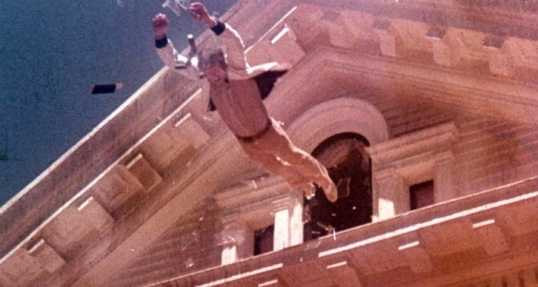
In this scene below — which does count as a spoiler, in case you’re one of those annoying toaduckers who complains about stuff like that — the House finally gets its revenge on the obnoxious family that’s been living inside of it.  Now, taken out of context, it may seem a bit harsh to describe the scene as being a crowd pleaser but, if you’ve sat through the entire film, it’s hard not to cheer a little when the chimney comes down.

Seriously, what an obnoxious little brat.

Errementari, Review by Case Wright


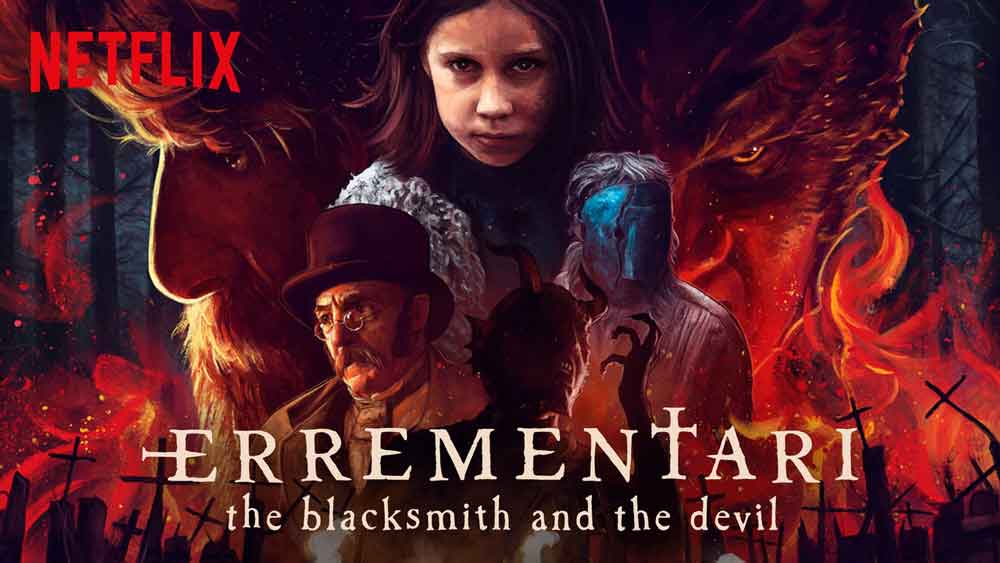
Happy Horrorthon!!! What do you get when you have Basques, Demons, Blacksmithing, and Illegitimate Children? About 91 minutes of entertainment! The toughest part of this movie is getting the title spelling correct. I couldn’t tell if they were speaking their Euskadi language or Spanish. I remember this dialect when I ran with the bulls in Pamplona. I was 22, hard-drinking, and up for anything dangerous. Once you left the city, it all looked liked rural Massachusetts and this film captured that old world culture and better yet, you have didn’t see me at 22 vomiting Paella, making out with Brits and Argentines, or ACCIDENTALLY ending up in a brothel.

The story centers around the reclusive Patxi who is considered a crazy hermit who lives outside of town and Usue, an orphaned child, who lives with the stigma of her mother’s suicide. Patxi was a veteran of the Napoleonic wars. When France invaded Spain, he fought, was captured and sentenced to death by firing squad. In order to see his family again, he made a deal with a demon Sarteal – as you do. Demons, they’re always acting like pun crazy evil genie’s, twisting your wishes to make them terrible.

I would be able to handle such a wish. I would draft a wish document with supporting case law, retain counsel for a minimum of 2 grand to review the wish, and insist the counsel indemnify. Sadly, Paxti did not have my savvy. After he made the wish, he survived and went home to find that his wife thought he was dead, had a baby – Usue- with a lover, and in a rage Paxti killed the lover and the mom hanged herself. In response, Paxti blames Sarteal for his wife’s death, captures Sarteal, and imprisons him in his bunker outside of town. Poor Usue is left parentless because of Paxti.

Side Note: Screw Paxti. Yes, Sarteal’s evil and blah blah blah, but it was Paxti who did the murdering. Take some personal responsibility, Paxti! It’s like that song “Hey Joe” by Jimi Hendrix. Joe is an asshat, but the Narrator is just as guilty. In Errementary, there’s no one else to blame! Unlike this story, Joe confessed that he was “gonna shoot [his] Old Lady and the narrator doesn’t do ANYTHING!!!” Why not say… Heeeey Joe, Where you going with that gun in your hand? Heeeey Joe, Maybe we should have a chat..take a breather…maybe up the meds a bit? Heeeeey Joe, you don’t down own your Old Lady and domestic violence is never acceptable! Heeeey Police, Joe’s got a damn gun and is threatening to murder his wife… yes… right now… he’s heading to.. where is that house honey? …. 72..yeah….7213 Robins Lane. Thank you.

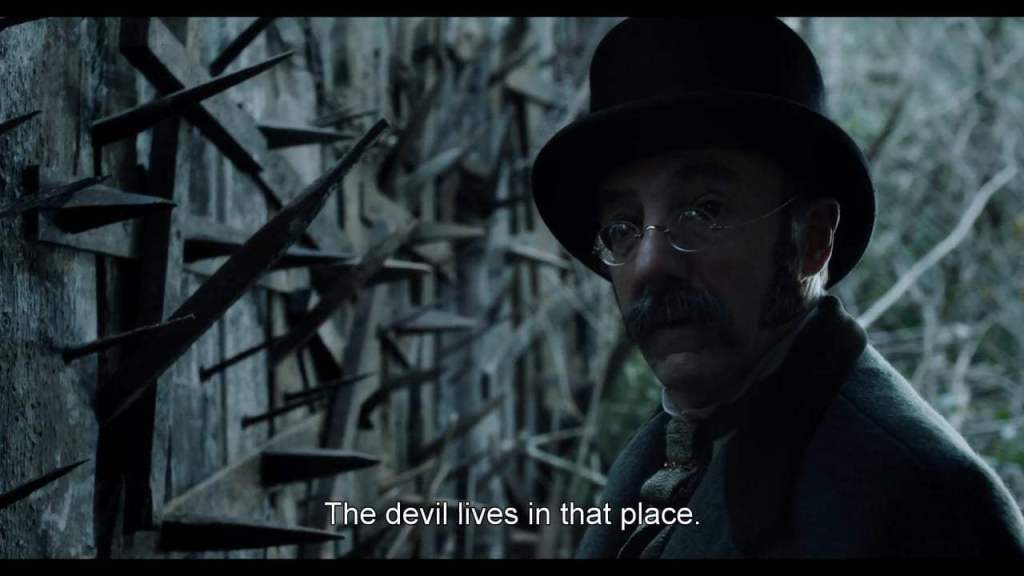
The local kids are constantly taunting Usue and chasing her and, on one occasion, she’s fleeing bullies and goes where they will NOT follow- Paxti’s property. His home and property is riddled with traps, Christian crosses, and other warding. There appears to be a child in a cage that she sets free, but this in fact Sarteal- the demon. Sarteal attacks Paxti, but Paxti gets him back, and then Paxti bonds with Usue by torturing the demon with chickpeas. Yes, Chickpeas. Demons are all OCD if you throw chickpeas on the ground, they have to count them. It comes up repeatedly in the story. It’s a whole thing.

Sarteal is kind of funny actually. He’s a failed soul collector and has been in Paxti’s makeshift prison for at least 20 years. In town, a Tax Collector comes and convinces the townsfolk to enter Paxti’s property because there is supposedly gold there. The Tax Collector, however, is not who he seems (except to Libertarians!)- he’s a demon -Alastor – sent to collect both the Blacksmith’s soul as well as Sarteal who is in poor standing in Hell for being a screw up.

The townsfolk try to enter Paxti’s property, but get caught in Paxti’s many traps he set up to imprison Sarteal if he escaped. The Tax Collector convinces the townsfolk to believe that Paxti is holding or killed Usue on his property. They form a mob with torches…very 3rd Act Frankenstein. Usue wants to see her mom again; therefore, she makes a deal with Alastor to see her mom in Hell in exchange for her soul. Alastor takes her to Hell and Paxti’s sets out to rescue her. He goes to Hell with a Golden Bell because the chimes do things to demons….it’s weird.

The depiction of Hell on their budget was not bad. Paxti does manage to redeem himself. He sends Usue back to Earth and he stays in hell with his bell and to find Usue’s mom…it’s weird. I enjoyed this film A LOT, but mostly because of the live tweeting. So, my advice is to try to watch it in some way with friends!

Horror Film Review: Burnt Offerings (dir by Dan Curtis)


This 1976 film is about a family so obnoxious that their own house tries to kill them!

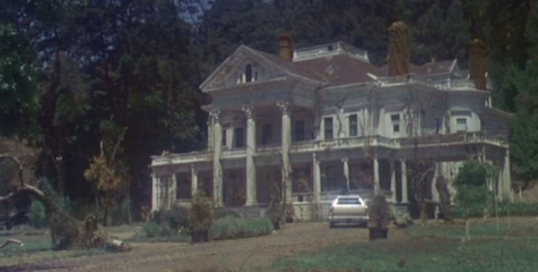
Well, maybe it’s not entirely the family’s fault. The film suggests that the house would have tried to kill anyone who lived there because the house itself is possessed by ghosts or Satan or something of that nature. Still, you can’t help but feel that the house took some extra joy out of destroying the Rolf family.  I know that I got some extra joy out of watching them get destroyed.

Ben (Oliver Reed) is a writer. Ben’s wife, Marian (Karen Black), is a flake who becomes obsessed with the house as soon as she sees it. Their son 12 year-old son, Davey (Lee Montgomery), is …. well, there’s no nice way to say this. He’s a brat. He’s the type of kid who you would be terrified of your kid befriending at school because then he’d want to come hang out at your house all the time. The movie doesn’t seem to realize that he’s a brat but the audience does. And finally, Aunt Elizabeth (Bette Davis) is Bette Davis, which means that she spends most of the movie delivering her lines in the most overdramatic and arch way possible.

The Rolfs are renting the house for the summer. The owners of the house are the Allardyces (Burgess Meredith and Eileen Heckart) and you would think that people would know better than to rent a house from Burgess Meredith. I mean, how many horror films in the 70s specifically featured Meredith as some sort of emissary of the devil? The Rolfs are asked to do two things: look after the house and look after Mrs. Allardyce, who lives on the top floor and never wants to be disturbed. The Rolfs are assured that they’ll never see Mrs Allardyce and the Rolfs are like, “Sure! That makes sense!”

Anyway, as soon as the Rolfs move in, the house starts to make weird noises and shingles start flying off the roof and, at one point, Ben nearly drowns his son in the pool.  And while it’s kind of understandable, considering how annoying his son is, it’s still not a good look.

Yep, it’s pretty obvious that the house is evil but Marian loves it, almost as if she’s becoming …. possessed! Meanwhile, Ben keeps having visions of a sinister looking chauffeur (Anthony James, whose creepy smile is the only memorable thing about this film) and Davey keeps standing too close to the outside chimney. You don’t want to do that when a house hates your guts.

It all leads to the inevitable ending, which involves people getting tossed out of windows and *ahem* crushed by chimneys. The family’s so obnoxious that you can’t help but cheer when that chimney comes down.  In fact, to be honest, as little as I think of this movie, I always specifically watch it just to see that chimney come down on one certain character.  Things might not work out well for the Rolfs or anyone else watching this rather slow and predictable movie but at least the house survives.

Fly, baby, fly!

Now, I will admit that I do own this film on DVD, simply because I love the commentary track.  Director Dan Curtis, star Karen Black, and the film’s screenwriter, William F. Nolan, watch and discuss the film and it quickly becomes obvious that none of them remember much about making it.  While Karen Black tries to keep the peace, Curtis and Nolan bicker over who is most responsible for the parts of the film that don’t work.  When Anthony James shows up as the creepy chauffeur, Dan Curtis says that he doesn’t remember his name and then gets visibly annoyed when Karen Black spends the next few minutes talking about what a good actor Anthony James is.  It’s all enjoyably awkward and, as someone who has hosted her share of live tweets, I couldn’t help but sympathize with everyone’s efforts to find something positive to say about Burnt Offerings.

Horror on The Lens: Where Have All The People Gone? (dir by John Llewellyn Moxey)


For today’s horror on the lens, we have a 1974 made-for-TV movie about what happens when a family comes down from the mountains and discovers that everyone’s disappeared.

“Where have all the people gone!?” is the obvious question and it’s also the title of this film.  Our own Jedadiah Leland reviewed this movie back in March and he described it as being “effectively creepy.”  I watched it with my friends in the Late Night Movie Gang a few months later and we described as being perhaps the best Peter Graves film we had seen since we watched that one where everyone was a clone.

So, after those recommendations, how can you not watch Where Have All The People Gone?

Enjoy!