30 More Days of Noir #7: Hell Bound (dir by William J. Hole, Jr.)


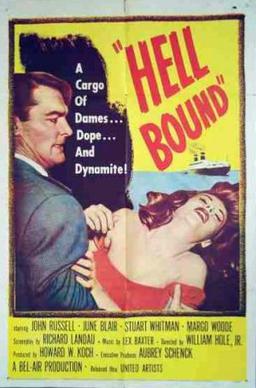
Like so many film noirs, 1957’s Hell Bound opens with a narrator.  As we watch scenes of a group of thieves robbing a Naval ship of World War II narcotics, the narrator explains to us what each criminal is doing and how their plot will hopefully lead to them getting rich.  Again, this is something we’ve seen in a countless number of film noirs.  What makes Hell Bound unique is that the narration keeps going long after one would expect it to stop.  And the expected cops and federal agents are never introduced….

That’s because we’re watching a film within a film!  Jordan (John Russell) has made and produced the film himself, all to convince a gangster named Harry Quantro (Frank Fenton) to support his plan to …. well, to rob a Naval ship of narcotics.  Jordan promises that the real-life theft will go just as smoothly as the theft in the movie!  And, it must be said, Jordan’s movie was really well-made.  He hired actors and everything.  Harry agrees to give Jordan his backing on the condition that Jordan use Harry’s girlfriend, Paula (June Blair), in the operation.  That, of course, means that Jordan won’t be able to use his own girlfriend, Jan (Margo Woode).  That’s going to be awkward.

Anyway, Jordan starts to assemble his crew and they’re the typical film noir collection of misfits.  One of the more fun things about Hell Bound is that it’s full of odd and eccentric characters, the types who would you actually expect to find trying to rob the U.S. Navy of narcotics in the 1950s.  My favorite character was the blind drug dealer named Daddy (Dehl Berti).  He has the perfect attitude for someone who had the luxury of not having to see the damage caused by his professions.

Of course, there’s no such thing as a perfect plan.  Whenever you get a bunch of criminals together to pull off the perfect heist, there’s bound to be some betrayals and some paranoia.  We’ve all seen the ending of Goodfellas and we all know what the piano coda from Layla means.  Complicating matters is that a big part of the scheme requires Paula to fake being an ambulance nurse and that means that she’s going to have to work with an honest ambulance driver named Eddie Mason (Stuart Whitman).  Eddie is a good, working class guy who just wants to help people and make the world a better place.  How can Paula go through with her part of the plan when she’s got Eddie looking at his hands and saying that he wants to use them to be a healer!?

I really liked Hell Bound.  I wasn’t expecting much from it but it turned out to be a really effective and clever 50s film noir.  Clocking in at 70 minutes, it doesn’t have any time for excess padding or anything else.  As soon as the film-within-a-film comes to an end, it jumps right into the action and it doesn’t let up.  Add to that, you’ve got John Russell giving a tough and gritty performance as the wannabe criminal mastermind and then you’ve got Stuart Whitman managing to make his self-righteous character likable and June Blair doing a great job as the femme fatal.  Hell Bound is bit of an unsung classic, a tough and gritty film noir that packs a punch.
 

Cinemax Friday: Striking Poses (1999, directed by Gail Harvey)


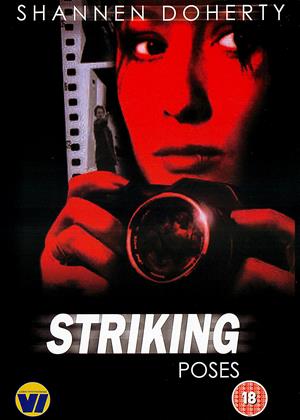
Gage Sullivan (Shannen Doherty) is a freelance photographer who makes most of her money as a member of the paparazzi and who hates what her life has become.  When she realizes that she and her assistant, Casey (Tamara Gorski), are being stalked by someone whose trademark is leaving behind wads of chewed bubble gum (?), she calls in a security professional named Nick Angel (Joseph Griffin).  When it appears that not even Nick can protect her from the stalker, Gage turns to a former associate of Nick’s, a hitman named Gadger (Aidan Devne).

This direct-to-video film is pretty dumb,  Once Gage meets up with Gadger, the film goes off the rails as everyone reveals that they’re not who they say they are and multiple double crosses are revealed, each leaving behind plot holes so big that a convoy of trucks could probably roar through them without even having to slow down.  I don’t have much experience with professional con artists but it seems like the really successful ones would know better than to come up with a con that’s as pointlessly complicated as the one in this movie.  Even the fake gambling parlor in The Sting wasn’t as needlessly complex as what happens in Striking Poses.

Striking Poses is a let-down and, for an R-rated direct-to-video film, it’s also extremely tame.  I’m not really sure where that R rating comes from because there’s no nudity, very little violence, and I don’t think I even heard much profanity.  Maybe someone slipped the ratings board some money to avoid getting slapped with a dreaded PG.  This is a movie about a con that feels like a big con itself.

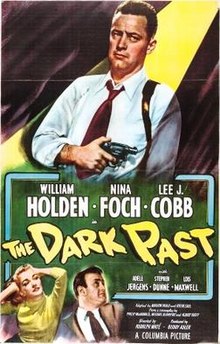
30 More Days of Noir #6: The Dark Past (dir by Rudolph Mate)


Now, this is an interesting little film noir!

This 1948 film stars William Holden, Lee J. Cobb, Nina Foch and Lois Maxwell.  William Holden is Al Walker, an escaped convict and a ruthless murderer.  Nina Foch is Betty, Walker’s devoted girlfriend and partner in crime.  Lee J. Cobb is Dr. Andrew Collins.  Lois Maxwell, years before she would be cast as Miss Moneypenny in the first Bond films, plays Ruth Collins, Andrew’s wife.  When Walker, Betty, and the gang break into the Collins home, they hold he doctor and his family hostage.

That may sound like a similar set-up to Desperate Hours and hundreds of other low-budget crime movies.  And, indeed, it is.  What sets The Dark Past apart from those other films is that Dr. Collins is a psychiatrist and his response is not to try to defeat or trick Walker but instead to understand him.  Even after Walker kills a friend of the family’s, Collins remains convinced that he can get to the heart of Walker’s anger and help the criminal start the process of reform.

When the nervous and violent Walker threatens the family, Collins calmly offers to teach him how to play chess.  When it looks like Collins might have a chance to escape, he instead stays in the house and continues to talk to Walker.  Eventually, he finds out about a recurring dream that Walker has been having, one that involves Walker standing in the rain under an umbrella that has a hole in it.  Collins links the dream to Walker’s traumatic childhood and he shows Walker why he feels the need to be violent and destructive.  But will it make a difference when the cops show up?

The Dark Past is an interesting relic.  Watching it today, it can seem a bit strange to see just how unquestioning the film is of the benefits of analysis and dream interpretation.  Nowadays, of course, we know that dream symbolism is often just random and that it’s impossible for a psychiatrist to “cure” a patient after only talking to them for an hour or two.  However, The Dark Past was made at a time when psychiatry was viewed as being the new science, the thing that that no one dared to question.  This was the time of The Snake Pit and Spellbound.  The Dark Past suggests that all any criminal needs is just a night spent talking to someone who had studied Jung and Freud.  Today, the film seems a bit naive but it’s still an interesting time capsule.

William Holden is great as Al Walker.  That, in itself, isn’t a surprise because William Holden was almost always great.  Still, Holden does an outstanding job of making Walker and his neurosis feel real and, like the best on-screen criminals, he brings a charge of real danger to his performance.  Lee J. Cobb has the less showy role but he also does great work with it.  It takes a truly great actor to make the act of listening compelling but Cobb manages to do it.

The Dark Past may not be as well-known as some film noirs but it’s an interesting and occasionally even compelling film.  Keep an eye out, eh?

30 More Days of Noir #5: The Criminal (dir by Joseph Losey)


From 1960, it’s British noir!

Johnny Bannion (Stanley Baker) is a career criminal, one who divides his time between long stretches in prison and short visits to the real world.  He’s handsome, he’s charming, he’s clever, and he’s totally trapped.  Baker moves through the film like a natural-born predator, waiting for the moment to strike.  When he’s in prison, he’s as defiant as a caged tiger.  When he’s out of prison, he’s always stalking the next prize.

Johnny has a hard time staying out of prison.  When we first meet him, he’s in prison and it quickly becomes clear that he’s quite a respected figure behind bars.  When he gets out, the first thing that he does is team up with his old associate, Mike Carter (Sam Wanamaker), and make plans to rob a racetrack.  Mike and Johnny have an interesting relationship.  On the one hand, Mike kept Johnny’s apartment for him while he was locked away and Johnny obviously has enough faith in Mike to work him.  On the other hand, neither man seems to truly trust the other.  That’s the world of criminals, I suppose.  Never trust anyone.

Of course, it quickly turns out that there’s actually a good reason to never trust anyone when you’re living a life of crime.  As soon as Johnny, Mike, and the gang pull of the racetrack robbery, Johnny’s betrayed.  Johnny ends up locked away once again, all thanks to Mike.  However, it turns out that Mike may have acted too soon because Johnny hid all the money before he was sent back to prison.  Now, Mike has to figure out a way to pressure Johnny into revealing where the money’s buried while Johnny has to try to survive in a world of ruthless prisoners and guards who are ineffectual at best and crooked at worst.  Mike’s not the only one who is interested in where Johnny put all that cash….

I have to admit that I’m probably a bit biased when it come to The Criminal because it’s a British crime film that I actually saw while in the UK.  It’s one thing to watch a tough British crime film from the safety of Texas.  It’s another thing to watch it at 2 in the morning while in a hotel room with a nice view of the Thames.  As opposed to the watered down British-American co-productions that we tend to get used to here in the United States, The Criminal was British through-and-through, from the tough working class accents to the harsh urban landscape to the stylish suits that were worn even inside the prison.

It’s a dense movie.  Though Stanley Baker is undoubtedly the star, director Joseph Losey is just as interested in the other people who come within Johnny’s orbit and, as a result, we get to know not just Mike but also the guards and the other prisoners.  Partrick Magee, who was a favorite of Kubrick’s, makes a strong impression as Barrows, the prison guard who may be a manipulative sadist or who may just be a man who is doing what he has to do to maintain some sort of order in the prison.  The film’s portrayal of Barrows is ambiguous but the same can be said for almost everyone in the movie.  In classic noir fashion, there are no traditional heroes.  Johnny’s bad but he’s a little bit less bad than the men who betrayed him and who are willing to go to extreme lengths to discover where Johnny hid that money.

Directed by Joseph Losey, The Criminal alternates between scenes of hard-edged reality and scenes that feel as if they could have been lifted from some sort of Boschian nightmare.  The scenes outside the prison are harshly realistic while the inside of the prison feels almost like some sort of surrealistic dreamscape where demons take human form.  The Criminal is an effective and violent British noir, one that will encourage you to keep your eyes on the shadows.

Porky’s Revenge (1985, directed by James Komack)


The senior class of Angel Beach High finally graduate in Porky’s Revenge, the last official Porky’s film.  It’s a good thing, too.  Most of the members of the Porky’s cast were already in their late 20s when they were cast in the first Porky’s.  By the time Porky’s Revenge was made, most of them looked more like they should be planning for their retirement than for college.

Director Bob Clark did not return for Porky’s Revenge and it really shows.  The third film doesn’t have any messages about tolerance or fighting bigotry.  Instead, it’s just a typical teen sex comedy with a subplot about Brian Schwartz (Scott Colomby) trying to help Coach Goodenough (Bill Hindman) pay back his gambling debt to Porky (Chuck Mitchell).  Otherwise, the gang plays basketball, tries to arrange an orgy with the cheerleaders, and even helps Ms. Balbircker (Ellen Parsons) find love.  I guess everyone forgot about Ms. Balbricker allying herself with the Klan during the previous film.

Porky’s Revenge doesn’t really have enough ambition to be terrible though.  It’s just bland.  Just as it doesn’t have the social conscience of the first two film, it’s also not as raunchy.  There’s considerably less nudity and the occasionally rough edges of the first two films have been removed.  That makes Porky’s Revenge less problematic but it also makes it less interesting.  The first two films may have been imperfect but they did capture the feel of high school.  This one doesn’t do that because the actors are too old and suddenly their characters are too nice.  If not for the title, you would think this was just another dumb comedy that played for a week at the drive-in as opposed to being the second sequel to the most commercially-successful Canadian film of the 80s.

I did laugh when the gang went to the ruins of Porky’s to make sure that it hadn’t been rebuilt, just to discover that Porky now owned his own steamboat.  I’m also glad that everyone finally graduated and gave the Porky’s saga a fitting close.

There was a direct-to-video sequel to Porky’s Revenge.  It came out in 2009 and was called Porky’s Pimpin’ Pee Wee.  I think I can live without watching it.

Porky’s II: The Next Day (1983, directed by Bob Clark)


The teens of Angel Beach, Florida are back!  They’re still trying to get laid, they’re still playing pranks on each other, and, this time, they’re …. FIGHTING THE KLAN!?

Porky’s II continues with the first Porky’s mix of raunchiness and social commentary.  While Pee Wee (Dan Monahan) tries to get back at his friends for spending the whole previous movie making fun of the size of his dick, the other members of the large ensemble cast thwart an attempt by the Klan to keep them from putting on a Shakespearean showcase.  The Klan is upset that a Seminole has been cast as Romeo so they burn a cross and do everything they can to sabotage the production.  Also trying to keep the show from going on is the hypocritical Rev. Bubba Flavel (Bill Wiley) and Mrs. Balbricker (Nancy Parsons), who both consider Shakespeare’s plays to be obscene.  When Wendy (Kaki Hunter) discovers that one of the county commissioners has been lying about supporting the play, she humiliates him in public by pretending to vomit in a fountain and accusing him of impregnating her.  It’s slightly funnier than it sounds but just slightly.

The first Porky’s took a stand against anti-Semitism while the second Porky’s takes a stand against censorship and the Klan.  That’s actually pretty cool when you consider that both of these films are usually just thought of as being dumb sex comedies.  Just like the first film, Porky’s II may be raunchy but it has a conscience.  That was due to director Bob Clark, who obviously meant for the Porky’s films to be about more than just T&A.

Unfortunately, Porky’s II is never as funny as the first Porky’s.  Too many of the jokes are recycled from the first film and the cast’s habit of laughing at their own “humorous” lines is even more grating the second time around.  Even the film’s most famous scene, where Wendy humiliates the duplicitous commissioner, goes on for too long and doesn’t have as much of a payoff as it should.  The best scenes in the film are the scenes that were lifted from Hamlet, Romero & Juliet, and A Midsummer Night’s Dream.  You wouldn’t expect the ensemble of Porky’s to feature that many Shakespearean actors but apparently it did.  Fans of A Christmas Story, which was also directed by Clark and which came out the same year as Porky’s II, will especially want to pay attention to the MacBeth sword fight scene just because the famous holiday leg lamp makes an appearance.

Porky’s II is nowhere near as good or memorable as the first Porky’s but its heart is in the right place.  While not as big of a success as the first Porky’s, it still did well enough to lead to Porky’s III, which I’ll review tomorrow.

30 More Days of Noir: The Killer Is Loose (dir by Budd Boetticher)


Film noir comes to the suburbs!

The Killer is Loose opens with the robbery of a savings and loan.  At first, it seems like meek bank teller Leon Poole (Wendell Corey) behaved heroically and kept the robbery from being far worse than it could have been.  How meek is Leon Poole?  He’s so meek that his nickname has always been Foggy.  People have always made fun of him because of his glasses and his bad eyesight.  Everyone assumes that Poole is just one of those quiet people who is destined to spend his entire life in obscurity.

However, the police soon discover that Leon Poole is not the hero that everyone thinks that he is.  Instead, he was involved in the robbery!  When Detective Sam Wagner (Joseph Cotten) leads a group of cops over to Poole’s house to arrest the bank teller, Poole’s wife is accidentally shot and killed.  At the subsequent trial, Poole swears that he’ll get vengeance.  And then he’s promptly sent off to prison.

Jump forward three years.  Leon Poole is still in prison.  He’s still deceptively meek.  He still wears glasses.  Everyone still assumes that he’s harmless.  Of course, that’s what Poole wants them to believe.  He’s still obsessed with getting his vengeance.  Meanwhile, Detective Wagner and his wife, Lila (Rhonda Fleming), are living in the suburbs and have a somewhat strained marriage.  Lila wants Wagner to find a less dangerous and less stressful job.  Wagner wants to keep busting crooks.

When Poole see a chance to escape from prison, he does so.  That’s not really a shock because even the quietest of people are probably going to take advantage of the chance to escape from prison.  What is a shock is that Poole ruthlessly murders a guard while making his escape.  He then kills a truck driver and steal the vehicle.  He then tracks down his old army sergeant and guns him down while the man’s wife watches.  Always watch out for the quiet ones, as they say.

Now, Poole has just one more target.  He wants to finish his revenge by killing Lila Wagner.

The Killer is Loose is a tough and, considering the time that it was made, brutal film noir.  (Seriously, the scene where Poole kills his former sergeant really took me by surprise.)  While both Rhonda Fleming and Joseph Cotten give good performances in their roles, it’s Wendell Corey who really steals the film.  Corey plays Poole not as an outright villain but instead as a man who has been driven mad by years and years of taunts.  After spend his entire life being told that he was a loser, Poole finally decided to do something for himself and, as a result, his wife ended up getting killed by the police.  Now that Poole’s managed to escape from prison, he’s willing to do anything just as long as he can get his final revenge.  Corey plays Poole with a smoldering resentment and the performance feels very real.  (If the film were made today, it’s easy to imagine that Poole would be an anonymous twitter troll, going through life with a smile on his face while unleashing his anger online.)  It brings a very real spark and feeling of danger to a film that would otherwise just be a standard crime film.

The Killer Is Loose also makes good use of its suburban setting, suggesting that both Fleming and Cotten have allowed themselves to get complacent with their life away from the obvious dangers of the big city.  You can buy a new house, the film seems to be saying, but you can’t escape the past.

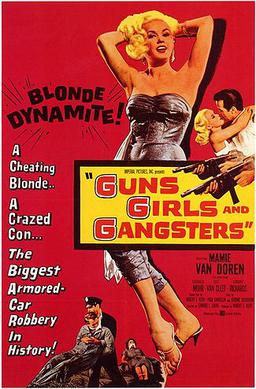
30 More Days of Noir #3: Guns, Girls, and Gangsters (dir by Edward L. Cahn)


Guns, Girls, and Gangsters!  The title of this 1958 film pretty much sums it all up.

Now, technically, I guess you could debate whether or not the criminals in this film really qualify as gangsters.  When I hear the term “gangster,” I tend to think of the big Mafia chieftains, like Al Capone and the Kennedys.  Maybe it’s because I’ve seen The Godfather too many times but I always associate gangsters with wealth, big mansions, elaborate weddings, and aging crooners who need someone to chop off a horse’s head in order to get a role in From Here To Eternity.  However, the gangsters in this film are all basically small-time criminals.  One of them does own a nightclub but it’s not a very impressive nightclub.  If anything, they’re wannabe gangsters.  However, Guns, Girls, and Wannabes just doesn’t have the same ring to it.

Chuck Wheeler (Gerald Mohr) has a plan.  He wants to rob an armored car.  It’s a Vegas armored car, so of course it’s going to be full of money and since Michael Corleone killed Moe Greene three years before, there shouldn’t be too many repercussions from hijacking it.  (Sorry, I’m still thinking about The Godfather.)  To enlist the aid of a nightclub owner, he enlists the aid of a singer named Vi (Mamie Van Doren).  Vi just happens to be the wife of Chuck’s former prison cellmate, Mike (Lee Van Cleef).  Vi has been demanding a divorce for a while but Mike won’t grant it because he’s insanely jealous.  He probably wouldn’t be happy to find out that Chuck and Vi are now a couple but, fortunately, he’s locked up.

Except, of course, Mike escapes from prison around the same time that Chuck and the gang manage to hijack that armored car.  As you can guess, this leads to mayhem and havoc.  That’s where the guns of the title come into play….

Guns, Girls, and Gangsters is an entertaining little B-noir.  It’s only 70 minutes long so the film doesn’t waste any time getting to the action.  (There’s also a narrator who serves to fill in any plot holes and to keep the audience entertained with his rather self-important delivery.)  Gerald Mohr is a bit on the dull side as Chuck but you better believe that Lee Van Cleef is 100% menacing and oddly charismatic as the as the always angry Mike.  Van Cleef brings a charge of very real danger to the film.  (Perhaps he’s the gangster that the title was referring to, though I would still think of him as being more of an outlaw than a gangster.)  And, of course, you’ve got Mamie Van Doren, playing yet another tough dame in dangerous circumstances.  Van Doren gets to perform two musical numbers in Guns, Girls, and Gangsters and they both have a low-rent Vegas charm to them.  Watching this film, it occurred to me that Van Doren may not have been a great actress but she had the perfect attitude for films like this.  She played characters who did what they had to to do survive and who made no apologies for it and it’s impossible not to be on her side when she’s having to deal with creeps like Chuck or sociopaths like Mike.

Guns, Girls, and Gangsters is an entertaining B-noir.  There’s enough tough talk, cynical scheming, and deadly double crosses to keep noir fans happy.

Porky’s (1981, directed by Bob Clark)


Porky’s.

On the one hand, it’s a crude, juvenile, and raunchy sex comedy where a bunch of teenagers in 1960s Florida think that it’s a hoot and not at all problematic to spy on the girls shower and to hire a black man to scare all of their (white) friends.

On the other hand, it’s a heartfelt plea for tolerance where Tim (Cyril O’Reilly) finally stands up to his abusive father (Wayne Maunder) and makes friends with Brian Schwartz (Scott Colomby), who is apparently the only Jewish person living in Angel Beach, Florida.

What’s strange about Porky’s is that everyone knows it for being the template for almost every bad high school film that followed, with tons of nudity, jokes about sex, and characters with names like Pee Wee, Miss Honeywell, Cherry Forever, and Porky.  But, when you sit down and watch the movie, you discover that, for all the raunchiness, it actually devotes even more time to Brian Schwartz dealing with the local bigots than it does to any of the things that it’s known for.  Everyone remembers the shower scene but it’s obvious the film’s heart is with Brian and his attempts to make the world a better place.  Porky’s is a sex comedy with a conscience.

Porky’s is an episodic film about a group of teenage boys trying to get laid and also trying to get revenge on the owner of the local brothel.  There’s a lot of characters but I’d dare anyone to tell me the difference between Billy, Tommy, and Mickey.  I went through the entire movie thinking that Billy was Mickey until I turned on the subtitles and discovered who was who.  Porky’s has a reputation for being a terrible movie but it’s actually a pretty accurate depiction of the way that most men like to imagine how their high school years went.  It captures the atmosphere of good-spirited teenage hijinks if not the reality.

One of the interesting things about Porky’s is that Bob Clark went from directing this to directing A Christmas Story.  The innocence of A Christmas Story might seem like it has nothing in common with raunchiness of Porky’s but, actually, they’re both nostalgic films that are set in an idealized past.  (If you still think A Christmas Story has nothing in common with Porky’s, just remember that Ralphie didn’t actually say “fudge.”)  Of course, A Christmas Story struggled at the box office and only became a hit when it was released on video while Porky’s is still the most successful Canadian film to ever be released in the U.S.  Sex sells.  As cool as it was to see Brian Schwartz stand up for himself, I doubt the people who made Porky’s a monster hit were buying their tickets because they had heard the film struck a blow against anti-Semitism.  They were going because they knew there was a shower scene.

Porky’s deserves its reputation for being a not-so great movie but I would be lying if I said that I didn’t laugh more than once while watching it.  (Of course, I still didn’t laugh as much as the characters in the films laughed.  I’ve never seen a cast that was as apparently amused with themselves as the cast of Porky’s.)  There’s a lot of bad moments but it’s hard not to crack a smile when Miss Honeywell demonstrates why she’s known as Lassie or when one of the coaches suggests that wanted posters can be hung around the school to help catch the shower voyeur.  Plus, everyone learns an important lesson about tolerance and how to destroy a brothel.  As bad as it is, it’s hard to really dislike Porky’s.

Ralph Gibson: Photographer/Book Artist (2002, dir. by Paula Herdia)


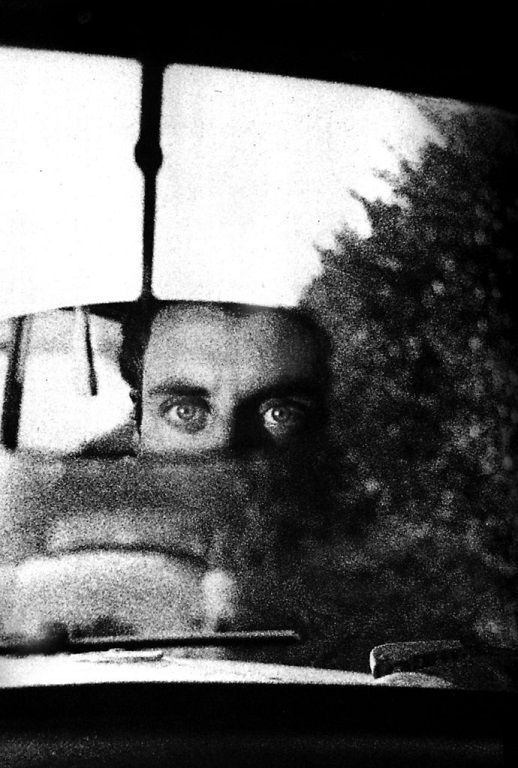
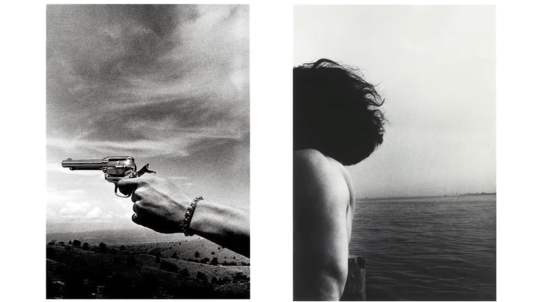
Photographer Ralph Gibson is one of the most important photographers of the last century and, in this documentary, he discusses both his life and his work.  An independent iconoclast, Gibson went from serving in the Navy to working as an assistant to Dorothea Lange to eventually publishing his own very influential books of photographs.  Gibson’s work is fascinating, sensuous, and frequently surreal and helped to change the public perception about whether or not photography can also be art.

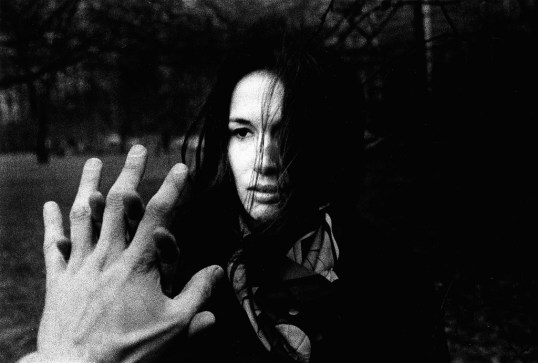
Here’s just a few examples of Gibson’s work:

In the documentary Ralph Gibson: Photographer/Book Artist, Gibson tells his own story of how he became both a photographer and a publisher.  It’s interesting to listen to him as he explains how he first came to realize that how a picture is placed on a page (especially when compared to the placement of the picture on the facing page) can make as much of an artistic statement as the pictures themselves.  The documentary also features interviews with several of Gibson’s contemporaries and also with critics who attempt to analyze what makes Gibson’s work so effective.

The only problem with this documentary is that it’s too short.  It’s only 30 minutes long so sometimes, like when Gibson is talking about his childhood and his time in the Navy, it feels rushed.  The best thing about the documentary though is that it features many of Gibson’s photographs and also Gibson himself.  Listening to Gibson talk will make you want to pick up a real camera and start capturing the world around you.

This documentary is on Prime and if you’re an artist looking for inspiration, I recommend it.