Horror Film Review: Dementia 13 (dir by Francis Ford Coppola)


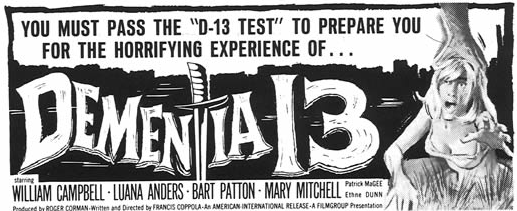
So, imagine that the year is 1963 and you are the legendary producer/director Roger Corman. You’ve just finished shooting your latest film and it turns out that you didn’t spend all of the money that you had allocated to make it! You’ve got an Irish castle at your disposal and some extra cash. Why not assign your ambitious assistant to make a quick little movie that’s specifically designed to cash-in on the success of Psycho and it’s numerous imitators?

And that, of course, is how Francis Ford Coppola came to direct his first film. Today, of course, Coppola is best known for directing three of the best American films of all time, The Godfather, The Conversation, and The Godfather Part II. (Some people would include Apocalypse Now in that list, as well.) In 1963, he was just another aspiring filmmaker making his debut under the watchful eye of Roger Corman.

Coppola both wrote and directed Dementia 13. The film’s a pretty nifty little horror/mystery. Of course, the plot doesn’t make much sense if you give it too much thought but any fan of the Roger Corman-style of film making should be used to that by now.

Luana Anders plays Louise Haloran, the film’s greedy femme fatale. When we first meet her, she’s calmly watching her husband drop dead of a heart attack. After learning that she’s not going to be receiving any sort of inheritance because her husband died before his mother, Louise decides to invite herself to the Haloran family castle, where her mother-in-law, Lady Haloran (Eithne Dunne), is about to take part in an annual ceremony that is meant to pay tribute to Haloran’s dead daughter, Kathleen. Looking for a way to try to trick Lady Haloran into making Louise her heir, Louise tries to fool Lady Haloran into believing that Kathleen is trying to contact her from beyond the grave.

Got all that? Because I’m not going to try to type it out again.

Anyway, I don’t want to spoil the rest of the plot but let’s just say that it all leads to a midnight swim and a shocking axe murder. Who could be the killer be? Could it be one of Louise’s two brother-in-laws, Richard (William Campell) and Billy (Bart Patton)? Could it be the local doctor, Justin Caleb (Patrick Magee?) Or how about Richard’s fiancee, the oddly named Kane (Mary Mitchell?” Or how about Simon (Karl Schnazer), the local poacher? Or maybe Kathleen really has risen from the dead? Or how about….

Well, look, it could be a lot of people. Dementia 13 has a labyrinth plot and it’s got a few twists that you probably shouldn’t spend too much time thinking about. It’s very much a young director’s film but, at the same time, that’s also the film’s greatest strength. Coppola reportedly got in trouble when the film went overbudget (which is something that had never previously happened on a Corman film) but the end result is a film that features several spooky visuals, an ominous atmosphere, and one very shocking murder. You wouldn’t necessarily watch a film like Dementia 13 and think that the director would go on to make something as great as The Godfather. But Coppola’s talent, even if it’s a bit unformed, is still very much noticeable while watching his directorial debut.

Speaking of watching the film, it’s in the public domain so it’s very easy to watch! Pick up a Mill Creek 50-DVD box set and there’s a good chance you’ll find Dementia 13 included within. Or, you can just go over to YouTube and watch it for free!

Enjoy!
Horror On The Lens: Gammera The Invincible (dir by Noriaki Yuasu and Sandy Howard)


Okay, I’ll be the first to admit that 1966’s Gammera The Invincible is not really a horror film.  Maybe there was a time when people found the idea of a giant, fire-breathing turtle to be scary but I kind of doubt it.

But let’s think about this!  What better time is there to watch a movie about giant, fire-breathing turtle than in October?

Seriously, this is a fun movie and if you’ve got some time to kill this morning, I guarantee this movie will make you smile.

As I wrote in my 2014 review of this film, Gammera is one hell of a turtle.

Enjoy!

The TSL’s Grindhouse: Body Bags (dir by John Carpenter and Tobe Hooper)


An odd but mildly likable film, that’s the best description of Body Bags.

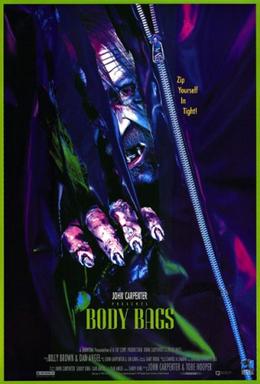
Originally, Body Bags wasn’t even meant to be a film.  Instead, in 1993, Showtime wanted to do a horror anthology show, one that would mix comedy and chills in the style of HBO’s Tales From The Crypt.  Three episodes were filmed.  Two were directed by John Carpenter.  The other was directed by Tobe Hooper.  Robert Carradine, Stacy Keach, and Mark Hamill all agreed to appear on the show.  That’s an impressive collection of talent but, for whatever reason, Showtime decided not to pursue Body Bags as a series.  So the three episodes were strung together in an anthology film.  Linking the stories was a warp-around segment where Carpenter played a coroner and Tobe Hooper and Tom Arnold played morgue attendants!

Now, it must be said that John Carpenter probably made the right decision when he decided to become a director instead of an actor.  That said, what Carpenter lacked in acting technique, he made up for with unbridled enthusiasm.  Carpenter appears to be having a blast playing an old style horror host.  Who can blame him?  In fact, I would say one the most appealing things about John Carpenter as a personality is that he always seems to be truly enjoying himself, regardless of all the crap that he’s had to put up with in Hollywood.

As for the segments …. well, they’re uneven.  That’s not really a shock. Part of the problem is that, because they weren’t originally envisioned as all airing together, a lot of ideas and story points are repeated from segment to segment.  The first segment is about a serial killer.  The second segment is about a transplant.  The third segment is about both a transplant and a serial killer.  It gets a bit repetitive.

Carpenter directed the first two segments, The Gas Station and HairThe Gas Station is a bit too simple for its own good.  Robert Carradine is a serial killer who harasses a woman at a gas station.  That’s pretty much it.  Carradine gives a good performance ad Halloween fans will get a laugh out of a reference to Haddonfield but there’s not much else going on.  Hair is a bit better.  Stacy Keach plays a businessman who gets a hair transplant, just to discover that the hair is extraterrestrial in origin.  Hair is clever and playful, like an above average episode of The Twilight Zone.  Keach plays his role with the right mix of comedic outrage and genuine horror.

The third segment is called Eyes and it was directed by Tobe Hooper.  Mark Hamill plays a baseball player who is losing his eyesight as the result of a car accident.  He gets an eye transplant.  At first, everything seems fine but soon, he’s having visions of himself murdering people!  It turns out that the eye once belonged to a serial killer.  You can guess where this is going but Mark Hamill really throws himself into the role and Tobe Hooper’s direction is appropriately intense.

Body Bags is a pretty minor entry in the filmographies of two great directors but, at the same time, it’s enjoyable in its own silly way.  There’s a likable goofiness to John Carpenter’s wrap-around segment and it lets us know that we shouldn’t take any of this too seriously.  Watch it for your own amusement.

The Unnominated: Star 80 (dir by Bob Fosse)


Though the Academy of Motion Picture Arts and Sciences claim that the Oscars honor the best of the year, we all know that there are always worthy films and performances that end up getting overlooked.  Sometimes, it’s because the competition too fierce.  Sometimes, it’s because the film itself was too controversial.  Often, it’s just a case of a film’s quality not being fully recognized until years after its initial released.  This series of reviews takes a look at the films and performances that should have been nominated but were,for whatever reason, overlooked.  These are the Unnominated.

First released in 1983, Star 80 is an examination of fame, obsession, misogyny, and finally madness.  All four of those qualities are exemplified in the character of Paul Snider (Eric Roberts), a man with a charming smile, a ludicrous wardrobe, and the personality of a pimp.  When we first see Paul Snider, he’s naked and he’s covered in blood and he’s ranting about how the world is trying to destroy him.  Even if he wasn’t holding a rifle, he would be terrifying.  Suddenly, we flash back to a few years earlier.  Snider is being dangled out a window by two men.  Snider pathetically begs to be pulled back into the room.  The men laugh at him before pulling him up.  Snider, looking fairly ridiculous in a cheap suit that he probably thinks makes him look like a celebrity, fights off tears as he says he deserves to be treated with dignity.

Star 80 is based on a true story.  Mariel Hemingway plays Dorothy Stratten, the actress and Playboy playmate who was murdered by Paul Snider.  Snider, who often claimed credit for having “made” Dorothy, was married to her at the time, though Dorothy had filed for divorce and was dating director Peter Bogdanovich.  Unwilling to let her go and return to being a small-time hustler, Snider shot Dorothy and then himself.  Director Bob Fosse, who was best known for directing musicals like Cabaret and All That Jazz, was attracted to the story because he understood that type of world that produces sleazes like Paul Snider.  According to Eric Robets, Fosse even said that he probably would have ended up like Paul Snider if not for his talent.

Snider, the film quickly establishes, really doesn’t have any talent beyond the ability to manipulate people who are too naïve to see through his bullshit.  Snider wants to be a star.  He wants to be rich.  He wants people to kiss his ass.  When he meets Dorothy, he sees her as his ticket.  Dorothy’s mother (a poignant performance from Carroll Baker) sees straight through him from the start.  Tragically, Dorothy doesn’t realize the truth abut who he is until they’re already in Hollywood.  As Dorothy tries to break away from him, Paul desperately tries to find some sort of success, all the while complaining that the world is conspiring to keep him from being a man. 

Eric Roberts dominates the film and it’s one of the scariest performances that I’ve ever seen.  Roberts is convincing when he’s ranting and raving against the world that he feels is against him but what’s even more disturbing is that he’s convincing when he’s turning on the charm.  Paul Snider may not be smart.  Paul Snider may not be talented.  But he know how to gaslight.  He knows how to destroy someone’s fragile confidence, largely because his own confidence has been shattered so many times that he’s become an expert in exploiting insecurity.  Snider is a tacky dresser and nowhere near as smooth as he thinks but, intentionally or not, he uses that to his advantage.  He tries so hard to impress that it’s easy to see how someone could feel sorry for him and want to help him.  However, because Fosse lets us know from the start what Snider is really going on inside of Sinder’s head, we never make the mistake of trusting him.  We know who Paul Snider is because we’ve all known a Paul Snider.

Eric Roberts’s performance is so intense that it’s unfortunate but not surprising that it was overlooked at the 1983 Oscars.  He was playing a truly repellent character and he did it so convincingly that I imagine many viewers had a hard time realizing that Eric Roberts was not Paul Snider but was instead an actor playing a terrible character.  Some probably said, “Why should we honor such a loathsome character?” and again, the answer is because there are many Paul Sniders out there.  Roberts captured much more than just one man’s breakdown.  He captured a sickness at the heart of a fame-driven culture.

Of course, Paul Snider was not the only symptom of that sickness to be depicted in Star 80.  Every man that Dorothy either uses her in some way or just views her as being a commodity.  Hugh Hefner (Cliff Robertson) presents himself as being a fatherly mentor but Robertson plays him as being just as manipulative and ultimately narcissistic as Paul Snider.  Director Aram Nicholas (Roger Rees, playing a character based on Peter Bogdanovich) seems to love Dorothy but their relationship still feels out-of-balance.  Aram, afterall, is the director while Dorothy is the actress.  The private detective (Josh Mosel) that Paul hires to spy on Dorothy seems to have no lingering guilty over the role he played.  Even Snider’s roommate (David Clennon) is more interested in talking about his dog and his car then about the murder/suicide of two people with whom he lived.

It’s a dark film and not one to be watched when depressed.  At the same time, it’s a portrait of obsessiveness, misogyny, and an overwhelming need to be “someone” that still feels relevant today.  Along with Sweet Charity, it was the only Bob Fosse film not to be nominated for Best Picture.  (This was back when there were only five best picture nominees.  Three of the nominated films — Terms of Endearment, Tender Mercies, and The Right Stuff — hold up well.  Two of the nominees — The Dresser and The Big Chill — are a bit more iffy.)  Eric Roberts was not nominated for the best performance of his career.  Again, it’s a shame but not a surprise.  This was a dark and disturbing film, a true Hollywood horror story.  One imagines that most members of the Academy wanted to escape it far more than they wanted to honor and be reminded of it.

Previous entries in The Unnominated:

  1. Auto Focus 

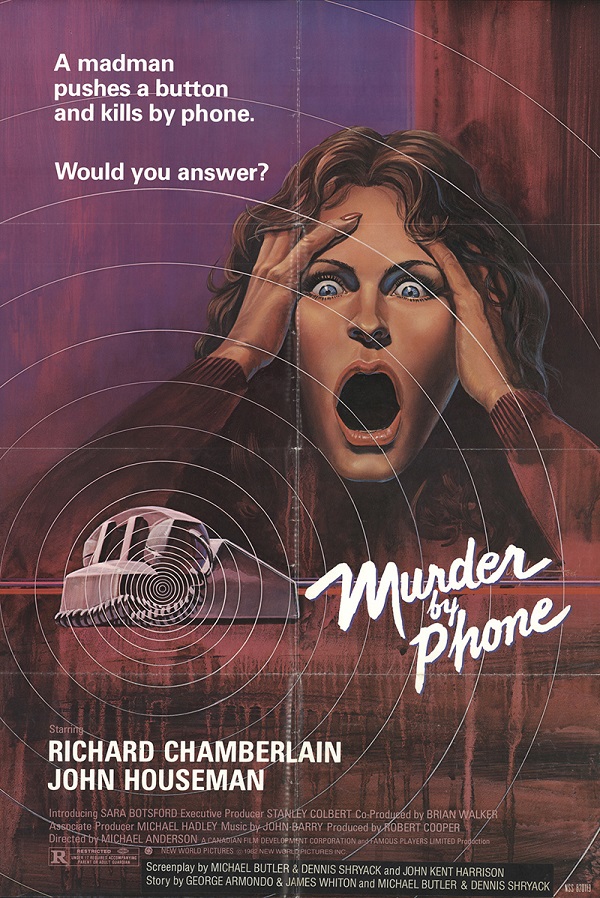
Murder by Phone (1982, directed by Michael Anderson)


Here’s a movie that will make you thankful for the death of landline phones.

People across Toronto are answering phones and blowing up.  Someone has created a device that can send a blast of electricity through the phone line.  The blast is so powerful that it causes hemorrhaging before it blows its victim off of their feet and then melts their phone.  The first victim is a woman who makes the mistake of answering a pay phone.  (It was 1982.  Pay phones were very popular with the youngsters.)  Her college professor (Richard Chamberlain!) decides to investigate her death.  Helping him, for at least a few scenes, is his mentor (John Houseman!!).

Chamberlain and Houseman were serious actors so who knows why they’re in this largely tepid thriller.  But present they are and one of them eventually makes the mistake of answering his phone and seeing a legitimate actor have to pretend to die in such a stupid way almost makes the movie worth the trouble of watching.

Despite all of the killer phone stuff, Murder by Phone is pretty slow and the murderer turns out to be pretty boring.  I only watched it because it was directed by Michael Anderson, who also directed The Martian Chronicles, which I’m planning on reviewing tomorrow.  He also directed a legitimate Best Picture winner (Around the World in 80 Days) and Logan’s Run so he had it in him to do a better job with the promising material in Murder By Phone than he did.  Instead of going all out with the science fiction elements, Anderson directed the movie like it was an episode of a cop show.  It’s disappointing because the story really had potential to be something better.  When it comes to movies about killer phone calls, the top prize still goes to Telefon.

The movie is also known as Bells, which sounds even worse than Murder By Phone.

International Horror Film Review: The Awful Dr. Orlof (dir by Jess Franco)


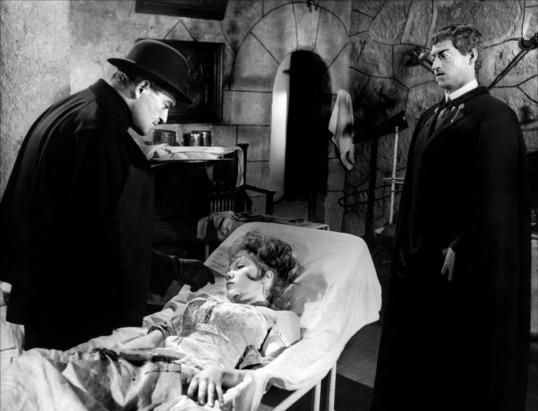
This 1962 Spanish film opens with a village gripped by terror!  Someone is abducting young dancers from their apartments and sometimes straight off the street!  Who could be responsible for such a terrible act?  Could it be the Mafia?  Could it be the Communists?  Could it be a wayward jazz pianist or maybe an aspiring filmmaker who befriended Orson Welles when the latter moved to Europe to escape the IRS?  Or could it be that awful Dr. Orlof?

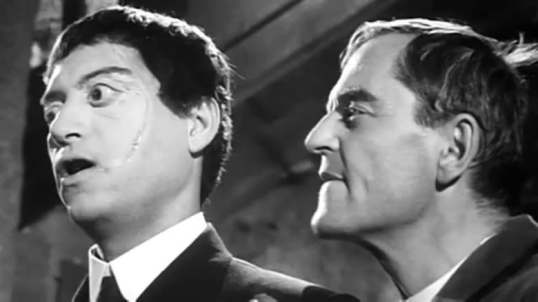
Who is Dr. Orlof, you may ask?  He’s a former prison doctor who retired after a fire disfigured his daughter.  Now, he lives in an isolated castle, where he cares for his daughter.  They say that his only companion is Morpho, a blind former convict who wears an emotionless mask over his features and who is often seen wandering around the village in the middle of the night.  Could it be that Dr. Orlof is responsible for the disappearances?

Of course it’s Dr. Orlof!  His name is right there in the title of the film.  In fact, it’s so obvious that Dr. Orlof is sending Morpho out in the middle of the night so that he can abduct beautiful women who are then used in experiments designed to restore the beauty of Orlof’s daughter that you have to wonder why the police just don’t arrest him as soon as the crimes start.  I mean, yes …. I assume that the police need to find some sort of evidence to prove that Orlof is behind the crime but then again, this film was shot in Spain during the years when General Francisco Franco was in charge of the country.  I’m sure the police could have done whatever they wanted.

The Awful Dr. Orlof is considered by many to be the first Spanish horror film.  It was also one of the first films to be directed by Jess Franco, who was no relation to the general.  With both critics and at the box office, this was one of Jess Franco’s most successful films and it was one that he would remake several times over the course of his career.  Dr. Orlof, always played with decadent haughtiness by Howard Vernon, went on to appear in several other Franco films.  (In subsequent films, he added an extra F to his last name.  That’s probably because The Awful Dr. Orlof was released in some countries as The Awful Dr. Orloff.  The double F brings to mind Boris Karloff so it’s not a bad idea to spell it that way but all of the evidence that I’ve read and seen would suggest that Franco originally spelled the name Orlof, with only one F.)  For that matter, Morpho also appeared in quite a few films, some with Orlof and some without him.  In the Awful Dr. Orlof, Morpho is played by Ricardo Valle and he’s a genuinely creepy character.  The blank mask that he wears as he stalks through the night is perhaps the best-known image to come out of The Awful Dr. Orlof.  In fact, if you’ve only seen screenshots of the film, it’s easy to assume that Morpho is the title character, just because of how prominently he is featured in every shot.  It’s impossible to take your eyes away from him.

On the whole, Jess Franco does not have a great critical reputation.  He worked fast.  He made a lot of movies and occasionally, it was obvious that his main concern was getting a paycheck.  Especially when it came to his later films, Franco could be a sloppy and inconsistent director.  And yet, when Franco took his time and when he actually cared about the material, his talent was undeniable.  The Awful Dr. Orlof is one of Franco’s better movies.  While the story won’t win any points for creativity, Franco’s direction is atmospheric and, at it best, the movie feels like a filmed nightmare, full of slightly askew angles and menacing shadows.  The black-and-white cinematography helps, adding a touch of gothic class to the film.  Howard Vernon gives a multi-layered performance as Orlof.  He may be, as the title state, awful but there’s no doubt that his actions are the actions of a desperate parent.  And, of course, Morpho will haunt your nightmares.

All in all, The Awful Dr. Orlof is not awful at all.  It’s a good film to use if you’re tying to introduce Franco to someone who might not be familiar with his work.  Definitely show them Dr. Orlof before showing them A Virgin Among The Living Dead.  Just a suggestion.

A Blast From The Past: None For The Road (dir by Herk Harvey)


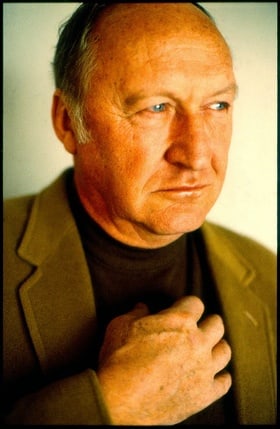
Director Herk Harvey

For today’s Herk Harvey-directed Blast From The Past, we have the 1957 short film, None For The Road. Produced by Centron, this was a film that was meant to make motorists aware of the dangers involved in drinking and driving. It’s a good message and, for once, the judgmental tone of the film is deserved. This isn’t about telling people not to have fun in school. This is about teaching people not to kill people through their own drunken stupidity! It may not be quite as effective as some of the Australian anti-drinking and driving commercials that I’ve seen but still, it’s a worthwhile message.

It’s also about a scientist who gets rats drunk so he can test their balance. That’s kind of weird and seems unnecessary but I guess maybe people were less aware of the dangers of excessive drinking in the 50s.

On another note, even though some of the college students in this film drink too much, I do appreciate their attempts to dress up before going out. They’re making an effort to get used to wearing a tie voluntarily before being forced to wear one at the office and I respect both their initiative and their understanding that the course of their life is already so predestined that they might as well be supporting characters in a Paul Schrader movie.

Of course, I would be amiss if I didn’t point out that, in its portrait of the road as being a path that can lead to either happiness or death, this short film shares a theme with Herk Harvey’s one feature film, Carnival of Souls. The drunken college kids in this film could be the same people we see harassing Candace Hilligoss at the start of Carnival of Souls. We’ll be sharing Carnival of Souls on Saturday.

Horror Film Review: Hellraiser (dir by Clive Barker)


On Monday night, Dancing With The Stars did a horror night, in which “the stars” did dances that were inspired by horror films. One of the first to perform was a professional wrestler who is apparently known as The Miz. When the Miz performed, he was dressed in black and he had several fake pins attached to his face.

After he danced, host Trya Banks asked The Miz what scared him. Obviously seeing a chance to suck up to the judges and the audience, the Miz grandly announced, “This! Doing this every week terrifies me! Dressing up like Hellraiser and dancing terrifies me….”

Uhmmm, excuse me, Mr. Miz — the character’s name is Pinhead. The movie is called Hellraiser. You were dressed up as Pinhead.

Seriously, I felt that the Miz should have been eliminated from the competition at that exact moment but no. His sucking up worked. Everyone laughed. Everyone applauded. No one called him out on his error. It upset me a bit. I was like, “Who are you to do horror night when you don’t even know the difference between the movie and the character!?”

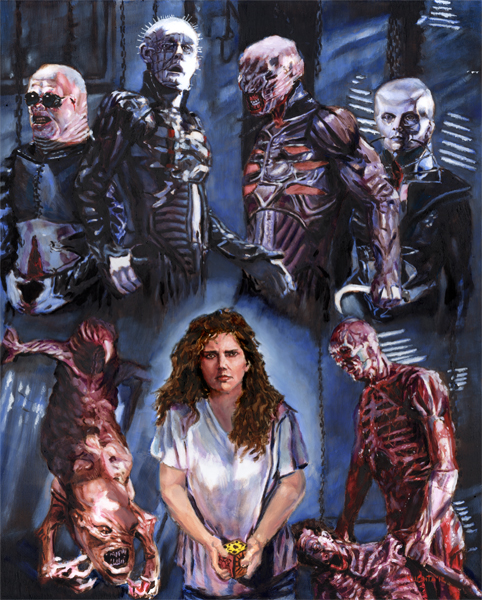
Really, they should all be forced to watch or rewatch Hellraiser. First released in 1987, the directorial debut of Clive Barker holds up pretty well as a blood-filled horror movie. It tells the story of Larry (Andrew Robinson), his daughter Kristy (Ashley Laurence), and his second wife, Julia (Clare Higgins). Larry’s ne’er-do-well brother, Frank (Sean Chapman), has died under mysterious circumstances so Larry moves into Frank’s old house and tries to renovate it. He hopes that this will somehow help his strained marriage to Julia, who was having an affair with Frank. Why Larry thinks this is a good idea is never quite clear. Larry seems to be a nice guy but it doesn’t take long for the audience to get the feeling that he might not be that smart.

Kristy, on the other hand, is much smarter than her father and she knows better than to trust Julia. In fact, Kristy refuses to even live in the same house as Julia. Still, Kristy does check in on her father occasionally and she quickly realizes that Julia is doing something strange. It turns out that Frank may be dead but his tortured, skinless spirit lives on. Julia has been picking men up in bars and bringing them back to the house so that Frank can steal their skin. On the one hand, you do have to feel kind of sorry for all of the people who die. On the other hand, Frank does look better with skin.

Frank ended up in his skinless state because he foolishly opened up a puzzle box. That’s where Pinhead (played by Doug Bradley) comes into the equation. Pinhead and the other Cenobites live in another demension and they’ve spent so much time “exploring” that they can no longer tell the difference between pain and pleasure. Pinhead’s face is covered in pins. (In fact, Pinhead started out as something of a fan nickname as Bradley is just credited with playing “the Lead Cenobite” in the film’s end credits.) The Cenobites are actually only in Hellraiser for a few minutes. The majority of the film is made up of Julia bringing strange men home and Frank attacking them. But it’s the Cenobites — and Pinhead in particular — who make the biggest impression. Beyond his bizarre appearance, Doug Bradley plays the character with such haughty arrogance that it’s hard not to be intrigued. He knows things.

Hellraiser holds up well. Andrew Robinson does his best but Larry is a bit of a moron. However, Clare Higgins has fun with her femme fatale role while Ashley Laurence is likable and sympathetic as Kristy. For the most part, the special effects hold up well and even the film’s slightly more cartoonish moments add to the feeling that the film takes place in a universe that is becoming increasingly unstable. The puzzle box is wonderful creation. It’s easy to say that you would never mess with something like that but most people would. The temptation would just be too great.

Watch Hellraiser and never get Pinhead’s name wrong again!

Horror on the Lens: The Last Man on Earth (dir. by Ubaldo Ragona and Sidney Salkow)


Hi there and Happy October 27th!  For today’s treat from the ranks of horror films that have fallen into the public domain, I present to you one of the most important films in horror history.  Though it wasn’t appreciated when it was first  released back in 1964, The Last Man On Earth was not only the 1st Italian horror film but George Romero has also acknowledged it as an influence on his own Night of the Living Dead.

It’s easy to be a little bit dismissive of The Last Man On Earth.  After all, the low-budget is obvious in every scene, the dubbing is off even by the standards of Italian horror, and just the name “Vincent Price” in the credits leads one to suspect that this will be another campy, B-movie.  Perhaps that’s why I’m always surprised to rediscover that, taking all things into consideration, this is actually a pretty effective film.  Price does have a few over-the-top moments but, for the most part, he gives one of his better performances here and the black-and-white images have an isolated, desolate starkness to them that go a long way towards making this film’s apocalypse a convincing one.  The mass cremation scene always leaves me feeling rather uneasy.

The film is based on Richard Matheson’s I Am Legend and no, it’s nowhere as good as the book.  However, it’s a lot better than the Will Smith version.

If you have 87 minutes to kill, please enjoy The Last Man On The Earth.

Cleaning Out The DVR: Outlaw Blues (dir by Richard T. Heffron)


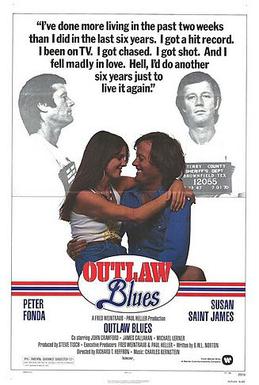
The 1977 film, Outlaw Blues, opens in Huntsville State Prison. An arrogant country music star named Garland Dupree (James T. Callahan) is about to perform for the prisoners. He’s hoping his Huntsville concert will do for him what playing at Folsom did for Johnny Cash. The warden insists that Garland listen to a song written and performed by a soft-spoken prisoner named Bobby Ogden (Peter Fonda). A visibly annoyed Garland agrees but he doesn’t actually listen while Bobby performs. Instead, Garland is too busy arguing with the manager of his record label, Hatch (Michael Lerner). However, the members of Garland’s backup band record Bobby as he sings.

Several months later, Bobby is about to be released from prison when he learns that Garland is performing his song. Not only has Garland made it a hit but he’s also taking credit for writing it! Garland and Hatch even copyrighted the song, something that Bobby was never able to do because he was in prison.

Released from prison, Bobby ends up in Austin. He wants to stay out of prison and get his life straightened out. He wants to pursue a career as a singer. And he wants Garland to admit that he stole Bobby’s song. Unfortunately, when Bobby confronts Garland, things escalate and Garland ends up accidentally getting shot. Garland survives but now Bobby has the police after him. With the help of one of Garland’s former backup singers, Tina Waters (Susan Saint James), Bobby tries to become a star while staying one step ahead of the cops. Like the outlaws of old, Bobby and Tina sneak around Texas, performing where they can. (Knowing that any publicity is good publicity, Tina often calls the cop just as Bobby finishes his show, all the better for her and Bobby to make a dramatic escape.) Hatch is eager to record and release a Bobby Ogden record but both Bobby and Tina know that he can’t be trusted. But with the cops closing in, what choice do they have?

For a film about criminals on the run, Outlaw Blues is a surprisingly loose and laid back movie. It’s definitely a product of the 70s. It celebrates rebellion and doing your own thing, it mixes drama and comedy and, because it was made in the 70s, you know there’s always a good chance that, regardless of how pleasant the majority of the film may be, everyone’s going to die at the end of the movie. That definitely adds some tension to the film’s story that might not otherwise be there. For the most part, though, this is an enjoyable little lark of a drive-in movie. It celebrates individualism while also finding time for a few songs and a car chase or two.

A good deal of the film’s charm is the result of the chemistry between the two stars. Peter Fonda and Susan Saint James just seem as if they belong together and they both play characters who are written with slightly more depth than you might otherwise expect from what was obviously meant to be a cheap, drive-in film. Tina may appear to be a hippie but, as played by Saint James, she eventually turns out to be a clever businesswoman and promoter. As for Peter Fonda, he definitely had his acting limitations but he also had a nice smile and a far more likable screen presence than you might suspect if you only know him from his remote performance in Easy Rider. In Outlaw Blues, Fonda’s inexpressive manner feels right for someone who has spent most of his life in prison and who is still adjusting to being on the outside. Fonda wins you over and, once his character falls in love with Saint James, Fonda starts to relax and you get the feeling that both he and Bobby Ogden are having fun.

Outlaw Blues may be a minor 70s film but it’s likable. It has an amiable spirit which makes it worth watching.