4 Or More Shots From 4 Or More Films is just what it says it is, 4 shots from 4 of our favorite films. As opposed to the reviews and recaps that we usually post, 4 Shots From 4 Films lets the visuals do the talking!
Today is the start of a new year and it’s also a day to start thinking about which film you’re going to discover over the course of the next 12 months! Below are my suggestions for 8 films that, if you haven’t already watched them, you should definitely make time to watch before 2023 rolls around!
8 Shots From 8 Film For 2022
It (1927, dir by Clarence Badger, DP: H. Kinley Martin)
The Rules of Game (1939, dir by Jean Renoir, DP: Jean Bachelet)
Portrait of Jennie (1948, dir by William Dieterle, DP; Joseph H. August)
Chappaqua (1966, dir by Conrad Rooks, DP: Etienne Becker, Robert Frank, and Eugene Schufftan)
An American Hippie in Israel (1972, dir by Amos Sefer, DP: Ya’ackov Kallach)
Strange Behavior (1981, dir by Micahel Laughlin, DP: Louis Horvath)
The Two Orphan Vampires (1997, dir by Jean Rollin, DP: Norbert Marfaing-Sintes)
A Field in England (2013, dir by Ben Wheatley, DP: Laurie Rose)
Well, the clock has now struck midnight on the West Coast and that officially means that it is 2022 in the United States! It’s a new year, which means that we have another chance to get things right or, at the very least, not repeat the mistakes of the previous year.
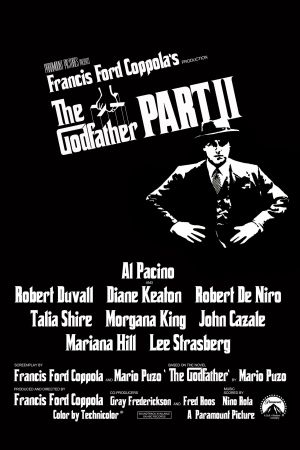
I’m looking forward to 2022 for a number of reasons. We’ve got a lot planned here at Through the Shattered Lens. So, what better way to start things off than by sharing a scene that I love from one of the greatest and most important films of all time, 1974’s The Godfather Part II?
The scene below takes place on New Year’s Eve. The scene starts in 1958 and it ends in 1959. Michael Corleone (Al Pacino) and his brother Fredo (John Cazale) are in Havana at the invitation of Hyman Roth (Lee Strasberg). Roth know that Cuba could be a gold mine for the American mob but Michael, from the start, realizes that the country’s corrupt government is on the verge of collapse. Tragically, it’s also in Havana that Michael realizes that Fredo betrayed him to his enemies.
On December 31st, 1958, as the corrupt and wealthy celebrate a new year in Havana, the communist rebels ride into the city. While the President of Cuba prepares to announce that he will be fleeing the country, Michael confronts his brother and tells him that he knows the truth. Later, as they both attempt to flee the country, Michael and Fredo see each other on the streets. Fredo runs from Michael, refusing his offer to help. Though Fredo would eventually return to the family, the film’s ending revealed Fredo’s first instinct was the correct one.
Much of the scene below is based on fact. The Cuban government did fall on New Year’s Eve and Fidel Castro and his rebels did triumphantly ride into Havana on January 1st. Before Castro came to power, the Mafia did have a major stake in Cuba and reportedly quite a few mobsters were in Havana when Castro took over. Meyer Lansky (on whom the film’s Hyman Roth was based) was one of the many mob officials who were rumored to have caught the last flight off of the island. Seeking to be the only mob boss in his country, Castro did force the Mafia out of Cuba, which led to an alliance between organized crime and the CIA to try to overthrow Castro. At the time that The Godfather Part II was released, the details of the CIA and the Mafia’s attempts to assassinate Castro were just starting to be revealed to the public. As powerful as the scene below is today, it probably resonated even more with audiences in 1974. In 1974, this was all still recent history and it undoubtedly brought to mind the still-fresh national trauma of the assassination of the Kennedy brothers.
Beyond the historical significance of the scene below, it also features brilliant work from two actors who will forever be linked together, Al Pacino and the late John Cazale. Cazale and Pacino first met while they were both working off-Broadway, years before Mario Puzo even started writing the novel that would become The Godfather. They were close friends and, along with co-starring in The Godfather films, they also played bank-robbing partners in Dog Day Afternoon. Tragically, John Cazale died of cancer at the age of 42. He only appeared in five films, every one of which was nominated for Best Picture and one could argue that the Academy’s failure to nominate Cazale for either Dog Day Afternoon or Godfather Part II is one of the most unforgivable oversights in Oscar history.
That said, it’s a new year. Save the arguing for later. Here’s a scene that I love:
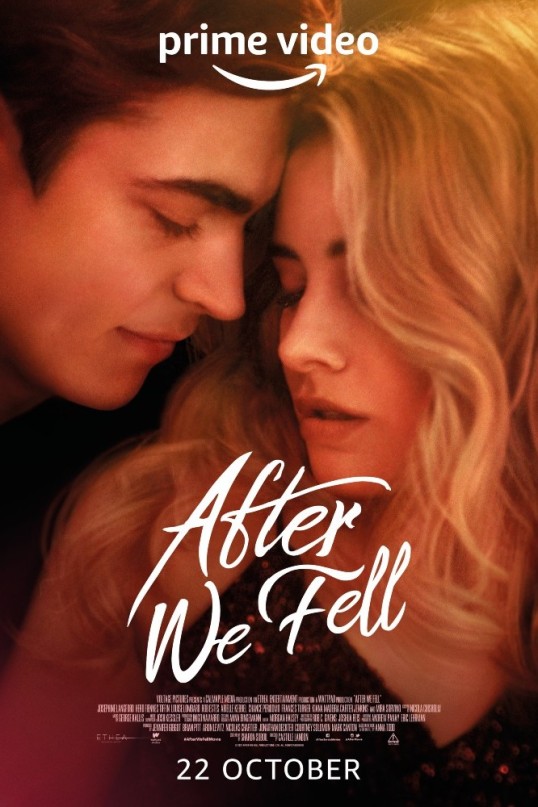
After We Fell continues the story of Tessa and Hardin, the world’s most boring couple.
If you’ve seen Afterand After We Collided, you know the story of Tessa (Josephine Langford) and Hardin (Hero Fiennes-Tiffin). You know that Tessa has an alcoholic father and that she met and fell in love with Hardin during her first semester of college. You know that Hardin is a British bad boy with a lot of really lame tattoos but he also really likes The Great Gatsby. Hardin’s from a wealthy family and he’s a recovering alcoholic. Hardin may come across like a sullen jerk but that’s just because no one but Tessa understands who he truly is. Blah blah blah.
Hardin and Tessa spent the first two movies having a bunch of boring relationship problems and that’s pretty much what they spend the third movie doing, as well. There’s a lot of tastefully filmed sex scenes but no one’s going to mistake these films for Fifty Shades of Grey. Whenever Hardin and Tessa have sex in After We Collided, there’s a close-up of Hardin grabbing a condom. The one time that Hardin doesn’t grab a condom, it leads to one of the film’s few plot developments. It’s the rule of Chekhov’s Condom. If a condom is used in the first act, a condom will not be used in the second act, and there will be consequences in the third act.
There’s not really much of a plot to this one. Tessa takes a job in Seattle. Hardin doesn’t want her to go to Seattle. Tessa’s drunk dad shows up. Hardin bonds with the drunk dad. Hardin’s mother gets married so the film’s action moves to London.
When Hardin and Tessa visit his mom, Hardin’s mom says, “I set your bed up, Hardin.”
“I was expecting to stay on the floor,” Hardin replies.
OH, SHUT THE FUG UP, HARDIN! JUST SAY THANK YOU FOR ONCE!
The After films wouldn’t be so bad if Hardin wasn’t such an annoying douchebag. And it would help is Tessa actually had a personality that went beyond her relationship with Hardin. They’re a boring couple. Whatever chemistry Fiennes-Tiffin and Langford had in the first two films is totally missing in After We Fell. When they have phone sex, you feel bad for whoever at the NSA is having to transcribe their conversation. They have no interests outside of each other and listening to middlebrow music. Hardin continually fears that Tessa is going to leave him but Tessa wouldn’t exist if she wasn’t half of a couple and neither would Hardin. They’re not individuals. They have no personality outside of worrying about each other, fighting with each other, and talking about each other. One gets the feeling that they are the couple that everyone tries to avoid at a party. “Don’t get stuck in a corner with those two unless you’re ready to spend the entire night listening to the story about that time Hardin was reading The Great Gatsby in the student union….”
The film ends with the promise of “To be continued.” I’m looking forward to After The Divorce.
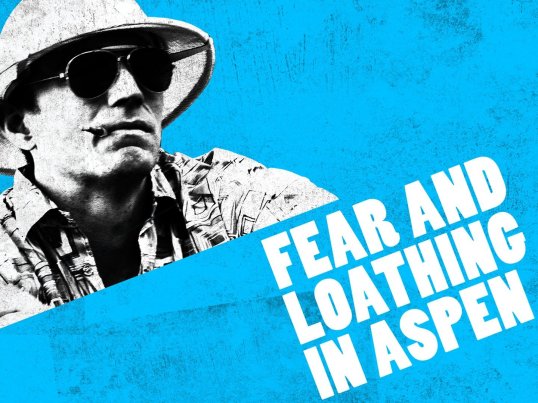
The year is 1970 and big business has all the power in Aspen, Colorado. The landscape is being bulldozed to make room for time-shares. The once pristine ground is being covered in asphalt. The rich are using Aspen as their own personal playground while the hippies, drawn to the town by the beautiful landscape, are regularly used as scapegoats for every problem that the town encounters.
A struggling journalist named Hunter S. Thompson (Jay Bulger) wants to change that. When Thompson first declares that he will be running a third party, “freak power” campaign for Sheriff of Pitkin County, his main concern is getting paid to write about it and perhaps becoming a regular contributor to Rolling Stone Magazine. But, as the campaign starts to grow and Thompson finds success in motivating the hippies to actually register to vote, he starts to realize that he could actually win this thing. Despite the efforts of Aspen’s mayor (Cheryl Hines, the stepmother of the film’s director), “freak power” is on the verge of turning the establishment upside down.
Fear and Loathing in Aspen is based on the true story of Thompson’s campaign. Thompson did not win but he did go on to write Fear and Loathing in Las Vegas and to cover the 1972 presidential election for Rolling Stone. Thompson was an iconoclast, a writer who as open about his love for drugs as he was for his love of guns. He committed suicide in 2005. If he were still with us, one imagines that he would probably love Bernie while hating Trump, Biden, and Twitter. There have been a few, generally uneven attempts to bring Thompson and his writing to cinematic life, the most famous probably being Terry Gilliam’s adaptation of Fear and Loathing in Las Vegas, starring Johnny Depp as Thompson.
Fear and Loathing Aspen stars Jay Bulger as Thompson and it should be said that Bulger does a good job in the role. While he doesn’t quite have the movie star charisma of Johnny Depp, he is believable as a sincere prankster, as someone who is genuinely torn between whether or not to burn it all down or to try to make people’s lives better by participating in the system. Unfortunately, the rest of the film doesn’t really rise up to the level of Bulger’s performance. Cheryl Hines, Laird Macinstosh, and Paul Morgan all give such cartoonishly evil performances as Thompson’s political opponents that it makes Steve Carell’s performance as Donald Rumsfeld in Vice look nuanced and intelligent by comparison. The film’s director tends to rely a bit too much on obvious tricks, like split screens and shaky hand-held footage. It gets distracting.
The director, by the way, is Bobby Kennedy III, the son of Robert F. Kennedy, Jr. There’s some irony to be found in a film about outsiders being directed by a member of the Kennedy family, particularly the son of someone who would probably just be another Facebook conspiracy troll if not for the circumstances of his birth. Fear and Loathing in Aspen may tell the story of an outsiders revolt but it doesn’t feel authentic. With the exception of a few scenes, it feels like counterculture cosplay.
Over the past 11 years, I’ve shared so many scenes from It’s A Wonderful Life that I’m a bit worried that I’m gong to run out of moments to share. It’s A Wonderful Life is one of my favorite films of all time, along with being a Christmas tradition. I watched it earlier this month and I’ll be watching it tonight with my family.
Below is one of the more somber but important scenes in It’s A Wonderful Life. George and Clarence go to what would have been Bailey Park if George had been born. Instead, it’s now a cemetery and buried there is George’s brother, who would have died if George hadn’t been born. And, as Clarence explains, every man that George’s brother saved would have died as well. “Each man’s life touches so many other lives,” as Clarence puts it.
Here is a scene from a wonderful movie called It’s A Wonderful Life.
Age is one of those strange factors when it comes to relationships.
My Dad was 35 when he married my Mom, who was 10 years his junior. Aaron and Sam Taylor-Johnson have a 23 year age difference between each other and they’re doing fine (I hope). Florence Pugh and Zach Braff have a 21 year difference. Anna Nicole Smith was about 27 when she married a near 90 year old J. Howard Marshall. If your mind is totally shutting down on you on the age differences, I’d tell you that maybe Paul Thomas Anderson’s Licorice Pizza may not be for you, but to still give it a chance. The story is so well written that you’ll often forget there any kind of age differences. If that’s not a problem, the movie is more than worth your time.
A Licorice Pizza is another word for a vinyl album. Although I grew up with records (Purple Rain and Jaws were on constant rotation as a kid), I can’t say I’ve ever heard the term before.
Licorice Pizza is a love story at heart, between 15 year old Gary Valentine (Cooper Hoffman, son of the late Phillip Seymour Hoffman, an Anderson regular) and 25 year old Alana Kane (Alana Haim, of the band Haim) set in the early 1970s. Gary’s young, but is both very curious and confident, actively looking for the next opportunity ahead of him (even if he has to create it). Alana’s successful at what she does, is resourceful in her own right and doesn’t hesitate to call someone out on their crap.
I caught Licorice Pizza on the Friday after Thankgsiving at the Village East by Angelika just below 14th Street in Manhattan. which hosts one of the best 70 MM screens in the borough. This was the same theatre I attended for Paul Thomas Anderson’s The Master in 70MM. The place is absolutely beautiful and reminds me of the old Ziegfeld. Think of 70MM as what IMAX was before IMAX ever existed.
By far, Licorice Pizza‘s greatest strengths are the plot and cast. For Hoffman and Haim, these are their first acting performances, but they flow so well in every scene (with Haim the stronger of the two) that it feels completely natural. Hoffman is energetic and smooth, and I hope to see him do more in the future. Haim is a marvel, and if she doesn’t end up with some kind of award for all this, I’d be very shocked. She dances with all of these actors as if she’s done it for years, and in the rare instance where there’s a hiccup – there’s a moment regarding the character’s age – the recovery’s so quick that you have to wonder if that was scripted or not. It reminds me of Michael Mann’s Miami Vice, in that being undercover is basically taking on a persona and throwing yourself fully into it to make it believable. Both leads are the heart of all this.
Jack Holden (Sean Penn) takes Alana Kane (Alana Haim) for a ride in P.T. Anderson’s Licorice Pizza
Of course, it helps to have backup to support the leads. Alana Kane’s family is also Alana Haim’s. Her sisters, Danielle and Este, along with their parents are all on hand here. The film is also peppered with stars like Tom Waits (Bram Stoker’s Dracula), Sean Penn playing a variant on Bill Holden(Milk), Christine Ebersole (The Wolf of Wall Street), Benny Safdie (Uncut Gems) and Maya Rudolph (Bridesmaids, and she’s Anderson’s wife) that help to round out the weirdness of Los Angeles in the 1970s. Of particular note are both George DiCaprio (Father of Leonardo) as a waterbed salesman, and Bradley Cooper as legendary producer Jon Peters (who was responsible for Batman, A Star is Born and Man of Steel). Of all of the supporting cast, Cooper has by far the most positive and zany appearance, with his version of Peters feeling more like a live action Rocket Raccoon. His character here is almost the opposite of the one he plays in Nightmare Alley. I also loved Benny Safdie’s politician here. Each supporting character has a story of their own that Alana & Gary are pulled into.
And then there’s John Michael Higgins, who plays a restaurant owner who makes fun of his Japanese wife’s ability to speak English. He talks to her in a made up broken version of Japanese, which my audience seemed to be okay with. They laughed, mostly. It’s like the Christmas Story Chinese Food scene, where the family has to listen to a broken version of “Deck the Halls”. Depending on who you are, it may come across as cringeworthy, and is honestly the only thing that stumble steps the movie in any way. Then again, one could argue that it’s just the 70s. Things were different. Anyone recollecting what life was life back then is bound to have a relative or someone just like that.
All that aside, I loved the flow of the movie. Between The Master and Inherent Vice, I half expected Licorice Pizza to take some dark turns. While the movie does get a little strange where the effects of the gas shortage plays in (also one of the best scenes), the film is incredibly lighthearted and fun. Like every romantic comedy, you have all of the great elements. Gary pursues Alana, but her attentions are turned towards another. By the time Alana starts to realize that maybe Gary is good for her, he’s kind of moved on. You may find yourself hoping everything works out – it’s hard not to love these characters. All of this is done with a soundtrack from the era that rivals some of the best offerings from Tarantino’s Once Upon a Time in Hollywood or Gunn’s Guardians of the Galaxy. A little Bowie, some Nina Simone, some Paul McCartney and Wings & even Donovan pepper the film. For the score, Radiohead’s Johnny Greenwood is back once again as Anderson’s go-to composer.
Overall, Licorice Pizza is a surprisingly lighthearted tale from Paul T. Anderson. It never overreaches or spends too much time in any one place, understanding that love is a complex thing. Grounded by two talented newcomers, a plethora of supporting heavies, a wonderful soundtrack and a screenplay that’ll make you smile, Licorice Pizza is an easy recommendation.
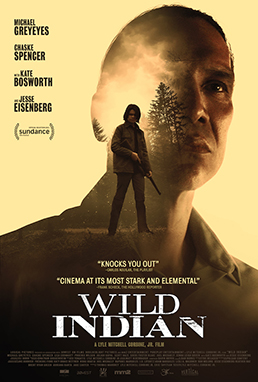
Wild Indian opens in the 80s, with two teenage boys living on a Ojibwe reservation in Wisconsin. Both of them come from broken homes. Both of the are bullied in school. Makwa (played, as teenager, by Phoenix Wilson) is quiet but angry and spends most of his time trying to avoid the company of his alcoholic parents. His cousin, Teddo (played, as a teenager, by Julian Goppal), is slightly more responsible and level-headed. One day, after Makwa kills one of his classmates, he begs Teddo to help him hide the body. Teddo is reluctant but eventually, he agrees.
We then jump forward several years. Now played by Michael Greyeyes, the adult Macwa lives in California and he uses the name Michael Peterson. He’s a businessman, a partner in a firm with Jerry (played by the film’s executive producer, Jesse Eisenberg). Michael is married to a white woman (Kate Bosworth) and lives in an upscale apartment. He and his wife have one child and another is on the way. Though Michael doesn’t deny his Native heritage, he now uses it for a gimmick. He describes it as being his “brand.” He never speaks of his past in Wisconsin. His wife doesn’t even know his original name. Michael would seem to have everything that he’s ever wanted but it’s obvious that he’s still struggling with his inner demons. He hires a stripper so that he can strangle her. The rare time he does talk about other Native Americans, it’s to dismiss them as being dishonest and narcissistic, descriptions that many would use to describe Michael himself.
Meanwhile, Teddo (now played by Chaske Spencer) has spent the last several years in prison. Wracked with guilt after helping Makwa cover up the murder of their classmate, Teddo became a drug dealer. When he gets out of prison, his face is heavily tattooed, as if he’s trying to announce his crimes and sins to the world. When he visits the mother of the boy that Makwa murdered, Teddo starts to cry uncontrollably. Eventually, Teddo leaves Wisconsin, heading to California so that he can confront Makwa face-to-face.
Wild Indian is an atmospheric and, at times, rather disturbing thriller. It’s not a surprise that Teddo wants and needs some sort of resolution with Makwa but, from that premise, the film’s story goes off in some unexpected directions and, in the end, neither Makwa nor Teddo turn out to be quite who the viewer was expecting them to be. Teddo, the violent drug dealer, turns out to have a strong sense of moral obligation while Makwa, for all of his success, is so deeply in denial about his past and his sins that he can’t even be honest with himself about who he is, much less anyone else. It all leads to a rather jarring ending, one that may seem abrupt but actually works perfectly. In the end, the sins of the past cannot be escaped and they cannot be changed. All one can do is live under the clouds of the past.
Wild Indian is triumphant directorial debut for Lyle Corbine, Jr., an uncompromising character study of two men who can never escape the past no matter how much they may want to. Both Michael Greyeyes and Chaske Spencer give wonderful performances as Makwa and Teddo. This is definitely a film to track down and watch.
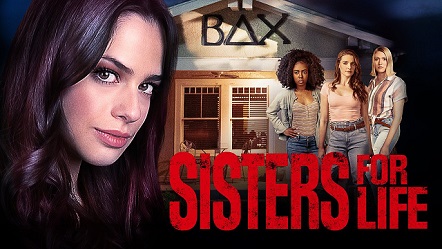
Bailee (Briana Fermia) really wants to join the college’s nicest sorority and she feels that she established a real connection with Jana (Maddison Bullock) when she interviewed to be selected for one of the opening spots. Unfortunately, connection or not, there’s no room for Baileee because a legacy named Cori (Taylor Fono) has also applied. Cori’s mom was in the sorority. Cori’s sister was in the sorority. Therefore, Cori gets to be in the sorority! Yay! College traditions are the best!
Bailee confronts Jana about how unfair it is that she wasn’t invited to join the sorority. Jana feels guilty but what can she do? There’s just no space. But then, one night, Cori is attacked on campus. Due to her injuries, Cori has to withdraw from the college and therefore the sorority. Who can take Cori’s place? Jana has a suggestion!
Bailee is now in the sorority and it soon turns out that she’s totally clingy and kind of psychotic. She takes the whole idea of “sisters for life” very seriously and Bailee fully expects that Jana will be her sister for life. Jana, meanwhile, is like, “This is my senior year, I want to hang out with my boyfriend, and I want to finish up my science project so I can have a career once I graduate.” Soon, the other sorority sisters are getting drugged, framed, and attacked. Even Jana’s boyfriend gets attacked in the shower! Could it all somehow be connected to Bailee?
Of course it’s all connected to Bailee! The film wastes no time in making it clear that Bailee is not to be trusted. That’s the way Lifetime films work. Anyone who shows up out of nowhere and suddenly starts demanding that you be her sister for life is going to turn out to be totally unhinged. They always start out as slightly needy but seemingly sweet but, by the time the second commercial break rolls around, they’ve already put at least one person in the hospital or maybe even worse. Some people will go to outrageous lengths to have a friend.
Anyway, Sisters for Life was a fun, if slightly predictable, Lifetime film. As I’ve said in the past, though, the predictability is kind of the point. Familiarity is one reason why Lifetime movies are so much fun to watch. We’re always a few steps ahead of everyone else in the movie. Towards the end of the film, one character announces, “You’re the meanest sister that I’ve ever had!” with a totally straight face and if you can’t appreciate the self-awareness behind a line like that than Lifetime films just aren’t for you.
If abduction runs in you family, it might be time to get a new family.
Or it might just be time to make sure that you’re really, really good at it because, if abduction is the family business, you don’t want to be embarrassed at the next family reunion.
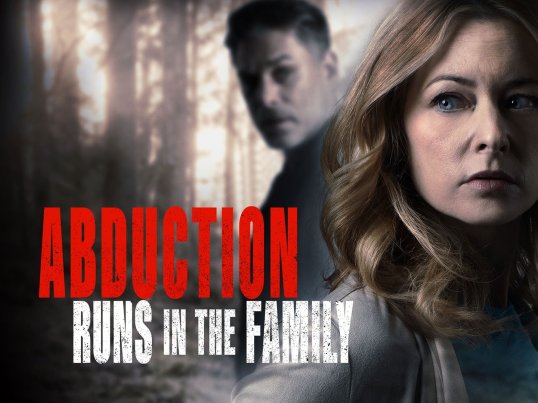
Abduction Runs In The Family in not only an ominous way to describe your relations but it’s also the title of a Lifetime movie. It stars Jessica Morris as Alyssa. When she was a child, Alyssa was abducted by a man named Miles (James Hyde). Miles did not abuse or deliberately harm Alyssa. Instead, he wanted a replacement for his daughter, Sophie and, when he abducted her, he treated her as if she was his own daughter. Alyssa was eventually rescued and Miles was sent to prison. Now, years later, Alyssa has become famous as a result of talking and writing about how she was not only kidnapped but how she also eventually forgave Miles for what he did. As the movie begins, Miles is about to get out of prison and Alyssa has a book coming out about her experience. Finally, life is providing a chance for both of them to get on with their lives. Miles, of course, has been given a restraining order as a condition of his parole. He’s not to go anywhere near Alyssa or her daughter, Emma.
But then …. Emma disappears!
Emma’s been abducted and Miles is Alyssa’s number one suspect. However, Miles has an alibi for the entire afternoon and he insists that he did not kidnap Emma. If Miles didn’t do it, who did? Can Alyssa rescue Emma with the help of the man who abducted Alyssa so many years ago?
Abduction Runs In The Family is an interesting Lifetime film, largely because it takes an unexpected approach to the relationship between Alyssa and Miles. Alyssa insists that, after kidnapping her, Miles only treated her with kindness and fatherly love and the film keeps you guessing as to whether Alyssa’s memories are correct or if she’s still suffering from Stockholm Syndrome. Miles is creepy, largely due to his past, and yet he still seems to be sincere in his desire to move on from his previous actions. It leads to an interesting dynamic between the two characters, who are both well-played by Morris and Hyde.
Unfortunately, the solution to the mystery itself isn’t particularly satisfying. This is one of those Lifetime mysteries where the film overall would have benefitted from a few more suspects because once you eliminate one them, there’s pretty much only one other person left. And, unfortunately, a good deal of the film’s conclusion rests on the guilty party leaving a very obvious clue out in the open for everyone to see.
All that said, this is still a compelling Lifetime film, one that takes its story in some unexpected directions. The final scene between Morris and Hyde is nicely acted and written. This is definitely a Lifetime film to keep an eye out for.
Since I kind of enjoyed watching Rubyearlier today, I decided to watch the second film in Lifetime’s Landry family saga, V.C. Andrews’ Pearl In the Mist.
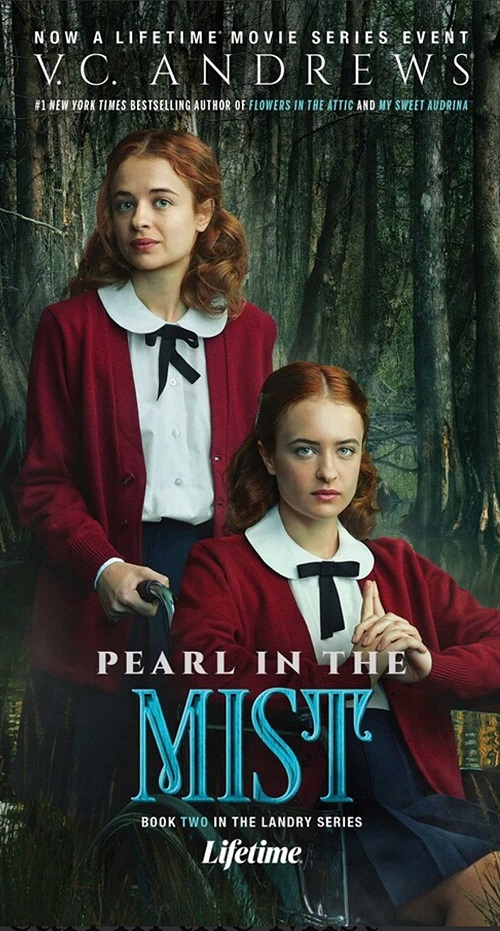
Pearl in the Mist picks up where the first film ended. The year is 1962 and aspiring artist Ruby (Raechelle Banno) is living in New Orleans and still thinking about the life that she left behind in the Bayou. Her father (Gil Bellows) is still married to her bitchy stepmother (Lauralee Bell). Ruby’s twin sister, Giselle (Karina Banno), is still using a wheelchair as a result of a car accident and she’s still angry that Ruby stole away Giselle’s boyfriend, Beau (Ty Wood). Ruby’s half-brother, Paul (Sam Duke), is still living in the Bayou and is still in love with Ruby, despite the fact that any physical relationship between them would be incestuous.
However, it’s time for Ruby and Giselle to get out of New Orleans. They’ve been enrolled in a prestigious boarding school. Giselle is not happy about having to leave home. Ruby is excited because, goddammit, Ruby’s excited about everything. At the boarding school, Ruby deals with all sorts of drama. She befriends a girl who is passing as white. She inspires a blind pianist. She flirts with a hunky groundskeeper. She continues to paint under the tutelage of Miss Stevens (Meaghan Hewitt McDonald). She does all of this despite the fact that the school’s headmistress (Marilu Henner) hates her because Ruby is from the Bayou and no one trusts “swamp people.” As the same time, Ruby has to deal with her wicked stepmother and her bitter sister.
I have to admit that, at first, I didn’t think I was going to like Pearl in the Mist, if just because Ruby herself was so perfect that she was kind of annoying. She never had a bad thought. She never said a bad word. She was also so extremely naïve and so endlessly enthusiastic that I could understand why Giselle was so sick of having to deal with her. Ruby’s innocence made sense in the first film, because Ruby was still adjusting to life in the city. But, by the time Pearl in the Mist rolls around, there’s really no excuse for Ruby to be so clueless about …. well, everything.
Fortunately, about halfway through, the film started to get interesting. Bizarre incidents started to pile up. Characters started to snap at each other in dialogue that was so overwritten and pulpy that it was kind of impossible not to love the sound of it. The film embraced the melodrama, as I like to say. It all eventually led to a plot twist involving Giselle that was so insane and so out there that it redeemed the entire film. Karina Banno appeared to be having a lot of fun being bad as Giselle and it was fun to watch her. If you’re going to be in a film like this, you always want to play the bad girl. They always get the best lines.
In the end, Pearl in the Mist was so over-the-top and cheerfully silly that I couldn’t help but enjoy it. All trips to the Bayou should be as fun.




 Through the Shattered Lens