The TSL’s Horror Grindhouse: Bigfoot (dir by Bruce Davison)


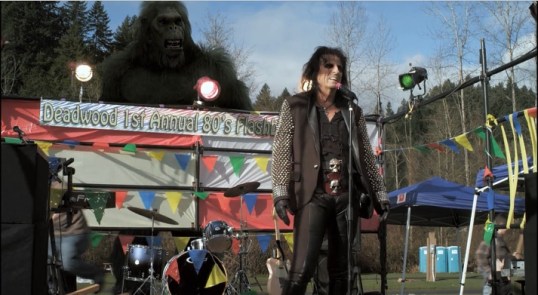
In this 2012 Asylum production, the legendary Bigfoot is revealed to just be a big gorilla who wants to sleep for the winter.  In fact, Bigfoot seems to have more in common with King Kong than the hairy, humanoid that people have been reporting seeing for over a hundred years.  Unfortunately, all of the hunters and the tourists and the noise from a local music festival keep interrupting Bigfoot’s slumber.  It turns out that Bigfoot is not a morning monster and tends to wake up grumpy.  When Bigfoot is in a bad mood, he turns over RVs, steps on hunters, and tries to destroy Mt. Rushmore.

Concert promoter Harley Henderson (Donny Bonaduce) wants to kill Bigfoot and turn his body into a tourist attraction.  Environmental activist Simon Quinn (Barry Williams) wants to not only protect Bigfoot but to also perform protest-themed folk music.  Harley and Simon were once musical partners, until Simon decided that he would rather protect endangered species and Harley decided to become a businessman.  Now, they hate each other and are constantly on the verge of coming to blows.  Meanwhile, Sheriff Alvarez (Sherilyn Fenn) just wants to keep her town safe from the creature’s rampage.  You read that right.  This film is The Partridge Family vs. The Brady Bunch with Twin Peaks trying to keep the peace.  If you’re wondering how The Asylum convinced Bonaduce, Williams, and Sherilyn Fenn to all appear in a low-budget film about a giant gorilla menacing South Dakota, consider that they also convinced Bruce Davison to appear in it as well.  In fact, Bruce not only stars but he directed the film as well!  I mean, Bonaduce and Williams were probably just happy that someone was calling them and this film was made before Twin Peak: The Return reignited Fenn’s career.  Bruce Davison, however, has an Oscar nomination to his name.  Of course, before one gets too snarky, it’s important to remember that actors have bill to pay, just like the rest of us.  Sometimes, those bills are played by appearing in Shakespeare.  Sometimes, they’re paid by appearing in Bigfoot.

Actually, no one should be ashamed about appearing in Bigfoot.  Like most of the films produced by the Asylum, Bigfoot is actually a lot of fun.  It’s not a film that’s meant to be taken seriously.  Instead, it’s basically a parody of the big-budget giant monster movies that come out of Hollywood, complete with a tacked-on environmental subplot and an endangered national monument.  Bigfoot is in on the joke.  The minute that Barry Williams picks up his guitar and starts to sing an insufferable folk song, it’s obvious that this film is laughing along with us.  Bigfoot was designed to be a silly film and it succeeds.  When taken on its own terms, it’s hard not to enjoy it.

Finally, Alice Cooper appears in this film as himself, performing at Bonaduce’s concert.  After Alice complains about the crowd size and bemoans the indignity of going from being one of the world’s biggest stars to performing at a festival in South Dakota, Bigfoot literally kicks him off the stage.  Much like the film, Alice deserves some credit for be willing to poke fun at himself.

Who Is The Black Dahlia? (1975, directed by Joseph Pevney)


In 1947 Los Angeles, the body of 22 year-old Elizabeth Short is discovered in an empty lot.  Short, who was nicknamed The Black Dahlia because she always wore black, was an aspiring actress who was violently tortured before being chopped in half.  Her murder remains one of Hollywood’s most infamous unsolved crimes.

In this made-for-television movie, Ronny Cox and Efrem Zimbalist, Jr. play the two detectives who are assigned to investigate Short’s murder.  Though they struggle to find any clues identifying who could have killed Short, they do learn about her life and how she went from being a naïve innocent who came to Hollywood with stars in her eyes to being a hardened and cynical woman who may have been supporting herself through sex work when she was murdered.  The film makes use of frequent flashbacks, in which Elizabeth Short is played by Lucie Arnaz.  Her friends and acquaintances are played by familiar television faces like Henry Jones, Mercedes McCambridge, June Lockhart, Brooke Adams, Donna Mills, and Tom Bosley.  Also be sure to keep an eye out for Sid Haig, playing a tattoo artist.

What Elizabeth Short went through over the course of her short time in Hollywood was probably too graphic to be put on television in the 70s but this movie still does a good job of recounting the basic facts of her life and murder.  Because the film is based on fact, no one is ever arrested for Short’s murder.  The only suspect is a doctor who turns out to have an alibi.  The movie instead focuses on Short trying make it in Hollywood and discovering that it’s a cruel town.  Lucie Arnaz was far better than I was expecting in the role of Elizabeth and brought a lot of vulnerability to the role.  The film ended with a title card, asking anyone who had information about the murder of Elizabeth Short to call the LAPD.  The case remains open to this day.

International Horror Film Review: Hostile (dir by Mathieu Turi)


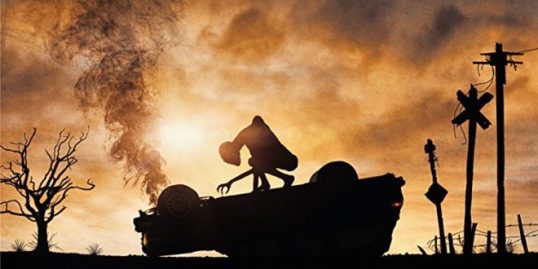
The world is ending and you’re stuck in the desert. The vehicle you were driving has flipped over. You’ve got a severely broken leg and can’t move. The few remaining humans in the city have informed you that a rescue party will not be sent out until the sun rises. And you’ve got a deformed creature circling your crashed van, trying to find a way to enter.  You have to figure out how to survive the night while being hunted by some sort of mutant and you also have to mentally work out your relationship issues while doing so.

(It may sound like a nightmare but if you ever break up with someone while on a road trip through South Texas and then you have to ask that person to give you a ride home, it can be a reality.  Not that I’m speaking for personal experience, of course….)

That’s the situation in which Juliet (Brittany Ashworth) finds herself in the 2017 French film, Hostile.  While Juliet tries to survive the night, she flashes back to the life and the world she used to know. She remembers how she was once a nearly illiterate drug addict who met and fell in love with an art gallery owner named Jack (Grégory Fitoussi). After discussing the paintings of Francis Bacon and the role of fate in everyone’s life, Jack took it on himself to lock Juliet in an apartment until she overcame her addiction. Now, that’s not something that most professionals would necessarily recommend trying, especially when the addict and the apartment owner barely know one another.  In fact, I felt it was a bit presumptuous on Jack’s part.  Who is Jack to decide that he’s going to be the one to save Juliet’s life?  Jack may think that his intentions are good but there’s something a bit too self-righteous and controlling about Jack, even if he is trying to keep someone from self-destructing.  He’s every preachy Intervention producer come to life.  He’s someone who most viewers will feel a bit of ambiguity about.

The audience might not be totally comfortable with what Jack does but, for Juliet and Jack, it all works out and they fall in love. Juliet remembers the good times with Jack and she also remembers how their relationship eventually fell apart and how the world itself eventually started to end, almost as if their relationship issues were a bit of a metaphor for the fragility of society.  Meanwhile, the creature outside the van continues to try to find its way inside.

Hostile is a claustrophobic and atmospheric end-of-the-world thriller from director Mathieu Turi. The inside of that van is a properly ominous location and it’s impossible not to sympathize with Juliet as she struggles to figures out how to survive the night. The film’s deliberate pace takes some getting used to and the final twist requires a certain suspension of disbelief but both Ashworth and Fitoussi are well-cast as Juliet and Jack. In the end, the film is a moody and interesting look at the end of the world, albeit one that is marred by the heavy-handedness of its script.

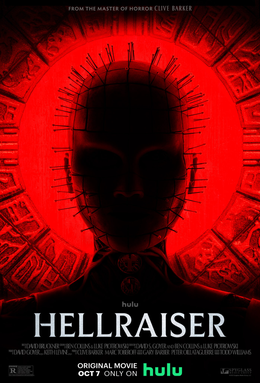
Horror Film Review: Hellraiser (dir by David Bruckner)


Last night, I started watching the Hellraiser reboot.  I fell asleep about 40 minutes in.

That’s never a good sign, especially when it comes to a horror movie.  A horror movie is supposed to be so scary that you can’t sleep.  It’s supposed to be so intense and disturbing that it gives you nightmares, even if you actually do manage to get some rest.  A horror movie is supposed to haunt you, not bore you.  That’s especially true of the Hellraiser movies, which are defined by their grotesque imagery and the terrifying implications of the Cenobites.

This morning, I finished watching the movie.  Somehow, I did not fall asleep again.

The Hellraiser reboot asks the question: “If Doug Bradley isn’t playing Pinhead, is there any point to watching this crap?”

Based on this movie (and, to be fair, the two previous Hellraisers as well), the answer would appear to be no.  Jamie Clayton takes over the role of Pinhead in the new Hellraiser and the results are a bit underwhelming.

I mean, the Cenobites still look somewhat frightening, don’t get me wrong.  And the puzzle box is a huge part of the reboot’s plot.  And there’s still a lot of blood and a lot of talk about how suffering can be music and a lot of people get ripped apart by magical space chains.  But, with all that in mind, the Cenobites still come across as being kind of boring.  They’ve gone from being frightening creatures beyond imagination to just being generic bad guys.

A big problem is that Jamie Clayton never quite captures the all-encompassing contempt for existence that Doug Bradley brought to the role.  Bradley played Pinhead as a regal sadist, delivering his lines with a withering condescension.  As played by Bradley, Pinhead was really neither good nor evil.  He had transcended such concerns in his search for experience.  Hence, he could get away with announcing that he and the Cenobites were angels to some and demons to others.  In the original Hellraiser, Pinhead (and Bradley) made his first appearance by saying, “You called, we came,” and that pretty much summed up what made the character so frightening.  Bradley’s Pinhead had no concern as to the circumstances that led to him being  called and he certainly had no patience for anyone who thought they could talk their way out of the situation.  Bradley’s Pinhead was beyond such concerns and that made him all the more frightening.

Jamie Clayton’s Pinhead, on the other hand, is smug and not much else.  She’s playing a game with humanity but that leaves her vulnerable to losing.  That’s a mistake that Bradley’s Pinhead would not have made.  (Or, at least, he wouldn’t have made it in the original movie.  The Hellraiser sequels are a different story.)  There’s nothing particularly regal about Clayton’s Pinhead.  She’s just another horror villain.  With her demanding a sacrifice from anyone who cuts themselves on the puzzle box, she’s not that much different from the little girl in Ring.

(In Clayton’s defense, she’s not the first person to replace Doug Bradley as Pinhead.  Bradley also did not appear in the two previous Hellraiser films, Revelations and Judgment.  Bradley felt the scripts were poorly written and, perhaps more to the point, Dimension Films wanted him to take a pay cut.)

As for the reboot itself, it’s about Riley (Odessa A’zion), a recovering drug addict who, along with her boyfriend Trevor (Drew Starkey), steals the puzzle box and then cuts herself on the box which leads to the Cenobites stalking all of her annoying friends.  Riley is an incredibly unlikable character and her friends are kind of whiny so who cares?  Gordan Visnjic plays a decadent businessman who is trying to manipulate the box to his own ends.  Visnjic has a good scene at the start of the film, one that perfectly captures the privileged ennui that would lead to someone getting involved with the Cenobites.  But, eventually, even Visnjic is reduced to being a one-dimensional character.

The main lesson of this Hellraiser film (and the previous two films as well) is that things work better with Doug Bradley than without him.

Horror On The Lens: The Phantom of the Opera (dir by Rupert Julian)


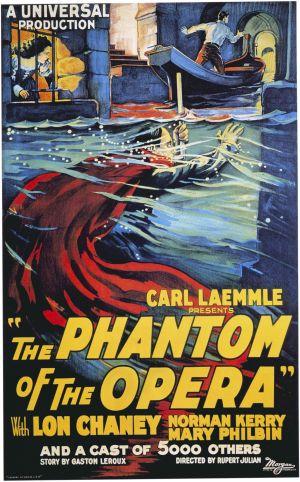
Today’s horror movie on the Shattered Lens is both a classic of silent era and one of the most influential horror films ever made.  It’s one that I previously shared in 2013, 2015, 2016, 2108, 2019, 2020, and 2021 but it’s such a classic that I feel that it is worth sharing a second (or fifth or even a sixth or perhaps an eighth) time.

First released in 1925, The Phantom of the Opera is today best known for both Lon Chaney’s theatrical but empathetic performance as the Phantom and the iconic scene where Mary Philbin unmasks him. However, the film is also a perfect example of early screen spectacle. The Phantom of the Opera was released during that period of time, between Birth of the Nation and the introduction of sound, when audiences expected films to provide a visual feast and Phantom of the Opera certainly accomplishes that. Indeed, after watching this film and reading Gaston Leroux’s original novel, it’s obvious that the musical was inspired more by the opulence of this film than by the book.

This film is also historically significant in that it was one of the first films to be massively reworked as the result of a poor test screening. The film’s ending was originally faithful to the end of the novel. However, audiences demanded something a little more dramatic and that’s what they got.

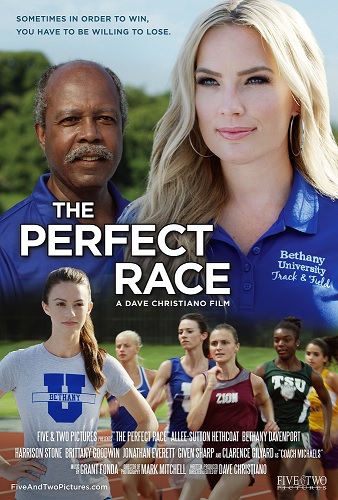
October Positivity: The Perfect Race (dir by Dave Christiano)


In this 2019 sequel to Remember The Goal, cross country coach Courtney Smith-Donnelly (Allee Sutton Hethcoat) finds herself coaching at the college level.  One of the runners that she coached in high school, Brittany (played by Bethany Davenport), is now the best runner at Bethany University.  In fact, she’s the second best runner in the nation!  Coach Michaels (Clarence Gilyard, Jr.) brings in Courtney to work with Brittany while he deals with some health complications.

So, pretty much all the stuff that happened during the first movie happens during the second.  Once again, everyone doubts Courtney’s training methods.  Once again, Courtney takes it upon herself to tell all of the runners how to live their lives.  Brittany’s father gets angry when Courtney tells Brittany to run slower than usual.  Considering that Courtney is now a local celebrity because of how well the cross country team did in Remember the Goal, you might think that the other coaches would know about her techniques and would prepare for them.  But nope.  No one has any faith in Courtney’s ideas but she’s vindicated in the end.  In fact, over the course of two movies, Courtney is never once incorrect about anything.  To be honest, that’s kind of annoying.

The main difference between Remember The Goal and The Perfect Race is that Courtney is a thousand times more preachy in the sequel.  In the first film, she cited a verse from Corinthians and later talked about Jesus raising a girl from the dead and that was about it.  In The Perfect Race, it’s rare that a scene goes by without Courtney saying, “Do you remember the story about….” and then offering up a Biblical lesson.  It gets a bit tiring and, again, it’s hard not to get bored with Courtney having all of the answers all of the time.  For example, when she’s told that the track team doesn’t practice when its raining, she promptly asks everyone in the room to raise their hand if their parents are divorced.  Courtney goes on to explain that, if you’re not willing to train while it’s raining, you probably won’t be able to make a marriage work either.  WHAT!?  You know what else might end a marriage?  Dying of pneumonia.

For a film about athletics, The Perfect Race is a very talky film.  Unfortunately, most of the conversations are very repetitive.  When Courtney tells Brittany to slow down during one of her races, we got several scenes in a row of people asking each other why Courtney did that.  Brittany’s father asks Brittany why Courtney told her to slow down.  Brittany replies that she doesn’t know.  In the very next scene, Brittany’s father tells Coach Micheals about what Courtney told Brittany to do.  Coach Michaels asks Brittany’s father why Courtney did that.  “I don’t know,” Brittany’s father replies.  Coach Michaels asks Brittany why Courtney did that.  “I don’t know,” Brittany replies.  In the next scene, two rival coaches talk about Brittany slowing down.  One coach asks, “Why did she do that?”  “I don’t know,” the other coach replies.  And it just kept going and going until eventually, I wanted to throw something at the TV.

Anyway, my frustrations aside, Courtney is triumphant at the end of the movie, largely because Courtney is perfect and never makes any mistakes.  Did I mention how annoying that can get?

This film inspired me to go for a run, if just to have an excuse to stop watching it.  And, before anyone asks, I do not like carrots.

The TSL’s Horror Grindhouse: Scissors (dir by Frank De Felitta)


The plot of the 1991 film, Scissors, is not easy to describe. That’s not because the plot is particularly clever as much as it’s because it doesn’t make much sense.

Basically, Sharon Stone plays a woman named Angela Anderson. She is oddly obsessed with scissors and terrified about getting close to anyone. She’s been getting hypnotherapy from Dr. Carter (Ronny Cox) in an effort to understand why she’s so repressed but she doesn’t seem to be getting anywhere. This could possibly have something to do with the fact that Dr. Carter is continually distracted by the adulterous activities of his wife, Ann (Michelle Phillips).

Angela lives in a lonely but surprisingly big apartment with only her cat for company. Her cat is named Midnight and he’s a black cat so he automatically became my favorite character in the film. Living next door to her are two twin brothers. Alex (Steve Railsback) is a soap opera star. Cole (Railsback, again) is an artist in a wheelchair who continually paints cartoonish pictures of Angela being attacked by a man with a big red beard.

Then, one day, Angela goes out to buy some scissors. When she returns and gets on the elevator to head back up to her apartment, she’s attacked by a man …. A MAN WITH A RED BEARD! Fortunately, Angela is able to stab him with her scissors. After the man with the red beard runs off, Angela is discovered in the elevator by Alex and Cole. Alex and Angela fall in love. Cole’s not too happy about that.

Following so far?

Angela get a call about a job interview, one that requires her to go to a stranger’s apartment. Despite the fact that the film has spent nearly an hour setting up Angela as being intensely agoraphobic, she has no problem going to this apartment. However, once she enters the apartment, she finds herself locked in! She also discovers that the red-bearded man is also in the apartment. Fortunately, he’s dead. Unfortunately, it appears that he was killed by Angela’s scissors. There’s also a raven in the apartment. The raven continually taunts Angela, saying, “You killed him!” Let’s just be happy that Edgar Allan Poe wasn’t around to see this.

Trapped in the apartment, Angela has flashbacks to her past. Is Angela the murderer? Is all of this just happening in her mind? Or is someone trying to drive her over the edge?

Though Scissors is set up as a psychological horror film, it’s really more of an extended acting exercise for Sharon Stone. Stone wanders around the apartment. She talks to herself. She had a nervous breakdown or two. She discusses life with a puppet. Every single scene seems to be designed to make audiences go, “Wow, she really can act!” but, despite all of the histrionics on display, Angela is still a very one note character. By making her obviously unstable from the start, the film doesn’t really leave the character with much room to develop or take us by surprise. The film attempts to end on a bit of an ambiguous note as far as Angela’s character is concerned but that type of ambiguity has to be earned. There’s nothing to Stone’s performance to indicate that there’s anything about Angela that isn’t totally on the surface. To suggest that there was more to her than originally appeared is to insult the audience’s ability to discern hidden depths.

The film does eventually wrap up its mystery and present a solution of sorts. Unfortunately, it’s a totally unsatisfying solution and one that’s dependent on otherwise intelligent people coming up with a ludicrously overcomplicated scheme to deal with one not particularly complicated problem. It’s all pretty forgettable but at least the cat survives.

The Strange Possession of Mrs. Oliver (1977, directed by Gordon Hessler)


Miriam Oliver (Karen Black) is a prim housewife who always keep her hair in a tight bun and who wears eyeglasses.  After she starts to have dreams about going to her own funeral, Mrs. Oliver’s personality starts to change.  Her husband, Greg (George Hamilton), can only watch as Mrs. Oliver puts on a blonde wig, ditches her eyeglasses, and starts to dress in revealing clothes.  Greg wants to concentrate on starting a family but the new Mrs. Oliver only cares about going out and partying all night.  She also wants to move into a new house, one that was previously owned by a woman named Sandy.  Sandy, who was a student of the occult, died in a mysterious fire.

The Strange Possession of Mrs. Oliver is a good made-for-TV movie that gives viewers two Karen Blacks for the price of one!  Black is undeniably sexy, whether she’s playing the prim Mrs. Oliver or the wild Sandy.  But she also delivers a really good performance as she switches back and forth from being Mrs. Oliver and being Sandy.  Richard Matheson provides an intelligent script while Gordon Hessler’s direction keeps you guessing as to whether Mrs. Oliver is truly possessed or if she’s just having a mental breakdown of some sort.  This is an enjoyably twisty thriller with a good ending and a knockout performance from Karen Black.

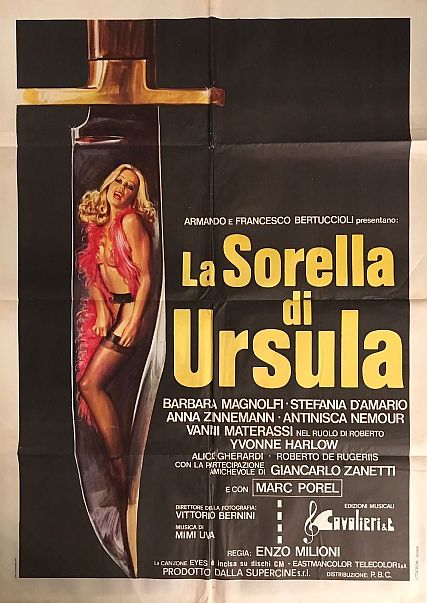
International Horror Film Review: The Sister of Ursula (dir by Enzo Milioni)


This 1978 Italian giallo tells the story of two sisters.  Ursula (Barbara Magnolfi, who is best-known for playing Olga in Argento’s Suspiria) is high-strung and prone to nightmares.  She claims that she can see people for who they really are.  Dagmar (Stefania D’Amario) is a year or two older.  She looks after her sister and makes sure that Ursula takes her pills.  Still, it’s hard to escape the feeling that Dagmar would like to be free of having worry about Ursula.

After the death of their father, Ursula and Dagmar check into a hotel in an Italian resort town.  Ursula wants to find their mother, a prostitute who left their father shortly after Ursula was born.  Dagmar, for her part, seems to just want to take a vacation and maybe meet a few men.  Ursula gives Dagmar a hard time for being promiscuous.  Dagmar gives Ursula a hard time for being neurotic and not having any fun.  It’s a typical family vacation.

Unfortunately, there’s also a homicidal lunatic on the loose, one that kills the promiscuous.  In typical giallo fashion, he wears black gloves and, often, all we see of him is his madness-filled eyes.  Unlike a lot of other giallo killers, he does not use a knife.  Nor does he strangle his victims.  Instead, he uses a big wooden dildo to beat people to death.  Believe me, I’m probably making it sound more interesting than it actually is.  For a film that wallows in sleaze, The Sister of Ursula doesn’t focus too much on the killer’s use of a dildo as a murder weapon, beyond showing its shadow on a wall at one point.  It’s an odd piece of directorial restraint that feels at odds with the rest of the movie.

Describing The Sister of Ursula as being a sleazy film doesn’t begin to describe just how sleazy this film is.  There’s not a single character to be found in the film who is not, in some way, perverse and the frequent soft-core sex scenes seem to exclusively take place in locations that don’t appear to have been cleaned anytime recently.  (One such scene features a picture of Donald Duck hanging on the wall over the bed.  That’s one of those weird but fun decorating choices that always seems to occur in giallo films.)  There are many films that leave you feeling like you need to take a shower afterwards.  This is one of the few films that I can think of that will leave you feeling like you need to take a shower every fifteen minutes or so.  

As for the film’s mystery, it plays out at a languid pace.  The story gets bogged down with a subplot about drug dealers.  One would be tempted to say that the film cultivates an atmosphere of ennui but I think that’s giving The Sister of Ursula too much credit.  This film was not made by a subversive artist like Jean Rollin or Jess Franco.  Instead, it’s just a poorly directed and paced giallo film.  That said, the Italian scenery is often lovely to look at and Barbara Magnolfi and Stefania D’Amario are believable as sisters.  This is a minor giallo that’s not so much terrible as it’s just forgettable.  

Horror Film Review: Halloween Ends (dir by David Gordon Green)


Halloween Ends?  Not likely.

It is true that, with this movie, David Gordon Green does close out his version of the Halloween trilogy and, for that, we should all be thankful.  For all the critical acclaim that the film received, none of Green’s Halloween films seem destined to stand the test of time.  I like almost all of David Gordon Green’s work except for his Halloween films and, unfortunately, I find his version of Halloween to be so self-important and annoying that it overshadows what I previously liked about his other movies.  (Don’t even get me started on the news that he will next be rebooting The Exorcist.)  Watching the Green Halloween trilogy, you find yourself wondering why Green made the films at all since he seems to consider the whole slasher genre to be beneath him.  Say what you will about Rob Zombie’s Halloween films, Zombie at least loves the horror genre.  Green, like so many Blumhouse filmmakers, only seems to make horror films so that he can remind us that he’s better than them.

But I doubt that this will be the final Halloween film.  It will be the last Halloween film produced under Blumhouse, as the rights to the story and the characters now revert back to Malek Akkad.  And, as long as there is money to be made off of the franchise, there will be new Halloween films.  Someone else will come along and reboot the franchise and hopefully wipe out the Green continuity just as ruthlessly as Green wiped out the previous franchise’s continuity.  In an age of franchises and prequels and cinematic universes, the Halloween franchise is proud to say, “Ha!  You mean you actually kept track of what happened in all the other movies!?  Sucks to be you, dumbass.”

But let’s talk about Halloween Ends.

As you may remember, Halloween Kills ended with Michael killing Laurie Strode’s daughter and Laurie (Jamie Lee Curtis) grabbing a shotgun and heading out to get  revenge.  Well …. ha ha, joke’s on you.  Laurie never got her revenge.  Michael vanished.  Four years later, Laurie has gone from being a badass survivalist to being a cheerful, cookie-baking grandma because she had to let go of the anger.  Laurie spent forty years preparing for Michael to return and then, when Michael does return and brutally murders her daughter, Laurie decides that she has to let go of her anger.  Laurie’s main concern is that the town of Haddonfield is now a traumatized and angry place.  Maybe she can spread positivity by writing a memoir about her life.  Sadly, this means that we also have to listen to passages from Laurie’s memoirs.  Laurie Strode is good at fighting psychotic killers but she sucks as a writer.

Unfortunately, whenever Laurie leaves the house that she shares with her granddaughter, Allyson (Andi Matichak), she runs the risk of being accosted by all of the angry people who all lost a relative or a friend to Michael Myers.  All of them view Laurie as being a reminder of the pain caused by Michael.  They actually do have a point and you have to wonder about Laurie’s claim that she’s staying in Haddonfield to help the town heal.  First off, I don’t know why Laurie would have so much loyalty to what appears to be a fairly generic suburb.  Secondly, the townspeople are so traumatized that is actually seems a bit a selfish for Laurie to remain in Haddonfield and to continually remind everyone of the worst night of their lives.  I mean, Laurie could move.  You know who can’t leave?  The wheelchair-bound woman who was paralyzed while Michael was killing everyone in town because he wanted to find Laurie.

Michael disappeared after killing Laurie’s daughter.  No one knows where Michael is.  Michael is a big and fearsome serial killer who nearly wiped out an entire town and he’s out there somewhere and apparently, no one is looking for him.  That’s what one has to assume because, according to the film, he’s spent the last four years living underneath a bridge.  He’s still wearing his mask.  He looks and acts exactly the same way as he did previously.  He’s still killing people.  He’s just doing it under a bridge.  How, in four yeas time, has it not occurred to anyone in law enforcement to not check under the bridge?  It’s the most obvious hiding spot in town but no one looked under the bridge.  And why, if Michael is obsessed with killing Laurie, has he spent four years under a bridge as opposed to going to Laurie’s house?

Michael is pretty much treated as a supporting character in Halloween Ends.  For that matter, so is Laurie.  The majority of the film centers around a new character named Corey (Rohan Campbell).  Corey was a college student with a bright future until a terrible babysitting accident led to the death of a boy named Jeremy.  Corey was blamed for the death, even though it really wasn’t his fault.  (The scenes with Corey and Jeremy open the film and are so well-handled that it leaves little doubt that Green was far more emotionally invested in Corey’s storyline than he was in any of the Michael/Laurie nonsense.)  Even though Corey was acquitted of manslaughter, he is now the town pariah.  Corey meets and falls in love with Allyson but, unfortunately, the town’s constant taunting and suspicion causes him to snap.  He becomes a disciple and then a rival of Michael’s.

Corey is the type of damaged character who has been at the center of many of David Gordon Green’s non-Halloween films.  One gets the feeling that Green wanted to make a movie about Corey but, since he’s abandoned indie films in order to spend his time screwing up venerable horror franchises, Green and co-writer Danny McBride instead jammed Corey’s story into a Halloween film.  While Corey has the potential to be an interesting character, he doesn’t belong here.  Making Corey into a killer means reducing Michael’s powers.  Michael goes from being a fearsome symbol of pure evil to being some guy in the sewers who gets beaten up and mugged by a nerdy guy who previously couldn’t even stand up to the members of the school band.  It not only goes against the spirit of the original Halloween films but also against everything that was previously established in the Green Halloween films.  I mean, Corey beats up Michael after Corey gets beaten up by a bunch of band kids.  Maybe if the posse in Halloween Kills had been made up of the high school marching band, Laurie’s daughter would still be alive.

It all gets to be a bit annoying.  There are so many little things that don’t make any sense.  My favorite is that the family of that hired Corey to babysit moves out of their house after the death of their son.  Corey continues to break into the now abandoned house, which has sat empty for four years.  And yet, the abandoned house is remarkably well taken care of.  For some reason, the family took all of their furniture but left behind a grand piano.  Why wouldn’t they take the piano with them?  In the drawing room, there’s a book shelf that is empty except for three books.  Why would the family leave those three books behind?  When Green rebooted the Halloween franchise, he ignored all of the sequels because, according to him, the sequels weren’t any good and didn’t make sense.  But Halloween Ends feels as rushed and nonsensical as any of the films that featured Danielle Harris as Laurie’s daughter.

The film ends with the community of Haddonfield coming together once again.  It’s a scene that I wish I could describe but to do so would mean spoiling the end of the movie.  Let’s just say that it’s incredibly dumb and it almost feels like a parody of the previous Green films.  One of the worst thing about the Green films is the insistence of presenting Haddonfield as being some sort of iconic location as opposed to just being a generic anytown USA.  The whole reason why the original Halloween films were so effective was because Haddonfield could have been anywhere.  Green tries to turn Haddonfield into another Twin Peaks and it’s another sign that he never really understood what made John Carpenter’s original film work in the first place.  Ironically, a lot of what happens during the final moments of Halloween Ends would make more sense if Michael was Laurie’s brother but, again, the Green films did away with all that.

Halloween Ends is not necessarily the worst film of 2022.  As a director, Green is still capable of coming up with an effective shot or two.  But, considering the hype that accompanied it, it is one of the most disappointing.  And it also has the most unintentionally funny ending of any film you’re likely to see in 2022.  Whenever I feel down, I just think about that solemn procession to the auto yard and it cheers me right up.

As I said at the start of this review, Halloween will never end as long as there is money to be made.  So, in another few years, we’ll get another reboot and, once again, we’ll discover with Laurie, Tommy Doyle, Linsdey, and Sheriff Brackett have been doing since the night Michael came home.  My idea for a reboot is that they should make Michael and Laurie into siblings.  That would be interesting.