Film Review: My Dinner With Eric (dir by Eliza Roberts and Darryl Marshak)


One day, in Hollywood, actor Eric Roberts has dinner with Rico Simonini, who is both a fellow actor and a cardiologist to the stars.  They proceed to have a long and somewhat meandering conversation about …. well, just about everything.

Eric asks Rico how he balances being both an observant Catholic and, as a doctor, a man science.  Rico asks if Eric ever met Marlon Brando, which leads to an amusing story about the morning that Eric mistook Brando for being Jack Nicholson’s gardener.  They discuss how the movies have changed over the years, with Eric announcing that, with the exception of Leonardo DiCaprio and Brad Pitt, there are no more movie stars left.  Eric talks about how movies today are made quickly and cheaply and how the fact that we can now watch a movie anywhere has effectively ended the idea of movies being big events.  Rico talks about seeing Frank Sinatra being brought to the hospital for the final time.  They talk about their mutual love of Harry Dean Stanton and Burt Young.  Eric says that, before he became a star, Bruce Willis was the best bartender New York had ever seen.  Eric also talks about getting high with actor Sterling Hayden.

Oddly enough, the film skips around in time.  We seem some snippets of conversation that were apparently shot at a different dinner between the two men.  It’s during this second dinner that Eric is approached by a woman named Sandra who excitedly tells him that she loves his sister.  “Your sister blows my panties off!” she exclaims before walking away.  “Wow,” Rico says as an “OMG” thought balloon suddenly appears over Eric’s head.
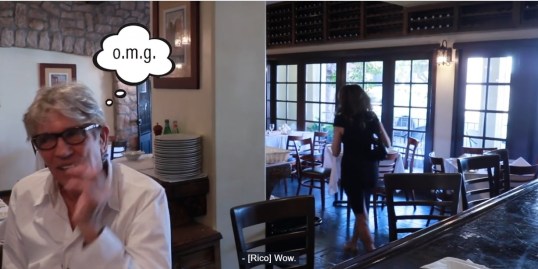
The film sets itself up to make us believe that we’ll be eavesdropping on a casual, everyday conversation between the two men but, throughout the film, the men also acknowledge that they are being filmed.  Two women who interrupt the conversation to ask for an autograph also smile straight at the camera.  Are we watching a documentary or are we watching a fictionalized portrait of Eric and Rico’s friendship?  On the one hand, the film’s opening credits specifically credits Rico and Eric Roberts as co-writing the screenplay, which would seem to suggest that we’re watching a scripted conversation.  At the same time, Eric also gets a few details mixed up when he’s telling his stories.  For instance, he says that Jack Nicholson was Oscar-nominated for Terms of Endearment the same year that Eric was nominated for Runaway Train.  Actually, that year, Nicholson was nominated for Ironweed.  It’s not a huge mistake and, indeed, there’s actually something undeniably charming about the fact that Roberts has been doing this for so long that he occasionally has a difficult time keeping his dates straight.  But it’s the type of mistake that one makes while speaking off-the-top of one’s head as opposed to reciting lines from a script.  Are we watching a true conversation or are we watching a recreation of a conversation?  The film leaves it up to us to decide, a reminder that films can reflect reality while also being totally fictional.

When My Dinner With Eric started, the image was grainy and the hand-held camerawork was distracting.  However, as soon as Eric complains that most films made today look like they were shot on someone’s phone, the image suddenly becomes crisper, the camerawork settles down, and even the film’s soundtrack becomes significantly less muddy.  It’s as if, by calling out the poor visuals and sound quality of most low-budget films, Eric Roberts magically fixed this film.  When Eric complains about the service at the restaurant, we get a De Palma-style split screen.  When Eric talks about Rod Steiger, the film slips in a clip from On The Waterfront.  Later, the film finds time to feature a clip from Kubrick’s The Killing.  Even as we listen to the conversation between the two men, the directors make sure that we know that we’re watching a movie, once again tasking us with determining what is real and what is just being said for the cameras.

And yes, it’s all a bit self-indulgent and one could probably argue that this film is a vanity project for both Eric Roberts and Rico Simonini.  But I have to admit that, after a rough start, I actually grew to like this film.  Eric Roberts is a good conversationalist and, as you might expect from someone who has been working in the movies since the late 70s, he’s got a story for every occasion.  There’s an unexpected and earnest sincerity to Eric Roberts in this film and, even more importantly, an undeniable love of acting.  When the film starts, Eric seems awkward and a bit nervous.  But once he starts talking about his technique and the roles that he loved and the ones that he lost out on, he seems to come alive and, before our eyes, he transforms into the quirky performer who has appeared in everything from tough crime films to straight-to-video thrillers to Lifetime melodramas to micro-budget faith movies.  It’s interesting to watch and he and Rico seem to be having a good time talking to each other.  Though Rico may not be as a famous as his friend, he still manages to hold his own in their conversation.

Do I recommend this film?  If you’re a fan of Eric Roberts and if you have the patience necessary to stick with the film despite a somewhat rough beginning, then yes.  It’s currently on Tubi.
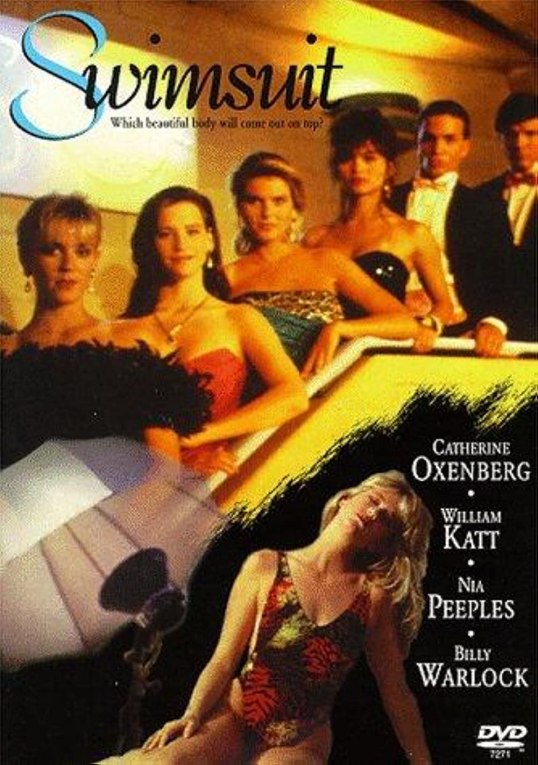
Retro Television Reviews: Swimsuit (dir by Chris Thomson)


Welcome to Retro Television Reviews, a feature where we review some of our favorite and least favorite shows of the past!  On Sundays, I will be reviewing the made-for-television movies that used to be a primetime mainstay.  Today’s film is 1989’s Swimsuit.  It  can be viewed on Tubi!

Mrs. Allison (Cyd Charisse, in what is basically an extended cameo) is determined to make Saltare Swimsuit Company the most popular swimsuit brand in the world.  And, as we all know, the key to popularity is picking the right models.  She assigns her second-in-command, Brian Rutledge (William Katt, giving off a pure Malibu vibe), to find the most beautiful women and men on the beach.  Joining Brian on this mission is his goofy assistant, Willard Thurm (Tom Villard).

Brian and Willard quickly manage to gather a group of potential models, all of whom will now compete for the chance to represent Saltare.  Among the hopefuls:

Maria (Nia Peeples) is hoping that she will not only become the body of Saltare but that she’ll also be able to launch an acting career.  Complicating matters is that she used to be married to Brian and he tends to get upset whenever an audition causes her to be late to a photoshoot.

Jade (Catherine Oxenberg) wants to be famous and rich and she’s already living a wealthy lifestyle.  Everything about Jade suggests that she’s probably doing massive amounts of cocaine but, since this is a made-for-TV movie, we don’t get to see any of that.  Instead, she ends up having a very unlikely romance with Willard.

Romella (Ally Walker) is Hungarian and speaks mangled English, which this film plays for cringey laughs.  She befriends a male model named Scott (Paul Johansson) and schemes to make money.

Finally, Rosy (Cheryl Pollak) is an innocent and naïve waitress who, like all good Americans, has always dreamed of being a model.  As she competes, she finds herself torn between two potential suitors.  Chris Cutty (Billy Warlock, showing off the blue  collar beach style that landed him the role of the troubled lifeguard on Baywatch) is working class but honest and he has big plans of opening up his own business.  Hart Chadway (Jack Wagner) is slick and wealthy and older.  Gee, I wonder who Rosy will end up with?

You know all the horror stories that you hear about the modeling industry?  The sexual harassment?  The eating disorders?  The constant pressure to be perfect?  The drug addiction and the depression and the stalkers and the cancel crowd watching your every move?  Well, absolutely none of that is present in Swimsuit, which basically portrays modeling as perhaps the most earnest and wholesome industry to be found in the United States.  Mrs, Allison wants the best for all of her models and Brian and Willard are complete gentlemen.  You’ll be able to guess, from the minute she first appears onscreen, who is ultimately going to be the winner of the model search but, in the end, everyone gets something to be happy about.  This is a film without any real conflict, beyond Rosy trying to decide whether to date a working class hunk or a slightly more wealthy hunk.

You may have guessed that there’s not a huge amount of depth to Swimsuit.  It’s a movie about good looking people posing in swimsuits.  It’s the type of film that you can play in the background while you do other things.  Whenever someone starts singing a song on the soundtrack or you hear the sound of waves hitting the beach, you know that it’s time to look at the screen.  No one in the film makes a huge impression, though Cyd Charisse is properly eloquent as Mrs. Allison and William Katt is likable as Brian.  Tom Villard and Catherine Oxenberg make for an unexpectedly cute couple, which just goes to show that it’s never a bad idea to temper beauty with goofiness and vice versa.  Otherwise, this is an inoffensive but slightly forgettable fantasy of what it’s like to be a model.

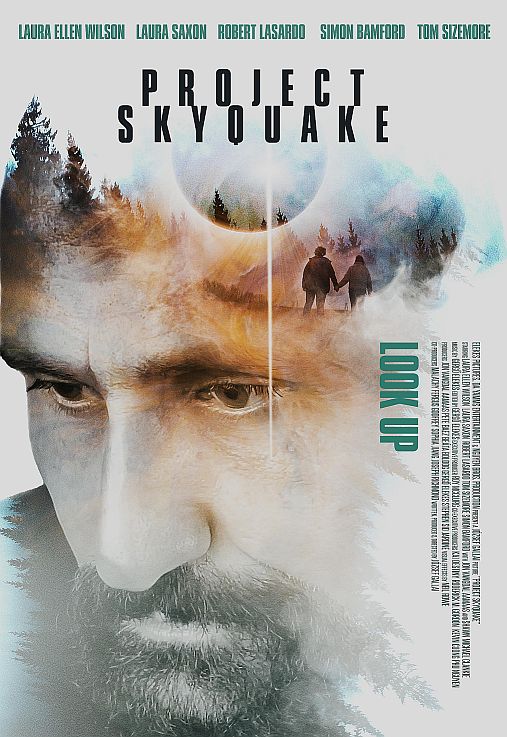
Film Review: Project Skyquake (dir by József Gallai)


Project Skyquake, the latest film from director József Gallai, opens with a voice in the darkness.  The voice belongs to Andrew Derrickson (Simon Bramford), the stepfather of a student journalist named Cassie.  Andrew explains that Cassie and her friend Margot have been missing for a while.  They are actually one of the many people who disappeared all in the same day, an event that changed the world.

As he speaks, we see scenes of empty roads, abandoned buildings, and ominous forests and we can’t help but notice that there does not seem to be many people around.  We know that something big has happened but we don’t know what yet.  However, when looking at these desolate images, it’s hard not to think about what the real world has gone through over the past two years.  Due to the pandemic and lockdowns, many people did literally seem to disappear.  They retreated into their homes and they locked their doors and some have yet to emerge.  In the early days of the Pandemic, images of empty streets and deserted buildings were a regular feature on the news and online.  Some news sources even took to referring to the pre-COVID days as being the “before time,” as if the expectation was that the world would just have to accept the new normal of a empty streets and missing faces.  Project Skyquake, I should make clear, is not directly a COVID film but it is a film that resonates because of what most of humanity has just been through (and what many people are currently still experiencing).  At a time when many are trying to memoryhole what it was like and pretend as if it really wasn’t as bad as all that, Project Skyquake is a film that reminds us of exactly what it felt like to feel as if one was witnessing the end of the world.

We watch footage of the days leading up to the disappearance of Cassie (Laura Ellen Wilson) and her friend Margot (Laura Saxon).  Cassie is fascinated by “skyquakes,” a very real phenomena in which people have reported hearing explosions and trumpets coming from the sky.  As Cassie explains it, some people think that the skyquakes are UFO-realted.  Some blame the government.  Some say it’s a natural occurrence with a scientific explanation.  Others view the skyquakes as being the sound of heavenly trumpets announcing the start of the rapture and the end of the world.  Cassie explains that the skyquakes could be holes in time and we are hearing the sounds of the future.

After receiving a video from Hank (Tom Sizemore), another skyquake researcher, Cassie and Margot drive out to a location where skyquakes have frequently been reported.  They’re hoping to capture the phenomena on film.  Instead, they find themselves driving further and further into what appears to be a deserted forest.  Of course, the forest isn’t as deserted as it may appear and Cassie and Margot soon discover the truth about the skyquakes….

Project Skyquake is an enjoyably creepy found footage film.  The film makes good use of its atmospheric locations, with the forest and the things found within growing significantly more threatening with each passing moment.  (The shots of the abandoned buildings and the unwelcoming wilderness reminded me a bit of Jean Rollin’s The Night of the Hunted, with its portrayal of semi-deserted and dystopian Paris.)  The film does a good job of capturing the frightening and powerless feeling of being lost, both physically and mentally.  Laura Ellen Wilson and Laura Saxon are both immediately sympathetic as Cassie and Margot and, even more importantly, they’re believable as lifelong friends.  The viewer really does care about what is going to happen to them.

The film also does a good job of portraying the underground network of paranormal investigators and hobbyists who are convinced that there is more to the world than what can be easily seen.  Along with Tom Sizemore’s Hank. we also hear from Scott Carmichael (Robert LaSardo), an expert on the phenomena, and a Professor Stokkebø (Jon Vangdal Aamaas).  They are people who come from different parts of the world and different backgrounds but what they all share in common is a belief that there is more out there than we know or have been told about.

Project Skyquake is a short but effective film about a real-world phenomena.  It’ll make you listen to the sky a little more carefully then next time you’re standing underneath it.

Retro Television Reviews: The Seduction of Gina (dir by Jerrold Freedman)


Welcome to Retro Television Reviews, a feature where we review some of our favorite and least favorite shows of the past!  On Sundays, I will be reviewing the made-for-television movies that used to be a primetime mainstay.  Today’s film is 1984’s The Seduction of Gina.  It  can be viewed on Tubi!

Gina (played by Valerie Bertinelli) is bored.

She’s a 20 year-old newlywed who spends her days going to college and her nights sitting in a tiny apartment and waiting for her husband, David (Fredric Lehne), to come home.  David is an intern at a hospital.  He works the nightshift and, as a result, he’s usually exhausted and not particularly communicative.  Unlike her husband, Gina comes from a wealthy family and she’s due to inherit a good deal of money as soon as she turns 21.  However, David stubbornly refuses to use any of Gina’s money to make either of their lives better.  He gets angry when Gina even mentions the possibility.  He’s prepared to spend the next ten years living in a crummy apartment and working terrible hours.  Once he establishes himself as a doctor, he says that he and Gina can start to think about starting a family.  Are you getting the feeling that David has control issues?  Because that’s definitely the feeling that I got from him.

Bored and frustrated, Gina turns to gambling.  Who can blame her?  Not only is it a way to make some money and bring some excitement into her life but it’s also something that she’s really good at!  She starts out just putting bets on horse races.  (The owner of a nearby bodega is also a bookie.)  She uses the money to buy a new television set, which David totally freaks out about.  Soon, Gina is sneaking off to Lake Tahoe.  While David works at the hospital, Gina hits the blackjack table and spins the roulette wheel.  She even attracts the eye of Keith Sindell (Michael Brandon), a handsome lawyer who loans her money and obviously has an interest in her that goes beyond card games.  Every morning, she jumps in her car and rushes back to San Francisco, arriving at her apartment before David gets home and lying to David about what she’s been doing all night.

It starts out well but this wouldn’t be a TV movie if there wasn’t a bit of drama.  Unfortunately, Gina’s luck starts to change and she soon finds herself in debt.  The owner of that bodega is a lot less nice when he’s demanding his money.  And Keith might be willing to cheat on his wife with her but he still expects her to pay back the money that he’s given her.  The world of gambling turns out to be harsh and unforgiving.  Gina is forced to find ways to get the money.  If that means lying to her husband, her father (played by Ed Lauter), and her accountant, so be it.  She might even have to — gasp! — get a job as a cocktail waitress!

It’s obvious from the start that Gina is going to get into trouble, or at least it’s obvious to everyone but Gina.  And really, isn’t that the way life is sometimes?  Usually, the only person who can’t see the walls closing in is the person who is about to get crushed.  The Seduction of Gina is melodramatic and predictable but Valerie Bertinelli is likable in the role of Gina and the scenes in casino are enjoyably gaudy and a little bit sordid.  It’s an entertaining movie, a Lifetime film that came out before Lifetime.  The film’s message is not to gamble but The Seduction of Gina makes winning look like so much fun that it probably inspired more people to hit the casinos than to stay at home and balance the checkbook.  In the classic DeMille fashion, this film offers both sin and a hint of salvation but it understands that sin is more entertaining to watch.

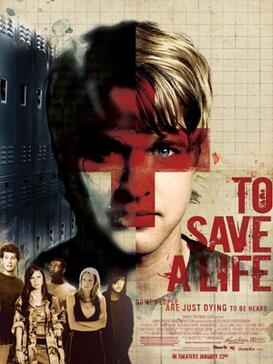
October Positivity: To Save A Life (dir by Brian Baugh)


The 2009 film, To Save A Life, tells the story of two friends.

When they were children, Roger saved Jake’s life by pushing him out of the way of a car.  Roger ended up with a permanent limp while Jake was able to continue playing basketball.  By the time they start high school, Jake (now played by Randy Wayne) is a basketball star while Roger (Robert Bailey, Jr.) is an outcast.  Jake and Roger start to drift apart, with Jake even abandoning Roger so that he can go to a party with his popular new girlfriend, Amy (Deja Kreutzberg).  By the time that they’re seniors, Jake and Roger barely acknowledge each other’s existence.  When Roger brings a gun to school and kills himself in front of his classmates, Jake is wracked with guilt.  When Jake goes to Roger’s funeral, he discovers that he’s the only one of Roger’s classmates who bothered to show up.

Jake tries to go back to his normal life.  He plays basketball.  He dates Amy.  He continues to be the school’s beer pong champion.  He desperately seeks approval from his mother and his father, both of whom are too busy dealing with their own failing marriage to pay much attention to Jake.  However, Jake cannot shake the feeling that he not only betrayed Roger but that his current life is empty.

To the shock of everyone, Jake starts to attend the meetings of a church youth group.  Jake gets to know the other members of the group and discovers that quite a few of them are not particularly sincere in their faith.  The local preacher’s kid, Danny (Bubba Lewis), tells Jake that the church’s youth pastor, Chris (Joshua Weigel), is only using him because he knows that Jake is a popular student and Chris believes that Jake will bring more members into the group.  When Jake convinces Amy to attend church with him, she finds the whole experience to be weird and off-putting.  When she tells Jake that he’s pushing her too hard to be a part of his new group, it’s hard not to feel that she has a point and, fortunately, Jake realizes that she has a point.  Later, she reveals a secret that could change both her life and Jake’s life forever.

With the help of his friend Andrea (Kim Hidalgo), Jake starts to try to reach out to all the other students who, like Roger, believe themselves to be outcasts.  For his efforts, he is shunned not only be his former friends but also by several members of the youth group.  When Jake befriends troubled Johnny Garcia (Sean Michael Afable), Johnny is framed for a crime he didn’t commit….

I’ve reviewed several faith-based films this month, mostly because I felt it would serve as an interesting and occasionally humorous counterpoint to all of the horror reviews.  For the most part, I’ve been fairly snarky in my reviews and I think that snark is justified.  Faith-based films, no matter how sincere they may be, are often rather cringey to sit through.  That said, I actually really liked To Save A Life, which is a generally well-acted, well-directed, and not particularly preachy film.  Unlike a lot of other faith films, To Save A Life doesn’t idealize Jake’s experience.  His problems don’t disappear once he starts going to church and the film makes clear that his guilt over Roger’s death is something that he will always carry with him.  Instead, the film’s emphasis is less on preaching at people and more on just treating them decently and with respect.  The film is willing to concede that Amy has a point when she says that the relentless positivity of the church youth group is all a bit much and that the members themselves can be just as judgmental and hypocritical as anyone else in the world.  Indeed, the film stands out from other faith-based films by featuring a villain who largely hides his activities behind the fact that his father is a preacher.  The film benefits from a cast who, for the most part, all give naturalistic performances.  Randy Wayne and Kim Hidalgo especially do a good job of making their characters seem like actual human beings as opposed to idealized symbols.

To Save a Life is actually pretty good.  And that’s a good note on which to end this October Positivity series.

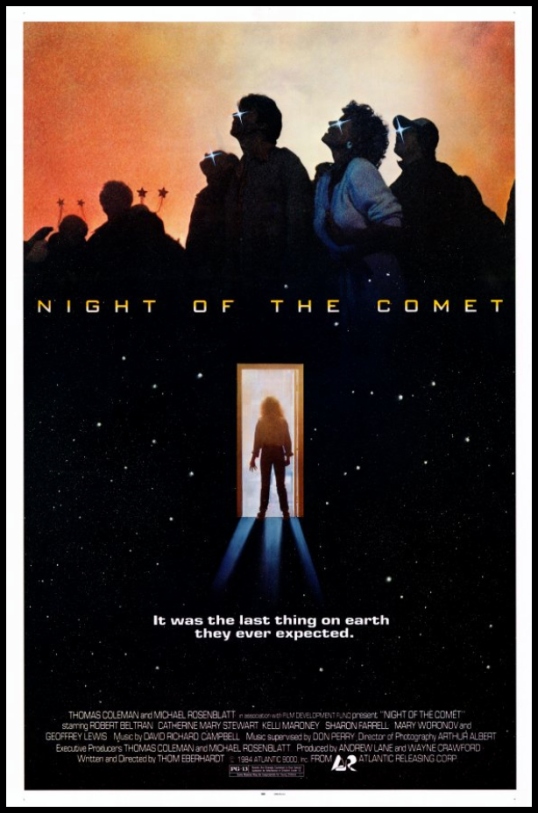
Horror Film Review: Night of the Comet (dir by Thom Eberhardt)


The 1984 film, Night of the Comet, begins with the end.

The end of the world, that is!

When the Earth passes through the tail of a comet, the end result is that the majority of the world’s population is reduced to red dust.  Those who are exposed to the comet but not turned immediately into dust face an even worse fate.  They are transformed into mindless zombies.  Fortunately, 18 year-old Reggie (Catherine Mary Stewart) and her 16 year-old sister, Sam (Kelli Maroney), both managed to avoid getting exposed.  Sam was in a steel shed, hiding from their abusive stepmother.  Reggie was in a theater projection room with her boyfriend.  When Reggie and Sam wake up in the morning to discover that they are two of the few people left alive on the planet, they do what anyone would do.

They go to the mall!

Which is probably the same thing that me and my sisters would have done if we had found ourselves in a similar situation.  That’s one reason why Night of the Comet holds up so well.  It’s one of the few films to be honest about how most people would probably react to the end of the world.  Instead of giving a big dramatic monologue or having a breakdown or getting into a fight about who is to blame and what it all means, Reggie and Sam try to have a little fun.  Of course, they also grab some guns while they’re at the mall.  They’re not stupid.  They know the situation is grim and they need to be prepared.  But still, there’s no reason why they shouldn’t try on all the clothes that they previously would not have been able to afford.  And why shouldn’t they treat the mall as their own personal playground?  They’re young and they’ve survived the end of the world.  They deserve to enjoy themselves.

Of course, just because Reggie and Sam survived, that doesn’t mean the world is a safe place.  Along with the zombies, there’s also a crazed group of former stockboys who now view the mall as being their own personal kingdom.  And then there’s the scientists, who claim that they’re benevolent but who are actually looking for healthy specimens on which they  can experiment.

Night of the Comet is a terrifically fun horror movie, a real treat for anyone who has ever imagined what they would do if they were among the last people on Earth.  Catherine Mary Stewart, Kelli Maroney, and Robert Beltran (who plays another survivor) brings a lot of energy to their likable roles while Mary Woronov and Geoffrey Lewis are properly menacing as the two main scientists.  The zombies, with their crazed eyes and their decaying faces, are genuinely frightening.  Director Thom Eberhardt wisely doesn’t overuse the zombies.  Indeed, the whole point of the film is that the world is now nearly empty of people, whether they’re zombies or not.  But because the zombies aren’t present all of the time, it makes it easy to forget about them and it also makes all the more frightening when they suddenly show up.

Night of the Comet is an enjoyable mix of horror and comedy, one that holds up well nearly 40 years after it was first released.

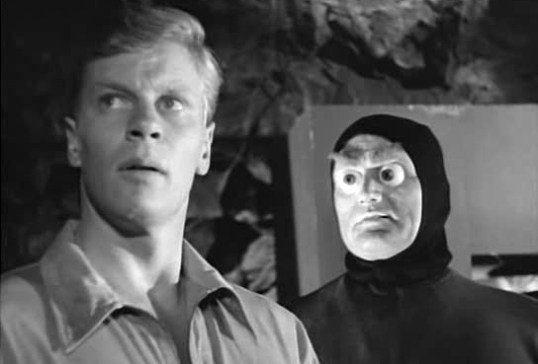
Horror Film Review: Killers From Space (dir by W. Lee Wilder)


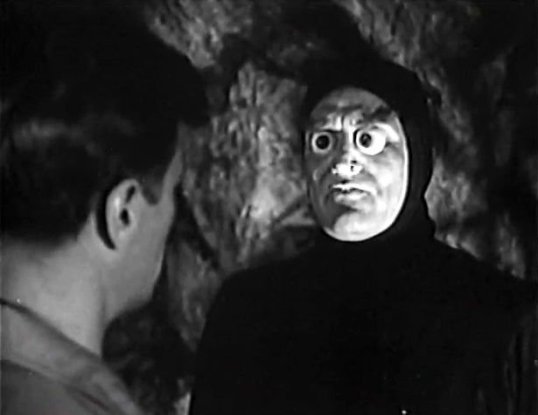
This is the one with the googly-eyed aliens.

Killers From Space was released in 1954 and, in many ways, it’s typical of the sci-fi B-movies that were released at the time. A nuclear scientist (Peter Graves) crashes the airplane that he’s flying. Everyone thinks that he’s dead but, a day later, he shows up at the army base. He says he can’t remember anything about the crash but once he’s put under hypnosis, he remembers being abducted by a bunch of aliens. No one believes his story but Graves knows what happened and he’s determined to thwart the aliens before they can sap away all of Earth’s energy. And by Earth, I mean America because this film is from 1954 and every character in the movie understands that there’s only one nation that matters!

With a running time of only 70 minutes, it’s a standard alien invasion flick. It’s perhaps a bit distinguished by the presence of Peter Graves, who handles his role with dignity.  Graves was one of those actors who could deliver even the most ludicrous dialogue with a certain amount of gravitas and the film certainly gives him plenty of chances to do just that.  Graves has the perfect deep, resonant establishment voice.  Just the sound of it makes the viewer think of America.  As such, there’s something undeniably fun about him deploying that voice for a film about an invasion of googly-eyed aliens.  And the film is also somewhat notorious for being one of the many B-movie to be directed by Lee Wilder, the brother of Billy Wilder.  Billy Wilder not only perfected the modern comedy but he also made some of the most important film noirs ever made.  He was a master of every genre and someone who inspired countless filmmakers.  He directed witty masterpieces like Double Indemnity and Sunset Boulevard and The Apartment.  Billy Wilder made the first major film about alcoholism, The Lost Weekend. Billy Wilder won Oscars and competed at Cannes. Lee Wilder made movies like Killers From Space.  The Cannes elitists never invited Lee Wilder to their festival and, watching his films, one gets the feeling that it was the festival’s lost.  Ironically, both directors made films that continue to intrigue viewers, though for very different reasons.  Billy Wilder gave us an amoral Hollywood screenwriter narrating a film from beyond the grave.  Lee Wilder gave us googly-eyed aliens.  And true film lovers love both of them for their entertaining contributions to world cinema.

With all that in mind, the main thing that people remember about Killers From Outer Space are the aliens and …. well, who can blame them? Seriously, look at them!

I mean, obviously they’re just big googly eyes and half the time, they don’t even fit correctly. You can probably buy eyes like that for yourself if you really wanted to. But still, the image of those big eyed aliens is undeniably creepy! You may quickly forget most of what happens in Killers From Space. It’s not that memorable of a film, to be honest. But you will never forget those eyes!

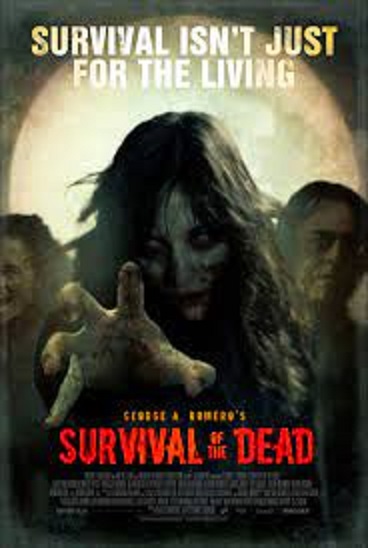
The TSL’s Horror Grindhouse: Survival of the Dead (dir by George Romero)


Sitting off the coast of Delaware, Plum Island seems like the perfect place to live. The people are friendly. The town is small and quaint but definitely inviting. There are plenty of horses, for those who like to ride. The island’s one mailman is a welcome sight, dropping off mail everyday and giving everyone a friendly wave.

The only problem with Plum Island is that, as pretty as it may be, it is also the home to two feuding Irish families. Patrick O’Flynn (Kenneth Welsh) and Seamus Muldoon (Richard Fitzpatrick) have been enemies for as long as anyone can remember. Their feud has gone on for so long that its doubtful anyone even know what started it all. The two families have an uneasy peace up until the breakout of the zombie apocalypse. The O’Flynns want to kill every zombie that shows up on the island. The Muldoons, on the other hand, want to keep the zombies as pets and workers until a cure for their condition can be found. Eventually, Patrick O’Flynn turns out to be so reckless in his mission to destroy the undead that he’s exiled from the island. Even his own daughter, Janet (Kathleen Munroe), supports sending Patrick off to the mainland.

However, no sooner has Patrick been exiled then he hooks up with a bunch of AWOL National Guardsmen, who are weary of spending the rest of their days chasing the undead. Patrick leads them back to Plum Island, hoping to use them to destroy the the Muldoons forever.

Released in 2010, Survival of the Dead is both the final entry in George Romero’s Dead films (which started way back in 1968 with the classic Night of the Living Dead) and it was also Romero’s last completed film as a director. (Romero died in 2017, while in pre-production on a film called Road of the Dead.) Unfortunately, Survival of the Dead was not warmly greeted by critics or audiences, many of whom felt that Romero was simply rehashing concepts that he had already fully explored in the previous Dead films.

To a certain extent, those critics have a point. There are a lot of flaws with Romero’s final film, from the obviously low budget to the inconsistent performances. (Welsh, Fitzpatrick, and Munroe are all well-cast and give good performances but the National Guardsmen are all forgettable at best.) At the same time, there’s enough weird moments in Survival of the Dead to make it watchable. Plum Island is a memorably surreal location. The undead of Plum Island continue to exhibit the same behavior in death that they did in life. The mailman still tries to deliver mail. Another zombie continues to ride her horse across the island. It’s only when they sense the living amongst them that they turn deadly. As with all of Romero’s Dead films, the living dead may be dangerous and relentless but the truly scary characters in the film are the living humans who, even in the middle of the end of the world, cannot set aside their differences long enough to work together. The film’s final shot, which suggests that it takes more than death to end a blood feud, is so striking that it makes up for a lot of the weaker moments that came before it.

In the end, the most interesting thing about Survival of the Dead is that it’s more of a western than a traditional horror movie, featuring two warring families fighting on horseback and battling to control the land. Romero often said that he felt trapped by his reputation as a horror filmmaker and that he was actually interested in all genres of film. With Survival of the Dead, Romero finally got to make a Western. The end result is uneven but still has enough interesting moments to make it worth watching.

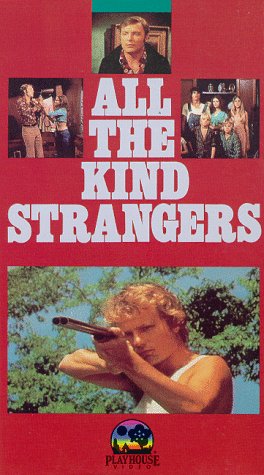
Horror Film Review: All The Kind Strangers (dir by Burt Kennedy)


This 1974 made-for-television movie opens with photojournalist Jimmy Wheeler (Stacy Keach) driving down an isolated country road.  He’s driving across America, heading towards California.  However, when he sees a young child walking on the side of the road and struggling to carry two bags of groceries, Jimmy pulls over and offers the child a ride.

That’s a big mistake.  As Jimmy soon discovers, the child lives on an isolated farmhouse in the middle of nowhere.  He resides with his six brothers and sisters.  The family is led by Peter (John Savage), the oldest sibling.  Jimmy discover that there’s only one other adult on the farm.  The children refer to her as being their mom and Carol Ann (Samantha Eggar) certainly does seem to be busy, cooking dinner and keeping the house clean.  It’s only when the children leave the kitchen that Carol Ann finally tells Jimmy the truth.  She’s not related to the children.  Instead, she is someone who made the same mistake that Jimmy did.  She gave one of the kids a ride home and she’s never been allowed to leave.

It turns out that the children’s parents died a few years ago but, because the family lives so far away from town, no one has ever noticed.  Peter has been in charge of the family but he’s reaching the point where he no longer wants to spend his entire life on the farm.  He wants to experience Mardi Gras and then visit California.  So, Peter has been sending out the children to tempt random adults to come to the house, where Peter auditions them to see if they would be good parents.  Peter has decided that Carol Ann can be the mother.  Now, he just needs to find someone to serve as the father.

Jimmy seems like a good candidates, except for the fact that he doesn’t want to spend the rest of his life in the middle of nowhere and raising a bunch of odd children.  Unfortunately, Jimmy soon discovers that it won’t be easy to escape.  The farm is guarded by a pack of dogs and Peter has a way of taking care of all the kind strangers who fail their audition….

Even though it’s only 75 minutes long, All The Kind Strangers is a bit of a slow film and often, it seems like it can’t decide whether it wants to be a straight horror film or a family melodrama.  Add to that, one of the kids is played Robby Benson, who showed up in a lot of 70s films, always playing awkward teenagers.  Benson gives such a bizarrely over the top performance that it’s hard to take him or any situation in which he’s involved seriously.  (Benson also sings the film’s easy listening theme song.)  That said, the film still manages to create and maintain an effectively creepy atmosphere and Stacy Keach, Samantha Eggar, and John Savage all give good performances.  The fact that the kids aren’t evil as much as they’re incapable of understanding the consequences of their actions actually serves to make them even creepier than the typical demented children who appear in films like this.

All The Kind Strangers has its moments, even if it doesn’t make a huge impression.

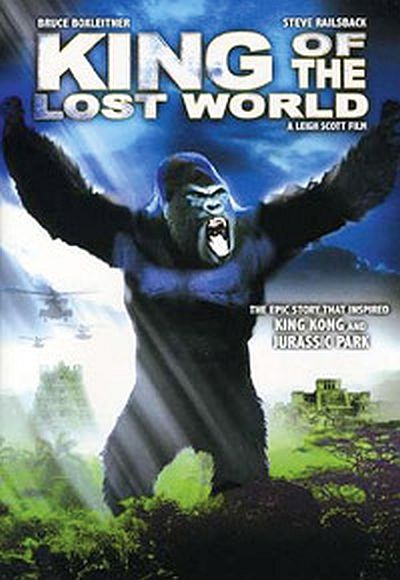
Horror Film Review: King of the Lost World (dir by Leigh Scott)


Produced by the Asylum, this 2005 film opens with a plane crashing on a remote island.  The plane splits apart on impact, leaving the back part of the plane on the beach and the cockpit lost somewhere in the jungle.  With the reluctant help of the mysterious Lt. Challenger (Bruce Boxleitner), the survivors attempt to find the cockpit and a way to radio for help.  What they discover is that the island is not only crawling with dinosaurs and giant bugs but there’s also a really big ape lumbering about.  There are also natives, who want to sacrifice the survivors to the ape.  Apparently, a sacrifice a day keeps the ape away, which is something that’s good to know if you ever find yourself stranded on an unchartered isle.

This may sound a lot like King Kong and, definitely, the film did borrow more than a little from both those films and Jurassic Park.  However, King of the Lost World has even more in common with TV show Lost.  The scenes of the survivors on the beach and often feel as if they were lifted from the show’s pilot.  (And let’s not forget that a lot of the pilot’s action actually did center around trying to find where the plane’s cockpit had ended up.)  Lt. Challenger, who carries a mysterious briefcase with him and who refuses to explain the full details of why he’s on the island, feels like he could have been one of the enigmatic Others.  Technically, though, the film is actually an adaption of Arthur Conan Doyle’s The Lost World, which one of a series of novels that Doyle wrote about Professor Challenger and his adventures as an explorer.  Prof, Challenger, it should be said, was a bit more of a sympathetic character than Lt. Challenger.

Unfortunately, King of the Lost World doesn’t really live up to any of its influences.  The giant ape and the dinosaurs are all neat in their cheap but goofy way but they are also barely in the movie.  Instead, the majority of the movie is about people wandering through the forest and arguing about whether or not they should go left or right.  When the survivors get captured by the natives, there is a slightly fun sequence where two of them get hypnotized and “go native” but even that’s only interesting for a scene or two.  If a movie promises a giant ape, it needs to deliver the giant ape for more than a minute at the start and five minutes at the end.

Usually, I am proud and not at all ashamed to defend the Asylum and their low-budget mockbusters but King of the Lost World is not one of their better films.  The movie ended with a hint of a possible sequel but, as far as I know, it never happened.  Fortunately, even if King of the Lost World didn’t lead to a franchise, the Asylum would go on to give us the Sharknado films and a lot of other fun movies as well.