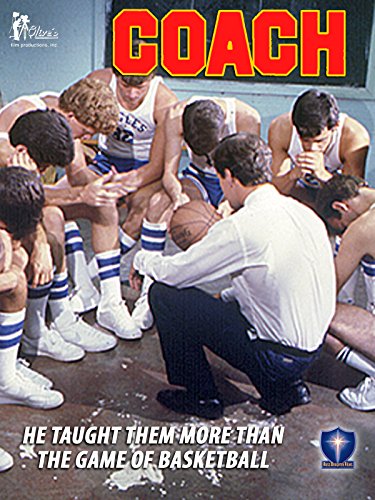
January Positivity: Coach (dir by John Taylor)


Despite the fact that I’ve regularly been watching and reviewing Hang Time, I have to admit that I really don’t know much about basketball.  In fact, I’d have to say that every time that I watch a movie or a television show about basketball, I learn something new.

For instance, when I watched Space Jam 2, I discovered that basketball is the only thing holding the multiverse together.

When I watched Hoosiers, I discovered that basketball is also the only thing holding Indiana together.

From watching the basketball episode of Saved By The Bell, I discovered that Zack Morris was apparently the best basketball player in California, despite having never been seen playing or even talking about the game in the past.  I always thought you had to be extremely tall to play basketball but I guess I was wrong.

From watching Hang Time, I’ve discovered that you only need one good player to repeatedly win the state championship.

And from 1983’s Coach, I discovered that high school basketball coaches can quit whenever they want to.  Apparently, they can just voluntarily leave the court and refuse to coach the team and it’s not a violation of a contract or anything else that you might expect it to be.  Of course, the team in Coach is so bad that they’ve only won two games in three years!  The players are all seniors and they’re all about to graduate without knowing the thrill of winning the state championship.  Every coach that they’ve had has walked off the court.  Not even the principal of their school cares whether or not they win.  In fact, he seems to prefer that they keep losing, though it’s never explained why.

Their newest coach is Philip (played by Colin Earls) and he is determined to turn them into a good team.  It’s not just that he thinks it would be good for the players to actually win a game or two before becoming adults.  It’s also that the team represents the only Christian school in the league and he feels that they owe it to God to actually try to win a game or two.  It doesn’t help that the other teams are making fun of them for being from a Christian school.  What type of Christian school doesn’t have a good basketball team!?

Uhmmm …. maybe the type of school that puts more importance on academics than athletics?  I mean, that always seems like a possibility.

Anyway, he gets the team into shape by encouraging them to read the Bible and to play for the team instead of playing for their own personal glory.  The best member of the team feels guilty for putting his own personal glory above the team so Philip takes him to a lecture that’s delivered by a guy who is so tall and so awkward that I can only assume that he was a real-life basketball player.  Does the team start winning?  Well, it would be a pretty depressing move if they didn’t.

Coach is an extremely low-budget film and the majority cast appears to have been amateurs.  It’s only 78 minutes long and none of the players is really allowed to develop much of an individual personality.  One player is really good.  One player has a temper that he has to control.  That’s about all we learn about them.  The team gets some help from a nerdy guy who uses a big bulky computer to scout the other teams.  For me, the computer stuff was the highlight of this film, just because everyone in Coach is so amazed by the fact that a computer has a practical use.  This film was made in 1983 and it shows!

I also found it amusing that, during the game, the computer and the guy was always hidden away in what appeared to be a boiler room.  I guess this was to keep the other teams from figuring out that computers could be used to store and analyze information.  I felt kind of bad for the guy who operated the computer, though.  While the rest of the team was playing and getting all the credit, he was essentially locked away in a secret room.

Coach is undoubtedly sincere but, aside from all the excitement over the big bulky computer, it’s a bit forgettable.  In the end, the team will always remember their friends at Hang Time and I guess that’s the important thing.


Lost Heroes: The Untold Story of Canadian Super Heroes (2014, directed by Will Pascoe)


Lost Heroes is an engrossing look at the history of Canadian super heroes.

Starting in the 1930s, Lost Heroes details how Canada’s entry into World War II also led to the first Golden Age of Canadian comic book heroes.  After the passage of the War Exchange Cultivation Act of 1940, many American products, including the comic books that were just as popular with children in Canada as they were in America, could no longer be imported to Canada.  Looking to fill the hole, Canadian publishers put out their own comic books, all featuring uniquely Canadian heroes who fought the Nazis.  Because these books were published in black-and-white, they became known as the Canadian Whites.

The first half of the documentary is about the Canadian Whites and the companies that published them.  Maple Leaf was the home to a hero who dwelled under the sea and who was known as Iron Man.  Cosmo Grant was a Batman-style scientist while Brok Windsor traveled in a canoe.  Anglo-American published the adventures of Commander Steel and Freelance, two international adventurers who aided in the Canadian war effort.  Educational Projects introduced readers to Canada Jack, an ordinary Canadian who fought crime but also taught valuable life lessons.  Most popular of all was Bell Features, which was home to Nelvana of the North (who drew her powers from the Northern Lights), Crash Carson, and Johnny Canuck.  Johnny Canuck’s super power was “being Canadian.”

The stuff about the Canadian Whites is genuinely interesting.  Jack Tremblay, one of the artists of the Golden Age, is interviewed and talks about the experience of being a 16 year-old comic book artist.  (Because of the war effort, many of the Golden Age comic books were written and illustrated by teenagers who weren’t old enough to enlist.)  Along with re-introducing some forgotten World War II super heroes, the documentary also looks at how those super heroes represented Canadian culture and how they helped readers take pride in being Canadian.

The end of World War II also brought about the end of the Golden Age of Canadian comics.  With the war over, the War Exchange Cultivation Act also came to an end and, once again, American comics could be sold in Canada.  The black-and-white Canadian comic books could not compete with the color comic books coming from the States and most of the Canadian publishers closed up shop.  The rest of the documentary deals with the periodic attempts to revive the Canadian comic book industry throughout the years.  Though Captain Canuck it found some brief success in the 70s, it ultimately could not compete with the Marvel and D.C. titles coming across the border.

Much of the second half of the documentary deals with Wolverine and Alpha Flight, both of which were created for Marvel by John Byrne.  Along with being one of the world’s most recognizable and popular super heroes, Wolverine is also Canadian and several people interviewed in the film take pride in pointing out all of the things about Wolverine that identify him as being from Canada, everything from his love of beer to his flannel shirts.  Alpha Flight is less warmly received, with many criticizing it for being more about how Americans view Canada than Canada itself.

Lost Heroes is an interesting and informative documentary.  It examines both the history of Canadian comics and also what those comic book heroes said about Canada’s national identity and its efforts to distinguish itself from its neighbor down south.  The documentary ends with the suggestion that the Canadian super heroes will rise again.  I hope they do.

January Positivity: Consider It All Joy (dir by William Mings)


The 1986 short film, Consider It All Joy, features one of my favorite scene transitions.

Newly married Claire (Bonnie Hawley) and David (Gary Costello) kiss while sitting in front of the fireplace.  One jump cut later and Claire is smiling and pregnant and David has a look on his face that says, “My boys can swim!”  That’s about as close as any faith-based film will ever get to acknowledging that two people, even two married people, have not only had sex but that they actually enjoyed having sex and that they probably had sex more than once.  Of course, it helps that Hawley and Costello had a lot of chemistry and they just seemed like they belonged together as a couple.  They’re totally believable as one of those married couples who rarely fight and yet don’t annoy their friends with their happiness.

The other thing that Consider It All Joy has is a lot of wood paneling.  I wouldn’t say that every room in this film has wood paneling but enough of them do that, as I watched, I found myself saying, “That’s a lot of wood paneling.”  But that makes sense.  This is a low-budget, indie film that was shot in the 80s.  It was designed for a very specific audience and there’s nothing particularly slick or overly stylized about it.  Watching the film, the viewer gets the feeling that the majority of it was filmed in someone’s house, as opposed to on a set.  The actors probably wore their own clothes.  In many ways, the film itself feels like a time capsule.  Until time machines are invented, watching a film like this might be the closest that one could get to witnessing the 80s firsthand.

As for the film itself, it tells the story of Claire dealing with the sudden death of David.  The majority of the film is told in flashback so we watch all of the scenes of them meeting, courting, marrying, and starting a family with a sense of dread.  As happy as they are, we know that it’s not going to last.  When David is laid off from his job, he refuses to get upset and instead tells his boss that he knows everything will work out because he has faith and that God will provide.  Everyone at the office is apparently really impressed with David’s good attitude.  Of course, they’re not impressed enough to keep him around and to continue to pay his salary.  Personally, I think they’re getting off easy but then again, everything that I know about downsizing and corporate America comes from the second season of The Office.

David does eventually find a new job and it turns out to be a far better one than he previously had!  However, no sooner has David left for work than the police show up at the door and tell Claire that he’s been killed in an auto accident.  At first, Claire is angry but then she remembers David’s faith and she decides to consider it all joy.  The film ends with her witnessing to one of David’s friends, with the suggestion being that Claire might not be single for long!

As I’ve said before, I have a weakness for low-budget indie films, especially ones that pretty much epitomize the era in which it was made.  This is pretty earnest film and I doubt that it will change the minds of anyone who doesn’t already agree with its message but Bonnie Hawley and Gary Costello are a believable couple and the film couldn’t be more 80s if it tried.

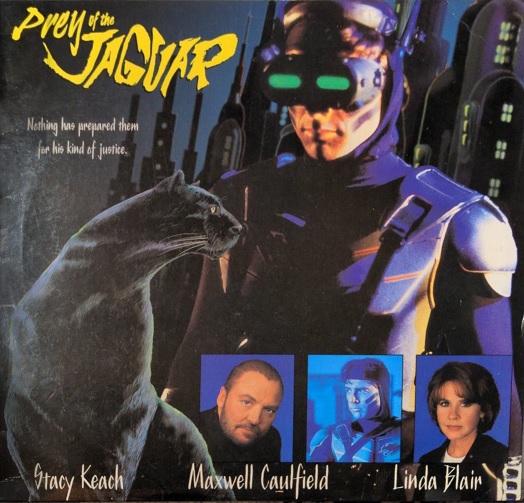
Prey of the Jaguar (1996, directed by David DeCoteau)


Derek Leigh (Maxwell Caulfield) is a former Special Ops agent whose son and wife are killed by a drug lord (Trevor Goddard) than Leigh helped to put behind bars.  Inspired by his dead son’s love of super heroes, Leigh puts on a purple rubber suit and learns karate from Master Yee (John Fujioka) while The Toymaker (Paul Bartel) supplies him with an arsenal of weapons.  Calling himself the Jaguar, Leigh goes after the men who killed his family.

Caulfield wears an obviously fake mustache for the first half of the film so that he can shave it off when he becomes The Jaguar.  The camera never stops spinning around.  Most of the fights look fake and the exterior of Derek’s house changes from shot-to-shot.  Stacy Keach plays a high-ranking government official but doesn’t bother to get a haircut or hide his pony tail.  Linda Blair plays a cop and sounds like she sucked helium before filming her lines.  I’m not sure what she was doing in the movie.  She may not have been sure either.  Prey of the Jaguar is a reminder of just how cheap and cruddy most super hero films were before Marvel took over Hollywood.  Of course, Derek doesn’t really have any super powers, beyond getting proficient at martial arts in record time.  He is just wearing the outfit to honor the spirit of his dead son.  That actually makes more sense than most of the Marvel origin stories.  The movie itself was too cheap to work and the actors were so disinterested that they seemed to actively be trying to make sure that there would never be a Prey of the Jaguar 2.

The most interesting thing about the film are the opening credits, which reveal that this film was executive producer by the Wolf of Wall Street himself, Jordan Belfort.

Catching Up With The Films of 2022: Emily The Criminal (dir by John Patton Ford)


An hour or so into Emily the Criminal, there’s a scene in which Emily (Aubrey Plaza) goes to what she thinks is a job interview with a prestigious ad agency.  For the second time in the film, Emily is forced to tell a potential employer that she has a felony conviction.  In this case, it doesn’t seem to matter.  Alice (Gina Gershon), the head of the agency, explains that she is looking for an intern to work in the design department.

Emily asks if Alice is asking her to take an unpaid internship.

Alice replies that everyone starts as an intern and that, if they do a great job, they might get a paid position in five to six months.

Emily asks how Alice can expect anyone to work regular hours without getting paid.

Alice replies that Emily will paid in experience.  “When I began in this industry,” Alice says, “I have no intention of just being a secretary….”

“But secretaries get paid!” Emily snaps.

Alice replies with an obviously well-rehearsed anecdote about how, when she started, there were no women in the executive office.  When Emily cuts her off again, Alice drops the Pelosiesque facade and accuses Emily of being spoiled.  When Emily tells her off before storming out of the office, you’ll want to cheer.  It doesn’t matter how you may feel about some of Emily’s earlier life decisions or Emily as a person.  When Emily calls out Alice for expecting people to work for free, you will totally be on Emily’s side.

You’ll also understand why Emily would chose to be, as the title makes clear, a criminal.

When we first meet Emily, she is a part of the gig economy, delivering food for a catering company.  There was a time when she dreamed of becoming a professional artist and living in South America.  Now, she’s just trying to figure out how to pay the huge amount of student loan debt that she owes, despite the fact that she never graduated from college.  When she learns of an opportunity to make $200 in one hour, she takes it.  As Youcef (Theo Rossi) explains it, all she has to do is use a fake credit card to buy a flat-screen TV so that Youcef and his associates can then sell it.  (In a nice bit of irony, it later turns out that Youcef is basically an unpaid intern for his cousin.)  After her first job is a success, Youcef starts to trust Emily with making bigger and riskier purchases.  Soon, Emily is making her own fake credit cards and running her own scams.  She’s still an independent contractor but now she’s making a lot more money.

Emily the Criminal takes a matter-of-fact approach to Emily’s activities.  There’s none of the condemnation that one might expect as the result of having seen other movies and, regardless of how dangerous things get for her, there’s never a moment where Emily herself reconsiders whether or not she wants to be a criminal.  The film doesn’t necessarily celebrate criminality but it does ask why Emily should care about the rules of society that obviously doesn’t care about her.  If Emily remains law-abiding, she’ll be stuck in a demeaning job and she’ll never pay off her debts, which means that she’ll just become a criminal by default.  (And, let’s be honest, we all know that all the talk about canceling student debt is just something that gets trotted out during an election year.  We’ll hear it again in 2024 and again, nothing will happen.)  As a criminal, the only risk is that Emily could be arrested or attacked by another criminal but, as the film makes clear from the start, Emily already has a criminal record so what’s one more charge?  As for being attacked, Emily continually proves herself to be tougher and far more ruthless than the other criminals around her.  Alice might brag about how she’s found success in an industry dominated by men but Emily actually does it.

Emily the Criminal is a relentlessly-paced journey through the shadows of the gig economy, a world where the only law is that everyone is looking out for themselves.  Aubrey Plaza gives a career best performance as Emily, playing her as someone who not only turns out to have a natural talent for being a criminal but who occasionally shocks herself with how ruthless she can be.  Emily may be a criminal but its hard to judge her.  It’s just a job.

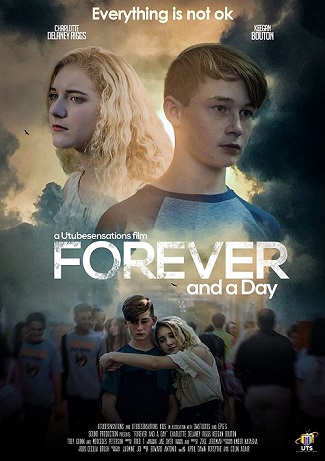
January Positivity: Forever and a Day (dir by Zeke Jeremiah)


In a small Texas town, life seems to be going as it always does.

High school freshman Daniel (Keegan Bouton) spends most of his time hanging out with his best friend, Haley (Charlotte Delaney Riggs).  They walk around town together.  They explore the woods together.  They talk about their first year in high school and which teachers they like and which they dislike.  When they see one of their classmates getting picked on by a group of bullies, Haley wants to do something to stop it while Daniel argues that there’s nothing they can do.

Besides, they have an even more pressing concern.  Haley’s mother (Mercedes Peterson) has begun to flirt with Daniel’s father (Trey Guinn)!  In a well-written and well-acted scene, they sit in a car and watch as Haley’s mom talks to Daniel’s dad and both of them discuss the things that their parents do while flirting, just to watch in silent horror as their parents proceed to do every one of those things.  Though they may be best friends, they’re still a little bit creeped out by the idea of their parents dating.  Daniel, especially, still thinks that his father and mother might someday get back together.

From the start, the viewer is aware that something tragic is going to happen.  The town is too perfect and Haley and Daniel’s friendship is too heartfelt for there not to be a tragedy waiting around the corner.  And, from the minute we see poor Colby (Holdan Mallouf) getting pushed around by Travis (Blaze Freeman) and his gang, we can pretty much guess what that tragedy will involve.  It’s just a question of who, amongst the character that we’ve met, will be unlucky enough to be in the hallway when Colby finally snaps.

It may sounds melodramatic but, unfortunately, it’s also an honest portrayal of the fears that everyone has when it now comes to high school.  School shooting are a tragedy that few of us can get our heads around, which is one reason why people are often more interested in using them to score political points than to actually discuss the events that led up to each shooting and the culture that produced them.  This film does a good job of examining the aftermath of the shooting and the struggle of people to understand both how it could have happened and how it could have been prevented.  This film emphasizes love and faith as a way to both deal with tragedy and to combat the anger and depression that leads to it happening.  No one was willing to stand up for Colby and the only person who shows any real concern for him was led away by her best friend.

(I do have to say that I cringe a little bit whenever school shooters are portrayed as just being stereotypical nerds who snapped because the bullies wouldn’t leave them alone.  That describes a few school shooter but it certainly doesn’t describe shooters like Nikolas Cruz, Adam Lanza, or the two Columbine shooters.  Portraying any kid who is picked on as being a ticking time bomb just further stigmatizes the socially awkward.)

Forever and a Day is a low-budget film and it’s hardly flawless.  (I could have done without the narrator.)  But, at the same time, it deals with a difficult subject with emotional honesty and the cast does a good job inhabiting their characters.  In the end, it’s a film that asks all of us to treat each other with kindness and there’s nothing wrong with that.

McBain (1991, directed by James Glickenhaus)


In the year 1973, Bobby McBain (Christopher Walken) was an American POW, fighting for his life in a North Vietnamese prison camp that was run by a general so evil that he wore a necklace of human ears.  Luckily, on the last day of the war, McBain was rescued by Roberto Santos (Chick Vennerra).  When Bobby asked how he could ever repay Santos, Santos gave him half of a hundred dollar bill and told him that someday, Santos would give him the other half.  McBain swears that he will be ready when the day comes to get the other half.  I guess he’s like Caine in Kung Fu, waiting for the chance to snatch the pebble from his master’s hand.

15 years later, McBain is a welder in New York.  One day, while sitting in a bar, he watches as Santos is executed on live television after a failed attempt to overthrow the dictator of Colombia.  Shortly afterwards, McBain is approached by Santos’s sister (Maria Conchita Alonzo), who asks McBain to help her finish Santos’s revolution.  McBain tells her a long story about attending Woodstock and then reunites with his Vietnam War buddies, Frank (Michael Ironside!), Eastland (Steve James), Dr. Dalton (Jay Patterson), and Gil (Thomas G. Waites).  After killing a bunch of drug dealers, stealing their money, and harassing Luis Guzman, the gang heads for Colombia.

I wonder how many people have watched this movie over the years with the expectation that it would be a live action version of the famous Rainier Wolfcastle film that was featured in several episodes of The Simpsons.  Unfortunately, this movie has nothing to do with the Simpsons version of McBain.  (Sorry, no “Bye, book.”)  Instead, it’s just another strange and overlong action film from director James Glickenhaus.  The film mixes scene of total carnage with dialogue that often seems to be going off on a totally unrelated tangent, like McBain’s musings about what Woodstock ultimately stood for.  Walken doesn’t seem to be acting as much as he’s parodying his own eccentric image.  Walken takes all of his usual quirks and trademark vocal tics and turns them up to 11 for this movie.

Even though the movie is twenty minutes too long, it still feels like scenes are missing.  Alonzo leaves Colombia on a mule and then is suddenly in New York.  (The mule is nowhere to be seen.)  We don’t actually see Walken recruiting the majority of his team.  Instead, they just show up in his house.  Once the action moves to Colombia, it turns out that overthrowing the government is much simpler than it looks.  While the rebels lay down their lives while attacking the palace, McBain and his crew pretty much stroll through the movie without receiving even a scratch.  Maybe welders should be put in charge of all of America’s foreign policy adventures.  It couldn’t hurt.

With its hole-filled plot and confusingly edited combat scenes, McBain isn’t great but 80s action enthusiasts should enjoy seeing Michael Ironside and Steve James doing their thing.  Others will want to see it just for Christopher Walken’s characteristically odd performance.  He may not be Rainier Wolfcastle but, for this movie, Christopher Walken is McBain.

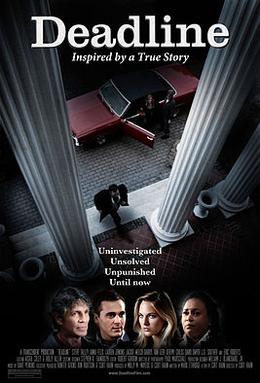
The Eric Roberts Collection: Deadline (dir by Curt Hahn)


In the year 1993, a black teenager named Wallace Sampson was shot and murdered in the small town of Amos, Alabama.  The murderer was never caught.  In fact, according to most people in the town, the murder was never even really investigated.  The town’s white leaders, many of whom were members of the Ku Klux Klan, swept the murder under the rug.

20 years later, Trey Hall (Lauren Jenkins) is determined to solve Wallace’s murder.  Trey may be the daughter of the richest man in town but, as she puts it, she was practically raised by Wallace’s mother, Mary Pell Sampson (Jackie Welch).  Mary Pell Sampson is the long-time maid of Trey’s father, Everett Hall (David Dwyer).  When journalist Matt Harper (Steve Talley) comes down from Tennessee to do a story on another murder, Trey tells him that he should totally ditch the recent murder and instead investigate the older murder.  Matt, who is currently in the process of being cancelled due to a poorly written headline, decides that he wants to investigate and report on the death of Wallace Sampson.  His editor agrees, on the condition that he work with the older and more cynical Ronnie Bullock (Eric Roberts).

While investigating Wallace’s murder, Matt has to deal with his own very messy personal life.  His fiancée, Delana (Anna Felix), wants to call off the wedding because Matt is too obsessed with work.  His father (J.D. Souther) is dying of cancer but can still find the time to scold Matt for ending a sentence with a preposition.  Finally, Matt is not happy about having work with Ronnie, who is an old school reporter who travels with a gun and who has little use for the demands of society.  When Matt accuses Ronnie of being racist, Ronnie angrily corrects him.  When Matt accuses Ronnie of being sexist, Ronnie just shrugs.  It’s really the type of thing that only Eric Roberts could pull off.

Deadline is loosely based on a true story and it’s certainly a well-intentioned film.  Unfortunately, the majority of the performances feel amateurish, the pace is rather slow, and the bad guys are so obviously evil that the film itself feels a bit cartoonish.  (If only all murderers were as easy to pick out as they are in this film….)  It suffers from the same problem that afflicts a lot of films about civil rights in the South, in that the black characters are often pushed to the background and left undeveloped while the film focuses on the nobility of rich white liberals.  Again, the intentions are good but the execution leaves a bit to be desired.

That said, Eric Roberts is well-cast as Ronnie Bullock and, whenever he’s onscreen, he brings some much-needed energy to the film.  In some ways, Ronnie is a cliché.  He’s the cynical, politically incorrect journalist who, deep down, still believes in doing the right thing.  But Roberts manages to bring some nuance to both the character and the film.  The viewer will be happy every time that Roberts steps into a scene.  Eric Roberts’s performance is the highlight of the film and the best reason to see Deadline.

Previous Eric Roberts Films That We Have Reviewed:

  1. Star 80 (1983)
  2. Blood Red (1989)
  3. The Ambulance (1990)
  4. The Lost Capone (1990)
  5. Love, Cheat, & Steal (1993)
  6. Love Is A Gun (1994)
  7. Sensation (1994)
  8. Doctor Who (1996)
  9. Most Wanted (1997)
  10. Mr. Brightside (2004)
  11. Six: The Mark Unleased (2004)
  12. Hey You (2006)
  13. In The Blink of an Eye (2009)
  14. The Expendables (2010) 
  15. Sharktopus (2010)
  16. Miss Atomic Bomb (2012)
  17. Lovelace (2013)
  18. Self-Storage (2013)
  19. Inherent Vice (2014)
  20. Rumors of War (2014)
  21. A Fatal Obsession (2015)
  22. Stalked By My Doctor (2015)
  23. Stalked By My Doctor: The Return (2016)
  24. The Wrong Roommate (2016)
  25. Stalked By My Doctor: Patient’s Revenge (2018)
  26. Monster Island (2019)
  27. Seven Deadly Sins (2019)
  28. Stalked By My Doctor: A Sleepwalker’s Nightmare (2019)
  29. The Wrong Mommy (2019)
  30. Her Deadly Groom (2020)
  31. Top Gunner (2020)
  32. Just What The Doctor Ordered (2021)
  33. Killer Advice (2021)
  34. The Poltergeist Diaries (2021)
  35. My Dinner With Eric (2022)

Catching Up With The Films of 2022: Wrong Place (dir by Mike Burns)


After his wife is killed in a car crash, former police chief Frank Richards (Bruce Willis) takes a job as a security guard for a small town convenience store.  It’s not really a demanding job.  As we see in one montage, Frank spends most of his time playing solitaire.  However, one evening, Frank steps out back to have a cigar and he just happens to catch meth dealer Virgil Brown (Massi Furlan) executing a man.  Frank promptly disarms and arrest Virgil.

Virgil’s son, Jake (Michael Sirow), is not happy about this.  Knowing that Frank is the only eyewitness who can testify against Virgil at his trail, Jake heads off to kill Frank.  However, when Jake arrives at Frank’s cabin, he discovers that it is inhabited by Frank’s daughter, Chloe (Ashley Greene), and her girlfriend, Tammy (Stacey Danger).  Jake tries to take Chloe and Tammy hostage but Chloe turns out to be a lot tougher than he assumed.  Chloe is waiting to hear whether or not she’s cancer-free and, as she explains to Jake, she has nothing to lose by risking her life and fighting him.  And while Jake is certainly dangerous and quick to fire his gun, he’s also not the most competent criminal to ever come out of the backwoods of Alabama.  If you’re guessing that this leads to several scenes of various characters chasing each other through the woods and shooting at each other, congratulations!  You’re right!

This was one of the last films that Willis made before announcing his retirement last year.  Watching the film, it’s easy to see that Willis was struggling a bit.  There’s none of the swagger that viewers typically associate with Bruce Willis and he delivers many of his lines in a flat monotone.  That said, this film is still a better showcase for Willis than American Siege or Fortress: Sniper’s Eye.  Indeed, in the early scenes with his soon-to-be-deceased wife, Willis feels a bit like the Willis of old.  Even if Bruce Willis was struggling to remember his lines, his eyes still revealed a lot of emotional depth.  In the scenes where he and his wife discuss getting older and mention how scary it is to be sick, the dialogue carries an extra resonance.  If nothing else, the role of a decent man who will do anything to protect his family seems like a more appropriate final role for Willis than the various crime bosses that he played in some of his other ’22 films.

Unfortunately, Wrong Place gets bogged down with the whole hostage subplot.  There’s only so much time that you can spend watching people yell at each other before you lose interest.  Ashley Greene, Stacey Danger, and Michael Sirow all give convincing performances but the film itself falls into a rut.  When Jake is first introduced, he seems like he could be an interesting villain.  He doesn’t really know what he’s doing but he’s determined to impress his father.  (Sadly, it’s pretty obvious that Jake’s father will never be impressed with anything Jake does, regardless of what it may be.)  Jake’s incompetence makes him even more dangerous because it also makes him impulsive and quick to anger.  Unfortunately, the film doesn’t do much with his character.  Once the action kicks in, he just become another generic backwoods villain.

I get the feeling that the director meant for Wrong Place to be more than just another action film.  The film moves at its own deliberate pace and, even after the hostage situation has concluded, the film still goes on for another ten minutes.  One gets the feeling that the director wanted to make a sensitive film about the relationship between a headstrong daughter and her old-fashioned father.  But, because this film was also a low-budget action film, he also had to toss in some backwoods meth dealers.  The film has some moments of unexpected emotional honesty, many of them curtesy of Ashley Greene.  But, in the end, it keeps getting bogged down with endless scenes of people running through the woods with guns.  The end result is an uneven film but at least Willis gets to play a hero again.

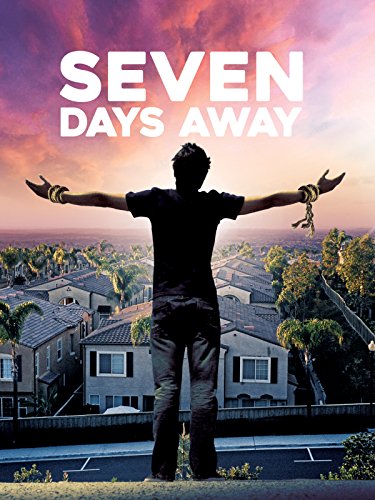
January Positivity: Seven Days Away (dir by Josiah David Warren)


Clayton (Josiah David Warren) is the religious kid who everyone dreads getting in to a conversation with.  He’s the type of kid who accepts a ride from one of his friends and then starts to give everyone a hard time for drinking and driving and….

Actually, wait a minute …. drinking and driving sucks!

So, Clayton is actually totally correct to tell his friends to put down the beer cans while they’re driving.  They, of course, just laugh him off and call him “church boy.”  One accident later, Clayton’s friend is dead and Clayton is more determined than ever to go down to Mexico and do missionary work.  Everyone tells him that it’s dangerous to go down to Mexico.  Everyone knows that Clayton’s father died while serving as a missionary.  But Clayton and another group of friends still head down to Mexico.

Unfortunately, it turns out that Clayton’s other friends may not be drunk drivers but they’re still not all that interested in evangelizing in Mexico.  They especially get angry when Clayton insists that they accompany him to the local church.  Clayton finally gets annoyed with all of them and he decides to wander off on his own.  Of course, that’s always a mistake.  No sooner has Clayton turned down the wrong street than he’s been kidnapped.

Clayton finds himself tied up in an old barn and being held prisoner by a group of human traffickers.  They’re convinced that Clayton is rich and they continually call his mother and demand that she send them some money.  Meanwhile, Clayton soon realizes that he’s not the only person behind held prisoner in the barn.  He also comes to realize that the desert surrounding the barn is full of dead bodies.

Noticing that his kidnappers are always drinking and smoking, Clayton tells them that they shouldn’t.  When they demand to know why not, Clayton quotes Corinthians.  That goes over about as well as you might expect.

Seven Days Away attempts to mix the faith-based genre with the action genre.  When Clayton isn’t preaching or quoting the Bible, he’s running through the desert and trying not to get shot.  Unfortunately, the film doesn’t really work as an action film.  The film uses some hand-held camerawork to try to generate some suspense but, at this point, the whole hand-held thing is such a cliché that it actually inspires more laughs than gasps of terror.  The soundtrack is remarkably muddy and it’s often difficult to understand just what exactly anyone is saying.  Even by the standards of the low-budget faith genre, the acting is amateurish.  As a film, it just doesn’t come together.  The fact that the film’s director also played the lead role was perhaps a bit of the problem.  It’s hard not to feel the film would have had a better chance at success if he had just concentrated on doing one thing as opposed to everything.

I guess the best thing you can say about a film like this is that it was well-intentioned.  Watching it brought back memories of the days leading up to Spring Break, when the campus would be full of stories about students who got drunk while partying in Mexico and subsequently vanished.  I have to admit that I never had a lot of sympathy for the students in those stories.  Sometimes, you just have to use a little common sense.