Retro Television Reviews: Under the Influence (Dir by Thomas Carter)


Welcome to Retro Television Reviews, a feature where we review some of our favorite and least favorite shows of the past!  On Sundays, I will be reviewing the made-for-television movies that used to be a primetime mainstay.  Today’s film is 1986’s Under the Influence!  It  can be viewed on YouTube!

Noah Talbot (Andy Griffith) is an upstanding member of the community.  He owns a hardware store.  He has a large family.  He’s known as a gruff but folky storyteller.  He’s a deacon in his church and helps to collect the offering every Sunday.

He’s also a drunk and a bit of a bully.  His family walks on eggshells around him, fearful of setting him off on one of his benders.  He occasionally spends the night in jail, arrested for trying to drive drunk.  Even when he gets bailed out, his first instinct is to go back to the bar.  The folks at the bar love him, don’t you know.  The people at the bar are always happy to see him and never bother him about whether he’s had too much.  The people at the bar never let him down the way that he feels his family has left him down.

The members of his family each cope in their own individual way.  Noah’s wife (Joyce Van Patten) is in denial and spends a lot of her time popping pills.  His oldest daughter, Ann (Season Hubley), is driven to succeed at work and spends all of her time both hating her father and desperately hoping for his approval.  (When she tells him that she got a raise at work, he berates her for only getting a 6% increase in her salary.  “That’s just a cost of living increase!” he snaps at her.)  His eldest son, Stephen (Paul Provenza), fled to Los Angeles and is trying to make a career as stand-up comedian.  (“You’re no David Letterman,” Noah tells him.)  His youngest daughter, Terri (Dana Anderson), secretly replaces Noah’s liquor with water and food-coloring.  And his youngest son, Eddie (Keanu Reeves), is becoming an alcoholic himself.

Having read all that, you may be wondering just how exactly Keanu Reeves could be the son of Andy Griffith and it’s a fair question.  This was one Keanu Reeves’s first acting roles and he does a pretty good job in the role of Eddie.  That said, he looks so totally different from both Andy Griffith and Joyce Van Patten and the actors playing his siblings that I was half-expecting someone to mention that Eddie had been adopted.  Then again, Paul Provenza doesn’t really bear much of a resemblance to the actors playing his parents either.  Dana Anderson and Season Hubley do, at least, look like sisters.

Lack of family-resemblance aside, all of the actors in Under the Influence do a good job of inhabiting their characters.  For those who are used to seeing Andy Griffith playing friendly Southerners in reruns of The Andy Griffith Show and Matlock, it’s shocking and a little disturbing to see him playing an abusive, alcoholic jerk in Under the Influence.  Noah is someone who would not only destroy his own family to get a drink but who would then blame them for it happening in the first place.  Noah may be under the influence of alcohol but the entire family is suffering because they’re under the influence of Noah.  By the time Noah is spitting up blood and demanding that his youngest son sneak liquor into his hospital room, the viewer knows there is no hope for Noah but hopefully, his family will escape.

It doesn’t make for a particularly happy movie but, speaking as someone who grew up in an alcoholic household, I can attest that it does make for an honest portrayal of what addiction does not just to the addict but also to the people around the addict.  I cringed in sympathy through nearly the entire film, especially as I watched three of the four children react in the same ways that I did.  (Unlike Eddie, I never became much of a drinker and instead developed an aversion to alcohol in general.)  It’s a film that feels real and one’s heart aches for the entire family.  If it could happen to Andy Griffith, it could happen to anyone.

Film Review: Purple Rain (dir by Albert Magnoli)


“Prince could actually act.”

That was my main reaction to watching the 1984 film, Purple Rain, a few nights ago.  Over the years, there have been a lot of music stars who have attempted to make the transition to acting.  Some have been more successful than others.  While some have stuck to playing versions of themselves, others have attempted to become actual character actors and the end results have often been mixed.  Being a strong stage performer does not neccesarily mean that person is automatically going to be a convincing film actor and the history of the movies is full of famous singers whose personality seemed to evaporate as soon as they had to act for the cameras and try to sound convincing while reciting dialogue.  Taylor Swift has built up a strong and incredibly loyal fanbase but you wouldn’t necessarily believe that she was one of the world’s biggest stars if you only knew her from her wan and bland performances in Cats and Amsterdam.  Indeed, while watching her in Amsterdam, it’s kind of hard not to be thankful when that car drives up and brings her performance to an end.

Prince, on the other hand, could truly act.

In Purple Rain, he plays The Kid.  The Kid is an enigmatic musician living in Minneapolis, Minnesota.  He’s the front man of a band called The Revolution and he sings songs that are, at times, almost disturbingly personal.  The Kid rides a purple motorcycle and he’s one of those musicians who is driven to record almost every sound that he hears.  (At one point, The Kid listens to a recording of an unidentified woman sobbing.  Who exactly the woman was or why she was crying are questions that are never answered, though I think it’s possible it was supposed to be the Kid’s mother.)  He performs to escape from the scars of his upbringing.  His father (Clarence Williams III), a failed musician, regularly beats his mother (Olga Karlatos, who memorably lost an eye in Lucio Fulci’s Zombi 2).  No one can deny The Kid’s talent but he’s also known for being a bit of a control freak and the other members of the Revolution sometimes feel that he’s not willing to give them the credit and opportunities that they deserve and….

Okay, obviously there are some similarities between The Kid and the man playing him.  Purple Rain was Prince’s first film and his first acting role and it makes sense that he would want to play a character in a situation that he was familiar with.  But that still doesn’t change the fact that Prince gives an excellent and charismatic performance in the lead role.  Unlike so many other singers-turned-actors, he doesn’t lose his spark when he has to remember his lines.  His presence doesn’t evaporate when the camera is turned on him.  Instead, if anything, Price feels even more natural off-stage than on.  Whether the Kid is being playful or serious, driven or defeated, Prince is never less than convincing.  Yes, the audience never forgets that they’re watching Prince.  But, at the same time, the Kid comes to life as an individual character with his own life and problems and personality separate of the actor who is playing him.

As for the film’s plot, it’s a fairly simple one.  The Revolution is one of three bands that hold down the house band slot at the First Avenue nightclub.  The Kid’s rival, Morris Day (played by Morris Day), plots to replace the Revolution by putting together an all-girl group called Apollonia Six.  Apollonia Six is led by Apollonia (Apollonia Kotero), who is the Kid’s girlfriend.  As Morris explains it, the Kid is too wrapped up in himself to help out Apollonia or the Revolution’s Wendy and Lisa.

And Morris Day has a point.  As soon as Apollonia tells the Kid that she’s going to be working with Morris, the Kid responds by striking her.  It’s a shocking scene but, as the film shows, it’s all the Kid learned at the hands of his father.  It’s only after a personal tragedy that the Kid starts to realize that he does not have to be just like his father.  That said, let us hope that the Kid invested in some therapy and some anger management courses after the end credits rolled.

As a character, the Kid would be unbearable if not for the strength and charm of Prince’s performance.  Prince is amazing when he performs on stage and the film’s soundtrack still holds up but what makes the film work are the moments when Prince shows us the Kid’s vulnerable side.  Self-loathing is not an easy feeling to play and it’s an even more difficult feeling to make sympathetic but Prince does both.  The Kid knows that he’s self-destructive and immature but he’s also sincere in his desire to be better than his past. The film leaves you to wonder if he’ll succeed.

Personally, I really hope he did.

The TSL Grindhouse: Exterminator 2 (dir by Mark Buntzman)


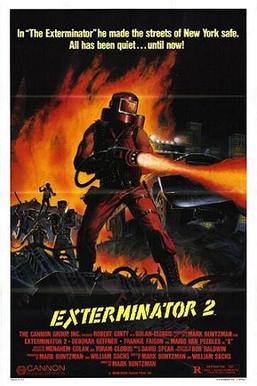
Four years after the end of the first Exterminator, the man they drove too far is driven too far again….

As you may remember, the first Exterminator ended with the CIA shooting vigilante John Eastland (Robert Ginty) because Eastland’s anti-crime activities were somehow making the President look bad.  The wounded Eastland fell into the Hudson River.  “Washington will be pleased,” the CIA agent said to the gunman.  However, the film’s final shot revealed that Eastland had survived his plunge.

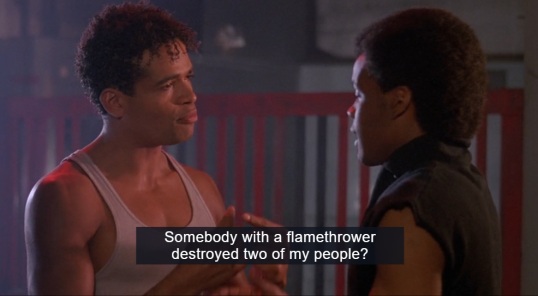
1984’s Exterminator 2 opens with Eastland returning to New York City.  He’s got a small apartment and a police scanner and when he hears a report that an elderly couple is being menaced by a group of thugs, he puts on a welding mask and uses his flame thrower to set the criminals on fire.  Of course, he doesn’t actually arrive in time to save the old couple from getting shot and killed.  Just because Eastland has decided to become a vigilante, that doesn’t mean that he’s particularly good at it.

The first Exterminator was a grim and gritty thriller that took itself very seriously.  In fact, one could argue that it took itself a bit too seriously.  Exterminator 2, which was produced by Cannon Films, takes a slightly different approach.  This is obvious as soon as Mario Van Peebles shows up as X, a cult leader who is looking to take over the New York drug trade.  Van Peebles, with his model good looks and his quick smile, is not exactly the most intimidating of villains.  And X is not exactly the most brilliant of bad guys.  For one thing, he drives a car with a big red X spray painted on one of the doors, which doesn’t seem to be the smartest thing to do when you have both the police and crazed vigilante hunting for you.

Fortunately, for X, John Eastland is easily distracted.  After he sets a few people on fire, he seems to lose interest in actually being a vigilante and instead, a large portion of the film is taken up with him getting a job collecting garbage with his friend, Be Gee (Frankie Fasion).  (Much like the previous film’s Michael Jefferson, Be Gree served with Eastland in Nam.)  Eastland also meets and falls in love with a dancer named Caroline (Deborah Geffner).  Unfortunately, a trip to Central Park leads to Caroline getting attacked by a bunch of X’s followers.  With Caroline in a wheelchair, Eastland has little choice but to pick up his flame thrower and transform his garbage truck into a tank of destruction….

Exterminator 2‘s production was a troubled one.  Director Mark Buntzman was one of the producers of the first Exterminator and apparently, Cannon disliked his first cut of Exterminator 2.  Director William Sachs (who was Cannon’s resident “film doctor”) was brought in to do extensive reshoots in Los Angeles.  Unfortunately, by the time Sachs was brought in, Robert Ginty had already moved on to another project and Sachs was forced to use his stunt double for any scenes involving Eastland.  (This is one reason why Eastland spends much of the film wearing a welder’s mask.)  Also because of Ginty’s absence, Sachs ended up adding a lot of scenes that focused on Van Peebles’s performance as X, with the end result being that the film often seems to be more about X and his gang than it is about Eastland and his hunt for revenge.  (Unfortunately, this also led to a lot of unresolved subplots, including one in which X orders one of his roller skating henchman to kidnap a woman off the street so she can be used to test a new batch of heroin.)  Many of the scenes featuring Ginty have a totally different feel to them from the scenes featuring Van Peebles and Ginty’s stunt double.

The end result is a film that really doesn’t have any sort of narrative momentum.  One is never really sure what either X or Eastland is hoping to accomplish.  Instead, they just kind of wander around until they have their final confrontation.  Along the way, there’s a few poorly edited fights but there’s also a lot of scenes that are just included to serve as filler.  As I already mentioned, Van Peebles is not a particularly menacing villain but Ginty also isn’t a particularly compelling hero.  Ginty’s goofy screen presence was nicely subverted by the grime and grit of the first Exterminator but, in the second film, he just comes across as being petulant and even a bit whiny.

The first Exterminator famously ended with the lines, “Washington will be pleased.”  I don’t think anyone would particularly be pleased with Exterminator 2.  As a final note, I will admit that I was so bored with this film that, when I watched it, I barely noticed when it ended and Tubi segued into showing a film called Executioner 2.  That pretty much sums up the entire Exterminator 2 experience.

The TSL Grindhouse: The Exterminator (dir by James Glickenhaus)


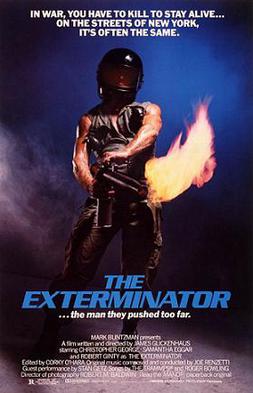
First released in 1980, The Exterminator begins during the Vietnam War.

Two soldiers, John Eastland (Robert Ginty) and Michael Jefferson (future Cannon Film mainstay Steve James) have been captured by the Viet Cong and can only watch as a third soldier is beheaded by his captors.  (The graphic beheading, in which the camera lingers on the head slowly sliding off the neck, is an early warning of what this film has in store for its audience.)  Jefferson manages to free himself from his bonds and kills most of the enemy soldiers.  After Jefferson frees him, Eastland fires a bullet into the still twitching body of the VC commander.

The film jumps forward to 1980.  Living in New York City, Jefferson and Eastland are still best friends and co-workers at a warehouse.  For a second time, Jefferson saves Eastland’s life when the latter is attacked by a gang calling themselves the Ghetto Ghouls.  When the Ghouls get their revenge by tracking down Jefferson and piecing his spine with a meat hook, Eastland gets his revenge by killing …. well, just about everyone that he meets.

Though The Exterminator was obviously inspired by Death Wish, a big difference between the two films is that Eastland doesn’t waste any time before starting his anti-crime crusade.  In the original Death Wish, Paul Kersey (played by Charles Bronson) starts out as a self-described “bleeding heart” liberal who was a conscientious objector during the Korean War.  Even after his wife and daughter are attacked (and his wife killed) by Jeff Goldblum, Kersey doesn’t immediately pick up a gun and start shooting muggers.  Indeed, it’s not until the film is nearly halfway over that Kersey begins his mission and, in one of the film’s more memorable moments, he reacts to his first act of violence by throwing up afterwards.  While one could hardly call Death Wish an especially nuanced film, it does at least try to suggest that Kersey’s transformation into a vigiliante was a gradual process.

The Exterminator, on the other hand, goes straight from Eastland informing Jefferson’s wife about the attack to Eastland threatening a tied-up Ghetto Ghoul with a flame thrower.  When did Eastland kidnap the Ghetto Ghoul?  Why does Eastland have a flame thrower?  Where exactly has Eastland tied up the Ghetto Ghoul?  None of this is explained and the film’s abruptness gives it an almost dream-like feel.  The film plays out like the fantasy of everyone who has ever been mugged or otherwise harassed.  Magically, Eastland suddenly has the skills and the resources to outsmart not just the criminals but also the police who have been assigned to stop him.  Even the CIA is assigned to take down Eastland because his anti-crime crusade is inspiring people to wonder why the President hasn’t been able to reduce crime.  The film plays out like the type of daydreams that Travis Bickle had when he wasn’t driving his taxi.

Eastland is ruthless in his kills but fortunately, everyone he kills is really, really bad.  The Ghetto Ghouls clubhouse is decorated with a poster of Che Guevara but Che’s revolutionary rhetoric isn’t worth much when the Exterminator’s after you.  A mob boss makes the mistake of not telling Eastland about the Doberman that’s guarding his mansion so into the meat grinder he goes.  New Jersey loses a state senator when Eastland discovers him torturing an underage male prostitute.  The film was shot on location in New York City and the camera lingers over every grimy corner of the city.  A scene where Eastland walks through Times Square takes on a cinéma-vérité feel as people jump out at him and try to entice him to take part in everything the city has to offer.  If Death Wish suggested that Paul Kersey’s actions were saving New York, The Exterminator suggests that we should just let John Eastland burn the whole place down.

With his youthful face, Robert Ginty looks more like a mild-mannered seminarian than a hardened veteran of both Vietnam and the mean streets of New York but, ultimately, that works to the film’s advantage.  If anything, it explains why everyone who meets him trends to underestimate what he’s capable of doing.  B-movie vet Christopher George overacts in his usual amusing way as he plays the detective who has been assigned to catch The Exterminator.  Samantha Eggar plays a doctor who starts dating George for no discernible reason.  The scenes featuring George and Eggar often seems as if they belong in a different film but they do provide some relief from the rather grim and gruesome scenes of The Exterminator killing almost everyone who he meets.

The Exterminator was controversial when it was originally released and it still retains the power to shock.  It’s easy to laugh at some of the film’s more melodramatic moments but there were still more than a few scenes that I watched with my hands over my eyes.  The film’s hard edge grabs your attention from the start and the idea of the CIA sending assassins to take out a neighborhood vigilante is so over the top and ridiculous that it’s kind of hard not to appreciate it.  That the film totally buys into its paranoid worldview (“Washington will be pleased.”) makes the whole thing far more compelling than it should be.

As ludicrous as it all is, The Exterminator is a film that defies you to look away.

Retro Television Reviews: A Tattered Web (dir by Paul Wendkos)


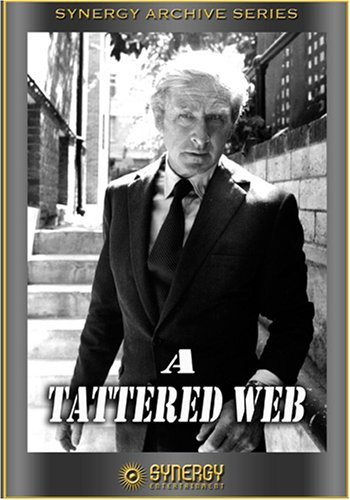
Welcome to Retro Television Reviews, a feature where we review some of our favorite and least favorite shows of the past!  On Sundays, I will be reviewing the made-for-television movies that used to be a primetime mainstay.  Today’s film is 1971’s A Tattered Web!  It  can be viewed on YouTube!

Sgt. Ed Stagg (Lloyd Bridges) is a good cop and an overprotective father.  Ever since his wife left him, Ed has been determined to make sure that his daughter, Tina (Sallie Shockley), has a good life.  So, as you can probably guess, Ed is not amused when he finds out that Tina’s husband, Steve (Frank Converse), has been cheating on her with Louise Campbell (Anne Helm).  Ed has never liked Steve and would love it if his daughter left him.  But, Ed still doesn’t want want Tina to have to go through the pain of knowing that her husband is seeing another woman.

Ed decides to drop by Louise’s apartment and talk to her himself.  Louise, however, is not willing to let some old stranger tell her how to live her life.  After all, she’s heard from Steve about what a terrible and judgmental father-in-law Ed is.  Ed gets frustrated and shoves Louise.  Louise stumbles back, hits her head, and …. uh-oh.  Louise is dead!  To be honest, it didn’t really look like she hit her head that hard.  In fact, I had to rewatch the scene to see if she actually hit her head at all.  But no matter.  Louise is dead and Ed’s responsible.

The next morning, when Ed and his partner, Joe (Murray Hamilton), are called in to investigate Louise’s homicide, Ed is approached by Louise’s neighbor (John Fiedler), who gives him a description of a  young man who he says he frequently saw going up to Louise’s apartment.  The description perfectly describes Steve.  The police sketch artist draws a picture that looks like just like Steve.  Joe thinks that Steve is responsible.  Not wanting his daughter to think that her husband’s a murderer, Ed decides to frame Willard Edson (Broderick Crawford), an alcoholic who frequently comes into the station and confesses to crimes so that he can have a place to sleep for the night.

Yes, it’s a tattered web indeed.  Ed is able to talk Edson into confessing to the crime but then Steve does his own detective work and realizes that Edson couldn’t be the murderer.  Ed tells Steve that he should just let the police arrest Edson because, otherwise, they’re going to come after Steve.  Steve, however, says that he would rather be arrested and be given a chance to prove his innocence than just stand by idly while an innocent man goes to jail.  Being a veteran cop, Ed wasn’t expecting everyone to be so damn honest!

A Tattered Web isn’t bad for a 70-minute made-for-TV movie.  The film’s main strength is the cast, with Lloyd Bridges, Murray Hamilton, and especially Broderick Crawford giving strong performances.  The scene where Ed talks Edson into confession is especially well-done, with Crawford giving a performance of growing desperation while Bridges himself appears to be on the verge of tears as Ed realizes what his life has become.  Like his sons Jeff and Beau, Lloyd Bridges is such a likable actor that it’s hard not to care about what happens to the characters that he’s playing, even when he’s playing a murderer.  A Tattered Web is an effective thriller that reminds viewers that guilt cannot be escaped.

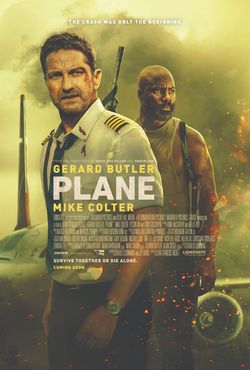
Film Review: Plane (dir by Jean-François Richet)


Brodie Torrance (Gerard Butler) is a pilot for Trailblazers Airlines.  When he arrives for his flight from Singapore to Honolulu, he is not thrilled to discover that one of his passengers is going to be the recently captured fugitive, Louis Gaspare (Mike Colter).  However, that soon turns out to be the least of his problems as his plane ends up flying straight into a storm.  With the plane damaged, Brodie is forced to land on an island.  Unsure of how long it’s going to take the airline to find the plane, Brodie heads into the jungle to find help.  Accompanying him is Louis, who turns out to be the not that bad of a guy at all.

Unfortunately, there are some actual bad guys on the island.  In fact, it turns out that the island is controlled by Datu Junmar (Evan Dale Taylor), a vicious terrorist who is implied to be connected to ISIS.  Junmar and his men plan to take the passengers and crew hostage.  In New York, a mysterious man named Scarsdale (Tony Goldwyn) has arranged for a group of mercenaries to travel to the island and rescue the crew and the passengers.  However, it’s not clear whether the mercenaries are going to make it to the island in time.  Can Brodie defeat the terrorists and help everyone escape from the island?

Fortunately, Brodie Torrance may just be a pilot who works for an admittedly third tier airline but he’s also Gerard Butler.  From the minutes we first see Brodie, we know that there’s probably more to him than just flying commercial planes.  And indeed, it does turn out that Brodie knows how to throw a punch.  He also knows how to fire a weapon and how to run someone over on a landing strip.  Again, he’s Gerard Butler.  Gerard Butler really doesn’t get enough credit for being an actor who is believable as both an action hero and a normal human being.  Someone like Dwayne Johnson is always credible when he’s fighting someone or shooting a weapon or delivering a one liner but it’s always difficult to picture him as someone who goes to the mall or gets his oil changed every year or who does anything else that feels remotely like everyday life.  Gerard Butler, on the other hand, is credible whether he’s punching out a villain or shopping at a grocery store.  He’s the everyday action hero and Plane makes good use of his talents.

Plane is a simple and admirably straight-forward film.  Brodie lands on an island that’s full of terrorists.  Brodie has to defeat the terrorists and escape from the island.  There aren’t a lot of unnecessary complications or attempts to fool the audience into thinking that Plane is something more than it is.  Instead, Plane embraces its status as an action movie and it tells its story in a brisk 107 minutes.  It’s entertaining and it’s undemanding and, even though it was released way back in January, it’s a good film for the summer months.  In the past, straight-forward, well-made action films were so common that we took them for granted.  Today, in this age of bloated, CGI-heavy cinematic universes, messy continuities, and movies that often run closer to three hours than 90 minutes, a film like Plane is a cause for celebration.

Retro Television Reviews: Dr. Cook’s Garden (dir by Ted Post)


Welcome to Retro Television Reviews, a feature where we review some of our favorite and least favorite shows of the past!  On Sundays, I will be reviewing the made-for-television movies that used to be a primetime mainstay.  Today’s film is 1971’s Dr. Cook’s Garden!  It  can be viewed on YouTube!

Everyone loves Dr. Leonard Cook.

Played by Bing Crosby, Dr. Cook has been the doctor in the small town of Greenfield for as long as anyone can remember.  He has delivered almost the entire town.  He’s the friendly face that everyone sees whenever they have an ache or a pain.  He’s the somber source of comfort whenever the time comes from someone to pass.  Dr. Cook has lost some patients but he’s saved even more and no one doubts that Dr. Cook always does his best.  As admired as Dr. Cook is as a doctor, he’s almost equally admired for the beautiful garden outside of his office.  Cook maintains the garden by always pulling out any plants that he feels would not serve the best interest of the garden.  That’s Dr. Cook.  He’s always doing whatever needs to be done to make the world a nicer place.

Unfortunately, Dr. Cook is getting old and he’s slowed down a bit.  He has a heart condition and he can no longer be as physically active as he once was.  Dr. Cook’s former student, Jimmy Tennyson (Frank Converse), returns to Greenfield so that he can help out his former mentor.  Dr. Tennyson is going to help ease Dr. Cook into retirement and then eventually take Cook’s place as the town doctor.  Dr. Cook may say that he’s not planning on retiring anytime soon but it’s obvious that he has faith in Dr. Tennyson’s ability to eventually replace him.

Or, at least, Cook feels that way until Dr. Tennyson starts asking about some of Cook’s patients who have died over the years.  Tennyson discovers that many of Cook’s patients died despite not being seriously ill and that Dr. Cook also has a surprisingly large supply of poisons.  When it’s mentioned that no one in town has ever wondered why Dr. Cook has lost so many patients because only the “mean” patients tend to die, Dr. Tennyson realizes that Dr. Cook has been doing his bit to make sure the town of Greenfield stays a nice place.  Dr. Cook calls it “community service.”  Dr. Tennyson calls it murder but can he turn on his former mentor and the most beloved man in town?  And when Tennyson starts to pressure Cook to stop practicing medicine and playing God, Dr. Cook starts to make his own plans to put his former student in his place.

An adaptation of a stage play by Ira Levin, Dr. Cook’s Garden is a suspenseful and short made-for-TV movie.  Director Ted Post does a good job of opening up the action and preventing the film from becoming overly stagey.  The main reason the film succeeds is due to the performance of Bing Crosby in the role of Dr. Cook.  Crosby’s kindly and cheerful demeanor keeps the viewer off-balance but, once Dr. Cook decides to target his former student, the friendly surface evaporates and Dr. Cook is revealed to be just as ruthless and cruel as those who he targets.  This is the type of film that will inspire you to wonder just what exactly your neighbors may be hiding in their gardens.

Retro Television Reviews: In Search of America (by Paul Bogart)


Welcome to Retro Television Reviews, a feature where we review some of our favorite and least favorite shows of the past!  On Sundays, I will be reviewing the made-for-television movies that used to be a primetime mainstay.  Today’s film is 1971’s In Search of America!  It  can be viewed on YouTube!

College student Mike Olson (young Jeff Bridges) returns home and informs his mother (Vera Miles) and his father (Carl Betz) and his annoyingly quirky grandmother (Ruth McDevitt) that he’s dropped out of college.  He apologizes for wasting all the money that they spent on tuition but hey, maybe he can make it up to them by taking them on a journey as he drives across America in an old bus.

Uhmmm….

Now, let me just repeat this so that there is no confusion.  This absolutely schmuck took his parents’ money, wasted it, dropped out of college, and now he expects everyone to travel with him across America because he’s decided that he’s a part of the counterculture.

And, instead of telling him to go to Hell and get a job, his family agrees.

Oh sure, Mom is a little bit hesitant about Mike’s idea.  But Dad is really enthusiastic.  He understands the kids and he wants a chance to relive his own youth, before he got tied down with things like paying bills and being a responsible human being.  And, of course, if the Hippies were famous for anything, it was their love of upper class, middle-aged people.  Just ask the LaBiancas.

And, of course, grandma is totally excited about it because she’s an old person in a made-for-TV movie.

So, they all board the bus and Mike takes them to a music festival so that they can meet some of his friends.  For instance, there’s Nick (Sal Mineo), a drop-out who says that he’s more burned out than turned on.  There’s Annie (Tyne Daly), who is going to need someone to help deliver her baby.  There’s Bodhi (Glynn Turman), who is some sort of doctor.  He and grandma bond of their shared quirkiness.  And then there’s Kathy (Renne Jarrett), who is at the music festival despite the fact that she’s really sick and on the verge of dying. When Kathy’s parents (Howard Duff and Kim Hunter) show up looking for her, Mike has to decide whether to save her life or respect her wish to do her own thing.

This was obviously meant to be a pilot for a show where the family would travel around the country and I guess get involved in different adventures each week.  The main problem is that, while Jeff Bridges seems to be a bit of a hippie in real life, he’s not particularly convincing in this film.  He’s way too clean-cut and his family’s decision to follow him across the country never makes the least bit of sense.  As for the hippies themselves, they come across as being so shallow that I found myself wanting to donate money to the Nixon campaign.

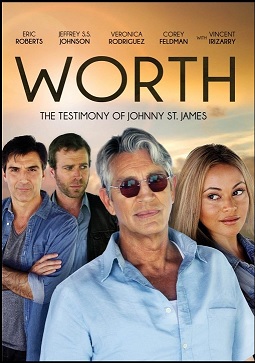
June Positivity: Worth: The Testimony of Johnny St. James (dir by Jenn Page)


First released in 2012, Worth is a film about a hostage situation.

Ugh.

Listen, I’m just going to be honest with you here.  With a few obvious exceptions (i.e., Dog Day Afternoon), I am not a huge fan of films about hostage situations.  It doesn’t matter how talented the cast may be or how much the director tries to keep things interesting.  Usually, as soon as the hostage taker pulls that gun and yells, “Nobody move!,” whatever narrative momentum that the film may have had going comes to a screeching halt and thing proceed to get very stagey.  The audience is expected to sit through at least 90 minutes of wailing hostages, feverish monologues, and Stockholm syndrome.  And, of course, we can’t forget the SWAT team threatening to kill both the hostage taker and the hostages while a harried negotiator tries to bring everything to a peaceful solution.  It’s all very predictable and usually a bit tedious to sit through.

Worth is also a film about alcoholics so double ugh.  I’m not a huge fan of alcoholics or films where people spend all of their time giving speeches about why they started drinking and what happened to make them hit rock bottom.  Don’t get me wrong.  There’s been a lot of great films made about alcoholism but there’s also been a lot of films that seem to exist to remind us of just how whiny alcoholics can be.  Mixing alcoholics and hostages is rarely a good thing.

On the plus side, Worth has got Eric Roberts in it.  No, Roberts does not play the hostage taker.  Nor does he play one of the hostages.  Roberts ends up with the unenviable task of having to negotiate with the hostage taker.  Eric Roberts’s role is not a big one.  One gets the feeling that it probably took two days (maybe three) for him to shoot all of his scenes.  Still, his role here is bigger (and more important) than his role in Amityville Death House.

Worth’s main character is Johnny St. James (Jeffrey Johnson), a former seminarian who ended up becoming a cop.  Ten years ago, Johnny’s pregnant wife was killed by a drunk driver and Johnny himself has been an alcoholic ever since.  Johnny is finally ready to attend his first AA meeting and his friend and partner, Hickey (Eric Roberts), tags along for moral support.  While Johnny is inside the church for the meeting, Hickey is the one who waits in the car and calls into headquarters and tells the chief that Johnny’s at an emergency dental appointment.

Unfortunately, Johnny discovers that the AA meeting is being led by Earl (Vincent Irizarry), the man who was driving the car that struck and killed Johnny’s wife.  Earl did several years in prison and became a minister during his time behind bars.  Earl may not recognize Johnny but Johnny automatically knows who Earl is.  Johnny sits in the back of the church, listening as the other members of the group give their testimony.  After listening to Chad (Corey Feldman) talk about how difficult it is to be sober, Johnny snaps, pull out his gun, and — ugh — the hostage situation begins.

The movie starts out well, with both Eric Roberts and Vincent Irizarry offering up strong supporting performances.  I mean, even Corey Feldman isn’t that bad.  But as soon as Johnny pulls that gun and starts shouting and bullying everyone and barking out orders, the film turns into a bit of an endurance test.  There’s only so much time that someone can spend listening to one guy yell at people about not moving before mentally checking out.  Johnny traps himself in that church as soon as he pulls that gun but the film also traps itself by not leaving itself anywhere else to go.  Johnny has a tragic backstory and the film does share an important message about the power of forgiveness but Johnny himself was such an annoying character than even I wanted the SWAT team to storm the church and take that douchebag out.

Worth was no Dog Day Afternoon.

Previous Eric Roberts Films That We Have Reviewed:

  1. Star 80 (1983)
  2. Blood Red (1989)
  3. The Ambulance (1990)
  4. The Lost Capone (1990)
  5. Love, Cheat, & Steal (1993)
  6. Love Is A Gun (1994)
  7. Sensation (1994)
  8. Dark Angel (1996)
  9. Doctor Who (1996)
  10. Most Wanted (1997)
  11. Mr. Brightside (2004)
  12. Six: The Mark Unleased (2004)
  13. Hey You (2006)
  14. In The Blink of an Eye (2009)
  15. The Expendables (2010) 
  16. Sharktopus (2010)
  17. Deadline (2012)
  18. Miss Atomic Bomb (2012)
  19. Lovelace (2013)
  20. Self-Storage (2013)
  21. This Is Our Time (2013)
  22. Inherent Vice (2014)
  23. Road to the Open (2014)
  24. Rumors of War (2014)
  25. Amityville Death House (2015)
  26. A Fatal Obsession (2015)
  27. Stalked By My Doctor (2015)
  28. Joker’s Poltergeist (2016)
  29. Stalked By My Doctor: The Return (2016)
  30. The Wrong Roommate (2016)
  31. Stalked By My Doctor: Patient’s Revenge (2018)
  32. Monster Island (2019)
  33. Seven Deadly Sins (2019)
  34. Stalked By My Doctor: A Sleepwalker’s Nightmare (2019)
  35. The Wrong Mommy (2019)
  36. Free Lunch Express (2020)
  37. Her Deadly Groom (2020)
  38. Top Gunner (2020)
  39. Just What The Doctor Ordered (2021)
  40. Killer Advice (2021)
  41. The Poltergeist Diaries (2021)
  42. My Dinner With Eric (2022)

The Eric Roberts Collection: Amityville Death House (dir by Mark Polonia)


Eric Roberts is The Warlock!

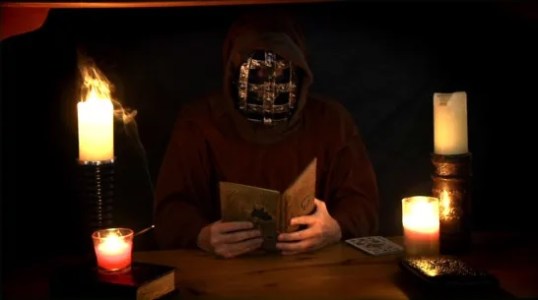
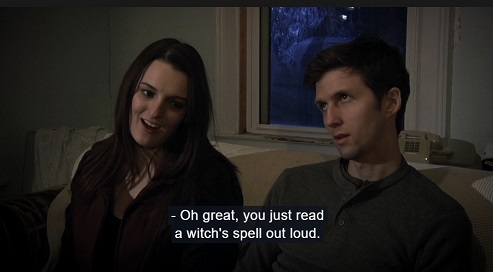
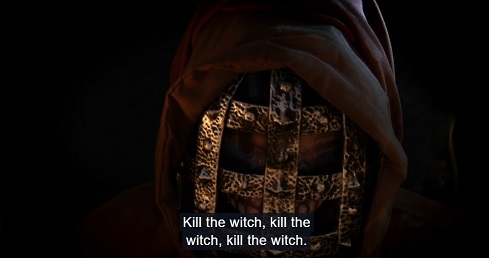
If you’re specifically watching the 2015 film, Amityville Death House, because of the presence of Eric Roberts (and seriously, who could blame you?), Roberts appears about four minutes into the film.  His first scene lasts about 50 seconds.  He pops up a few more times throughout the film and, each time, he’s onscreen for, at most, 20 seconds.  Every time that he appears, he is sitting in a room that has been decorated to look like a dungeon.  He never interacts with anyone in the cast and, indeed, it’s easy to tell that this is another one of these films where he did all of his scenes in one day and probably didn’t even have to leave his house.  He wears a mask throughout the entire film but there’s no mistaking his voice.

Amityville Death House takes place in the town of Amityville, New York and it features a house that looks like a smaller version of the infamous haunted house that appears in most of the other Amityville films.  That said, there’s not any reference to the supposed hauntings or the DeFeo murders or any of the other usual Amityville plot points.  Instead, this film deals with the spirit of a 17th century witch named Abigail, who was lynched by the inhabitants of Amityville.  Eric Roberts plays the Warlock who, for reasons that are never quite clear, hopes to bring Abigail’s spirit back into the realm of the living.

When Tiffany (Kyrsten St. Pierre) comes up to Amityville to check in on her grandmother (Yolie Canales), she finds Abigail’s old diary and realizes that her grandmother lives in Abigail’s former home.  Tiffany even reads aloud from the diary, which is not good news for her friends, Aric (Michael Merchant), Bree (Cassandra Hayes), and Dig (Houston Baker).  Her friends were just traveling with Abigail to help her out at her grandmother’s place.  They certainly weren’t expecting to end up under a witch’s curse thanks to Tiffany’s stupidity.

Even with a running time of just 75 minutes, Amityville Death House is a painfully slow film.  Scenes play out with no sense of pace or suspense and the characters are all paper thin.  The final ten minutes of the film are enjoyably weird, with the characters suffering from hallucinations, one person turning into a spider, and dialogue like, “She has the witch’s teats!”  But it takes such a long time for the movie to reach that point and there’s so much unnecessary padding on the way that many viewers will probably check out before getting to experience any of that.

On the plus side, though, Eric Roberts at least sounded like he was having fun.

Previous Eric Roberts Films That We Have Reviewed:

  1. Star 80 (1983)
  2. Blood Red (1989)
  3. The Ambulance (1990)
  4. The Lost Capone (1990)
  5. Love, Cheat, & Steal (1993)
  6. Love Is A Gun (1994)
  7. Sensation (1994)
  8. Dark Angel (1996)
  9. Doctor Who (1996)
  10. Most Wanted (1997)
  11. Mr. Brightside (2004)
  12. Six: The Mark Unleased (2004)
  13. Hey You (2006)
  14. In The Blink of an Eye (2009)
  15. The Expendables (2010) 
  16. Sharktopus (2010)
  17. Deadline (2012)
  18. Miss Atomic Bomb (2012)
  19. Lovelace (2013)
  20. Self-Storage (2013)
  21. This Is Our Time (2013)
  22. Inherent Vice (2014)
  23. Road to the Open (2014)
  24. Rumors of War (2014)
  25. A Fatal Obsession (2015)
  26. Stalked By My Doctor (2015)
  27. Joker’s Poltergeist (2016)
  28. Stalked By My Doctor: The Return (2016)
  29. The Wrong Roommate (2016)
  30. Stalked By My Doctor: Patient’s Revenge (2018)
  31. Monster Island (2019)
  32. Seven Deadly Sins (2019)
  33. Stalked By My Doctor: A Sleepwalker’s Nightmare (2019)
  34. The Wrong Mommy (2019)
  35. Free Lunch Express (2020)
  36. Her Deadly Groom (2020)
  37. Top Gunner (2020)
  38. Just What The Doctor Ordered (2021)
  39. Killer Advice (2021)
  40. The Poltergeist Diaries (2021)
  41. My Dinner With Eric (2022)

Previous TSL Amityville Reviews:

  1. The Amityville Horror (1979)
  2. Amityville II: The Possession (1981)
  3. The Amityville Cure (1990)
  4. The Amityville Haunting (2011)
  5. Amityville: The Awakening (2017)
  6. The Amityville Murders (2018)
  7. Amityville Cop (2021)
  8. Amityville Emanuelle (2023)