Horror Book Review: ‘Salem’s Lot (by Stephen King)


“Within, walls continued upright, bricks met neatly, floors were firm, and doors were sensibly shut; silence lay steadily against the wood and stone of Hill House, and whatever walked there, walked alone.”
—Shirley Jackson, The Haunting of Hill House

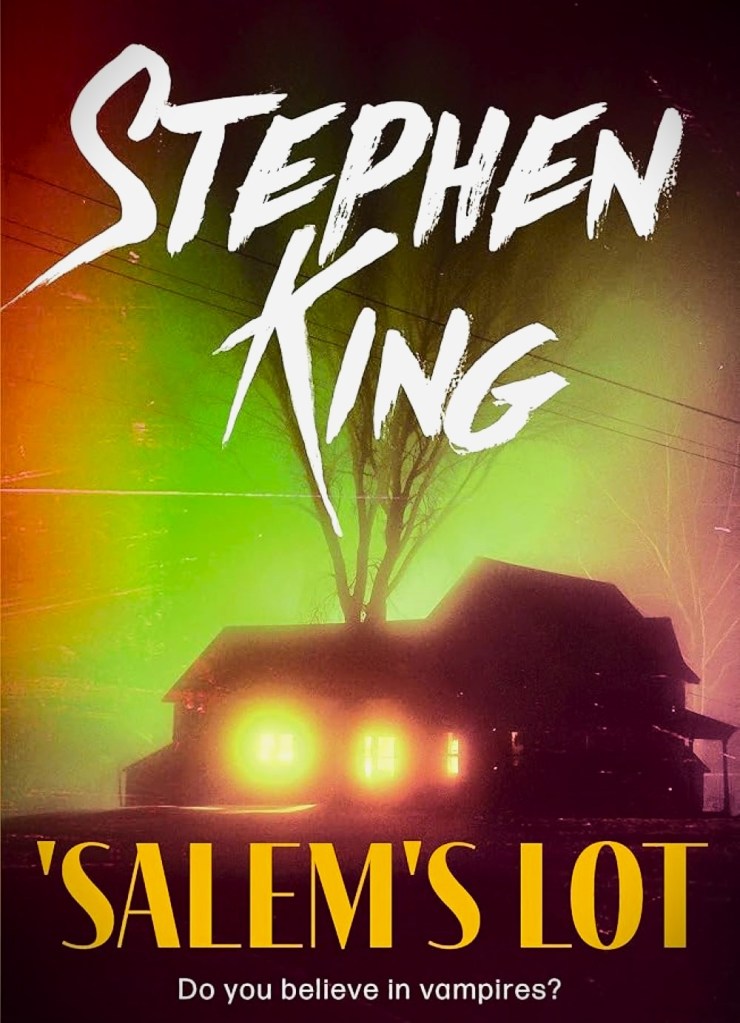
Stephen King’s Salem’s Lot opens with an unsettling and bold narrative choice. Instead of introducing the main characters or setting a conventional stage, the novel begins by showing two nameless figures—an older man and a younger companion, burdened by events already passed. These itinerants are fleeing a terrible evil, seeking refuge in a small Mexican village, suffused with mystery and dread. This brief but cryptic prologue hooks the reader immediately with a pervasive sense of unease and unanswered questions: who are these men, and what horror haunts them so far from home?

This unsettling beginning is not only risky but masterful. King, in just his second published novel, chooses to forgo straightforward exposition and instead promises that the narrative will move backward, retracing the dark events that led to this moment of flight and loss. The prologue casts a shadow into the past, preparing readers for a story where the darkness is already present and will only deepen.

Rewinding, the narrative places us in the small New England town of Jerusalem’s Lot—known to its inhabitants simply as “The Lot”—a quintessential small town in 1970s Maine. Here, Ben Mears, a novelist haunted by childhood trauma centered on the forbidding Marsten House, returns home with the intention of writing about the old mansion. The Marsten House is not just a setting; it is a malignant presence perched over the town like an ominous sentinel. Ben’s youth intrudes everywhere in his memory of that house—a place where something unknowable once touched him—and now, as an adult, he confronts both that past and the house again, its shadow casting unease over the town.

Ben isn’t the only arrival. Richard Straker sets up an antique shop, accompanied by his rarely seen partner, Kurt Barlow—an inscrutable figure whose very mention deepens the novel’s pervasive tension. King reveals Barlow’s presence slowly and indirectly, heightening the atmosphere without immediate confrontation.

King excels at immersing readers in the rhythms of small-town life. Through detailed observation of everyday routines, gossip, and personalities, he crafts a believable, textured community. Each townsperson—whether skeptical official, gossip-prone neighbor, child, or elder—is vividly realized, not as a simple archetype but as a living, breathing individual. Yet beneath this surface of normalcy lurks a pervasive darkness: secrets, resentments, and moral frailties accumulate like hidden mildew in the town’s corners.

In this, Salem’s Lot evokes the spirit of Peyton Place, the classic fictional small town where scandal and hypocrisy fester beneath neighborly facades. King’s Jerusalem’s Lot feels like a much darker cousin—a town where those faults and hidden sins once fodder for gossip become the very soil from which real, supernatural evil springs. While Peyton Place explored human failings within social dynamics, Salem’s Lot reveals how those failings create openings for Kurt Barlow’s vampiric menace. The town’s insularity, mistrust of outsiders, and collective denial become liabilities dooming it—not just morally, but existentially.

At the heart of this encroaching nightmare stands the Marsten House, a building elevated beyond mere backdrop into a living entity. Like Shirley Jackson’s Hill House, Richard Matheson’s Belasco House in Hell House, and King’s own later Overlook Hotel, the Marsten House is steeped in decades of violence and evil. Its walls seem to soak up past horrors; its windows serve as more than architectural features—they are eyes into the house’s dark soul. This physical presence is sinister and predatory, complicit in the nightmarish events it enables. To enter the house is to step into something corrupt and breathing, an organism as alive and malign as the vampire it conceals.

What makes Salem’s Lot especially powerful is how King integrates the supernatural into the texture of daily life. The fantastical elements do not feel imposed or alien but grow organically from the social dynamics, habits, and vulnerabilities of this small town. The horror is inevitable precisely because it grows from recognizable human weaknesses and communal blind spots. This fluid blending invites readers to experience terror as an intimate shattering of the ordinary, a disruption of the familiar.

Relationships anchor the emotional core of the narrative. Ben’s romance with Susan Norton, the steady wisdom of Matt Burke, the youthful courage of Mark Petrie—their humanity keeps the terror grounded and poignant. As vampirism spreads, these bonds are tested and shattered. Community, which once defined the town’s identity, fractures under suspicion and fear. Friends become threats; homes become prisons.

The looming Marsten House is a perfect emblem of this dual threat: a predator perched within the community itself. As Barlow turns neighbors into monsters, the house’s silent complicity looms ever larger. It is as much a character as any human, a sentinel feeding on the decay of place and spirit alike.

As the novel hurtles toward its climax, King heightens the tension with vivid, claustrophobic scenes inside the haunted mansion. The house’s corridors and rooms twist into traps, its atmosphere suffocating and oppressive. King’s mastery of sensory detail brings a visceral dimension to the horror, blending psychological terror with physical menace.

The conclusion returns to the somber tone of the prologue. Although some survive, the town is hollowed out—a ghostly husk abandoned to darkness. Evil is not eradicated but waits patiently, ready to thread its way back through the cracks. The cycle of horror, loss, and exile continues.

Stephen King’s unique strength in Salem’s Lot lies not only in his richly developed characters and finely drawn community but in how seamlessly he introduces supernatural horror into what reads like a real-time study of small-town life. The fantastical elements grow naturally from the social fabric, making the terror feel inevitable rather than contrived. This synthesis of realism and fantasy deepens the novel’s power.

King’s portrayal of Jerusalem’s Lot as a place rotting from within yet clinging to its veneer of normalcy offers a chilling echo of Peyton Place. But while Metalious’s town suffocated under scandal, Salem’s Lot is consumed by predation—the vampire feasting not only on blood but on the fractures of belonging and trust. It is both eerily familiar and profoundly alien: a place where monsters live not just in shadows, but in whispered suspicions and buried sins.

Through this blend of gothic haunted-house traditions, social critique, and psychological realism, Salem’s Lot endures as a masterpiece of horror. The Marsten House is not merely a setting but a sentinel, symbolizing accumulated evil watching over a doomed community. King’s novel terrifies not only with its monsters but with its intimate knowledge of how everyday life can harbor the seeds of nightmare beneath a calm surface.

Horror Novel Review: Teddy by John Gault


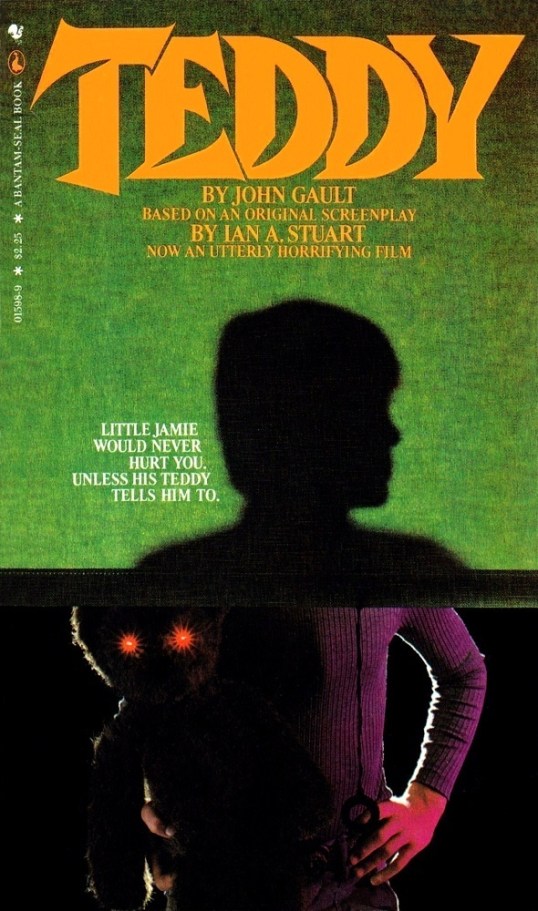
Yesterday, I wrote about a Canadian horror film called The Pit.  I mentioned that it was a film about a creepy 12 year-old named Jamie who had conversations with his teddy bear, developed a not-so-innocent crush on his babysitter, and who regularly fed the people he disliked to a bunch of underground monsters who lived in a pit in the woods.

Yesterday, I also read Teddy, the 1980 novelization of The Pit.

(The Pit was originally titled Teddy.)

Teddy is even more creepy than The Pit, largely because it includes all of the disturbing details that were either cut from the finished film or perhaps dropped when the script was rewritten.  Jamie is still a creepy 12 year-old who talks to his teddy bear.  Unlike the film, the novel makes it clear that Teddy is actually a living force of evil and that his words are not just a figment of Jamie’s imagination.  The book actually suggests that Teddy moves from child to child, corrupting each of its owners.  Teddy in the book is also a hundred times more pervy than Teddy in the movie, making some rather crude comments about Jamie’s mom and later encouraging Jamie to join him in checking out some porno magazines.

The book also delves into the investigations surrounding the disappearance of Jamie’s many victims.  As a result, we get to know the victims a bit better in the book than we did in the movie.  Also as a result, Jamie also comes across as much more deliberately evil in the book than he does in the movie.  Even if he is under the possible demonic influence of Teddy, Jamie still seems to take way too much pleasure in people dying.  This is especially true of the scene where his babysitter falls into the pit.  In the movie, Jamie tries to help her escape.  In the book, Jamie not only pushes her but smiles afterwards as he listens to her screams.

Agck!  What a creepy kid!

Teddy is a pretty effective little horror novelization.  It’s also not easy to find a physical copy.  However, you can read it at Open Library.

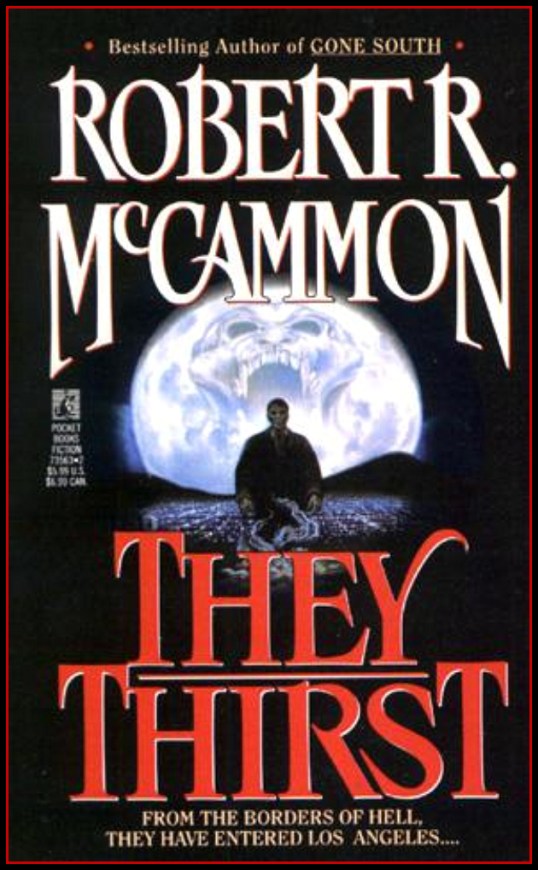
Horror Book Review: They Thirst (by Robert R. McCammon)


Robert McCammon’s 1981 novel They Thirst stands as a significant yet often overlooked contribution to the vampire horror genre and to modern horror literature more broadly. The novel deftly marries Gothic vampire traditions with contemporary anxieties surrounding urban decay, societal collapse, and the limitations of scientific reasoning. McCammon’s approach—transforming vampirism from a supernatural curse into a viral, apocalyptic force—presents a fresh perspective that elevates the narrative beyond conventional monster fiction. The result is a richly detailed and thought-provoking story that explores not just the nature of evil, but humanity’s fragile relationship with belief, knowledge, and survival.

The novel’s geographical and thematic scope is ambitious from the outset. It begins in Eastern Europe, grounding the story firmly in vampire mythology, before making a dramatic shift to Los Angeles, California. This transition is more than a change of location; it serves as a potent narrative device. While Stephen King’s ’Salem’s Lot confines the vampire threat to the insular setting of a small New England town, They Thirst imagines an entire sprawling metropolis consumed from within. Los Angeles—with its sprawling excesses, cultural contrasts, and complicated history—becomes a perfect backdrop for the ancient evil of McCammon’s story. In many ways, the city and the novel’s antagonist are made for one another: Vulkan, a 13th-century Hungarian prince turned vampire, and his undead legion prey on humanity’s vulnerable underbelly, just as Los Angeles has often been depicted as a city feeding off the dreams—and the desperation—of its most naive and downtrodden residents.

This parallel between city and vampire empire is one of the novel’s strongest thematic elements. Both embody forms of false promise: Los Angeles offers fame, wealth, and a kind of modern immortality through celebrity culture, while Vulkan offers literal immortality through vampirism. Yet both promises are double-edged. The city’s glittering surface conceals poverty, violence, and spiritual emptiness; Vulkan’s offer of eternal life masks the curse of undeath and loss of humanity. In that sense, Vulkan and Los Angeles mirror each other, feeding off hope and desperation alike. This symbiotic relationship deepens the horror: it’s not just that vampires invade the city, but that they thrive there because the city, in its essence, is already broken and hungry.

The antagonist, Prince Vulkan, represents the archetypal vampire lord but is also reimagined as a force of apocalyptic renewal. His ambition is to establish a vampiric empire within Los Angeles, turning the city into a dark kingdom under his rule. The irony of this choice is palpable; Los Angeles is a city obsessed with youth, image, and perpetual reinvention, and Vulkan exploits those cultural values by offering something seemingly eternal. His infiltration begins subtly—with grave robberies, disappearances, and escalating violence—until the infestation becomes impossible to ignore. The city’s sprawling nature, its labyrinthine neighborhoods, and its social divides become the perfect terrain for an epidemic to spread unchecked.

McCammon stays true to Bram Stoker’s legacy, incorporating essential vampire lore: vulnerability to sunlight, the necessity of native soil in coffins, and the insatiable craving for blood remain central to the story. But he sets these paranormal elements against a starkly modern world, making their impact feel immediate and unavoidable. One striking subplot involves a wealthy coffin manufacturer whose industrial-scale production unwittingly supports Vulkan’s legion by supplying coffins in large quantities. This detail reinforces the novel’s critique of modernity: progress and capitalism, while often celebrated, can be co-opted by darkness when divorced from awareness and wisdom.

Central to the narrative is the novel’s sharp examination of science and superstition. McCammon critiques modern rationalism’s limits when confronted with the inexplicable. As the vampire epidemic grows, institutions built on evidence and strict rationality—police departments, medical professionals, the press—are shown to be inadequate. Police officers demand forensic proof; scientists dismiss eyewitness accounts as hysteria or fabrication; journalists prioritize sensationalism over truth. This widespread skepticism, while understandable in a culture founded on empiricism, ironically becomes what allows the vampires to thrive. McCammon suggests that humanity’s overreliance on logic and denial is itself a fatal vulnerability. The story implies that what civilization labels “superstition” may hold the very keys to survival against threats outside the realm of science.

This tension—between modern science and the supernatural—gives the novel a distinctively unsettling atmosphere. The city’s collapse is not solely due to the vampires themselves but also because humanity’s intellectual arrogance leaves it vulnerable. The horror grows as reason twists into denial, and disbelief becomes as lethal as the vampires’ bite. McCammon doesn’t dismiss science but critiques a worldview that excludes anything it can’t measure or rationalize. The vampires are, in a way, as much the product of this intellectual blindness as they are physical monsters.

From this thematic core comes one of the novel’s most compelling characters: Detective Andy Palatizin. A man haunted by his past in Hungary, Palatizin has already faced these same creatures in his youth. His instincts and knowledge make him an outlier in the modern police force, where skeptics and bureaucrats dismiss his warnings as superstition. Palatizin’s struggle embodies the tension between ancient wisdom and modern disbelief. Alongside him are characters who represent various facets of Los Angeles life: Wes Richer, a hopeful comedian whose life is upended by the chaos; Solange, his psychic partner who senses the darkness; Tommy Chandler, a youth thrust unwillingly into the fight against evil; and Kobra, a dangerous albino gang leader whose alliance with Vulkan underscores the novel’s bleak view of human nature. Through these characters, McCammon presents a cross-section of humanity reacting to incomprehensible horror in ways both brave and flawed.

The novel’s pacing builds steadily, escalating from subtle unease to urban apocalypse. McCammon’s detailed descriptions of Los Angeles falling apart—freeways clogged with abandoned vehicles, entire neighborhoods burned out, power grids failing—create a vivid portrait of a civilization unraveling. It is in this progression that They Thirst transcends the conventional vampire tale, transforming into a mythic story of apocalypse. The battle grows beyond individual survival into a symbolic contest between light and darkness, belief and denial.

In this way, They Thirst invites comparison not only to ’Salem’s Lot but also to Stephen King’s The Stand. Both novels begin with localized catastrophe but evolve toward apocalyptic narrative arcs that weigh heavily on the theme of good versus evil. Palatizin’s final confrontation with Prince Vulkan mirrors the spiritual and philosophical duels seen in The Stand—a struggle not only between man and monster but between faith and nihilism. This heightened mythic tone gives They Thirst a resonance that extends beyond its genre, engaging with questions about human nature, belief, and the limits of reason.

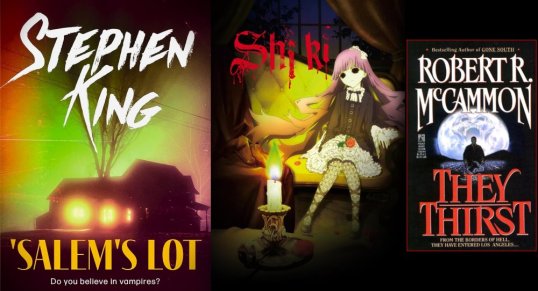
The novel’s themes also echo the Japanese vampire tale Shiki, which similarly explores a community’s devastating response to supernatural infection and the corrosive effects of denial. Although Shiki is set in a small rural village as opposed to a vast city, both stories articulate the dangers of refusing to confront inconvenient truths, particularly when those truths conflict with scientific rationality or cultural blindness. McCammon’s choice of Los Angeles as a setting magnifies this theme, illustrating how sprawling urban environments—with their anonymity, social stratification, and competing belief systems—become fertile ground for supernatural and existential threats alike.

Moreover, They Thirst represents a crucial moment in Robert McCammon’s development as a writer of expansive horror fiction. The novel’s sophisticated interplay between individual characters and large-scale disaster foreshadows the narrative techniques he would later perfect in Swan Song. If They Thirst can be considered McCammon’s ’Salem’s Lot—an exploration of vampirism growing into an epic struggle—then Swan Song stands as his The Stand—a sweeping post-apocalyptic saga combining horror, hope, and human resilience on a grand scale. Seen in this light, They Thirst is not only a memorable and impactful vampire narrative but also the author’s foundational work in epic horror storytelling.

In sum, They Thirst is a novel of considerable ambition and thematic richness. It successfully unites Gothic vampire mythology with contemporary social concerns, delivering a story that is both thrilling and intellectually engaging. The interplay of science and superstition, the vivid portrayal of Los Angeles as a city on the brink, and the moral complexity of its characters elevate the book beyond simple genre fare. This novel offers a challenging and unforgettable journey — a reminder that some darkness is older than reason and that even the brightest city lights may hide the longest shadows.

Would further assistance be welcome in preparing this review for publication or tailoring it to a specific format or audience?Robert McCammon’s 1981 novel They Thirst stands as a significant yet often overlooked contribution to the vampire horror genre and to modern horror literature more broadly. The novel deftly marries Gothic vampire traditions with contemporary anxieties surrounding urban decay, societal collapse, and the limitations of scientific reasoning. McCammon’s approach—transforming vampirism from a supernatural curse into a viral, apocalyptic force—presents a fresh perspective that elevates the narrative beyond conventional monster fiction. The result is a richly detailed and thought-provoking story that explores not just the nature of evil, but humanity’s fragile relationship with belief, knowledge, and survival.

The novel’s geographical and thematic scope is ambitious from the outset. It begins in Eastern Europe, grounding the story firmly in vampire mythology, before making a dramatic shift to Los Angeles, California. This transition is more than a change of location; it serves as a potent narrative device. While Stephen King’s ’Salem’s Lot confines the vampire threat to the insular setting of a small New England town, They Thirst imagines an entire sprawling metropolis consumed from within. Los Angeles—with its sprawling excesses, cultural contrasts, and complicated history—becomes a perfect backdrop for the ancient evil of McCammon’s story. In many ways, the city and the novel’s antagonist are made for one another: Vulkan, a 13th-century Hungarian prince turned vampire, and his undead legion prey on humanity’s vulnerable underbelly, just as Los Angeles has often been depicted as a city feeding off the dreams—and the desperation—of its most naive and downtrodden residents.

This parallel between city and vampire empire is one of the novel’s strongest thematic elements. Both embody forms of false promise: Los Angeles offers fame, wealth, and a kind of modern immortality through celebrity culture, while Vulkan offers literal immortality through vampirism. Yet both promises are double-edged. The city’s glittering surface conceals poverty, violence, and spiritual emptiness; Vulkan’s offer of eternal life masks the curse of undeath and loss of humanity. In that sense, Vulkan and Los Angeles mirror each other, feeding off hope and desperation alike. This symbiotic relationship deepens the horror: it’s not just that vampires invade the city, but that they thrive there because the city, in its essence, is already broken and hungry.

The antagonist, Prince Vulkan, represents the archetypal vampire lord but is also reimagined as a force of apocalyptic renewal. His ambition is to establish a vampiric empire within Los Angeles, turning the city into a dark kingdom under his rule. The irony of this choice is palpable; Los Angeles is a city obsessed with youth, image, and perpetual reinvention, and Vulkan exploits those cultural values by offering something seemingly eternal. His infiltration begins subtly—with grave robberies, disappearances, and escalating violence—until the infestation becomes impossible to ignore. The city’s sprawling nature, its labyrinthine neighborhoods, and its social divides become the perfect terrain for an epidemic to spread unchecked.

McCammon stays true to Bram Stoker’s legacy, incorporating essential vampire lore: vulnerability to sunlight, the necessity of native soil in coffins, and the insatiable craving for blood remain central to the story. But he sets these paranormal elements against a starkly modern world, making their impact feel immediate and unavoidable. One striking subplot involves a wealthy coffin manufacturer whose industrial-scale production unwittingly supports Vulkan’s legion by supplying coffins in large quantities. This detail reinforces the novel’s critique of modernity: progress and capitalism, while often celebrated, can be co-opted by darkness when divorced from awareness and wisdom.

Central to the narrative is the novel’s sharp examination of science and superstition. McCammon critiques modern rationalism’s limits when confronted with the inexplicable. As the vampire epidemic grows, institutions built on evidence and strict rationality—police departments, medical professionals, the press—are shown to be inadequate. Police officers demand forensic proof; scientists dismiss eyewitness accounts as hysteria or fabrication; journalists prioritize sensationalism over truth. This widespread skepticism, while understandable in a culture founded on empiricism, ironically becomes what allows the vampires to thrive. McCammon suggests that humanity’s overreliance on logic and denial is itself a fatal vulnerability. The story implies that what civilization labels “superstition” may hold the very keys to survival against threats outside the realm of science.

This tension—between modern science and the supernatural—gives the novel a distinctively unsettling atmosphere. The city’s collapse is not solely due to the vampires themselves but also because humanity’s intellectual arrogance leaves it vulnerable. The horror grows as reason twists into denial, and disbelief becomes as lethal as the vampires’ bite. McCammon doesn’t dismiss science but critiques a worldview that excludes anything it can’t measure or rationalize. The vampires are, in a way, as much the product of this intellectual blindness as they are physical monsters.

From this thematic core comes one of the novel’s most compelling characters: Detective Andy Palatizin. A man haunted by his past in Hungary, Palatizin has already faced these same creatures in his youth. His instincts and knowledge make him an outlier in the modern police force, where skeptics and bureaucrats dismiss his warnings as superstition. Palatizin’s struggle embodies the tension between ancient wisdom and modern disbelief. Alongside him are characters who represent various facets of Los Angeles life: Wes Richer, a hopeful comedian whose life is upended by the chaos; Solange, his psychic partner who senses the darkness; Tommy Chandler, a youth thrust unwillingly into the fight against evil; and Kobra, a dangerous albino gang leader whose alliance with Vulkan underscores the novel’s bleak view of human nature. Through these characters, McCammon presents a cross-section of humanity reacting to incomprehensible horror in ways both brave and flawed.

The novel’s pacing builds steadily, escalating from subtle unease to urban apocalypse. McCammon’s detailed descriptions of Los Angeles falling apart—freeways clogged with abandoned vehicles, entire neighborhoods burned out, power grids failing—create a vivid portrait of a civilization unraveling. It is in this progression that They Thirst transcends the conventional vampire tale, transforming into a mythic story of apocalypse. The battle grows beyond individual survival into a symbolic contest between light and darkness, belief and denial.

In this way, They Thirst invites comparison not only to ’Salem’s Lot but also to Stephen King’s The Stand. Both novels begin with localized catastrophe but evolve toward apocalyptic narrative arcs that weigh heavily on the theme of good versus evil. Palatizin’s final confrontation with Prince Vulkan mirrors the spiritual and philosophical duels seen in The Stand—a struggle not only between man and monster but between faith and nihilism. This heightened mythic tone gives They Thirst a resonance that extends beyond its genre, engaging with questions about human nature, belief, and the limits of reason.

The novel’s themes also echo the Japanese vampire tale Shiki, which similarly explores a community’s devastating response to supernatural infection and the corrosive effects of denial. Although Shiki is set in a small rural village as opposed to a vast city, both stories articulate the dangers of refusing to confront inconvenient truths, particularly when those truths conflict with scientific rationality or cultural blindness. McCammon’s choice of Los Angeles as a setting magnifies this theme, illustrating how sprawling urban environments—with their anonymity, social stratification, and competing belief systems—become fertile ground for supernatural and existential threats alike.

Moreover, They Thirst represents a crucial moment in Robert McCammon’s development as a writer of expansive horror fiction. The novel’s sophisticated interplay between individual characters and large-scale disaster foreshadows the narrative techniques he would later perfect in Swan Song. If They Thirst can be considered McCammon’s ’Salem’s Lot—an exploration of vampirism growing into an epic struggle—then Swan Song stands as his The Stand—a sweeping post-apocalyptic saga combining horror, hope, and human resilience on a grand scale. Seen in this light, They Thirst is not only a memorable and impactful vampire narrative but also the author’s foundational work in epic horror storytelling.

In sum, They Thirst is a novel of considerable ambition and thematic richness. It successfully unites Gothic vampire mythology with contemporary social concerns, delivering a story that is both thrilling and intellectually engaging. The interplay of science and superstition, the vivid portrayal of Los Angeles as a city on the brink, and the moral complexity of its characters elevate the book beyond simple genre fare. This novel offers a challenging and unforgettable journey — a reminder that some darkness is older than reason and that even the brightest city lights may hide the longest shadows.

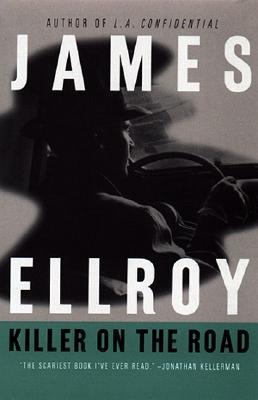
Horror Novel Review: Killer On The Road by James Ellroy


First published in 1986 and considerably shorter than the typical James Ellroy novel, Killer On The Road takes the form of the memoirs of Martin Plunkett, a child genius who grew up to be a prolific serial killer.

The book starts with Plunkett already serving a life sentence at Sing Sing.  He’s a killer who is now off the road and his memoirs are less about his plans and more about his own struggle to understand how he became the killer that he became.  There are plenty of possible explanations, going all the way back to his dysfunctional childhood and the trauma of his parent’s divorce.  He may be brilliant but he spends all of his time wishing that he could turn invisible like a comic book character and spy on people in their homes.  He comes to idolize Charles Manson but is disappointed when, while in prison, he meets the actual Manson and discovers that he’s just a rambling loser.  The book is written in Plunkett’s own words and, in typical sociopath fashion, he thinks very highly of himself but careful readers will look between the lines and see someone who is just as confused by what he became as everyone else.  For all of his intelligence and his nonstop speculation about the human condition, Plunkett ultimately seems like an empty vessel.  Plunkett’s years on the road are full of unexpected detours.  A meeting with a cop definitely do not go the way that anyone would probably expect it to go.  Even though the story is narrated Plunkett, people like FBI agent Dusenberg come across as fully developed characters as well.

It’s a disturbing and sad but compulsively readable book.  It may have been written before Ellroy developed his signature style but it stills shows his strengths as a storyteller.  Interestingly enough, Ellroy later stated in My Dark Places that he based Martin Plunkett’s dysfunctional youth on his own, which definitely leaves one happy that James Ellroy discovered writing as an outlet for his emotions.  Unlike Martin Plunkett, James Ellroy went on to become one of the best writers of our current era.

Horror Book Review: X-Isle By Peter Lerangis


X-Isle!?

Is this a book about an island that is populated by the twenty or so people who actually refer to twitter by it’s “new” name of X?

No, actually, it’s not.  X-Isle was published in 2002, in the days before social media and ever-present phones.  X-Isle is a slasher story, one in which a group of good-looking teens end up hanging out at the exclusive Spinnaker Lodge, a luxury resort on an isolated island.  It’s like that island that Kim Kardashian took all of her friends and employees to during the COVID epidemic?  Remember that?  Everyone else was locked inside or wandering around triple-masked while Kim went to an island and then scolded everyone else for not taking proper precautions.

(Sorry to get off topic there but seriously, the COVID era was messed up in ways that people are still struggling to full comprehend.)

Reading X-Isle, I found myself wandering if you really could write an effective, non-ironic, old school slasher story nowadays.  The whole key to the slasher genre is that people have to be isolated and there has to be no way of reaching out for help.  Every slasher movie now has to come up with some extended to reason to explain why no one can call the police.  Whenever a horror movie starts with someone saying, “Give me your phone, you’ll get it back after the weekend,” I roll my eyes a little just because it’s become such a cliche.  At this point, I imagine even Camp Crystal Lake has free wi-fi.  It’s easy to imagine a camp counselor tweeting out, “Help!  There’s a murderer at Crystal Lake!” and someone replying, “Whatever, Jussie.”

X-Isle gets off to a good start with a collection inner-office dossiers that introduce us to the main characters.  What the memo reveals is that the main requirement to work at the resort is a handsome face or a good body.  Once the story kicks in, we meet our group of potential victims and, unfortunately, none of them really live up to all the hype in the introduction.  We spend a good deal of time with Carter, a womanizer who, at one point, feels the need to tell us that he’s not psychotic despite the fact that his behavior is often manipulative and narcissistic.  When you actually have to tell people that you’re not a psycho, you probably are. Of course, in this book, Carter is one of the heroes.

Someone is killing guests and employees.  It’s a YA book so we don’t actually see the kills but the aftermath is described in properly grisly fashion.  The reveal of who the killer was doesn’t make much sense but, given that the book ends with a cliffhanger, that was perhaps deliberate.

Anyway, I’ve always kind of enjoyed the slasher genre, even with all of its cliches and its issues towards anyone who shows the slightest spark of independence.  X-Isle was a fast and entertaining read.  None of the characters were particularly likable which made it a lot less stressful to read about them being put in danger.  In the end, the main lesson is to stay away from mysterious islands.  That’s probably good advice.

Children of the Corn, Book Review by Case Wright


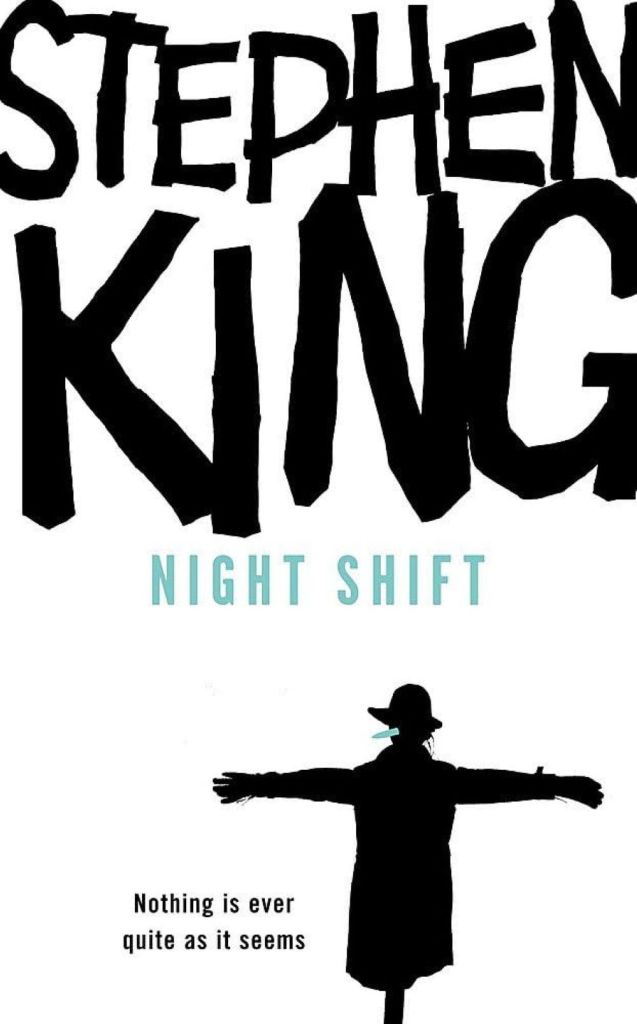
Horrorthon is in full swing; so, it’s time to review a classic: Children of the Corn from Night Shift. Night Shift is an anthology devoted to failure. It’s all about Men not measuring up and people getting hurt by their failings. Poor Stephen, he needs a hug. Children of the Corn was published in 1977 in Penthouse…the 60s and 70s were weird. I’m not anti-p0rn because I really don’t care, but why mix it with literature? Was it that the WWII and Boomer generations wanted a one-stop shop? If so, why not merge the p0rn, literature, fishing gear, and fire extinguishers?

If you’re reading an early King novel, be prepared to be depressed because it is always a gruesome and unhappy ending because a guy failed. Children of the Corn is no exception. I wonder if Night Shift wasn’t this clever anthology I always thought it was, but was actually Stephen King’s clumsy pitch meeting short story compilation? Many of the stories that were adapted to film were way better written. To be honest, the film versions of Stephen King’s short stories are usually significantly better than his books.

The plot is that Burt and his wife Vicky are trying to do a cross country trip to save their marriage. Once they arrive in Nebraska, they get trapped and sacrificed to a pagan corn god who likes to use children as his henchmen- a typical Nebraska custom. The Cornhuskers draw a big crowd, but in the off season, it’s always about the pagan corn god murders. During the Cornhusker season, the residents still do sacrifices, but the victims are deep fried with the other Fair Foods, which means that the victims are all A salted and Battered. *BOOM*

There are a few more details that I am leaving here like the He Who Walks Behind the Rows etc., but once you’ve seen one pagan corn god, you’ve seen them all.

Tommyknockers, Book Review, by Case Wright


Stephen King has had addiction issues his entire adult life. He’s very open about it. In fact, there are at least three books he’s said that he doesn’t remember writing because he was using more blow than Julie on The Love Boat- the books are The Shining, Misery, and The Tommyknockers.

The plot is that a spaceship crashed long ago in Maine and it takes over the brains of the lifeforms who interact with it. The main characters are Roberta AKA Bobbi who literally stumbles on part of the ship, starting the plot because it starts infecting the town. Gard, a four alarm alcoholic/poet and Bobbi’s former lover, comes to help her and is immune to the ship’s affect because of a steel plate in his head.

As the story progresses, the ship changes the town folk both mentally and physically. The townies make all kinds of wacky and interesting inventions without knowing how they work, lose most of their teeth, and they develop pig-like faces. I told you that he did a lot of cocaine when he wrote this book.

The townies use Gard to help them dig out the ship and there are MANY chapters on the digging logistics. It’s fair to say that Gard spent most of his time in this book as an alcoholic day laborer (maybe he even did some work on my upstairs bathroom because that was done really shitty). I think that you could actually say they were entire chapters just devoted to his digging and things like that; man, Stephen really needs an editor with a spine.

A classic Stephen King plot device is that there are people who power up a haunted house and Tommyknockers uses that to an extreme! Even before I became an engineer, I wonder if Stephen understood how batteries worked? Can you imagine what he did to his kid’s Christmas toys?!

While his stories have recurring plot devices, the heroic journey for his characters changed with his personal change in fortune. The stories in Night Shift and the others from the early part of his career were all about failure: failing your loved ones and failing to maintain control over your life. In those years, the heroes could only succeed by sacrificing their life. The way to stop from harming everyone around them was through suicide because “blood calls to blood” i.e. the family curse. I think that it is clear that the Blood is alcoholism and drug abuse- it’s inherited. When he was failing in life, suicide was described as the only option because the hero was the doorway to misery and I can tell you from my childhood an alcoholic father is definitely the doorway to misery.

After 1979, his career took off and his bank account to pay for copious amounts of cocaine. However, the happy endings became the standard. Money can cure a lot problems, but blood calls to blood and the demons will always remain, but that is what made this book stand out because like his novels in the early part of his career- the hero dies. He can’t save Bobbi and this book was at a high point of addiction. It seems clear to me that it crossed his mind that he couldn’t live with his addiction and that death was the only exit.

Tommyknockers is a messy beach read that is mostly entertaining. If you’re like on a vacation with some real downtime and the Wi-Fi is broken or you’re really into aliens, give it a read.


4 Books For The Weekend (10/3/25)


I want to start by recommending The Friday Afternoon Club, Griffin Dunne’s memoir of growing up amongst the rich and famous in Hollywood and Manhattan.  The son of Dominick Dunne and the nephew of John Gregory Dunne, Griffin Dunne came of age in the 60s and the 70s.  Reading his memoir, it’s easy to wonder if there’s anyone who he didn’t rub shoulders with at one time or another.  Sean Connery saves him from drowning when he’s just eight.  He attends one of Ken Kesey’s acid tests with John Gregory Dunne and Joan Didion.  A pre-stardom Harrison Ford does carpentry work at the Dunne family home and shares his weed with the young Griffin.  In New York, Griffin’s roommate and (for the most part) platonic best friend is a hyperactive young actress named Carrie Fisher.  While Griffin tries to find himself in Hollywood and New York, his father Dominick drops in and out of the film business.

For it’s first half, The Friday Afternoon Club is, at times, a laugh-out-loud memoir.  Griffin Dunne is a very funny storyteller and his command of language reveals a bright and insightful mind.  However, the second half of the book takes a dark turn with the murder of his sister, Dominique.  Dominique, who had just appeared in Poltergeist, was strangled by her abusive boyfriend, a chef named John Thomas Sweeney.  Griffin Dunne writes unsparingly of the horror of watching as Sweeney’s lawyers tried to present Dominique as somehow being to blame for her own death.  After the judge refused to allow the prosecution to introduce evidence showing that Sweeney had a history of abusing and choking women, the jury found Sweeney guilty of manslaughter.  (The jury foreman later said that, if the jury had been allowed to hear the evidence of Sweeney’s past abusive behavior, they would have found Sweeney guilty of murder.)  Sweeney was sentenced to six years in prison and was paroled after only 30 months.  Griffin Dunne writes of the years that both he and his father spent obsessing on Sweeney’s whereabouts.  (Sweeney, for those curious, continued to find work as a chef even after his prison sentence.  He currently goes by the name of John Maura.)

It’s a powerful memoir.  Griffin writes honestly about his dysfunctional family, describing even their conflicts with a good deal of love.  Probably the most touching passages in the book are about his relationship with his brother Alex, the one member of the family to see through Sweeney from the start.  Those looking for Hollywood gossip will find plenty, though Griffin is never malicious.  Those looking for details about the filming of An American Werewolf in London and After Hours will find those as well.

Published earlier this year, Susan Morrison’s Lorne is a biography of Lorne Michaels, the man behind Saturday Night Live.  Lorne has actually produced quite a few other shows and movies but, as this book makes clear, his legacy will always be Saturday Night Live.  The book follows Lorne from his beginnings in Canada to his time as a counter-culture tastemaker to his current position as a senior member of America’s cultural establishment.  Lorne went from being a rebel to being a member of the club and, reading about the process, one comes to suspect that he was always more comfortable in the club than outside of it.  It’s an interesting journey and the Lorne Michaels who emerges is occasionally idealistic, occasionally pragmatic, and — even after 595 pages — rather enigmatic.  It’s a fascinating story, one that provides insight into American culture has changed and developed over the past 50 years.  There’s certainly more insight to be found in this book than in Jason Reitman’s Saturday Night.

On a similar note, Todd S. Purdum’s Desi Arnaz: The Man Who Invented Television argues that Arnaz deserves far more credit for …. well, inventing television than he’s usually given.  Often dismissively described as being Lucille Ball’s less talented husband, Purdom persuasively argues that Arnaz deserves far more credit for the success of I Love Lucy than he is commonly given.  The book details how Arnaz’s family lost their fortune in one of Cuba’s many revolutions, how Arnaz came to America and built a career for himself, and how Arnaz revolutionized television as the producer of I Love Lucy.  The book deals with both the good and the bad of Lucy and Desi’s marriage.  Desi emerges as a complex and flawed character, one whose career never really recovered after his divorce from Lucille Ball.

Finally, an old friend recommended that I read Bryan Burrough’s 2015 book, Days of RageDays of Rage takes a look at the the domestic terrorism of the 70s, the bombings, kidnappings, and even murders that were committed by members of such groups as the Weatherman, the BLA, the SLA (they kidnapped Patty Hearst), and the FALN.  Along with taking a look at the motivations of the terrorists themselves, Burrough also writes about how the FBI reacted.  In the end, it’s a book without any heroes.  The FBI frequently violated the law in their pursuit of domestic enemies.  Meanwhile, the radicals often come across as being a collection of hypocrites who were essentially more interested in playing revolution than actually accomplishing anything.  The Weathermen, in particular, come across as being a bunch of smug and overly privileged LARPers.  It’s an interesting book and one that feels very relevant in our current cultural moment.

Check out my previous book recommendations here!

Horror Novel Review: My Secret Admireir by Carol Ellis


First published in 1989, My Secret Admirer tells the story of Jenny.

Jenny is a teenager who has lived in four different town over the past six years.  Her dad’s job requires him to move from town to town and her mother doesn’t like the idea getting tied down anywhere.  I have to admit that I could relate to Jenny because my family used to move all over the place.  By the time I was 12 years old, I had lived in Texas, Oklahoma, Arkansas, New Mexico, Colorado, and Louisiana.  Frequently moving meant that I had to continually get used to new towns, new schools, new teachers, and new friends.  Years later, I realized that spending my childhood on the go left me with massive trust and abandonment issues.  In other words, it really sucked.  My heart went out to Jenny.

When the book opens, Jenny has only been in her new home for a few days.  She’s still nervous about the house and the town.  She’s scared of the hills that are near her home and the rocky bluffs that sit behind the hills.  She worries about wild animals.  She doesn’t know anyone in town and school doesn’t start for another few days.

So, of course, her parents decide to abandon her.

When they are informed that their old house has been sold, Jenny’s parents buy plane tickets so that they can fly back to their former home and collect the rest of their belongings.  Jenny is left behind so that she can deal with the painters (who are scheduled to show up in three days).  Parents in YA book — especially YA horror books — are usually not that great but I have to say that Jenny’s parents take selfish parenting to a whole other level.

Fortunately, Jenny meets her neighbor, the very talkative Sally.  Sally ropes Jenny into taking part in a big scavenger hunt.  During the hunt, Jenny meets Dave and his bitchy girlfriend, Diana.  Diana and Dave are having a fight so Dave teams up with Jenny for the scavenger hunt and, within an hour or so, Jenny and Dave are in love.  Unfortunately, the scavenger hunt does not go as well for Diana.  A day after a sudden storm brings the hunt to a close, Diana is found at the bottom of the cliff.  With Diana in a coma, Jenny wonders if it’s possible that Dave pushed her.

Meanwhile, Jenny seems to have a secret admirer, someone who calls the house and leaves messages on her answering machine.  It’s all good and well until someone leaves a present on her porch.  When Jenny opens the package, she discovers the head of a rattlesnake!

This novel was fairly ridiculous.  Between Jenny’s parents basically abandoning her in a town and house that she barely knew to Jenny falling in love with Dave after spending 30 minutes with him, this book was all about people making bad decisions.  Unfortunately, despite all of the silly plot developments, the book never quite becomes the sort of over-the-top, melodramatic spectacle that one might hope it would become.  That said, I could relate to how Jenny felt about always being the new girl and it was a quick read.  For that matter, I don’t like heights either.

In the end, the book’s message was one to which I could relate:

No, not that!  Instead, if you believe in yourself, you can get a boyfriend and you can survive being stuck in a scary old house!  That’s an important lesson to learn!


Horror Book Review: Driver’s Dead by Peter Lerangis


Poor Kirsten!

In the 1994 novel Driver’s Dead, teenage Kirsten is not only currently living in a house that she thinks might be haunted by the ghost of the son of the previous owners but she’s also somehow gotten a reputation for being a bad driver!  (Ironically enough, the son of the previous owners was also killed in a car crash …. or was he?)

When it come to having one’s driving unfairly criticized, I could relate to Kirsten.  I can still remember the pain of those days when I was “learning” how to drive.  Learning is in quotes because, quite frankly, I already knew how to drive.  I had seen enough TV shows and gone on enough road trips with my family to know which pedal to push and how to turn the steering wheel.  And yet, every driving instructor that I had to deal with insisted on being like totally critical of me.  One of the first times that I drove on the road, I got yelled at by the instructor because I didn’t look both ways before making a lane change.

“I looked in the rearview mirror!” I snapped.

Apparently, that was not the right answer because she kept yelling at me until I finally said, “How am I supposed to concentrate on driving with you talking all the time!?”

That also did not go over well.  That particular instructor refused to ride with me anymore.  I went home in tears so my mother went up to the school and yelled at all of the instructors for being rude to me.  The next time I drove, it was with the owner of the school, who was much nicer to me.  The owner of the school asked me if I had a lazy eye.  “Not anymore,” I replied.

Anyway, you get my point.  I somehow managed to get my license despite having to deal with some pretty clueless driving instructors.

Anyway, back to Driver’s Dead.  Kirsten decides to deal with her driving struggles by getting some help from Rob.  Rob shows her how to drive but it turns out that his father is a big-time racist and Rob is kind of a jerk as well.  When Rob tries to grope her, Kirsten tells him to get lost.  (Yay!)  Then Rob turns up dead.  Uh-oh.

Who murdered Rob and how is it connected to the blood that keeps seeping out from underneath the closet in Kirsten’s bedroom?  And what to make of Mr. Busk, the alcoholic driver’s teacher who has apparently never gotten over his experiences in Vietnam?

Driver’s Dead is a YA book from the mid-90s so it’s definitely a bit dated.  Check out the reference to floppy disks and running DOS on a computer!  Check out Kirsten’s crush on Jason Priestly!  But I still found it to be entertaining because Kirsten was a likable character and the plot neatly mixed the supernatural with a standard YA mystery story.

Plus, who can’t relate to being a better driver than most people realize?  Ghosts and murder aside, I shared Kirsten’s struggle.