Gerald’s Game- Book Review by Case Wright


ggame4

Hello Horrorthon Readers! It’s a great day to get scared and Retweet and Reblog my work! “Gerald’s Game” is a throwback for Stephen King.  It was published in 1992 and his readers were used to near or over 1000 page tomes.  This book clocks in at a meager 332 and is very pithy and often gross.  At this point in King’s life, he was in the middle of or just finished a relapse into drugs and alcohol.  Gerald’s Game mirrored his life in many ways; he was tormented by his past and incarcerated by his unresolved demons in his present.

The story depicts Jessie, a woman, who has become subservient to her husband.  Over the years of their unequal marriage, she has given up her career and identity at his request to be his quiet lawyer’s wife.  This manifests into Gerald’s last desire of pure possession.  He begins play a sex game with his spouse where she role plays a handcuffed woman and he plays a pirate rapist.  To get the full effect, Gerald uses an off season beach house to use for his game because there will be no one who could come to her aid.

When Gerald begins to perform is rape-game, Jessie decides that she has had enough.  She stands up to Gerald, but he decides to rape his handcuffed wife.  This causes Jessie to snap and kick Gerald right in the balls, giving him a fatal heart attack.  Jessie’s road to hell turns into the autobahn.  A dog comes by and eats her husband’s dead body, causing her psyche to kick into high gear hallucinations.  In order to save herself, she must deal with her past and how all of her decision led her to her current situation.

This book also deals with two horrific acts that recur often in King’s work – Incest and Rape.  The rape/incest scene in this book is purely vomit inducing.  We are forced to live through Jessie’s horrible present and past.  Her psyche appears often as a college friend and her younger self as a puritan who is being pilloried for sexual enticement.  The sexual enticement charge being her self-blame for her father raping her.  The book makes you live through each and every moment of her losing her sense of self and volition.

As in his other books, King likes the idea of a primitive sacrifice to conquer a monster or a demon.  We see that in It, The Stand, Misery, and his many other stories.  In this story, her psyche let’s her know how free herself after she deals with the ghosts of her past.  The solution: she must …… I’m not spoiling it that much.  You know me better than that by now.

I would recommend this book, but the creepy factor is extremely high.   I would recommend this book in audio or paper format.  It is perfect for a plane ride or if your weekend plans fall through.

Book Review: The Zero Factor by William Oscar Johnson


Consider this.

William Henry Harrison was elected President in 1840.  A few months later, he became the first President to die in office, the result of giving a rambling inauguration speech in the rain.

Abraham Lincoln was elected in 1860.  He was assassinated by an actor in 1865.

James A. Garfield was elected in 1880.  He was shot and subsequently died of medical malpractice in 1881.

William McKinley was reelected in 1900.  He was assassinated by a leftist in 1901.

Warren Harding was elected in 1920 and was murdered by his wife in 1923.

Franklin D. Roosevelt was reelected in 1940.  He died of natural causes in 1945.

John F. Kennedy was elected in 1960.  He was assassinated by a lone gunman in 1963.

The second President to die in office, Zachary Taylor, was elected in 1848 but died in 1850!  (In his case, he was either poisoned or died of natural causes.  It depends on which book you read.)

That is the Zero Curse.  For a period of 120 years, any president was elected in a zero year died before the end of his term.  Some people thought it was a coincidence.  Some people thought it was a supernatural occurrence.  Whatever it was, it was a strange piece of American history.

In fact, it even inspired a novel!  The Zero Factor was published in 1980, presumably to capitalize on that year’s presidential election.  The Zero Factor tells the story of Augustus “Gus” York, a Republican governor who is nominated for President after the convention deadlocks.  Gus is honest, homespun, and naive.  To everyone’s shock, Gus narrowly wins the election.

Gus is an ethical President whose moderate political stances manage to alienate every powerful person in the world.  Not surprisingly, a group of evil rich people hire an assassin to take out President York.  Will Gus be able to survive the zero factor!?

So, this may seem like a strange book to review for October and I’ll be the first to admit that I nearly scheduled this review for November.  However, the book does feature three rather odd scenes where Gus is haunted by the ghosts of the zero year presidents.  Those scenes are actually a lot of fun.  I especially liked the description of Franklin Roosevelt’s ghost rolling around the Presidential bedroom while his eyes glow a ghostly yellow.  Best of all, Gus gets advice from the ghost of my favorite scandalous president, Warren G. Harding!  Thanks to President Harding and the gang, The Zero Factor can be classified as a book for October.

As for the rest of the book, it’s a well-written political thriller.  At times, the book’s politics can be rather heavy-handed (why write about a Republican President if you’re just going to make him act like a Democrat?) and the portrayal of the gay assassin is dated and a bit cringe-inducing.  But Gus is a likable character and I appreciate any book that takes the time to rehabilitate Warren Harding.

As for the Zero Curse, it was broken by the President who actually was elected in 1980, Ronald Reagan.  George W. Bush continued to break it in 2000.  (That said, both Bush and Reagan were targeted by potential assassins during their presidencies.)  The next zero year election will be 2020, an election that looks like it’s going to involve a record number of elderly candidates.

Book Review: 666 by Jay Anson


Published in 1981, 666 is a book that will make you wonder, “How do people not know what 666 means?”

It’s the story of Keith and Jennifer, an attractive young couple who move into a new home and immediately become fascinated by the empty house across the way.  The empty house’s address is 666 Sunset Brooke Lane and no one finds that strange.

Keith decides to explore the house and discovers not only a coin that was minted by the Roman Empire but also a stained glass window that appears to feature someone who looks exactly like him.  Keith does find that strange but it still doesn’t occur to him that there might be a clue to be found in the address.

Jennifer friend, David, decided to rent out 666 Sunset Brooke Lane and immediately starts to have visions of not only Christians being tortured during the reign of Nero but also of a naked Jennifer standing on the house’s front porch.  And yet, David never associates this with the house’s address.

Keith’s brother is a priest (!) who is investigating a local Satanic cult and yet somehow, it never occurs to him to be concerned about 666 Sunset Brooke Lane.

Anyway, it all ends in (tame) sex, violence, and tragedy, as these things often do.  The main lesson that I took away from this book was that you should be concerned if a notorious murder house suddenly appears in your backyard.  It’s a lesson that I won’t forget.

666 was written by Jay Anson, who had previously written a “non-fiction” book called The Amityville Horror666 is a story about four incredibly dumb people, all of whom inspired me to shout, “Why don’t you just leave the damn house!?” more than a few times.  That said, it’s also enjoyably pulpy and the main characters are all so thinly drawn and unlikable that you really don’t mind when they start dying.  Though you’ll be shaking your head at many of the book’s implausibilities, the final chapters are crudely effective and, when it’s time to describe the torture techniques of ancient Rome, Anson goes all out.

Plus, the book has a really cool inside cover!

Book Review: Carrie by Stephen King


First published in 1974, Carrie is often cited as being Stephen King’s first novel.

That, of course, isn’t technically true.  King had written three novels before Carrie, the majority of which weren’t very good.  Carrie is a novel that King says he wrote in a hurry because he was living in a trailer and needed the money.  It’s also a novel that King says he had absolutely no faith in because he didn’t feel like he could write from a female perspective.  Despite King’s then-low opinion of what he had written, Carrie went on to become his first published novel.  Thought the novel wasn’t an immediate success (the hardback edition only sold 13,000 copies), it subsequently became a best seller after it was adapted into Brian DePalma’s 1976 film of the same name.

By now, we all know the story, don’t we?  Even if you’ve never read the book or seen any of the film versions, there’s been so many different rip-offs and unofficial remakes of Carrie that I doubt that there’s anyone who doesn’t know the story.  Everyone knows that Carrie White was a high school outcast and that her mother was a religious fanatic.  We all know what happened the night that Tommy Ross took Carrie White to prom.  We all know about the cruel prank that was played on Carrie, about the pig’s blood that was dumped on her right after Tommy and Carrie were crowned king and queen of the prom.  And we all know that Carrie’s response was to use her own telekinetic powers to burn down the entire town and to kill the majority of her tormentors.

44 years after it was first published, it’s still interesting to read Carrie.  On the one hand, you can definitely see the beginnings of King’s signature style, especially towards the end of the book when Sue Snell comes across a dying Carrie.  On the other hand, this book is definitely different from any other King novel.  For one thing, it’s only 199 pages long.  Living in a trailer and struggling to make ends meet may not have been easy for King but I would say it actually made him a better writer.  Carrie contains none of the rambling, self-indulgent filler that’s come to typify much of King’s recent work.  One imagines that, if King wrote Carrie today, we’d have to wade through at least 500 pages of people talking about the history of psychic phenomena before the book even got around to Sue asking Tommy to take Carrie to prom.  Instead, because King was writing while hungry, there’s a hunger to the book.  It doesn’t waste any time.

King structured the novel so that half of it was narrative and half of it was, for lack of a better term, evidence.  We get excerpts from police reports, newspaper articles, and books written after the prom disaster.  The White Committee offers up their official report.  We get to read a little bit of Sue Snell’s book, I Am Sue Snell.  I imagine the structure was largely the result of King’s self-confessed insecurity with the book’s subject matter.  (For instance, whenever you doubt that Tommy Ross would actually take Carrie to prom, an except from the final report of the White Committee pops up and assures you that he did.)  Though borne of insecurity, the structure actually works pretty well.  It leaves little doubt that, after Carrie’s prom, the world will never be the same again.

The thing that really struck me while rereading this novel was that Stephen King himself seemed to dislike Carrie White almost as much as her classmates did.  King focuses, to an almost uncomfortable degree, on Carrie’s unattractive appearance and, often times, he seems to be keeping his own distance from his main character, as if he was weary about trying to get inside of her head.  When Carrie does go on her rampage, she comes across more as an out-of-control monster than someone who has been pushed too far.  Our popular conception of Carrie being a tragic victim really has more to do with how Sissy Spacek played her in the original film than in how King wrote about her in his novel.

Instead, the book is far more concerned with Sue Snell and Tommy Ross, who are both portrayed as being everyone’s idealized high school companion.  As both a novel and a film, Carrie‘s greatest weakness has always been that the plot hinges on the idea that any teenager, no matter how guilt-ridden, would actually ask their romantic companion to take someone else to prom.  The pig’s blood, I believe.  The prom, less so.

Carrie has its flaws but, to be honest, I actually think it’s better than some of King’s more recent books.  If nothing else, it’s a chance to look into Stephen King’s mind before he became the Stephen King.

Book Review: THE LAST STAND by Mickey Spillane (Hard Case Crime 2018)


gary loggins's avatarcracked rear viewer

2018 is the centennial anniversary of Mickey Spillane’s birth! Spillane got his start in comic books, then caused a sensation with his 1947 novel I, THE JURY, introducing the world to that hardest of hardboiled PI’s, Mike Hammer. Hard Case Crime, an imprint every pulp fiction fan should know about, celebrates Spillane’s birth by releasing THE LAST STAND, The Mick’s last completed novel, with a bonus unpublished novella from the early 1950’s.

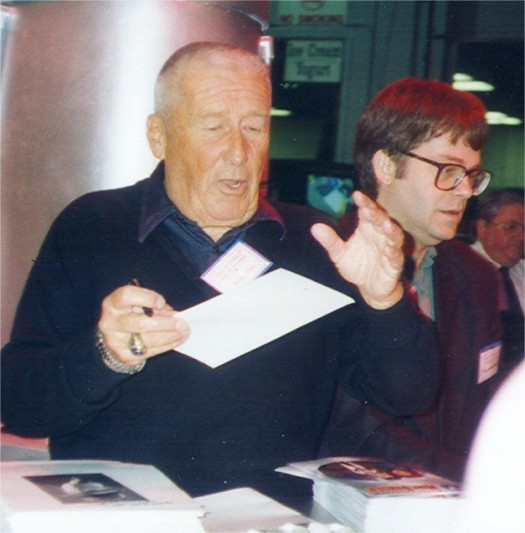
Spillane with friend/literary executor Max Allan Collins

Mickey’s literary executor and friend Max Allan Collins writes the introduction. Collins is no stranger to the hardboiled genre himself, having been Chester Gould’s replacement on the long-running comic strip Dick Tracy from 1977-92, author of the graphic novel ROAD TO PERDITION, and the Quarry series of books (made into a Showtime series in 2016). Since Spillane’s death in 2006, Collins has been editing and completing the writer’s (“I’m not an…

View original post 553 more words

Book Review: Bob Honey Who Just Do Stuff by Sean Penn


The debut novel of actor Sean Penn, Bob Honey Who Just Do Stuff basically reads as if it was written by someone who read the first thirty pages of Thomas Pynchon’s The Crying of Lot 49 and then thought, “I could do this!  How difficult can it be!?”  When the book first came out, several critics declared it to be the worst novel ever written but I don’t know if I’d go that far.  It may very well be the worst novel of 2018 but it’s not really memorable enough to deserve the grand title of worst ever.

It’s very much a debut novel, which is to say that there’s no plot, all of the characters have cutesy names, and it’s absurdly overwritten.  Penn really goes out of his way to let you know that he owns a thesaurus.  Making it somehow even more annoying is his habit of using footnotes to explain any word or acronym that he suspects that we, being mere readers, will not be able to understand.

As far as I can tell, each chapter is about whatever Penn was upset about on the day that he wrote it.  The first half of the novel is all about Bob Honey making money selling plumbing equipment to Jehovah’s Witnesses and murdering old people because old people take up too much space.  Though the entire book takes place in Honey’s mind, we’re never quite sure who Bob Honey is because Sean Penn himself doesn’t seem to know.  Penn came up with a silly name and a stupid career and some random quirks and then I presume he forced his friends to read the first few chapters.

“Did you like it?” Penn asked.

“Uhmmm…” his friends replied, “It’s …. uhmmm … interesting….”

“I know!  It really is!”

The second half of the book was written after Trump was elected President because Bob Honey suddenly goes from being apolitical and ennui-stricken to suddenly being really pissed off that the country has been taken over by “The Landlord.”  Suddenly, Bob Honey is a woke assassin and you get the feeling that if Hillary Clinton had won, Penn never wouldn’t have had any idea how to finish the book.  However, since Trump won, the book ends with a lengthy poem in which Penn mentions every political cause that he cares about, along with letting us know that he’s skeptical about #MeToo.  Thanks for sharing, Sean.

It’s a strange book because, on the one hand, Penn seems desperate to let us all know how woke and anti-Trump he is but, at the same time, it’s hard to read Bob Honey and not come away with the impression that Sean Penn really doesn’t like, trust, or respect women.  Every woman who appears in the book is either ridiculed for being simple-minded or portrayed as being inherently evil.  Honey is obsessed with his ex-wife, who drives an ice cream truck, for some reason.  I kept expecting some sort of scene between Bob and his ex-wife but no.  Instead, Honey just sees her truck and then let’s us know that everything’s basically her fault.  It appears that the only reason she’s in the book is so Sean Penn can yell, “Ice cream truck!  YOU GET IT!?  ICE CREAM TRUCK!  SYMBOLISM, YOU RED  STATE PHILISTINES!”  There is only one vaguely positive female character in the book but she’s only present in flashbacks and Penn spends more time talking about her vagina than her personality.  Plus, she’s described as being hairless because … reasons, I guess.  The book comes across as if Penn wrote it in between jerking off to his whore/madonna complex.

As I said, there’s really no plot.  Bob Honey gets annoyed.  A reporter bothers Bob Honey.  Bob Honey thinks about how much he hates women.  Bob Honey goes to Baghdad during the Iraq War.  Bob Honey goes to New Orleans in the aftermath of Katrina.  Basically, it’s a tour of places and things that Sean Penn has never experienced but which he has probably considered making a movie about.

(And, to give credit where credit is due, the books reads like something Uwe Boll would have vomited onto the screen.)

Here’s the thing: if you wrote this book, you wouldn’t be able to get it published and people would probably take your obsession with finding a hairless lover as evidence that you should be on a sex offenders list.  Because Sean Penn is Sean Penn, he gets his book published and then gets to appears on talk shows to defend the stupid thing.  If you’re a real writer (as opposed to someone who just woke up one day and said, “I’m going to write a book!”) and that doesn’t leave you outraged, then you’re not paying attention.  Because as bad as Bob Honey is, Sean Penn’s second novel will probably be published as well.  While you’re working hard on a fourth rewrite, Sean Penn will be appearing on Colbert and promoting Bob Honey Who Just Do Stuff Part 2.

A lot of people have held up Bob Honey as evidence of Sean Penn’s stupidity.  I don’t think he’s so much stupid as he’s just insecure.  A common theme when it comes to anything that Sean Penn does appears to be a desire to be known as more than just a good actor.  As a result, Penn directs overwrought movies that take themselves too seriously.  (I mean, I liked Into the Wild but, even while watching that film, it seemed like a minor miracle that Penn restrained his instinct toward pretension just enough not to blow it.)  He goes on talk shows and insists that, despite all evidence to the contrary, Hugo Chavez was a great guy and people in Venezuela are really, really happy.  He takes it upon himself to let Oscar viewers know that “Jude Law is one of our finest actors” and he sends angry, profane notes to the creators of South Park.  And, of course, he ends up writing books like Bob Honey Who Just Do Stuff.  “Look, world,” Penn seems to be shouting with all of this, “I’m complicated!  There’s more to me than you think!”

And you have to wonder: why not just take joy in being really, really good at what you actually can do?  Sean Penn’s performance in Milk probably did more for the cause of human rights than any book he could ever write or speech he could ever give.  And yet, apparently, that’s not enough.

We need good actors who are willing to give performances in films that might otherwise not get made without a “name” in the cast.

We don’t need a sequel to Bob Honey.

Hopefully, Sean Penn will rediscover his love of acting before writing one.
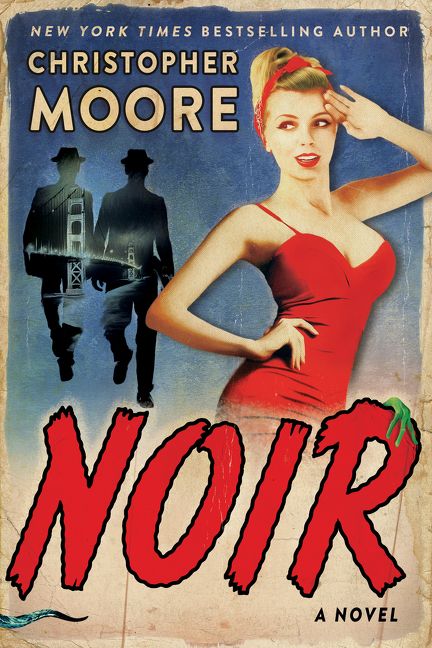
Book Review: NOIR by Christopher Moore (William Morrow 2018)


gary loggins's avatarcracked rear viewer

In between everything else I do, I read about a book a week, mainly mystery fiction. Current favorites include James Lee Burke, Lee Child, Michael Connelly, Janet Evanovich, and John Sandford, all with their own unique styles, and all masters of the genre. But when I need a good laugh, I pick up Christopher Moore. I first became aware of Moore’s work with his brilliant 2002 novel LAMB, OR THE GOSPEL ACCORDING TO BIFF, CHRIST’S CHILDHOOD PAL, an irreverent satire narrated by Jesus’s good buddy Biff that’s as outrageous as it sounds, and sinfully funny to boot.

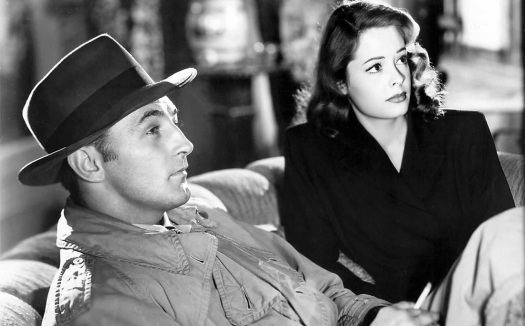
Robert Mitchum and Jane Greer in “Out of the Past” (RKO 1947) have nothing on Sammy and The Cheese!

This time around, Moore goes from taking on the Scriptures to the hard-boiled world of Raymond Chandler and Dashiell Hammett. The novel is set in 1947 San Francisco, a very good year for noir

View original post 303 more words

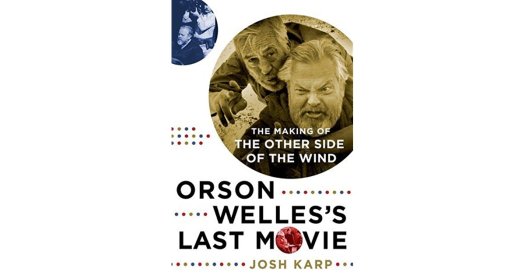
Book Review: ORSON WELLES’S LAST MOVIE by Josh Karp (St. Martin’s Press 2015)


gary loggins's avatarcracked rear viewer

There’s a lot of buzz around the film community about THE OTHER SIDE OF THE WIND, Orson Welles’s unfinished film begun in 1970 that he worked on for almost a decade. Welles used different film stocks (8, 16, & 35 MM) and varied his styles to create a film-within-a-film focusing on the early 70’s clash between the Old Hollywood of the studio system and the New Hollywood auteurs (Welles, the ultimate auteur himself, disdained the term).  Netflix has announced the film has finally been restored and completed with the help of an Indiegogo campaign, and will be available for viewing sometime in 2018 (When, Netflix, when???). In the meantime, you can read author Josh Karp’s fascinating 2015 book ORSON WELLES’S LAST MOVIE: THE MAKING OF THE OTHER SIDE OF THE WIND.

Karp gives us a fast-paced look behind the scenes of a genius at work, creating art on…

View original post 283 more words

Book Review: Fahrenheit 451 by Ray Bradbury


Tonight, HBO will be premiering a new film version of Fahrenheit 451, one that stars Michael B. Jordan as “fireman” Guy Monag and Michael Shannon as his boss, Captain Beatty.  If one may forgive the expression, it’s a hotly awaited production.

That said, regardless of whether the HBO film lives up to the hype or not, don’t forget to read the book that inspired it!

Written by Ray Bradbury and originally published in 1953, Fahrenheit 451 takes place in, what was then, the near future.  It’s a world where the citizens are too shallow to realize that they’re living under an authoritarian regime.  Everyone is kept docile through the use of pharmaceuticals and there is no culture beyond what’s televised on the “parlor walls.”  (Actually, Bradbury’s near future doesn’t sound that different from our present.)

It’s a world where books are forbidden.  Of course, some citizens still insist on trying to hide books in their attics and their basements but, fortunately for the government, there’s always somebody willing to inform.  Whenever it’s discovered that’s someone’s been hoarding books, the firemen are deployed.  Of course, these fireman aren’t used to put out fires.  Instead, they burn books.  Fahrenheit 451, we learn early on, is the temperature at which paper will burn.

Guy Montag is one of the firemen.  Though he can’t always explain why, he doesn’t feel satisfied with his “perfect” life.  Even when his wife Mildred survives an overdose of sleeping pills, Montag can hardly be bothered to react.  Guy has started to have doubts.  When he meets a teenage girl named Clarisse, he’s stunned when she says that she doesn’t care about “how.”  Instead, she cares about “why.”  Guy finds himself intrigued by Clarisse, even if he still finds himself wondering if she’s going to inform on him.

And then there’s Captain Beatty!  Beatty is Montag’s boss but at times, he almost seems to be encouraging Montag to doubt the system.  Beatty even reveals that he used to be an avid reader himself.  Is he sincere when he encourages Montag to read or does he have ulterior motives of his own?

Fahrenheit 451 holds up remarkably well.  True, some of the dialogue is a bit clunky and things slow down a bit whenever Montag interacts with Faber, a former English professor.  But, much like Orwell’s 1984, the book’s central theme remains relevant today.  Right now, there are people on both the Right and the Left who would happily burn books if it meant doing away with ideas and opinions with which they disagree.  (I imagine even some of our self-righteous centrists would be more than willing to burn a book or two in the name of bipartisanship.)  Democracy dies not in darkness but in ignorance and the best way to keep a population ignorant is to not only burn anything that challenges the state but to also ridicule the very idea of thinking for one’s self.  That is the society that Bradbury portrays in Fahrenheit 451 and it’s one that feels very much like our own.

One final note: I found my copy of this book at Half-Price Books last December.  The copy that I found once belonged to a student named Ashley and she filled the margins with notes about her friends Taylor and Sidney.  At the start of the book, they were best friends.  About halfway through, she suddenly hated both of them but, by the end of the book, they were friends again.  Yay!

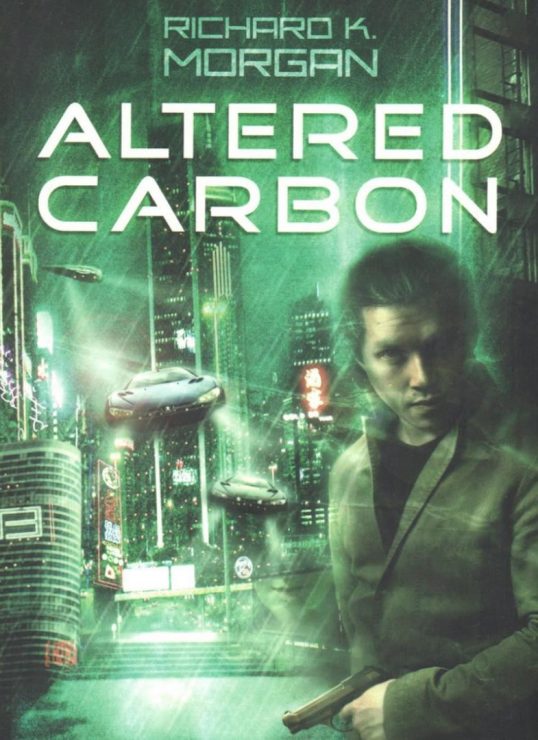
Altered Carbon, Book Review by Case Wright


Altered-Carbon-bc

I grew up loving pulpy detective stories of the 40s.  Sam Spade and The Thin Man were my heroes from another time.  They dealt in visceral reality and tarnished ideals, but still meted justice to the deserving.  However, because of the mores of the time period, the more explicit side could only be implied.

“Altered Carbon” takes the Gumshoe genre mixes in the concept of a Ronin (A Japanese samurai who no longer has a liege lord and becomes a sword for hire), has the mystery take place hundreds of years in the future, but still keeps the setting of the Rainy City (Seattle, My Home) and Bay City (Future San Francisco).  What results is the greatest pulp detective story that I have ever read.  The story touches upon issues of morality and our technology stripping us naked of our humanity.

In the future, we are able to download our memories onto flash drives and re-upload them into “Sleeves” (bodies grown or bought).  Crime is punished by you losing your body and putting your consciousness on a server where it will remain for as long as 200+ years, making you return to a body not your own and family scattered in time.  We have colonized worlds throughout the galaxy and corporations and the super rich rule us all.  The wealthy are able to have unlimited bodies to download into, giving them immortality and total perversion.

Takeshi Kovac is taken out of storage by an extremely wealthy man – Lorenz Bancroft- who is over 300 years old because he wants to find out who “murdered” him.  Lorenz has his consciousness saved to a remote server every 48 hours. During the last 48 hours, he was murdered or he killed him self. He doesn’t know who is out to kill him.

Lorenz chooses Kovacs because Kovac’s is a former “Envoy” (hyper-trained marine of the future).   His senses are honed to make him a badass Sherlock Holmes!

Kovac’s mission is to dig into the underworld of the future to find the killer. The whodunnit is filled with twists, violence, and the steamiest sex scenes to print. The novel pushes our understanding what makes us human and the Id run riot!

If sex, violence, and mystery doesn’t interest you, keep browsing, but you’re making a mistake.

I’m going to be cautious about spoiling anything in this excellent book, but I will tease some more as to why it should be read.