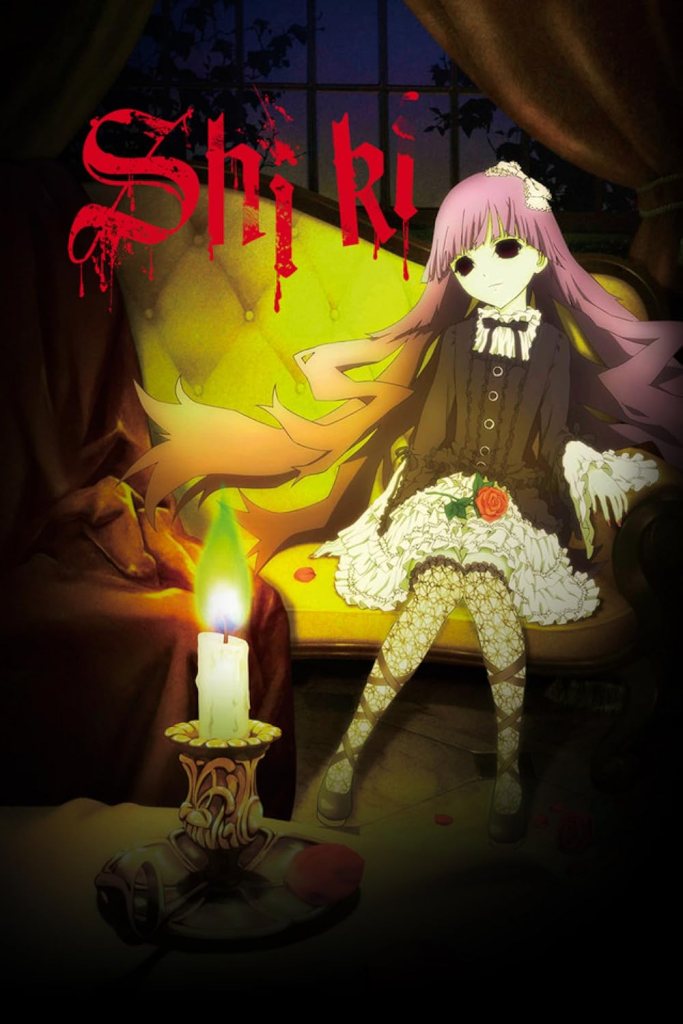
Anime You Should Be Watching (Horror Edition): Shiki (dir. by Tetsurō Amino)


The anime adaptation of Shiki, based on Fuyumi Ono’s acclaimed horror novel and directed by Tetsurō Amino, stands as a rare specimen in the horror genre. Rather than relying on quick shocks, excessive gore, or typical jump scares, Shiki unsettles its audience through atmosphere, moral erosion, and the slow, relentless unraveling of human conscience. Premiering in 2010, the series unfolds at a measured, almost meditative pace, transforming what could have been a simple vampire tale into a profound meditation on survival, faith, fear, and the delicate boundary between life and death when everything is pushed to the brink.

The story is set in Sotoba, a small, isolated village nestled precariously near a larger modern metropolis. The residents of Sotoba live tightly woven lives, their routines and social bonds preserved with careful attention over generations. This fragile peace shatters when a mysterious wave of deaths begins sweeping through the population. At first, these fatalities are dismissed as consequences of the harsh local climate—heatstroke, seasonal illnesses, and the inevitable toll of old age. Yet, as the body count rises, the truth reveals itself to be much darker: the deceased are rising as vampires, known locally as “shiki” or “corpse demons,” creatures that survive by feeding on the living.

What distinguishes Shiki from many other vampire narratives is its refusal to paint the conflict in stark black-and-white terms of good versus evil. The shiki are portrayed not as mindless monsters but as tormented souls, burdened by memories, emotions, and guilt over what they have become and the horrors they must commit to survive. Conversely, the human villagers—once caring and close-knit neighbors—succumb to suspicion, fear, and eventually cold-hearted survival instincts. The real horror emerges as morality frays and the line between human and monster becomes irrevocably blurred.

Unlike classic horror tales set in small towns—such as Stephen King’s ’Salem’s Lot, where a seemingly idyllic village hides sinister supernatural forces—Shiki offers a nuanced inward gaze. For instance, the novel They Thirst situates vampirism within a sprawling urban landscape, where anonymity accelerates chaos and alienation. In contrast, Shiki uses the microcosm of Sotoba to emphasize intimate, communal decay. The focus is not just on the physical threat, but on the erosion of social bonds and moral fabric, revealing how fragile human civility truly is under stress.

While ’Salem’s Lot depicts vampires as a pure evil contaminating a tight-knit community—highlighting themes of moral corruption and contamination—Shiki explores moral ambiguity with far greater depth. The vampires, including the enigmatic Sunako Kirishiki, retain their memories, emotions, and even remorse. Both vampires and humans carry guilt and anguish, complicating simplistic notions of villainy. The villagers—their friends, family, and neighbors—begin to see the suffering of the vampires while realizing their own brutal deeds. The narrative challenges viewers to question whether survival excuses the loss of morality or if it is possible to retain one’s spirit even amid brutal chaos.

At the heart of the series are characters who embody competing moral philosophies. Natsuno Yuki, a cynical teenager newly transplanted to Sotoba from the city, provides both an insider and outsider’s perspective. His disillusioned view highlights how fear, suspicion, and grief can unravel even the most intimate relationships. Natsuno serves as a rational voice within a community unraveling into paranoia and despair, offering a reflection of the audience’s own struggle to comprehend the incomprehensible.

Dr. Toshio Ozaki exemplifies the desperate human desire for order amid chaos. Initially, he seeks to explain away the deaths with rational, scientific explanations grounded in medicine. However, when superstition and supernatural realities intrude, Ozaki is compelled to confront truths beyond his understanding. His leadership in trying to save Sotoba begins with scientific resolve but soon descends into moral compromise. As hysteria spreads, the villagers’ collective violence explodes into ruthless slaughter, justified as necessary to preserve survival. Ozaki’s internal conflict—balancing ethical convictions against brutal necessity—reflects the series’ central question: at what point does the will to survive erode the soul?

Set against this turmoil is Sunako Kirishiki, the quiet yet profoundly troubled leader among the shiki. Though she has lived for centuries and suffers deeply from a sense of divine rejection—believing God has forsaken her—Sunako retains a core spirituality that anchors her sense of morality. Even as she is forced to kill in order to survive, she wrestles with guilt and her faltering faith. Her belief that divine rejection is not synonymous with divine abandonment acts as a form of moral defiance, preserving her fragile humanity amid brutal circumstances.

This spiritual resilience is deepened through her relationship with Seishin Muroi, a local junior monk and published author. Muroi, gentle and introspective, offers a unique perspective on the tragedy unfolding in Sotoba. His dual roles as a religious figure and a thoughtful writer allow him to interpret the crisis with spiritual depth and philosophical insight. His literary works—admired by the Kirishiki family, especially Sunako—explore mortality, suffering, and the search for meaning beyond pain. As a monk, Muroi embodies faith and compassion; as an author, he grapples with existential ambiguities, granting him a rare wisdom in navigating the village’s descent.

Muroi’s role makes him both observer and actor in Sotoba’s unraveling. His spiritual duties compel him to provide comfort and guidance, while his writings deepen his understanding of human and supernatural suffering. This duality shapes his interactions with Sunako and others, serving as a pathway for faith and empathy to endure amid horror and despair.

Sunako’s friendship with Muroi becomes central to her moral endurance. In contrast to Tatsumi, the Kirishiki family’s pragmatic and ruthless jinrō guardian who views survival through a cold, utilitarian lens, Muroi offers a moral counterpoint grounded in mercy and hope. Through his compassionate presence and reflective insights, Sunako finds a way to renew her faith. Although she feels forsaken, Muroi’s influence rekindles the fragile spark of belief in her that prevents her humanity from being swallowed by despair.

The thematic contrast between Muroi and Tatsumi becomes a fulcrum for Shiki: survival devoid of soul versus survival with spirit. Muroi’s continuing faith—soft, tentative, but persistent—demonstrates that even in the bleakest conditions, moral conviction need not fade entirely. His dual lens as monk and author enriches the narrative, bridging theology and philosophy while threading through the story’s core existential dilemmas.

Amino’s direction amplifies these themes through patient pacing and subtle storytelling. The mounting tension grows slowly through quiet, contemplative moments and lingering visuals—the hum of cicadas, shifting light through leaves, the barely audible footsteps in the dark. Ryu Fujisaki’s stylized character designs convey unease with elongated features and a surreal sheen, while Yasuharu Takanashi’s sparse, mournful score melds choral lamentations with haunting silences. Together, these elements create an immersive atmosphere steeped in dread and melancholy.

By the series’ climax, the distinction between human and shiki dissolves into near indistinguishability. Both sides bear the scars of survival—physical, psychological, and spiritual. The violence ceases, but the damage lingers, leaving survivors hollow, burdened by guilt and loss. Yet amidst the ruins of a shattered community, Sunako’s renewed faith, forged under Muroi’s guidance, flickers faintly—an emblem of hope that refuses to be extinguished.

The final scene distills this weighty truth without grandiosity or closure. There are no victors, no absolutes—only profound loneliness in survival. The living bear wounds deeper than any inflicted by fang or bullet. But in this quiet aftermath, Sunako’s fragile faith, buoyed by Muroi’s steadfast compassion, pulses as the last vestige of what it means to remain human: choosing faith and empathy even when everything else seems lost.

Shiki closes not with resolution but with a haunting reminder: survival is incomplete without humanity, and faith—however delicate—is the courage to hold onto that humanity when all else has fallen away.

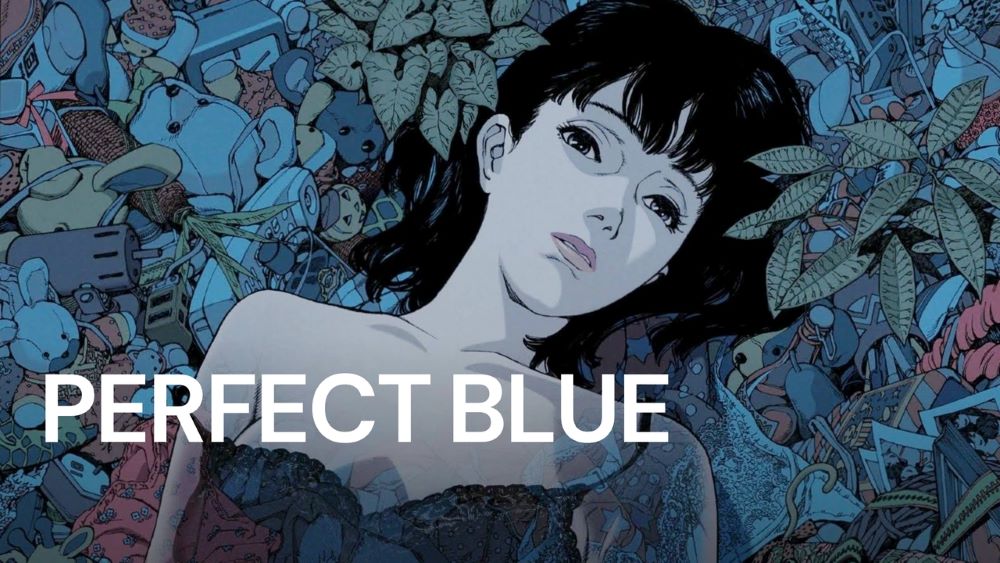
Anime You Should Be Watching (Horror Edition): Perfect Blue (dir. by Satoshi Kon)


Satoshi Kon’s 1998 psychological thriller Perfect Blue remains a striking and influential work nearly three decades after its release. Despite being an animated film, it evokes the unsettling style and tension found in the classic Italian giallo thrillers of the 1970s and ’80s—films by directors like Dario Argento and Mario Bava—and melds them admirably with elements of 1970s Eurotrash exploitation and arthouse psychological thriller reminiscent of Brian De Palma. Kon’s debut feature is a haunting exploration of fractured identity, blending show-business satire, Hitchcockian suspense, and surreal nightmare imagery into a profoundly relevant story in today’s age of parasocial fandom and digital voyeurism.

The film centers on Mima Kirigoe, a member of the bubblegum J-Pop group “CHAM!” who decides to leave the idol world to pursue a career in serious acting. This choice, rooted in her desire for personal growth and artistic expression, sets off devastating consequences. For her managers and many fans, Mima’s break from the manufactured idol persona is viewed as betrayal—a dissolution of a carefully crafted image designed for maximum market appeal. The pristine, innocent figure worshipped by fans begins to crumble, replaced by the complicated reality of adulthood and the harsh glare of fame.

To fully grasp the horror underpinning Perfect Blue, it’s important to understand the nature of Japanese idol culture. These idols are not merely singers or performers—they are highly managed brands. Every lyric, outfit, choreographed move, and public appearance is tightly controlled to project purity and accessibility. This system bears close resemblance to the meticulously produced Western pop acts of the late 1990s and early 2000s like Britney Spears and the Backstreet Boys. Both rely on constructing polished, artificial personas that maximize commercial appeal, often at the expense of genuine selfhood. When an idol deviates from this script, it frequently provokes obsession, confusion, and even violent reactions from a subset of fans unable to reconcile the constructed image with evolving reality.

Mima’s transition from ingénue pop star to serious actress thrusts her into an intense psychological crucible. Her first major acting role requires her to perform a deeply disturbing rape scene, one that blurs lines between professional obligation and personal violation. Kon lingers on Mima’s shocked expression—a powerful mask of confusion and repressed trauma. This sequence sets the tone for the film: a world where performance, identity, and exploitation intertwine irrevocably, creating a landscape where self and roles imposed by society become indistinguishable.

As Mima’s public persona shifts, darker forces emerge. An eerie fan website titled “Mima’s Room” chronicles her life with disturbing accuracy but is clearly authored by an unknown party. Even more threatening is an obsessed fan fixated on the idol version of Mima, stalking her and insisting that the “real” Mima no longer exists. This duality—between reality and imitation, self and construct—becomes the film’s thematic centerpiece. The narrative loops and fractures, cutting between dreams, televised drama, and supposed reality until neither Mima nor the viewer can be sure what is authentic. This masterful ambiguity immerses us in the protagonist’s psychological collapse.

The horror in Perfect Blue operates on two deeply intertwined levels. First, it is a psychological portrait of a young woman’s unraveling, echoing themes explored in Roman Polanski’s Repulsion and Darren Aronofsky’s Black Swan—films focused on fragile female psyches under immense pressure. While Aronofsky has publicly denied that Black Swan was directly inspired by Perfect Blue, the similarities in theme and specific visual motifs suggest otherwise. Both films explore the disintegration of identity in a young woman caught between innocence and adult roles, with dreamlike, unsettling sequences blurring reality and hallucination. The parallels in their portrayal of psychological breakdown, stalking, and the pressure of performance are striking, though Aronofsky’s work is set in the world of ballet rather than pop music and acting.

Second, Perfect Blue channels the lush, stylized dread characteristic of giallo cinema. Kon borrows Argento’s fascination with voyeuristic camera angles, saturated color palettes, and the interplay of beauty and violence. Like Argento’s heroines trapped in a hall of mirrors, Mima finds herself caught in a labyrinth where surreal horror becomes tangible and murder might be just another staged act in a disturbing performance.

Yet unlike Suspiria’s occult grotesques, Kon’s horror resides not in supernatural forces but within the mind and media itself. Animation becomes a revelatory choice—rather than softening violence, it frees Kon from physical constraints, allowing reality to fracture visually with startling fluidity. Identities shift from frame to frame, reflections move independently of their sources, and timelines collapse and fragment like psychic glitches. The medium’s flexibility intensifies the film’s psychological disorientation, blurring fact and fantasy in ways live-action cinema would struggle to capture so viscerally.

Kon’s prescient understanding of media obsession resonates more strongly than ever today. Long before social media reshaped how identity is constructed and perceived, Perfect Blue envisioned the internet as a distorting mirror that erases the line between self and performance. The “Mima’s Room” website serves both as diary and prison—a disturbing precursor to the carefully curated digital personas that dominate social media platforms now. As Mima reads falsified diary entries that resemble her life more “truthfully” than her own memory, she grows alienated from reality. The omnipresent gaze of fans, stalkers, and producers merges into an oppressive force she cannot escape.

This taps into a modern phenomenon: parasocial relationships. These one-sided emotional bonds fans develop with celebrities or fictional characters foster a dangerous illusion of intimacy and knowledge, often masking boundaries between admiration and entitlement. In Perfect Blue, the deranged fan believes he “knows” Mima in a way that justifies controlling her, even committing violence to preserve the image he idolizes. This mirrors the darker side of parasocial dynamics today, where fans demand absolute authenticity or control over public figures’ identities, sometimes leading to harassment or stalking. Kon’s film foreshadows how internet culture can exacerbate these fragile boundaries, blurring realities and fueling destructive obsession.

The film’s editing amplifies this psychological suffocation. Kon intercuts scenes from Mima’s TV drama—ironically titled Double Bind—with moments from her “real” life until one blurs imperceptibly into the other. Viewers are drawn deeper into uncertainty: are we witnessing actual events, staged fiction, or yet another deceptive layer? This deliberate manipulation creates unease without relying on cheap jump scares or graphic violence. The horror is existential—losing trust not only in others but in one’s own mind.

This theme has become exponentially more relevant with the rise of social media influencers and online streaming personalities. Today, countless individuals cultivate personal brands that blend their private lives with public personas online, often with blurred or deliberately ambiguous boundaries. The intense fan interaction, constant scrutiny, and expectation of accessibility echo the pressures Mima faces. As social media blurs the line between “real” self and online performance, the risks of losing grip on one’s identity—as Mima does—feel more immediate and widespread than ever.

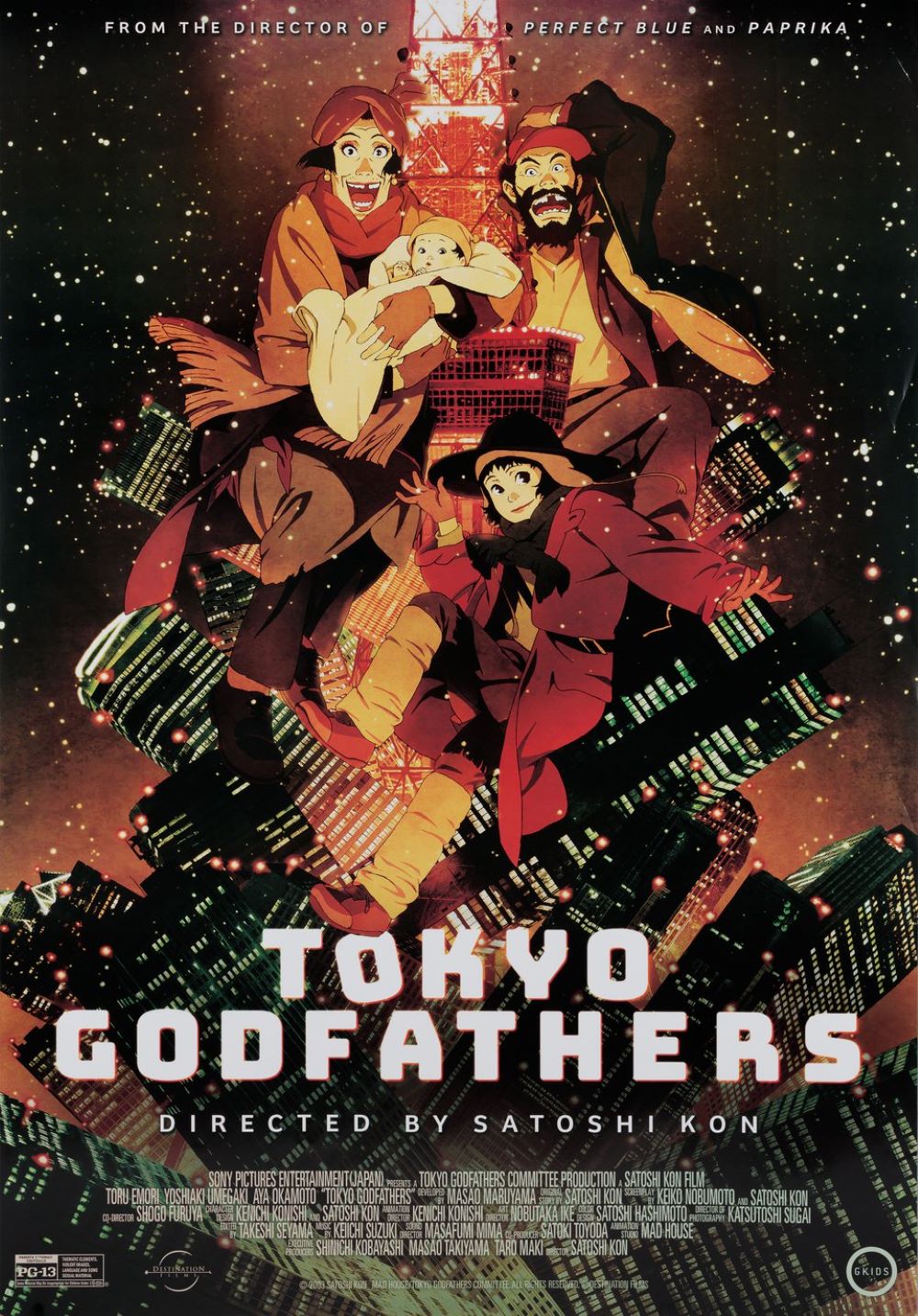
It is extraordinary that Perfect Blue was Kon’s first feature film. His command of cinematic language is masterful—harnessing animation as a means to probe psychological depths rather than as mere escapism. His subsequent works—Millennium ActressTokyo GodfathersPaprika—build on themes of identity, memory, and the fluid borders of reality, but Perfect Blue remains his rawest and most unsettling contribution. His untimely death from pancreatic cancer in 2010 at just 46 left the film community mourning a visionary whose full promise was tragically unfulfilled.

One of Perfect Blue’s greatest achievements is rejecting outsider stereotypes about anime. It is neither childish fantasy nor gratuitous erotica, though it fearlessly explores sexual anxiety, trauma, and performance under intense scrutiny. Kon’s film proves that animation can tackle mature themes—mental illness, societal pressure, gender identity—with subtlety and emotional gravitas usually reserved for live-action cinema. It challenges the misinformed Western association of adult anime with “hentai,” affirming animation’s capacity as a serious art form.

Kon’s film also critiques fandom’s darker impulses, asking difficult questions about ownership and identity. How much of a celebrity’s life belongs to the public? How much of one’s self must be sacrificed under the weight of expectation? In today’s hyperconnected online world, Kon’s portrayal of obsessive fans demanding idealized idols is uncannily relevant and urgent.

Ultimately, Perfect Blue transcends genre and era. It is not merely a psychological thriller or celebrity critique but a mirror held to an increasingly performative world. Long before social media dissolved the lines between private and public selves, Kon foresaw how image can consume reality. The result is a masterful fusion of paranoia, empathy, and stunning visual style—a giallo-inspired fever dream painted in blood-red and neon blue. For animation, it remains a landmark in artistic maturity; for cinema as a whole, it stands as one of the most chilling and insightful portraits of fame’s corrosive gaze and the dark side of parasocial obsession.

Anime You Should Be Watching: Farming Life In Another World (Isekai Nonbiri Nouka)


The last anime I recommended was the mature and very dark MONSTER. It’s time to lighten and chill things down a bit with my next recommendation. This series is one of my recent favorites that I’ve re-watched several times since the 12-episode season came out January 2024. The series I am talking about is Farming Life In Another World (Isekai Nonbiri Nouka).

The series is quite light-hearted and almost a fantasy version of farming life sims like Stardew Valley. Like many isekai (trans. another world), Farming Life In Another World is about a random person (usually from Japan) who has been transported to another world either through the mistake of some multiversal god/goddess or through the machinations of a certain truck-kun.

What or who is a truck-kun? Well, I’m glad you asked. Truck-kun is literally a truck that has become the go-to implement in sending a poor person from our would and into another by running them over while they are not looking. If there was ever a perfect example of why we should always look both ways before crossing the street it is that truck-kun is always out there lurking, waiting for the right time to pounce and claim another victim. Except, truck-kun wasn’t the culprit this time around but health problems from literally being overworked to death that sends out protagonist reincarnating to another world.

So, back to Farming Life In Another World, our protagonist has been accidentally taken to another world by God and apologizes to our main character for the unfortunate turn his life had taken by sending him to this new world. God’s generosity he asks Hikaru for one wish to make his life easier on this new world and Hikaru, in his past-life as an overworked, middle-aged office worker from Japan, asks for long-life and a chance to live a quiet and arboreal life this second time around. With his new found abilities and the Omnipotent Farming Tool to help fulfill Hikaru’s wish, God sends him off to this new world, dropping him off in the Forest of Death where Farming Life In Another World begins in earnest.

This anime is definitely one of the lighthearted ones with a bit of the fan-service thrown in to add to the comedic aspect of the story being told. Farming Life In Another World was adapted from the light novel of the same name by author Kinosuke Naito. The source material made more use of Hiraku’s endless stamina courtesy of God by having him literally sleep with every female that joins the village he ends up building in the middle of the Forest of Death. The anime lightens up on this aspect of the light novel and turns it into a running joke in that he gets nervous and tries to forget the fact that every female (from vampires, killer angels to all types of elves) want to have sex with him. The anime adaptation is the PG-version of what was a very raunchy light novel.

Yet, despite the apparent change in tone with the anime adaptation compared to the light novel source material, Farming Life In Another World does actually work as a slice-of-life comedy isekai. Fans of the light novel may cry that the changes from the sex comedy that was the light novel was too much of a change for fans who have never read the light novel will not miss anything. What they will get instead is a lighthearted series that eases new fans to anime into a new genre of the medium that has dominated the industry for the past decade or so.

Just like any adaptation of a written source material there will always be those who complain that the adaptation should be slavishly faithful to the original material. Yet, I always say that even if the adaptation has made drastic changes to the source material it doesn’t change the fact that the original still exists to be enjoyed. Sure, the ecchi and heavy fanservice of the light novel has been changed to be more PG-rated but it doesn’t detract from the fun and chill vibes of the anime version.

Farming Life In Another World works, in my opinion, because it does minimize the more raunchier side of the story to concentrate on the day-to-day and slice-of-life tone of the source material. The anime focuses on the world building and comedy side of Hiraku’s journey with his companions as they build what amounts to as an advanced and powerful village in the middle of what his new world considers the most dangerous area in the world. He does this with the help from Rurushi Ru (vampire mage) and Tia (angel aka the Annihilation Angel) who start off as frenemies but turn into close friends and friendly rivals (the show hinted at Hiraku marrying both which is a compromise the show makes to the source material).

Isekai is a genre in anime that has been very prevalent each new season for the past decade or so. Some would say that this genre has been the bane of the anime industry since we see knock-offs after knock-offs every year with most being bad (though some I would consider bad but enjoyable enough to be guilty pleasures). Yet, the genre has produced some of the best series in that same time frame. They’re not the majority, but they’re there enough in number to wash the taste of the awful ones.

Does Farming Life In Another World count as one of the best in genre? I say no, but it doesn’t have to be one of the best. It just had to be the best in what it had to be and that’s a slice-of-life comedy with some clever world building that would make any one who is a fan of sims games giddy. While we don’t get the raunchy and fanservice heavy anime adaptation of the light novel (if one wanted to know what such a version would look like I suggest they watch 1980’s sex comedies like Porky’s or Revenge of the Nerds).

Plus, the anime has a banger of an opening song.

“Flower Ring” by Shino Shimoji and Aya Suzaki

Faming Life In Another World Series Trailer