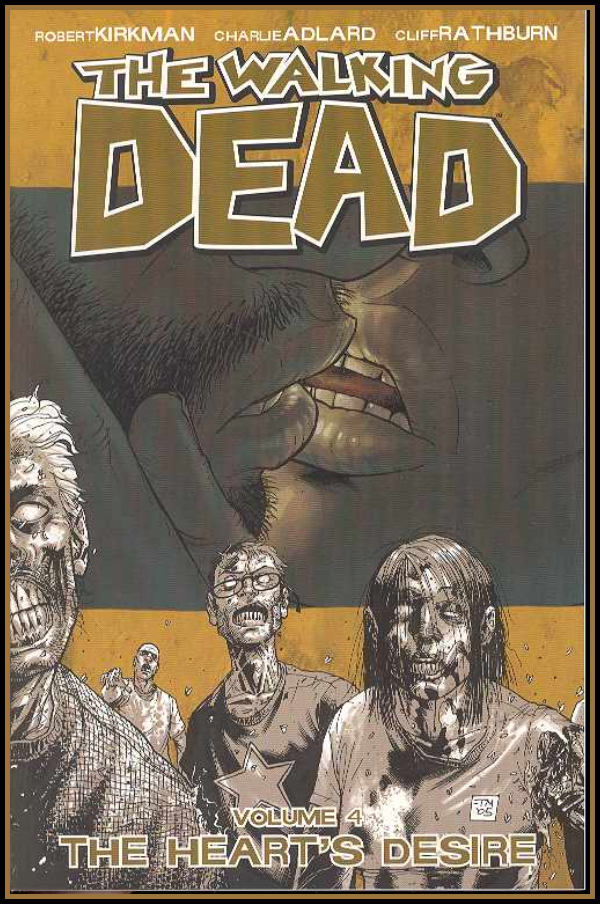
I’ve loved and obsessed over Kirkman’s The Walking Dead series and the previous three collected volumes have not disappointed at any level. This fourth volume collects issues 19 through 24 and is appropriately titled The Heart’s Desire. We pick up from the cliffhanger that ended the third volume (Safety Behind Bars) as Dexter gives Rick and his group a choice that bodes nothing but death either way he chooses: stay and be shot or leave and take their chances with the zombies outside the fences.
The book starts things off with a bang as Rick realizes that Dexter’s success in getting guns of his own has let loose a bigger set of problems as zombies from a locked wing of the prison was accidentally let out. What happens next as Rick’s group and Dexter’s group fight to stay alive shows a new side to Rick that surprised me alot. It puts a new wrinkle on Rick’s rule of “you kill, you die” and will have long-reaching ramifications deeper in the story. It is also in this heart-pounding sequence that a new face is added to the mix in the form of a female survivor whose mode of survival, to say the very least, is interesting.
The rest of the book really deals less with the zombies but the emotional consequences of many of the characters’ actions from the very start of the series all the way to point of this volume. I can fully understand the disappoint many fans have with the direction the series took with all the drama and sopa opera kind of twists nd turns of the heart, but I think people fail to realize that Kirkman is writing about the human condition rather than just about zombies. Sure I got abit impatient with all the emotional crisis and the meltdowns by almost everyone involved, but I can also understand why they’ve been acting the way they have. I think if Kirkman had written abit more of zombies and death in this part of the series people wouldn’t be complaining much.
Kirkman himself has already admitted that zombies wasn’t what the story was all about, but just a part of it. With the group in relatively safety within the secured fences of the prison and some sort of artificial normalcy starting to come back to the group he needed a way to continue the conflicts that make for good drama. What else but let the pent-up emotional baggage everyone has been carrying since issue 1 to finally come to boil. Part of me didn’t fully enjoy this new arc in the series, but not enough to be disappointed with the end result. Hell, even with all the drama Kirkman still came up with one of the best fight scenes in the series a la Carpenter’s They Live and South Park’s “Cripple Fight” episode.
The Heart’s Desire was not as great as the previous three collected volumes in the series, but it still told a good story though with a bit more drama than most fans of the book were willing to take. I myself enjoyed the book enough that it wasn’t a waste and I was a bit surprised and shocked at the observation Rick finally made and shared with everyone at the end of the volume. I know that after all the emotional trials and tribulations everyone in the series went through in The Heart’s Desire and how the arc ended there’s nothing left but up for the series.
It looks to be grindhouse week. First we get Robert Rodriguez’s feature-length version of his fake grindhouse trailer Machete. A trailer created solely to give the Robert Rodriguez/Quentin Tarantino grindhouse/exploitation homage flick, Grindhouse, even more of that dingy grindhouse feel while it played in the theaters. While other fake trailers were shot and added to the film there was one which only saw a theater inclusion during Grindhouse‘s theatrical run and that would be Jason Eisener’s trailer (which beat out other amateur-made fake grindhouse trailers) titled, Hobo With a Shotgun.
Now with Machete set to come out this week on Sept. 03, 2010, the first teaser trailer for the feature-length film version of Hobo With a Shotgun has been released and exclusively for film site Ain’t It Cool News. Jason Eisener also directs this version, but with Rutger Hauer in the role of the Hobo instead of David Brunt who handled the role in the original trailer.
From the look of the film as seen in the teaser this particular flick definitely sticking to its grindhouse roots. This flick could almost be the homeless, perpetually drunk and angry cousin of another 1980’s exploitation action flick starring perpetually scowling and all-around badass Charles Bronson in Death Wish III.
Now, if Eli Roth can just get onboard this making the fake trailers become real flicks and do a feature-length version of his fake grindhouse trailer, Thanksgiving.
“I mean, in a sense we’re all vampires. We drain energy from other life forms. The difference is one of degree. That girl was no girl. She’s totally alien to this planet and our life form… and totally dangerous.” — Dr. Hans Fallada
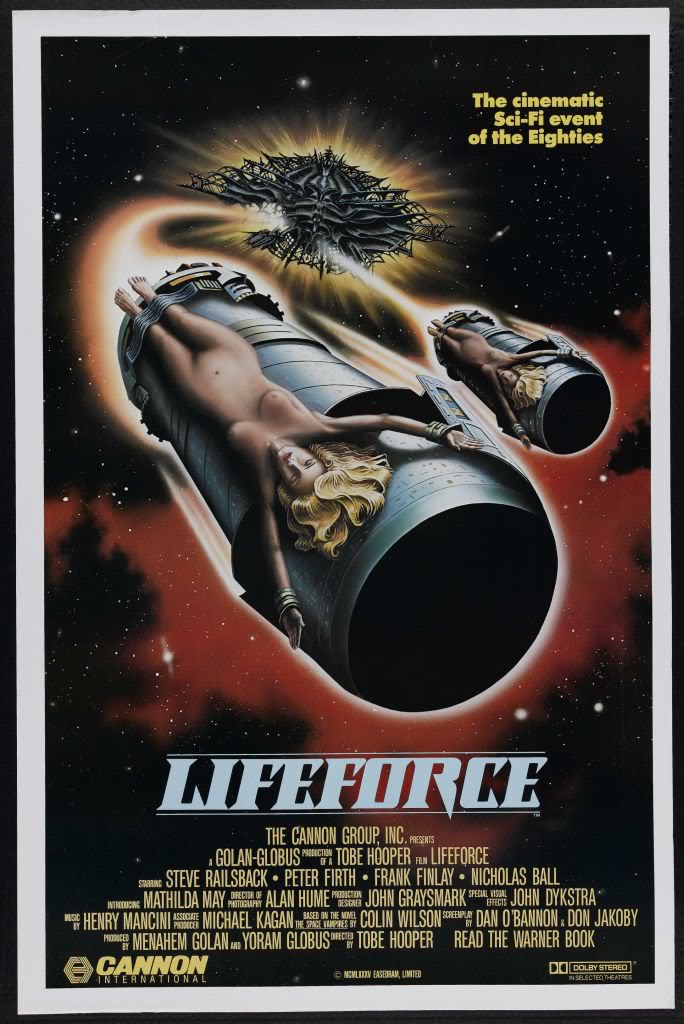
1985’s Lifeforce, directed by Tobe Hooper, was critically panned and barely registered at the box office. Yet in the decades since its release, something curious has happened: the film has gathered a loyal cult following among fans of science fiction and horror. Hooper’s film fuses so many genre conventions that it resists classification—too strange for pure sci-fi, too grandiose for standard horror. The result is a striking and eccentric reinvention of the vampire myth, a lavish but uncanny blockbuster that feels imported from an alternate cinematic timeline.
The film begins squarely in the realm of science fiction. Conceived during the public fascination with Halley’s Comet ahead of its 1986 return, Lifeforce rode the wave of comet-themed media flooding the decade. Most were cheap cash-ins. Hooper’s film stood out for its ambition and its visual scale.
Coming off Poltergeist, Hooper received an unusually large budget—a far cry from the lean, feral energy of The Texas Chainsaw Massacre. The story follows the crew of the shuttle Churchill as they discover a massive alien spacecraft hidden in the comet’s tail. Inside, frozen in suspended animation, are three humanoid figures. The ship’s dignified name feels ironic, even doomed; considering what’s to come, Demeter might have been more fitting. Like the sailors of Stoker’s novel, these astronauts inadvertently ferry an ancient predatory force home—yet this time, the threat arrives from the stars.
The horror unfolds once the crew retrieves its mysterious “specimens.” Members die in gruesome succession until only one survivor, Colonel Tom Carlsen (Steve Railsback), escapes in a pod back to Earth. Railsback’s performance is an intriguing mix of unhinged emotion and grim conviction. His intensity suits a film that constantly walks the line between pulp spectacle and cosmic tragedy.
When the story shifts to London, Lifeforce transforms into a supernatural thriller with procedural undertones. Peter Firth’s Colonel Colin Caine becomes the viewer’s compass: calm, authoritative, and determined to impose order on mounting chaos. As London succumbs to panic and outbreak, his steady professionalism anchors the outlandish events. His partnership with Railsback’s haunted, psychic Carlsen gives the middle act its volatile energy.
Among the supporting cast, Frank Finlay leaves one of the strongest impressions as Dr. Hans Fallada, a scientist fascinated by death and metaphysical energy. He serves as both philosopher and investigator, treating the vampiric invasion as a riddle of life itself. His restrained curiosity lends weight to scenes that might otherwise descend into absurdity. While the city collapses, Fallada studies the phenomenon with eerie calm, treating catastrophe as an experiment in cosmic entropy.
Patrick Stewart also makes a memorable, if brief, appearance as Dr. Armstrong, the head of a psychiatric hospital linked to the Space Girl’s psychic presence. His role builds to the film’s most grotesque and bizarre sequence: an exchange of minds, sudden possession, and an unnervingly intimate kiss with Railsback. The moment condenses everything Lifeforce represents—erotic, macabre, and unconcerned with boundaries. Stewart brings a gravitas that makes the absurd strangely compelling, a counterweight to Railsback’s volatility and Mathilda May’s silent allure.
May, as the unnamed Space Girl, says little but dominates the film through presence alone. She embodies an alien ideal of beauty and destruction, gliding through scenes with a composure that’s both sensual and predatory. Her nudity, much debated at the time, plays less as exploitation and more as elemental symbolism—the human body as an expression of both creation and death, desire and annihilation.
Supporting figures from the British military and government round out the ensemble, emphasizing the film’s descent into bureaucratic chaos. Michael Gothard’s Kane, a Ministry of Defence officer struggling to reconcile logic with the inexplicable, captures the helplessness of institutional order collapsing under cosmic threat. His pragmatic exchanges with Firth highlight competing instincts between reason and survival.
As the infection spreads, Lifeforce expands into a vision of urban apocalypse that fuses British science fiction and American spectacle. London becomes a nightmare tableau—crowds of shriveled corpses feed on energy while arcs of blue plasma swirl through the sky. The city’s fall evokes both George A. Romero’s zombie apocalypse and the metaphysical unease of Nigel Kneale’s Quatermass stories. Amid the insanity, Finlay and Firth remain the emotional touchstones, keeping the audience oriented as narrative logic begins to dissolve.
For all its ambition, however, Lifeforce suffers from erratic pacing and tonal whiplash. The first act unfolds with deliberate, moody wonder, then abruptly veers into frenzied exposition and psychic melodrama once the story reaches Earth. The balance between unsettling mystery and outright spectacle often collapses under its own weight. Scenes that should evoke cosmic terror sometimes tip into unintended camp, particularly in the dialogue-heavy middle stretch. Hooper’s direction, though visually imaginative, occasionally struggles to maintain coherence amid the script’s shifting identities—part creature feature, part disaster epic, part metaphysical drama. The editing, especially in the theatrical cut, undercuts tension with rushed transitions that leave emotional beats hanging. Railsback’s manic performance, while strangely compelling, can also verge on excess, blurring the line between conviction and chaos.
Tonally, the film wavers between awe and amusement. For some viewers, its earnest delivery will read as self-parody; for others, its collision of erotic horror and science fiction grandeur gives it a singular vitality. Lifeforce’s flaws are inseparable from its daring. It dares to fail boldly, and in that failure finds a kind of messy transcendence—larger than reason, too strange to fade.
In the end, Lifeforce lingers as one of the strangest hybrids of its era: part gothic fable, part erotic horror, part apocalyptic science fiction. It was too eccentric to find mainstream success, yet its sincerity and scope give it lasting resonance. The ensemble performances and tonal daring hold the film together, transforming potential chaos into something mythic—a story about possession, contagion, and humanity’s fatal pull toward the unknown.
Beneath its spectacle, the film engages in a deeper dialogue between gothic and cosmic horror traditions. Its characters represent a spectrum of responses to the incomprehensible: Fallada’s intellectual curiosity, Firth’s stoic resolve, Railsback’s frenzy, and May’s serene seduction. Together they form a portrait of human fragility in confrontation with the infinite. Where gothic horror finds fear in the collapse of reason, cosmic horror finds it in the vast indifference of the universe.
By fusing these lineages, Lifeforce becomes a mythic apocalypse that feels both intimate and vast—an encounter between flesh and void, terror and temptation. Its fusion of genres, ideas, and performances ensures its peculiar power endures, a reminder that some of the strangest failures of 1980s cinema are also its most visionary.
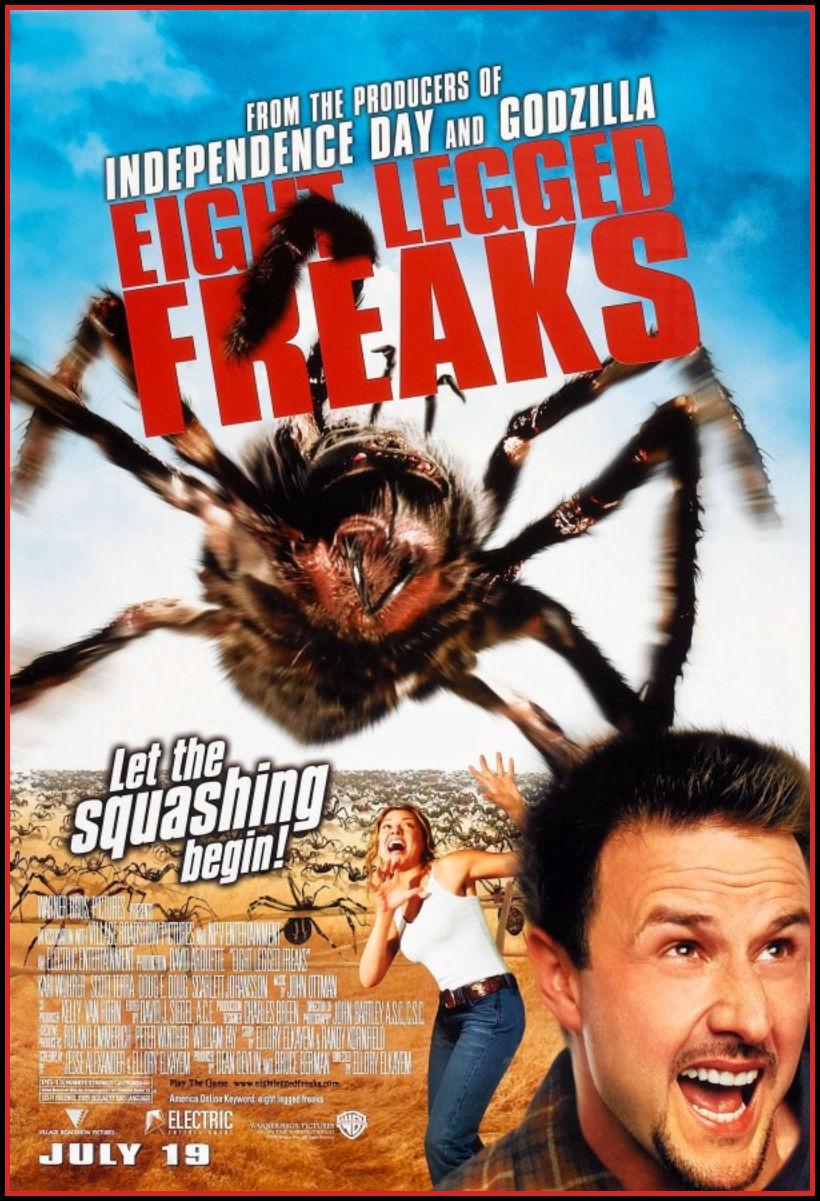
In 2002 there came a film in the tail end of that year’s summer blockbuster film season which took me by surprise. The film I’m talking about was Eight Legged Freaks. It was from Kiwi-born director Ellory Elkayem and he did a wonderful job of bringing back just a small peek at those fun 1950’s giant monster and insect movies like Them! and a host of others.
The film pretty much follows the same conventions as those old-time monster movies. It has the smart and bookish teenage boy whose love for all things spiders will come in handy as the film moves along. Then there’s the eccentric and creepy loner who collects spiders and learns that the water he has been giving them has now been tainted by toxic chemicals from a drum container that has fallen into a nearby river during transport. This river and the creek it feeds is right next to a down-and-out mining Arizona town, ironically named Prosperity. The film wouldn’t be complete without the arrival of its prodigal son, Chris McCormick (played with quite a bit of understatement by the usual over-the-top David Arquette) whose father used to own the gold mines which the town relied on for its economy.
With a reluctant hero comes the woman he left behind and pined for years ago, but now much older and with kids of her own from a previous marriage. Kari Wuhrer — of MTV and B-movie fame — plays Samantha Parker. McCormick’s love interest who also happens to be Prosperity’s current town sheriff and single mother to the aforementioned teenage boy with the thing for spiders and nubile teen daughter Ashley (played by pre-superstardom Scarlett Johansson). Then there’s Wade, the town mayor whose failing ostrich farm and unused mega-mall is leading him to sell the town wholesale to some nameless giant corporation.
With the basic plot set and characters introduced all hell breaks loose as toxic-mutated spiders grow to giant proportions and begin to terrorize and devour the townspeople. At first, it’s isolated attacks until their numbers grown in size and they attack the town itself en masse. This may be a B-movie but it sure had great CGI-effects when it came to the giant arachnids and how they behaved on the screen. The many different types of giant spiders ended up having distinct personalities to distinguish themselves from each other. From the tank-like tarantula to the agile jumping spiders and the cunning trapdoor spiders. In fact, these spiders were also given some sort of voice which sounded like chipmunks on helium as they screeched, yipped and screamed their way around the screen.
Eight Legged Freaks was not something great to write mom home about, but it was a fun film to sit through, especially one full of teenagers who seem to scream and shout the loudest. This was a type of film that actually needs a rowdy audience to really entertain. There’s really no need to follow the dialogue since most of it is quite forgettable. The action on the screen from the giant spiders chasing motocross-riding teens and their attack on the townspeople at the mega-mall does well without the need of extraneous dialogue.
Ellory Elkayem did a great job in making Eight Legged Freaks not just a fun movie but also a throwback to the 50’s monster movies that we see now on syndication. This movie showed Elkayem had great potential as a genre filmmaker. It’s a shame he had to follow up Eight Legged Freaks with two very awful and forgettable sequels to the Return of the Living Dead franchise. I’m still hoping that he’ll rebound from that double-debacle and make more fun monster movies. Until that happens we’ll always have his little flick about giant, mutant spiders who sounded like chipmunks on helium.
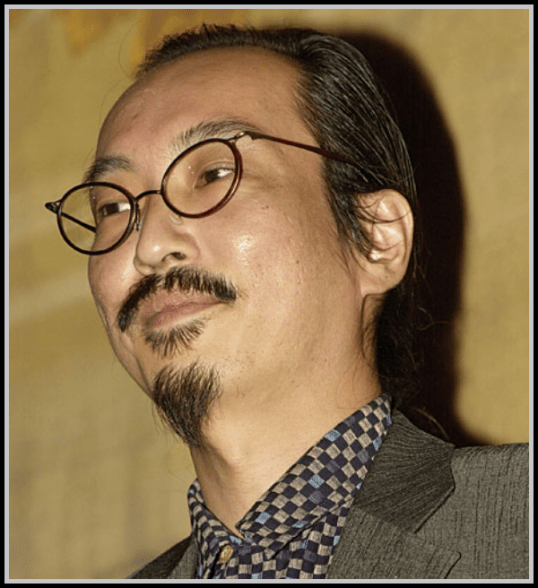
The sudden passing of Satoshi Kon this past August 24, 2010 was a shock to anime and non-anime fans of his work. No better words were spoken to describe his contribution to the medium he so loved than one posted here last week.
I, myself, never realized that he was the one who had directed the very mature anime works I had seen and found to be on the level of any live-action production by such luminaries as Aronofsky, Nolan, Cronenberg and many other masters of their craft. The suddenness of his death has shocked the anime community and even almost a week since it happened his passing away and his legacy still the talk of the community.
His legacy is undisputable and will forever remind fans of anime just how much his talent will be missed. Satoshi Kon was able to leave behind one final document which has been posted in his blog posthumously by his loved ones. These last words from Satoshi Kon brings to light one man’s personal and intimate perspective on one’s mortality. It’s almost as if life was imitating art this time around. To try and describe any more of this man’s last words cannot be done as I lack the insight and grasp of the English language to give it the proper due.
Below is the link to Makiko Itoh’s site who was kind enough to translate Satoshi Kon’s final words.
Madhouse’s anime series adaptation of the very popular manga, Highschool of the Dead (In Japan known as Gakuen Mokushiroku) is now 2/3’s into it’s first 13-episode season run. The reaction to the series has been pretty positive, but there’s definitely been some mixed to negative reactions to how the series’ animators from Madhouse has wholly embraced the ecchi nature of the manga. Some have even called it fanservice overload. I’m guessing they said the same about the manga when they first read it and thought the anime would tone things down.
My reaction to such criticism is “live with it”. There’s a reason why the manga has been so popular despite some long-delays from the manga’s writer and artist. For good or worse the manga and the series will succeed and fail because of it’s very ecchi nature. To expect the anime to actually tone down that particular aspect of the original manga source would be self-censorship and takes away half the fun of the manga. To continue complaining about the series because of its fanservice even this deep into the anime and still continue to watch it just speaks nitpicking and “grumpy old man syndrome”.
Now this eight episode does cut back on the fanservice after the some very heavy doses of it from the last couple episodes. There’s still enough of it that its not all about the zombies, but blatant fanservice sequences was very absent from this last episode. There are some very hilarious and awesome use of “bullet time” effects during the latter half of the episode when the group gets trapped by an oncoming horde of zombies. We also get to see more great kick-ass action from the senior-class member of the group, Saeko Busujima, as she bokken smashes her way through the wall of zombies to try and distract them away from the main group. Takashi helps her out and it’s with his shooting and Saeko-chan’s acrobatic fighting that the bullet-time effects get put to good use.
This particular episode actually combines at least chapter 8 and 9 of the manga and it looks like the anime writers may be looking to start condensing the latter chapters of the manga into one episode. This maybe Madhouse’s way of hedging their bets in case ratings for the series doesn’t get a second season greenlit. I’m hoping that doesn’t happen and we get a second season to see the anime through right through the end. The manga is still going and with the anime series’ release it looks to gain more readers.
So, even with the naysayers dumping on the series because of the fanservice (even though they still continue to watch) I do believe the series has done well in adapting the manga. Some of the characterizations may seem a bit off as the series’ writers try to balance action, fanservice and quiet character moments, but with most shonen anime series sometimes characterizations take a backseat to what its audience want: the visual stuff whether they’re action and/or fanservice.
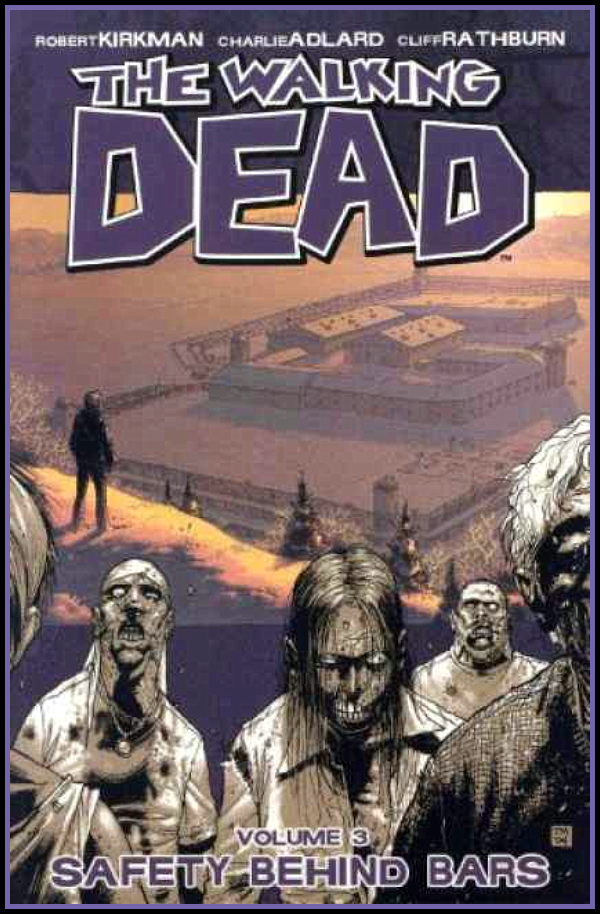
Safety Behind Bars is the third collected volume of Robert Kirkman’s excellent The Walking Dead comic book series from Image Comics. This volume collects issues 13 through 18 and it continues that journey and travails of surviving in a world overrun by the undead. As the tagline of the books proclaim, in a world ruled by the dead we are forced to finally start living. This is so true in Safety Behind Bars as Kirkman and returning artist Charlie Adlard tell the story of Rick Grimes and his band of survivors as they come across what they think will be their salvation from the threat of the hungry dead: an abandoned prison complex.
The last we saw Rick, Tyrese, Lori and their ragtag band of survivors they had just been forced off the the presumably safety of the Herschel farm after the tragic events which transpired within its fences. But Safety Behind Bars starts off with the group discovering an abandoned prison complex that may just solve their shelter, safety and food problems. Once again, Kirkman’s writing is tight and to the point. The characters of Rick and the rest of the survivors continue to evolve as the days and months pass by in the journey to survive. What they find in the abandoned prison is both safety and danger, but not in the way of most people thought it would come in. Sure there are still zombies both inside and outside of the prison’s security fences, but as the enormity of the crisis finally crashes on everyone — that there won’t be a rescue — the survivors reach the threshold of their breaking points to the detriment of everyone involved. It’s especially tragic for Tyrese as a tragedy pushes him to act on his base instincts in an act of vengeance that is both understandable and horrifying.
More people are introduced to the group in the form of surviving group of inmates left behind by fleeing prison guards. This new group acts to change the group dynamics and even add more conflict to what Rick and his group thought was going to be safety from the dead. Instead, human nature — as Kirkman sees it — causes more problems and danger than the dead represent. The events of The Walking Dead has really changed everyone involved and we lose more people to both living and the dead.
The volume ends in an even bigger cliffhanger than the previous two collected volumes. Like the best drama series on TV, The Walking Dead hooks you in with great writing, well-drawn characters and a great hook that pulls the reader in and doesn’t let go. Whether the upcoming AMC and Darabont-produced tv adaptation of this series follows this particular story-arc is still up in the air. To deviate from the prison would definitely involve a new story-arc that surpasses what Kirkman has written in these 6-issues and that would be quite a tall order.
Again the power metal lads from Germany, Blind Guardian, appears for the fourth time with one of their newest songs for Song of the Day. The song of which I speak of is the second ballad of two that Blind Guardian composed and produced for their latest album, “War of the Thrones”.
While metal bands have done ballads in the past and will continue to do so, Blind Guardian has shied away from the power ballads of most metal bands and have instead opted for the kind of folksy ballads that troubadours and traveling bards of the Middle Ages and the Age of Renaissance played much in inns and royal courts across the lands. In fact, the band has seen themselves more like traveling bards (but with a power metal kick to their music).
“War of the Thrones” definitely sounds like something a traveling troupe of bards would play at a royal court. Even the subject matter which inspired the song is from a historical fantasy series of novels by fantasy writer George R.R. Martin whose A Song of Fire and Ice many have seen as the American Lord of the Rings. The band never shies away from the fantasy aspects of their songwriting and with this song they embrace this aspect of their band’s sound.
The song’s lyrics has themes and ideas from Martin’s fantasy series. From the raging war for the throne of Westeros which has engulfed the lands south of the Wall to the sinister “Others” beyond the wall whose march will raze the Wall which keeps them from the warring kingdoms in the south. For fans of Martin’s fantasy series the song should be a delight as it brings up imagery from the books. For fans of Blind Guardian it’s a nice addition to their growing folksy ballads which goes hand in hand with their faster and more complex work.
War of the Thrones
Nothing will grow here
Icy fields – blackened sorrow
Legacy of a lost mind
Feed my void
What you’re waiting for
I’m too late
It is more than a game
The river reveals
Now I’m in between these lines
I cannot escape it seems
Sail on, my friend
All I ever feel is
All I ever see is
Walls they fall
When the march of the Others begins
All I ever feel is
All I ever see is
Rise and fall
When the War of the Thrones shall begin
While I sit there in silence
Come and talk to me
I can’t free my mind
It is all I’m begging for
While I sit there in silence
Will it ever end?
Will I find what I’m longing for?
Will I ever walk out of shadows so grey?
I’m condemned, I am hallowed
Icy fields they won’t hurt anymore
Will you walk with me?
Any further
There at world’s end
It’s me
I sing
I cannot escape it seems
Sadly I sing
All I ever feel is
All I ever see is
Walls they fall
When the march of the Others begins
All I ever feel is
All I ever see is
Rise and fall
When the War of the Thrones shall begin
Away
Watch the river it flows
(Now and ever)
I cannot believe in more
And now my time will come
Carry on
Will I ever learn from the past?
Will I fade away?
Will I ever stay where the shadows will grow?
There is luck at the gallows
I will free my mind
Soon it will show
Let it rain
There’ll be no spring
My dream is a mirror
It reveals a matter of lies
All I ever feel is
All I ever see is
Rise and fall
When the War of the Thrones will begin
All I ever feel is
All I ever see is
Rise and fall
When the War of the Thrones has begun
Leave a fee for the tillerman
And the river behind…
Well, it’s now official. AMC has finally released the very same trailer that people not fortunate enough to have attended San Diego Comic-Con last month. This trailer is under 5 minutes long and it’s the same one those who attended the Comic-Con panel for the show saw. Only shaky and grainy bootleg copies of the trailer has been seen outside of that panel. While some bootleg versions were quite good in quality they’re still not a substitute for the official release of the same trailer by AMC for everyone to watch.
This official trailer release was also AMC’s way of finally announcing the premiere date of the 90-minute pilot episode (directed by showrunner and producer Frank Darabont). The pilot will premiere worldwide on Halloween Night, October 31, 2010. While some thought the pilot will premiere early on AMC’s “Fearfest” campaign for October I think it’s appropriate that the series premieres on Halloween Night. I can definitely see many fans of the comic book series planning their Halloween parties to include group watch of the pilot episode the very same night.
Still two months away and this trailer definitely doesn’t make the wait any easier.
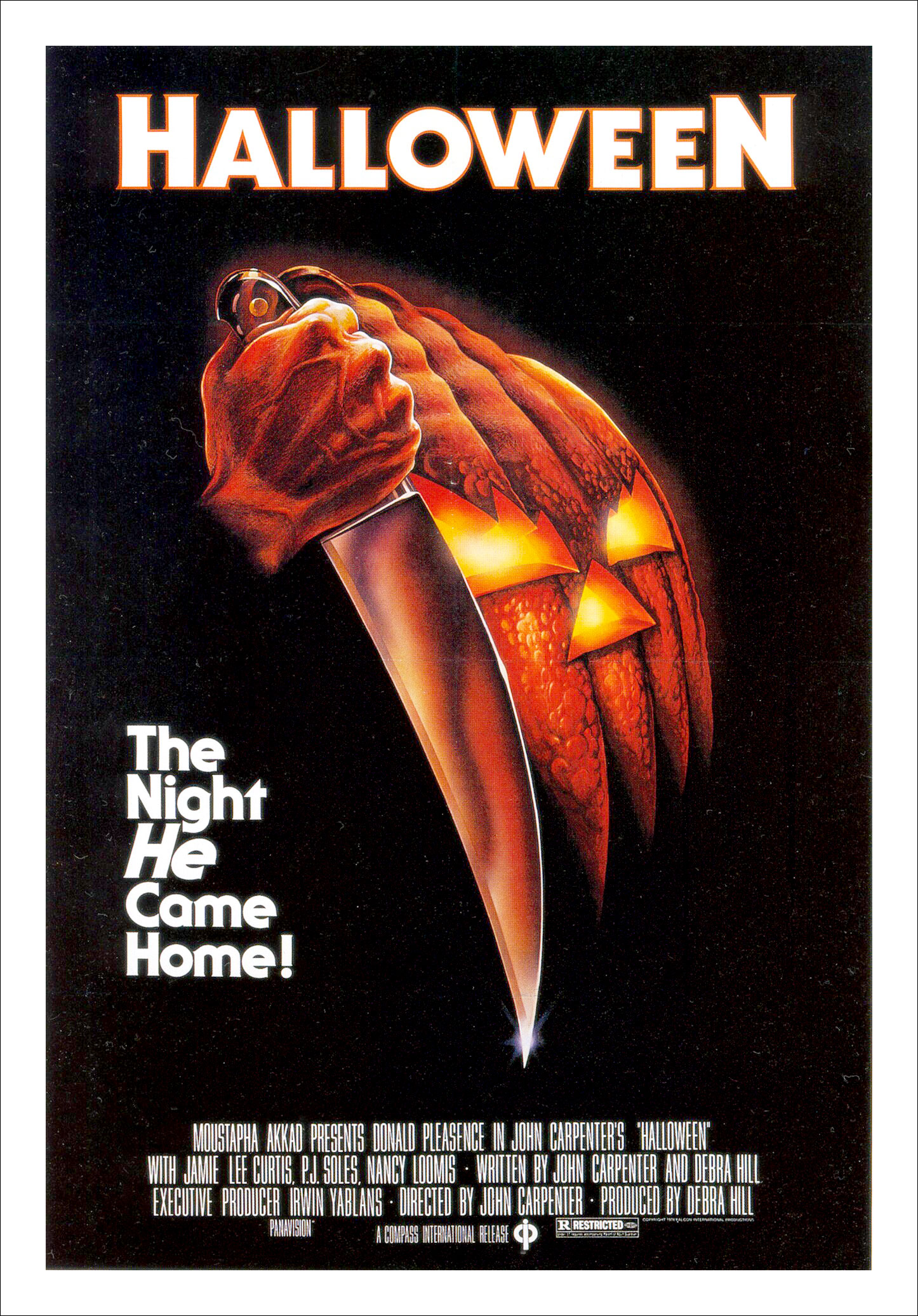
What better way to bring back a new daily grindhouse than the film which started the teen slasher genre. I speak of John Carpenter’s Halloween.
The film was truly a child of 1970’s independent filmmaking. With a budget of just $320,000 (even adjusting for inflation it’s still quite low) Carpenter made what’s considered one of horror’s defining films. Carpenter’s film was a smash hit when it was released in 1978. It played mostly in drive-in’s, grindhouse cinema houses before finally appearing in more mainstream venues. By then the film had become one of those must-see titles that many films both independent and mainstream try for but fail to do.
Some have commented that since Halloween was such a success in the box-office then it shouldn’t be considered grindhouse. I look at such thinking as quite narrow. Grindhouse was never synonymous with bad filmmaking. If one said the term meant cheap filmmaking then I would agree. Carpenter’s film has all the trappings of what makes a great grindhouse. It’s violent (though it really has less blood than what audience really remember) and uses sex as a storytelling tool (again the sex is quite chaste compared to later teen slashers).
While some film historians credit Hitchcock’s Psycho as the granddaddy of the slasher genre it wasn’t primogenitor of the teen slasher subgenre which has become an industry onto itself since Carpenter’s breakthrough hit. A hit that set many of the basic rules of teen slasher horror for decades to come. We get the nigh-unstoppable killer who seems more like a force of nature than human. The notion that teenage girls who have premarital sex will die horribly because of it while the chaste and virginal girl survives and inevitably stops the killer (until the subsequent sequel that is).
Halloween is grindhouse through and through. The fact that Carpenter’s obvious talent and skill as a director, editor, film composer and cinematographer shouldn’t DQ this film from being called grindhouse.


 Through the Shattered Lens