Trash Film Guru Vs. The Summer Blockbusters : “World War Z”


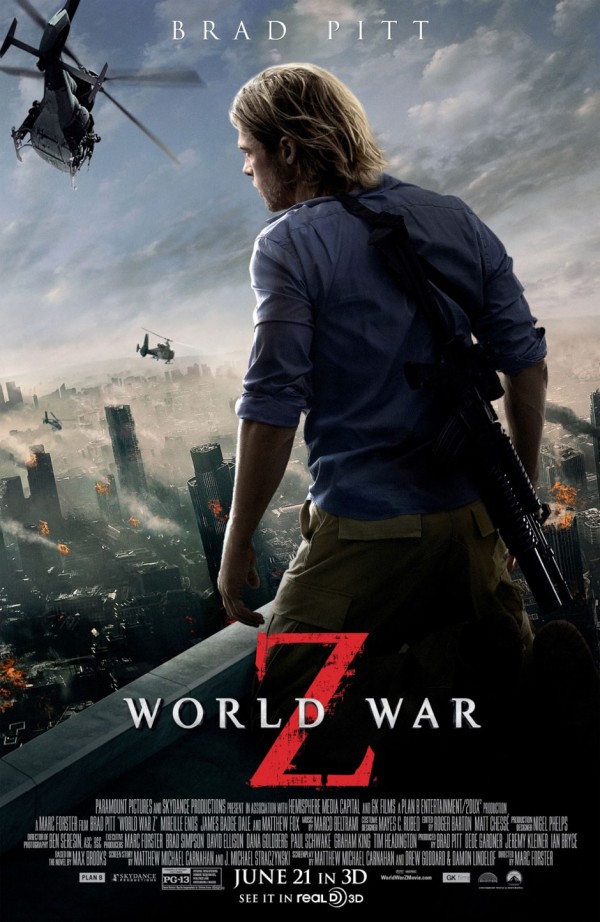
World-War-Z-2013-Movie-Poster3-600x922


Okay, I get it — fans of Max Brooks’ best-selling “zombie apocalypse” novel World War Z are pissed off about director Marc (Monster’s BallQuantum Of Solace) Forster’s big-budget, big-screen “adaptation” of it because the finished product bears essentially no recognizable similarity to its printed-page predecessor. Heck, some are even going so far as to say that they actually like the film, they just feel that it should be called something else.

On the other hand, it seems that more or less everyone who hasn’t read the book loves the movie.

Much as I’d enjoy picking a side in this, the latest great “genre geek debate,”  I honestly can’t, simply because I don’t really fit into either of the “warring” camps, seeing as how I neither read the novel nor loved the film with the kind of awestruck wonder its most fervent partisans seem to be brimming over with.

Oh, sure, it was pleasantly entertaining enough — United Nations bad-ass-for-hire Gerry Lane (Brad Pitt — who, let’s face it, is probably contractually obligated to always play somebody at least a little bit cooler than the Average Joe) races against the clock, and around the globe, to keep his wife, Karin (Mireille Enos of TV’s The Killing) and their kids safe from a massive viral plague that essentially mashes together elements of the scenarios George Romero laid out in both The Crazies and his seminal “Living Dead” flicks, only with a much larger budget that enables the filmmakers to give us a more international perspective on the goings-on. Governments are strained to breaking point and/or collapse entirely, WHO and the world’s various military forces struggle to get a handle on things, no area is left unaffected, no one is safe —you get the picture.

The script went through four sets of hands — Babylon 5 creator and frequent comics scribe J. Michael Straczynski gave way to former Lost head honcho and occasional comics scribe Damon Lindelof who in turn gave way to Drew Goddard who in turn gave way to Matthew Michael Carnahan — and, as you can imagine, is something of a mess as a result. Fortunately, it never slows down long enough for you to fully realize that fact, and instead keeps you on the edge of your seat with its PG-13-level action and semi-violence (notice I don’t say anything about gore — sorry, die-hard zombie-holics) from the time it clocks in to the time it knocks off and heads for the bar around the corner.

The end result is something of a hustle — it’ll slowly dawn on you as you make your way home from the theater that what you just saw really wasn’t anything too special, but what the hell — you were too busy having fun to notice.

And that was probably the whole point, really. I don’t think Forster and his literal army of screenwriters set out to reinvent the wheel here or overturn the sacred “Romero Rules” permanently. They were just the guys brought in to make something of a damn popular book that Paramount bid a fortune to obtain the rights to and if, at the end of the day, all that survived of World War Z as most folks knew it was the title, well — that’s pretty much all they were paying for, anyway. Beyond that the only edicts from the studio “suits” were probably to land a huge star, load up on the CGI, and deliver a product that the average summertime movie-goer would find to be a reasonable enough investment of ten bucks and (roughly) two hours.

Judging it on that scorecard, you’d have to say they can all pat themselves on the back, say “mission accomplished,” and go home. Those hoping for a movie that would revolutionize the genre on celluloid the same way the book did in print are bound to be left feeling a bit disappointed, as is anyone who bothers to actually think about what they’re seeing while they’re seeing it, but for anyone and everyone else, hey — it’s a decent enough little thrill ride. Grab some popcorn, sit back, and please don’t struggle against your inner 12-year-old.

Now, as to the other raging debate splitting the internet about whether or not this is actually a horror movie or just a “thriller” with some genre trappings —

Forget it. I’m sooooo not going there. One nerd-controversy per review is my limit.

Trash Film Guru Vs. The Summer Blockbusters : “Now You See Me”


now_you_see_me_xlg

Maybe it’s unfair to saddle director Louis (Transporter) Leterrier’s new-ish “caper” drama Now You See Me with the “blockbuster” label, since it obviously doesn’t have the budget (or hype machine surrounding it) of an Iron Man 3 or a  Man Of Steel, but its surprisingly healthy take at the box office in recent weeks has it hedging into “blockbuster” territory in terms of its gross ticket receipts, it’s got a “blockbuster”-caliber cast, and it definitely falls into the category of lightweight, fun, summer entertainment, so — let’s just roll with it.

And let’s not take that “lightweight, fun, summer entertainment” statement as a jab, either, please, because Now You See Me is a solid little piece of film-making that anyone associated with it can (and should) be damn proud of. It’s just not particularly “deep” in any thematic sense.

But so what? It’s been awhile since Hollywood served us up a good “caper”-style thriller — the last genuinely superb one that comes to mind is Roger Donaldson’s criminally-underappreciated The Bank Job, and that’s getting to be a good few years ago now — and even though this is a film that doesn’t aim for the same level of “ooh”s and “aah”s of the latest Marvel or DC celluloid comic-book adaptation, it’s got more genuine heroics than most of them, and is every bit as finely-calculated a crowd-pleaser as anything they’ve sent down the pipeline in recent years, as well.

The all-star cast definitely helps to elevate a script that at times belabors its points with admittedly necessary but occasionally clumsy “info-dump” scenes and features a smattering of dialogue that can best be described as “clunky,” and while none of the actors involved are exactly stretching their abilities into new and unexplored territory, there’s something to be said for knowing what the folks you hire are best at doing and then getting out of the way and letting them do it.

To that end, Jesse Eisenberg tackles his role as fast-talking, arrogant illusionist J. Daniel Atlas with aplomb; Woody Harrelson delivers a solid, workman-like piece of acting as mentalist Merritt McKinney; Isla Fisher gives us a nice turn as former-magician’s-assistant-turned-headliner Henley Reeves; Dave Franco projects cool confidence as safe-cracker/lock-picker/con artist extraordinaire Jack Wilder; Mark Ruffalo gives another “believable everyman” performance as Special Agent Dylan Rhodes, the man tasked with somehow getting some charges to stick on our intrepid foursome, who have come together and billed themselves as “The Four Horsemen,” after they apparently rob a bank in front of a Las Vegas show audience (or do they?); Michael Caine gives it his usual grade-A “go” as the group’s  multi-millionaire benefactor/promoter/future victim; Morgan Freeman essentially plays himself in his guise as Through The Wormhole host, albeit with quantum physics being replaced with magic trick “debunking” as his gig; Melanie Laurent cuts a satisfying European-woman-of-mystery figure as Alma Dray, Ruffalo’s reluctant Interpol partner/potential love interest — heck, there are even notable minor performances here from Michael Kelly and Common as two of the cops who are down a few rungs on the investigative totem pole.

It’s not like the film doesn’t have any sort of statement to make about the general state of the world, either — to the contrary, “The Four Horsemen” take great pride in ripping off those who have ripped off society, and represent the kind of folk heroes the world could surely use in the wake of the mortgage crisis and the atrocious Wall Street bailout it gave birth to. Think of them as modern-day Robin Hoods with a flair for the dramatic and plenty of  flat-out amazing tricks up their sleeves.

Still, the art of deception being the constant theme here, don’t be shocked if the reasons for our protagonists’ “crimes” turn out to be a lot more personal than they first appear to be (hey, I did say this movie wasn’t particularly “deep,” remember? Not even when it looks like it might be.) . I think I’ll just leave it at that, which might even be saying a little too much already.

Leterrier, as we’ve come to expect, keeps things moving at a fairly expert clip, throws in some nifty little visual tricks along the way, and most definitely delivers the goods in the film’s more action-heavy scenes, and while he handles the script’s quasi-trippy/metaphysical conclusion quite nicely in my view, I think a lot of folks will still find it a bridge too far, and frankly, for a movie that’s all about sleight of hand, you’ll still most likely see the “surprise character revelation” at the end coming from a mile off.

But ya know what?  This is such an expertly-crafted piece of populist entertainment that I don’t think you’ll mind its admittedly-glaring weaknesses, simply because you’ll be too busy smiling from ear to ear. And that, perhaps, is its greatest trick of all.

There will surely be better films than Now You See Me released in 2013. Heck, there already have been. But I doubt there will be any that are more fun.

Trash TV Guru : “Skywire Live With Nik Wallenda”


1636_500


Okay, I’m gonna step waaaaaayyyy out of my usual “comfort zone” as a self-appointed critic here — and probably step in it, quite literally, with some points I’m going to make about what the over-two-hours-in-length self-promotional, self-congratulatory pablum I just watched on the Discovery Channel, Skywire Live With Nik Wallenda — says about our society in general and our collective taste in television programming, but what the hell? I’m in the mood to piss off a lot of folks who deserve to have their delicate sensibilities prodded at worst, completely shattered at best, so here we go.

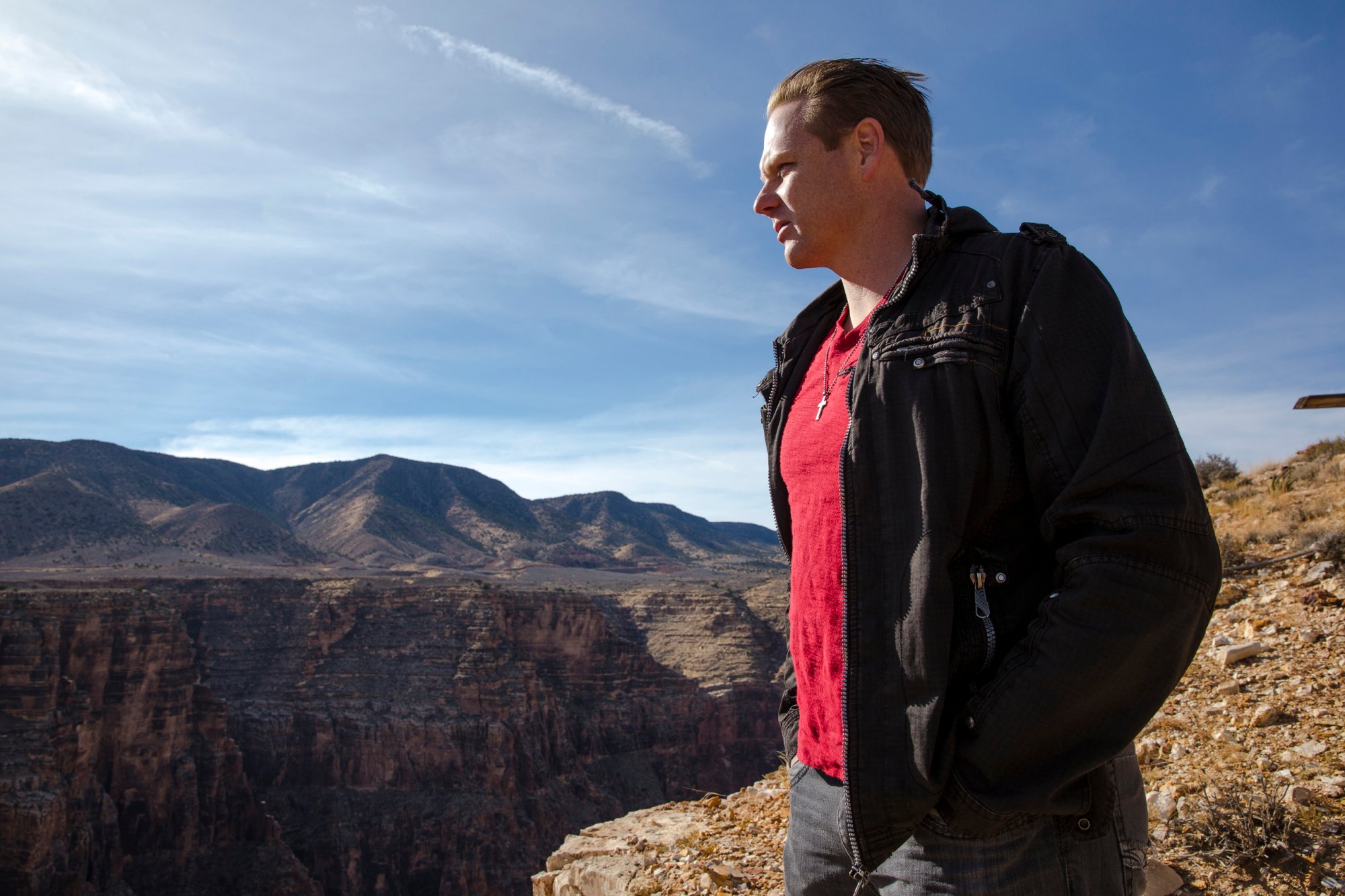
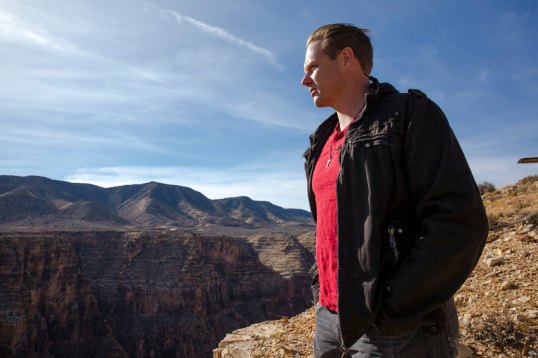
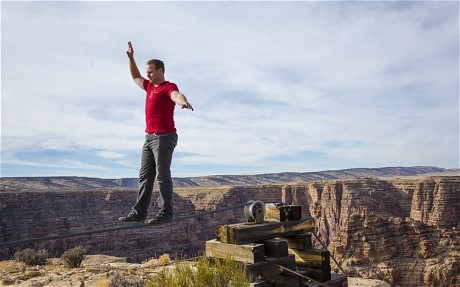
First off, Nik Wallenda , an umpteenth-generation daredevil and great-grandson of the legendary Karl Wallenda, has balls of brass. He just walked across a 1,400-foot gorge  that’s over 1,500 feet high on a fucking cable. It was incredible. It was an amazing feat I couldn’t undertake if the lives of myself and everyone I loved depended on it. Bravo, sir. That was some genuinely incredible stuff and I tip my cap to you with all the respect in the world. I’m not here to denigrate your amazing accomplishment, in and of itself, in any way, shape, or form. Unfortunately, the show that featured your breathtaking, heart-stopping, courageous, death-defying performance was complete shit. And a lot of that, Nik, is your own fault.

That’s because you allowed yourself, I’m guessing quite willingly, to be used. By a ratings-hungry cable network, a shove-it-down-your-throat segment of Evangelical Christianity (not that there’s really much of a mellow, “live-and-let-live” contingent among that bunch), your own fame-starved ego, and the American public’s passive-aggressive thirst to see our idols brought low at any cost — even and especially if it means their death.
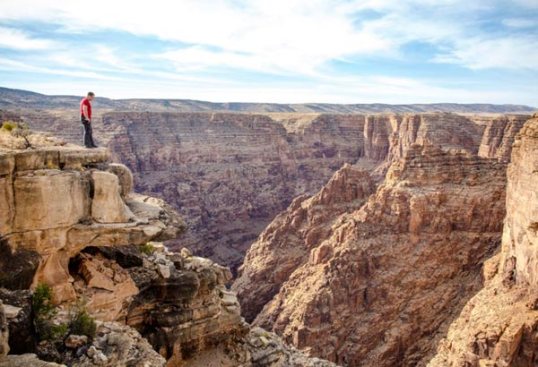
4c3b


Taking those culprits for this show’s demise, then, in order : obviously there are a lot of worthless channels on the tube competing for our attention right now, but few are are as openly hypocritical and shamelessly self-aggrandizing as Discovery. During the numerous commercial breaks that peppered  the interminable,  90-plus-minute lead-up to Wallenda’s actual walk itself hosted by low-rent presenters Natalie Morales and Willie Geist (go on, say it with me — “whoever the fuck they are”), which was every bit as hype-inflated as the Super Bowl pregame and loaded with obviously staged “candid interviews” with Wallenda and his family and “actual behind-the-scenes footage” of his training (that just happened to include a shot of him parking a Mitsubishi car and Mitsubishi just happened to be the main sponsor of Skywire Live), they kept pimping the show debuting right after, Naked And Afraid, a “reality” program that apparently drops an overweight, middle-aged couple into the middle of the jungle with no clothes, no food, and no dignity, and dares them to survive. Real classy stuff. And this from a network that still tries to pretend to specialize in educational programming? Please. Discovery is a channel featuring lowest-of-the-lowest-common-denominator shows that are developed by greedy, shameless executives and watched and enjoyed by stupid people. Rumor has it that not only was Wallenda’s walk not over the Grand Canyon as advertised (actually, that’s not a rumor — it took place on Navajo Land  along the Colorado River that, frankly, isn’t part of the Grand Canyon, and the local tribal chief is apparently quite pissed about the network constantly referring to his area as being something it’s not), but that he had a light-weight emergency parachute hidden under his shirt in case he fell. I actually hope that’s true, because I like to think that there’s enough humanity left in the assholes that make these shows to at least not want to see their star performers get killed, although that same promise of potential death seems to be at the crux of Naked And Afraid‘s apparent “appeal,” as well. But more on that in a minute.

Next up, the Christians. Despite Wallenda’s wife insisting that her husband’s main goal with this spectacular stunt was too — yawn — “inspire other people to follow their dreams,” it’s quite clear that what he was really trying to do was promulgate his religious faith, and make a boat-load of money in the process. You’d think a guy in his position would be doing everything he could to keep the amount of weight he was balancing on that cable to a minimum, but he wore a heavy, dangling silver cross around his neck, thanked Jesus with every step he took and God with every fourth or fifth step, and indulged in some of the most purple, over-the-top, nauseating proclamations of faith you could imagine. “Dear sweet Jesus whose precious blood sanctified us all and in whose honor and glory I move forward across this gorge, please, I beg in your holy name, make these winds rising from the canyon floor die down and carry me across in safety to the other side so I can give you all the credit for the work that I’m out here doing” isn’t exactly a verbatim quote from Wallenda, but it may as well be. And did you happen to notice the not-exactly-camera-shy televangelist phony Joel Osteen on hand to pray with Nik, his wife, and his kids just before he went across? Of course you did, a snake like Osteen wouldn’t be there otherwise. It seems a little bit weird that a guy of Wallenda’s background — who uses his mother’s last name rather than his dad’s, a most non-traditional way of keeping the famous family name going , and who grew  grew up in the ribald world of carny performers — would throw his lot in with repressive, right-wing Bible-thumpers, but that certainly appears to be the case . You’ll find less overt religiosity in any given episode of the fucking 700 Club than there was on Skywire Live.
1371864026465.cached

And yet, for all the talk of wanting to give the “praise and glory” for his achievement to his “lord and savior,” Wallenda sure seemed to enjoy stroking his own ego, as well. Every one of the completely scripted “interviews” with his family before he actually hit the high-wire was a puff-piece designed to portray our ostensible hero in the most glowing — dare I say radiant — light, and when he did finally begin his perilous crossing, he first insisted that he just wanted to ‘quit talking” and be alone with his thoughts , before  duly proceeding to to yak (and, as we’ve already established, preach) to the camera the entire twenty-plus-minute duration of his trek. He complained of being thirsty when he was finished. Gee, wonder why that would be?

Finally, we need to focus some of the blame for this debacle not on its star, nor his hangers-on, nor his network bosses, but on ourselves. We watched Wallenda’s tight-rope act, at least in part, to see what would happen not if he made it, but if he didn’t. Just like the folks who are really watching NASCAR hoping to see a fiery and fatal crash. Or who are watching an NFL to see a gruesome, career-ending injury. Or who are watching Naked And Afraid to see the couple starve to death or be eaten by wild animals (another thing Discovery would, presumably, never allow to actually happen, at least for legal, if not moral, reasons). At least in the Roman gladiatorial arena they were upfront about why the crowds were there, but these days we don’t have the guts to look at ourselves that closely and honestly. There’s something deeply flawed within the human mind, or heart, or soul, or wherever it is, that the supposed blood of Nik Wallenda’s supposed savior can’t fix — in fact, the very notion that we think we need some poor schmuck’s blood to save us from anything (well, okay, specifically to save us from ourselves) is just further proof of what I’m talking about. We feel that the death of another somehow not only justifies our existence, but even more perversely sanctifies it. I’m no saint. I’m a flawed, contradictory, complex, perhaps even entirely unfathomable human being. And so are you. There’s no way that somebody’s demise is gonna change that and somehow make us “pure”  — whether that somebody is Nik Wallenda, John F. Kennedy, Dale Earnhardt or Jesus Christ. We may desperately want to think that seeing someone of great accomplishment die a very public and spectacular death somehow “proves” that we’r every bit as good and worthy as they are, but honestly, folks — that was never in doubt. Nik Wallenda puts his pants on one leg at a time just like you and me. He doesn’t need to die to prove that, and his “savior” — whether real or imagined, which is another debate for another time — didn’t need to die to prove it to him. Can we please just grow the fuck up as a species and leave all this blood sacrifice bullshit behind us one and for all? Countless “living gods” and heroes of one stripe or another have either mythically or actually sacrificed themselves for us by this point, and we’re still the same sorry-ass bunch as ever. This whole “purification by blood” thing just ain’t working. Can’t we try something else?
wallenda-main-pic_2595734c


Well, no, apparently we can’t. Not as long as there are TV networks willing to tease the possibility of death in order to grab ratings, and not as long as there are people willing to prostitute out their talents to said networks for that purpose. Wallenda can pray with Joel Osteen to find any other angle on why people were watching his show tonight all he wants to, but the ugly truth of the matter is that lots of folks were secretly hoping to see him perish, and 2,000-plus years of the kind of Jesus-freaking he was doing tonight haven’t changed that fact. It’s said that every society gets the monsters it deserves, and while Nik Wallenda hardly qualifies as a monster by any stretch of the imagination, his show tonight — and all its ilk — are definitely monstrosities that exploit the darkest recesses or our human nature, stoke them to a fever pitch, and make suckers of us all. They pervert even the most astonishing feats and twist them into something cheap, ugly, degrading, and degraded. And we respond by loving every minute of it and lining up for more.
Before You See Anything Else — “Before Midnight”


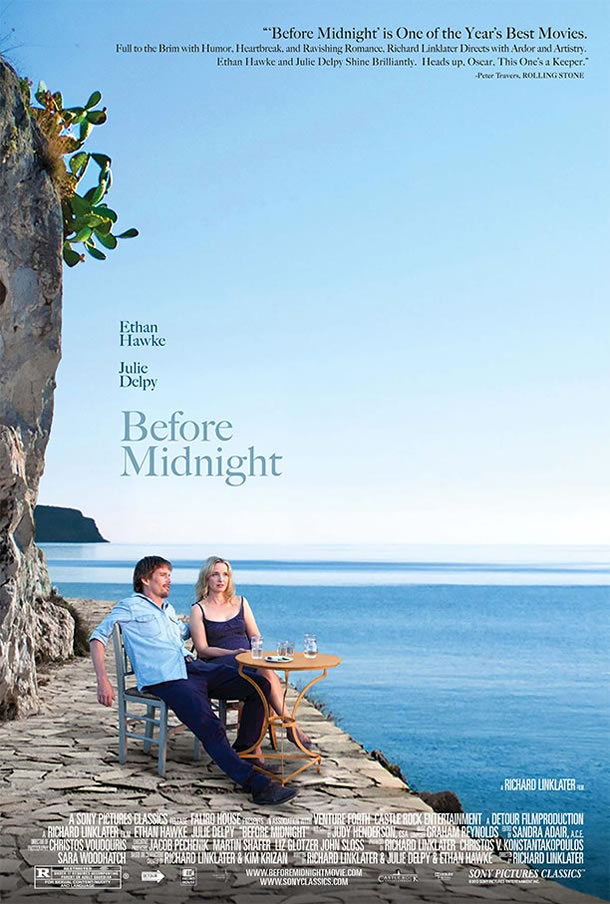
before-midnight-poster


So, this is it. You can keep your Man Of Steels, your Iron Man 3s, your Star Trek : Into Darknesses, and your Pacific Rims — fun popcorn fare some of those may be, but for me summer 2013 at the movies is all about the third installment in Richard Linklater, Ethan Hawke, and Julie Delpy’s long-running cinematic romance, Before Midnight. I won’t rehash the details of how and why this unlikeliest of indie “franchises” has meant so much to this armchair critic on a personal level over the years — hell, over the decades now! — as my reviews of Before Sunrise and Before Sunset last week covered that ground pretty damn thoroughly already, suffice to say that the chance to see Jesse and Celine living happily ever after is, at the risk of sounding hopelessly corny, a little bit of a celluloid dream come true for yours truly. And so here it is — and here they are, doing just that.

Or are they? Okay, sure, they’re together — and have been, apparently, since the conclusion of Before Sunset nine years ago. They’ve got twin daughters, successful careers (Jesse as a novelist and English professor, Celine as an environmental activist) in Paris, and are just winding up spending a magical summer at a writer’s retreat in the Greek Islands. Sounds ideal, right?

But all is not, of course, well in paradise — Jesse’s torn about the son he left behind in the US and wants to be a more active part of his life, Celine feels stifled by the apparently-tranquil domesticity of her situation and has no desire to move back to America for Jesse to be near his kid, and both are struggling with the the ever-narrowing possibilities life offers up as we age and our thousands of dreams get whittled down to a more concrete set of responsibilities. The passing years have seen “must do”s replace “want to”s in their lives, and one of the running themes of all of these Before pictures is that of  somehow finding a way for love and passion and the sheer wonder of being with another person who understands and accepts us for who we are to survive amidst all that.

They seem to be doing their best. Their sex life is still refreshingly healthy for a cinematic couple on the cusp of middle age, they still walk and talk like the two young lovebirds who met on the train to Vienna, and they still show a genuine affection for one another that can give all of us some small measure of hope. But half the film is consumed by a fairly heated and wide-ranging argument in a hotel room that lays bare the many fault lines underpinning in their relationship. The only question, it seems, is whether they’ll continue to navigate those together or choose to go their separate ways.

Linklater, Delpy, and Hawke, who collaborated on the screenplay together once again (though it’s still nice to see them share character-creation credits with Linklater’s friend, the late Kim Krizan), strike a very delicate balance here between presenting the “heaviest” material we’ve yet to see in this series with the most lighthearted, comedic  sequences to date, as well, and the end result is a film that’s not just a joy to watch, but to absorb, from its first frame to its last.

My long-standing group of friends I’ve seen all these films with waited until we could all see it together, and over the customary after-movie drinks last night we all agreed on two things — we loved it to pieces, even though it was, in many instances, the most difficult of  the bunch to take in; and we couldn’t wait to see it again. It’s just a bit too early to figure out where we’d rank this is the entire — uhhmmmm — “pantheon,” I guess, after only one viewing, ya see.

Now, if you’ll indulge me, I’d like to unceremoniously transition into a personal plea here — rumors are swirling that this might be the final Before of the bunch, and if that’s the case, I think it’s well past time for Oscar to show it a little respect. Yes, this series enjoys a deeply passionate and committed following, but it sure would be nice if Hollywood’s establishment paid some attention to this evolving little piece of wonderment that’s been happening under their noses for nearly two decades. Hawke and Delpy have both affected subtle body-language shifts over the years to delineate their characters’ evolving personalities (he walks with more swagger than ever, for instance, while she exudes an air of peace-that’s-looking-for-any-excuse-to-erupt resignation) that perfectly complement their maturation on paper and each is deserving of a Best Actor/Actress in a Leading Role nomination, and if the three collaborators aren’t recognized with a nod for Best Original Screenplay, there seriously ought to be an investigation. Hell, unless something else comes along that completely knocks our collective socks off, there ought to be an investigation if they don’t win it. Let’s get the email, blog, forum, etc. pressure campaign started right here — who’s with me on this?

Before Midnight is the most authentically human picture to come down the pipeline in ages, and traverses a rocky yet rewarding emotional terrain with grace, warmth, and yes, even charm. It shows how love endures when initial , lustful ehuberance ages into a kind of occasionally- resplendent ardor, and how it finds its level and holds us aloft even when we get everything we’ve ever wanted only to find out it’s still not exactly what we were yearning for (humans, we’re so picky). It’s the “happily ever after” we’ve always wanted for Jesse and Celine — and for ourselves — warts and all. And I’m so completely in love with the cinema, and even with life,  again it damn near hurts. If this is, indeed, the end — and I sincerely hope it’s not, I want to grow old with these characters — it couldn’t be more perfectly imperfect, more gloriously flawed, more tragically comedic, more uneasily blissful.


Trash Film Guru Vs. The Summer Blockbusters : “Man Of Steel”


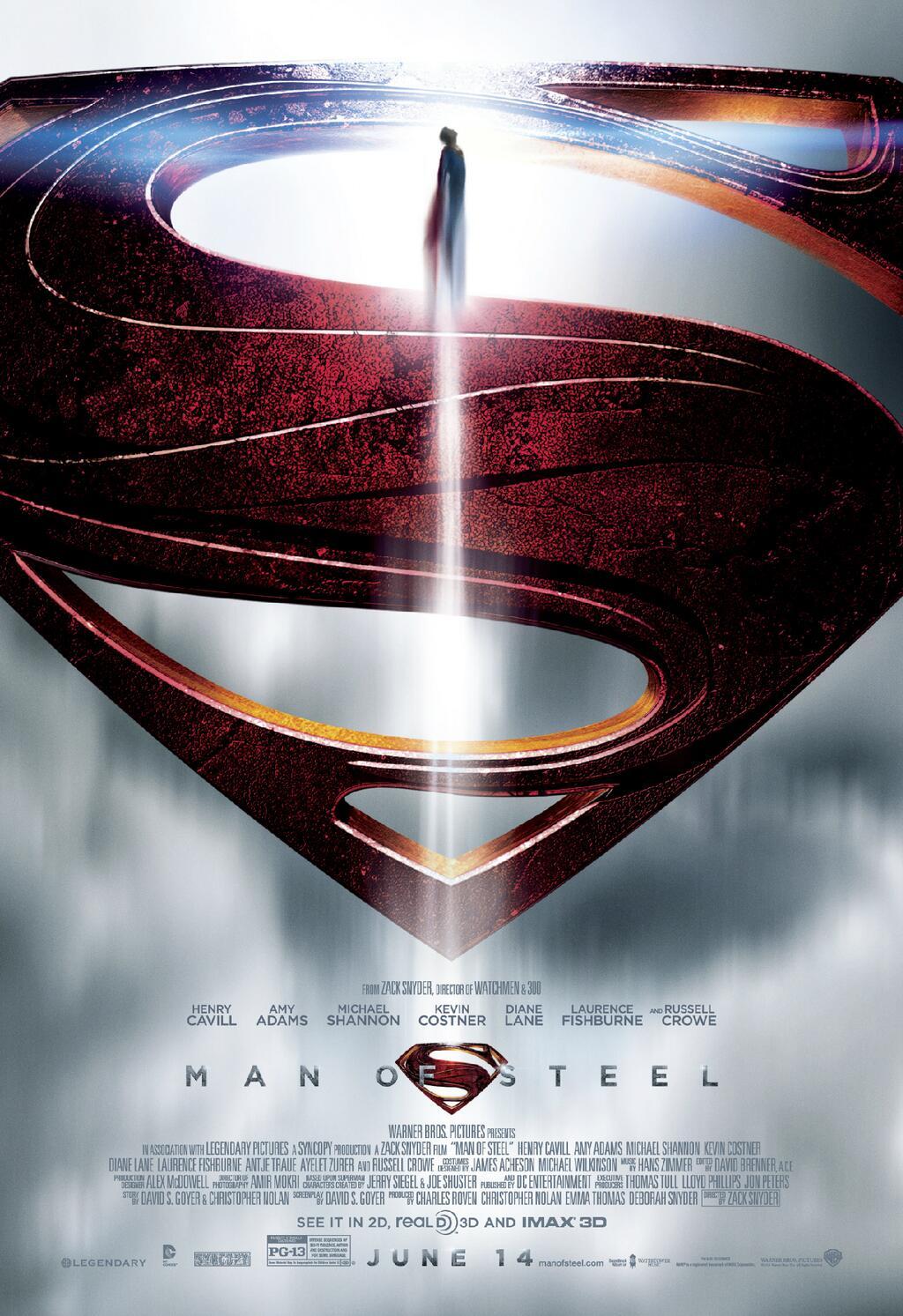
New Man of Steel Poster

I know that, in this day and age, we as a society seem to get off on tearing down our myths and legends and “humanizing” them, but seriously — when did Superman develop a split personality?

Before you jump to any conclusions based on that admitted “gotcha” of an opening line, allow me to state for the record that I didn’t actively dislike Zack Snyder’s Man Of Steel, it’s just that it spends its first half or so rather half-heartedly trying to portray its title character in more human terms than we’ve seen in previous iterations before finally throwing all that out the window and deciding that it actually wants to tell a story about a God who walks (and flies) among us, and the film definitely suffers as a result of this abrupt shift in tone.

But first the “plus” side of the ledger : Man Of Steel is pretty much the most awesome visual spectacle the movies have ever produced. I’m no fan of CGI as a general rule, but damn if every single effects shot in this flick isn’t enough to take your breath away, particularly the sequences on Superman’s home planet of Krypton, which Snyder and his WETA-employed staff depict in a markedly new and exciting “biotech on steroids” fashion. When the action goes earthbound, the optical awesomeness continues, never fear, so if spectacle is what you’re after, you’ll walk away from this well pleased indeed.

Pitch-perfect (with one notable exception which we’ll get to in a moment) casting doesn’t hurt matters any, either — Henry Cavill makes an immediate impression in both his Superman and Clark Kent personas; Russell Crowe is suitably above it all as his Kryptonian father, Jor-El; Kevin Costner and Diane Lane are almost too spot-on for words as his adopted human parents; Laurence Fishburne’s Perry White is old-school newspaper vet all the way (even with the pierced ear); and the always-underrated Michael Shannon oozes psychotic menace as lead villain General Zod. Watching all these people at work is a genuine joy.

Granted, the script — by Dark Knight veteran David S. Goyer (from a story co-plotted with the head honcho of this whole enterprise, Christopher Nolan) — doesn’t do any of them any favors dialogue-wise (apparently Kryptonians have evolved beyond good, old-fashioned conversation and speak entirely in grandiose pronouncements — but it’s not like the mere humans in this film are any less prone to dull, dry, wooden,  faux-poetic waxings themselves), but the players by and large manage to rise above the material they’ve been handed.

I say “by and large” (and here comes that exception I talked about a moment ago) because, sadly, one has been dealt such a losing hand that I’m not sure what she could really have done about it — I’m speaking, of course, about Amy Adams’ Lois Lane. Goyer does some brave and interesting things in terms of shaking up the established Clark-Lois backstory ( let’s just say she won’t be sneaking glimpses of him at sly angles when his glasses are off to see how much he might or might not look like Superman), but the cold, emotionally distant nature of this particular big-budget beast means that the whole love story angle falls pretty flat. By the time Goyer, Nolan, and Snyder decide they want to play the Nietzchean uberman card for all it’s worth, the independent, confident journalist we meet at the outset is reduced to becoming more awestruck than she is lovestruck, and rather than being “Superman’s girlfriend” she comes off more as his disciple. Who just so happens to kiss him. I mentioned the abrupt tonal shift in the film at the outset of this review, and poor Lois definitely suffers the brunt of it.

The messianic poses Cavill is forced into during all the flight and battle sequences get pretty old pretty fast as well, it’s gotta be said, and with no real transition period in the way the story is structured between its “simple farm boy from Kansas”  and its “demi-god here to save us all from the evil forces originating from his own homeworld” (that he inadvertently brought here himself, but hey, let’s not dwell on that) segments, well — let’s just say not much thought apparently went into how jarringly that would all play out. Hans Zimmer’s typically percussive, insistent musical score only augments the problem, and while there’s no way anybody was gonna have fans forgetting about John Williams, a “stripped-down,” “less over the top” orchestral accompaniment really doesn’t work when you’re trying to portray Superman as a fucking deity.

Superman purists, for their part,  may also find themselves semi-outraged by more than the snakeskin-fetish-wear take on his costume. There’s no Jimmy Olsen here, no Lex Luthor (although the “Lexcorp” logo appears here and there on props throughout — as do the logos for Sears, 7-11, and an unending and highly annoying litany of corporate sponsors), and “Metropolis” is never mentioned by name even though the entire final act takes place there. So be ready for at least some “nerd-rage” on the internet. Still, if those were the only things that bugged me about Man Of Steel, I’d be feeling a little bit better about it as a whole right about now. Not that I’m all that pissed or disappointed —-just, well, kinda perplexed.

I can’t say that Man Of Steel isn’t a fun movie to watch, because it is — hell, it’s an absolute visual marvel, and if you want to shut your brain off and just be taken along for a wild adventure ride, you’re not gonna do much better this (or any other) summer  Still —my mind kept drifting back to the famous first-encounter-between-Supes-and-Lois scene in Richard Donner’s Superman : The Movie (still the gold standard for all superhero flicks as far as I’m concerned) : when Lois asks him “who are you?,” and he replies, simply and with a smile, “a friend,” that told us all we needed to know right there. Sure, he was faster than a speeding bullet, more powerful than a locomotive, and able to leap tall buildings in a single bound, but at the end of the day , Superman as envisioned by Richard Donner, Mario Puzo, and Christopher Reeve was one of us.

By contrast, Superman a la Snyder, Nolan, Goyer and Cavill is above us. He’s not here to help humanity, but to redeem it. He’s not our hero anymore, he’s our savior — whether we want one or not.

Trash Film Guru Vs. The Summer Blockbusters : “After Earth”


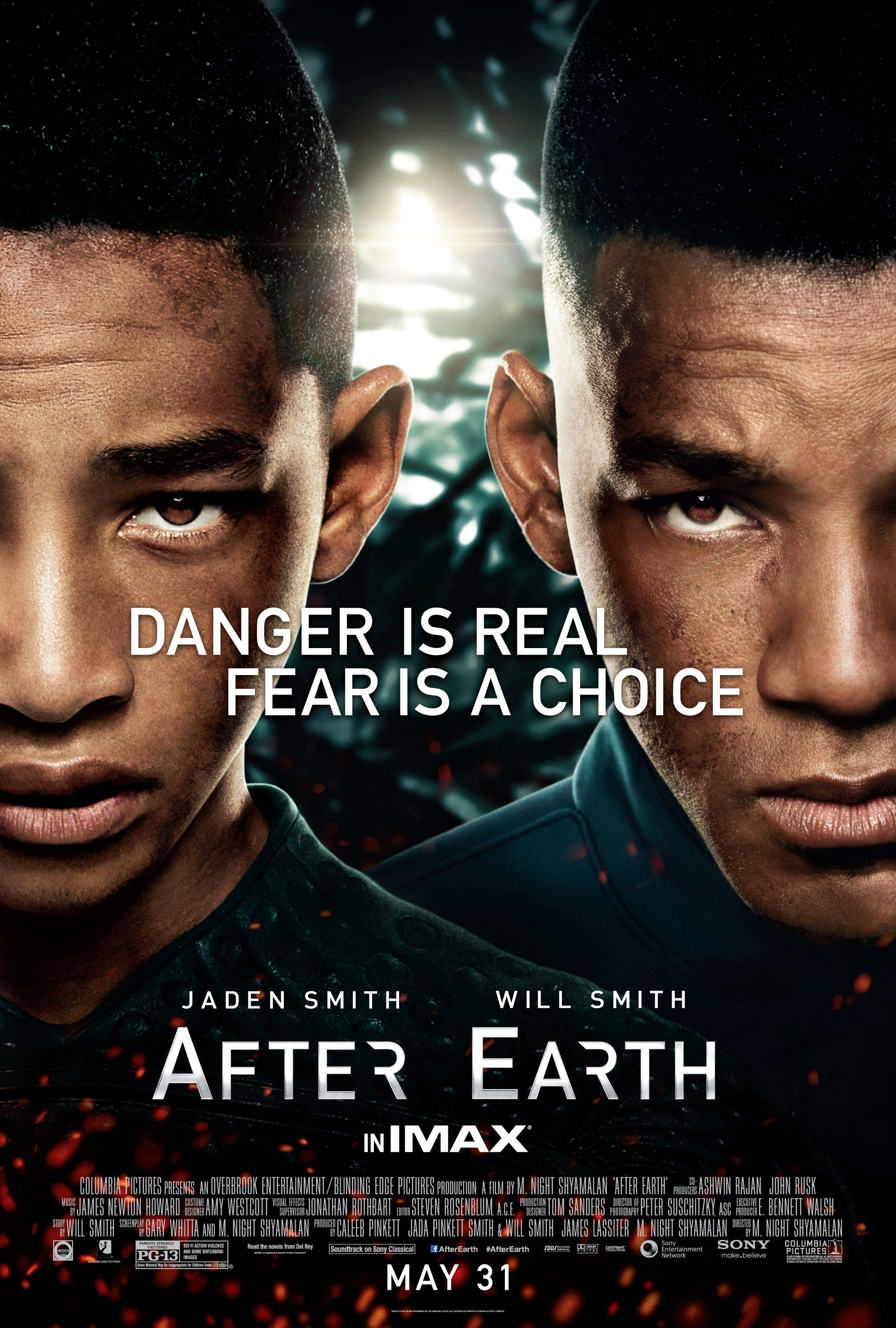
After-Earth-poster


Given that the always-on-the-ball Lisa Marie Bowman already beat me to the punch with this one on these virtual “pages,” I won’t waste too much of your time, dear reader, on my post-mortem analysis of the decidedly dull, wannabe-mystical-and-“empowering” mess that is Will Smith’s latest vanity project, After Earth, and instead merely remark upon some — -well, remarkable facts.

The first being that precisely two scribes here at TTSL actually saw this thing, and my best guess is that we both saw it in empty theaters because, according to box office receipts from the past weekend, nobody else went. So Sony/Columbia owes us a debt of thanks. And maybe some free passes to some future release of theirs.

Secondly, I’d like to state for the record that this film actually isn’t the abysmal and abject failure so many have quickly taken to labeling it as being so much as it’s just thoroughly predictable and almost relentlessly dull. 1,000 years after the evacuation of the planet due to largely unspecified but apparently quite serious environmental devastation,  emotionally distant military bad-ass-with-focus-group-tested -name Cypher Raige (Smith) and his son, Kitai (Smith’s kid Jaden) crash-land on the supposedly uninhabitable rock and must find a way to — yawn — survive while also learning to — yawn again — finally form the deep bonds of trust that all parents and their offspring are, y’know, supposed  to have.

There’s a bog-standard “warrior monk” mentality that runs through this picture that confuses stoicism for honor and nonchalance for dignity, and while Smith seems to be ill at ease with the material, he’s really got no one to blame but himself given that the film’s plot was apparently hatched in his own mind and the whole thing’s a family affair, with the former “Fresh Prince” not only starring in it, supposedly having a hand in scripting it, and casting his son to appear alongside him, but with his wife,  Jada Pinkett Smith, grabbing a producer’s credit, as well. And while it might be tempting to lay a pretty fair share of the blame for this overwrought snoozer on M. Night Shyamalan’s doorstep, as well — especially given his thoroughly uninspiring track record over the past decade or so —  the fact is that he’s pretty much acting as a director/co-writer-for-hire here, his fifteen minutes as Hollywood’s “next big thing” having apparently — finally! — run their course.

And weird as it sounds considering my disdain for pretty much anything he’s ever had his name attached to in the past, Shyamalan actually acquits himself reasonably well here. His direction doesn’t especially stand out in any respect, mind you, but you know what they say about how tough it is to make a silk purse from a sow’s ear. All in all, I got the distinct impression that he was at least trying to inject some life into some pretty goddamn listless proceedings.

His efforts certainly aren’t enough, though. LMB’s right that the film’s environmental message feels both heavy-handed and tacked on — shit, at least Birdemic was so hilariously inept at doing more or less the same thing that you couldn’t help but love it —but its New Agey emotional subtext is even more clumsy and ham-handed than its ecological one,  and to me that’s where the film’s most egregious sermonizing is to be found.

Parents should love their kids and be nice to them? Wow, ya don’t say.

Anyway, there’s probably not much point belaboring the obvious any further here — I’ve never been a big fan of piling on, and as I said, I don’t find  this flick so much actively bad as it is just dull, preachy, and without purpose apart from demonstrating to the world what an awesome, caring, understanding bunch the Smith/Pinkett clan is (after all, they’d never treat their kids like this in real life, right?). So there ya go —  and there it goes, since all indications are that After Earth will probably “enjoy” a well-deserved short-lived run on our nation’s movie screens before slowly dying on the home video and cable TV vine. Hang onto your cash and catch it on TNT or TBS some Saturday afternoon a year from now.

Before The New One Comes Out — “Before Sunset”


before-sunset-movie-poster-2004-1020215600

When I got back to the US after spending 18 or so months abroad in 2005, Before Sunset had already come and gone from theaters the previous year, and to be honest, my first reaction to it was to be a bit perplexed by the whole idea. “Never saw that one coming,” I thought to myself — but I knew I had to see it. Yeah, as I said last time, I couldn’t really picture any other ending for Jesse and Celine apart from one where they absolutely had to have met up again six months later and lived, as the saying goes, “happily ever after,” but here we were, nine years down the road, with the real (well, okay, not “real” — it is a movie, after all — but you know what I mean) story of what came next. Fortunately for me, my very good (to this day) friend with whom I had seen Before Sunrise had missed this one in the cinemas, as well, so just a few days after getting settled back into my house, with almost no furniture in place, and my TV and DVD player only having been hooked up a matter of hours earlier, we kicked back and did a little marathon viewing session of both films back-to-back.

The first thing I was taken aback by was how much of an emaciated meth-head Ethan Hawke looked like this time around, and Julie Delpy looked to be bordering on “unhealthy thin” status as well, but no matter — for the next hour-and-a-half or so we were back in their lives, and they were back in ours, and even if everything wasn’t gonna be perfect, it was all gonna be good enough.

Which isn’t too bad a summation of Before Sunset as a whole, with one added caveat — “good enough” can be pretty damn beautiful in its own way. Jesse’s an author know, touring Europe to promote his new book, an obviously-autobiographical account of two strangers who meet on a train, spend an evening in Vienna, and fall deeply, passionately, and completely in love. Then never meet again. Or maybe they do. The novel’s ending is deliberately ambiguous.

Sound familiar? Anyway, on the last night of his tour he happens to be giving a reading/signing in Paris, and Celine shows up. They have just enough time, it seems, to grab a cup of coffee before he’s on a plane back home, and the motif of “stolen time” that they should never have had in the first place that runs through the first film is definitely pressed even further this time around, as events unfold very nearly in real time and every minute our two long-separated lovers spend together is one that pushes the envelope of their “real lives” even further out of shape.

I have to be honest — on first viewing this ultra-compressed time frame gave things a very rushed feel that I wasn’t terribly “in to,” but  I’ve subsequently grown to appreciate its utility as a story-telling device more and more. Jesse’s got a wife and son back home, but it’s a sham marriage where they’re both just going through the motions, while Celine, who now does some sort of unspecified work for an environmental organization,  has a boyfriend who works as a photojournalist and is basically gone all the time. She couldn’t make it back to Vienna to meet him all those years ago because her grandmother had just died, while Jesse showed up and couldn’t find her, even going so far as to post missing persons flyers around town in hopes of tracking her down. And that “missed meeting” has informed and shaped the course of their lives every bit as much as the time they actually did meet.

Once again,  Richard Linklater’s superbly subtle eye ensures than the camera is in exactly the right place for maximum dramatic impact with every shot, but giving the proceedings an even more naturalistic flow here is the fact that there’s no Linklater/Karen Krizan script to be read — rather Hawke and Delpy were allowed to “get in character” and create their own dialogue for these people they knew so well. It works like a charm, and the whole thing feels like nothing so much as an expertly-filmed conversation between two old lovers that unfolds as they hurriedly stroll through the streets of Paris. Every second counts. Every word counts. Ever movement and expression counts. Everything counts. Even if it’s delivered with the more practiced nonchalance that most of us acquire as settle into what life is rather than dream about what it could be.

With both characters now in the early 30s, those possibilities of which I speak have narrowed considerably compared to last time around, but I think that’s the whole unfolding theme of this entire series — learning to find a place for dreams, and for love, in a world that whittles away the chances at achieving both as the years go on. A search for beauty and truth and meaning by projecting our hopes and ideals into visions of a world that we wished existed inexorably giving way to a life where we can still, hopefully, search for — and maybe even find — beauty and truth and meaning in a world that already exists.  It’s painfully obvious that both Jesse and Celine have never really “moved on” from their one magical night together, and that they’ve both dreamed of an existence where they were able to meet again ever since. Jesse’s stumbled into a responsible “family man” life simply because he saw it as all that was on offer anymore, and Celine’s carefully walled herself off from real emotional connection with others simply because it all hurts too much when they inevitably leave. Both are hopelessly infatuated with a memory, yet torn apart by it at the same time,  and are  now presented with a very rare opportunity in life — the chance to rekindle that memory, actively, in the present day, and maybe — just maybe — build on it. They both share the unbreakable bond of one moment in time that’s authored every moment since. And now, finally meeting again after all these years, wouldn’t ya know it — they’re in a hurry.

Imperfect circumstances for two people leading imperfect lives that have largely been a series of imperfect reactions to one perfect evening. Celine’s completely neurotic, Jesse’s completely resigned to his fate, and yet — the spark is still there. Their time together here is often painful, argumentative, and decidedly uncomfortable, but it all feels so almost unbearably authentic that you can’t help but become just as swept up in it as you were by that night in Vienna.

All of which leads to an ending you can’t help but love, despite the enormous complications you know it will present to both of these characters’ lives. Linklater is obviously trading in reversals with Before Sunset from the outset — showing us still-frame shots of where our couple will go at the beginning rather than showing us where they’ve been  at the end, and swapping out talk of what they want their lives to be with a litany of regrets over what their lives have become, but whereas their first meeting was a luminous evening capped off with a separation, their second is a rocky, tenuous, long-delayed and frankly even a bit faded afterglow that Jesse purposely blows off his flight home to stay in. This is no longer an idealized memory, or a painful reminder of what might have been — this is here. This is now. This is real life with all its flaws and foibles and tragedies and responsibilities. And these two are in in together.

As with all things as we get older, moments of revelation and life-altering decisions become more subtle and unpronounced in their execution, but their impact is every bit as real. When Celine tells Jesse “you’re going to miss that flight,” and he replies “I know,” it’s not tinged with the momentous import of every new character revelation we enjoyed in their first outing, but it sure does resonate at least as much as any of them, if not moreso. These people are grown-ups now. Their actions matter. And our reactions to them are consequently more complex and nuanced. “Dude, you’re fucking your life up big-time here” is answered by “but you’ll be fucking it up even more if you leave.” I was, and still am, elated by his choice, despite its implications, and am eagerly awaiting the next chapter in this story with a burning interest I haven’t felt for any other film in years. Before Sunrise left me in love with an idealized vision; a dream. Before Sunset left me in love with the real world and all the possibilities that still exist within it.

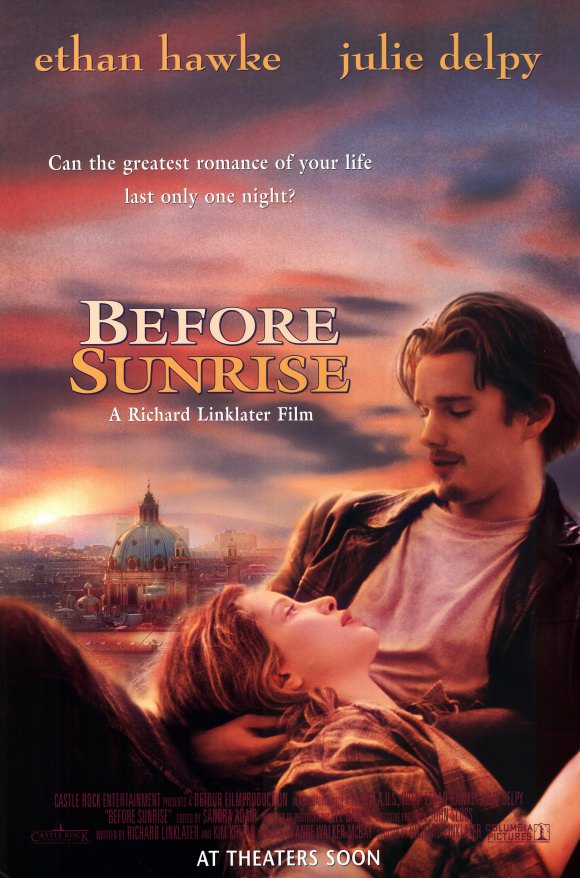
Before The New One Comes Out — “Before Sunrise”


1995-before-sunrise-poster1


Folks who only “know” me from my online and (occasional — in fact, too occasional for my tastes, but that’s another matter for another time) print writing are probably going to be surprised by what I’m about to admit : the summer movie I’m most looking forward to here in 2013 isn’t Man Of Steel or Star Trek Into Darkness or Iron Man 3 or The Lone Ranger or any of that. Nope, friends, the one I absolutely can’t wait for — hell, pathetic as it sounds, the one I feel, at this point, that I’m flat-out living for is Before Midnight, the third collaboration between Richard Linklater, Julie Delpy, and Ethan Hawke that marks their next — and hopefully not last — look into the lives of my personal favorite couple in cinematic history, Jesse and Celine.

How much do I love these flicks? So much that I’m setting myself an arbitrary 1,000-word limit on my reviews of the first two so that I literally have to force myself not to spend all night writing about them. Say what you will for the likes of Pulp FictionReservoir Dogs, or Linklater’s own Slacker or Dazed And Confused, but for me the first two Before films are the celluloid touchstone for so-called “Generation X”-types like myself, and are probably, I would imagine,  pretty damn engrossing for other audiences — both older and younger — as well.

Once you’ve seen the second, it’s fairly well impossible to look at the first through anything but the prism of what comes after, so pretending like I can take Before Sunrise on its own merits is an exercise in futility. Let’s not even go there, then. And let’s avoid the whole question of which is the “better” of the two, as well, since they’re inextricably linked and those of us who know ’em and love ’em wouldn’t have it any other way. Let’s just agree right here and know that we’re looking at them one at a time only because they came out one at a time, and let that be the end of it.

And while we’re at it, I might as well state for the record that I can’t look back at Before Sunrise without some kind of warm nostalgic glow that, I’m certain, warps my overall view of the film itself and colors everything about it with a far more rosy tint than it’s earned.

Or wait. Maybe it has earned it. In fact,  maybe the reason 1995 stands out as a great fucking year in my life is precisely because that’s when this movie came out. It would make sense. It’s not like there are a tremendous number of overly specific memories that flood my mind when you say “1995.”  I was living in an apartment I shared with a buddy of mine since high school, I worked a couple of dead-end gigs, I had a girlfriend that I had a semi-rocky but mostly just dull and listless relationship with — the usual stuff. But I did party a lot and have a ton of fun and found myself tenuously taking the first steps into what would eventually become — yawn! — “responsible adulthood” along with a good group of friends who were going through the same shit at the same time, some of whom I’m fortunate enough to still be “tight” with to this day.

Damn, we could talk about anything. And one thing we talked a lot about was Before Sunrise. How Ethan Hawke was so much more human than he’d seemed in anything else. How Julie Delpy was just fucking luminous in every frame. How the dialogue was so real and immediate and free-form and authentic.

Truth? I think these were people we wanted to be having a night we all wanted to have. Most of us probably didn’t catch the numerous Ulysses references dropped as Jesse and Celine made their way through the streets of Vienna, most of us didn’t know enough about film yet to really appreciate the spot-on choices Linklater made with his camera at every turn, and most of us couldn’t yet directly relate to the intense and abiding love these two developed over the course of one (goddamnit, I’ll say it) magical evening — we just knew this was what we wanted life, and love, to be like.

And I think we all still do. We’ve probably all been lucky enough to feel that same sense of unfolding wonderment at the discovery of another person in our lives — I know I have and I was smart enough to marry the girl — but it didn’t happen in Vienna, on a compressed time frame, and we were all probably a lot more clumsy about it. So hey — here’s to movie magic.

It’s kinda hard to believe that just a couple years prior to this, Hawke was starring in a flick called Reality Bites, because Before Sunrise is, at the end of the day, a story about how reality doesn’t “bite” at all, but about how amazing, wonderful, and almost unbearably perfect life can be, even if it’s only for all-too-brief moments here and there. Linklater and co-writer Kim Krizan delivered a crackerjack script, to be sure, but the best and most important line they gave us — even if it’s a cliche — is when Delpy’s Celine informs us of her belief that “if there’s a God, it’s not in you, or me, but right here — in the space between us,” because for all it’s amazing dialogue, naturalist acting, and pitch-perfect characterization, it’s in observing that space between our two young lovers that the real enchantment in this work lies.

When the two finally part company at the end, it really does rip your heart out — especially knowing what’s in store for them nine years down the road — but I have to admit, before I ever even heard that the first sequel was in the offing, my reaction to the way this one wrapped up was always the same — “Jesse, you schmuck, don’t get on that train, drop everything and tell this girl you want to love her for the rest of your life starting right now and let the chips fall where they may!” I spent the following years imagining that they must have met again in Vienna six months down the road precisely as they’d planned because, frankly, I just couldn’t bear to picture any other possible outcome — if any couple ever deserved to live “happily ever after,” it was this one.

Nearly 20 years (!) and God-knows-how-many viewings later, I still believe that. Even before knowing what happened next (but not yet knowing what happens after that one — folks in New York, LA, and Austin who have already gotten to see Before Midnight, know that I am well and truly envious) this simple, uncomplicated story, where nothing happens but everything happens — a story laced with a kind of, for lack of a better term, “active nostalgia,” that takes you right back to where you were in life when you first saw it but reveals new things each time that can only come from being certainly older and hopefully wiser — was enough to make me fall in love with love in a richer and more rewarding way than I had ever considered previously and to want the spontaneous joy of getting to know another person and what makes them tick that these two shared to never, ever, in a million billion years, end. Not for them, not for me, not for any of us.

Now I’m getting sappy. Or maybe I started out sappy right from the get-go here and have gotten progressively worse about it to the point where I just can’t ignore it any more.  And that 1,000 word limit? Guess I fucked that up. But ya know, I don’t care — I’m just happy right now. Happy to live in a world where stories like this are even possible. Happy to have a front-row seat to perhaps the greatest intermittent two-person character drama anybody’s ever come up with. And happy to share my thoughts on a movie that’s meant so much to me with you good people reading this. If you ain’t got a love like this, friends, I wish you nothing but the very best in finding it. And if you’ve got it, never take it for granted and never let it go. This. Is. What. Life’s. All. About.


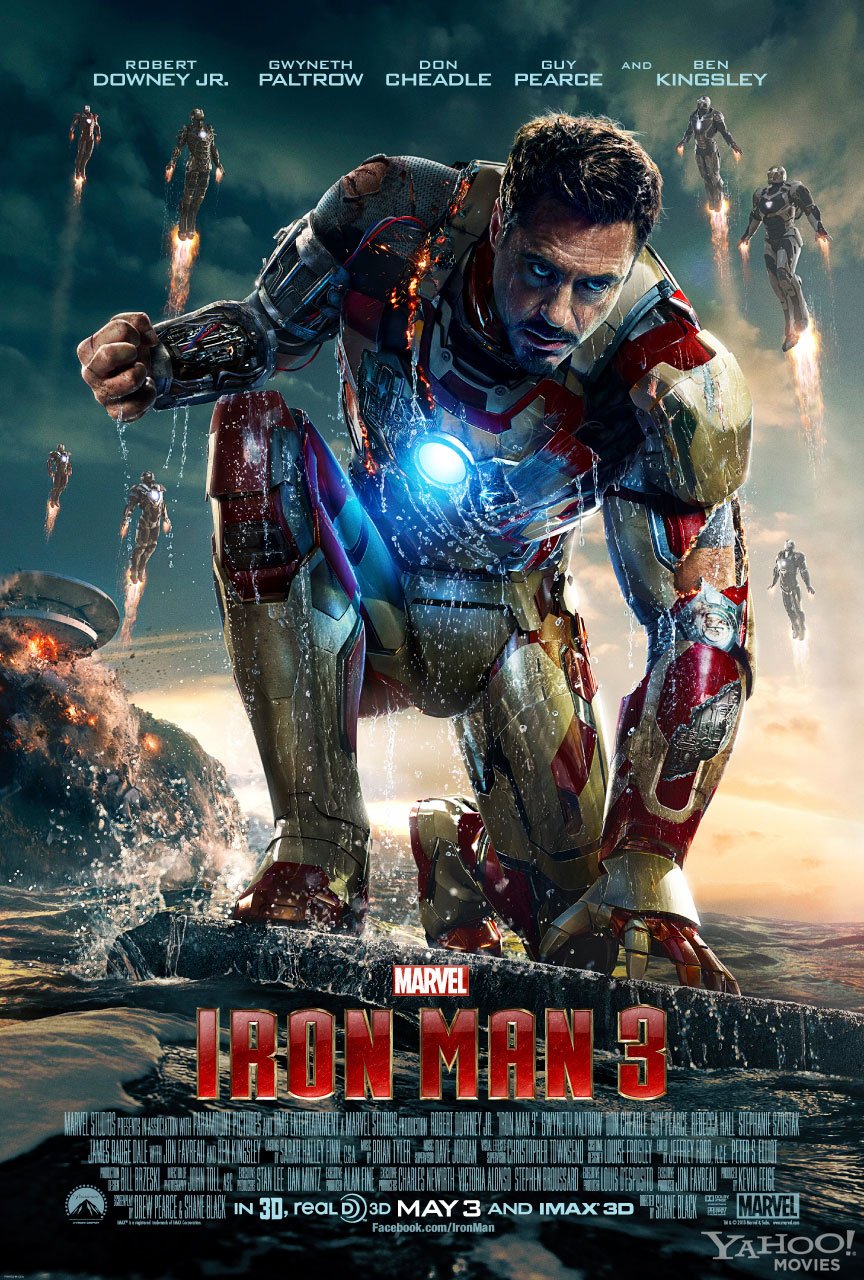
Trash Film Guru Vs. The Summer Blockbusters : “Iron Man 3”


iron man 3 poster


I’m not sure one can entirely, or even adequately, separate how one feels about Marvel’s latest bloated billion-dollar blockbuster, Iron Man 3, from how one feels about their last one, The Avengers — excuse me, Marvel’s The Avengers — since Joss Whedon’s flick has been positioned, story-wise, as a thematic and consequential lead-in to director Shane Black’s first crack at the cinematic exploits of Tony Stark and his super-suit. After all, it’s Stark himself who solemnly informs us that “nothing’s been the same since New York,” and the events he “endured” there are supposedly the catalyst for a new, darker, more somber and “mature” phase of his life that’s now begun.

Right off the bat, then, you’ll have to forgive me if I just don’t “buy in” to that whole scenario. I know, I know — I’m one of only about ten people on the entire planet who was less than blown away by Marvel’s The Avengers (got it right this time), but let’s leave that aside for a moment, because the fact is that even if I did love it to pieces, it’s essentially nothing more than a fairly light-hearted, superheroes-save-the-world romp. It didn’t even try to have some kind of “heavy,” far- reaching resonance. It was a popcorn movie. You might feel it was a particularly good, or even terrific, popcorn movie, but come on — if you think it was a work of lasting emotional depth and impact, I think you’re kidding yourself, friend.

Still, that’s the hook we’re being told to swallow in order to fully “appreciate” the baseline Iron Man 3 is starting from. And things only get more quasi-resonant from there, as we see Stark (Robert Downey Jr. doing a fine job essentially playing himself, as usual) inadvertently create a rival/enemy for himself in Guy Pearce’s Aldrich Killian before taking on a genuinely big menace in the form of mysterious international terrorist The Mandarin, superbly brought to life by a genuinely menacing Ben Kingsley. Flat-as-cardboard side characters “Pepper” Potts (Gwyneth Paltrow, who as always probably deserves more to do), James “Rhodey” Rhodes (Don Cheadle, clearly in it for the paycheck) and Maya Hansen (Rebecca Hall) essentially aren’t given much to do apart from complicate things here and there for Stark/Iron Man, and help him out when he needs it in various forms, whether that be in the boardroom, bedroom, or battlefield (depending on which of the three we’re talking about), but Black and co-writer Drew Pearce are clearly interested in putting some of their eggs in the baskets marked ” Stark’s struggle against himself”  and “where does the man end and the armor begin?,” as well.

And hey, kudos to them for at least trying to give this superhero property some heft and gravitas of some sort — and if the Shane Black who gave us Kiss Kiss Bang Bang and scripted The Monster Squad were the one running the show here, maybe it would have worked out fine, but his work this time around hews more closely to his efforts as screenwriter on such middling testosterone-laced fare as The Last Boy Scout and the Lethal Weapon movies than anything else.  Which is to say that this is certainly a competent-enough film in terms of its execution, but doesn’t offer a whole lot beyond that, despite its director’s best intentions.

Maybe the die was cast from the  outset. Maybe the Iron Man franchise is such a juggernaut at this point that it’s propelled forward by nothing but its own apparently-unstoppable momentum and all attempts at interjecting some personality into things are bound to fail. I give Black points for at least wanting, apparently, to vary things up from the Jon Favreau/Joss Whedon formula, and for doing something radically different with the character of The Mandarin that probably not all fans of his comic book appearances will appreciate and/or approve of, but in the end it feels like he put up a fight for some kind of individualistic vision for a minute there, knew he was beaten, threw in the towel, and just decided to go with the flow. His bank account will surely thank him — as will, I’m willing to bet, the majority of viewers — but for my part, I was left feeling more than a bit underwhelmed by the whole spectacle.

For those who are only in it for that, though — for spectacle for spectacle’s sake alone — Iron Man 3 will probably have you smiling from start to finish, and that’s fine. It’s kinda what these summer blockbusters are all about, after all. But for those of us who were hoping for something maybe a little bit more radically divergent from the pre-set path, it’s pretty fair to say that this Black and company seem content to lead us on, then leave us hanging.

Trash Film Guru Vs. The Summer Blockbusters : “Star Trek Into Darkness”


StarTrekIntoDarknessEnterprisePoster

There are those who have argued online — and in print, as well, I’d imagine — that once you cross the invisible threshold from merely “liking” a recurring or serialized entertainment property/artistic venture (I’ll leave you, dear reader, to decide which of those categories the Star Trek franchise falls into) into becoming a full-fledged “fan” of it that you’re basically fucked, because while “liking” something means you appreciate it for what it does, being a “fan” of it means you like it for what it’s already done, and are quite happy to just have the folks behind it serve you up more of the same. Hell, you might even get pretty upset if they don’t!

I’m not sure I’m willing to go so far as to agree with that sentiment in its entirety — many fans of various works of genre entertainment actually appreciate being offered something new and unique on occasion, in my experience — it certainly applies to a very large segment of most of the various fandoms out there. You know the kind of folks I’m talking about — those who get worked into a mouth-foaming frenzy at the slightest changes or tonal shifts in a given installment of the film, TV, novel, or comic book series and feel the need to shout about what a “blasphemy” has taken place at the top of either their lungs or, as is more often the case these days with computer keyboards and such, fingertips. It gets pretty old pretty fast and I’ve learned to tune most of it out, but anyone who denies the existence of fans such as these is flat-out delusional — the more level-headed among us might like to ignore them, sure, but we can’t admit that they don’t exist. At least not with a straight face.

My point here being, you rightly ask? Uber-conservative fans such as this are bound to be happy with Star Trek Into Darkness (there’s no colon in the title, I checked), J.J. Abrams’ second foray into Gene Rodenberry’s venerable sci-fi universe, because, despite all its superficial “differences” to what has come before, this is really just more of the same.

Which isn’t my half-hearted and/or half-assed way of saying it’s a bad flick — all in all it’s reasonably well-executed and keeps the average audience member more or less interested throughout — it’s just that we’ve seen more or less all of this done before, and unlike with his first go-round, this time Abrams doesn’t even really expend any effort into tricking you into believing (at least on first viewing) that you’re witnessing some bold new take on things here.

And that should suit the stick-in-the-mud types just fine, I would think, since these are folks who go beyond simply being able to see the creaks and joins in a given structure and actually and actively like seeing them, pointing them out, and analyzing them ad nauseum.  In short, I think these people are gonna absolutely love the fact that this film’s big, supposedly-emotionally-resonant “turning point” is just a mirror-image inversion of the same exact scene in Star Trek II : The Wrath Of Khan. They’ll probably also enjoy the fact that, for all their supposed “added depth,” characters like Simon Pegg’s Scotty and Zoe Saldana’s Uhura are still essentially one-dimensional ciphers who just have a few more lines now, and that Karl Urban’s Dr. “Bones” McCoy still speaks in nothing but utterly predictable one-liners rather than , you know, actual, honest-to-goodness dialogue. And I think they’ll also dig the fact that Abrams has quickly established recurrent patterns of his own here — gotta have a Leonard Nimoy cameo, gotta have at least one hot-chick-in-underwear scene, etc.

No doubt about it — if you’re one of these “don’t rock the boat too much or I’m really gonna bitch about it” types of fans, Star Trek Into Darkness  is bound to be right up your alley. In fact, it’s probably likely to make you feel pretty clever, as well, since you’ll be utterly convinced that the poor schmuck in the seat next to you isn’t going to see this movie’s “big revelations” coming.

Guess what, though? He (or she) probably is, since it only takes the most minimal amount of working knowledge of Star Trek lore to have a pretty solid guess as to the real identity of Benedict Cumberbatch’s pseudonymous “John Harrison” villain, the way things are bound to play out once Chris Pine’s Captain Kirk leads leads his crew — uhmmmm — “into darkness” is essentially a foregone conclusion, and shit, your “this guy’s bound to die” radar is guaranteed to be  ringing at top volume from the get-go in relation to one of the story’s semi-principal characters (the oldest Trek trick in the book).

Again, none of which is to say this is in any way an actively bad film — the main cast all acquit themselves pretty well, especially Zachary Quinto as Spock, the CGI effects are uniformly just fine (heck, they always are these days), and the principal narrative is by and large plenty entertaining enough.  It’s just a thoroughly predictable one. If you’re in the mood to kick back, shut your brain off, and just sit through a fairly standard Star Trek romp, this’ll do the job just fine. Just don’t go in expecting anything more — or at the very least anything other — than that.

I have no idea where the Trek franchise is headed from here. Abrams has, as everyone knows, recently been handed the reigns over on Star Wars, as well, so whether or not he intends to do both I couldn’t say. It sounds to me like it would be an awful lot of work  to juggle them both, and maybe now would be a good time to walk away from this one and pass the buck  to somebody else. He’s clearly out of ideas here, anyway, so it wouldn’t be too big a loss.

One last time now, in unison — which is not me saying that this sucked ! It’s just an acknowledgement that it only took two films for the “new” Star Trek to become as safe and stagnant as the “old” version and that a genuinely fresh take on things might be for the best going forward.