Film Review: Dark Star (dir by John Carpenter)


Dark Star (1974, dir by John Carpenter, DP: Douglas Knapp)

What’s it like to live in outer space?

That’s the question posed by 1974’s Dark Star and the answer seems to be that it’s boring as Hell.  Lt. Doolittle (Brian Narelle), Sgt. Pinback (future director and screenwriter Dan O’Bannon), Boiler (Cal Kuniholm), and Talby (Andreijah “Dre” Pahich) have been floating in their spaceship for over twenty years.  (Because of the vagaries of the space-time continuum, they’ve only aged three years in all that time.)  The leader of their mission, Commander Powell (Joe Saunders) was killed when he was accidentally electrocuted at the start of the mission.  The crew put his body in suspended animation so that they could still ask him question despite the fact that he’s not quite alive.  (When they do talk to Powell, Powell is very resentful about the whole situation.)  Doolittle, a former surfer, has taken over as commander of the ship though no one seems to be quite sure what their mission is.

The men struggle to find ways to pass the time as they float endlessly through space.  Some of them watch the asteroids in the distance.  Doolittle fantasizes about surfing.  Pinback plays jokes on people and claims to be an imposter who killed the real Pinback before the start of the mission.  The spaceship is a cluttered mess and the crew looks more like a collection of long-haired hippies than a group of rigorously trained astronauts.  They spend their time getting on each other’s nerves.

They do have a few things that they have to deal with over the course of the film.  The men aren’t particularly smart and whatever discipline they had was abandoned long ago.  As a result, their ship constantly seems to be on the verge of literally falling apart.  A dangerous alien that looks like a beach ball gets loose on the ship.  Even worse, one of the ship’s talking bomb is having an existential crisis.  It’s been over 20 years and it has yet to be used to blow anything up.  What, the bomb wonders, is the purpose of being a bomb if you can’t blow anything up?  Then again, what is the purpose of being in space if there’s nothing left to explore or to discover?

Dark Star is a film that requires a bit of patience.  It moves at its own deliberate pace and a lot of the humor comes from the contrast between the shabbiness of the film’s crew and Stanley Kubrick’s far sleeker vision of space travel in 2001: A Space Odyssey.  Both Dark Star and 2001 are existential films about man’s search for meaning in the stars.  In 2001, Dave Bowman finds that meaning, even if he doesn’t realize it.  The crew of the Dark Star however have to deal with very real possibility that there is no meaning.  Dark Star‘s comedy comes from poking fun at the concept that going into space would make people any less frustrated than they already are on Earth.

Essentially a stoner comedy set in space, Dark Star was John Carpenter’s feature debut.  It started out as a student film but Carpenter and Dan O’Bannon were able to raise an extra $10,ooo  to extend it to feature length.  Largely overlooked when it was first released, it was re-released in 1979.  By that point, Carpenter had directed Halloween and O’Bannon had written Alien, a film that had more than a little in common with Dark Star’s shabby future and its dangerous alien.  While Dark Star definitely shows its origins as a student film, I’ve always enjoyed it.  It’s hard not appreciate the film’s ambition.  And, in its way, it’s probably one of the most realistic vision of life in space ever captured on film.  Humans, the film says, will always be humans.  They’ll always screw things up but occasionally, if they’re lucky, they’ll also get to surf amongst the stars.

Lisa Marie Reviews An Oscar Nominee: The Elephant Man (dir by David Lynch)


The Elephant Man (1980, dir by David Lynch, DP: Freddie Francis)

David Lynch never won a competitive Oscar.

He received an honorary award from the Academy in 2019.  He generated some minor but hopeful buzz as a possible nominee for Best Supporting Actor for his role in Steven Spielberg’s The Fabelmans.  He was nominated for Best Director three times and once for Best Adapted Screenplay.  But he never won an Oscar and indeed, even his nominations felt like they were given almost begrudgingly on the part of the Academy.  In an industry that celebrated conformity and put the box office before all other concerns, David Lynch was an iconoclastic contrarian and the Academy often didn’t do know what to make of him.  Of the many worthy films that he directed, only one David Lynch film was nominated for Best Picture and, in my opinion, it should have won.

1980’s The Elephant Man is based on the true story of Joseph Merrick (renamed John for the film), a man who was horribly deformed and terribly abused until he was saved from a freak show by a surgeon named Dr. Frederick Treves.  The sensitive and intelligent Merrick went on to become a celebrity in Victorian London, visited by members of high society and allowed to live at London Hospital.  (Even members of the royal family dropped in to visit the man who had once been forced to live in a cage.)  Merrick lived to be 27 years old, ultimately dying of asphyxiation when he attempted to lie down and, in Treves’s opinion, sleep like a “normal person” despite his oversized and heavy head.  In the film, Merrick is played by John Hurt (who gives a wonderful performance that, despite Hurt acting under a ton on makeup, still perfectly communicates Merrick’s humanity) while Treves is played by Anthony Hopkins, who is equally as good as Hurt.  (Hurt was nominated for Best Actor but Hopkins was not.  Personally, I prefer Hopkins’s performance as the genuinely kind Dr. Treves to any of his more-rewarded work as Dr. Lecter.)  The rest of the cast is made up of veteran British stars, including John Gielgud, Wendy Hiller, Freddie Jones, and Kenny Baker.

Lynch’s version of The Elephant Man is only loosely based on the facts of Merrick’s life.  It opens with a disturbing fantasy sequence (one which I assume is meant to be from Merrick’s point of view) in which a herd of elephants strike down Merrick’s mother and then appear to assault her.  Shot in stark black-and-white and often featuring the sounds of droning machinery in the background (in many ways, The Elephant Man feels like it takes place in the same world as Eraserhead), the first half of The Elephant Man feels like a particularly surreal Hammer film.  (Veteran Hammer director Freddie Francis served as The Elephant Man‘s cinematographer.)  Merrick is kept off-camera and, when we finally do see his face, it’s in a split-second scene in which Merrick is as terrified as the person who sees him.  Before we really meet Merrick, we’ve already heard Treves and the hospital administrator (John Gielgud) discuss all of the clinical details of his condition.  We know why he’s deformed.  After we see him, we know how he’s deformed.  After all of that, the audience is finally ready to know Merrick the human being.  Without engaging in too much obvious sentimentality, Lynch shows us that Merrick is a kind soul, one who has been tragically mistreated by the world.  Just as with the real Merrick, almost everyone who meets the film’s John Merrick is ultimately charmed by him.  In the film, Merrick is kidnapped by his former owner, the alcoholic Bytes (Freddie Jones), who wants again puts Merrick on display in a cage.  In the end, it’s Merrick’s fellow so-called “freaks” who set him free and allow him to return to the hospital, where he has one final vision of his mother.  This vision is a much less disturbing than the one that opened the film.  The film celebrates the humanity of John Merrick but is also reveals the genius of David Lynch.  There’s so many moments when the film could have gone off the rails or become too obvious for its own good.  But Lynch’s unique style so draws you into the film’s world that even the mysterious visions of his mother somehow feel completely necessary and natural.  The Elephant Man is the David Lynch film that makes me cry.  Lynch was a surrealist with a heart.

The Elephant Man was only David Lynch’s second film.  He was hired to direct by none other than Mel Brooks, who produced the film but went uncredited to prevent people from thinking it would be a comedy.  (Lynch, however, did cast Brooks’s wife, Anne Bancroft, as an actress who visits Merrick.)  Brooks hired Lynch after seeing Eraserhead and recognizing a talent that many in Hollywood would never have had the guts to take a chance on.  (Despite the success of Eraserhead on the midnight circuit, David Lynch was working as a roofer when he was offered The Elephant Man and had nearly given up on the idea of ever making another film.)  Reportedly, Brooks stayed out of Lynch’s way and protected him from other executives who fears Lynch’s version of the story would be too strange to be a success.  Lynch and Brooks proved those doubters wrong.  Acclaimed by critics and popular with audiences, The Elephant Man was nominated for Best Picture and David Lynch was nominated for Best Director.  I like Ordinary People.  I like Raging Bull.  But The Elephant Man was the film that should have won in 1980.

The Elephant Man remains a powerful movie and an example of how an independent artist can make a mainstream movie without compromising his vision.  (Of course, I imagine it helps to have a producer who has the intelligence and faith necessary to stay out of your way.)  David Lynch may be gone but his art will live forever.  The Elephant Man will continue to make me cry for the rest of my life and for that, I’m thankful.

The Elephant Man (1980, dir by David Lynch, DP: Freddie Francis)

Retro Television Review: Malibu, CA 1.24 “Uncle Charlie”


Welcome to Retro Television Reviews, a feature where we review some of our favorite and least favorite shows of the past!  On Thursdays, I will be reviewing Malibu CA, which aired in Syndication in 1998 and 1999.  The entire show is currently streaming on YouTube!

This week, a special guest star is forced to appear on the show.

Episode 1.24 “Uncle Charlie”

(Dir by Gary Shimokawa, originally aired on May 9th, 1999)

Jason and Scott are totally excited because their Uncle Charlie is coming to visit.  As they explain to Murray, Uncle Charlie has been in the Marines for 30 years and is a total badass.  Murray says that he tried to join the Marines but was classified as being “FW.”  “Freaking weirdo,” Murray says.  Peter then says that he doesn’t like it when Charlie comes to visit because Charlie always make fun of him for being too thin.  Really when this show started and Peter was supposed to be like a seriously cool surfer dude?

Anyway, Charlie shows up and he’s played by Dick Butkus.  After finishing up both Hang Time and Half-Nelson, I thought I was done with reviewing anything to do with Dick Butkus but nope, here he is in yet another Peter Engel-produced show!  I imagine that Butkus did this show as a favor to Peter Engel or maybe Butkus was just under a contract that he couldn’t get out of.  Still, it’s hard not to notice that Butkus does not appear to be particularly enthusiastic about appearing on Malibu CA.  While it’s true that Butkus always came across as being more of an ex-athlete than an actor (because, of course, that’s exactly what he was), Butkus still at least made an effort on Hang Time.  In Malibu, CA, Butkus seems to be struggling to stay awake.

Uncle Charlie is upset because the Marines want him to consider retirement.  Charlie works out his frustration by having Jason and Scott do calisthenics.  (He’s not their favorite uncle anymore!)  But then Charlie starts hanging out with Murray and Murray encourages Charlie to be a beach bum.  That sounds good to Charlie and I have to admit that I think Dick Butkus hanging out on the beach in a Hawaiian shirt with Murray actually had a lot of potential.  I’m as surprised as anyone that Murray has turned out to be this show’s saving grace but he has.  I guess we should be glad the Marines didn’t take him.

Charlie’s new beach-centric philosophy becomes a problem when Charlie finds himself being considered for a job at a military school.  The school doesn’t want beach bums!  Can Jason and Scott straighten Charlie out?  Will Jason ever manage to get through a scene without looking straight at the camera for his cue?  Who cares?

As for the B-plot, Traycee has tickets to the Beastie Boys.  She invites Stads and Sam to come to the concert with her.  Awwww, how nice!  “You’ve only got two tickets!” Stads snaps because, for some reason, the show has decided that Stads should always be in a bitchy mood.  (Remember when the show started and Stads was vaguely likable?)  Sam and Stads compete for the title of Traycee’s best friend.  Years later, Paris Hilton had a reality competition show based around the same concept.

This episode was dull.  When not even Dick Butkus can make your actors look good by comparison, you’ve got a problem.

Rest in Peace, David Lynch


I’m truly devastated to hear the David Lynch, one of the few true visionaries of our age, has passed away.  His death was not totally unexpected.  He had recently opened up about his health difficulties.  But it’s still hard to believe that David Lynch is no longer with us.  He was 78 years old and he was one of the best.  I’m sure we all have much more to write and share about him in the future.  For now, I’m still coming to terms with the news.

From What Did Jack Do?

Scene That I Love: “Obey” from John Carpenter’s They Live


They Live (1988, dir by John Carpenter, DP: Gary B. Kibbe)

Today, we continue to wish John Carpenter a truly happy birthday!  Needless to say, today’s scene that I love comes from a Carpenter film, 1988’s They Live.  Though They Live was apparently not a huge box office success when it was first released, it’s a film that feels more relevant with each passing day.  Carpenter is often described as being a great horror director but, with this film and The Thing, he shows that he’s a master of capturing cinematic paranoia.

There’s definitely a reason why They Live continues to find new fans over 30 years since it was originally released.  Who hasn’t experienced that secret message of “OBEY!”

6 Shots From 6 Films: Special John Carpenter Edition


4 Or More Shots From 4 Or More Films is just what it says it is, 4 shots from 4 of our favorite films. As opposed to the reviews and recaps that we usually post, 4 Shots From 4 Films lets the visuals do the talking!

Today, the Shattered Lens wishes a happy 77th birthday to one of this site’s favorite filmmakers and a patron saint of the independent spirit, the great John Carpenter!

In honor of the man and his legacy, here are….

6 Shots From 6 John Carpenter Films

Halloween (1978, dir by John Carpenter, DP: Dean Cudney)

The Fog (1980, dir by John Carpenter, DP: Dean Cudney)

Escape From New York (1981, dir by John Carpenter, DP: Dean Cundey)

The Thing (1982, dir by John Carpenter, DP: Dean Cundey)

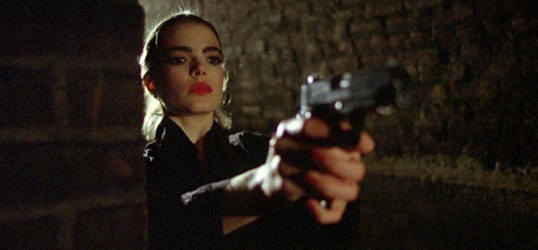
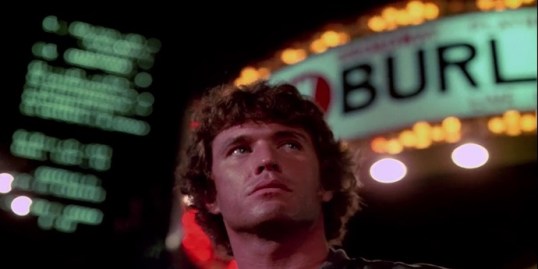
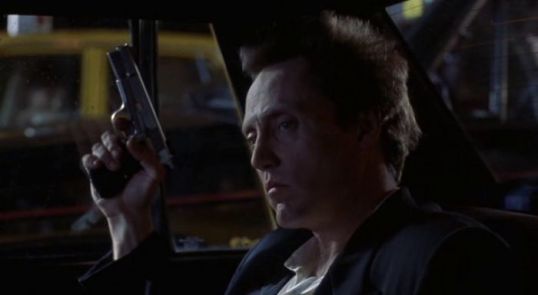
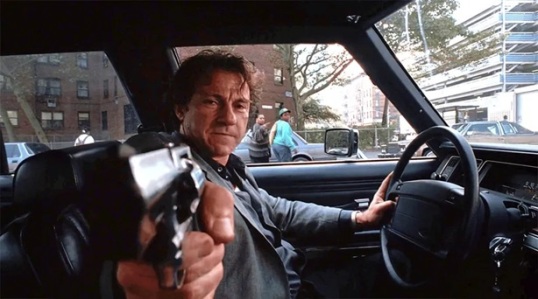
Prince of Darkness (1987, dir by John Carpenter, DP: Gary B. Kibbe)

They Live (1988, dir by John Carpenter, DP: Gary B. Kibbe)

The Films of 2025: Dead Before They Wake (dir by Andy Crane and Nathan Shepka)


It’s always interesting to compare American films about the UK with the films made by the people who actually live there.

American films about the UK are all about meeting quirky people, visiting clean and brightly-lit castles, maybe falling in love with a member of royalty, and perhaps discovering that your father is actually a member of Parliament played by Colin Firth.  If the action moves out of London or into Scotland or Wales, one cab be assured that it will involve an American having car trouble outside of a goat farm and then meeting an eccentric but handsome veterinarian.  If the film takes place in Scotland, the veterinarian and his randy father will wear a kilt.  The same thing will happen if the film is set in Wales because most Americans don’t know the difference between Scotland and Wales.

Films about the UK that are actually made in the UK tend to be visually moody and full of people dealing with economic uncertainty while living in depressingly tiny flats.  The cities are often portrayed as being covered in graffiti and no one, not even the film’s hero, is ever particularly happy.  British films about the UK are full of melancholy, rainy atmosphere and are often as violent as American films about the UK are quirky.

Dead Before They Wake takes place and was filmed in some of the darkest corners of Glasgow.  Nathan Shepka plays Alex, a nightclub bouncer who occasionally takes on other jobs.  He’s someone who knows how to handle himself in a fight and he often returns to his small and cramped home with split knuckles and a bruised face.  At the same time, he’s also a loving son whose deaf and very ill father is in a retirement community.  (His father encourages Alex to settle down and get married.)  Outside of his father, the only person with whom he has an regular contact is Gemma (Grace Cordell), a teacher who moonlights as a stripper to make extra money.  (That said, she still finds herself receiving an eviction notice.)  Alex pays Gemma to have sex with him but it’s obvious that there’s something more to their relationship than just a transaction.  They’re two people lost in an increasingly dark world.

Alex is approached by a shabby but well-intentioned attorney named Evan (Sylvester McCoy).  Evan hires Alex to track down a 14 year-old girl who Evan believes has been abducted by a sex trafficking ring.  The girl’s mother is a heroin addict.  The girl’s father is a government official.  Alex reluctantly takes the job and he soon manages to link the girl’s disappearance to a low-rent operation run by Amar (Manjot Sumal).  Amar is someone who is very protective of his own teenage daughter but who has no problem with the idea of abducting girls who are the same age or younger and forcing them to work in his makeshift brothel.  While Alex tries to find a way to infiltrate Amar’s operation, a mysterious man named Holden (Patrick Bergin) watches from the shadows.

Though the plot may remind some of Taken, Dead Before They Wake is far more thoughtful than any Liam Neeson’s admittedly entertaining thrillers.  Alex is not a former secret agent with a precise set of skills.  He’s just a tough guy who knows how to throw (and take) a punch and his investigation of Amar’s operation pushes him over the edge not because he’s trying to rescue a family member but because Alex is a human being who cannot believe or forgive the amount of depravity that he discovers during his investigation.  Throughout the film, there are hints that Amar’s operation is actually fairly small-scale when compared to some of the others.  A meeting with a representative of a national syndicate brings to mind the scandals of the late British DJ Jimmy Savile, who may not be well-known in the States but who, in the UK, became a symbol of depravity when it was revealed, after his death, that he was a prolific pedophile and sex abuser whose actions were largely ignored and sometimes even covered up by the British establishment.

Throughout Dead Before They Wake, there are scenes and details that establish that the film is more than just a revenge flick.  Gemma’s struggle to survive financially is handled with sensitivity and Grace Cordell gives an authentic performance in the role.  The scene where she tries to hide her growing fear upon learning that a picture of her dancing has appeared online and been seen by at least one of her students is wonderfully-acted.  The film contrasts Alex’s small flat with the large home that is owned by Amar and the film opens with a disturbing scene that shows just how exactly Amar kidnaps the girls who he then gets hooked on drugs and forces to work for him.  Dead Before They Wake is about much more than just action.

Dead Before They Wake does have its flaws.  Towards the end of the film, we’re expected to believe that one character overlooked something so obvious that it momentarily makes it difficult for us to suspend our disbelief.  But, for the most part, this is a disturbing and effective thriller, one that concludes on a proper note of Scottish melancholy.

Music Video of the Day: Take My Breath Away by The Hospital (2024, dir by Marcelo de la Vega)


Right now, I have a cold so I can relate to the song’s title.  It’s a good song and a straight-forward video.  No, it’s not a cover of the song from Top Gun that played whenever Tom Cruise looked up at the sky.

Enjoy!

Late Night Retro Television Review: Monsters 3.5 “Outpost”


Welcome to Late Night Retro Television Reviews, a feature where we review some of our favorite and least favorite shows of the past! On Wednesdays, I will be reviewing Monsters, which aired in syndication from 1988 to 1991. The entire series is streaming on YouTube.

I have a cold and a slight fever so tonight’s review is going to be a short one.

Episode 3.5 “Outpost”

(Dir by T.K. Hudson, originally aired on October 28th. 1990)

In the far future, a space mining company is transforming terminally ill people into cyborg mutants and sending them to work on inhospitable planets in return for keeping them alive.  Cara (Juliet Mills), a representative of the company, is sent to one of the outposts to discover why the horribly disfigured Sebastian (Tony Fields) is no longer doing his job.

Separated by a layer of glass, Sebastian and Cara have a 19-minute conversation.  Cara is rude and condescending and makes it clear that she has zero concern for the well-being of Sebastian.  This is perhaps as bitchy as the world will ever see a Mills sister act, which is really saying something when you consider some of the Saved By The Bell episodes in which Hayley Mills played Miss Bliss.  Sebastian has been hearing voices and is tempted to just wander across the alien landscape until he dies.  Why should he spent the rest of eternity miserable and alone.

Cara gets annoyed.  She says that work is important.  Why, when her husband was ill and dying, she didn’t even bother to take off from her job to visit him.  He died while she was away or, at least, that’s what the company told her….

Can you see where this is going?

This episode benefitted from the performances of Juliet Mills and Tony Fields but the story was extremely predictable.  The dialogue was definitely a bit more intelligent than we’ve seen in previous episodes of Monsters and I respected the episode’s ambition but, in the end, the story dragged a bit and the big twist was easily guessed.  This was not a terrible episode but it wasn’t particularly memorable either.