Whenever you saw Robert Loggia in a movie or a TV show, you knew he was going to be a tough guy.
He played gangsters in The Sopranos, The Don’s Analyst, Sicilian Vampire, Innocent Blood, Prizzi’s Honor, Armed and Dangerous, and Speedtrap. In Scarface, he played Frank Lopez and controlled the Miami drug scene until he was overthrown by Al Pacino’s Tony Montana. In David Lynch’s Lost Highway, he played Mr. Eddy and nearly killed a man over tailgating. (Before casting him in Lost Highway, Lynch offered Loggia the role of Frank Booth in Blue Velvet. When Loggia turned the role down, Lynch offered it to Dennis Hopper. If Loggia had accepted the role, the 90s would have been a very different time as far as movies are concerned.) Loggia was nominated for an Oscar for playing a tough P.I. in Jagged Edge. In Independence Day, he was the Chairman of the Joint Chiefs of Staff. If the aliens knew he was waiting for them, they probably would have stayed home.
Robert Loggia even played himself in one of the best commercials of the 1990s.
Robert Loggia’s acting career began in 1956, when he appeared alongside Paul Newman and Steve McQueen in Somebody Up There Likes Me. Over the years, he played everyone from Joseph in The Greatest Story Ever Told to Norman Bates’s psychologist in Psycho II. But, for many of us, he will always be best remembered as Mr. MacMillan in Big, the toy company owner who rediscovers his inner child by dancing on a keyboard with Tom Hanks.
Rest in Peace, Mr. Loggia. Thank you for the memories.
On Wednesday, I saw the movie Creed and what can I say? Creed is exactly the film that we were hoping it would be. Not only does it continue the story of Rocky Balboa but it proves that Ryan Coogler is a major directing talent and that Michael B. Jordan is a film star in the making. Ever since Creed was first screened for critics, we’ve been hearing that “Creed is the best Rocky since the first one.” I would go even further to say that Creed is one of the best boxing films to be released since the first Rocky. Though the story may be formulaic, Creed is a film that will take you by surprise. No one — not even the biggest Rocky fans — was expecting it to be this good.
When the movie opens, Adonis Johnson, the illegitimate son of the legendary boxer Apollo Creed, is just another kid in foster care. His mother has recently died and Apollo was killed in the ring before Adonis was even born. Adonis is adopted by Apollo’s widow, Mary Anne (Phylicia Rashad). Fifteen years later, Adonis is working in an office and has just gotten a big promotion but he spends his weekends boxing in cheap venues in Mexico. Eventually, over Mary Anne’s objections, Adonis quits his job and moves to Philadelphia. Adonis wants to box professionally and he wants his father’s greatest opponent and best friend, Rocky Balboa (Sylvester Stallone), to train him.
But Rocky is no longer the man he used to be. He stills owns his restaurant and he still goes out to the cemetery to visit the grave of his wife, Adrian. Since the end of Rocky Balboa, Rocky’s best friend, Paulie, has died and his son has moved to Canada. (Paulie still gets an affectionate shout out when Adonis comes across his old porn stash at Rocky’s house.) Rocky is older, sadder, wiser, and more alone than he has ever been. He is also still haunted by Apollo’s death in the ring. At first, Rocky does not want to train Adonis but eventually, the younger man wins him over. Under Rocky’s tutelage, Adonis wins his first professional fight. When the news gets out that Adonis is Apollo’s son, he is given a chance to fight the reigning world champion, Ricky Conlan (Tony Bellew).
Watching Creed, it is obvious that Ryan Coogler knows his Rocky films. Creed features call backs to every entry in the series, even the ones that have not received the positive reviews of the first Rocky and Creed. Of course, the entire film is haunted by Apollo’s death at the hands of Ivan Drago in Rocky IV. The restaurant and Rocky’s visits to Adrian’s grave were first introduced in Rocky Balboa. When Rocky shows Adonis a picture of him and his son, it is a still photo of Sylvester and Sage Stallone in Rocky V. When Adonis first meets Rocky, he asks him who won the fight that ended Rocky III. Adonis’s fight against Conlan is a call back to Rocky’s fights against Apollo in the first two Rocky films. When Adonis thinks about his father, a clip of Carl Weathers flashes across the screen. Finally, just as Rocky fell in love with Adrian, Adonis falls for a singer named Bianca (Tessa Thompson).
Even though Creed is steeped in the history of Rocky, it still manages to establish its own identity. Creed is not just a film about boxing. It is also about a son’s effort to escape the shadow of his famous father and establish his own identity. Michael B. Jordan gives a performance that feels so real and so honest that it constantly takes us by surprise.
Speaking of surprising performances, Sylvester Stallone has never been better. This is not only his best performance in the role of Rocky Balboa but the best performance of his underrated career. It is a performance that is totally devoid of ego and Stallone has never been this vulnerable on screen. If Stallone is not, at the very least, nominated for an Oscar for his performance here, it will be an injustice.
Coogler does a good job of capturing the mean streets of Philadelphia and watching Adonis’s training montage is an inspiring experience. (It would not be a Rocky film without an inspiring training montage.) Coogler also does a good job filming the action inside the ring. The second fight, which is shown in almost one entirely unbroken take, is especially exciting.
Creed is a stunningly effective film. When I saw it, the audience broke out in applause at the film’s final shot. Rocky Balboa’s story may be close to finished but Adonis Creed’s has just begun. I can not wait to see where it goes.
It’s the turn of the 20th century and the Old West is fading into legend. When they were younger, Steve Judd (Joel McCrea) and Gil Westrum (Randolph Scott) were tough and respect lawmen but now, time has passed them by. Judd now provides security for shady mining companies while Gil performs at county fairs under the name The Oregon Kid. When Judd is hired to guard a shipment of gold, he enlists his former partner, Gil, to help. Gil brings along his current protegé, Heck Longtree (Ron Starr).
On their way to the mining camp, they spend the night at the farm of Joshua Knudsen (R.G. Armstrong) and his daughter, Elsa (Mariette Hartley). Elsa is eager to escape her domineering father and flirts with Heck. When they leave the next morning, Elsa accompanies them, planning on meeting her fiancée, Billy Hammond (James Drury), at the mining camp.
When they reach the camp, they meet Bill and his four brothers (John Anderson, L.Q. Jones, John Davis Chandler, and the great Warren Oates). Billy is a drunk who is planning on “sharing” Elsa with his brothers. Gil, Judd, and Heck rescue Elsa and prepare for a final confrontation with the Hammond Brothers. At the same time, Gil and Heck are planning on stealing the gold, with or without Judd’s help.
Ride the High Country was actually Sam Peckinpah’s second film but it’s the first of his films to truly feel like a Sam Peckinpah film. (For his first film, The Deadly Companions, Peckinpah was largely a director-for-hire and had no say over the script or the final edit.) Peckinpah rewrote N.B. Stone’s original script and reportedly based the noble Steve Judd on his own father. All of Peckinpah’s usual themes are present in Ride the High Country, with Judd and, eventually, Gil representing the dying nobility of the old west and the Hammond brothers and the greedy mining companies representing the coming of the “modern” age. Ride The High Country‘s final shoot-out and bittersweet ending even serve as a template for Peckinpah’s later work in The Wild Bunch.
Much like the characters they were playing, Randolph Scott and Joel McCrea were two aging veterans on the verge of retirement. For these two aging stars, who had starred in countless westerns before this one, Ride The High Country would provide both fitting farewell and moving tribute. This would be the last chance that either of them would have to appear in a great movie and both of them obviously relish the opportunity. The best moments in the film are the ones where Judd and Gil just talk with the majestic mountains of California in the background.
Among the supporting cast, Ron Starr and Mariette Hartley are well-cast as the young lovers but are never as compelling as Gil or Judd. Future Peckinpah regulars R.G. Armstrong, L.Q. Jones, and Warren Oates all make early appearances. Seven years after playing brothers in Ride the High Country, L.Q. Jones and Warren Oates would both appear in Peckinpah’s most celebrated film, The Wild Bunch.
The elegiac and beautifully-shot Ride The High Country was Sam Peckinpah’s first great film and it might be his best.
Randolph Scott and Joel McCrea in Ride The High Country
“As God as my witness, I thought turkeys could fly.”
With those words, the Turkeys Away episode of WKRP in Cincinnati takes it place as a holiday classic. In this episode, Arthur Carlson — the station manager of the perpetually low-rated and eponymous radio station — attempts to pull off the greatest Thanksgiving promotion of all time. However, after Mr. Carlson incorrectly assumes that turkeys can fly, things go terribly wrong.
Believe it or not, this episode is based on a true story. A radio station in Atlanta tried a similar promotion, the main difference being that the station manager tossed the turkeys out of the back of a moving truck.
While enjoying the holiday, take a moment to remember this classic TV moment. Happy Thanksgiving!
At the start of The Sheepman, reformed gambler and gunslinger Jason Sweet (Glenn Ford) shows up in the middle of cattle country. He has won a herd of sheep in a poker game and he is planning on grazing them on the nearby public land. Knowing that he will face opposition from the local cattle ranchers, Jason asks the local towns people to direct him to the town bully. After Jason beats up Jumbo (Mickey Shaughnessy), Jason is invited to meet Jumbo’s boss, Col. Stephen Bedford (Leslie Nielsen).
As soon as Jason meets Bedford, he realizes that he is not a colonel and his name is not Bedford. Instead, he is an old friend from Texas, a former gambler and outlaw named Johnny Bledsoe. Like Jason, Bledsoe has also gone straight and is now the most powerful man in town. He is also engaged to marry a local girl named Dell Payton (Shirley MacClaine), to whom Jason has taken a liking. Bledsoe tells Jason to take his sheep somewhere else and when Jason refuses, Bledsoe threatens to have him, Dell, and his sheep killed.
Wait a minute, Leslie Nielsen is playing a bad guy?
Surely, you can’t be serious!
I am serious. And don’t call me Shirley.
(Sorry, had to do it.)
Leslie Nielsen is best remembered for being the deadpan comedian who could deliver the most ridiculous of lines with a totally straight face and who helped to make Airplane one of the funniest movies ever made. But before Nielsen recreated himself as a comedic actor, he was a dependably stiff supporting player and occasional leading man who appeared in nearly 100 dramatic pictures. The Sheepman is one of his “serious” roles.
Today, it is always strange to see one of Nielsen’s dramatic performances. Johnny Bledsoe is a standard western villain and Nielsen does okay with the role but, because his serious performances shared the same style as his comedic performances, it was impossible not to think of Dr. Rumack saying, “I just want to tell you both good luck. We’re all counting on you,” even while Johnny Bledsoe was offering to pay the outlaw Chocktaw (Pernell Roberts) to track down and kill Jason and his sheep.
The Sheepman is an average western and, as always, Glenn Ford is a good hero. But ultimately, the most interesting thing about it and the main reason to see it is to witness Leslie Nielsen doing his thing before he officially became the funniest man in the world. Leslie Nielsen was not a terrible dramatic actor but watching The Sheepman made me all the happier that he eventually got to show the world his true calling.
Long before South Park, The Simpsons, and Pixar, there was Ralph Bakshi. At a time when animation was considered to only be good for children, Bakshi shocked audiences and critics with animated films that dealt with mature themes and were definitely meant for adults. His first two films, Fritz the Cat (1972) and Heavy Traffic (1973), was the also the first two animated films to receive an X-rating. Bakshi satirized racism in the controversial Coonskin (1975) and Bakshi’s adaptation of The Lord Of Rings (1978) beat Peter Jackson’s by 23 years. It was after the critical and commercial disappointment of the heavily flawed but interesting Lord of the Rings that Bakshi decided it was time to make a film that would be more personal to him. The end result was American Pop.
American Pop tells the story of four generations of a family of Jewish immigrants and how music affects their lives. In typical Bakshi fasion, this animated film deals with issues of violence, sexuality, drug abuse, and poverty. American Pop may be animated but it is definitely a film meant for adults.
In the 1890s, Zalmie (Jeffrey Lippa) and his mother escape from Russia after Zalmie’s father, a rabbi, is killed by the Cossacks. Zalmie grows up in New York and after his mother is killed in the Triangle Shirtwaist Factory fire, he is raised by a vaudeville comedian named Louie (Jerry Holland). Zalmie wants to be a singer but is shot in the throat during World War I. His voice ruined, Zalmie marries a stripper named Bella (Lisa Jane Persky) and manages her career. His partnership with the mobster Nicky Palumbo (Ben Frommer) leads to Bella dying and Zalmie going to prison.
Zalmie’s son, Benny (Richard Singer), is a jazz pianist who, as a favor to his father, marries Nicky’s daughter. Benny has a son named Tony and tries to pursue his career without using his father’s influence. Then World War II breaks out.
Benny enlists in the army, seeking redemption from the crimes of his father and father-in-law. Serving in Europe, he misses his piano and, when he finds one in a bombed-out house in Nazi Germany, he plays a few bars of As Time Goes By. When a Nazi walks in on Benny, Benny plays Lili Marleen. For a few seconds, Benny and the Nazi share the common bond of music. “Danke,” the Nazi says before shooting Benny dead.
Growing up without his father, Tony (Ron Thompson) becomes a beatnik and eventually runs away from home. He ends up in Kansas, where he has a one-night stand with a waitress and becomes a songwriter for Frankie Hart (Marya Small), a stand in for Janis Joplin. Both Tony and Frankie start using heroin and Frankie dies of an overdose right before she is supposed to open for Jimi Hendrix. Abandoned by Frankie’s band, Tony ends up as an addict and dealer in New York. Accompanying him is his son, Pete, the result of his hookup with the waitress.
After being abandoned by his father, Pete (also played by Ron Thompson), follows in his footsteps and becomes a successful drug dealer. He is dealing cocaine to all of the big rock bands but, after discovering punk rock, he realizes that he wants something more out of his life.
After announcing that he will no longer sell anyone cocaine unless he is given a chance to record a demo, Pete is given a band and a recording studio. With the drug-craving record company execs watching, this tough and cocky punk grabs the microphone and sings…
…BOB SEGER’S NIGHT MOVES!?
The use of Night Moves, which is one of the least punk songs ever written, is one of the few false notes in American Pop. Otherwise, this is one of Ralph Bakshi’s best films. The majority of the film’s animation was done through rotoscoping, a technique in which animation is traced over live action footage. (For the gang war scenes, scenes from The Public Enemy were rotoscoped, as was footage of the Nicholas Brothers used in the Sing Sing Sing With A Swing montage.) Seen today, the technique is crude but effective at showing the contrast between the fantasy of music and the grim reality of life. Though it has its flaws (*cough* Night Moves *cough*), American Pop is an engaging look at the history and development of American music.
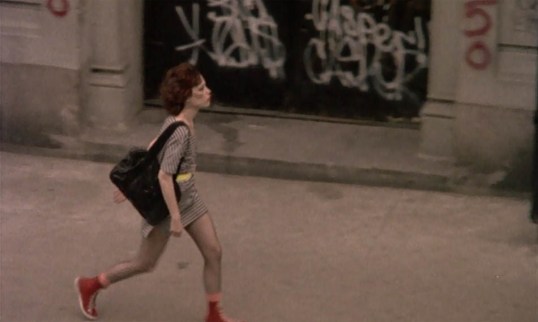
Shot guerilla-style during the waning days of New York City’s original punk scene, Smithereens tells the story of Wren (Susan Berman). Wren is a Jersey girl who, after being cut off by her family, comes to New York City. She moves into a run-down apartment, get a job making photocopies at a xerox store, and tries to break into the New York punk scene, despite having no talent or connections. The only thing that Wren does have is a lot of determination. When we first meet Wren, she is stealing another woman’s sunglasses and posting flyers of herself around New York City. Written under Wren’s picture: “Do you know me?”
Throughout the film, Wren bounces back and forth between two men. Paul (Brad Rinn) is a naive artist who has just arrived from Montana. He lives in a psychedelic-painted van that he parks in an abandoned lot. Paul first spots Wren while she is covering a subway car with her pictures and he is immediately infatuated with her. Wren hangs out with Paul until she meets Eric (played by punk icon Richard Hell), a sleazy musician who has recorded one semi-successful album and who is trying to come up with enough money to leave New York for Los Angeles. After Wren gets kicked out of her apartment, she moves in with Paul while continuing to sleep with Eric until she is finally forced to choose between the two men.
Susan Berman and Richard Hell
When Susan Berman was cast in the role of Wren, director Susan Seidelman told her to research her role by watching Nights of Cabiria and Smithereens does feel like a New York punk version of the Fellini classic. Like Cabiria, Wren remains hopeful despite the ugliness around her. Unlike Cabiria, Wren is not a very likable character. She uses everyone that she meets and is then shocked when people hold it against her. Despite that, she is so determined that it is hard not to root for her. What is interesting is that Wren is not a malicious character. She feels that she is destined to be famous and lacks the self-awareness to understand why other people are not as into her as she is. If Smithereens were made today, Wren would be trying to get on American Idol or The Voice. Sadly, Wren was just born too early to win a spot in the Jersey Shore house.
Susan Seidelman filmed on the streets of city and much of Smithereens is a documentary of life in New York City before the Giuliani/Bloomberg administrations cleaned everything up and turned Times Square into an urban Disney World. Along with being one of the first independent American films to ever compete at the Cannes Film Festival, Smithereens was also the scriptwriting debut for future Oscar-nominated screenwriter Ron Nyswaner. Keep an eye out for actor Chris Noth, making his film debut as a cross-dressing prostitute.
Directed by the legendary Monte Hellman, China 9, Liberty 37 is a revisionist take on the western genre. Fabio Testi plays Clayton Drumm, a legendary gunslinger who is about to be hung for murder. At the last minute, men from the railroad company show up and arrange for Clayton be released. They want him to kill a rancher who is refusing to sell his land. Clayton agrees but, before he leaves for his mission, he gives a brief interview to a writer from “out East.” Cleverly, the writer is played by director Sam Peckinpah, to whose films China 9, Liberty 37 clearly owes a huge debt.
After telling the writer that his eastern readers have no idea what the west is truly like, Clayton rides out to the ranch. Along the way, he gets directions from a nude lady (Jenny Agutter) who is swimming in a nearby stream. When Clayton reaches the ranch, he meets his target. Matthew Sebanek (Warren Oates) is himself a former gunslinger who used to kill people for the railroads. From the minute they meet, Matthew knows who Clayton is and why he is there. Both Clayton and Matthew have grown weary of killing and, instead of having the expected gunfight, they instead become fast friends. Matthew allows Clayton to stay at the ranch and introduces him to his wife, Catherine, who it turns out was the same woman who Clayton talked to earlier.
Catherine loves Matthew but resents his rough ways and feels that he treats her like property. One night, she and Clayton go for a nude swim and then make love. When Matthew finds out, he strikes his wife and, in self-defense, she stabs him in the back. Believing Matthew to be dead, she and Clayton go on the run.
Matthew is not dead and, once he’s recovered from being stabbed, he and his brothers set off to track down the two lovers. While Matthew chases after Clayton, he is being pursued by Zeb (Romano Puppo), another gunslinger who has been hired by the railroad to kill both Matthew and Clayton.
As a western, China 9, Liberty 37 is more interested in its characters than in the usual gunfights. There are no traditional heroes or villains and Monte Hellman emphasizes characterization over action. Even while he is relentlessly pursuing Clayton and Catherine, Matthew admits that he does not blame Catherine for leaving him. As for Clayton and Catherine, they are both consumed by guilt over their affair. This is one of the few westerns where the main character often refuses to fire his gun.
As Clayton, Fabio Testi is stiff and inexpressive, but Jenny Agutter and Warren Oates are terrific. Though their films were never as critically or financial successful, Warren Oates and Monte Hellman had as strong of a director/actor partnership as Martin Scorsese and Robert De Niro. China 9, Liberty 37 was the fourth and final movie that Monte Hellman and Warren Oates made together. It was also Oates’s last western before his untimely death in 1982.
Director Monte Hellman is as well-known for the films he did not get to make as for the ones he actually did make. (Originally, Quentin Tarantino wanted Hellman to director Reservoir Dogs. When Tarantino changed his mind and decided to direct it himself, Hellman was relegated to serving as executive producer. A lot of recent film history would be very different if Tarantino and Hellman had stuck to the original plan.) Like a lot of the films that Hellman actually did get to make, China 9, Liberty 37 was only given a sparse theatrical release and was often shown in a heavily edited version. It has only been recently that the full version of China 9, Liberty 37 has started to show up on TCM. It is an interesting revisionist take on the western genre and must see for fans of Monte Hellman, Jenny Agutter, and Warren Oates.
After taking off the month of October, I am now back on my Warren Oates kick. The latest Oates film that I watched was Crooks and Coronets, a heist comedy that stars Oates and Telly Savalas as two career criminals plotting a robbery in England.
Crooks and Coronets starts with Herbie Haseler (Telly Savalas) getting released from prison. Waiting for him is his partner-in-crime, Marty Miller (Warren Oates). Because Herbie wants to go straight and doesn’t want to do any more time, he is not happy to learn that Marty stole a car just so he could pick Herbie up from prison. Leaving the car behind, Herbie and Marty walk to a meeting with their old boss, New York gangster Nick Marco (Cesar Romero). Nick reminds Herbie and Marty that they owe him money and tells them that they can not go straight until they pay him back. Nick sends them to England to rob the estate of Lady Sophie Fitzmore (Edith Evans).
After arriving in the UK and meeting with Nick’s English counterpart, Frank Finley (Harry H. Corbett), Herbie and Marty infiltrate the Fitzmore estate. Marty pretends to be a security expect while Herbie says that he is a librarian who is interested in cataloguing the Fitzmore library. However, once they meet the kindly and eccentric Lady Sophie, neither one of them can bring themselves to rob her. Instead, Marty helps Sophie fly an old World War I airplane while Herbie turns Fitzmore mansion into a tourist attraction. When Nick and Frank show up and demand to know what the hold up is, Herbie and Marty have to find a way to stop the robbery.
Crooks and Coronets is never exactly memorable but it is amusing throughout. The main reason to watch it is for the performances of Edith Evans, Telly Savalas and Warren Oates. Though this is not one of Warren’s better-known films, it was a personally significant one for him. It was while filming Crooks and Coronets that Oates met British actress Vickery Turner. Turner played the role of Annie, a tour guide who helps to protect the mansion from Nick and Harry. She did not have a big role but she did look great in a miniskirt. She and Warren Oates were married in 1969 and, after they were divorced in 1974, she went on to have a very successful career as a novelist.

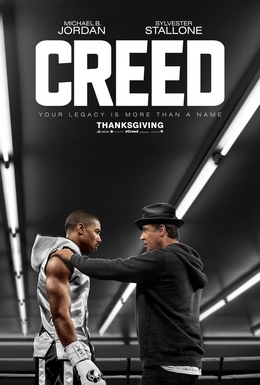 On Wednesday, I saw the movie Creed and what can I say? Creed is exactly the film that we were hoping it would be. Not only does it continue
  Watching Creed, it is obvious that Ryan Coogler knows his Rocky films. Creed features call backs to every entry in the series, even the ones that have not received the positive reviews of the first Rocky and Creed. Of course, the entire film is haunted by Apollo’s death at the hands of Ivan Drago in Rocky IV. The restaurant and Rocky’s visits to Adrian’s grave were first introduced in Rocky Balboa. When Rocky shows Adonis a picture of him and his son, it is a still photo of Sylvester and Sage Stallone in Rocky V. When Adonis first meets Rocky, he asks him who won the fight that ended Rocky III. Adonis’s fight against Conlan is a call back to Rocky’s fights against Apollo in the first two Rocky films. When Adonis thinks about his father, a clip of Carl Weathers flashes across the screen. Finally, just as Rocky fell in love with Adrian, Adonis falls for a singer named Bianca (Tessa Thompson).
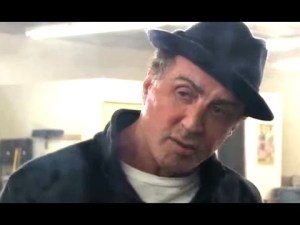 Speaking of surprising performances, Sylvester Stallone has never been better. This is not only his best performance in the role of Rocky Balboa but the best performance of his underrated career. It is a performance that is totally devoid of ego and Stallone has never been this vulnerable on screen. If Stallone is not, at the very least, nominated for an Oscar for his performance here, it will be an injustice.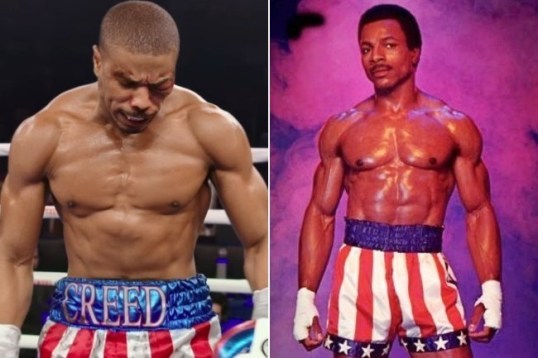
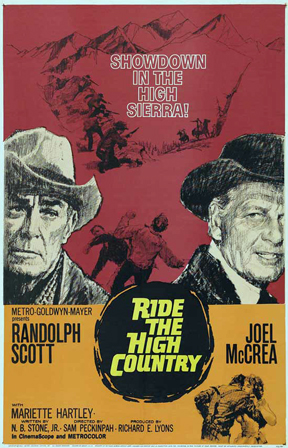 It’s the turn of the 20th century and the Old West is fading into legend. When they were younger, Steve Judd (Joel McCrea) and Gil Westrum (Randolph Scott) were tough and respect lawmen but now, time has passed them by. Judd now provides security for shady mining companies while Gil performs at county fairs under the name The Oregon Kid. When Judd is hired to guard a shipment of gold, he enlists his former partner, Gil, to help. Gil brings along his current protegé, Heck Longtree (Ron Starr).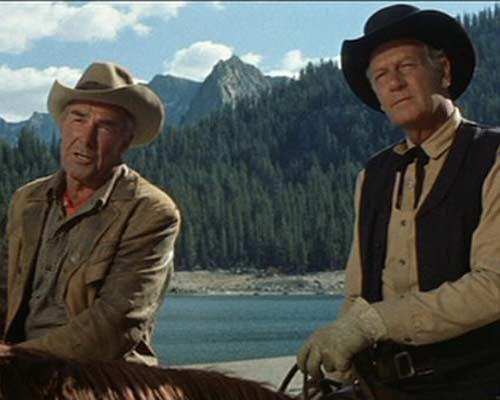
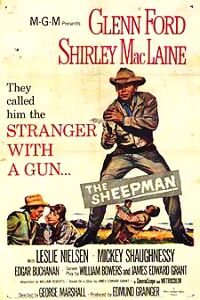 At the start of The Sheepman, reformed gambler and gunslinger Jason Sweet (Glenn Ford) shows up in the middle of cattle country. He has won a herd of sheep in a poker game and he is planning on grazing them on the nearby public land. Knowing that he will face opposition from the local cattle ranchers, Jason asks the local towns people to direct him to the town bully. After Jason beats up Jumbo (Mickey Shaughnessy), Jason is invited to meet Jumbo’s boss, Col. Stephen Bedford (Leslie Nielsen).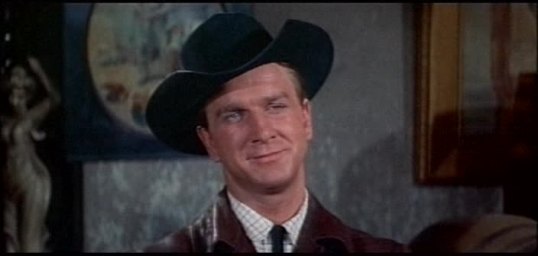
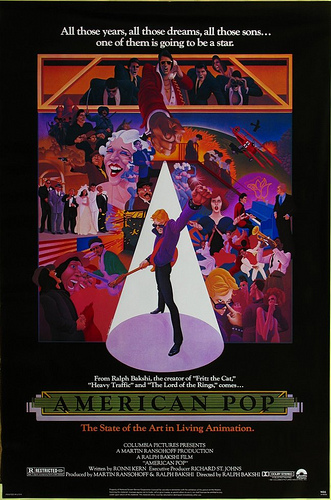 Long before South Park, The Simpsons, and Pixar, there was Ralph Bakshi. At a time when animation was considered to only be good for children, Bakshi shocked audiences and critics with animated films that dealt with mature themes and were definitely meant for adults. His first two films, Fritz the Cat (1972) and Heavy Traffic (1973), was the also the first two animated films to receive an X-rating. Bakshi satirized racism in the controversial Coonskin (1975) and Bakshi’s adaptation of The Lord Of Rings (1978) beat Peter Jackson’s by 23 years. It was after the critical and commercial disappointment of the heavily flawed but interesting Lord of the Rings that Bakshi decided it was time to make a film that would be more personal to him. The end result was American Pop.
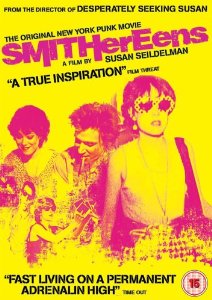 Shot guerilla-style during the waning days of New York City’s original punk scene, Smithereens tells the story of Wren (Susan Berman). Wren is a Jersey girl who, after being cut off by her family, comes to New York City. She moves into a run-down apartment, get a job making photocopies at a xerox store, and tries to break into the New York punk scene, despite having no talent or connections. The only thing that Wren does have is a lot of determination. When we first meet Wren, she is stealing another woman’s sunglasses and posting flyers of herself around New York City. Written under Wren’s picture: “Do you know me?”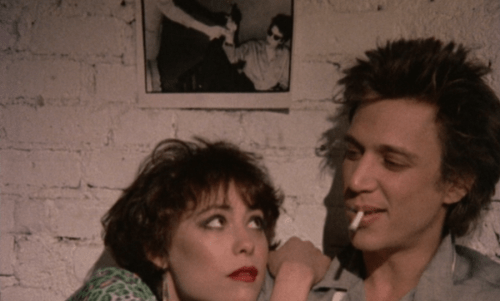
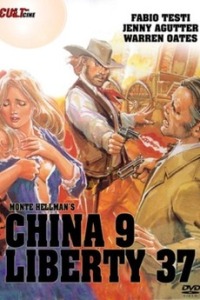 Directed by the legendary Monte Hellman, China 9, Liberty 37 is a revisionist take on the western genre. Fabio Testi plays Clayton Drumm, a legendary gunslinger who is about to be hung for murder. At the last minute, men from the railroad company show up and arrange for Clayton be released. They want him to kill a rancher who is refusing to sell his land. Clayton agrees but, before he leaves for his mission, he gives a brief interview to a writer from “out East.” Cleverly, the writer is played by director Sam Peckinpah, to whose films China 9, Liberty 37 clearly owes a huge debt.
 Catherine loves Matthew but resents his rough ways and feels that he treats her like property. One night, she and Clayton go for a nude swim and then make love. When Matthew finds out, he strikes his wife and, in self-defense, she stabs him in the back. Believing Matthew to be dead, she and Clayton go on the run.
 As a western, China 9, Liberty 37 is more interested in its characters than in the usual gunfights. There are no traditional heroes or villains and Monte Hellman emphasizes characterization over action. Even while he is relentlessly pursuing Clayton and Catherine, Matthew admits that he does not blame Catherine for leaving him. As for Clayton and Catherine, they are both consumed by guilt over their affair. This is one of the few westerns where the main character often refuses to fire his gun.
 Director Monte Hellman is as well-known for the films he did not get to make as for the ones he actually did make. (Originally, Quentin Tarantino wanted Hellman to director Reservoir Dogs. When Tarantino changed his mind and decided to direct it himself, Hellman was relegated to serving as executive producer. A lot of recent film history would be very different if Tarantino and Hellman had stuck to the original plan.) Like a lot of the films that Hellman actually did get to make, China 9, Liberty 37 was only given a sparse theatrical release and was often shown in a heavily edited version. It has only been recently that the full version of China 9, Liberty 37 has started to show up on TCM. It is an interesting revisionist take on the western genre and must see for fans of Monte Hellman, Jenny Agutter, and Warren Oates.
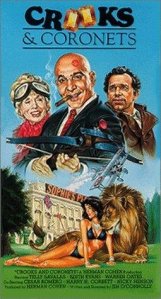 After taking off the month of October, I am now back on my Warren Oates kick. The latest Oates film that I watched was Crooks and Coronets, a heist comedy that stars Oates and Telly Savalas as two career criminals plotting a robbery in England.
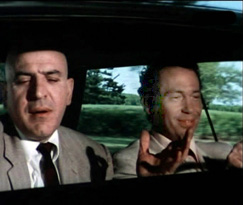 After arriving in the UK and meeting with Nick’s English counterpart, Frank Finley (Harry H. Corbett), Herbie and Marty infiltrate the Fitzmore estate. Marty pretends to be a security expect while Herbie says that he is a librarian who is interested in cataloguing the Fitzmore library. However, once they meet the kindly and eccentric Lady Sophie, neither one of them can bring themselves to rob her. Instead, Marty helps Sophie fly an old World War I airplane while Herbie turns Fitzmore mansion into a tourist attraction. When Nick and Frank show up and demand to know what the hold up is, Herbie and Marty have to find a way to stop the robbery.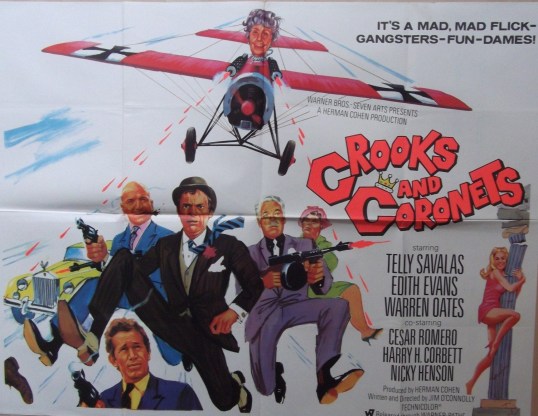


 Through the Shattered Lens