My 2020 Super Bowl Predictions


A Super Bowl without the Patriots?

It had to happen sometime.  Actually, it happened back in 2016, when the Broncos beat the Panthers.  Still, this is going to be the first Super Bowl since Donald Trump became president that will not feature Tom Brady out on the field.

Instead, it will be the Chiefs vs. the 49ers, two strong teams that have earned their right to play in the biggest game of the year.  It will be Kyle Shanahan vs. Andy Reid, Jimmy Garoppolo vs. Patrick Mahomes.  Everyone will be watching the game.  I remember that, in one of the old editions of Madden, Al Michaels used to describe the Super Bowl as being “an unofficial holiday” and he is right.  With the commercials and the half-time show, even people who hate football will be watching the game.

As far as the game goes, I don’t really have a dog in this hunt.  If the Ravens or the Patriots were appearing in the Super Bowl, I would be excited for the game but the Chiefs and the 49ers are two teams that I don’t really follow.

From what I have seen, I think it’s going to be a close Super Bowl.  It wouldn’t surprise me to see the 49ers jump out to an early lead just to have the Chiefs fight their way back into the game.  But anything could happen.  Both teams seem to be evenly matched.  I’m looking forward to watching Mahomes throw the ball for the Chiefs, just like I’m looking forward to seeing what Richard Sherman does on defense for the 49ers.

My final prediction:

Kansas City Chiefs — 28

San Francisco 49ers — 27

It’s going to be the type of game that we’ll end up telling our children about.

Music Video Of The Day: I Got You Babe by Sonny and Cher (1965, directed by ????)


Happy Groundhog Day!

This performance of the song that would haunt Bill Murray over the course of his own endless Groundhog Day is taken from Top of the Pops.

Cher would famously go on to do another version of this song with Beavis and Butthead.  As for Sonny Bono, he had to settle for a career in Congress.

Enjoy!

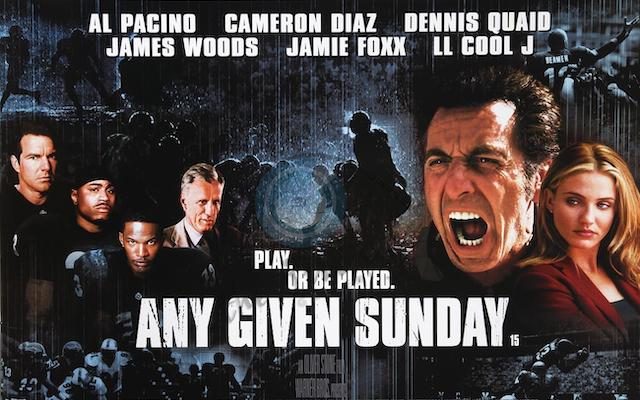
Any Given Sunday (1999, directed by Oliver Stone)


With Any Given Sunday, Oliver Stone set out to make the ultimate football movie and he succeeded.

Any Given Sunday is not just the story of aging coach Tony D’Amato (Al Pacino).  It’s also the story of how third-string quarterback Willie Beamon (Jamie Foxx) allows celebrity to go to his head while the injured starter, Cap Rooney (Dennis Quaid), deals with his own mortality and how, at 38, he is now over-the-hill.  It’s also about how the team doctors (represented by James Woods and Matthew Modine) are complicit in pushing the players beyond their limits and how the owners (Cameron Diaz) view those players as a commodity to be traded and toyed with.  It’s about how the Sharks represent their home city of Miami and how cynical columnists (John C. McGinley plays a character that is obviously meant to be Jim Rome) deliberately set out to inflame the anger of the team’s fans.  It’s about how politicians (Clifton Davis plays Miami’s mayor and asks everyone to “give me some love”) use professional sports to further their own corrupt careers while the often immature men who play the game are elevated into role models by the press.  It’s a film that compares football players to ancient gladiators while also showing how the game has become big business.  In typical Oliver Stone fashion, it tries to take on every aspect of football while also saying something about America as well.

In the role on Tony D, Pacino famously describes football as being “a game of inches” but you wouldn’t always know it from the way that Oliver Stone directs Any Given Sunday.  As a director, Stone has never been one to only gain an inch when he could instead grab an entire mile.  (Stone is probably the type of Madden player who attempts to have his quarterback go back and throw a hail mary on every single play.)  Tony tells his players to be methodical but Stone directs in a fashion that is sloppy, self-indulgent, and always entertaining to watch.  One minute, Al Pacino and Jim Brown are talking about how much the game has changed and the next minute, LL Cool J is doing cocaine off of a groupie’s breast while images of turn-of-the-century football players flash on the screen.  No sooner has Jamie Foxx delivered an impassioned speech about the lack of black coaches in the league then he’s suddenly starring in his own music video and singing about how “Steamin’ Willie Beamon” leaves all the ladies “creamin’.”  (It rhymes, that’s the important thing.)  When Tony invites Willie over to his house, scenes of Charlton Heston in Ben-Hur are on TV.  Later in the movie, Heston shows up as the Commissioner and says, about Cameron Diaz, “she would eat her young.”

Any Given Sunday is Oliver Stone at both his best and his worst.  The script is overwritten and overstuffed with every possible sports cliché  but the football scenes are some of the most exciting that have ever been filmed.  Only Oliver Stone could get away with both opening the film with a quote from Vince Lombardi and then having a player literally lose an eye during the big game.  Stone himself appears in the commentator’s both, saying, “I think he may have hurt his eye,” while the doctor’s in the end zone scoop up the the torn out eyeball and put it into a plastic bag.  Only Stone could get away with Jamie Foxx vomiting on the field during every game and then making amazing plays while a combination of rap, heavy metal, and techno roars in the background.  Stone regulars like James Woods and John C. McGinely make valuable appearances and while Woods may be playing a villain, he’s the only person in the film willing to call out the coaches, the players, the owners, and the fans at home as being a bunch of hypocrites.  Stone’s direction is as hyper-kinetic as always but he still has no fear of stopping the action so that Foxx can see sepia-toned images of football’s past staring at him from the stands.  Stone directs like defensive lineman on steroids, barreling his way through every obstacle to take down his target.  No matter what, the game goes on.

Any Given Sunday is the ultimate football movie and more fun than the last ten super bowls combined.

4 Shots From 4 Films: Special John Ford Edition


4 Shots From 4 Films is just what it says it is, 4 shots from 4 of our favorite films. As opposed to the reviews and recaps that we usually post, 4 Shots From 4 Films lets the visuals do the talking!

John Ford.

The very name brings to mind sweeping vistas, the grandeur of the old west, and stories about men doing what men had to do.  John Ford began his directing career during the silent era and he continued to work through the 1960s and, along the way, he created a unique and very American sort of cinema.  Though Ford may be known for his westerns, he also directed his share of war films, historical epics, and even a classic romantic comedy.  The son of Irish immigrants, Ford made several films that took place in Ireland.  The Quiet Man featured one of the greatest fight scenes in film history.  Stagecoach introduced the world to John Wayne and The Searchers proved that he could act.  With The Grapes of Wrath, Ford provided, for future generations, the definitive look at the Great Depression.  Twenty-two years later, The Man Who Shot Liberty Valance told us to always “Print the legend.”

John Ford was born 126 years ago today.  In honor of his legacy, here are 4 shots from 4 films.

4 Shots From 4 Films

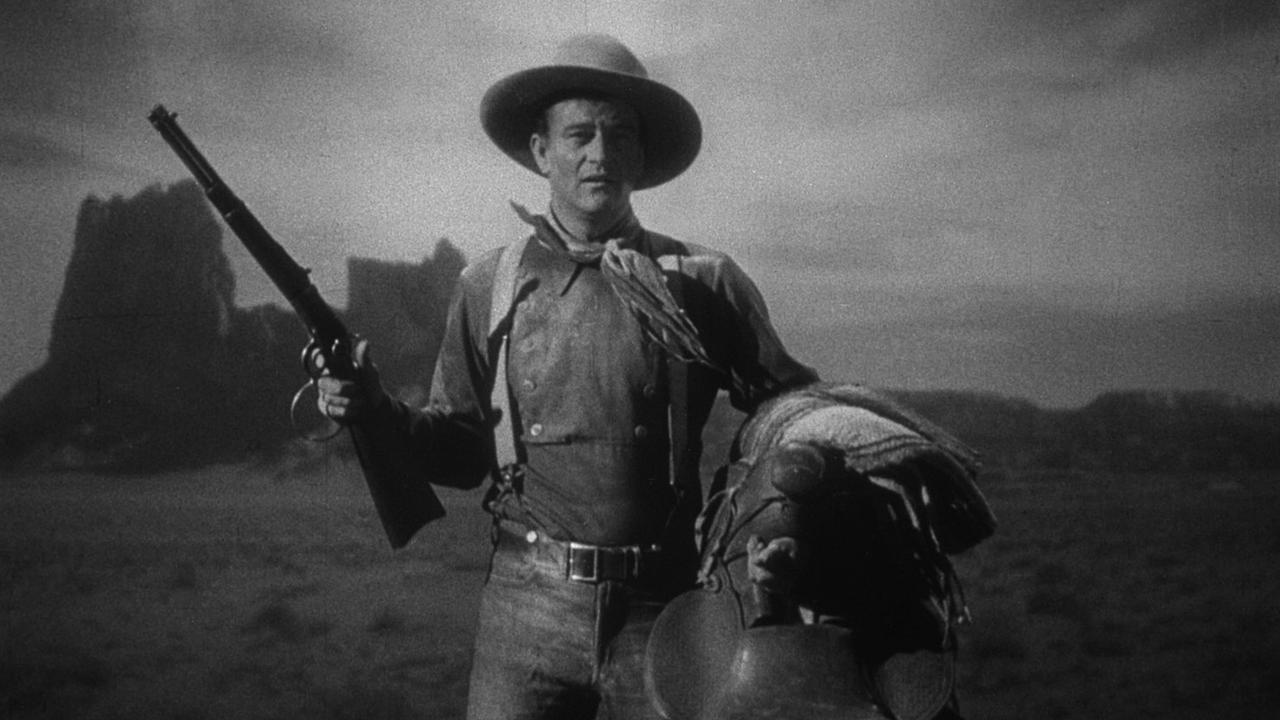
Stagecoach (1939, directed by John Ford)

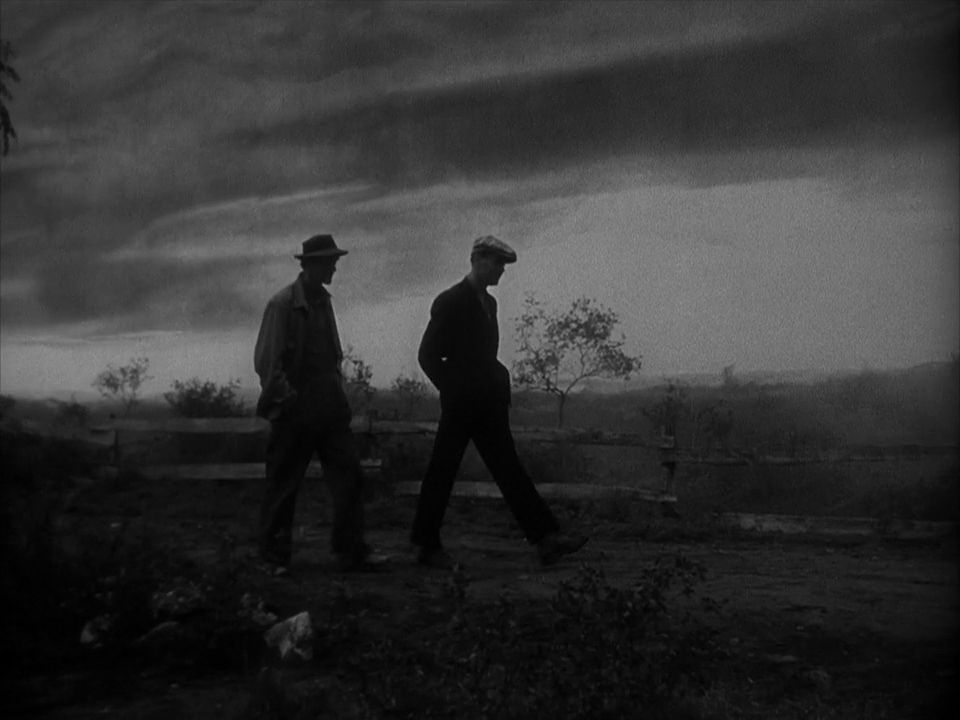
The Grapes of Wrath (1940, directed by John Ford)

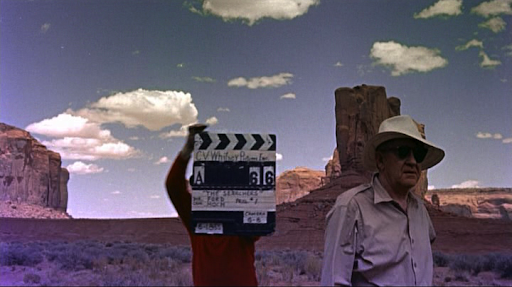
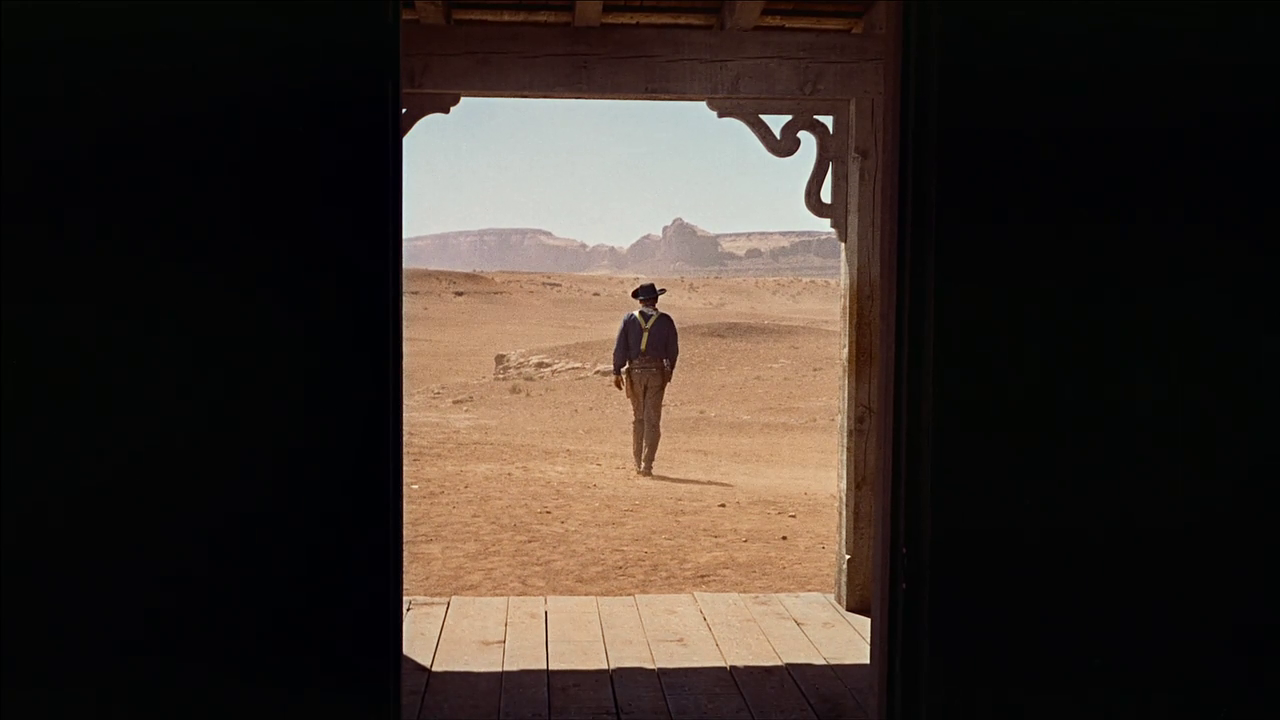
The Searchers (1956, directed by John Ford)

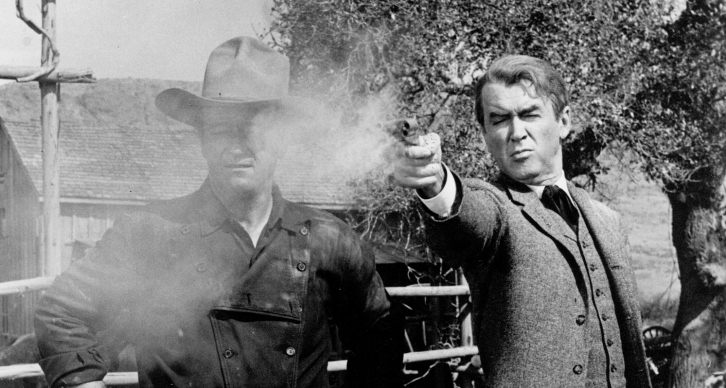
The Man Who Shot Liberty Valance (1962, directed by John Ford)

Music Video Of The Day: Grey Day by Madness (1981, directed by Chris Gabrin)


“‘Grey Day’ was a definite step on for Madness. I remember going to a club with a copy of it and Joe Strummer was DJing. I asked him to put this on, because I thought I’d finally done something that he could dig, not just jumping up and down – but he wouldn’t play it.”

— Madness lead singer Suggs on Grey Day

Grey Day may not have been good enough for Joe Strummer but I definitely appreciate it.

The first version of Grey Day was first performed by Madness when they were still known as The North London Invaders.  Three years later, they revisited the song and recorded it in the Bahamas “for tax purposes.”

The video was directed by Chris Gabrin, who was active in the 80s.  He also did videos for The Cure, Culture Club, John Mellencamp, and Pat Benatar.

Enjoy!

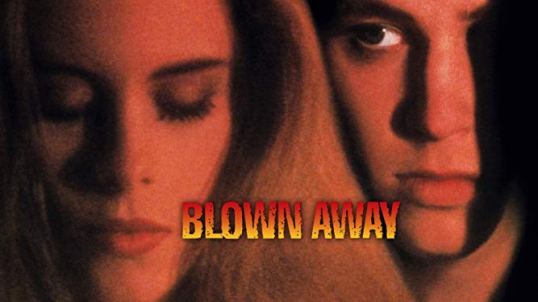
Cinemax Friday: Blown Away (1993, directed by Brenton Spencer)


Rich Gardner (Corey Haim) and his brother, Wes (Corey Feldman) both work at a ski resort in Canada.  When Rich rescues the wealthy Megan (Nicole Eggert) from being trampled by a horse, she invites him to attend her 17th birthday party.  Despite the fact that he’s already dating Darla (Kathleen Robertson), Rich goes to Nicole’s party.  Nicole greets him in her underwear and soon, the two of them are having softcore, late night Cinemax-style sex.  It’s only in the morning that Rich discovers that Megan is the daughter of his boss, Cy (Jean LeClerc).

With Wes’s encouragement, Rich continues the affair, even after Cy demands that Rich never see his daughter again.  Megan eventually tells Rich that she believes that Cy was responsible for the death of her mother and that she thinks they should kill Cy and, after Megan has gotten her inheritance, run off together.  At first, Rich is hesitant but when Megan turns up bruised and claiming that her father beat her up, Rich reconsiders Megan’s proposition.

In many ways, Blown Away is typical of the neo-noirs that used to dominate late night Cinemax in the 90s.  Take a faded TV or a film star.  Toss in an up-and-coming starlet who is willing to do nudity.  Add a dimly lit sex scene or two and a surprise twist at the end.  In this case, the surprise twist was actually a good one, the faded stars were the Two Coreys, and the up-and-coming starlet was Nicole Eggert.

Before they become direct-to-video mainstays in the 90s, both Corey Haim and Corey Feldman had a good, if brief, run as legitimate film stars.  With their subsequent notoriety, it’s easy to forget that they were two of the busiest and most critically acclaimed child actors of the 80s.  Corey Haim appeared in movies like Murphy’s Romance and Lucas while Corey Feldman did The Goonies and Stand By Me.  They co-starred in films like The Lost Boys and License to Drive.  Unfortunately, neither one of them was able to make the transition from being child stars to adult actors.  (It didn’t help that both of them had very public struggles with substance abuse and that the 90s saw both of them developing a unique talent for tracking down the worst projects possible and agreeing to star in them.)  Blown Away was one of the first of their post-stardom films and, whatever else you may say about it, it’s definitely better than the majority of the films that the pair made afterwards.  (Just try sitting through Dream A Little Dream 2.)  After years of playing best friends, Blown Away cast them as brothers who always seem to be on the verge of throwing a punch at each other.  When Rich and Wes say that they secretly hate each other, it feels less like a movie and more like real-life couples therapy.

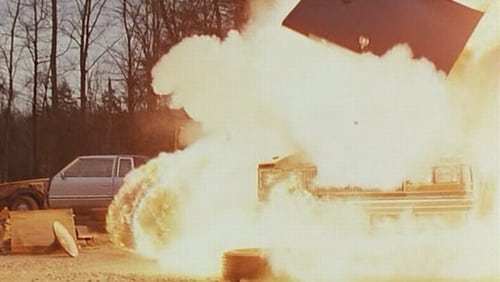
Blown Away is a classic of its kind.  Though Rich is not a very sympathetic hero and there’s a few scenes where Haim’s tendency to overact gets in the way of the film, Nicole Eggert is a perfect femme fatale and Corey Feldman again shows that he had more talent than he was usually given credit for.  If you can overlook a few plot holes (and not spend too much time worrying about how a bunch of teenagers became experts in setting explosives), the film’s storyline is interesting and far darker than the usual late night Cinemax fare.  When people like me talk about being nostalgic for the old days of watching Cinemax after midnight, this is the type of film that we’re talking about.

Music Video Of The Day: Anarchy in the U.K. by The Sex Pistols (1976, directed by Julien Temple)


Today is John Lydon’s 64th birthday so today’s music video of the day features him at his best.

For the record, John Lydon (or Johnny Rotten, as he was known when he was the Sex Pistols’s lead singer) is not an anarchist.  The famous lyrics that start off Anarchy in the U.K, came about because “I am an anarchiste” was the best rhyme that Lydon could come up with for “I am an Antichrist.”  Lydon has described anarchism as being “mind games for the middle class.”  Lydon’s right, of course.

Remarkable, John Lydon has gone from being regarded as a symbol of everything that was wrong with British youth (a representation of what the Daily Mail famously called “The Filth and the Fury” after drummer Paul Cook called Simon Grundy a “fucking rotter” on national television) to being a national treasure. Songs that once scandalized Britain are now unofficial anthems and, remarkably, Lydon’s gone from hated to beloved without changing a thing about his outlook or even his attitude.   Listening to an interview with Lydon from the Sex Pistols-era is not that much different from listening to an interview that Lydon may have given last month. He may now be doing butter commercials and appearing on I’m A Celebrity!  Get Me Out Of Here! but he remains that same Johnny Rotten who once scared the Hell out of anyone with a pension.

Enjoy!

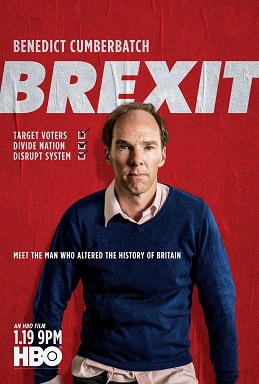
Brexit: The Uncivil War (2019, directed by Toby Haynes)


It’s finally happening.

Nearly four years after a narrow majority voted in favor of leaving the European Union, the UK is finally doing so.  The success of Brexit not only took the world by surprise but it shocked much of the UK as well.  I didn’t expect the Leave Campaign to win.  My relatives in the UK, all of whom voted to leave, never expected to win.  The British media establishment certainly didn’t expect Leave to win and their anguished reaction largely mirrored the reaction of their American counterparts when, a few months later, Donald Trump defeated Hillary Clinton.

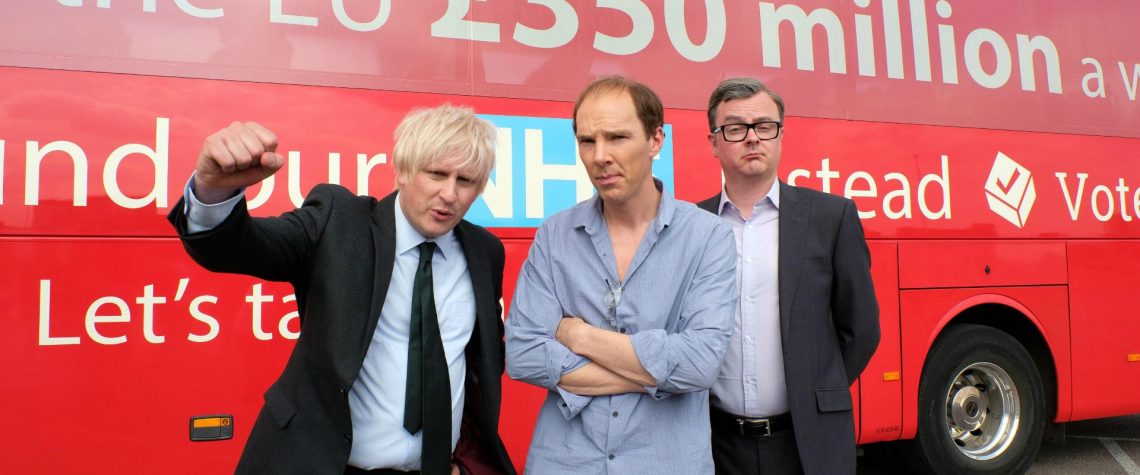
One person who was probably not, in any way, shocked by Leave’s victory was Dominic Cummings, who was the lead political strategist for the Vote Leave campaign.  At least that’s the impression that one gets from watching Benedict Cumberbatch play Cummings in Brexit: The Uncivil War.  

This television film originally aired on Channel 4 and subsequently, it made its American premiere on HBO.  Featuring sharp direction from Toby Hayes and an even sharper script by playwright James Graham, Brexit presents fictionalized accounts of both the Vote Leave Campaign and the Britain Stronger In Europe Campaign, which is led by Craig Oliver (Rory Kinnear).  As the film shows, while the conventional wisdom was that Leave didn’t have a chance, Cummings instinctively grasped what others were missing.  Cummings understood that people across the UK were angry because they felt that they had lost control of their own lives.  They were sick of being told that a bureaucrat in Belgium knew what was better for the UK than the people who actually lived there and who took more pride in being British than in being European.  While Oliver and the Remain campaign relied on the traditional politics that had always worked in the past, Cummings used new techniques (like social media databases) to reach out to people who might not have always voted but whose posts and tweets indicated that they might be open to Leave’s message.

Towards the end of the film, one of Oliver’s focus groups descends into chaos and a woman memorably cries, “I’m sick of feeling like nothing, like I have nothing! Like I know nothing. Like I am nothing. I’m sick of it!”  and, for the first time, Oliver realizes that Leave could win.  By that point, it’s too late.  With Leave’s strength growing every day, the British political establishment has descended into chaos.  Boris Johnson (Richard Goulding) and Michael Grove (Oliver Maltman) both throw their support behind Leave.  After the assassination of Jo Cox, Cummings and Oliver meet for a drink and, in a scene that ranks up there with the famous De Niro/Pacino meeting in Heat, they discuss what will happen if Leave wins.

The meeting between Oliver and Cummings never happened but the accuracy of the majority of the film has been verified by those who were involved in both campaigns.  (Oliver himself served as a consultant to the filmmakers.)  This is the film to see if you want to understand not only why Leave won but also why so many commentators were caught by surprise.  Though it was written by a Remainer and, in one of the film’s few missteps, Nigel Farage is portrayed as being a cartoonishly vapid twit, Brexit is one of the few examinations of the vote to understand why Leave’s “Take Back Control” slogan resonated with so many voters.  Though Brexit may be ultimately sympathetic to the Remain position, it refuses to dismiss the concerns of those who voted for Leave or to commit the sin of painting those voters as merely being uneducated or afraid of progress.  If the Remain campaign had made as much of an effort to understand those voters as the film about the campaign does, the vote may have gone a different way.

(Instead, much of Remain’s supporters reacted to defeat by 1) demonizing the voters and 2) demanding a second referendum so that the same voters could presumably get it right the second time around.  For four years, they said that the UK leaving the EU would be the end of western civilization and that the sky would fall.  As of right now, the sky is exactly where it has always been.)

When this film was produced, Theresa May was still in Number 10 Downing Street and there were real doubts as to whether Brexit would ever happen.  The film is book-ended by fictional scenes in which Cummings is interviewed during a public inquiry.  In these scenes, which were meant to be taking place in what was then the near future of 2020, Cummings insinuates that Brexit is still on hold.  In the real world, though, Brexit is finally happening and Dominic Cummings is currently the Chief Special Adviser to Prime Minister Boris Johnson.


 

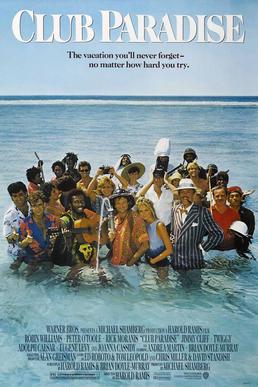
Club Paradise (1986, directed by Harold Ramis)


I think I was nine or ten years old when I first saw Club Paradise on HBO.  I remember thinking it was pretty funny.

I recently rewatched Club Paradise and I discovered that ten year old me had terrible taste in movies.

Robin Williams plays Jack Moniker, a Chicago fireman who gets blown out of a building while rescuing a dog.  Living off of his disability payments, he retires to the island of St. Nicholas, which is basically Jamaica but with less weed.  Jack and reggae musician Ernest Reed (Jimmy Cliff) open up their own Club Med-style resort, Club Paradise.  Jack doesn’t know much about the resort business but he does know how to put together a good brochure.  Almost the entire cast of SCTV shows up at Club Paradise, looking for a tropical vacation.  Things quickly go wrong because Jack doesn’t know how to run a resort and there’s also an evil developer (played by Brian Doyle-Murray) who wants Club Paradise to fail so that he can get the land.

Club Paradise has got a huge and impressive cast, the majority of whom probably signed on because they were looking forward to a paid Caribbean vacation.  Peter O’Toole plays the British-appointed governor of St. Nicholas.  Twiggy plays Jack’s girlfriend.  Joanna Cassidy plays a reporter and Adolph Caesar is cast in the role of St. Nicolas’s corrupt prime minister.  Because the film was directed by Harold Ramis, it is full of Ramis’s co-stars from SCTV.  Andrea Martin tries to get her husband to enjoy the islands as much as she’s enjoying them.  Joe Flaherty is the crazed pilot who flies people to the resort.  Rick Moranis and Eugene Levy play two nerdy friends who are both named Barry and who are only interested in scoring weed, getting laid, and working on their tan.  Rick Moranis and Eugene Levy playing nerds?  It’s a shock, I know.

There’s enough funny people in Club Paradise to ensure that there are a few isolated laughs.  Not surprisingly, the movie comes to life whenever Moranis and Levy are onscreen.  (If I had to guess, I imagine they were the reason why ten year-old me liked this movie so much.)  Needless to say, Jimmy Cliff also provides a killer soundtrack.  But Club Paradise ultimately doesn’t work because the script is too disjointed and it feels more like an uneven collection of skits than an actual film.  It’s impossible to tell whether we’re supposed to think of Club Paradise as being the worst resort ever or if we’re supposed to be worried that the bad guys will shut it down.  For a movie like this, you need a strong central presence to hold things together.  Unfortunately, Robin Williams’s style of comedy is too aggressive for the role of Jack.  The role was originally written for Bill Murray and it shows.  Most of Jack’s lines sound like things you would expect Bill Murray to say in his trademark laid back fashion and it is easy to imagine Murray redeeming some of Club Paradise‘s weaker scenes simply by attitude alone.  Instead, Robin Williams is so frantic that you never buy he could be happy living a laid back life on a Caribbean island.  As played by Williams, Jack often comes across as being unreasonably angry at everyone staying at Club Paradise and it’s hard to care whether or not he manages to save his resort or not.

Club Paradise was a bomb at the box office.  Harry Shearer, who was originally credited with working on the screenplay, hated the movie so much that he requested his name be removed from the credits.  (Instead, credit is given to Edward Roboto.)  As a result of the film’s failure, it would be 7 years before Harold Ramis would get to direct another movie.  Fortunately, that movie was Groundhog Day and this time, Ramis was able to get Bill Murray.

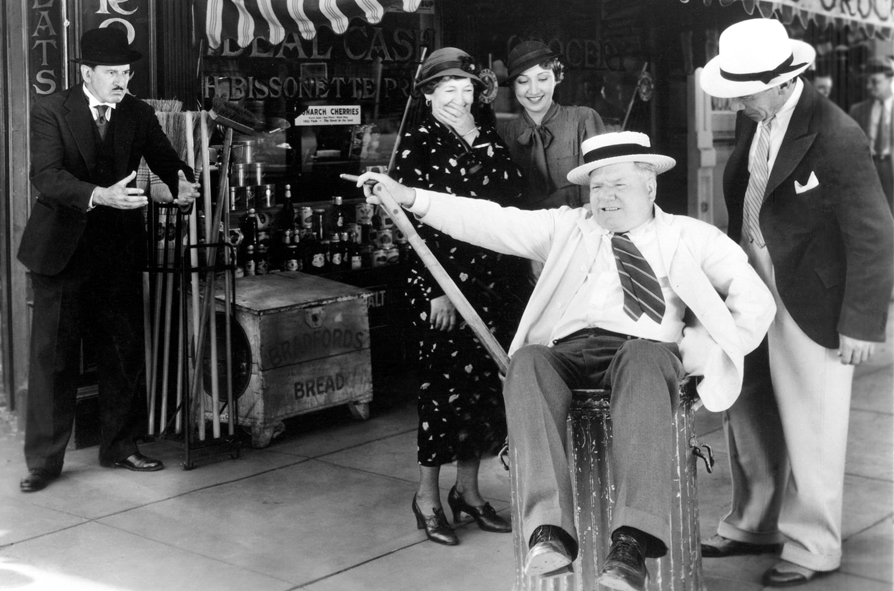
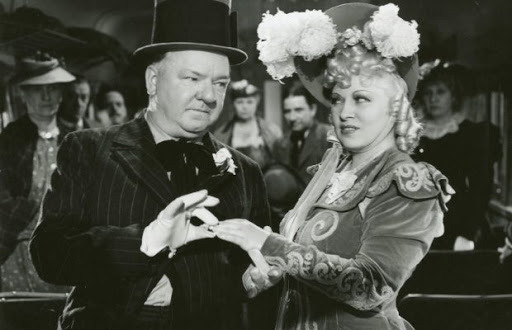
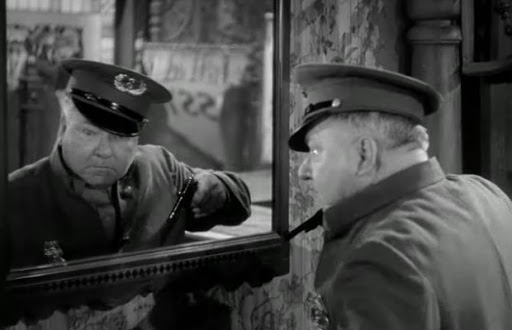
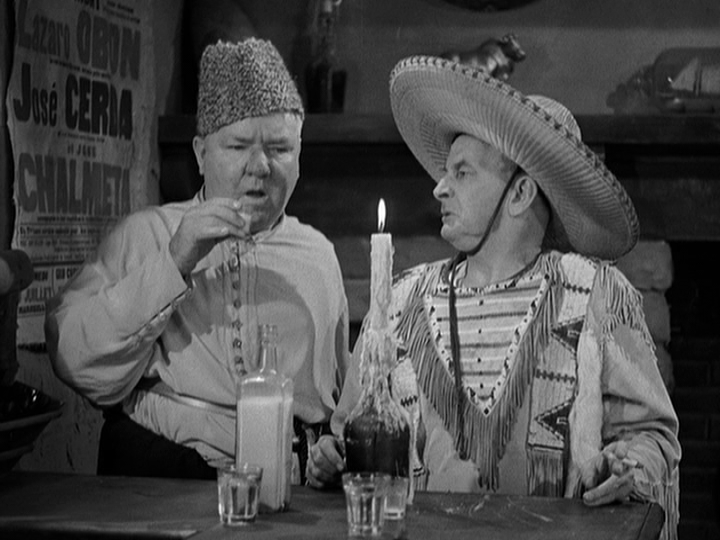
4 Shots From 4 Films: Special W.C. Fields Edition!


4 Shots From 4 Films is just what it says it is, 4 shots from 4 of our favorite films. As opposed to the reviews and recaps that we usually post, 4 Shots From 4 Films lets the visuals do the talking!

It was 140 years ago today that the greatest curmudgeon of them all, W.C. Fields, was born in Darby, Pennsylvania.  The world would never be the same.

In honor of a man who knew how to enjoy a stiff drink and who made a good living pretending to not like dogs and children, here are

4 Shots From 4 Films

It’s A Gift (1934, directed by Norman McCleod)

My Little Chickadee (1940, directed by Edward Cline)

The Bank Dick (1940, directed by Edward Cline)

Never Give A Sucker An Even Break (1941, directed by Edward Cline)