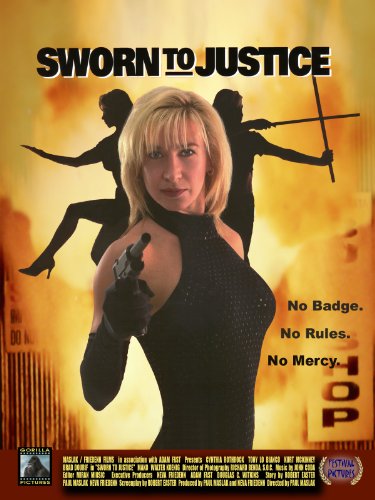
Cinemax Friday: Sworn to Justice (1997, directed by Paul Maslak)


Janna (Cynthia Rothrock) is a psychologist who is also a martial arts expert.  One night, she comes home to discover that her sister and her nephew have been murdered and that the killers are still in the house!  Though Janna manages to fight off the attackers, she also gets a nasty bump to the head.  Weeks later, after she’s gotten out of the hospital and she’s ready to get back to work, she discovers that she now has ESP!

All Janna has to do is touch someone or hold something in her hand and she has visions of the past and sometimes the present.  (She has those special ESP powers that do whatever needs to be done at the moment.)  When she finds her sister’s brooch, she flashes back to the night of the attack and sees the faces of the men who attacked her sister.  Using her newfound power, Janna sets out to get revenge.

But even as she tracks down the thugs who killed her sister, Janna still does not know the identity of the person who ordered the hit.  She just knows that he’s known as “The Man.”  Could he have something to do with the arrogant cop killer (Brad Dourif!) for whom Janna is serving as an expert defense witness?  Or could The Man by the publisher (Kurt McKinny) with whom Janna is having a steamy affair?  (This was a late night Cinemax film, after all.)  Or could it be the detective (Tony Lo Bianco) who is supposed to be investigating her sister’s death?

As far as Cynthia Rothrock martial arts films are concerned, Sworn to Justice is pretty good.  Rothrock was not only a force to be reckoned with in fight scenes but, as this film shows, she was a likable actress, too.  For the most part, she’s able to hold her own even when acting opposite seasoned scene stealers like Brad Dourif, Tony Lo Bianco, Mako, and even Walter Koenig, who plays Janna’s mentor with an outrageous German accent.  While the film’s fight scenes are just as good as you would expect from a Cynthia Rothrock fick, the ESP twist adds just the right amount of weirdness to keep Sworn to Justice from coming across as just another low-budget martial arts film.  The film doesn’t take itself too seriously.  Even while she’s getting revenge for their deaths, Janna never seems to be that broken up over the deaths of her sister and her nephew.  At worse, she’s seems to be annoyed by the inconvenience of it all.  It’s just something else that she has to find the time to deal with.

There are a few scenes that are so darkly lit that it’s almost impossible to see what’s happening but then there are other scenes, like the one where Janna shows off her favorite martial arts moves to her new boyfriend, that work surprisingly well.  This is a 90s production all the way, which means a saxophone-scored sex scenes and synthesizer-scored action scenes.  Sworn to Justice is a good Cynthia Rothrock film, even if most audiences will end up figuring out the identity of The Man long before she does.
 

Music Video Of The Day: Immigrant Song by Dread Zeppelin (1989, directed by ????)


I don’t know about you but I’m in the mood for a reggae-flavored cover of Led Zeppelin’s Immigrant Song, hopefully one that’s performed by a 300-pound Elvis impersonator.

Fortunately, when you get those type of cravings, you can turn to Dread Zeppelin.  Dread Zeppelin is certainly not the only band to cover Led Zeppelin but they are probably the best known.  Actually, it’s somewhat unfair to describe Dread Zeppelin as being only a Led Zeppelin cover band.  They’ve actually covered a wide variety of artists and I believe they’ve released some original material as well.  They even did a disco record at one point.

Dread Zeppelin is one of those bands where members come and go.  As of this writing, the band is still recording and touring but bassist Gary Putnam is the only member who has appeared on every recording and taking part in every tour.

Enjoy!

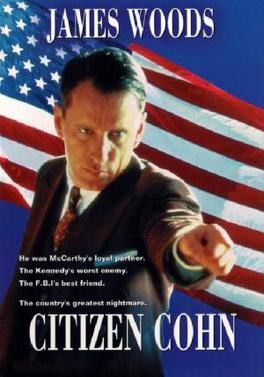
Citizen Cohn (1992, directed by Frank Pierson)


The year is 1986 and the powerful attorney Roy Cohn (James Woods) is dying.  The official story is that Cohn has liver cancer but the truth is that he’s dying of AIDS.  As he lies in his hospital bed, he thinks about his past and the events the led to him becoming one of the most feared and powerful men in America.  He is haunted by the ghosts of his many enemies, people like communist spy Ethel Rosenberg (Karen Ludwig) and his former colleague, Bobby Kennedy (David Marshall Grant).

Not surprisingly, a good deal of Cohn’s memories center around his association with Sen. Joseph McCarthy (Joe Don Baker), a charismatic alcoholic who, in the 50s, charged that he had a list with the names of communist spies deep within the government.  Cohn and Kennedy served as the counsels on McCarthy’s committees.  Cohn is with McCarthy from the beginning and he’s with him until the end of the senator’s career.  In fact, it’s Cohn’s own shadowy relationship with an army private that ultimately leads to McCarthy’s downfall.

Except for one aspect of the film, Citizen Cohn is one of the best films to ever be produced by HBO.  The film covers a lot of history in a little less than 2 hours and it does so in a way that is always interesting and easy to follow.  By including incidents from every phase of Cohn’s life, as opposed to just focusing on his time as McCarthy’, the film also shows how someone like Roy Cohn can become a behind-the-scenes power player despite the majority of the country having no idea who he is.  James Woods gives one of his best performances as the hyperactive and unapologetically corrupt Cohn while Joe Don Baker is perfect as the self-pitying Joseph McCarthy.

The problem with the film, and your mileage may vary on how big an issue this is, is that it almost presents Cohn’s final days — dying of AIDS in a lonely New York hospital room — as being some sort of deserved fate for everything that he did wrong in life.  For me, even in the case of someone like Roy Cohn, that’s a step too far and it comes very close to presenting AIDS as some sort of divine punishment (which, itself, comes dangerously close to mirroring the homophobic statements that were made — and still are being made — by anti-gay activists).  That may not have been the film’s intention but, with the flashback structure and all of his dead enemies materializing to taunt Cohn as he lies dying, it’s still a very valid interpretation.

Some of that is perhaps unavoidable.  Cohn, in both real life and the film, died largely unrepentant for anything he did during his life.  As the central character of a biopic, Cohn never has the type of big moment that you would hope for, where he would realize that it was wrong for him to destroy so many lives and show at least a hint of contrition for his past behaviors.  That Roy Cohn is even a compelling character is a testament to the talent of James Woods because it’s certainly not due to any sort of hidden goodness lurking underneath the surface of Cohn’s snarling personality.  The lack of apologies and regrets that made Cohn a powerhouse in real life also makes him an ultimately unsatisfying subject for a movie.

Music Video Of The Day: Under The Boardwalk, performed by Bruce Willis and The Temptations (1987, directed by ????)


Today is Bruce Willis’s birthday!

Everyone knows that Bruce Willis is the film star who, late in his career, turned out to be an unexpectedly good character actor.  Quentin Tarantino once said that Willis as one of the only modern stars who seemed as if he could easily step into an old gangster movie or film noir and not seem like he was out of place.  Tarantino was right.

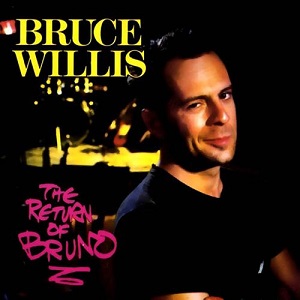
What is often forgotten is that, early on his career, Willis also pursued musical stardom.  He released two albums of R&B covers, the best known of which was the first, The Return of Bruno.  Released by Motown, The Return of Bruno was critically dismissed as being a vanity project but Bruce got the last laugh when the album exceeded expectations commercially and Willis went on to appear in movies like Pulp Fiction and 12 Monkeys.  Meanwhile, his critics had to settle for appearing in Rolling Stone.

When the album was released in 1987, HBO aired a concert film of Willis performing.  The video above is taking from that concert film and it features Bruce singing Under The Boardwalk with The Temptations.  Willis’s cover of Under The Boardwalk did not chart in the U.S. but it was hugely popular in the UK, where it reached the second spot on the charts.

Enjoy!

Fever (1991, directed by Larry Elikann)


Ray (Armand Assante) is a formerly viscous ex-con who has just gotten out of prison and is now determined to go straight and live on the right side of the law.  After spending nearly a decade behind bars, all he wants to do is to reunite with his girlfriend, Lacy (Marcia Gay Harden), and make her his wife.  However, there’s a problem.  While Ray was locked up, Lacy moved on.  She’s now engaged to Elliott (Sam Neill), a liberal attorney who, unlike Ray, is a pacifist.  Even though Lacy is still attracted to Ray, she does not want to get back together with him.

Unfortunately, there’s a second problem.  Ray may have gone straight but his former criminal associates don’t believe him.  They want Ray to help them pull off a major crime and when Ray says that is no longer his thing, they react by kidnapping Lacy.  If Ray ever wants to see Lacy again, he’s now got to return to his life of crime.

There’s also a third problem.  Ray may be an experienced criminal but Elliott insists on tagging along with him while he’s following the kidnappers’s orders.  So now, Ray not only has to commit several crimes but he has to do it with an inexperienced partner who doesn’t even believe in firing guns!

Fever is one of those HBO films that used to show up all the time on cable in the 90s.  I watched it a few times back in the day, just because I was a teenage boy and the movie featured a good deal of nudity.  Even at that time, though, I thought it was a slow and frequently boring movie.  Rewatching it for this review, I was shocked to discover that it was even slower than I remembered.  It seems like it takes forever for Ray and Elliott to finally team up and for the movie to get going.  Though the plot description may make it sound like a buddy comedy, it’s actually a very tough and grim picture.  Armand Assante and Sam Neill are not actors known for their light touch and they both give very serious and gritty performances.  Unfortunately, the film’s pace never really matched the intensity of its stars and the film’s storyline isn’t strong enough to hold up under scrutiny.  Once you start to wonder if Ray would really let Elliott tag along with him, the movie itself falls apart.

Armand Assante is a good actor who rarely seems to appear in good films.  Fever is a good example of that.  Assante gives an excellent and complex performance (and both Sam Neill and Marcia Gay Harden are pretty good too) but Fever itself never really clicks.

4 Shots From 4 Films: Special Piers Haggard Edition


4 Shots From 4 Films is just what it says it is, 4 shots from 4 of our favorite films. As opposed to the reviews and recaps that we usually post, 4 Shots From 4 Films lets the visuals do the talking!

Today, we wish a happy 81st birthday to one of the most underrated British filmmakers around, Piers Haggard.  Though Haggard made few feature films over the course of his career, he is best remembered for his work as television director.  Among Haggard’s triumphs: Dennis Potter’s Pennies From Heaven and Nigel Kneale’s Quatermass.

In honor of Piers Haggard’s long career and his birthday, here are:

4 Shots From 4 Films

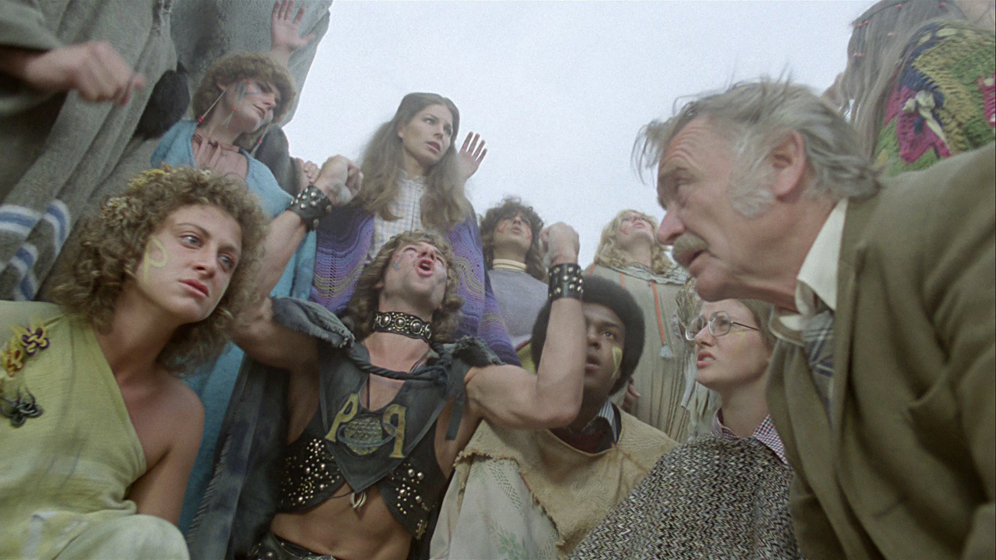
Blood On Satan’s Claw (1971, directed by Piers Haggard)

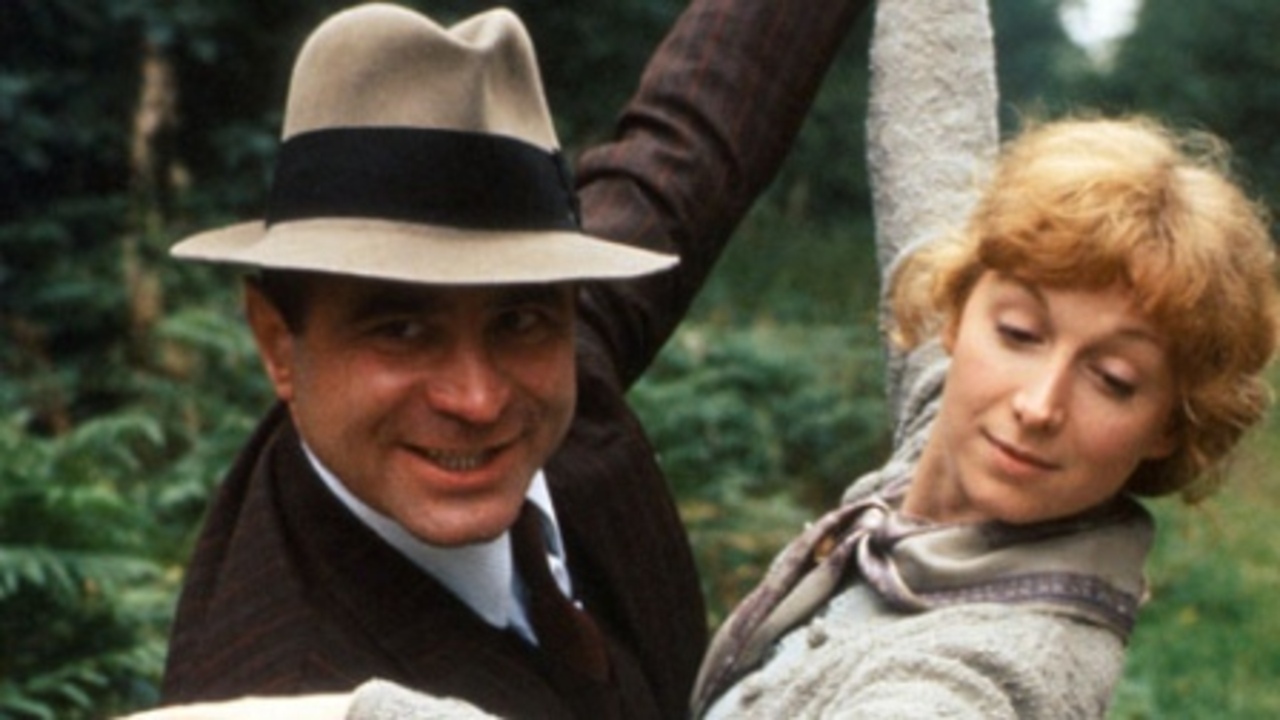
Pennies From Heaven (1978, directed by Piers Haggard)

Quatermass (1979, directed by Piers Haggard)

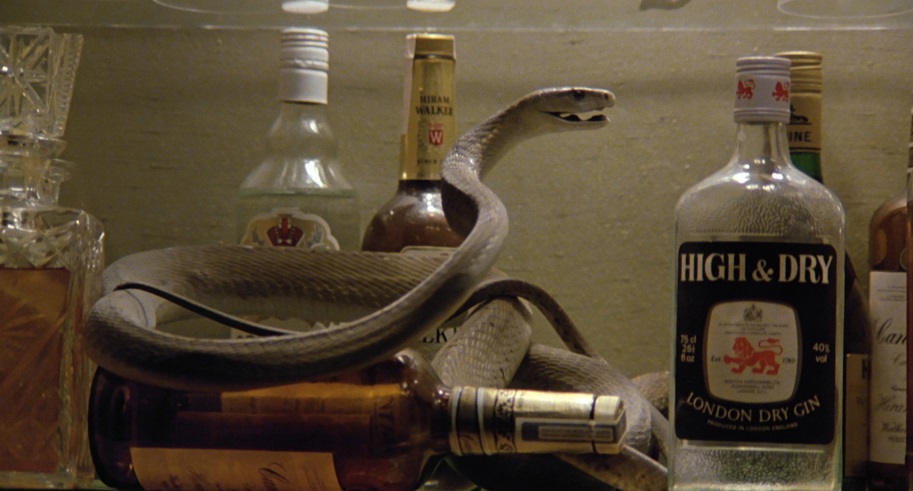
Venom (1981, directed by Piers Haggard)

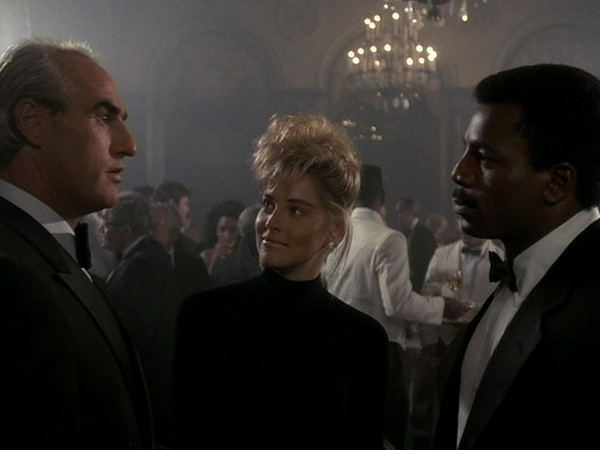
Action Jackson (1988, directed by Craig R. Baxley)


Jericho Jackson (Carl Weathers) is the tough Detroit cop who everyone calls “Action” because I guess Jericho was just too normal a name.  He’s a legend in the department and on the streets of the Motor City.  “Some people say his mother was molested by Bigfoot,” one patrolman says but the truth is simpler.  Jackson was a high school football star before he went to Harvard Law and got his degree.  He could have been an attorney but he decided to become a cop instead.

Unfortunately, Action Jackson is currently Desk Duty Jackson.  When he arrested Sean Dellaplane, the pervert son of auto manufacturer Peter Dellaplane (Craig T. Nelson), Jackson “nearly ripped off the boy’s arm.”  (“He had a spare!” Jackson snarls.)  Everyone says that, since his son’s arrest and his marriage to the beautiful Patrice (Sharon Stone), Peter Dellaplane has turned over a new leaf and is now an honest businessman.  Action Jackson doesn’t buy it.  In fact, he suspects that Dellaplane is responsible for the brutal murder of a union rep.

Though he may be married, Dellaplane still has a mistress.  Sydney Ash (Vanity) is a heroin-addicted singer.  After Dellaplane watches her sing a song, Sydney tells him, “I was expecting a standing ovation.”  “You’re getting one,” Dellaplane replies.  Jackson knows the best way to get to Dellaplane is to get his hands on Sydney.  He better hurry because Action Jackson has been framed for a murder that he didn’t commit and now he’s got every cop and criminal in Detroit after him.

A lot of people will tell you that Action Jackson is a bad movie but I like it.  It’s a tribute to the classic blaxploitation films of the 70s and though the violence may be excessive, it’s all played tongue-in-cheek.  Carl Weathers first suggested the movie to Joel Silver while the two of them were filming Predator and, from the start, Action Jackson is proud to be a B-movie.  There’s no subtext or deeper meaning involved, beyond Action Jackson cleaning up the streets.  Taking it seriously would be a crime.  This is probably the only film where you will ever be able to see Apollo Creed and the dad from Poltergeist face off in hand-to-hand combat.  Of course, whenever Craig T. Nelson throws a punch or a kick, the scene cuts away to disguise the fact that a stuntman is doing most of the work but even that becomes fun to watch for.  Some B-movie have a visible boom mic.  Action Jackson has a stuntman disguised to look like Craig T. Nelson from behind.

If I do have a complaint, it’s that the script is heavy on the one-liners, which makes sense as this film was made shortly after Schwarzenegger revolutionized action film dialogue with “I’ll be back.”  Unfortunately, Weathers wasn’t as good at handling one-liners as Arnie and Bruce Willis were.  As anyone who has seen the first four Rockys can tell you, Carl Weathers was an actor who could create art from a monologue of non-stop trash talk.  As I watched the film, I kept wishing that Action Jackson would do some Apollo Creed-level trash-talking whenever he was fighting the bad guys.  Maybe if he had, there would have been an Action Jackson 2.

A Scene That I Love: In Memory of Rudy Ray Moore, The Fight Scene From Dolemite


93 years ago, on this date in 1917, Rudy Ray Moore was born in Fort Smith, Arkansas.  From humble beginnings, Moore would grow up to become a comedian who inspires a cult-like following to this day.  Imagine Redd Foxx with even bluer material but less personal animus against the world and you might have some idea of the type of material that made Rudy Ray Moore famous.

Moore was not just a comedian.  He was also a self-proclaimed film star.  Dolemite, which he produced and starred in, remains his best-known movie.  Dolemite is a blaxploitation film but it’s a blaxploitation film unlike any other.  Moore plays Dolemite, a pimp who has been released from prison after serving 20 years.  Dolemite seeks revenge on the man who set him up, Willie Green (played by the film’s director, D’Urville Martin.)  Along the way, he proves himself to be the greatest kung fu-fighting pimp around.

Or, at least, that’s the idea.  As a movie, Dolemite is often considered to be an example of outsider art.  It’s a movie unlike any other and it is almost impossible to describe what it’s like to watch it for the first time.  In honor of Rudy Ray Moore’s birthday, here is one of the classic fight scenes from Dolemite:

4 Shots From 4 Films: Special Kurt Russell Edition


4 Shots From 4 Films is just what it says it is, 4 shots from 4 of our favorite films. As opposed to the reviews and recaps that we usually post, 4 Shots From 4 Films lets the visuals do the talking!

Today, we wish a happy 69th birthday to the patron saint of all thing that are cool about the movies, the one and only Kurt Russell!

And here to help us do that are:

4 Shots From 4 Films

Used Cars (1980, directed by Robert Zemeckis)

Escape From New York (1981, directed by John Carpenter)

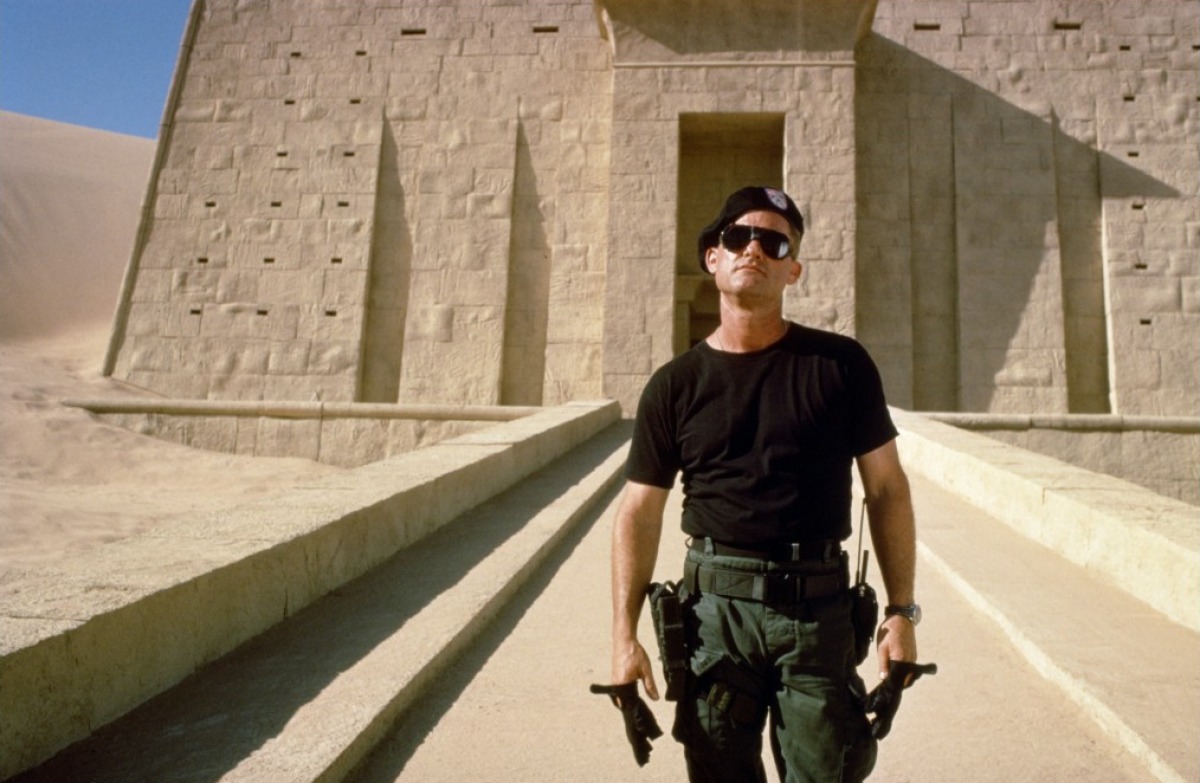
Stargate (1994, directed by Roland Emmerich)

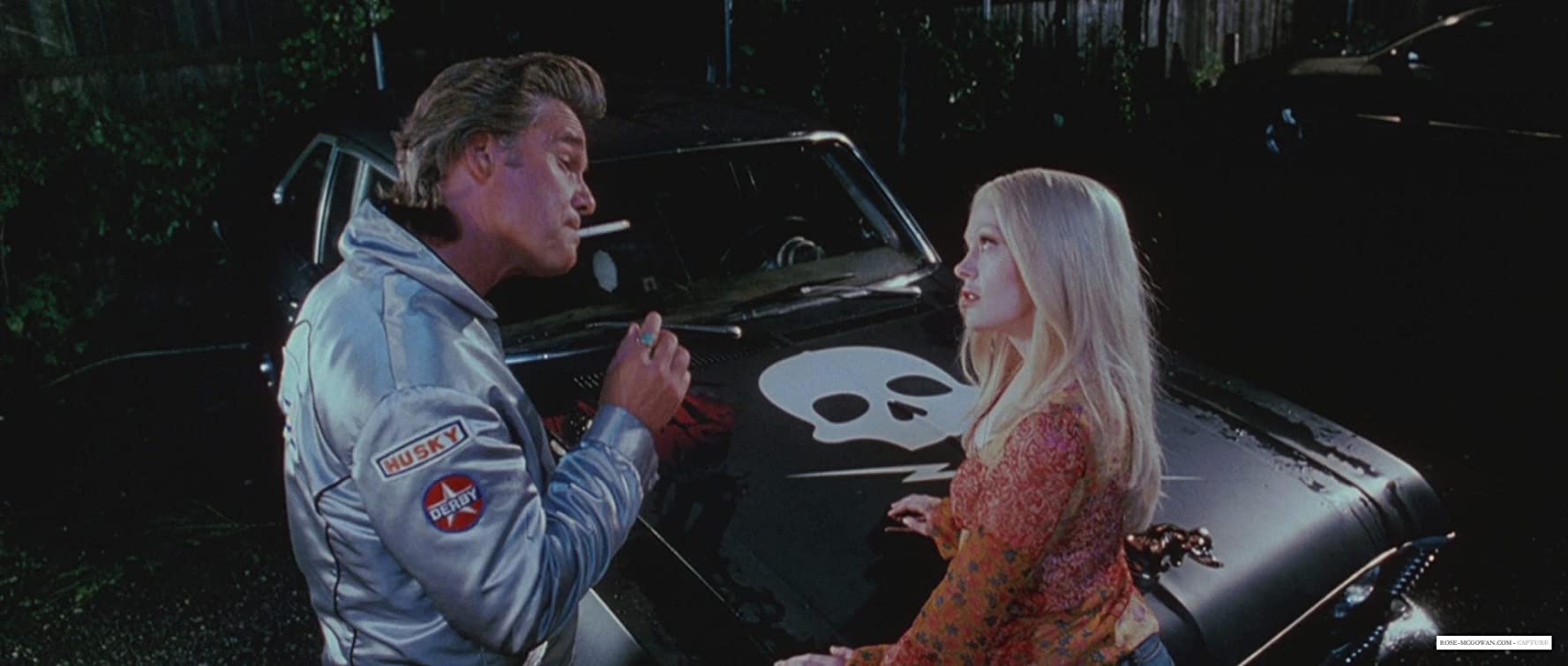
Death Proof (2007, directed by Quentin Tarantino)

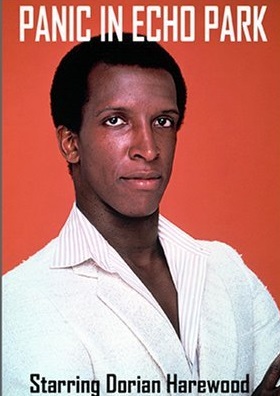
Panic in Echo Park (1977, directed by John Llewellyn Moxey)


Dr. Michael Stoner (Dorian Harewood) is a young, black doctor who works in a hospital located in a poverty-stricken Los Angeles neighborhood that has a high crime rate.  Stoner’s got the education and the talent to be working in an upscale hospital and making a lot of money but it’s more important to Stoner that he give something back to the community.  Stoner is a doctor who cares and he has no hesitation letting everyone know it.  When he meets a wealthy plastic surgeon at a party, he tells him that he should come down to Stoner’s hospital and try his hand at fixing up bullet holes.  The plastic surgeon doesn’t react well to the suggestion.

Stoner is convinced that there’s an epidemic breaking out in the Echo Park neighborhood but he can’t get anyone to listen to him.  No one cares about what happens in Echo Park.  When Stoner deduces that the illness is being caused by dirty tap water, he still can’t get anyone to listen to him.  He yells at people at parties and everyone ignores him.  He goes to the press and the media refuses to cover the story.  The corporate weasels who are responsible for poisoning the water don’t care about anything other than money.  Stoner talks about his problems to a young man who is in a coma and he gets no response.

Finally, Stoner is forced to enlist the help of a group of local teenagers who are making a documentary about life in their neighborhood.  Dr. Stoner may not always be polite but he gets results.

Directed by John Llewellyn Moxey, Panic In Echo Park is a made-for-TV movie and much like Where Have All The People Gone? (which was also directed by Moxey), it seems like it was probably envisioned as being a pilot for a weekly series.  Watching the film, it’s easy to imagine Dr. Stoner getting mad on a weekly basis.  Like most made-for-TV movies, it’s predictable and the characters are all either too obviously good or too obviously evil.  However, Dorian Harewood (who is probably best known for getting shot over and over again in Full Metal Jacket) gives a good performance as Dr. Stoner.  He doesn’t get to do much other than yell at people but Harewood does it well.  Today, a story involving people getting sick from dirty tap water does not seem far fetched (do they have clean water in Flint, yet?) and the scenes where Dr. Stoner orders people to be put into “quarantine” feel disturbingly like the evening news.