Tom Horn (1980, directed by William Wiard)


Today would have been Steve McQueen’s 90th birthday.

Sadly, McQueen died in 1980 at the absurdly young age of 50.  In life, McQueen never got as much respect as he deserved as an actor but in death, he’s been rediscovered as not just an icon of cool but also as an underrated actor who, much like Clint Eastwood, could say a lot without uttering a word.  (Be sure to read Marshall Terrill’s biography of McQueen.)  When Steve McQueen (as played by Damian Lewis) showed up in Once Upon A Time In Hollywood, it seemed appropriate.  McQueen and Tarantino both seem made for each other, even if McQueen died long before Tarantino even wrote his first screenplay.

McQueen made two films shortly before he died, The Hunter and Tom Horn. Unfortunately, neither one of them was a hit with audiences or critics.  The Hunter, which was McQueen’s last film, is a forgettable movie that features McQueen as a bounty hunter who can’t drive.  Tom Horn, however, was an underrated western that features one of McQueen’s best performances.

In Tom Horn, McQueen plays the title character, a legendary frontier scout who is known for the role he played in the capture of Geronimo.  When the film opens, Tom Horn has seen better days.  With the frontier changing and the old west being replaced by the modern age, Horn has been reduced to being almost a vagrant, wandering from town to town in search of work.  When the film begins, Horn has found employment as a “stock detective.”  He’s employed by the local cattlemen to keep rustlers from stealing their stock.  Horn uses the same violent methods that he’s always used, gunning down rustlers and often doing so in public.  What Horn doesn’t realize is that times have changed and the methods that previously made him a legend are now making him a pariah.  When the cattlemen realize that the townspeople are turning against them because of Horn’s activities, they conspire to take out Horn themselves.

Tom Horn is based on a true story.  In 1903, Tom Horn was hung for shooting a 15 year-old boy.  While it is agreed that Horn killed many men over the course of his life, he was undoubtedly framed for the murder for which he was executed.  While sitting in his jail cell, waiting to be executed, Horn wrote the autobiography upon which this movie is based.  The movie makes the argument that Horn was executed because he was a reminder of what the West used to be like.  In order to prove that they were now ready to be members of civilized society, the cattleman had to sacrifice Horn in the most public way possible.

The film does a good job of capturing the final days of the old west and Steve McQueen does an even better job of playing a man who doesn’t realize that his time has come to a close.  Horn often seems to be the only man who doesn’t understand that the time of outlaws and the gunslingers is coming to a close and that leaves him defenseless when he’s put on trial.  Even after found guilty, Horn remains confident that he will somehow escape the hangman’s noose.  Tragically, it’s not until time is up that Horn truly comes to understand that the world has changed and civilization no longer has place for men like him.  The same people who used to depend on men like Tom Horn now just want to forget that he ever existed.  McQueen took a long break between making The Towering Inferno and Tom Horn and dropped out of the public eye.  The only film he made during that period was a barely released version of Enemy of the People.  When McQueen made Tom Horn, he was also a man out of time and he brings a sense of resignation and loss to the role that he might not have been capable of doing earlier in his career.

Sadly, it was while filming Tom Horn that McQueen first started to show symptoms of the cancer that would eventually kill him.  Tom Horn was released in 1980 and never got the attention that it deserved.  It’s a minor western classic and features Steve McQueen at his best.

 

In Memory of Mike Longo and Eric Weissberg


Sadly, we have to start today with some sad news.  On the 22nd, the world of music lost both Mike Longo and Eric Weissberg.

Mike Longo was 83 years old and passed away at Mount Sinai Hospital in New York City.  Longo, who was admitted to the hospital last Tuesday, died of COVID-19.  Tragically, he was the first American jazz casualty of the cornonavirus.  Long had a long and distinguished career as both a pianist and a composer.  Along with his own solo work, he was known for serving as Dizzy Gillepsie’s musical director.  Below is a performance of Gillespie’s band, taken from a 1968 concert in Copenhagen.  The song that their playing is a Longo composition called Ding A Ling:

Longo also had an extensive solo career and he also worked as an educator, passing on his knowledge and love for jazz to the next generation.

Eric Weissberg

Eric Weissberg was 80 and passed away in a Detroit nursing home.  He had been suffering from Alzheimer’s for several years.  A folk musician who later became an in-demand sessions player, Weissberg was best-known as a banjo player.  With Steve Mandell, Weissberg arranged and performed the version of Dueling Banjos that is heard in the film Deliverance.

Rest in peace to both of these gentleman.  Thanks for the music.

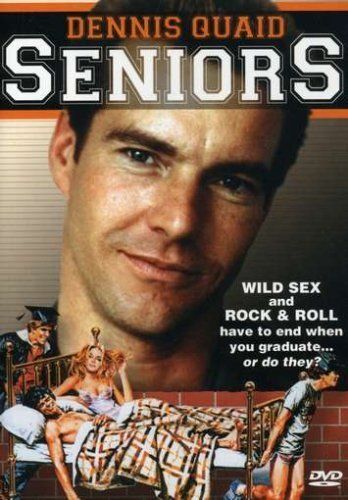
The Seniors (1978, directed by Rod Amateau)


Four college seniors (including one played by Dennis Quaid) are upset at the prospect of graduating, having to get real job, and losing Sylvia (Priscilla Barnes), the mute nymphomaniac who lives in their house with them and does all the cleaning and cooking.  They decide that the best way to avoid getting a real job is by setting up a fake company called Phantom Research.  They apply for and get a grant to study female sexuality, which essentially means that they pay the girls on campus to have sex with them.  Before you can say Risky Business (which was actually released years after this film), they expand their operations, get involved with some crooked businessmen, and nearly lose their lives.  It’s a comedy.

The Seniors is one of those films that used to come on television frequently when I was a kid.  I remember watching it when I was 12 and enjoying it, mostly because I was a stupid kid and I was at that age where any film about sex seemed clever and hilarious.  I recently rewatched it and discovered that there was only one funny bit and that was about a nerdy research assistant named Arnold (Rocky Flintermann) who helps out the seniors in return for them setting him up with Sylvia.  Throughout the film, the formerly virginal Arnold gets laid so often that he loses the ability to walk and then he dies.  Ha ha.  The rest of the film is just dumb.  The problem is that the film wants to be a raunchy, Animal House-style comedy but it was written by Stanley Shapiro (who previously wrote Doris Day comedies) and directed by Rod Amateau, who had previously directed several episodes of Gilligan’s Island.  Their style is all wrong for the material.

The film’s opening credits announce that it stars, among others, Ryan O’Neal, Clint Eastwood, and Charles Bronson.  A cartoon professor then walks out and announces that, “All of these big stars!  None of them are in this film!”  That’s too bad.  I would have liked to have seen some of those stars in this movie.  I think Eastwood would have told the seniors to get jobs and stop exploiting Sylvia.  Bronson would have blown away the entire operation but Ryan O’Neal probably would have been cool with it all.

O’Neal, Eastwood, and Bronson are not in the film.  Dennis Quaid is, though he probably doesn’t brag about.  Edward Andrews and Ian Wolfe both have minor roles as corrupt businessmen who help fund Phantom Research.  Alan Reed, the voice of Fred Flinstone, plays a professor.  This was his last performance before his death.

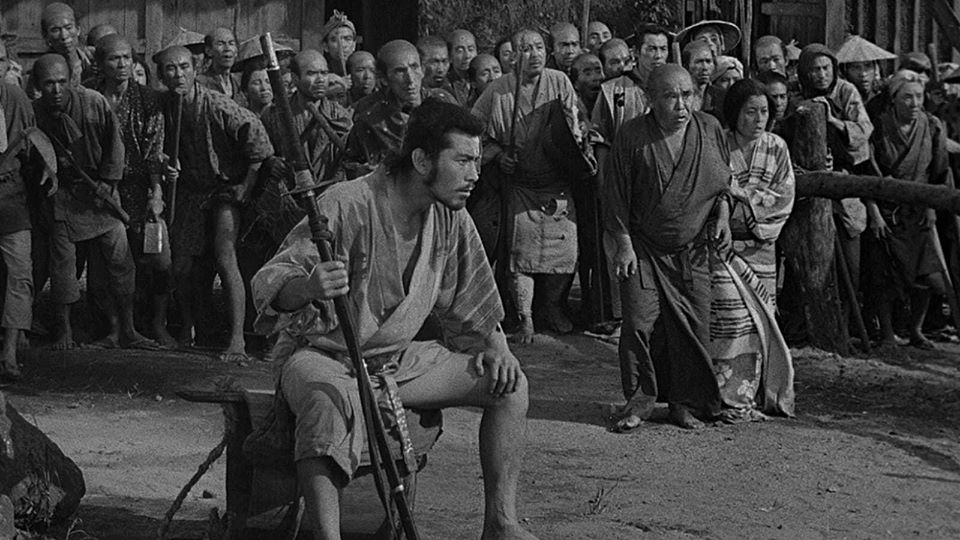
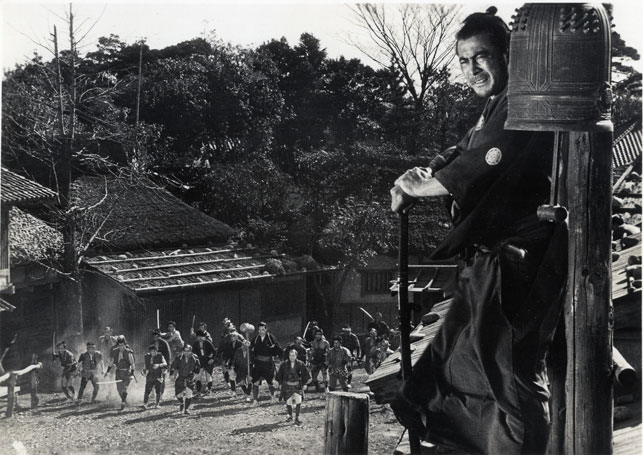
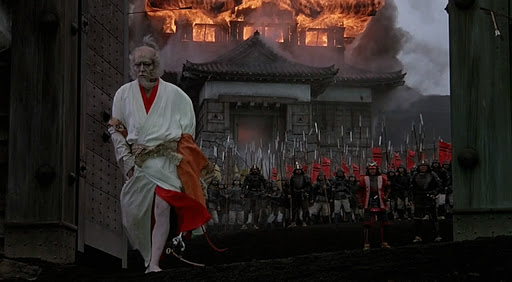
4 Shots From 4 Films: Special Akira Kurosawa Edition


4 Shots From 4 Films is just what it says it is, 4 shots from 4 of our favorite films. As opposed to the reviews and recaps that we usually post, 4 Shots From 4 Films lets the visuals do the talking!

110 years ago today, Akira Kurosawa was born.  Today, we honor the life of one of the most influential directors in film history and that means that it’s time for:

4 Shots From 4 Films

Seven Samurai (1954, directed by Akira Kurosawa)

Yojimbo (1961, directed by Akira Kurosawa)

Ran (1987, directed by Akira Kurosawa)

Dreams (1990, directed by Akira Kurosawa)

If you’re on lockdown right now and you’re not at already a familiar with Japan’s greatest director, this is a great time to discover the works of Akira Kurosawa!

Music Video Of The Day: The Turn Of A Friendly Card by The Alan Parson Project (1980, directed by ????)


The Turn of a Friendly Card is the title track off of the Alan Parsons Project’s 5th studio album.  On the album, the track runs for 16 minutes and it’s split into five different suites.  The version that is featured in the music video is considerably shorter.

When this video came out, MTV was very young and music videos were still viewed as being mostly a curiosity.  Like a lot of videos from that era, this is a very simple video, just some photographs of a casino in Europe and then some money and some cards.  The members of the band don’t even appear in the video.  Within a few years after the release of this video, this type of simplicity would disappear as MTV become more popular and videos became more overproduced.

Enjoy!

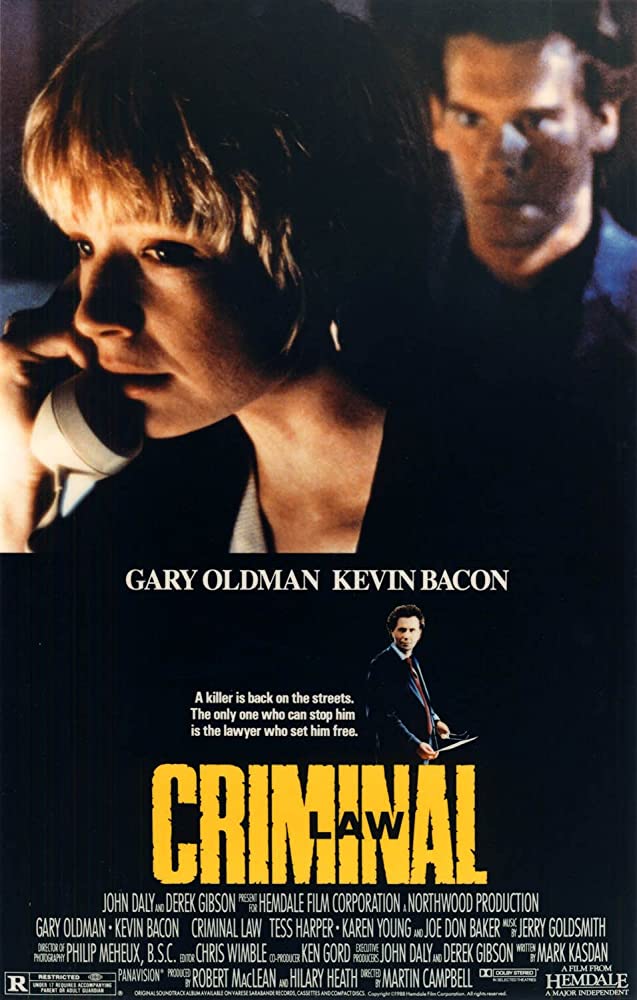
Criminal Law (1988, directed by Matin Campbell)


Gary Oldman is Ben Chase, a hotshot defense attorney who graduated from Harvard and now practices law in Boston.  That means that he gets to have a Boston accent and you know how much Gary Oldman loves playing a role with an accent.  Ben also has a pompadour because Gary Oldman always has something weird going on with his hair in almost every film he appears in.

Ben’s latest client is Martin Thiel (Kevin Bacon), a sociopathic rich kid who has been accused of murder.  Even though Ben thinks that Martin is probably guilty, he still gets Martin off the hook.  As soon as Martin get his acquittal, he starts murdering again.  Ben feels responsible so he decides that what he needs to do is trick Martin into implicating himself.  However, Martin knows what Ben is planning so, instead, he decides to frame Ben for the murders.  Somehow, it all links back to Martin’s feelings about abortion.  I guess Martin is against abortion or maybe he’s for it.  It was hard to keep track.  I watched the movie and I’m still not sure I followed everything that I saw.  It’s not that the plot is diabolically clever.  It’s just that it’s so incoherent that not a single plot point logically follows from another.

The film experiments with suggesting that there’s some sort of deeper connection between Martin and Ben.  Martin is obsessed with Ben and when Ben is in bed with his girlfriend, he briefly imagines that she’s turned into Martin and has a good old-fashioned freak out as a result.  It doesn’t make any sense.  First off, you have to believe that Ben can’t tell the difference between Kevin Bacon and his girlfriend.  Secondly, you have to then accept that Ben — a HARVARD GRADUATE — is so stupid that he would actually believe that his girlfriend had suddenly transformed into Kevin Bacon and must now be strangled.

Criminal Law is a film that you may be tempted to watch because of the pairing of Kevin Bacon and Gary Oldman but you’d be better off just watching JFK again.  They’re both great actors and and it’s always interesting to see them cast against type but neither one of them is particularly good in Criminal Law.  They’re let down by a script that doesn’t allow either one to create a consistent character.  Sometimes, Martin is a soulless attorney and other times, he’s a panicky social justice crusader.  Sometimes, Kevin Bacon is a clever sociopath and, other times, he’s just your typical mindless movie slasher.

On the plus side, Joe Don Baker is in this mess, playing a cop.  Joe Don Baker has played so many cops in so many bad movies that I wonder if he’s ever been tempted to try to arrest someone in real life.  In Criminal Law, he’s not given much to do but it doesn’t matter.  He’s Joe Don Baker!

Music Video Of The Day: Ponder The Mystery by William Shatner (2013, directed by William Shatner and Kevin Layne)


Today, we wish a happy 89th birthday to the one and only William Shatner!

This music video is for the title song from Shatner’s 2013 album, Ponder the Mystery.  Nowadays, it’s usually agreed that Shatner was laughing at himself when he famously covered songs like Tambourine Man and Lucy in the Sky with Diamonds.  But Ponder the Mystery features Shatner in a reflective mood.  This song, like every other song on the album, finds Shatner pondering not just the mysteries of life but the reality of death, as well.

After that happy introduction, what else can I do but invite you to…

Enjoy!

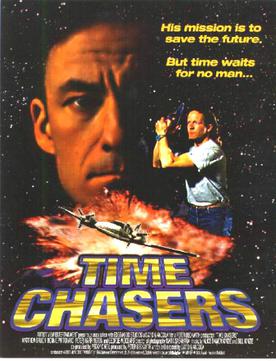
Time Chasers (1994, directed by David Giancola)


People, I know what you’ve heard but Time Chasers is not that bad.

I know that Time Chasers has got a reputation.  It was featured on one of the most brutal (and funniest) episodes of Mystery Science Theater 3000.  That, in fact, is probably how most people know about this film.  (Some members of the MST 3K crew subsequently revisited Time Chasers for Rifftrax.)  It’s true that MST 3K was known for taking apart bad films and it probably hasn’t helped the film’s reputation that it’s been reported that some members of the production were not amused about being mocked by Mike Nelson and the bots.

But that’s all in the past and I think that today, we can finally admit that Time Chasers is not that bad.

It’s certainly one of the few films to suggest that time travel can be achieved by an airplane, five oversized floppy disks, and a Commodore 64.  Nick Miller (Matthew Bruch) is a scientist and amateur airplane pilot who has discovered how to travel through time.  He hopes that we can use time travel so that we can figure out a way to “stop killing ourselves.”  Lisa (Bonnie Pritchard), the local journalist who went to high school with Nick, is impressed, especially when Nick takes her on a trip to the future (which does indeed look much like a mall food court).  Lisa is less impressed when Nick decides to sell the idea to J.K. Robertson (George Woodard).  J.K.’s a rich businessman and that automatically makes him evil.  Lisa understands this.  Nick does not.

J.K. promises that he won’t use time travel to develop weaponry but, when Lisa and Nick take another romantic trip to the future, they discover that the world is in ruins and it no longer looks like a food court.  Instead, people are shooting at each other.  J.K. lied!  Nick and Lisa go back to the present to confront J.K. but J.K.’s not willing to give up time travel that easily.  Soon, as a result of all the time travel, there are multiple Nicks and Lisas and J.K. Robertsons all over the place.  It all ends with a trip back to the American Revolution, where many of the colonists wear wrist watches and modern-style eyeglasses.

It is easy to poke fun at something like Time Chasers but I’m going to defend it.  The plot is actually more ambitious than you would expect from a low-budget sci-fi film and there are some clever touches that indicate that the director actually did give some serious thought to what would happen if you had multiple people jumping from one time to another.  (I like the fact that, when Nick meets his past self, Past Nick can’t understand why Present Nick won’t stop talking about Lisa.)  For all the ribbing that they took on MST 3K, both Matthew Bruch and Bonnie Pritchard are likable as Nick and Lisa.  Bruch may not look like a conventional hero and, in this film, he’s got a mullet that’s goofy as hell but there’s a lot of sincerity to his performance.

I love MST 3K.  When I first saw the Time Chasers episode, I laughed so much that it hurt and it’s still a favorite of mine.  (I cannot see an empty field without saying, “Hey, Children of the Corn.”  Lisa — our Lisa, not the film’s Lisa — is usually kind enough to reply, “Hey,” so my joke isn’t just left hanging in the air.)  But taken on its own, without Mike and the bots riffing on it, Time Chasers is not that bad.  It’s goofy take on time travel and, dammit, I like it.

4 Shots From 4 Film: Special Gary Oldman Edition


4 Shots From 4 Films is just what it says it is, 4 shots from 4 of our favorite films. As opposed to the reviews and recaps that we usually post, 4 Shots From 4 Films lets the visuals do the talking!

Today is the 62nd birthday of one of the best actors currently working, Gary Oldman!  In honor of both this day and also Gary Oldman’s amazing versatility as a performer, here are…

4 Shots From 4 Films

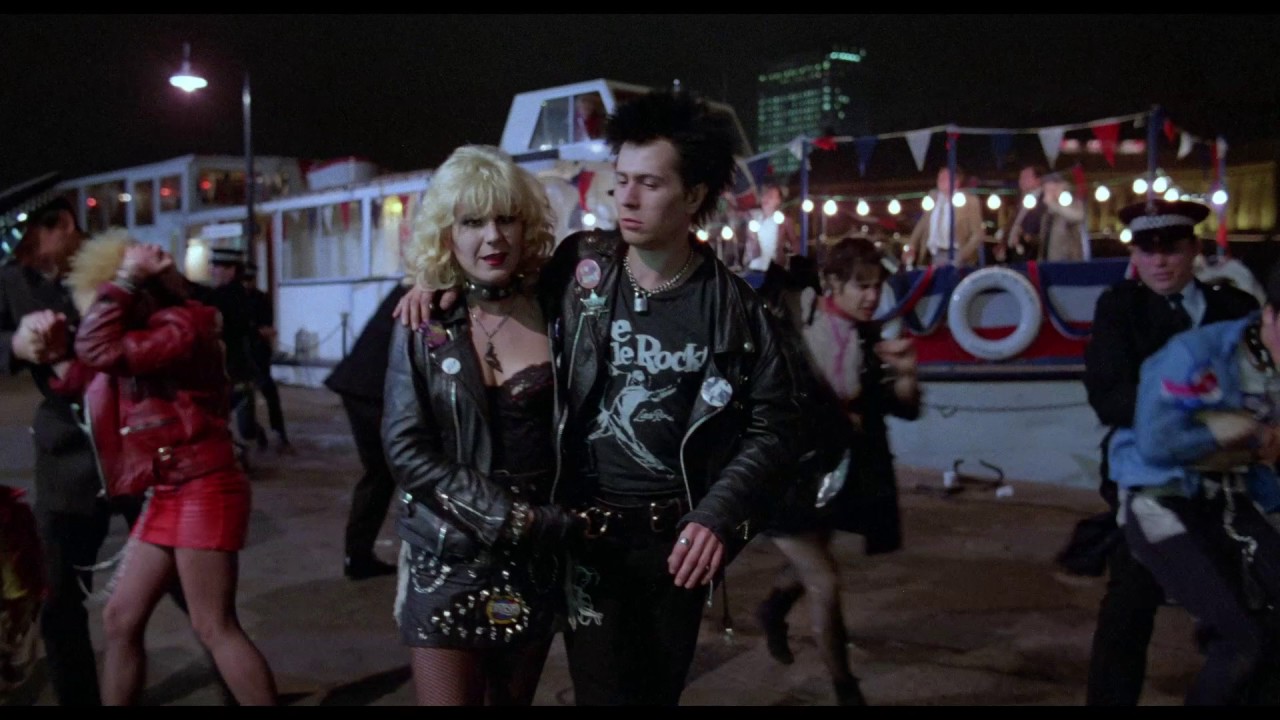
Sid & Nancy (1986, directed by Alex Cox)

The Firm (1989, directed by Alan Clarke)

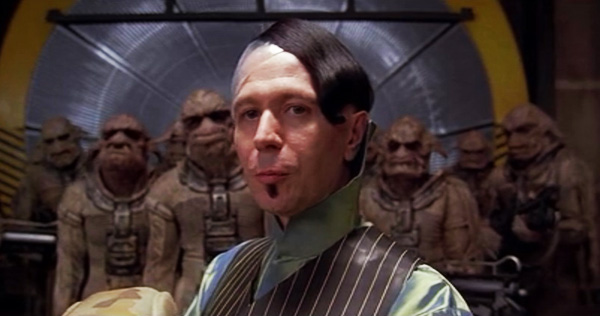
The Fifth Element (1997, directed by Luc Besson)

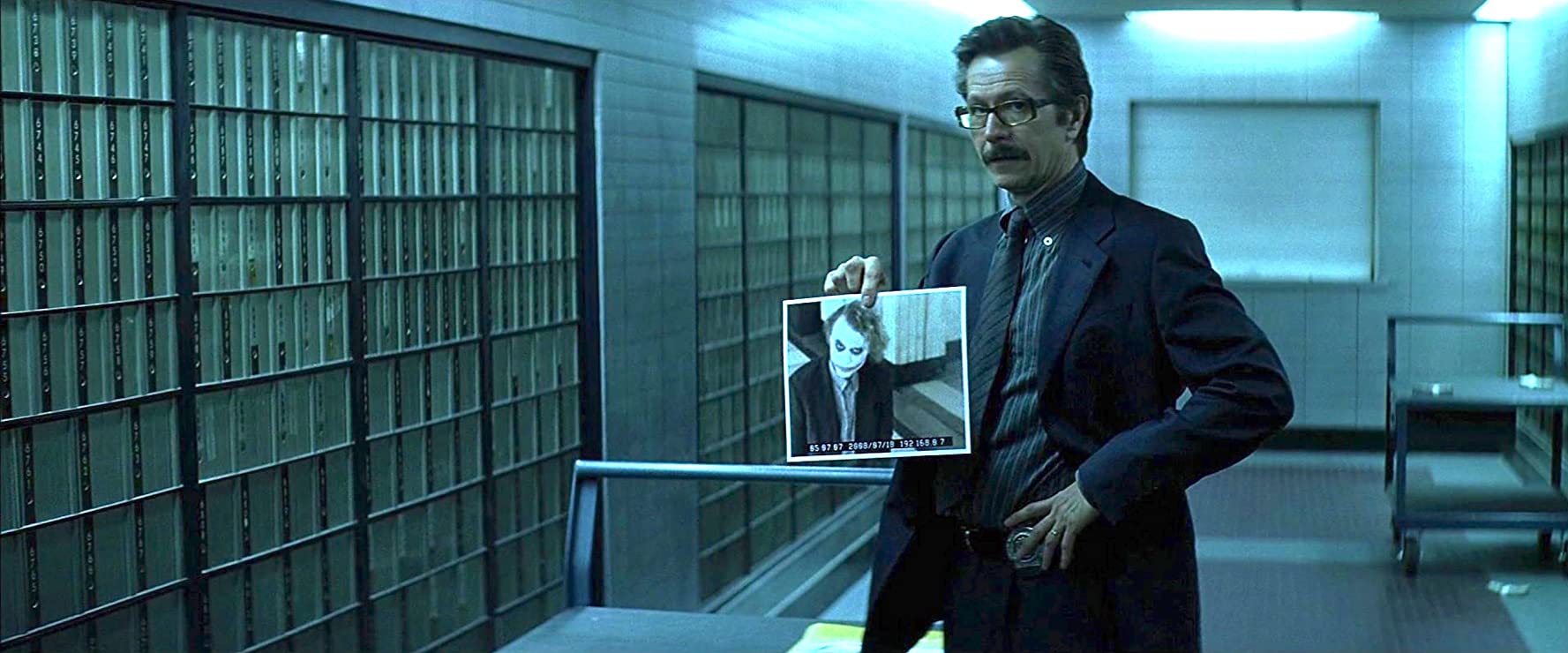
The Dark Knight (2008, directed by Christopher Nolan)

Music Video of the Day: Heartbreaker (At The End Of Lonely Street) by Dread Zeppelin (1990, directed by ????)


Yesterday’s music video of the day was Dread Zeppelin’s Immigrant Song.

Today’s music video of the day is another video from everyone’s favorite cover band.  This one is for Heartbreaker (At The End of Lonely Street).  I have no idea who directed it.  I don’t know if the song was a hit when it was released.  I don’t know if anyone but me cares.  But sometimes, you just need to see a Led Zeppelin song covered by a 300-pound Elvis impersonator.

Am I alone in this?

Enjoy!