4 Shots From 4 Films: Special Toshiro Mifune Edition


4 Shots From 4 Films is just what it says it is, 4 shots from 4 of our favorite films. As opposed to the reviews and recaps that we usually post, 4 Shots From 4 Films lets the visuals do the talking!

100 years ago today, the great Japanese actor Toshiro Mifune was born in Qingdao, Shandong, China, which was under Japanese occupation at the time.  After working as a photographer and as an assistant cameraman, Mifune made his acting debut in 1947, playing a bank robber in Snow Trail.

Mifune would go on to become an international superstar, appearing in hundreds of films before his death in 1997.  Sixteen of those films would be directed by Akira Kurosawa and Mifune’s performances in Kurosawa’s yakuza and samurai films would go on to inspire actors the world over.  When Sergio Leone adapted Yojimbo into A Fistful of Dollars, Clint Eastwood based his performance on Mifune’s performance in the original.  George Lucas would later create the character of Obi-Wan Kenobi with Mifune in mind.

In honor of the man and his career, here are

4 Shots From 4 Films

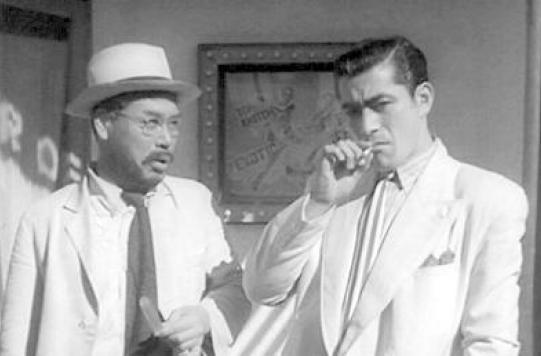
Drunken Angel (1948, directed by Akira Kurosawa)

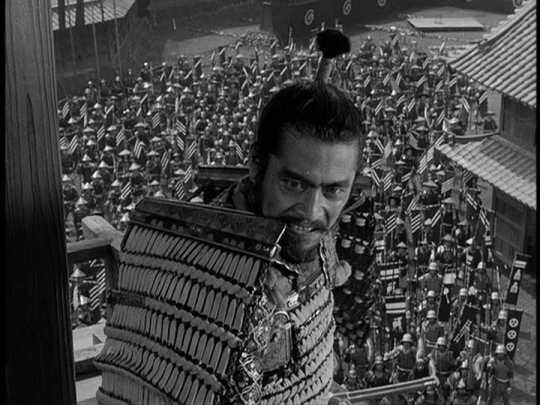
Throne of Blood (1957, directed by Akira Kurosawa)

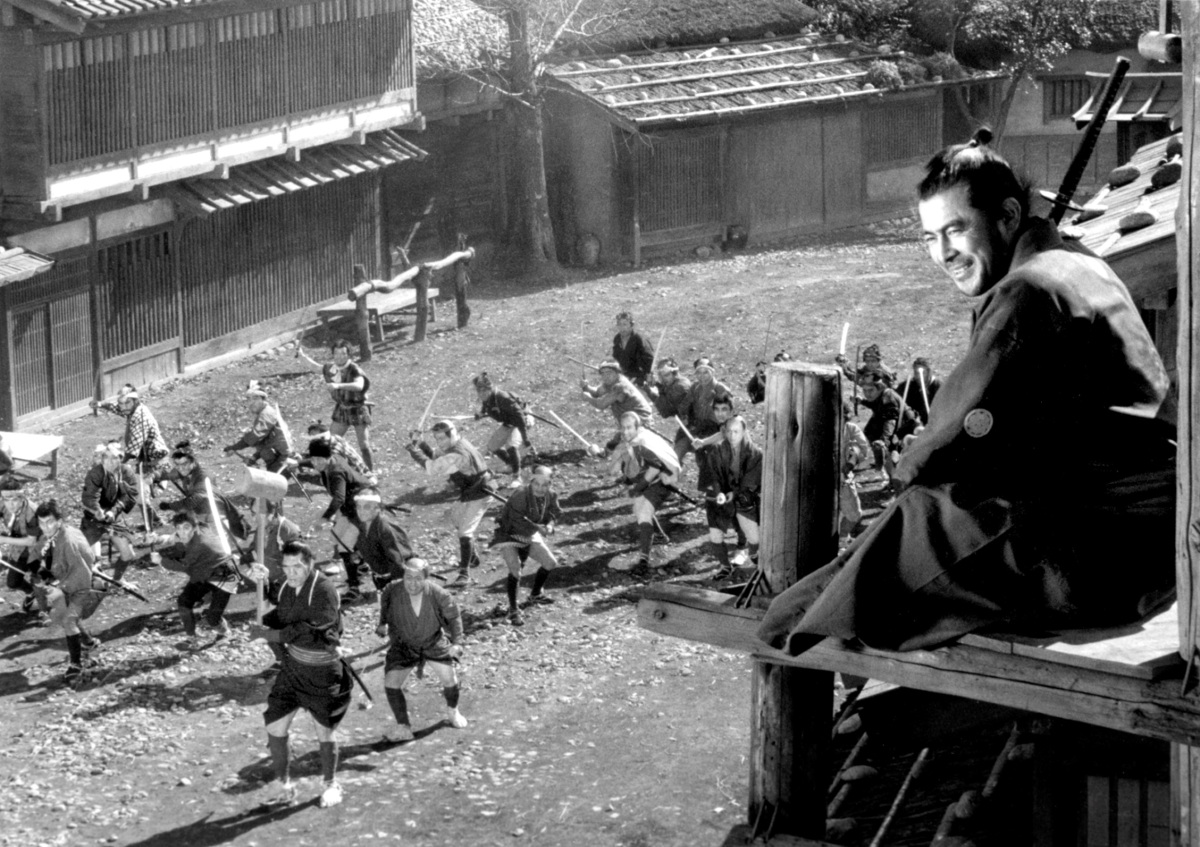
Yojimbo (1961, directed by Akira Kurosawa)

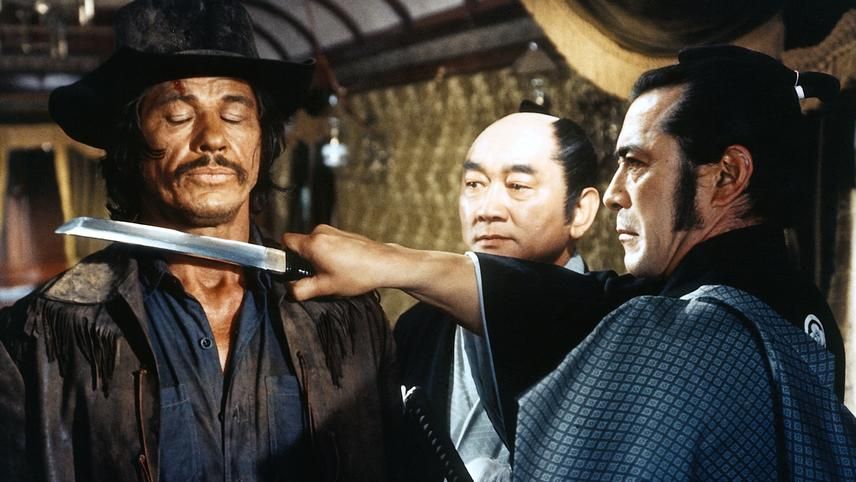
Red Sun (1971, directed by Terence Young)

Music Video Of The Day: Things Have Changed by Bob Dylan (2000, directed by Curtis Hanson)


Normally, today would be April Fool’s Day but this year, I don’t think anyone’s in the mood for any of that.  To quote today’s music video of the day, things have changed.

Bob Dylan wrote this song for a really good movie called Wonder Boys.  (The movie’s good and the Michael Chabon novel that it’s based on is even better.)  Dylan went on to win an Oscar for this song and I can still remember the night that he performed it at the Oscars.  On the night of the ceremony, he was in Australia so both his performance of the song and his acceptance speech was live streamed into the Shrine Auditorium.  The entire performance was a close-up of Dylan, without any camera movements or cuts to the audience.  It was eerie but effective and appropriate because Bob Dylan is an artist who has always tried to control his own image.

This video was directed by the late Curtis Hanson, who also directed Wonder Boys.

Enjoy!

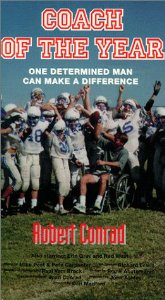
Coach of the Year (1980, directed by Don Medford)


Jim Brandon (Robert Conrad) used to be a member of the Chicago Bears, until he was drafted and sent to Vietnam.  While Jim was serving his country, he was wounded in battle and when he returns to the United States, he’s now in a wheelchair.  With his playing days over, Jim still wants to put his athletic abilities to good use.  When the Bears front office tells him that they want to place him in the PR department as a glorified mascot, Jim tells them to forget about it and then starts to search for any opportunity to work as a coach.  Unfortunately, no one is willing to take a chance on a coach who can’t walk across the field.

While he looks for a job, Jim is living with his sister (Erin Gray) and her son, Andy (Ricky Paull Goldin).  When Andy gets caught (not for the first time) breaking the law, he is sent to the local reform school.  It’s while Jim is visiting his nephew that he notices that the students at the Illinois State Training School for Boys like to play football.  Jim suggests that the school needs an official team and that he would be the perfect person to coach them.

At first, the boys are rebellious and refuse to show Jim any respect but Jim slowly wins them over.  When a prep school’s football team visits the reform school and makes some snide remarks, Jim challenges them to a game.  If Jim’s team wins, it will not only prove that Jim can coach but it will also give the members of the team a needed boost of self-respect.  If Jim loses, he’ll get fired and his team will probably try to escape before boarding the bus back to reform school.

Coach of the Year was a TV movie and there’s nothing surprising about it.  It’s a typical example of an “inspiring” sports film, where an underdog team is led to victory by an underdog coach.  The two teams play each other twice in the movie and, just as surely as you’ll be able to guess who wins the first game, you’ll also be able to guess who manages to beat the odds and win the second game.  The film’s main selling point is that Robert Conrad gives a good performance as Jim Brandon.  Conrad is believable as both a coach, a former star athlete, and a man who is not yet prepared to surrender his pride.  Though Jim’s clearly the hero, the movie doesn’t idealize him.  Sometimes, Jim can be too stubborn for his own good.  Supposedly, in real life, Conrad was always the celebrity who ended up taking his appearances on Battle Of The Network Stars too seriously and that’s the way that Conrad plays Jim.  It doesn’t matter if his team is made up of a bunch of juvenile delinquents or that their games are just for exhibition.  Jim’s determined to win.

Coach of the Year is on Amazon Prime.  Unfortunately, Battle Of The Network Stars is not.


Sahara (1983, directed by Andrew V. McLaglen)


The year is 1927 and famed automobile designer R.J. Gordon (Steve Forrest) dies before he can enter his latest creation into the Trans-African Auto Race across the Sahara Desert.  Wishing to keep her father’s dream alive and prove that she’s just as good a driver as the boys, R.J.’s daughter, Dale (Brooke Shields), enters the race in his place.  Since women are not legally allowed to compete, Dale has to pretend to be a man.  She does this by wearing a fake mustache, which she tosses off as soon she drives over the start line.  It has to be seen to be believed.

Dale and her team set out on the race and they quickly get caught up in a tribal war between two separate factions of Bedouins.  Dale is captured by the lascivious Rasoul (John Rhys-Davies), who attempts to have his way with her.  Fortunately, Dale is rescued by Rasoul’s nephew, Sheikh Jafar (Lambert Wilson).  Jafar is enchanted by Dale’s beauty and wants her to marry him.  Dale eventually agrees but, the morning after the wedding, she sneaks out of Jafar’s tent, jumps back in her car, and rejoins the race.  When she gets captured by the other Bedouins, they force her to stand on a rock while surrounded by panthers.  Like Brooke with a mustache, it has to be seen to be believed.

Sahara was produced by Cannon Pictures.  Menahem Golan, who gets a story credit along with his usual producers credit on this film, was a self-described fan of Rudolph Valentino and Sahara was his attempt to pay homage to Valentino’s performance in The Sheik, as well as cashing in on the adventure zeitgeist that had been launched by the box office success of Raiders of the Lost Ark.  With a budget of $15 million, Sahara was one of Cannon’s most expensive films and the end result was a mix of high production values and typical Golan-Globus goofiness.  The desert cinematography may be impressive but this is still a strangely old-fashioned movie starring Brooke Shields as a race car driver who speeds through the desert without once getting a hair out of place.  As attractive as she was, Brooke was never much of an actress and requiring her to show more than one emotion at a time, as Sahara often does, seems like the ultimate act of hubris.  Say what you will about the films that Cannon made with Bronson and Norris, the two Chucks always seemed like they were perfectly cast.  Shields also has no chemistry with Lambert Wilson, who looks embarrassed at having to pretend to be Rudolph Valentino.  On the plus side, Raiders of the Lost Ark alumni Rhys-Davies and Ronald Lacey are both present in the film and seem to know better than to take any of it seriously.  Rhys-Davies especially always seems to be on the verge of laughing at his terrible dialogue.

Though the view may be impressive, the script is bad and the lead actors are lost.  Avoid Sahara at all costs.

Music Video Of The Day: I Love Rock N Roll by Arrows (1976, directed by ????)


Though everyone is probably most familiar with Joan Jett’s cover of the song, I Love Rock N Roll was originally recorded by a London-based group called Arrows.

Though Arrows were only together for three years (from 1974 to 1977), they were popular with British teenagers and they even had their own TV show on Granada Television, where they would play their own songs and introduce other acts.  This video for I Love Rock N Roll comes from that television show.  This is probably from the same episode of the show that Joan Jett saw in 1976 while she and the Runaways were on tour in the UK.  She liked the song so much that she covered it when she made her first solo album.  Her version, of course, went on to become a huge hit.

(As popular as they were in the UK, Arrows were basically unknown in the United States.  During the time they were together, they only performed in the U.S. once and that was for an episode of Don Kirshner’s Rock Concert in 1975.  When Jett released her version of I Love Rock N Roll, most American listeners were unaware that it was a cover.)

The song was written by Alan Merrill, who was the lead singer for Arrows.  Sadly, Merrill, who was sick with COVID-19, died on Sunday.  Today’s music video of the day is dedicated to his memory.

Fast-Walking (1982, directed by James B. Harris)


Frank Miniver (James Woods) is the prison guard that everyone calls Fast-Walking.  He’s involved in almost every vice that a man living in a small town in Oregon can be involved in.  He takes bribes.  He usually shows up for work stoned and what he doesn’t smoke, he sells to the prisoners and the other guards.  He’s got a second job, running a trailer park brothel behind his cousin’s general store.

Frank’s cousin, Wasco (Tim McIntire), has been incarcerated and he expects Frank to help him take over the prison.  At first, Frank has no problem working with Wasco and letting his cousin have free reign of the cell block.  Wasco has soon established himself as the most powerful man behind bars.  When a black power activist named Galliot (Robert Hooks) arrives at the prison, Wasco wants to arrange for him to be assassinated.  Meanwhile, Galliot has offered Frank even more money to help him escape from the prison.

While Frank tries to keep both sides happy and make off with some money for himself, he’s also sleeping with Wasco’s accomplice on the outside, Moke (Kay Lenz).  Originally, Wasco ordered Moke to seduce Frank in order to keep Frank in line but, as Moke and Frank’s relationship continues, Wasco starts to get jealous and starts plotting to put Frank back in his place.

Fast-Walking is a gritty film that features a good deal of dark humor.  Unfortunately, the film’s many different parts never really come together and the film never strikes the right balance between comedy and drama.   James Woods is perfectly cast as Frank and the underrated Kay Lenz does wonders with an underwritten role but Tim McIntire is a less than ideal Wasco.  McIntire was a good actor but, physically, he’s all wrong for a character who is supposed to be so intimidating that he can walk into a prison and automatically take it over.  Wasco is written and played as being such a cartoonish character that it’s difficult to take him or his plots seriously.  The movie works best when it’s just focuses of James Woods’s nervy performance and Frank’s attempts to keep the other prison guards (including M. Emmett Walsh) from discovering his own racket.

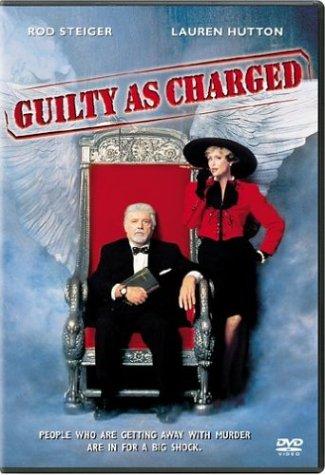
Guilty As Charged (1991, directed by Sam Irvin)


Stop me if you’ve heard this one before.

Kalin (Rod Steiger) is a crazy old religious fanatic who is rich enough to own a meatpacking plant and hire goons to work for him.  Underneath the meatpacking plant, he has a secret prison and an electric chair that he uses to electrocute people who he feels have escaped justice.  Helping out Kalin is a crazy preacher, played by Isaac Hayes (!), who waxes philosophically about how much he loves the smell of burning flesh.

While Kalin and the gang are executing people below ground, parole officer Kimberly (Heather Graham) is above ground and wondering why so many ex-cons are mysteriously vanishing.  Kimberly is worried that someone may be executing them but then she gets distracted by a politician named Stanford (Lyman Ward).  Stanford wants Kimberly to work on his campaign because she looks like Heather Graham and he’s a sleazy politico.

Meanwhile, a man named Hamilton (Michael Beach) has escaped from prison.  Hamilton claims that he was framed for a murder that he didn’t commit but no one is willing to believe him.  However, Hamilton is telling the truth and the murder was actually committed by Stanford!  The only people who know that Stanford is the murderer are Stanford, his wife (Lauren Hutton!!), and his maid (Zelda Rubinstein!!!).

It all leads to one question: How did all of these talented people all end up in this crappy film!?

The strange thing about Guilty As Charged is that, even though the film is centered around the death penalty, the film itself doesn’t seem to have any opinion on the issue.  Kalin and his followers are crazy religious fanatics who claim that they’re doing God’s work by executing people and Hamilton is an innocent man who has been marked for death so you would think that the movie is against the death penalty.  But then, in a twist that makes no sense, Kalin reveals that he knows that Hamilton is innocent and he’s only using him to get to Stanford and suddenly, the film is for the death penalty.  Kimberly is worried that someone is targeting ex-cons but, by the end of the movie, she’s targeting ex-cons herself even though nothing’s happened that should have made her change her mind.

Guilty as Charged is technically a comedy, though most of the jokes are too thuddingly obvious to provoke even the slightest of a smile.  Hayes wins some laughs, just because he seems like he’s having fun.  Rod Steiger bellows as if he’s getting paid by the decibel and doesn’t seem to be having any fun at all.  Guilty as Charged isn’t funny and it’s not thought-provoking but at least it’s got Isaac Hayes.

Cinemax Friday: The Rowdy Girls (2000, directed by Steve Nevius)


When I started watching The Rowdy Girls, I had high hopes for it because it was a western starring two of my favorite actresses, Shannon Tweed and the late Julie Strain.

Unfortunately, that hope vanished as soon as I saw the words “Lloyd Kaufman and Michael Herz presents.”  Yes, The Rowdy Girls is a Troma film and it begins with the dreaded Troma skyline.  Even among connoisseurs of crappy films, the Troma logo is often considered to be troubled.  Lloyd Kaufman may be one of the most likable and interesting people working in the indie film world and he deserves credit for being a pioneer of sorts but he and his company are also famous for distributing films that are often so bad as to be nearly unwatchable.

Rowdy Girls takes place in 1886.  Shannon Tweed, Julie Strain, and Deanna Brooks play three different but often unclothed women who all end up on the same stagecoach.  Tweed plays Velvet McKeznie, a prostitute who is disguised as a nun because she’s just ripped off one of her clients.  Brooks plays Sarah Foster, who is trying to escape from an arranged marriage.  And finally, Julie Strain plays Mick, the ruthless girlfriend of the outlaw Billy Poke (Daniel Murray), who is about to hold up the stagecoach, kill the local sheriff, and take everyone hostage.  Fortunately, the dead sheriff’s brother is close by so he sets off in pursuit of the outlaws and their hostages.  Throughout it all, a minstrel (Mark Adams) wanders through the film, playing a guitar and singing songs about the women and the old west.  The film also uses old school title cards to inform us of certain plot developments, which would make more sense if the rest of the film was shot in any way like a silent western.

The Rowdy Girls is a cheap Troma production through-and-through but, when compared to some of the other films that Troma has forced on the world, it’s not that bad.  It’s a cheap and abysmally-paced film but, at the same time, it also features Shannon Tweed dressed like a nun and Julie Strain playing an evil, whip wielding outlaw.  This is not a film for anyone looking for a serious or believable western but fans of Shannon Tweed and Julie Strain will get their money’s worth.  Tweed even gets to do a little bit of serious acting, when Velvet explains to Sarah why she’s pretending to be a nun.  As always, Tweed proves herself to be better than her material.


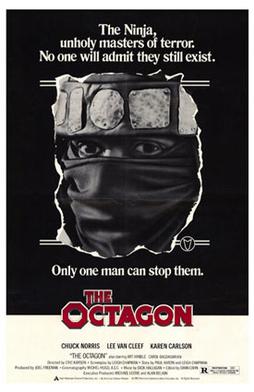
The Octagon (1980, directed by Eric Karson)


A ninja named Seikura (Tadashi Yamashita) is running a training camp where he shows mercenaries and terrorists how they can use martial arts to assassinate their enemies and disrupt the political system.  Someone has to stop him.

This looks like a job for CHUCK NORRIS!

In this one, Chuck plays Scott James, a retired karate champion who, though a massive series of apparently unrelated coincidences, is drawn into the fight against Seikura’s terrorists.  (Speaking of coincidences, Seikura just happens to be Scott’s half-brother.)  One of the fun things about The Octagon is that there’s no real rhyme-or-reason as to how Scott gets involved.  He just keeps running into people who want him to fight terrorists.  His former mentor (played by Lee Van Cleef) tries to recruit him.  Immediately after turning him down, Scott just happens to run into a woman (Karen Carlson) who is having car trouble and the woman tries to recruit him.  Scott’s old friend, A.J. (Art Hindle) tries to recruit him.  Even a dancer (Kim Lankford) who goes out on a date with Scott is more interested in talking about the terrorists than anything else.  Even when the terrorists decide to go after Scott, it’s mostly just because he keeps talking to their enemies.

Scott does eventually get involved.  He goes undercover, which means that he gives everyone a fake last name while asking them if they know where he can sign up for the terrorist training camp.  (But he doesn’t shave his mustache or anything else so he’s still obviously Chuck Norris.)  Eventually, Aura (Carol Bagdasarian) defects from the terrorists over to Scott’s side and the two of them launch an assault on the terrorist camp.  While this is all going on, Scott has doubts about whether or not he can really defeat his half-brother and we hear them in voice over.  It’s an interesting attempt to show what’s going on in an action hero’s head but, because Chuck was such an inexpressive actor early in his career, the contrast between his worries and his stone face creates a strange effect.

It doesn’t matter, though, that Chuck wasn’t an expressive actor or that the film’s plot is needlessly convoluted.  The fight scenes are frequent and they all rock and that’s what really matters.  Chuck throws a lot of punches and kicks in this film and, as opposed to some of his other early films, the director of The Octagon made sure that we could see every single one of them.  Whether he’s fighting in a small hotel room and fighting off a dozen enemies in the terrorist camp, Chuck’s exciting to watch.  Also exciting to watch is Carol Bagdasarian, who makes her role more than the typical action movie love interest.  At times, she seems like she might even be a deadlier opponent than Chuck himself!

Finally, Lee Van Cleef!  In this one, he drives a truck with a “Have You Hugged Your Gun Today?” bumper sticker.  No film featuring Lee Van Cleef can be that bad.  In fact, most, like The Octagon, are pretty damn entertaining.