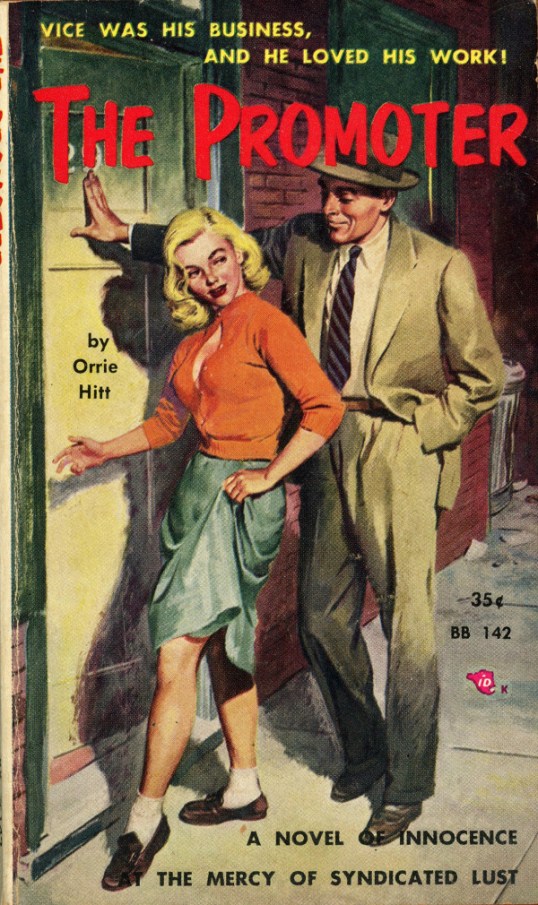
Something tells me this guy might not have her best interests at heart!
The Promoter was first published in 1957. Orrie Hitt was one of the most prolific writers of so-called “adult fiction” at the time. The cover was done by one of my favorite cover artists, Walter Popp.
The book is from 1953 but the theme of polygamous love cults is timeless. He’s probably the most clean-cut cult leader that I’ve ever seen. I guess his other wife is just standing outside the barn, waiting for him to get done whatever he’s going to do. William Vaneer was a pseudonym for Harry Wittington. This book was later republished, in 1964, under Wittington’s name.
This cover was done by Bernard Safran, who did several paperback covers but who is best known for his many paintings and photographs of life in New York.
This “nightstand” book was originally published in 1960. “Andrew Shaw” was a pseudonym for Lawrence Block. This was his second nightstand book. He later went on to become a very successful writer of crime thrillers and detective novels.
As for the cover, I’m sure that we’re looking at that big hat. Is she cheating with Zorro? This cover was done by Harold McCauley.
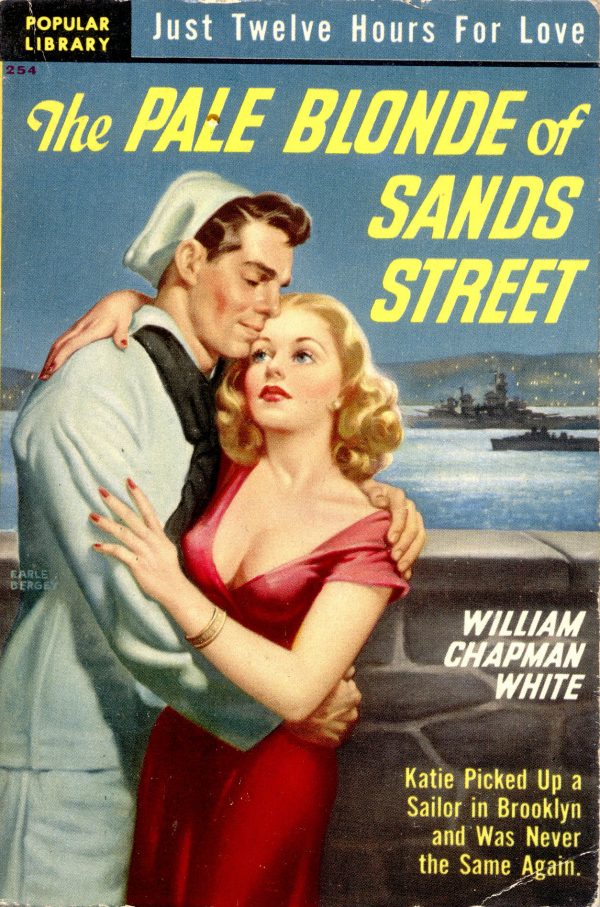
“Kate picked up a sailor in Brooklyn and was never the same again.”
There’s so many ways to interpret those words that I don’t know if I should be happy for Kate or scared. Luckily “just 12 hours for love” indicates that I should be happy for Kate, even if she was operating under a time limit. I just like how the blurb makes it a point to say that she picked up the sailor “in Brooklyn.” I guess the story would have been different if he was a Staten Island sailor.
This book and cover are from 1950. The artist is Earle Bergey.
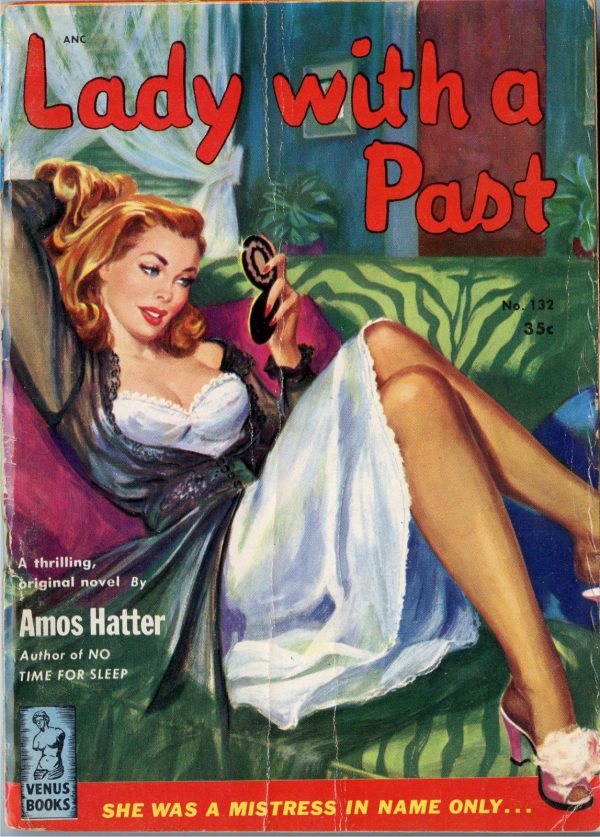
I couldn’t find out much about the content of this book, other than it was published in 1951 by Venus Books and it was, by 1951 standards, considered to be “adult reading.” Amos Hatter was a pseudonym for James W. Lampp, who wrote several of these type of books under different names. The book is about a girl who has a wild past and whether or not she can go on to have a normal life despite it. Because, of course, men can do whatever they want whereas women are expected to spend the rest of their lives apologizing for their decisions. What I like about this cover is that the lady with a past doesn’t look like she has any regrets whatsoever.
This cover was done by Howell Dodd, who has been featured many times in the past and who will be featured much more in the future.
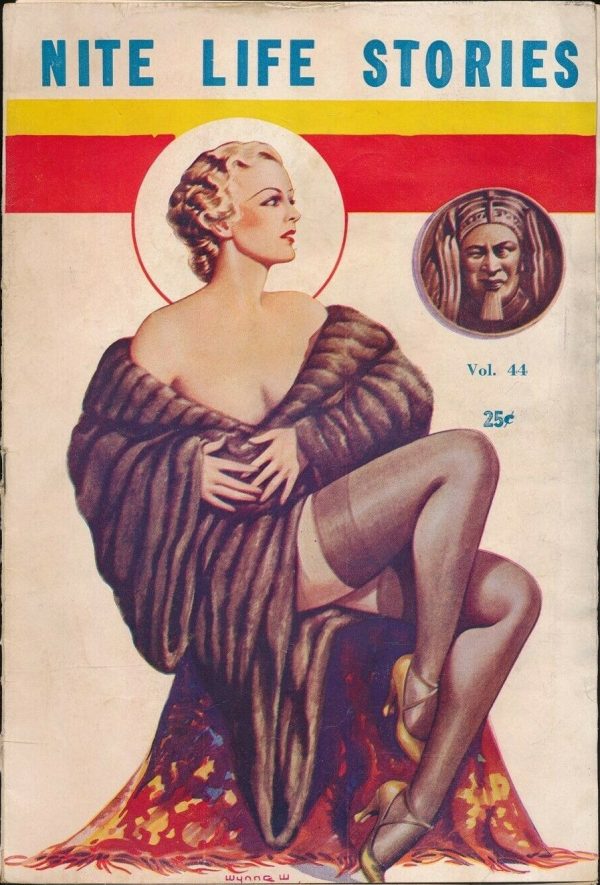
There’s no publication date for this magazine. There’s not even any information about who published it. What we do know is that this cover was done by Wynne W. Davies, one of the few artists of the pulp era who signed his covers.
I don’t know if I’ve shared this one before or not. I probably have. Though I call this one “Faith,” this picture is not necessarily meant to be about religious faith. Instead, it’s about what you believe in, whatever that may be. It’s about having faith in anything, whether it’s God or science or your ideology or your country or your family or your friends or anything. It’s about celebrating what you believe in your heat and mind and never giving up that faith.
As for the building in this picture, it’s actually the back of an old Albertson’s store. The building was torn down a few months after I took the picture.
I took this photograph many years ago, while watching the sun set in May. It was a very peaceful moment and I think this pictures that. One reason why I love this picture is that I didn’t even realized that I had also taken a picture of a bird flying across the sky until I looked at this image many months later. That’s one of the thing that I love about photography. You not only capture what you’re seeing but often, you discover what you previously missed.
I took this black-and-white photograph at a church that sits a few miles away from my house. It was an overcast day but that cross really stood out. A bird landed on top of the cross right when I snapped the picture, which was a nice touch.




 Through the Shattered Lens