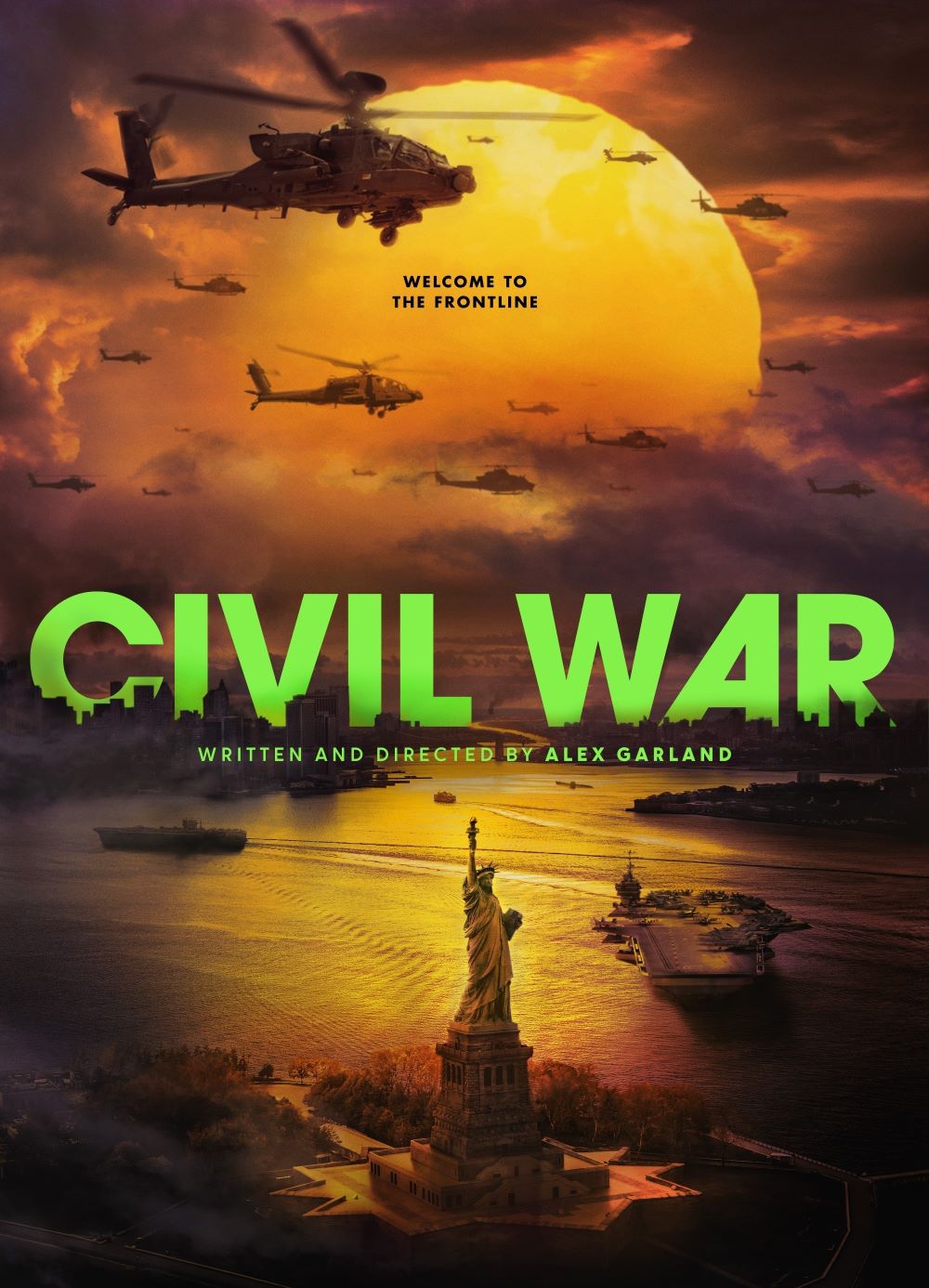
Review: Civil War (dir. by Alex Garland)


“What kind of American are you?” — Unnamed ultranationalist militant 

Alex Garland’s Civil War is the kind of movie that feels both uncomfortably close to reality and strangely abstract at the same time, like a nightmare built out of today’s headlines but deliberately smudged at the edges. It plays less like a political thesis and more like a road movie through a country that has already gone past the point of no return, seen through the eyes of people whose job is to look at horror and keep pressing the shutter anyway.

Garland frames the story around war journalists traveling from New York to Washington, D.C., hoping to reach the President before rebel forces do, and that simple premise gives the film a clear spine even when the politics around it stay fuzzy. Kirsten Dunst’s Lee, a veteran photographer, and Cailee Spaeny’s Jessie, a young aspiring shooter, are paired with Wagner Moura’s adrenaline-chasing reporter Joel and Stephen McKinley Henderson’s weary old-timer Sammy, forming a sort of dysfunctional road-trip family driving straight into hell. The setup is classic “last assignment” territory, but the context—an America shattered by an authoritarian third-term president and secessionist forces from places like Texas and California—is what makes the film play like speculative non-fiction rather than pure sci-fi. That Texas-California alliance as the Western Forces stands out as such strange bedfellows, two states about as diametrically opposed as you can get politically and culturally, which subtly hints at just how monstrous the president must be to drive them into the same camp against a common enemy.

The plot itself is pretty straightforward once you strip away the political expectations people bring in. The group moves from one pocket of chaos to another, crossing a patchwork United States where some areas still look almost normal while others are full-on war zones. The tension ramps as they get closer to Charlottesville and then D.C., eventually embedding with Western Forces as they push toward the capital. Along the way, the journalists encounter a series of vignettes—mass graves, roadside militias, bombed-out towns—that feel intentionally episodic, like flipping through the front page of a dozen different conflicts and realizing they all share the same language of fear and dehumanization.

Performance-wise, Dunst is the emotional anchor, playing Lee with a kind of hollowed-out professionalism that feels earned rather than performative. Her character is someone who has seen too many wars abroad and now finds herself documenting one at home, and Dunst sells that numbness without turning Lee into a complete emotional void. Spaeny’s Jessie, meanwhile, is the mirror opposite: all raw nerves and hungry ambition, constantly pushing closer to danger for the shot, until that drive becomes its own kind of addiction. Their dynamic—mentor vs. rookie, caution vs. thrill—gives the movie a human arc to track even when the bigger national stakes remain frustratingly vague.

The supporting cast makes the most of their moments. Moura brings a reckless charm to Joel, someone who clearly gets off on the chaos even as he understands the risks, while Henderson’s Sammy has that lived-in, old-school journalist vibe that makes his presence feel instantly comforting. Nick Offerman’s president shows up mostly as an image and a voice—an isolated leader giving delusional addresses about “victories” and “loyalty” while the country burns—which fits Garland’s choice to keep power distant and almost abstract. And then there’s Jesse Plemons in a late, unnerving scene as a soldier interrogating the group with the question “What kind of American are you?”, a moment that pulls the film’s subtext about nationalism and dehumanization right up to the surface.

Visually, Civil War is stunning and deeply unpleasant in the way it should be. Garland and his team lean heavily into realism: grounded battle scenes, chaotic firefights, and that disorienting sense of being in the middle of something huge and unknowable, with the camera clinging to the journalists as they scramble for cover or line up a shot. The film often uses shallow depth of field, throwing backgrounds into blur so explosions and tracers feel like ghostly streaks behind the tight focus on a face or a camera lens, which reinforces how narrow the characters’ survival focus has become. Sound design is equally aggressive—gunfire, drones, and explosions hit hard in a theater, and Garland doesn’t shy away from making violence both terrifying and, in a way, disturbingly exhilarating.

That’s one of the film’s more interesting, and arguably more uncomfortable, tensions: it’s overtly anti-war in its messaging, but it also understands that war, on a visceral level, can feel like a rush. Several characters clearly chase that feeling, and the film doesn’t let them—or the audience—off the hook for enjoying the adrenaline that comes from life-or-death stakes. There are moments where the action almost tips into “too cool” territory, but Garland usually undercuts this with the emotional fallout afterward, making it clear the cost of those images and thrills is paid in trauma and numbness.

Where Civil War is really going to divide people is in its politics—or more accurately, its refusal to spell them out. The film never fully explains how this United States got here or exactly what the sides are fighting over, beyond hints of authoritarian overreach and regional alliances like the Texas-California Western Forces. You get breadcrumbs: a third-term president who dissolved norms, references to an “Antifa massacre,” and presidential rhetoric that echoes real-world strongman language, but Garland refuses to plant a big obvious flag that says, “This is about X side being right or wrong.”

Depending on what you want from the movie, that choice either feels smartly universal or frustratingly evasive. On one hand, treating the conflict like a kind of Rorschach test lets viewers project their own anxieties onto the screen; it becomes a story about any country pushed too far by polarization, propaganda, and the normalization of violence. On the other, the vagueness around ideologies can come across as sidestepping tough specifics, especially in today’s charged climate, where audiences might crave a bolder stance on division and power.

To the film’s credit, its focus is very clearly on the experience of war, not the policy debates that preceded it. The journalists are not neutral robots; they have opinions, fears, and moments of moral conflict, but their professional instinct is to document first, analyze later, and that’s the lens the film adopts as well. You see how the job warps them: Lee’s exhaustion, Jessie’s desensitization, Joel’s thrill-seeking, Sammy’s weary sense of duty. In that sense, Civil War feels as much like an ode and a critique of war journalism as it does a warning about domestic collapse.

That said, the character work will not land equally for everyone. The emphasis on spectacle and raw incident sometimes leaves less room for layered personal depth, with figures beyond the leads feeling more archetypal than fully fleshed out. Even Lee and Jessie are shaped primarily by their roles in the chaos rather than extensive personal histories, which suits Garland’s lean, immersive style but might leave some wanting more nuance.

The last act, set during the assault on Washington and the White House, is where the film fully commits to being a war movie rather than a political allegory. The battle is staged with a mix of big, chaotic action and small, intimate beats: journalists diving behind columns, soldiers shouting directions, Jessie pushing closer to get the shot even as bullets hit inches away. It’s brutal and propulsive, driving home the film’s bleak thesis: once violence is normalized, legitimacy and process vanish, replaced by whoever has the most guns in the room.

Is Civil War perfect? No. It is at times overdetermined in its imagery and underdetermined in its world-building, and the decision to keep the “why” of the war so foggy will absolutely alienate viewers who wanted a sharper, more pointed statement about the current American moment. But it is also undeniably gripping, technically impressive, and thematically rich enough to spark real conversation about violence, media, and how far a society can bend before it breaks. As a piece of speculative near-future filmmaking, it lands somewhere between warning and reflection: not saying “this will happen,” but asking whether a country this polarized and numb to cruelty should be so confident that it won’t.
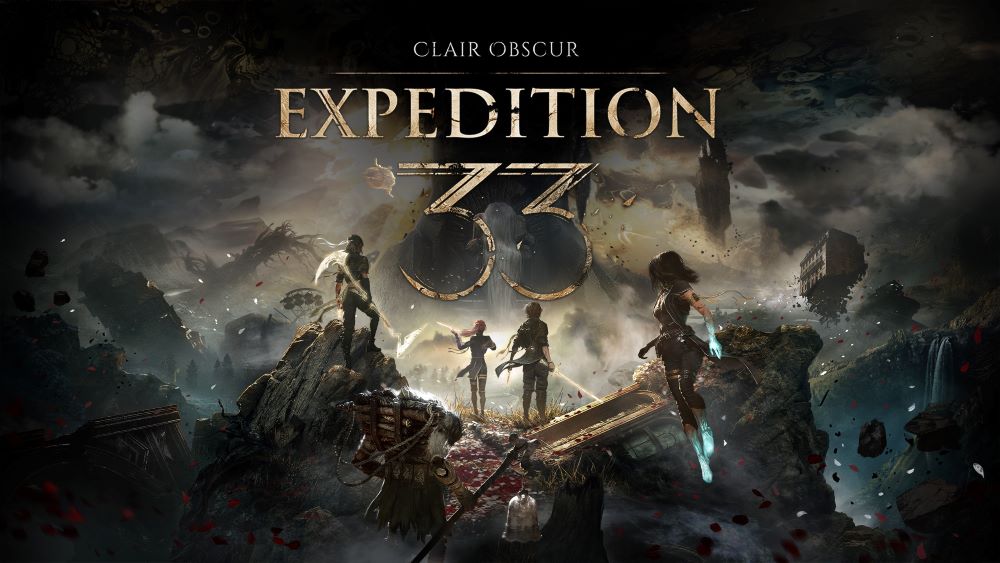
Clair Obscur: Expedition 33 Review


“Life keeps forcing cruel choices.” — Verso

I’ve now played through and finished Sandfall Interactive’s Clair Obscur: Expedition 33, and it stands out as a captivating entry in the JRPG space, blending a deeply melancholic storyline with eye-catching visuals and a combat setup that mixes thoughtful planning with split-second decisions, all within a richly detailed world evoking a fading era of grandeur. At its heart lies the chilling concept of the Paintress, a mysterious entity who annually inscribes a number across the heavens, causing all who reach that age to fade from existence without fanfare or trace. The game’s protagonists band together for a high-stakes voyage aimed at scaling her towering domain and halting this grim tradition before it strikes Year 33, transforming a familiar quest motif into an extended reflection on life’s brevity, rebellion against destiny, and the customs societies invent to endure tragedy. The tone stays approachable, laced with sharp-witted exchanges amid the gloom, while gameplay keeps players actively involved, and echoes of iconic JRPG influences from Hironobu Sakaguchi—like the sweeping epics of Final Fantasy and the poignant depth of Lost Odyssey—shine through in its design choices.

The plot progresses as a gripping blend of escalating peril and introspective pauses, opening in communities that have woven the Paintress’s decree into their daily fabric. Local celebrations honor remaining time, households tally days with subdued anxiety, and affluent districts ponder existence over lavish artworks meant to defy forgetting. Your team gathers from those scarred by previous culls—bereaved kin, displaced souls, wanderers—infusing the group with individual wounds that amplify the shared plight. The path forward involves sidetracks through abandoned sites, fraught dealings with devotees viewing the Paintress as a benevolent force, and ethical dilemmas such as granting mercy to those facing obliteration. Closer to the summit, layers of lore unfold, suggesting the Paintress could stem from a misguided origin or embodied sorrow, prompting the crew to debate whether victory redeems or merely reshuffles catastrophe.

This storytelling prowess draws clear lines to Hironobu Sakaguchi’s legacy, the visionary behind early Final Fantasy triumphs and the overlooked masterpiece Lost Odyssey. The grand-scale conflicts and heartfelt interpersonal ties of Final Fantasy resonate in how Clair Obscur intertwines global peril with private sorrows. Yet Lost Odyssey provides the closest parallel, with its focus on ageless wanderers burdened by sorrow—mirrored here by time-bound lives—employing ethereal sequences and subdued musings to delve into mourning’s toll. The short, evocative tales in Lost Odyssey‘s “Thousand Years of Dreams” parallel the game’s archival entries and memory glimpses, which breathe life into vanished souls: versifiers halted in flow, tinkerers forsaking unfinished marvels, youths denied basic legacies. Studio insights highlight Sakaguchi’s skill in rendering eternal burdens profoundly mortal as a guiding light for crafting the party’s resilient yet fractured ideals.

Central motifs pit surrender to fate against willful resistance, threading seamlessly through dialogues at rest stops and chance meetings to avoid heavy-handedness. Communal resignation appears as sensible resilience rather than weakness—resisting an annual wave proves futile, so adaptation prevails. The travelers represent the flip side: audacious optimism teetering on folly, fueled by unyielding curiosity, akin to Lost Odyssey‘s undying figures rediscovering purpose amid oblivion’s threat. A comrade might grip a memento from a lost relative as rage’s spark; another embraces excess, seeking fleeting thrills since futures dissolve; yet another serves as ethical anchor, cautioning that unchecked revolt harms bystanders. These paths collide poignantly—fractures from panic, mends through peril’s forge, hushed admissions of battling for vitality over triumph, capturing Sakaguchi’s fusion of mythic scope and visceral feeling.

Sorrow and recollection anchor further layers, via retrospective visions and elective records that personalize the toll, nodding to Sakaguchi’s use of intimate narratives to anchor vast realms. This juxtaposes against vibrant holdouts—opulent dances beneath ominous vaults, buskers flaunting flames to taunt twilight—fueling an overarching idea of enactment drawn from his dramatic sensibilities. Existence morphs into a drama directed by the Paintress, participants ad-libbing parts: resolute captain veiling dread, comic veiling remorse in quips, thinker unraveling legends pre-finale. The script deftly merges genuineness and showmanship; raw outpourings yield to lush scores, probing if sentiments endure or merely peak performances—reminiscent of Lost Odyssey‘s detached eternals reenacting humanness.

Optimism faces scrutiny, portrayed with nuance rather than idealization, honoring Sakaguchi’s shift from Final Fantasy‘s luminous quests to Lost Odyssey‘s jaded realism. Initially a binding flame, it frays amid reversals—raids by adherents, glimpses of doomed prior ventures—exposing vulnerabilities. Does opposition uplift, or burden allies with delusion? Nuanced moments abound: euthanizing a settlement embracing mass erasure to spare agony ignites clashes mirroring life’s terminal choices, akin to Lost Odyssey‘s eternal-versus-finite contemplations. Kinship and affection weave closeness—a divided pair riven by self-offering, budding connection strained by farewell drafts—revolving around fleeting hours. Cling or release kin? Impact stems from narrative faith in interpretive space, shunning neat closures per Sakaguchi’s player-trusting ethos.

The orchestral soundtrack stands as one of the game’s true triumphs, composed by the talented Lorien Testard with contributions from a full symphony orchestra that captures the Belle Époque essence in every sweeping string section and haunting motif. Testard’s score masterfully shifts from delicate piano interludes during quiet camp reflections—evoking fragile hope amid numbered days—to thunderous brass crescendos during tower ascents and boss confrontations, perfectly syncing with the emotional highs of defiance and loss. Guest artists like Alice Duport-Percier on vocals add ethereal layers to key themes, such as the Paintress’s ritual melody, which recurs as a leitmotif tying personal grief to cosmic dread. Recorded live with meticulous attention to period instrumentation, including harps and woodwinds for that ornate, fading-elegance vibe, the music doesn’t just accompany; it immerses, turning traversal into symphonic poetry and battles into operatic clashes that linger long after the controller’s down.

Performances soar across the board, with standout work from Charlie Cox as the determined Gustave, bringing a grounded intensity to the engineer’s final-year desperation, and Ben Starr as the enigmatic Verso, delivering a layered mix of menace and vulnerability that keeps you guessing. Jennifer English shines as the fiery Maelle with raw emotional power, while Shala Nyx’s calm yet fierce Sciel adds a steady anchor amid chaos. These voices, alongside gravel-voiced wisdom akin to Andy Serkis and resilient fire reminiscent of others in the cast, lend real heft to reflections on purpose in a counted world, elevating every dialogue into something memorable.

The opulent, twilight-era backdrop enriches motifs, merging Sakaguchi-esque fantasy with continental lavishness for novelty. Elaborate towers rend misty expanses, attire upholds decorum in wreckage, vessels glide as innovation’s specters—all painting a realm in refined decline, staging poise toward closure. Playful quirks—a trader morphing beasts for barter scraps, an aeronaut spouting verse aloft—highlight stubborn spirit, easing gravity sans dilution. Runtime hits 20 hours core, concise yet hinting at untapped depths—like genesis tales or foe quests—primed for expansions, echoing Sakaguchi’s potent brevity.

Gameplay propels via evolved hybrid vigor, building on Sakaguchi-defined norms: menu selections via vibrant dial (strikes, resource skills for ruptures/chains, targeted blasts, aids) merge with instant retorts through evades, counters, leaps versus foe cues, like Lost Odyssey‘s strategy plus timing. Flawless guards restore fuel for climaxes, crafting battles as hazard-harmony flows syncing with tale strains. Traversing covers sparse hubs with patrolling threats in flexible areas—bypass for pace, engage for growth—stats tilt to quickness/endurance edges, execution overriding setups. Initial timing hurdles test, end patterns exact, glitches annoy, yet synergy evokes tale revolt and Sakaguchi innovation.

Aesthetics dazzle: interfaces flare in spectacle—delays, bursts—rendering wins grand, saluting Final Fantasy pomp. Taken as a whole, Sandfall Interactive’s Clair Obscur: Expedition 33 takes a well-established brand of RPG mechanics and storytelling, polishes it with modern hybrid twists, introspective depth, that masterful orchestral score, and stellar voice work, modernizing it into one of the best games of recent years—a somber treasure where fate-drama depths, keen casts, and dynamic clashes in compact form outshine sheer scale, flaunting its Sakaguchi nods boldly while standing tall on its own. Shortfalls in ancillary tales and timing tilt persist, yet for evocative RPGs melding soul and vigor, it endures memorably—affirming grace persists, counted or not.

The Films Of 2025: Warfare (dir by Alex Garland and Ray Mendoza)


It’s been said that it’s next to impossible to make a true anti-war film because war itself is so cinematic that even the most harrowing portrayals of combat ultimately make it look exciting and, for those who survive, cool.

Now, I don’t quite believe that myself.  Stanley Kubrick made three of the most effective anti-war movies ever made, Paths of Glory, Dr. Strangelove, and Full Metal Jacket, though it should be noted that the first two of those films were more critical of the incompetence of those running the war than war itself.  Both Lewis Milestone and Edward Berger made strong anti-war statements by adapting All Quiet On The Western Front.  Both films featured battle scenes that were devoid of the personal heroics that tend to crop up in other war films.  (Platoon may have been firmly against the Vietnam War but it’s still hard not to cheer when a crazed Charlie Sheen takes on the entire VC on his own.)  Robert Altman’s M*A*S*H made an effective anti-war statement by focusing on what comes after the battle.  The scene where a geyser of blood suddenly erupts from a soldier’s neck shocks, terrifies, and ultimately outrages us.  That said, it is true that an effective battle scene, especially one that leaves the viewer feeling as if they are actually in the middle of combat themselves, does tend to get the heart pumping and the adrenaline surging, regardless of the politics of the person watching.  We tend to look up to those who have been tested by combat, those who have come under fire and who have survived.  One can be anti-war while still understanding why war itself has been a popular cinematic topic since the silent era.

I’m thinking about this because of the online reaction to Warfare, a film that came out in April of this year.  Based on actual skirmish that occurred in Iraq in 2007, the film plays out largely in real time and follows a platoon of Navy SEALs as they set up operations in a two-story house and then later try to escape when they come under fire from insurgents.  The film was written and co-directed by Ray Mendoza, who was one of the SEALs involved in the actual incident.  In the film, Mendoza is played by D’Pharaoh Woon-A-Tai while other SEALs are played by actors like Will Poulter, Michael Gandolfini, and Charles Melton.  The film itself doesn’t tell us much about the individual SEALs.  We don’t get any heart-breaking stories about anyone’s homelife.  No one takes the time to pull out a picture of their girlfriend back home or any of the other usual stuff that happens in war movies.  There’s really not time for that.  For over an hour, Warfare puts the viewers directly in the middle of the battle and it does a good job of it.  The bullets, the explosions, all of them seem far too real as we watch.

The online reaction to Warfare has definitely been a bit mixed.  There are quite a few people who are convinced that Warfare is a pro-war, “imperialist” film.  “Why did Alex Garland make this!?” cries one of the top reviews over on Letterboxd.  Myself, I disagree.  It’s not a political film.  It’s neither pro- nor anti-war.  Instead, it’s a film about a group of men who are fighting to survive.  And to me, it is an effective anti-war film because it shows exactly how much damage a bullet and a grenade can do to a human being.  When one of the SEALs is seriously wounded, there’s no glamour to it.  Instead, you feel his pain and you realize that it’s not even that clear what the mission was in the first place.  Warfare is a tough and gritty film.  It’s a combat film that makes me happy that I’ll probably never come under fire while also respecting the men who refused to leave anyone behind.

If peace could be achieved by didactic speeches and heavy-handed moralizing, it would have happened long before now.  Warfare presents what happened and leave it to the viewer to draw their own conclusion.

Scenes That I Love: The Third Man


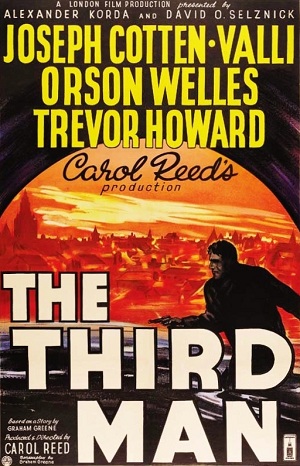
ThirdManUSPoster

Some movies are merely good.  Some movies are undeniably great.  And then, a handful movies are so amazingly brilliant that, every time you watch, you’re reminded why you fell in love with cinema in the first place.

The Third Man is one of those brilliant films.

Directed by Carol Reed and scripted by novelist Graham Greene, The Third Man takes place in the years immediately following the end of World War II.  Pulp novelist Holly Martins (Joseph Cotten) comes to Vienna to search for his old friend Harry Lime (Orson Welles).  Upon arriving, Holly is shocked to learn that Harry makes his living selling diluted penicillin on the black market.

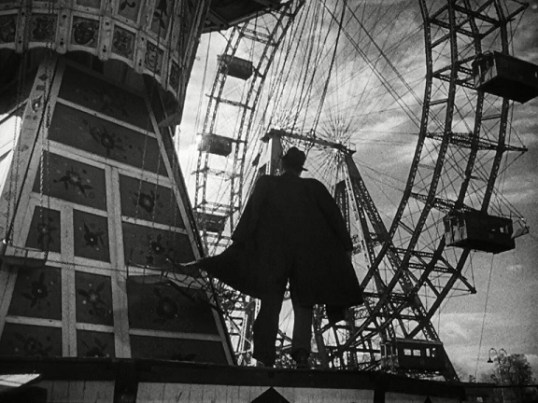
In the classic scene below, Harry and Holly have a clandestine meeting in a Ferris wheel and Harry justifies both his actions and the lives that have been lost as a result of them.

While Orson Welles’ performance is (rightfully) celebrated, I’ve always felt that Joseph Cotten’s work was even more important to the film’s success.  While Welles made Harry Lime into a charismatic and compelling villain, it was  Cotten who provided the film with a heart.

4 Shots From 4 Films: Special Carol Reed Edition


4 Shots From 4 Films is just what it says it is, 4 shots from 4 of our favorite films. As opposed to the reviews and recaps that we usually post, 4 Shots From 4 Films lets the visuals do the talking.

Today, we celebrate the birth of the great British director, Carol Reed!  It’s time for….

4 Shots From 4 Carol Reed Films

Odd Man Out (1947, dir by Carol Reed, DP: Robert Krasker)

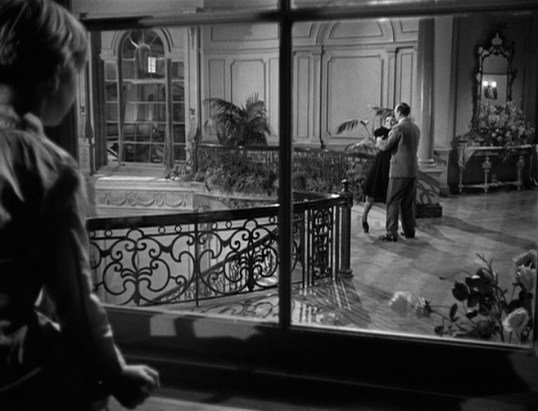
The Fallen Idol (1948, dir by Carol Reed, DP: Georges Perinal)

The Third Man (1949, dir by Carol Reed, DP: Robert Krasker)

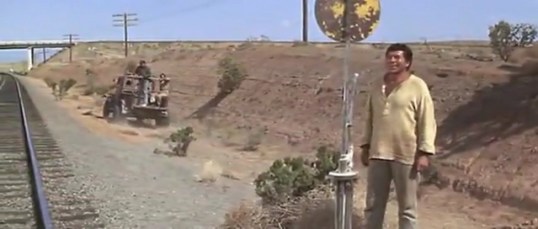
Flap (1970, dir by Carol Reed, DP: Fred J. Koenekamp)