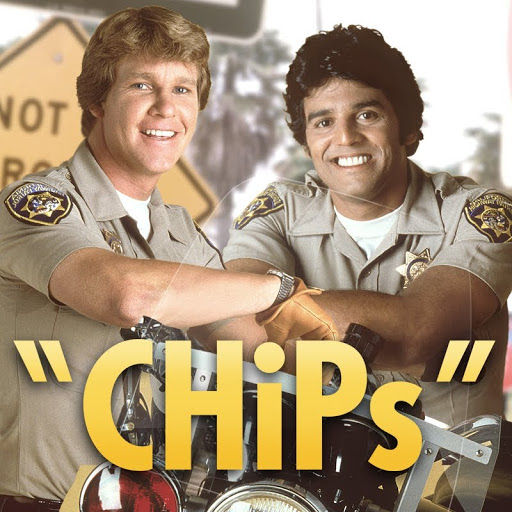
Welcome to Late Night Retro Television Reviews, a feature where we review some of our favorite and least favorite shows of the past! On Mondays, I will be reviewing CHiPs, which ran on NBC from 1977 to 1983. The entire show is currently streaming on Prime!
This week, the fourth season comes to an end.
Episode 4.21 “A Special Operation”
(Dir by Leslie H. Martinson., originally aired on May 17th, 1981)
Season 4 comes to an odd end with A Special Operation.
Getraer is injured when he crashes his motorcycle. He takes a piece of metal to the face and he nearly loses his eyesight. Luckily, the abrasive but brilliant Dr. Patterson (James Sloyan) is able to save both Getraer’s eye and his ability to see with it. However, the idealistic young Dr. Rhodes (A Martinez) worries that Patterson may have missed something. Can Patterson set aside his ego long enough to listen to his younger colleague?
Hey, wait a minute, isn’t this CHiPs?
I don’t have any way to prove this but there’s a part of me that strongly suspects the season finale of CHiPs was also a backdoor pilot for a medical show. So much time is spent with Patterson, Rhodes, and the nurses at the local hospital that it just feels like there was some hope that viewers would call in and demand to see more of Dr. Rhodes. A Martinez even gives a very Erik Estrada-style performance in the role of Rhodes.
Speaking of Estrada, he’s barely in this episode. (Ponch, we’re told, is preparing for to testify in a big court case.) It largely falls to Jon Baker to stop the assassin (Eugene Butler) who has been hired to try to take Getraer out of commission. This, of course, leads to the assassin stealing an ambulance and Baker chasing him. The ambulance flips over in slow motion but somehow, the assassin survives to that Baker can arrest him.
It was a strange end for a season that’s largely been dominated by Erik Estrada and his performance as Ponch. (Larry Wilcox, I will say, looked happy to have the finale to himself.) For the most part, Season 4 was an uneven season. The writing so favored Estrada over Wilcox that the show sometimes felt like it was turning into a parody of itself. The show that started out about two partners on motorcycles became a show about how Ponch could literally walk on water and do no wrong.
One of my all-time favorite comedies is the Zucker-Abrahams-Zucker 80’s classic, RUTHLESS PEOPLE! I’ll never forget watching it with my mom when I was a teenager. She laughed so hard, which made it loads of fun for me! I’ve been a fan of Danny DeVito ever since. As a matter of fact, DeVito is turning 81 today, which means he’s only a month older than my dad. Enjoy my friends!
Welcome to Retro Television Reviews, a feature where we review some of our favorite and least favorite shows of the past! On Mondays, I will be reviewing Miami Vice, which ran on NBC from 1984 to 1989. The entire show can be purchased on Prime!
This week, Crockett and Tubbs are assigned to protect a witness.
Episode 5.6 “Line Of Fire”
(Dir by Richard Compton, originally aired on December 16th, 1988)
Carlos Cantero (Aharon Ipalé) is on trial for murdering Ian Sims, one of Crockett’s confidential informants. Crockett is the number one witness against him, which is a problem because Crockett just spent the last few months under the impression that he was Sonny Burnett, one of Miami’s biggest drug dealers. Cantero’s defense attorney dismantles Crockett’s testimony by pointing out that Crockett had a “psychotic breakdown.”
(And you know what? The attorney is actually very correct about that. Crockett acts shocked when his mental health history is brought up but why wouldn’t it be?)
Luckily, there is an eyewitness to the murder of Ian Sims. The FBI asks Crockett and Tubbs to keep an eye on Keith (Justin Lazard), a heavy metal fan who is willing to testify against Cantero.
I have to admit that I nearly gave up on this episode because my first impression of Keith was that he was the most annoying character to ever appear on a television show. However, I’m glad that I didn’t because this episode actually introduced a very clever twist. Keith is not actually Keith. Instead, he’s DEA agent Joey Hardin, who has been assigned to pretend to be Keith to keep Cantero from going after the real Keith. It turns out that FBI Agent Bates (Kevyn Major Howard, the “Do you believe in Jesus?” guy from Death Wish II) is crooked and he’s giving information to Cantero.
Unfortunately, Crockett doesn’t find out the truth until Joey has already been shot multiple times by Bates. (Tubbs and Crockett proceed to gun down Bates.) Joey nearly dies while the prosecutor chortles about how all of this is actually going to help him get a conviction. It turns out that the prosecutor doesn’t know what he’s talking about. The real Keith is now too terrified to testify against Cantero, leading to Cantero going free. Joey does recover from being shot but, at the end of this episode, it’s hard not to feel that it was all for nothing.
This is one cynical episode! But that’s okay. Miami Vice was always at its best when it was being cynical and this episode is a throwback to old school Vice, back when the emphasis was on how no one could trust anyone and the government was often its own worst enemy. MiamiVice was definitely a left-wing show but occasionally, it did reveal a libertarian streak. That was certainly the case with this episode, in which the war on drugs is portrayed as being unwinnable because the government is naturally incompetent. Young idealists like Joey Hardin are sent off to battle and are ultimately abandoned once they’re no longer needed.
This was a good episode. I’m still having a hard time buying that Crockett could just go back to being a cop after being Miami’s top drug lord but whatever. It’s the final season. I’ll suspend my disbelief a little.
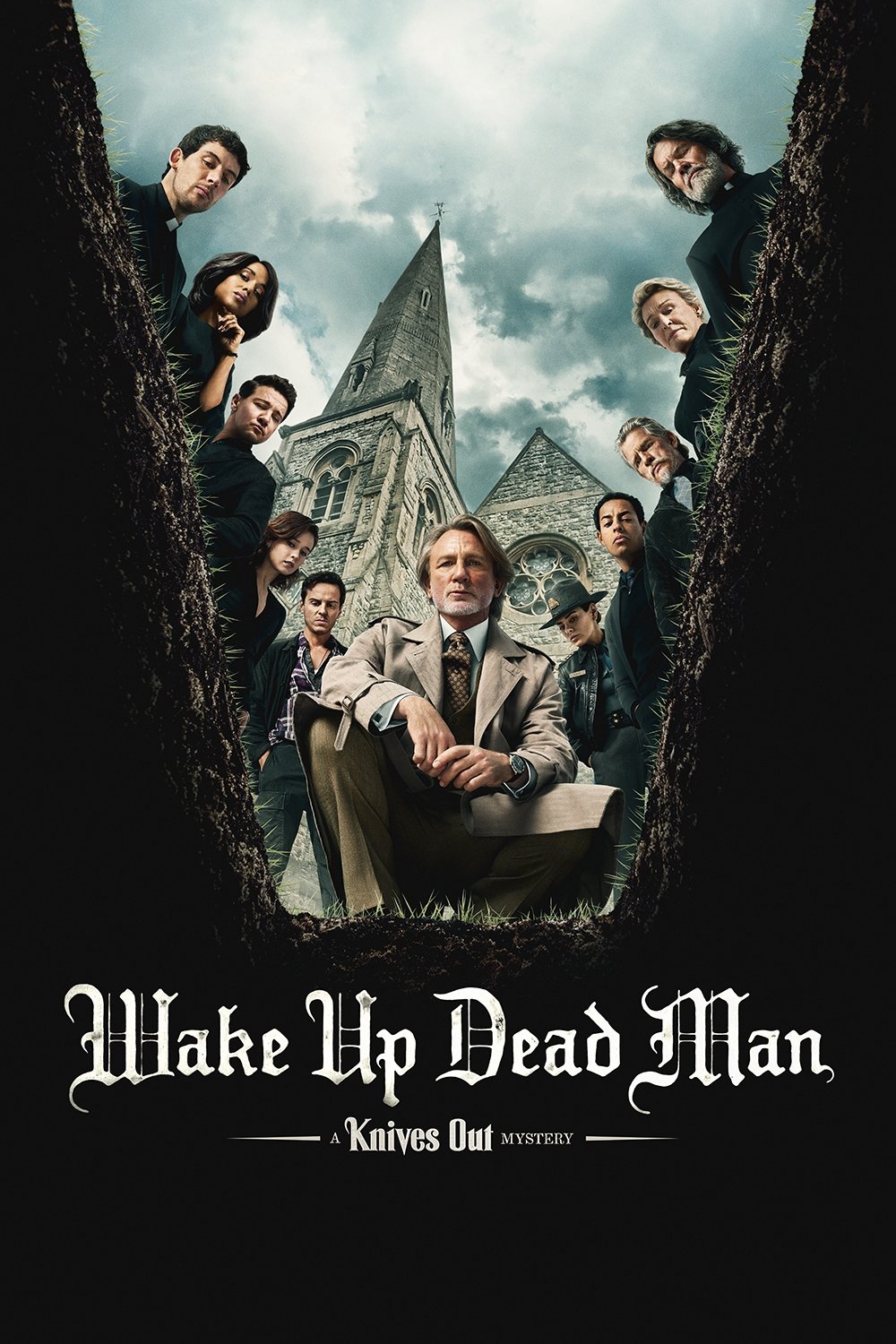
Wake Up Dead Man: A Knives Out Mystery is the third movie in Rian Johnson’s fun and twisty murder mystery series. Daniel Craig is back as the sharp detective Benoit Blanc, who’s got his work cut out for him with a seemingly impossible case this time. The movie is set in a small-town church with some pretty creepy secrets, and Blanc teams up with a young priest to crack the case. The cast is packed with great talent like Josh O’Connor, Glenn Close, Josh Brolin, Mila Kunis, Jeremy Renner, and Kerry Washington, so there’s a lot of star power mixed with sharp writing and those clever twists Johnson’s known for.
The movie mixes mystery, drama, and a bit of dark humor while diving into themes like faith, secrets, and lies. Benoit Blanc has to navigate a tangled web of hidden motives and dark pasts—all wrapped in the spooky atmosphere of the church and its community.
It’s dropping in theaters on November 26, 2025, and then hitting Netflix worldwide on December 12, so it’s definitely one to keep an eye out for whether you’re already a fan or just love a good whodunnit.
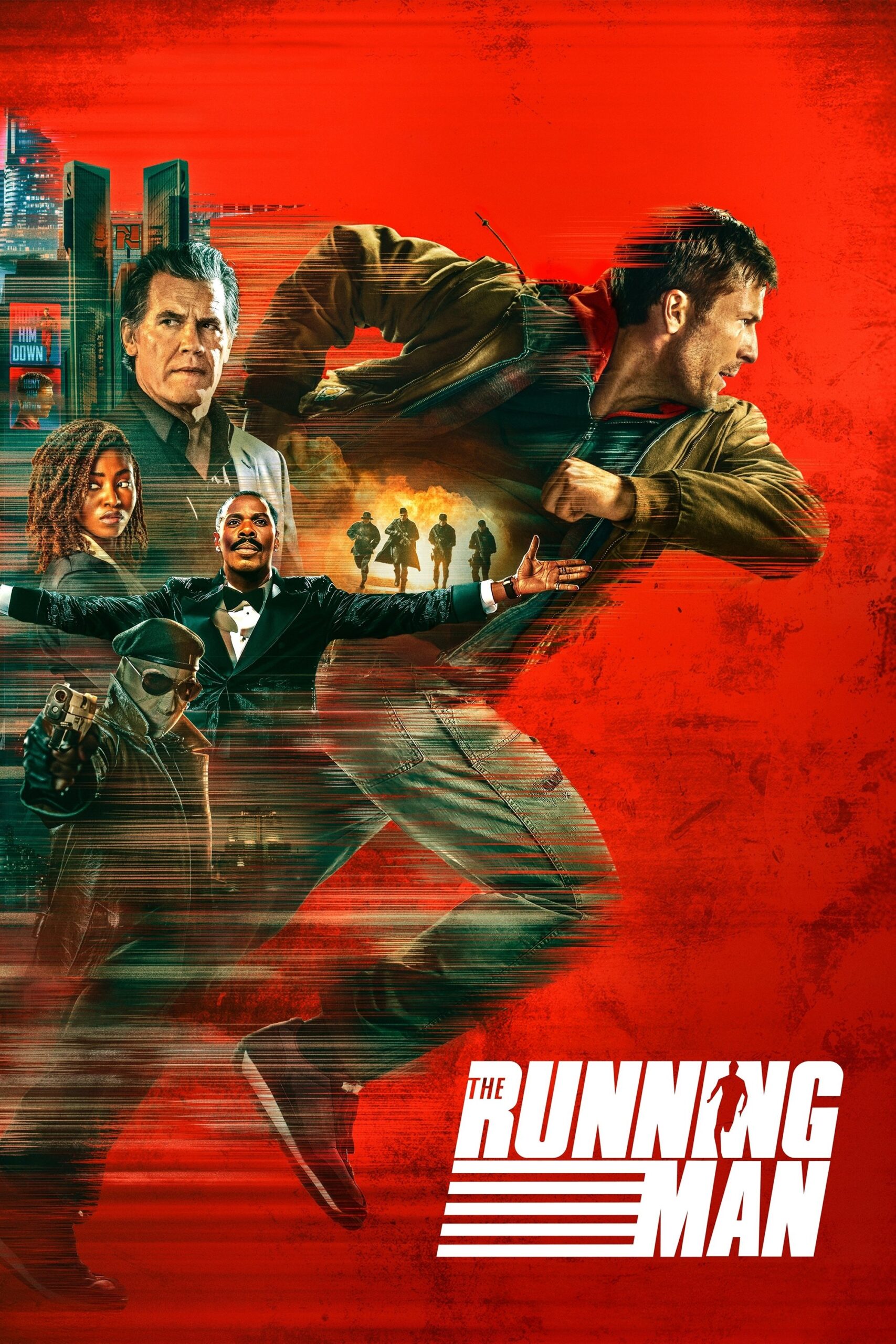
Edgar Wright’s 2025 take on The Running Man is an adrenaline shot to the chest and a sly riff on our era’s obsession with dystopian game shows, all filtered through his own eye for spectacle and pacing. Unlike many of his earlier works, such as Shaun of the Dead and Scott Pilgrim vs. The World, which bristle with meta-commentary, the film is a sleeker and more bruising affair. At its core, this is a survival thriller decked out in neon, driven by a director who wants to both honor and outpace what’s come before.
Wright’s version ditches the muscle-bound caricature of the 1987 Schwarzenegger adaptation, recentering on a more grounded protagonist. Glen Powell’s Ben Richards isn’t a quip-dispensing tank; he’s a desperate father, pressed to extremes, haunted more by anxiety than rage. We meet him in a world where reality TV devours everything, and nothing is too cruel if it wins the ratings war. Richards is cast as the sacrificial everyman, volunteering for the deadly Running Man show only because his family’s survival is at stake, not his ego. This lends the film a more human—and frankly, more believable—edge than either of its predecessors.
Visually, The Running Man is vintage Wright: kinetic and muscular, with chase scenes propelled by propulsive synths and punchy editing, each set piece designed as much to thrill as to disorient. Gone, however, is much of the director’s comedic ribbing; what remains is a tense visual feast, saturated in electric colors and relentless motion. The camera rarely settles. The television show itself is depicted as both garish and sinister, a spectacle that feels plausible because it’s only five minutes into our own future.
The film takes sharp aim at the machinery of television and the spectacle it creates, exposing how entertainment can thrive on cruelty and manipulation. It highlights a world where reality is heavily curated and shaped to serve ratings and control, with the audience complicit in consuming and encouraging the degradation of genuine human experience. The media in the film mirrors warnings that have circulated in recent years—that it has become a tool designed to appease the masses, even going so far as to use deepfakes to manipulate narratives in favor of particular agendas. While this focus on broadcast media delivers potent social commentary, Wright does drop the ball a bit by concentrating too much on traditional TV media at a time when entertainment consumption is largely online and more fragmented. This narrower scope misses an opportunity to deeply engage with the digital age’s sprawling and insidious impact on public attention and truth.
Glen Powell’s performance is pivotal to the film’s success. He anchors the story, selling both the exhaustion and the resolve required for the role. This Ben Richards is no superhero—his fear feels palpable, and his reactions are messy, urgent, and often impulsive. Opposite him, Josh Brolin steps in as Dan Killian, the show’s orchestrator. Brolin’s performance, smooth and menacing, turns every negotiation and threat into a master class in corporate evil. The stalkers, the show’s gladiatorial killers, are less cartoon than their 1987 counterparts, but all the more chilling for their believability—branding themselves like influencers, they embody a world where violence and popularity are inseparable.
On the surface, Wright’s Running Man leans heavily into social satire. It lobs grenades at infotainment, the exploitation inherent in reality TV, and the way audiences are silently implicated in all the carnage they consume. Reality is a construct, truth is whatever the network decides to show, and every moment of suffering is a data point in an endless quest for engagement. The critique is loud, though not always nuanced. Where Wright has previously reveled in self-aware storytelling, here he pulls back, focusing on the mechanics and cost of spectacle more than its digital afterlife.
Action is where the film hits hardest. Wright brings his expected flair for movement and tension, with chase sequences escalating to wild, blood-smeared crescendos, and hand-to-hand fights that feel tactile rather than stylized. The film borrows more heavily from the structure of King’s novel, raising stakes with each new adversary and refusing to let viewers catch their breath. Despite the non-stop pace, the movie runs a little too long—some sequences feel indulgent, and the final act’s rhythm stutters as it builds toward its conclusion. Still, even in its bloat, there’s always something energetic or visually inventive happening onscreen.
The movie’s climax and resolution avoid over-explaining or revealing too much, instead choosing to leave room for interpretation and suspense about the outcomes for the characters and the world they inhabit. This restraint preserves the tension and leaves viewers with something to chew on beyond the final credits.
For fans of Edgar Wright, there’s a sense of something both familiar and altered here. The visual wit, the muscular editing, the stylish sound cues—they’re all present. Yet the film feels less like a playground for Wright’s usual whimsy and more like a taut, collaborative blockbuster. It’s playfully brutal and thoroughly engaging, but does not, in the end, subvert the genre quite as gleefully as some might hope. For every moment of subtext or clever visual flourish, there is another in which the movie simply barrels forward, content to dazzle and provoke in equal measure.
The Running Man (2025) is a film with a target audience—those who want action, smart but accessible social commentary, and just enough character work to feel the stakes. It will delight viewers drawn to a flashier, meaner take on dystopian spectacle, and Powell’s central performance is likely to win over skeptics and fans alike. If you’re hoping for a thesis on algorithmic age or a meditation on surveillance capitalism, you may need to look elsewhere. But if you want a turbo-charged chase movie that occasionally stops to wag a finger at the world that spawned it, you’re likely to have a great time.
Ultimately, Edgar Wright’s Running Man is a sharp, glossy refit of a classic dystopian story, packed with high-octane action and grounded by its central performance. It won’t please everyone and doesn’t attempt to, but it never forgets that, above all, good television keeps us running. In the era of spectacle, that might be all you need.
Hi, everyone! Tonight, on twitter, I will be hosting one of my favorite films for #MondayMania! Join us for Lying Eyes, one of the original Lifetime films!
You can find the movie on Prime and then you can join us on twitter at 9 pm central time! (That’s 10 pm for you folks on the East Coast.) See you then!
Today, we continue to celebrate the birthday of Martin Scorsese with a song that has appeared in countless Scorsese films! When Scorsese made his Rolling Stone documentary, nonetheless than Mick Jagger commented on how odd it was that this was the first Scorsese film to not feature Gimme Shelter.
From the Rolling Stones and Merry Clayton, here is today’s song of the day.
As some of our regular readers undoubtedly know, I am involved in hosting a few weekly live tweets on twitter and occasionally Mastodon. I host #FridayNightFlix every Friday, I co-host #ScarySocial on Saturday, and I am one of the five hosts of Mastodon’s #MondayActionMovie! Every week, we get together. We watch a movie. We snark our way through it.
Tonight, for #MondayActionMovie, the film will be 2018’s Tomb Invader!
It should make for a night of fun viewing and I invite all of you to join in. If you want to join the live tweets, just hop onto Mastodon, find the movie on YouTube and hit play at 8 pm et, and use the #MondayActionMovie hashtag! The watch party community is a friendly group and welcoming of newcomers so don’t be shy.
4 (or more) Shots From 4 (or more) Films is just what it says it is, 4 (or more) shots from 4 (or more) of our favorite films. As opposed to the reviews and recaps that we usually post, 4 (or more) Shots From 4 (or more) Films lets the visuals do the talking.
Today, the Shattered Lens wishes a happy birthday to the one and only Martin Scorsese! It’s time for….
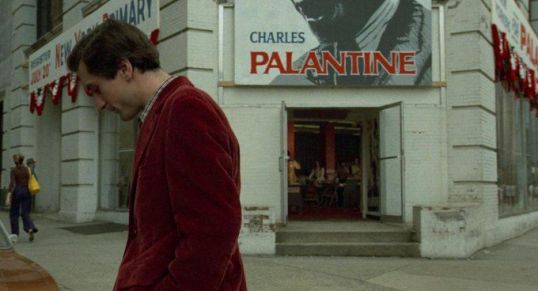
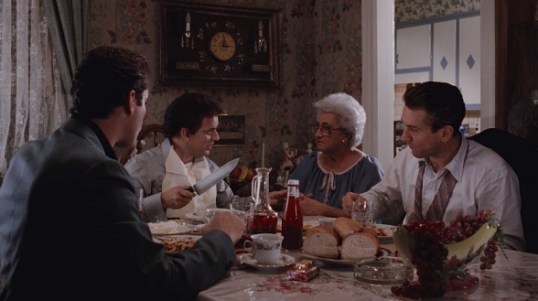
6 Shots From 6 Martin Scorsese Films
Taxi Driver (1976, dir by Martin Scorsese, DP: Michael Chapman)
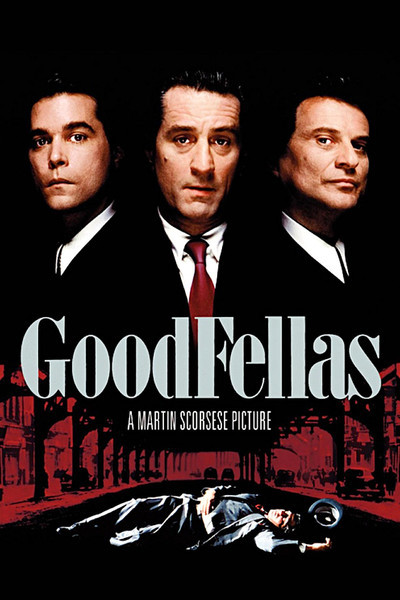
Goodfellas (1990, dir by Martin Scorsese, DP: Michael Ballhaus)
Casino (1995, dir by Martin Scorsese, DP: Robert Richardson)
Shutter Island (2010, dir by Martin Scorsese, DP: Robert Richardson)
Hugo (2011, dir by Martin Scorsese, DP: Robert Richardson)
The Irishman (2019, dir by Martin Scorsese, DP: Rodrigo Prieto)





 Through the Shattered Lens