4 Shots From 4 Horror Films: 1950s Part One


This October, I’m going to be doing something a little bit different with my contribution to 4 Shots From 4 Films.  I’m going to be taking a little chronological tour of the history of horror cinema, moving from decade to decade.

Today, we look at the start of the 1950s.

4 Shots From 4 Horror Films

The Strange Door (1951, dir by Joseph Pevney)

The Strange Door (1951, dir by Joseph Pevney)

The Black Castle (1952, dir by Nathan H. Juran)

The Black Castle (1952, dir by Nathan H. Juran)

The Maze (1953, dir by William Cameron Meznies)

The Maze (1953, dir by William Cameron Meznies)

House of Wax (1953, dir by Andre De Toth)

House of Wax (1953, dir by Andre De Toth)

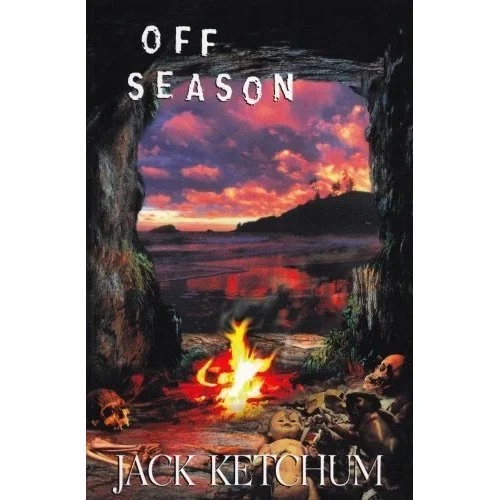
Horror Book Review: Off Season (by Jack Ketchum)


“Man is the cruelest animal.” — Friedrich Nietzsche

Jack Ketchum’s Off Season wasn’t my first venture into extreme horror, but it was an important stop along the way in my continuing exploration of splatterpunk—those raw, confrontational horror stories that don’t flinch from showing you every grisly detail. I’d already spent time in the grand guignol worlds of Edward Lee, Richard Laymon, Poppy Z. Brite, and Brian Keene, and I thought I’d built up a decent resistance to the genre’s more intense offerings. Then I opened Off Season, and within a few chapters, I realized this was going to hit differently. It’s less a fun horror romp and more of an ordeal—one that leaves you feeling like you’ve just crawled out the other side of something vicious, primal, and deeply unsettling.

Ketchum builds his novel around the infamous legend of the Sawney Beane clan—a family of cannibals who, according to folklore, hunted travelers along the Scottish coast in the 15th century. He strips that story out of its historical setting and drops it into the rocky, isolated coast of Maine, replacing the medieval backdrop with an environment that still feels dangerous and untamed. The setup is simple enough: a group of friends from New York rent a secluded cabin, expecting a peaceful getaway, and instead find themselves hunted by a clan that’s every bit as savage as their legendary counterparts. There’s a vibe here that’s partly Romero zombie survival horror, partly John Carpenter claustrophobic menace, but the big difference is that these villains aren’t supernatural—they’re unsettlingly human, real in their hunger and their primal needs. They do what they do because it sustains them, and somehow that makes them worse than any ghost or monster.

While Wes Craven’s The Hills Have Eyes mined similar ground with a more stylized, exploitation-film aesthetic, Ketchum’s take leans hard into plausibility. His cannibal clan feels like a natural, if disturbing, product of generations of isolation and inbreeding, kept alive through hunting, killing, and eating whoever wanders too close. That realism is what makes the violence hit so hard. Ketchum describes their assaults on Carla, her sister Marjie, and their companions with an unapologetically matter-of-fact tone—no flourish, no dramatics. The worst moments aren’t always the attacks themselves, but what he shows inside the clan’s cave home. Kids scamper across jagged stone like feral animals, gnawing meat straight off the bone. Adults pair up in incestuous “unions” meant only to keep the bloodline going. It’s both grotesque and disturbingly believable.

That refusal to hold anything back is part of why Off Season has been linked to splatterpunk, the horror subgenre that gained fame (and infamy) for pushing gore, moral transgression, and human depravity to the forefront. Some critics wrote it off as “horror pornography,” too focused on shock value, but fans saw it differently. In Ketchum’s hands, it’s not about gore for gore’s sake—it’s about stripping away all the comfort zones and exposing something ugly yet honest. When you finish one of these novels, you’re not left thinking “That would never happen.” You’re left thinking “That could happen. Under the wrong circumstances, that would happen.”

One of Ketchum’s storytelling choices is speed. The pacing is fast—there’s just enough time to understand who the characters are before the horror crashes down. That keeps tension high but also means the victims aren’t deeply fleshed out. They’re more representative than personal, standing in for civilization as a whole rather than pulling us into their emotional worlds. You don’t get many chances to connect with them deeply. Instead, you watch them transform from vacationers into survivors, and in some cases, those survivors become something just as savage as the people hunting them.

That shift happens in the second half, when the remaining characters fight back. The counterattack is satisfying in its own crude way, but Ketchum never dresses it up as righteous victory. The brutality of revenge feels just as ugly and unrelenting as the initial assault. By the end, what’s been preserved isn’t humanity—it’s just the body count in favor of the people we started with. The survivors get out, but they’re not unchanged. It’s not the kind of ending that makes you breathe a sigh of relief. More like an exhale that admits, “We made it, but look at what it cost.”

When Off Season first came out in 1980, it caused an immediate stir. Its content was so graphic that some bookstores wouldn’t carry it, and an edited version had to be released to calm the outrage. Years later, Ketchum went back and put out the uncut edition, restoring everything that had been stripped away. Reading that version today is reading the novel as he intended—nothing softened, nothing taken off the table. And in the world of extreme horror, that kind of authenticity is prized. It’s part of what’s given Off Season its staying power; it’s not just a book, it’s a dare.


Underneath all the blood and carnage is a question that sticks with you: If people were cut off from society long enough—if they lost the rules, the moral codes, the comforts—how far would they regress? Ketchum’s cannibals don’t feel like the spawn of evil forces. They feel like us, just pushed far enough in the wrong direction. Their behavior doesn’t come from cruelty for cruelty’s sake. It comes from basic survival drives—hunger, reproduction, and dominance. That’s why they’re such unnerving villains. They’re an evolutionary throwback you can imagine existing somewhere out there, beyond the maps, waiting for someone else to wander too close.


Finishing Off Season doesn’t give you that neat sense of closure other horror stories sometimes aim for. It doesn’t even give you release. It leaves you worn down, a little grimy, and maybe even unsettled in ways you didn’t expect. That’s the difference between horror built on supernatural scares and horror built on human brutality. The latter lingers; it’s harder to shake because you can’t make it go away just by telling yourself, “It’s only fiction.” With Ketchum, you’re never entirely sure.


As far as splatterpunk milestones go, Off Season earns its reputation. It’s both a challenge and a gut-punch—the sort of book that reminds you horror can still be dangerous. It’s not for every reader—if you’re expecting subtle ghost stories or stylish monster tales, you won’t find them here. What you’ll find instead is a grim, fast-paced nightmare about people who’ve let go of everything we’d call human and replaced it with something primal, something real in their hunger and their primal needs. And in the end, that may be the most disturbing thing about them—they’re not from another world. They’re from ours.

Watch Your Back (AI Short Film), Review by Case Wright


What film would Alex Magana make if he were a robot? This is a question that no one wanted answered, but Elevate Studios said, TOUGH, you are gettin it! And get it we did!

Many worry that AI will take over the world and our jobs; well, I’m here to tell you that you are 50% correct! AI will likely take your job, but not the world because it’ll just be too busy making boring/terrible short films.
Hey Robots, look I get that you feel like you got a full head of steam here, but why make terrible movies? We have people for that and those are jobs that are too good for you.
This short is about a priest called into perform and exorcism and he proceeds to punch the possessed woman and the demon leaves her. Yes, that was the whole film. I feel less now that I have seen this.

I put together a short myself using AI to show what it will be like when AI displaces humans:

Will the Robot unalive us all? I don’t know, but they will sure try to bore us to death!

Horror On The Lens: Teenage Caveman (dir by Roger Corman)


Future serious actor Robert Vaughn made his film debut in 1958’s Teenage Caveman.  Directed by Roger Corman, Teenage Caveman tells the story of a rebellious young man (that’s Robert Vaughn) who chooses to defy his father’s warnings and venture beyond the caves and into “the forbidden zone.”  He’s told that monsters roam in the forbidden zone and indeed, at least one of them does.  However, neither the Teenage Caveman nor his father are prepared for what lies at the heart of the forbidden zone.

(What will he find out there, Dr. Zaius?)

Robert Vaughn later said that, out of all the bad films that he made, this was the worst.  Personally, I think he was being a bit too hard on the film.  It’s not good but it is definitely fun.  Along with watching all of the dinosaur stock footage, you get to wonder how a caveman — especially a teenage caveman! — could possibly have such perfect hair.  Even more importantly, if you stick with it, this film has a twist ending that has to be seen to be believed.

Here is Teenage Caveman:


October Positivity: Allison’s Choice (dir by Bruce Marchiano)


In 2015’s Alison’s Choice, Chanel Marriott plays Alison.

Alison is a teenager who has a difficult relationship with her father.  He holds back his emotions from her.  She’s been left feeling insecure as a result and is perhaps a bit too dependent upon validation from other men.  For instance, her no-good boyfriend, Rick (Julian Alexander), bullies her into having sex in his tiny car.  When Alison later discovers that she’s pregnant, Rick’s response is to tell her to get rid of it.  He tells her to go find a clinic and have an abortion and then talk to him later.  Rick makes it clear that he will not paying for the procedure.  He also leaves it up in the air as to whether or not he’ll even come to the clinic to support Alison.

Classy guy, that Rick.

At the clinic, Alison finds herself having doubts.  Does she really want to get an abortion?  The clinic’s rather harsh and antiseptic atmosphere doesn’t make things any easier.  One nurse (Liz Randall) tries to pressure Alison to go through with her abortion.  The doctor (Britt Prentice) confesses that he can’t guarantee that abortion isn’t murder.  At the front desk, Ms. Glo (Bunny Gibson) asks Alison is she’s really sure she wants to go through with the procedure.  A pushy social worker named Marta (Amy Lydon) assures Alison that it’s not big deal.  Lecretia (Alicia Monet Caldwell) makes fun of Alison for being a first-timer.

And, of course, Jesus (Bruce Marchiano) shows up as a janitor and encourages Alison not to get an abortion.  Actually, he encourages everyone all over the world not to get an abortion and, whenever anyone does, he starts crying.  He says that he’s been working as a janitor since 1973.  That, of course, was the year of Roe v Wade.

Bruce Marchiano has played Jesus in a number of films.  He played Jesus in The Encounter, which is something of a guilty pleasure of mine.  Marchiano has a calm and soothing voice and his eyes tend to radiate kindness, which makes him a good choice to play Jesus.  From what I’ve seen of him in various faith-based productions, he’s not a bad actor at all.  He can deliver his lines without looking straight at the camera and he’s capable of showing emotion.  By the standards of many faith-based films, that makes him almost Brandoesque.

Unfortunately, Alison’s Choice is so heavy-handed and awkwardly acted by everyone else in the cast that Marchiano’s characteristically good and empathetic performance can’t really save it.  I’m not going to get into the specifics of whether or not the film is correct about abortion, beyond saying that this is not a film that is going to change anyone’s mind about the issue.  It’s a heavy-handed pro-life tract.  (Then again, there’s also been more than a few heavy-handed pro-choice tracts.)  What I will say is that Alison, as a character, is so indecisive and, quite frankly, annoying that it didn’t take me long to lose interest in her.  Even after she becomes convinced that she’s actually talking to Jesus, she still can’t decide whether or not she loves her boyfriend.  Girl, Jesus just told you that your boyfriend is no good.  I don’t care what anyone thinks about abortion.  If Jesus suddenly shows up and tells you to dump your boyfriend, you do it.

Eh.  I’m going to go watch The Encounter again.

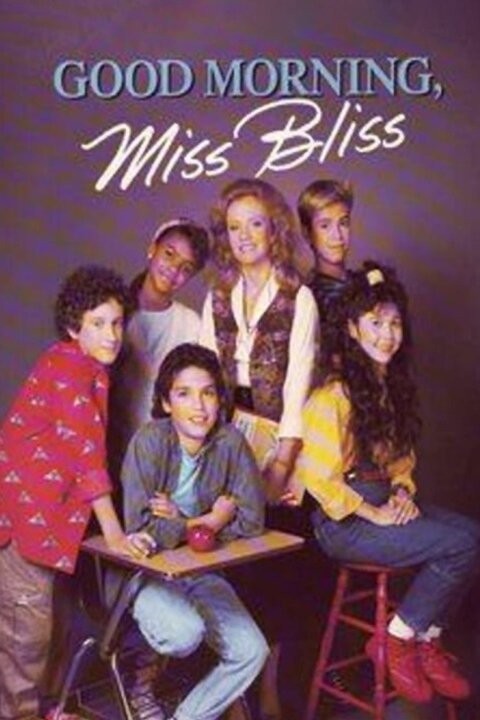
Late Night Retro Television Review: Good Morning Miss Bliss 1.13 “The Mentor”


Welcome to Late Night Retro Television Reviews, a feature where we review some of our favorite and least favorite shows of the past!  On Saturdays, I will be reviewing Good Morning, Miss Bliss, which ran on the Disney Channel from 1988 to 1989 before then moving to NBC and being renamed Saved By The Bell.  The entire show is currently streaming on Prime!

This week, we close out the Miss Bliss years.

Episode 1.13 “The Mentor”

(Dir by Gary Shimokawa, originally aired on March 18th, 1989)

For some reason, Miss Bliss’s mentor — James Lyman (Robert Donner) — shows up at the school to visit his favorite student, Carrie Bliss.  (Apparently, the very British Miss Bliss grew up in Indiana.  I’m not saying it’s not possible, as her parents could have come over when Miss Bliss was still young.  That said, it just seems odd that no one — not even her students — ever mention anything about Miss Bliss being British.  It would seem like something Miss Bliss would have mentioned during all of those lessons about the Constitution and American history.)  Mr. Lyman is retired but he agrees to substitute for Miss Bliss while she spends a week doing paperwork.  (Most teachers would probably just have to suck it up and both teach and do paperwork during the week but not our Miss Bliss!)

This is one of those annoying episodes where Mr. Lyman is the unconventional teacher who gives the kids free hall passes and takes them on extended field trip without getting permission beforehand.  Mr. Lyman makes learning fun!  (Gag!)  Miss Bliss gets upset because Mr. Lyman isn’t following her lesson plan and Mr. Lyman basically accuses Miss Bliss of being a sellout.  For once, I’m on Miss Bliss’s side here.  Mr. Lyman is a substitute.  His job is to follow the lesson plan.  If Miss Bliss doesn’t want him to handing out hall passes, that’s her right.  It’s her class!  And this whole thing of trusting the students not to abuse the hall pass?  I would have totally abused a free hall pass.  Everyone would abuse a free hall pass!  I would laughed at any teacher dumb enough to give me a free hall pass.  It’s almost as if the people who wrote this episode had absolutely no knowledge of how teenagers think.  In the end, Mr. Lyman comes across as being an unlikable crank.  The episode ends up with dressing up like Abraham Lincoln and showing up, unannounced, in Miss Bliss’s classroom.  Seriously, someone call the cops on their weirdo.

Meanwhile, Nikki worries that boys don’t see her as being feminine.  Lisa teachers her how to wear makeup.  Next year, maybe Nikki and Zach….

Oh, wait a minute.  Sorry, Zach, Mr. Belding, Screech, and Lisa are all moving to California.  Nikki, Mickey, Miss Bliss, Ms. Palladino, Mylo are staying in Indiana.  The Mentor was the final episode of Good Morning, Miss Bliss.  The Disney Channel canceled the show but producer Peter Engel took some of the cast over to NBC and launched Saved By The Bell.  The Miss Bliss episodes would later be repackaged for syndication with Zach saying, “I remember this time in Junior High…..”  I remember changing the channel whenever I realized a Miss Bliss episode was starting.

We’ll start Saved By The Bell next week.  Finally, the tyranny of Miss Bliss is over.

Lisa Marie’s Week In Television: 10/5/25 — 10/11/25


Abbott Elementary (Wednesday Night, ABC)

Eh.  I’m not really interested in Melissa’s adventures as a sixth grade teacher.  As well, Tariq really hasn’t been amusing since the end of the first season.  I worry this show is reaching the “treading water” phase of its existence.

Hell’s Kitchen (Thursday, Fox)

After a week of commercials that implied the police would be showing up at Hell’s Kitchen to arrest one of the chefs, this week’s episode featured the cops showing up at Hell’s Kitchen so the chefs could make them breakfast.  I wasn’t really surprised.  Hell’s Kitchen has always been shameless about doing stuff like that.  That’s actually a part of the show’s appeal.  As for this week’s episode, everyone appears to be remarkably incompetent.  I wouldn’t accept a meal from any of these people.

Law & Order (Thursday Night, NBC)

Another week, another murder.  Once again, Maroun was upset over having to do her job.  The law half of this show is usually pretty good but the order half is awful.  Nolan is such a wimp.  Maroun should have been fired the first time she ever suggested allowing a criminal to go free.

Ozark Law (Hulu)

I guess this show ran on A&E earlier this year.  I watched the first episode on Hulu.  It was a reality show about cops in small town Missouri.  They had to deal with a bunch of people hanging out at the lake for the Fourth of July weekend.  It was the usual stuff.  The cops arrested a woman for having an expired license.  A man’s house was burglarized.  The male cops were all heavily tattooed and bearded.  The female cops all looked like the hyper-religious girl from high school who would judge you for wearing a short skirt.  All the cops had that terse cop way of speaking.

The Prisoner (Nightflight Plus)

Jeff and I watched the final episode of this 60s show on Friday night.  I’ll miss Rover.

Special Force: World’s Toughest Test (Fox, Thursday Night)

Jussie Smollett has left the show so what even is the point now?

Horror On TV: Hammer House of Horror #10: Guardian of the Abyss (dir by Don Sharp)


Tonight’s episode of Hammer House of Horror features antiques and cults!  It’s a like a very British version of Friday the 13h: The Series.  This episode is not necessarily one of my favorite episodes of this series.  I always find the ending to be disappointing.  The said, it does feature an intriguing story and a cast of Hammer veterans.

This episode originally aired on November 15th, 1980.