Catching Up With The Films of 2024: Saturday Night (dir by Jason Reitman)


Saturday Night, which presents what I assume to be a highly fictionalized account of the 90 minutes before the 1975 premiere of Saturday Night Live, did the impossible.  It made me feel sorry for Chevy Chase.

Don’t get me wrong.  As played by Cory Michael Smith, Chevy Chase is not presented as being a sympathetic character in Saturday Night.  The film acknowledges his talent as a comedian and that he was the first star to come out of Saturday Night Live.  But he’s still presented as being arrogant, self-centered, rude, and often deliberately self-destructive.  The film portrays Chevy Chase in much the same way that most people describe him in real life.  Chevy Chase has apparently always been a difficult person to work with and, I suppose to his credit, it doesn’t appear that Chevy himself has ever claimed anything different.  But Saturday Night so piles on Chevy that even I felt it went a bit overboard.  It’s one thing to present Chevy as being the arrogant jerk that he’s admitted to being.  It’s another thing to fill the movie with moments in which people stop what they’re doing to tell Chevy that his career is going to start strong and then fade due to his bad behavior.  At one point, the NBC executive played by Willem DaFoe comments that Chevy could host his own late night talk show.  We’re all meant to laugh because eventually, Chevy Chase did host a late night talk show and it was such a disaster that it’s still, decades after its cancellation, held up as a prime example of a bad career move.  But, in the context of the film, it feels a bit like overkill.  It’s one thing to be honest about someone being a pain in the ass.  It’s another thing to repeatedly kick someone while they’re down.  Chevy, much like the NBC censor who is chanted down in the film’s cringiest moment, simply feels like too easy of a target.

Of course, Saturday Night is full of moments that are meant to comment more on the future than on whatever was going on in 1975.  The whole point of the film is that Saturday Night Live, a show that the network has little faith in and which is being produced by a hyperactive visionary (Gabriel LaBelle as Lorne Michaels) who seems to be making it up as he goes along, is eventually going to become a cultural phenomenon.  Every time someone tries to convince Lorne Michaels to cancel the premiere or to miss with the format, we’re meant to think to ourselves, “Little do they know that this show is going to be huge for several decades before eventually just becoming another predictable part of the media landscape.” The scenes of Garrett Morris (Lamorne Morris) wandering around the set and asking, “What is my purpose?  Why am I here?” may not feel like something that would have happened in 1975 but they’re there because it’s something that people were asking about in 2024.  Watching the film, it helps if you know something about the history of Saturday Night Live.  It helps to know that Dan Aykryod (Dylan O’Brien), John Belushi (Matt Wood), and Gilda Radner (Ella Hunt) are going to carry the show after Chevy Chase leaves.  It helps to know that Billy Crystal (Nicholas Podany) is going to become a Hollywood mainstay even after he gets dumped from the premiere for refusing to cut any material out of his act.  It helps to know that the mellow, pot-smoking band leader is actually Paul Shaffer (Paul Rust).  It helps to know that Lorne Michael and Dick Ebersol (Cooper Hoffman, giving one of the best performances in the film) are going to become powerful names in American television.  The film may be set in 1975 but it’s actually about all the years to come.

It’s still an entertaining and well-made film, one that I enjoyed watching.  Saturday Night manages to create the illusion of playing out in real time and director Jason Reitman captures the excitement of being backstage before opening night.  It’s an excitement that everyone can relate to, whether their opening night was on television, Broadway, or just a community theater in their small college town.  The backstage chaos of Saturday Night is wonderfully choreographed and, most importantly, it captures the feeling of being young, idealistic, and convinced that you can change the world.  Reitman also gets good performances from his cast, with Cooper Hoffman, Dylan O’Brien, and Rachel Sennott (playing writer Rosie Shuster) as stand-outs.  That said, the film is pretty much stolen by J.K. Simmons, who has a memorably lecherous cameo as Milton Berle and who provides Chevy Chase with a look at what waits for him in the future.  If the film is never quite as poignant as it wants to be, that’s because Saturday Night Live is no longer the cultural powerhouse that it once was.  If Saturday Night had been released just 18 years ago, before SNL became best-known as the place where Alec Baldwin hides out from bad publicity, it would probably be an Oscar front runner right now.  Released today, it’s just makes one feel a little bit sad.  The show that was built on never selling out eventually sold out.
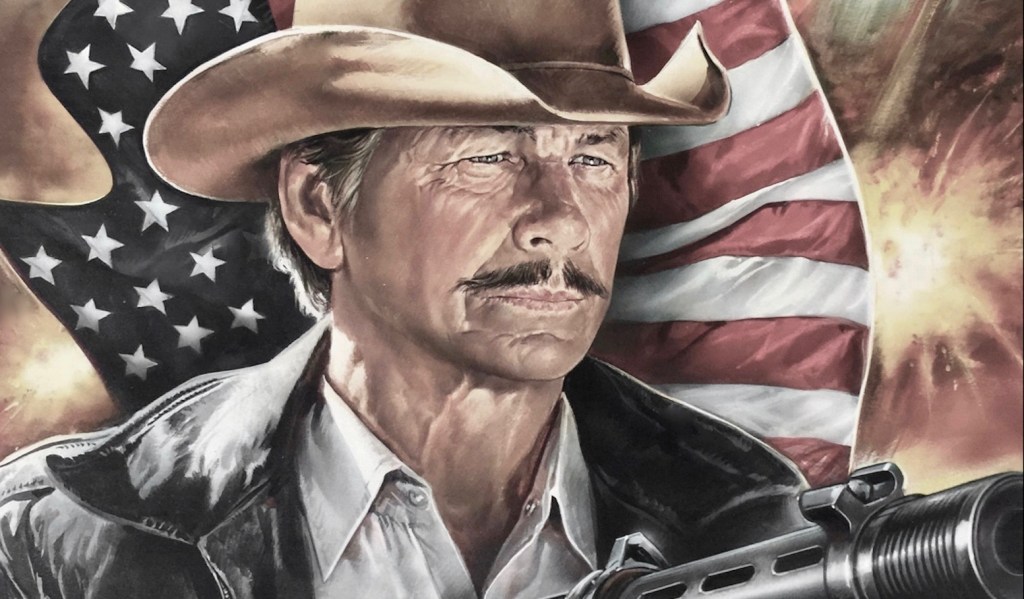
BORDERLINE (1980) – Charles Bronson battles human smuggler Ed Harris (in his first major film role)!


After a couple of decades of toiling away in TV and supporting roles, Charles Bronson became a huge international film star in 1968 when he starred in the films FAREWELL, FRIEND (with Alain Delon), and Sergio Leone’s ONCE UPON A TIME IN THE WEST (with Henry Fonda). For the next 5 years, Bronson would star in successful international co-productions, before hitting it big in the United States with the influential 1974 blockbuster, DEATH WISH. From 1974 to 1977, Bronson had his pick of any role that he wanted. This was probably the most interesting time in his career as he truly tried to expand his range with films like the depression-era HARD TIMES (1975), the romantic comedy FROM NOON TILL THREE (1976), the Raymond Chandler-esque ST. IVES (1976), and the surreal western THE WHITE BUFFALO (1977). But after 1977’s TELEFON and a series of underwhelming box office returns in the states, Bronson’s star was on the wane. He wouldn’t have his next #1 box office hit until he joined forces with the infamous Cannon studios in 1982 for the sequel to his biggest hit and DEATH WISH II. Cannon Studios would provide Bronson with a guaranteed paycheck and a non-stop presence on cable TV and at the video store for the remainder of the decade. I call the films that Bronson made between 1977 and 1982 the in-betweens. They don’t really fit into his European phase (1968-1973), his post-DEATH WISH phase (1974-1977) or his Cannon phase (1982-1989). To be completely honest, it seemed his career was somewhat in limbo at this point, and the movies he made during these years are some of his least well-known.

One of the movies that Charles Bronson made during the in-between years was 1980’s BORDERLINE. In this film, he plays Jeb Maynard, a border patrolman and expert tracker who will stop at nothing to find the human smuggler responsible for killing his friend and fellow patrolman Scooter, played by Wilford Brimley. I like this lower-key Bronson film. Director Jerrold Freedman has made a more realistic film than a lot of the movies in Bronson’s filmography. Outside of the murder that gets the story going, and the final showdown with the lead smuggler (a young Ed Harris), most of the film is made up of good old-fashioned field work and investigation. Bronson even based much of his performance on the technical advice of legendary border patrolman Albert Taylor. Now that doesn’t mean there aren’t some solid, action-packed scenes during the movie. My favorites include a scene where an undercover Maynard goes into Mexico with the mother of a young Mexican boy who was accidentally killed at the same time as Maynard’s friend Scooter. Maynard poses as a family member of the woman in hopes of being smuggled across the border so he can see how the illegal immigrants are being brought in. When thieves intercept the group, all hell breaks loose, and Maynard and the woman must fight their way out. Another badass moment occurs when Bronson beats needed information out of one of the smugglers in a nasty bathroom. This last scene is especially enjoyable for us Bronson fans.

There are so many good actors in this film. Outside of Bronson, Brimley, and Ed Harris, the cast is filled out by other veterans like Bruno Kirby, Bert Remsen, Michael Lerner, John Ashton, and Charles Cyphers. On a side note, Ed Harris gets the “introducing” credit here, even though he had appeared in several TV shows, as well as the movie COMA with Michael Douglas. This was his first major role in a feature film though. I also want to throw out special mention to Karmin Murcelo. She’s not a household name, but she’s excellent as the mother of the young boy who gets killed with Wilford Brimley’s character, who then helps Bronson in his quest to find the killer. Her career extended over 3 decades, and it’s easy to see why based on this performance.

BORDERLINE may not be an explosive action film like some of Bronson’s other work, but it’s an effective drama with a good performance from the star. I think he embodies the character perfectly. It’s also just as relevant in 2025 as it was in 1980, and I give the film a solid recommendation.

Music Video of the Day: Three Marlenas by The Wallflowers (1997, dir by ????)


You know, this is a good song by a good singer and good group of backing musicians.  (The Wallflowers have had many personnel changes over the years, with Jakob remaining the one consistent member.)  Jakob Dylan has always been a little overshadowed by his famous father and, while that’s understandable, it’s definitely a shame.  Jakob is a talented artist in his own right and this video shows that.

That said, the main reason I like this video is because of Jakob emerging from the ocean with those big blue eyes.  Hi, Jakob!

Enjoy!

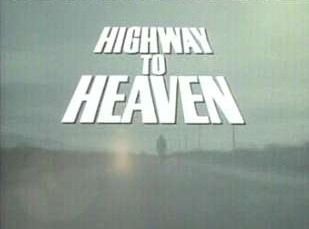
Late Night Retro Television Review: Highway to Heaven 3.7 and 3.8 “Love and Marriage”


Welcome to Late Night Retro Television Reviews, a feature where we review some of our favorite and least favorite shows of the past!  On Thursdays, I will be reviewing Highway to Heaven, which aired on NBC from 1984 to 1989.  The entire show is currently streaming on Freevee and several other services!

This week, we’ve got a two-hour episode of Highway to Heaven.

Episode 3.7 and 3.8 “Love and Marriage”

(Dir by Michael Landon, originally aired on November 12th, 1986)

It’s Mark and Jonathan’s four-year anniversary!

For four years, they have been traveling around the country and helping people out.  Mark is so excited that he makes a cake and decides not to watch the football game so that he and Jonathan can talk about old times.

“I remember the first time I met you,” Mark says at one point.

Later, Jonathan laughs and says that he remembers one really funny adventure they had.

Still later, Mark says, “Remember when Scotty proposed?”

Yay!  I thought as I watched all of this unfold.  It’s a clip show!  This will be easy to review!

However, it turned out that only first 20 minutes of the episode was a clip show.  Soon, Mark got a phone call telling him that his niece was getting married and that she wanted Mark to be the head usher.  Meanwhile, Jonathan put on his collar and became Rev. Smith, the man who would perform the ceremony.

Unfortunately, not all is well at the wedding rehearsal.  When the grandparents of the bride — Clarence (Bill Erwin) and Rose (Mary Jackson) — decide to get a divorce, this leads to the parents of the bride — Frank (Robert Mandan) and Carla (Barbara Stuart) — splitting up as well.  Seeing her elders splitting up, Trish Kelly (Anne Marie Howard) decides that there is no way she could marry Brad (Dean Scofield).

It falls to Jonathan and Mark to bring all of the couple back together.  Mark invades Clarence’s dreams and shows him how empty his life would have been if he had never married Rose.  Jonathan appears to Carla and explains that he’s an angel.  He gives Carla a chance to appear to Frank as a totally different woman.  Calling herself Ono, Carla dates Frank for a week but Frank eventually tells her that he loves his wife too much to be unfaithful to her.  Frank says that dating Ono made him realize how much he loved Carla.  It’s a good thing that Carla actually was Ono or Frank probably would have gotten the heck slapped out of him.

Seeing all of the members of her family getting back together inspires Trish to go ahead and give marriage a try.  Jonathan performs the wedding but now it’s a triple wedding as the grandparents and their parents join their daughter and renew their vows.  Wow, you all,  way to hog the spotlight on Trish’s special day.

This episode was a bit too cutesy for its own good.  I think if Jonathan and Mark has only been repairing one or two relationships, it would have been fine.  But three just felt like showing off and, more importantly, it left the episode feeling a bit overcrowded and overstuffed.

Fortunately, next week’s episode is one that I’ve actually seen before and I can promise you that it’s going to be a huge improvement!

Charles Bronson in DEATH HUNT (1981) – Keep warm my friends!


If you’re in Texas or Arkansas today, I hope you’re keeping as bundled up as Charles Bronson in DEATH HUNT. It’s cold out there people! Keep safe and stay home if at all possible! We don’t know how to drive in this weather!

Enjoy DEATH HUNT’s trailer below! Charles Bronson and Lee Marvin are as tough as it gets!

Lisa Marie Reviews An Oscar Nominee: Fargo (dir by the Coen Brothers)


Photograph by Erin Nicole

I am currently sitting in my bedroom, wrapped in several blankets and watching the snow fall on the other side of my window.  I love snow, mostly because I live in Texas and therefore, I don’t get to see it that often.  The most snow we’ve gotten down here, at least in my lifetime, was in 2021.  That was when we got hit by that blizzard and had to deal with rolling blackouts for a week straight.  That’s not a good memory but still, I love to watch the snow fall.  Even during that blizzard, I still loved the fact that I could use the snow as a nightlight as I read a Mickey Spillane book and waited for the power to come back on.

Down here in North Texas, snow is exotic.  In other parts of the country, it’s just a part of everyday life.

Like in the Dakotas for instance….

First released in 1996 and directed by the Coen Brothers, Fargo is a film that is full of arresting images.  As soon as you hear (or read) the title, those images and the sounds associated with them immediately pop into your head.  You immediately visualize the desperate car salesman Jerry Lundegaard (William H. Macy) trying to trick a customer into paying extra for the trucoat and insisting that “I’m not getting snippy here!”  You see the film’s two kidnappers, Carl Showalter (Steve Buscemi) and Gaear Grimsud (Peter Stomare), getting on each other’s nerves as they drive from one frozen location to another.  You remember heavily pregnant Marge Gunderson (Frances McDormand) investigating a snowy crime scene and gently correcting another officer’s “police work.”  You flash back to the moment when Mike Yanagita (Steve Park) suddenly breaks down in tears and tells Marge that she’s a super lady.  “And it’s a beautiful day,” Marge says at one point, wondering how so many terrible things could have happened on such a lovely day.  And she’s right.  It was a beautiful day.  It was far too beautiful a day to discover one man stuffing another into a woodchipper.

Myself, I always think of the scene where Carl attempts to find a place to hide a briefcase full of money.  It’s night.  Carl’s been shot in the face but he has the money that he’s gone through so much trouble to collect.  He runs into a field, looking for a place to hide it.  The field is covered in snow.  Every inch of the ground glows a bright white.  Everything looks the same.  But Carl still runs around desperately before picking a place to bury the suitcase.  It doesn’t seem to occur to Carl that there’s no visible landmarks or anything that would ever help him to find the money again.  He’s blinded, by the snow, by the pain of the bullet, and, like most of the characters in this movie, by his own greed.

Of course, Fargo is not a film about people behaving in intelligent ways.  Greed, loneliness, and desperation all lead to people doing some pretty stupid things.  Jerry thinks that the best way to pay off his debts and raise the money for a real estate deal is to arrange for his wife to be kidnapped so his wealthy father-in-law (Harve Presnell) will pay the ransom.  His father-in-law, who obviously despises Jerry and would be happy for him to just go away, is convinced that he’ll be able to both get back his daughter and recover his money.  (If Jerry had just spent a moment really thinking about his plan before going through with it, he would have realized his father-in-law would never just part with his money.)  Carl thinks that it’s a good idea to partner up with the obviously sociopathic Grimsud.  When a cop pulls over Carl and Grimsud’s car, Grimsud ignores the fact that Carl was talking his way out of the ticket and instead kills the policeman and then kills several eyewitnesses.  (“I told you not to stop.”)  Marge figures out what is going on but even she puts her life in danger by investigating a cabin without proper backup.  The characters in Fargo frequently behave in ludicrous ways and almost all of them speak with an exaggerated regional dialect (All together now: “Oh yeah,”) but they also feel incredibly real.  The sad truth of the matter is that there are people as greedy, dumb, and hapless in the world as Jerry.  There are people like Carl and Grimsud.  Even Jerry’s fearsome father-in-law is a very familiar type of character.  People do thing without thinking and inevitably, they make things worse the more overwhelmed they become.  Common sense (not to mention decency) is frequently the last thing that anyone considers.  Fortunately, Marge is believable too.  Marge at times almost seems so gentle and polite (“No, why don’t you sit over there?” she sweetly tells Mike when he attempts to get too close to her.) that the viewer worries about what’s going to happen to her when she gets closer and closer to figuring out what’s going on.  Fortunately, Marge turns out to be much stronger than anyone, even the viewer, expected.  The world of Fargo can be a terrible place but there’s moments of kindness and hope as well.

Fargo is both a comedy and a drama.  The opening title card says that the film is based on a true story, which is a typical Coen Brothers joke.  (The film was loosely inspired by several similar crimes but the story itself is fictional.)  Carter Burwell’s dramatic score is both appropriately grand and also gently satiric.  Jerry does some terrible things but William H. Macy plays him as being so naive and desperate and ultimately overwhelmed that it’s hard not to have a little sympathy for him.  Jerry truly thought it would be so simple to pull off a complicated crime.  (The poor guy can’t even get the ice off of his windshield.)  As played by Steve Buscemi, Carl Showalter talks nonstop and he makes you laugh despite yourself.  His shock at how poorly everything goes is one of the film’s highlights.  It’s a funny film but it’s also a sad one.  I always worry about what’s going to happen to Jerry’s son.  Ultimately, of course, the film belongs to Frances McDormand, who gives a wonderful performance as Marge.  She’s the heart of the film, the one who reminds the viewer that there are good people in the world.

Considering the film’s cultural impact, it’s always somewhat shocking to remember that Fargo did not win the Oscar for Best Picture.  It lost to The English Patient, a film about a homewrecker who helps the Nazis.  Personally, I prefer Fargo.

Fargo (1996, dir by the Coen Brothers, DP: Roger Deakins)

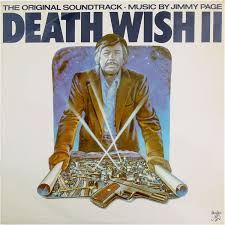
Happy Birthday, Jimmy Page & thanks for the DEATH WISH II soundtrack!


I’m a movie guy more than a music guy, but I still love Jimmy Page. His soundtrack for DEATH WISH II has been a part of my entire life. It’s such a strange, unique score, but it seems to work perfectly for the movie. I was only around 10 years old when I first saw an “edited for TV” version of the movie in ‘83 or ‘84. To be completely honest, the music kinda scared me. I laugh when I type that now, but it’s the truth! Parts of the soundtrack were rearranged again a few years later for DEATH WISH 3, the Charles Bronson movie I’ve watched more than any other.

Happy Birthday, Mr. Page!! Thanks so much for being Michael Winner’s neighbor and composing that soundtrack. This guy from Arkansas truly appreciates it!

I’ve attached a link to the soundtrack below for your listening pleasure!

Counterpunch (2013, directed by Kenneth Castillo)


Emilio Manrique (Alvaro Orlando) was born in the part of Miami that is never featured in any tourism commercials.  With an absentee father (Steven Bauer) and an addict mother (Yennifer Behrens), Emilio struggled while growing up, getting in trouble and spending time in a mental hospital before he was given a good home by his uncle (Oscar Torre) and grandmother (Ivonne Coll).  Boxing provides an escape for Enrique, a chance to make something out of himself.  But few promoters are willing to take a chance on him, not with his criminal background and rumored mental health woes.  Only Talia Portillo (Camila Banus), who is eager to prove herself as Miami’s first female boxing promoter, is willing to support Emilio but can even she get him a fight against the champion (Jilon VanOver).

From what I understand, Counterpunch was inspired by Alvaro Orlando’s actual life story.  (Along with director Kenneth Castillo, he’s credited with writing the film’s screenplay.)  Almost every boxing cliche is present in Counterpunch but I appreciated that the film took a look at not just how Emilio’s childhood set him on the path to becoming a boxer but also at what it did to him mentally.  As fearsome as Emilio’s opponents are in the ring, the greatest threat to his success of a boxer comes from his own inner demons.  Alvaro Orlando is believable as Emilio, which makes sense since it’s his story!  Danny Trejo and Steven Bauer both show up in small roles.  Trejo plays Emilio’s counselor and he gives a heartfelt performance, playing a character who doesn’t seem like he’s too far off from who Trejo actually is.

Counterpunch is a good boxing movie, even if it doesn’t exactly rewrite the rules of the genre.

Retro Television Review: Malibu, CA 1.23 “The New Cook”


Welcome to Retro Television Reviews, a feature where we review some of our favorite and least favorite shows of the past!  On Thursdays, I will be reviewing Malibu CA, which aired in Syndication in 1998 and 1999.  The entire show is currently streaming on YouTube!

This week’s episode is stupid!  Let’s get to it.

Episode 1.23 “The New Cook”

(Dir by Gary Shimokawa, originally aired on May 2nd, 1999)

After a relative in Texas breaks his leg — *sigh* I can already tell you that I’m going to hate this episode — Peter announces that he has to go down to the Lone Star State to look after the ranch because, of course, everyone who lives in Texas owns a ranch.  (Except for me apparently.)  Peter leaves Jason and Scott in charge of the restaurant.  Jason points out that he doesn’t get paid to be an assistant manager.  He gets paid to be a waiter and you know what?  Jason is perhaps the biggest douchebag to ever appear on a television show but, in this case, he’s absolutely correct.

Seriously, does Peter not have any adult employees that he can leave in charge?  Jason and Scott are not managers.  They are just his good-for-nothing sons who he hired because they were too irresponsible to be left on their own.  Scott has grown a bit more responsible over the course of the season but neither he nor Jason really has the track record of someone who you would leave in charge of a complicated business.  Jason and Scott do some pretty stupid things in this episode but it’s all Peter’s fault for being dumb enough to give them so much responsibility in the first place.

With Peter gone, it falls to Jason and Scott to hire a new chef for the kitchen.  They hire Inga (Victoria Silvstedt) because she’s tall, blonde, and apparently comes from a country where there are no laws about nepo kids sexually harassing their new employees. Unfortunately, it turns out that Inga cannot cook.  The head chef refuses to work with her and storms out of the restaurant.  Because neither Jason nor Scott can work up the courage to fire her, they try to teach her how to cook.  Then they try to run the kitchen themselves.  A bunch of Texans are coming to the restaurant and they’re expecting lobster.  Uh-oh, Traycee set all the lobsters free!  She dumped them in the ocean.  Hey, Traycee, you probably just killed all of those lobsters!  Can no one on this show think?

(And seriously, what was this episode’s deal with Texas?)

Scott and Jason have to figure out what to do about their guests who claim to be from Texas but who all have the fakest accents that I’ve ever seen.  Bleh.  Screw this storyline.  It’s too stupid.  I’m done talking about it.

Meanwhile, in the B-plot, Murray is visited by the legendary surfer, Webfoot Wilson (Peter Flanders).  Webfoot says that he’s putting together a charity for injured surfers.  But, after Sam and Stads see Webfoot stealing money from the Surf Shack’s cash register, they realize that he’s just a con artist!  Will they find the courage to tell Murray that his friend is a thief?  Of course, they will.  What a stupid B-plot but I will give credit where credit is due.  Brandon Brooks’s performance as Murray was probably the only thing that worked about this episode.  Murray may have started out as a standard weird sidekick but Brooks was actually able to make him into a surprisingly likeable and occasionally even funny character.

Next week …. oh, who cares?  Something will happen.