Horror Film Review: Godzilla vs. King Ghidorah (dir by Kazuki Omori)


“Godzilla has been erased from time …. but now, King Ghidorah is here!”

Whoops!  I guess you all shouldn’t have traveled back in time and kept that dinosaur from mutating into Godzilla then!

1991’s Godzilla vs King Ghidorah was the 18th film in the Godzilla franchise and, because the Back To The Future franchise was very popular in Japan at the time that the film was made, it has a plot that revolves around time travel.  A group called The Futurians appear in 1990s Japan.  They explain that, by the year 2204, Godzilla will have destroyed all life in Japan.  However, they have a plan.  They’ve built a time machine and they will be going back to 1944 so that they can remove Godzilla from his island home before the nuclear testing begins.  For some reason, the Futurians take a few people from the 90s back with them.

After witnessing a dinosaur stepping on a World War II American army platoon, the Futurians arrange for the dinosaur to be transported to the Bering Strait, where it won’t get doused with radiation.  Meanwhile, they secretly leave behind three adorable baby dragons that, once nuclear testing begins, will end up being transformed into King Ghidorah.

It turns out that Futurians are liars!  I’m shocked too.  In 22o4, Japan is actually the most powerful country in the world and it is so economically strong that America, Russian, and Europe are dependent upon it for their survival.  The Futurians were just jealous of what a great country Japan was destined to become so they decided to get rid of Godzilla and instead allow King Ghidorah to destroy the country.

Now, if the Futurians were smart, they would have actually destroyed the dinosaur.  Instead, they just sent it to the Bering Strait.  And if the Futurians were really smart, they wouldn’t have allowed people in 1991 to know what they were doing.  To be honest, all of the mistakes made by the Futurians were self-inflicted.  By taking people from the 90s back to the past and letting them see where the dinosaur was sent, they basically ensured that those people would immediately go to the Bering Strait in 1991 and give the dinosaur a dose of radiation so that it would become Godzilla and then battle Ghidorah….

WHAT!?

Yeah, I know.  It makes no sense.  This is one of the least logical Godzilla films that I’ve ever seen and that’s saying something.  Godzilla vs Biollante was loved by critics but it was considered to be a disappointment at the box office.  For the follow-up, the producers not only brought back a classic Godzilla opponent (and I did smile when the three-headed Ghidorah showed up because he really was the most awesome member of Godzilla’s supporting cast) but they also came up with a plot that was considerably more juvenile than the previous film.  The end result is a film that makes no sense from a narrative point of view but it does at least feature a few good fights between Godzilla, Ghidorah, and a robot version of Ghidorah.  And it was also a film that did well enough at the Japanese box office to guarantee that Godzilla would return.

Previous Godzilla Reviews:

  1. Godzilla, King of the Monsters (1958)
  2. Godzilla Raids Again (1958)
  3. King Kong vs Godzilla (1962)
  4. Mothra vs. Godzilla (1964)
  5. Ghidorah: The Three-Headed Monster (1964)
  6. Invasion of the Astro-Monster (1965)
  7. Godzilla vs. The Sea Monster (1966)
  8. Son of Godzilla (1967)
  9. Destroy All Monsters (1968)
  10. All Monsters Attack (1969)
  11. Godzilla vs Hedorah (1971)
  12. Godzilla vs Gigan (1972)
  13. Godzilla vs Megalon (1973)
  14. Godzilla vs Mechagodzilla (1974)
  15. The Terror of Mechagodzilla (1975)
  16. Cozilla (1977)
  17. Godzilla 1985 (1985)
  18. Godzilla vs. Biollante (1989)
  19. Godzilla vs. Mothra (1992)
  20. Godzilla vs. Destoroyah (1995)
  21. Godzilla, Mothra, and King Ghidorah: Giant Monsters All-Out Attack (2001)
  22. Godzilla (2014)
  23. Godzilla: Planet of the Monsters (2017)
  24. Godzilla, King of the Monsters (2019)
  25. Godzilla vs Kong (2021)
  26. Godzilla Minus One (2023)

4 Shots From 4 Horror Films: Special Roy Ward Baker Edition


4 Shots From 4 Films is just what it says it is, 4 shots from 4 of our favorite films. As opposed to the reviews and recaps that we usually post, 4 Shots From 4 Films is all about letting the visuals do the talking.

Today’s director is Roy Ward Baker, one of the masters of Hammer and Amicus horror!

4 Shots From 4 Roy Ward Baker Films

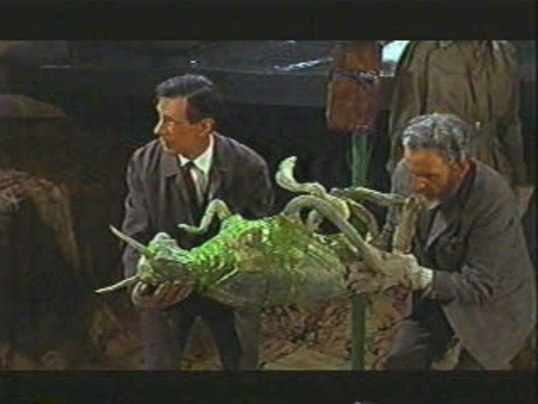
Quatermass and the Pitt (1967, dir by Roy Ward Baker, DP: Arthur Grant)

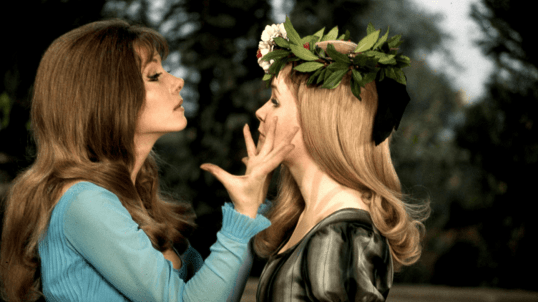
The Vampire Lovers (1970, dir by Roy Ward Baker, DP: Moray Grant)

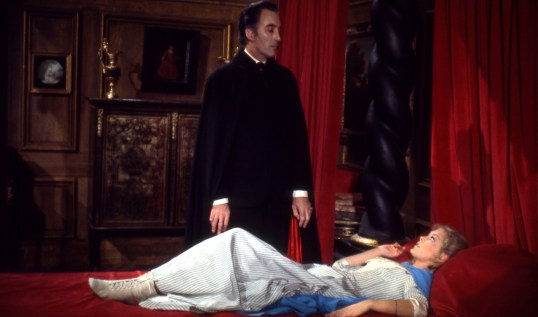
Scars of Dracula (1970, dir by Roy Ward Baker, DP: Moray Grant)

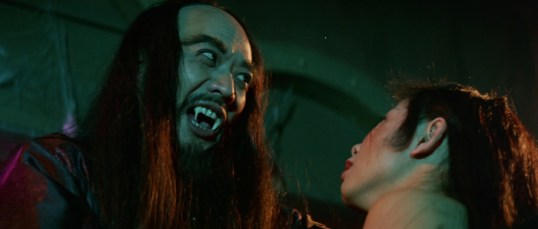
The Legend of the 7 Golden Vampires (1974, dir by Roy Ward Baker, DP: John Wilcox and Roy Ford)

Horror Film Review: Cult Killer (dir by Jon Keeyes)


What a stupid movie!

Released earlier this year, Cult Killer stars Alice Eve as Cassie Holt, a former librarian who is now a private investigator in Ireland.  Cassie has a tragic backstory, which we hear about from several people along with hearing about it from Cassie and then getting to see most of what we’ve already heard about in a series of flashbacks.  Cassie was sexually abused by her grandfather, dropped out of university, learned Brazilian ju-jitsu, became an alcoholic, went to AA, and is now a private investigator.

Her mentor is Mikael Tallini (Antonio Banderas, looking embarrassed).  When Mikael is murdered by a woman who pounces on him and then steps him to death, Cassie sets out to solve his murder and get revenge.  She discovers that her sleepy Irish village is actually the home of a cult of sex abusers and Jamie Douglas (Shelley Hening) has been killing everyone who either abused or betrayed her, though Mikael apparently was just killed because he had been hired to find out what she was doing.  Soon, Jamie is calling Cassie on the phone and telling her about all the details of her crimes, encouraging Cassie to help her while also acknowledging that Cassie will eventually have to arrest her or kill her or do something to avenge the death of her mentor at Jamie’s hands.  “We not do different, you and I,” Jamie says without a hint of irony.

Antonio Banderas gets top-billing in Cult Killer and he’s prominently featured on the film’s poster.  His character is killed off after the first ten minutes but he then reappears in flashbacks as Cassie remembers him training her and all the times that she told him about her tragic backstory.  There’s a lot of flashbacks in Cult Killer and they don’t exactly show up at the most logical of moments.  They’re rather randomly sprinkled throughout the film and often, there’s no real indication that we’ve entered flashback territory until Banderas shows up.  I know and understand that it’s currently totally melvin to tell a story in chronological order.  Everyone wants to be Christopher Nolan.  But the thing is, Christopher Nolan is a genius.  Most directors are not.  The director of Cult Killer is not.

Along with the jumbled timeline, the other big problem with this film is that Shelley Hening’s performance as Jamie is absolutely atrocious.  Some of it is the script, which forces all of its worst lines onto Jamie.  But, beyond that, Hening plays Jamie as being a somewhat mischevious brat while the film needs her to be a charismatic maniac.  Throwing a skull into a room and then calling Cassie to tell her that you just did some “Monster shit,” doesn’t make you into an intriguing anti-hero or a compelling villain.  It just makes you into the equivalent of a pre-teen tossing eggs at the house of a hated teacher and then bragging about it the next day.  Jamie’s relationship with Cassie never rings true and neither Eve nor Hening really seem to have much idea what’s going on with their characters either.  It takes a lot of effort to make two sex abuse survivors come across as being incredibly annoying but this film manages to do it.

The film features Jamie targeting the members of a cult of wealthy sex abusers.  That story had potential, especially when you consider that Epstein didn’t kill himself.  But the film gets so bogged down in flashbacks that it never creates a proper feeling of paranoia or, for that matter, any narrative momentum.  It all just feels rather pointless and confused, as if the film itself isn’t quite sure what it’s trying to say.  The best film to be inspired by the crimes of Jeffrey Epstein remains The Scary of Sixty-First.

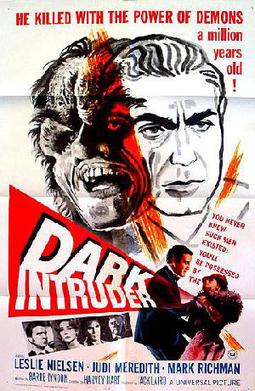
Horror Film Review: Dark Intruder (dir by Harvey Hart)


The 1965 film, Dark Intruder, takes place in San Francisco in 1890.

Murders are being committed on the foggy streets of the city that was once known as Yerba Buena.  Women are being stalked through allies and attacked by a caped figure who seems to thrive on the darkness.  At each murder, a hideous statuette is left behind.  The statuette seems to depict a winged demon emerging from the back of a man’s head.  With each murder, the demon appears to be growing closer and closer to fully escaping from the man.

The police are baffled and the press is suggesting that London’s infamous Jack the Ripper has come to California.  (Well, where else would he go?  I kid, California, I kid!  I love you, California.  Well, I love some parts of California, at least.)  As the police often due when they have a case with supernatural overtones, they turn to local socialite and bon vivant, Brett Kingsford (Leslie Nielsen).

Brett lives in a mansion, where he wakes up nearly every morning with a hangover.  He enjoys life but he’s also found time to become an expert on the occult.  He even has a giant plant in his library that perks up whenever there’s a paranormal presence nearby.  Brett is engaged to Evelyn Lang (Judi Meredith), who speaks in an annoyingly high voice.  When the police bring the statuettes to Brett, he takes them to a psychic named Chi Zeng for advice.  Chi Zeng (played by Peter Brocco, who you may have guessed was not Chinese) reveals that the statuette represent a Sumerian demon that is inhabiting the body of a human.  The demon has to commit seven murders so that it can freed from its host and then allowed to commit as many terrible acts as it wants.

Who is the demon possessing?  Brett’s friend, Robert Vandenburg (Peter Mark Richman), fears that it could be him.  Brett tries to assure Vandenburg that he has nothing to worry about but as Brett continues his investigation, he comes to realize that Vandenburg actually may have a lot to worry about….

Dark Intruder is a short film, clocking in at a little under an hour.  It was originally developed as a pilot for a television series that would have featured Leslie Nielsen solving occult crimes on a weekly basis.  Unfortunately, the series wasn’t picked up (it sounds like it would have been fun!) and Dark Intruder was given a theatrical release as part of a double feature with William Castle’s I Saw What You Did.  It’s an effective little film, full of gothic atmosphere, misty streets, and a frightening (and clawed) villain.  The murder that opens the scene seems as if it would have been quite graphic by the standards of 1966 television.  Perhaps that’s why the pilot didn’t lead to a series.

Of course, for a lot of people, the main appeal here is Leslie Nielsen, playing one of his “serious” roles.  Usually, it’s difficult to watch Nielsen’s dramatic work because it’s impossible not to be amused at his signature deadpan line delivery.  But he’s actually very good in Dark Intruder.  It helps that Brett Kingsford was written as being someone who had a sense of humor, as opposed to the stiff characters that Nielsen usually played in his dramatic roles.  Nielsen appears to be having fun in the role, which is not something you can say about most of Nielsen’s dramatic work.  Again, it’s a shame that Dark Intruder was apparently too ahead of its time for 1965.

Horror on the Lens: The Last Man on Earth (dir. by Ubaldo Ragona and Sidney Salkow)


Hi there and Happy October 8th!  For today’s treat from the ranks of horror films that have fallen into the public domain, I present to you one of the most important films in horror history.  Though it wasn’t appreciated when it was first released back in 1964, The Last Man On Earth was not only the 1st Italian horror film but George Romero has also acknowledged it as an influence on his own Night of the Living Dead.

It’s easy to be a little bit dismissive of The Last Man On Earth.  After all, the low-budget is obvious in every scene, the dubbing is off even by the standards of Italian horror, and just the name “Vincent Price” in the credits leads one to suspect that this will be another campy, B-movie.  Perhaps that’s why I’m always surprised to rediscover that, taking all things into consideration, this is actually a pretty effective film.  Price does have a few over-the-top moments but, for the most part, he gives one of his better performances here and the black-and-white images have an isolated, desolate starkness to them that go a long way towards making this film’s apocalypse a convincing one.  The mass cremation scene always leaves me feeling rather uneasy.

The film is based on Richard Matheson’s I Am Legend and no, it’s nowhere as good as the book.  However, it’s still a worthy adaptation and one that stays true to the tone of the text, including the fact that Price’s main tormenter was also once his neighbor and best friend.  This is one of those films that just hits differently in the wake of 2020’s COVID hysteria.

If you have 87 minutes to kill, please enjoy The Last Man On The Earth.

Music Video of the Day: Poison by Slaughterhouse (2023, directed by Meriel O’Connel and Anna Tse)


Because I’m getting old and I still don’t want to admit that the music I grew up with is now considered to be “classic” rock, this South Bay band is new to me but I like their sound and I like this video, which feels like a throwback to the days before music got boring and corporate.

I found an interview in which the lead singer (and director of the video) Meriel O’Connel had this to say about Poison:

The song is about society being subjected to constant overwhelming stimulus on our phones, devices, etc that creates this culture of comparison, disposability, and lack of fulfillment in our daily lives. There’s another component where these companies and corporations who push apps, social media, etc aren’t making these things just for fun, it’s all for profit. To keep us searching for more rather than being satisfied by ourselves and our immediate surroundings, and ultimately them knowing & tracking everything about us algorithmically.

It’s this lack of escapism that makes it more difficult for us to turn inwards & go into our own internal lives and spaces, and makes us place value on what we’re putting out externally rather than consider how we can be internally fulfilled, fill up our own cups.

That’s not bad!

Enjoy!