At the height of the Civil War, the small town of Border City, Missouri has declared itself to be neutral ground. Mayor Delilah Courtney (Nina Varela) announces that anyone who enters her town looking to recruit for either the Union or the Confederacy will be arrested and will face the possibility of being hung from the noose in the middle of Main Street.
That doesn’t stop Charles Quantrill (Brian Donlevy) from coming to town. Quantrill is a former Confederate officer who now terrorizes the Arkansas/Missouri border with his gang of thieves. Accompanying Quantrill is his wife, Kate (Audrey Totter), who once lived in Border City and who still enjoys singing a song at the saloon.
Another new arrival is Sally Maris (Joan Leslie), who comes down from Michigan to help her no-account account, Bitterroot Bill (Reed Hadley), run his saloon. Sally attempts to bring some order to the rowdy saloon, which makes an enemy out of Kate. When Bill is killed in a gunfight, Sally takes over the saloon and soon, she is being challenged first to a fight and then to an actual duel by Kate. With the disapproving Mayor Courtney watching all of the action from her office, it is obvious that one of the women is eventually going to be taken to the noose in the middle of the street but which one?
This is one of the best of the many B-westerns that Allan Dwan directed in the 1950s. Though much of the emphasis is on the usual western action — Quantrill wants to take over a mine, there’s a Confederate spy in town, and both Frank and Jesse James appear as supporting characters — the film is really about the rivalry and eventual partnership between a group of strong-willed woman who aren’t going to let anyone tell them how to live their lives. As tough as Kate is, Sally proves to be stronger than she looks and, in the end, they realize that they are stronger working together for a common goal than trying to tear each other down. Audrey Totter and Joan Leslie both give sexy and tough performances as Kate and Sally. They’re equally believable hanging out in a saloon, flirting with a cowboy, or drawing guns on each other in the middle of the street.
Along with taking a strong stand against vigilante justice, Woman They Almost Lynched features an exciting stage coach robbery, an intriguing story, and two very interesting lead characters. It’s a western that deserves to be better known.
Welcome to Retro Television Reviews, a feature where we review some of our favorite and least favorite shows of the past! On Mondays, I will be reviewing Miami Vice, which ran on NBC from 1984 to 1989. The entire show is currently streaming on Tubi!
This week, we learn how Sonny affords all of those wonderful toys.
Episode 2.3 “Whatever Works”
(Dir by John Nicolella, originally aired on October 4th, 1985)
Have you ever wondered how Sonny Crockett afford that nice Ferrari on just a cop’s salary? To be honest, it hadn’t really occurred to me. I just assumed that everyone in the 80s owned a Ferrari. I’ve been more concerned with how Sonny manages to maintain his undercover identity despite the fact that he spends almost all of his time hanging out with his fellow cops. I mean, surely, someone in the Miami underworld has noticed that “Sonny Burnett” sure does seem to have a lot of friends who worked Vice.
Regardless, in this episode, we learn that Sonny doesn’t actually own the Ferrari. Instead, it’s a vehicle that the department loans to Sonny so that he can maintain his cover. Apparently, the Ferrari once belonged to an actual drug dealer. Unfortunately, the Miami Police Department desperately needs to make some money at their next police auction so Maxwell Dierks (Robert Trebor), a weaselly bureaucrat, decides to repossess Sonny’s Ferrari and auction it off.
Sonny spends most of this episode obsessing on his car. While the rest of the Vice Squad laughs at Sonny’s misfortune, local informant Izzy Moreno tries to trick Dierks into giving him the car so that he can return it to Sonny. I hope Sonny appreciates who his true friends are. Anyway, Castillo eventually pulls some strings to save Sonny’s car. Maybe Sonny should have gone to him in the first place but, then again, Castillo is kind of intimidating. He literally never smiles.
While Sonny is obsessing on his car, someone is killing cops and leaving behind Santeria charms. Despite having grown up in Florida and being a veteran vice detective, it appears that Sonny has never before heard of Santeria. However, Castillo and Tubbs know all about it. Castillo is even friends with a Santeria priestess (Eartha Kitt) who explains that the killers did not view the cops as being policemen but instead as being fellow criminals.
It turns out that there’s a group of cops who have been shaking down drug dealers and now, they’re being killed one-by-one. For all the talk of Santeria, the solution to the problem is actually pretty straight forward. The Vice squad tracks down the people doing the killing and, after a shoot-out, the bad guys surrender. And that’s the end of that.
Oh, this episode. It had potential but it just fell flat. The Santeria stuff felt tacked on and it was pretty obvious that the episode’s writers were more interested in Sonny trying to get his car back than in the episode’s main storyline. Even the Eartha Kitt cameo felt a bit perfunctory.
On the plus side, this episode did feature a band singing Bang A Gong in the middle of a bar fight. That was pretty cool. The band was called Power Station and apparently, it was an off-shoot of Duran Duran. What’s interesting is that the members of the band are portrayed as being old friends of Sonny, to the extent that they applaud him as he beats up a bad cop. It brings a real “The name is Dalton” energy to the scene.
This week’s episode was a bit disappointing but next week’s episode is apparently a classic. I look forward to watching and reviewing Out Where The Buses Don’t Run.
The year is 1952 and one neighborhood in Brooklyn is on the verge of exploding.
A thug named Vinnie (Peter Dobson) holds court at a local bar. (His associates include the moronic Sal, who is played by a very young Stephen Baldwin.) Some nights, Vinnie and his associates mug people for money. Sometimes, they just attack people for fun.
A strike at the local factory has entered its sixth month, with management showing no sign of compromising and Boyce (Jerry Orbach), the head of the union, showing little concern for the men who are now struggling to feed their families. The local shop steward, Harry Black (Stephen Lang), is a self-important braggart who never stops talking about how he’s the one leading the strike. At home, Harry ignores his wife, with the exception of a violent quickie. On the streets, Harry embezzles money from the union and uses it to try to impress the men that he would rather be spending his time with. But even the men who Harry considers to be friends quickly turn on him when he is at his most pathetic.
Big Joe (Burt Young) is a proud union member who is shocked to discover that his teenage daughter (Ricki Lake) is 8-months pregnant. Despite being out-of-work and not caring much for Tommy (John Costelloe), Joe puts together the wedding that appears to be the social event of a shabby season. But even at the reception, violence lurks below the surface.
Georgette (Alexis Arquette) is a transgender prostitute who loves Vinnie, even after he and his idiot friends stab her in the leg while playing with a knife. Beaten at home by her homophobic brother (Christopher Murney), Georgette sinks into drug addiction.
Tralala (Jennifer Jason Leigh) is an amoral prostitute, one who specializes in picking up military men and then arranging from them to be mugged by Vinnie and his gang. Sick of being exploited by Vinnie, Tralala heads to Manhattan and meets Steve (Frank Military), an earnest soldier from Idaho. For the first time, Tralala is treated decently by a man but Steve is set to ship out to Korea in a few days and, as he continually points out, there’s a chance that he might not return. For all of the happiness she finds in Manhattan, Tralala is continually drawn back to her self-destructive life in Brooklyn.
First released in 1989 and directed by Uli Edel (who directed another film about desperation, Christiane F.), Last Exit To Brooklyn is based on a controversial novel by Hubert Selby, Jr. In fact, it was so controversial that the novel was banned in several countries and, for a while, was listed as being obscene by the U.S. Post Office. I read the novel in the college and it is indeed a dark and depressing piece of work, one that offers up very little hope for the future. It’s also brilliantly written, one that sucks you into its hopeless world and holds your interest no matter how bleak the stories may be. Due to its reputation, it took over 20 years for Last Exit to Brooklyn to be adapted into a film.
The film is actually a bit more positive than the book. One character who appears to die in the book manages to survive in the film. The wedding subplot was a minor moment in the book but, in the film, it’s made into a major event and provides some mild comedic relief. That said, the film is definitely dark. Almost every character is greedy and angry and those who aren’t are victimized by everyone else. Unfortunately, the film lacks the power of Selby’s pungent prose. As a writer, Selby held your attention even when you want to put the book away. When it comes to the film, the lack of Selby’s voice makes it very easy to stop caring about the characters or their stories. Even with the attempts to lighten up the story, the film is still so dark that it’s easy to stop caring. The non-stop bleakness starts to feel like a bit of an affectation.
And that’s a shame because there are some brilliant moments and some brilliant performances to be found in Last Exit To Brooklyn. An extended sequence where the police fight the striking workers is wonderfully directed, with the police becoming an invading army and the men on strike being transformed from just factory workers to rebels. The scene where Boyce informs Harry that he’s not as important as he thinks is wonderfully acted by both Jerry Orbach and Stephen Lang. As Tralala, Jennifer Jason Leigh gives a raw and powerful performance, whether she’s shyly accepting Steve’s kindness or drunkenly exposing herself to a bar full of lowlifes. In many ways, Tralala is the most tragic of all the characters to be found in Last Exit to Brooklyn. She’s tough. She’s angry. But, in the end, she’s ultimately the victim of men who are too stupid to understand anything other than aggression. The neighborhood applauds her when she confidently walks past a line of cops and strikebreakers but the same people who cheered for her later try to destroy her.
The film ends on an ambiguous note, with a peace that feels very temporary. The message seems to be that men are at their worst when they’re bored so perhaps it’s best to keep them busy, whether with a job or perhaps a wedding. It’s a flawed film but it sticks with you.
Since today is Presidents Day, I wanted to take a moment to acknowledge and honor my favorite president, Warren G. Harding of Ohio. The former newspaper editor-turned-Senator was elected in 1920, by one of the largest landslides in American history. (Interestingly enough, his opponent was another newspaper man from Ohio, James Cox.) Harding was elected on a platform that promised a “return to normalcy” after the authoritarian excesses of Woodrow Wilson. He was the first president to be elected in a national election in which all states allowed women to vote and he overwhelmingly won their vote. A politician who remembered his friends and who had little trouble entertaining his constituents in his office, Warren Harding epitomized everything that was fun about the early 1920s.
And we have actual newsreel footage of Warren Harding’s inauguration! For today’s blast of the past, here is newsreel footage of my favorite President renewing America’s greatness. This footage is over 100 years old and, in all seriousness, it shows why film is so important. The video below is not just a short movie of someone taking the oath of office in Washington, D.C. Instead, it’s a portal into the past. At a time when history itself is often altered to fit whatever the current narrative may be, it’s good that we can still see things for ourselves.
As some of our regular readers undoubtedly know, I am involved in hosting a few weekly live tweets on twitter and occasionally Mastodon. I host #FridayNightFlix every Friday, I co-host #ScarySocial on Saturday, and I am one of the five hosts of Mastodon’s #MondayActionMovie! Every week, we get together. We watch a movie. We snark our way through it.
Tonight, for #MondayActionMovie, the film will be 1981’s Smokey Bites The Dust! I picked it so you know it’ll be good.
Following #MondayActionMovie, Brad and Sierra will be hosting the #MondayMuggers live tweet. We will be watching Morgan Freeman in 2001’s Along Came A Spider! This film is also available on Prime!
It should make for a night of fun viewing and I invite all of you to join in. If you want to join the live tweets, just hop onto Mastodon, pull up Smokey Bites The Dust on YouTube, start the movie at 8 pm et, and use the #MondayActionMovie hashtag! Then, at 10 pm et, switch over to Twitter, start Along Came A Spider, and use the #MondayMuggers hashtag! The live tweet community is a friendly group and welcoming of newcomers so don’t be shy.
4 Shots From 4 Films is just what it says it is, 4 shots from 4 of our favorite films. As opposed to the reviews and recaps that we usually post, 4 Shots From 4 Films lets the visuals do the talking!
John Frankenheimer was born 94 years ago today, in New York City. He got his start working in live television and went on to become one of the best directors of thrillers around. After getting off to a strong start in the 60s, directing several classic films (many of which had a political subtext), Frankenheimer struggled in the 70s (though even that decade saw him directing the classic Black Sunday) before making a comeback in the 90s. (1998’s Ronin is regularly cited as having one of the best car chases ever captured on film.) He was also one of the first film directors to make the transition to regularly working for cable channels like TNT and HBO. Indeed, the films that he made for HBO played no small part in establishing HBO’s reputation as being a “prestige” network.
It’s time for….
4 Shots From 4 John Frankenheimer Films
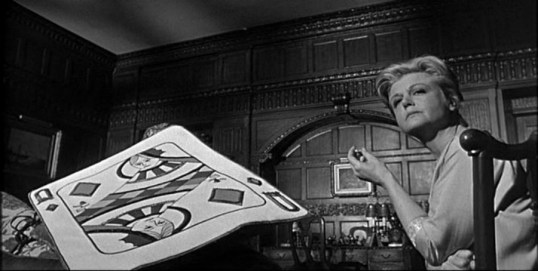
The Manchurian Candidate (1962, dir by John Frankenheimer, DP: Lionel Lindon)
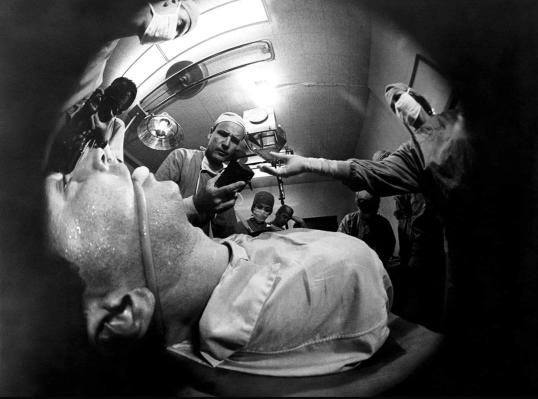
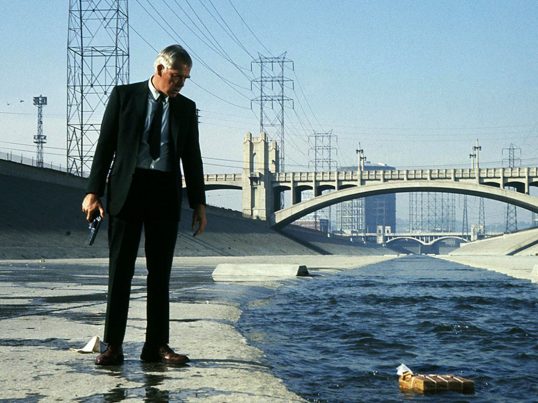
Seconds (1966, dir by John Frankenheimer, DP: James Wong Howe)
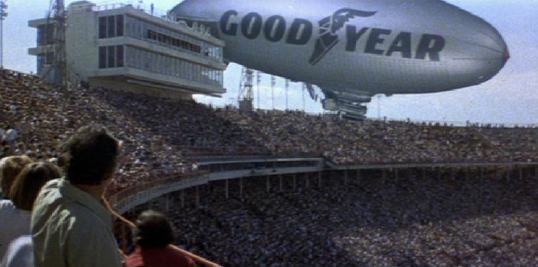
Black Sunday (1977, dir by John Frankenheimer, DP: John A. Alonzo)
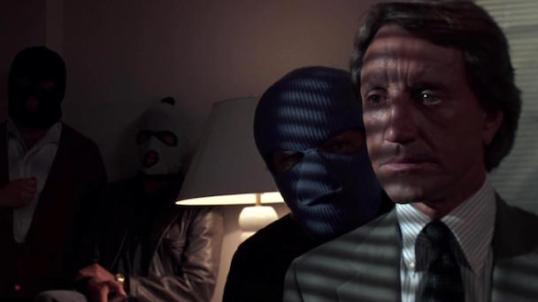
52 Pick-Up (dir by John Frankenheimer, DP: Jost Vacano)
Continuing our tribute to Lee Marvin on what would have been his 100th birthday, our song of the day is a reminder that Lee Marvin was not just a tough guy actor.
He was also a singer who had a number one single in the UK and Ireland with this song from 1969’s Paint Your Wagon! The same two weeks that Lee Marvin had the number one spot, The Beatles had the number two spot with Let It Be.
100 years ago today, Lee Marvin was born in New York City. One of the great screen tough guys, Lee Marvin played stoic and determined men who you didn’t want to upset.
That was certainly true of his role as Walker in 1967’s Point Blank. A thief who was double crossed by his partner and the organization to which his partner was in debt, Walker is determined to get back the money that he stole from someone else. Relentlessly, Walker moves from one mob boss to another and repeatedly, those bosses make the mistake of thinking that they can double cross him again.
Point Blank (1967, directed by John Boorman)
In this scene, which was reportedly considered to be shockingly violent by 1967 standards, Carter (Lloyd Bochner) attempts to fool Walker, just to discover that Walker is smarter and far more ruthless than anyone realizes.
Today’s very atmospheric music video of the day comes to us from Spain. Watching this video, ask yourself how many movies, books, and songs have been inspired by the life and crimes of Elisabeth Bathory. She may have been executed but it appears she still achieved the macabre immortality that she craved.
 At the height of the Civil War, the small town of Border City, Missouri has declared itself to be neutral ground. Mayor Delilah Courtney (Nina Varela) announces that anyone who enters her town looking to recruit for either the Union or the Confederacy will be arrested and will face the possibility of being hung from the noose in the middle of Main Street.



 Through the Shattered Lens