Last Night Retro Television Review: Monsters 1.7 “The Legacy”


Welcome to Late Night Retro Television Reviews, a feature where we review some of our favorite and least favorite shows of the past!  On Wednesdays, I will be reviewing Monsters, which aired in syndication from 1988 to 1991.  The entire show is streaming on Tubi.

Tonight’s episode of Monsters is …. surprisingly good!

Episode 1.7 “The Legacy”

(Directed by Jeffrey Wolf, originally aired on December 3rd, 1988)

Dale (David Brisbin) is a film teacher and a writer who is hoping to make his name and reputation by writing the authoritative biography of actor Fulton Pierce.  Pierce was silent film horror actor who, much like Lon Chaney Sr, was noted for his ability to physically transform himself into the monsters that he was playing.  Dale not only wants to write about the events of Pierce’s life but he also wants to explain how Pierce was able to play so many different monsters.

In order to get into Pierce’s mind, Dale moves into Pierce’s former home.  When Dale comes across Pierce’s old makeup box, he is convinced that he’s finally found the secret of Pierce’s success.  When he opens the makeup box and looks at the mirror within, he seems not his face but instead the face of some of Pierce’s most fearsome characters, including a disfigured monster and a cackling mad scientist.

For the record, the mirror apparitions are inspired by The Cabinet of Dr. Caligari, Thomas Edison’s Frankenstein, Phantom of the Opera, and maybe London after Midnight.

Dale’s girlfriend, a model named Debbie (Lara Harris), fears that Dale is wasting his time on a book that no one is going to care about.  When she drops by the house and discovers that Dale hasn’t even been able to come up with an opening line for his masterpiece, she gives him an ultimatum.  He can either spend the rest of his life trying to write his book or he can marry her but she’s not going to wait forever.  She tells him to “Make up your mind!” Dale latches onto the phrase “Make up your mind!,” shouting that he now knows how Fulton Pierce pulled off his amazing transformations.
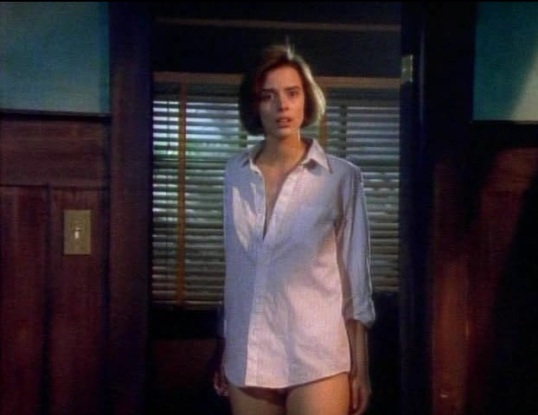
I was pretty much wearing the same outfit when I watched this episode.

At first Debbie thinks that she has made a real break-through with Dale but later, that night, she wakes up to find Dale standing in front of a mirror and staggering around like one of Fulton Pierce’s monsters.  She also discovers that the first chapter of the book is just the phrase Make Up Your Mind written over and over again.  Has Dale’s obsession led him to madness or has he truly been possessed by the spirit of Fulton Pierce?

Someone’s losing it.

This episode of Monsters was based on a short story by Robert Bloch and certainly, the plot is more intriguing than any of the stories that preceded it.  How exactly does an actor become a character and, more importantly, can you play a monster without becoming one yourself?  Can one enter the mind of a madman without becoming mad themselves?  (One wonders if Bloch, who was reportedly very much a no-nonsense personality, was satirizing the excesses of method acting.)  Though the episode is only 21 minutes long, the story doesn’t feel rushed and the deliberate pace helps to create a properly ominous atmosphere.  Add in two strong performances from David Brisbin and Lara Harris and you have the best episode of Monsters so far.
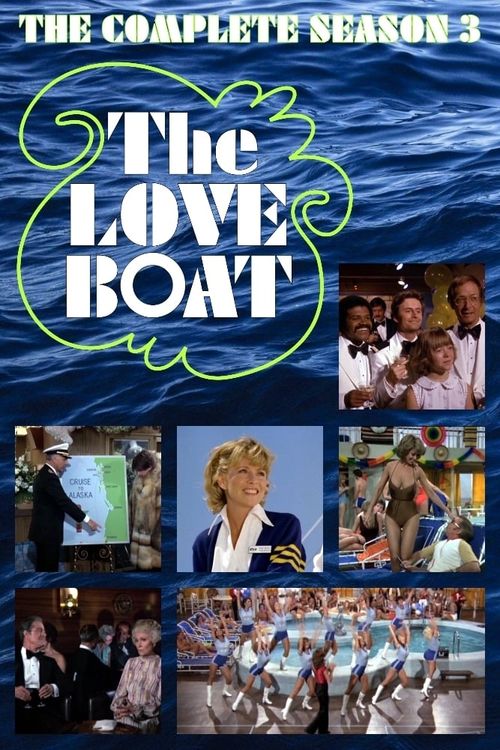
Retro Television Reviews: The Love Boat 3.16 “Making the Grade/The Gift/Doc’s ‘Ex’ Change”


Welcome to Retro Television Reviews, a feature where we review some of our favorite and least favorite shows of the past!  On Wednesdays, I will be reviewing the original Love Boat, which aired on ABC from 1977 to 1986!  The series can be streamed on Paramount Plus!

This week, Doc Bricker gets his moment in the spotlight.

Episode 3.16 “Making The Grade/The Gift/Doc’s “Ex” Change

(Dir by Gordon Farr, originally aired on December 15th, 1979)

Since the very first episode of The Love Boat, viewers have continually been told that Doctor Adam Bricker is a notorious swinger, a lothario was has been married numerous times and to whom almost every woman is immediately attracted.  There’s really not much about Bernie Kopell’s likable but rather mild-mannered performance as Doc that would lead anyone to think that any of that would be true but the show insists that Dr. Bricker is a legend of the high seas.

On this week’s episode, Doc’s most recent wife, Samantha (Juliet Prowse), boards the ship.  She and Doc split up a few years ago and they have a friendly relationship.  However, when Samantha informs Doc that her crooked lawyer never actually filed their divorce papers, Doc realizes that they are technically still married!  Will they get a quickie divorce in Mexico (which is Doc’s first idea) or will the give marriage another try?  (That’s Doc’s second idea.)  In the end, they realize that they are just too different to make a marriage work.  Samantha is smart and practical, while Doc is …. well, actually, Doc is the exact same way.  Doc insists that he and Samantha don’t have much in common but actually, they have a lot in common.  I think Doc is kind of fooling himself into thinking that he’s more of an impulsive wild man than he really is.  Anyway, at the end of the cruise, they decide to get divorced but at least they still like each other.  Doc never quit gets his heart broken like the rest of the cast does.  I guess that’s why he’s a legend.

Meanwhile, Vicki finally gets someone her own age to hang out with when Danny Harris (Johnny Timko) boards with his mother, Madeline (Jessica Walter).  Unfortunately, Danny is also kind of a spoiled brat and he’s really not happy when he discovers that his teacher, John Hurley (Dick Gautier), is also on board.  And then Danny is even more upset when John starts to romance Madeline.  And really, Danny has a point.  No one wants to see their teacher (or their boss) while they are on vacation.  And seriously, no one wants to deal with the idea of their teacher (or, again, their boss) suddenly becoming their stepfather.  That said, Danny eventually makes peace with the idea of his mom dating his teacher and everyone leaves the boat happy.

The final storyline features one of those plots that drives me crazy, because it could have easily been resolved by everyone not acting like an idiot.  Buddy Redmond (Red Buttons) boards the boat with his wife, Joan (Kaye Ballard).  Buddy claims that it’s been years since he last gambled but actually, he’s lying.  He has $2,000 in his suit pocket, money that he got from his bookie.  Joan doesn’t know about it.  When Joan hears that two other passengers, Benny Carter (frequent Love Boat guest star Sonny Bono) and Sally (Ronee Blakely), have lost their luggage, she donates Buddy’s jacket so that Benny will have something to wear at dinner.  When the envelope containing the money falls out of the jacket, Benny and Sally think that all of their financial problems have been solved.  Meanwhile, Buddy desperately wants to get back both the jacket and the money but he doesn’t want his wife to find out why.  Meanwhile, Benny and Sally need the money but they don’t want to steal it if it actually did fall out the jacket so they try to convince themselves that the envelope could have been left in their cabin by a previous passenger who is no longer on the boat.  Seriously, it’s exhausting to try to keep up with these people.  Fortunately, once Buddy discovers that Benny and Sally really need the money, he lets them keep it.  Joan is so touched that she totally forgets about the fact that her husband is apparently still a degenerate gambler.

Even by Love Boat standards, this was a silly episode.  At the same time, it was a pleasant diversion.  Juliet Prowse and Bernie Kopell made a nice couple, even if you never quite bought the idea of Doc being a playboy.  Red Buttons wisely underplayed his role and therefore, Buddy remained sympathetic even while demanding the return of his jacket.  Even Sonny Bono and Ronee Blakely were likable as a nice couple who found themselves in over their heads.  This cruise was silly but pleasant.

Film Review: The Killer (dir by David Fincher)


The Killer open with the film’s title character (played by Michael Fassbender) in an abandoned office in Paris.

He spends every day sitting in front of a window, watching the the luxury hotel across the street from him.  As is evident from the film’s title and the character’s voice-over narration, the man is a professional killer.  Sometimes, he kills up close-and-personal.  Sometimes, he kills in a way that makes the death look like it occurred naturally.  In Paris, he’s just waiting in an abandoned WeWork office with a sniper rifle.  The Killer informs us that a good deal of his time is spent waiting and getting bored.  Sometimes, he passes the time by listening to the Smiths.  Sometimes, he takes a moment or two to glance at all of the “normies” living their lives with no idea about what’s happening in the otherwise empty office above their heads.  The Killer spends a lot of time thinking about his philosophy of life and how that effects the way he does his job.  Through his voice-over narration, he talks about the huge amount of people in the world.  He talks about how an assassin should never improvise and how an assassin should never allow any feelings of empathy for other people.

That may sound like the beginning of a rather grim movie and certainly, there have been a lot of recent assassin films that have taken themselves way too seriously.  Indeed, when the movie started with the Killer going on and on and on about how he prepares for a job, I started to have unwelcome flashbacks to Andrew Dominik’s mind-numbingly pretentious Killing Them Softly.  (Really, I can only assume that everyone who was shocked by the mean-spirited ugliness of Blonde must have previously blocked Killing Them Softly from their memory.)

I need not have worried.  Fortunately, The Killer is directed by David Fincher and Fincher is far too clever a director to take any the character’s nonsense seriously.  The Killer may be obsessed with his inner monologue but Fincher clearly is not.  From the start, Fincher pokes fun at the Killer’s self-importance by having him do things like use the names of sitcom characters whenever he has to buy a plane ticket.  More often than not, the Killer’s narration is interrupted by someone proving that, despite what he may believe, the Killer does not have complete control over every situation.  All of the character’s philosophizing is ultimately his way of denying that, just like the people that he is hired to kill, he is also subject to the whims of fate.

For instance, in Paris, the job gets botched.  The Killer does not kill his target and, when he calls his handler (Charles Parnell), he’s informed that there probably will be consequences for his failure.  When the Killer returns to his home in South America, he discovers that his girlfriend has been assaulted and left near death by two other assassins.  The Killer heads to America, to confront the people that he holds responsible.  Some of those people are professionals who have offices and who live in the suburbs.  Some of them live on the fringes of society.  But all of them, like the Killer, exist in a shadowy and amoral world that makes sense to only them and which is invisible to most of the people around them.

It’s a revenge plot, the type that has been popular for decades.  (Indeed, one could easily imagine The Killer being made in the 70s with Charles Bronson playing the title role.)  The story may not be unique but the action plays out with Fincher’s signature visual style and a welcome amount of wit.  The Killer travels from Paris to South America to New Orleans to Florida to New York and eventually Chicago and each location has its own unique feel.  As always, Fincher has a terrific eye for detail and this film is at its strongest when it captures the feel of everyone else’s life going forward while The Killer remains focused on his mission.  Even the worst characters are allowed moments that humanize them.  Meanwhile, The Killer is so coldly determined that he often becomes as frightening as the people that he is pursuing.

The film is dominated by Fassbender, who is in every scene and who brings a feral intensity to the character.  The Killer may have a friendly smile but the viewer only has to look at his eyes to see just how shut off from any sort of human warmth that he actually is.  (Indeed, the Killer only seems to genuinely care about his girlfriend and, even then, we don’t learn much about his relationship with her.)  Over the course of the film, Fassbender shares scenes with Tilda Swinton, Charles Parnell, Arliss Howard, and an actress named Kerry O’Malley, who gives a sympathetic performance as a secretary who knows too much.  Everyone makes a strong impression, bringing the world of The Killer to life.

The Killer can be viewed on Netflix.  It’s a triumphant exercise in pure style.

Music Video of the Day: Sussudio by Phil Collins (1985, directed by Jim Yukich)


The music video for Sussudio was filmed at The Princess Victoria, a London pub that, at the time, was owned by Richard Branson.

This video was directed by Jim Yukich, a frequent Collins collaborator who has basically directed videos for everyone who was anybody in the music business.

Enjoy!

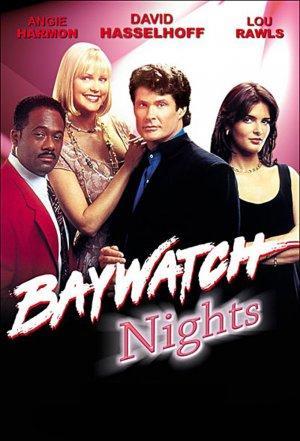
Late Night Retro Television Reviews: Baywatch Nights 1.1 “Pursuit”


Welcome to Late Night Retro Television Reviews, a feature where we review some of our favorite and least favorite shows of the past!  On Tuesdays, I will be reviewing Baywatch Nights, an detective show that ran in Syndication from 1995 to 1997.  The entire show is currently streaming on Tubi!

The year was 1995 and Baywatch, a show about lifeguards, was the most popular in the world.  Even though the critics never cared for the show, it got monster ratings.  Having played head lifeguard Mitch Buchanan for 6 years, star David Hasselhoff was growing tired with Baywatch’s format.  He wanted to try something new and that new thing was Baywatch Nights.  During the two years that Baywatch Nights aired, Mitch would spend his days as a lifeguard and his nights as a private investigator!

Baywatch Nights ran for two seasons.  The second season is remembered for featuring Mitch battling aliens, ghosts, and vampires.  The first season featured Mitch dealing with more traditional villains.  For our latest Late Night Retro Television Review, we’ll be looking at both seasons of Baywatch Nights!

Episode 1.1 “Pursuit”

(Dir by Gus Trikonis, originally aired on September 30th, 1995)

The very first episode of Baywatch Nights opens with Mitch Buchanan (played, of course, by David Hasselhoff) speaking directly to the audience.  He’s standing at his lifeguard stand, wearing his signature red Baywatch swim trunks.

“Some people,” Mitch says straight to the camera, “think that the beach closes when the sun goes down.  Uh-uh.  That’s when it really starts to heat up.”  Mitch goes on to explain that he’s working a second job as a private investigator.  His old friend, Garner Ellerbee (Gregory Alan Williams), is a partner in a detective agency with Ryan McBride (Angie Harmon), who was born in Texas, became a detective in New York, and recently moved to California.  Mitch is working with them.  Suddenly, Mitch says that he hopes those watching will enjoy this “new show.”

This brings up an interesting question.  Are we listening to Mitch or are we listening to David Hasselhoff?  If it’s David Hasselhoff talking directly to the audience, his monologue would seem to suggest that he thinks that Baywatch is real life, even though it’s a TV show.  He talks about Garner and Ryan as if they’re real people.  If we’re listening to Mitch Buchanan, that means that he has somehow become aware that he’s a character on a television show.  Has Mitch become self-aware?  Or has he realized that he’s living in some sort of Truman Show-style situation?

These are all questions that will probably never be answered.

As for the episode, it jumps right into things.  Mitch, Garner, and Ryan have their private detective offices located right above a nightclub called — wait for it — “Nights.”  Occasionally, they are helped by Destiny Desimone (Lisa Stahl), a perky blonde who spends her days doing Tarot card readings on the beach and her nights hanging out around the office.  When Ryan can’t figure out how to use a computer, Destiny is there to help  When Mitch and Garner can’t figure out how to have multiple landlines in one office, Destiny figures it all out!  It’s all very 90s, with boxy computers and long telephone cords.

Mitch’s first case involves serving as a bodyguard for a model named Cassidy (Carol Alt).  Cassidy says that someone is stalking her and she’s especially worried because another model has recently been murdered.  (“Her name was Alexa,” Mitch muses as he looks at the murdered model’s body, “This was her last photo session.”)  Mitch protects Cassidy and, of course, he falls for her but, in the end, he realizes that Cassidy has actually been stalking herself and was responsible for the other model’s death.  Mitch is shaken by his discovery of Cassidy’s guilt, even though the exact same thing previously happened to him during the first season of Baywatch, when he fell in love with a woman who turned out to be a black widow murderer.  Mitch muses that he knows how to be a lifeguard but he’s still learning how to be a private eye.

(Mitch, seriously, just watch reruns of Baywatch!  I mean, you’re only one episode into Baywatch Nights and you’re already recycling old plots so I imagine you should just keep doing what you did the first time.)

This episode’s plot is pretty predictable but, for a pilot, it’s likable.  Angie Harmon, Gregory Alan Williams, and David Hasselhoff all have a likable chemistry and, as a Texas girl, I appreciated the fact that Angie Harmon’s accent was authentic.  Mitch narrates the episode in a hard-boiled, private eye manner and David Hasselhoff’s earnest delivery is so at odds with his words that it becomes rather charming.  As a friend of mine once said when we watched him in Starcrash, “Every country should have a Hoff!”

As far as first episodes go, Pursuit does everything it needs to do.  It introduces us to the characters and their personalities.  Ryan is supercool and has really pretty hair.  Destiny is quirky.  Garner is determined.  And Mitch …. well, Mitch is David Hasselhoff.  Wisely, the first episode didn’t spend too much time trying to rationalize the idea of Mitch working all day as a lifeguard and then all night as a private eye.  Realistically, it seems like he would end up too exhausted to be good at either job.  Instead, the first episode simply tells the audience that Mitch is now a detective and that the audience better be willing to accept it.

(Unfortunately, most of the audience didn’t accept it, which is why the second episode featured Mitch dealing with sea monsters and resurrected Vikings.  We’ll get to that in a while.)

Next week, Mitch battles a group of thieves on skates!  Seriously, you know that’s going to be fun!

Retro Television Reviews: Fantasy Island 3.23 “Eagleman/Children of Mentu”


Welcome to Retro Television Reviews, a feature where we review some of our favorite and least favorite shows of the past!  On Tuesdays, I will be reviewing the original Fantasy Island, which ran on ABC from 1977 to 1986.  Almost the entire show is currently streaming is on Youtube!

This week, season 3 comes to an end!

Episode 3.23 “Eagleman/Children of Mentu”

(Dir by Michael Vejar, originally aired on May 17th, 1980)

As I watched the third season finale of Fantasy Island, I found myself growing a bit sad.  Even though I went into this program knowing that Ricardo Montalban and Herve Villechaize eventually came to despise each other, it’s still a bit jarring to see just how obvious that dislike was by the end of season 3.  Gone were the silly moments of banter that used to start each episode.  Instead, by the end of season 3, each episode opened with same stock footage of Tattoo announcing the plane and then Roarke and Tattoo heading down to the docks to meet their guests.  When Tattoo and Roarke do speak to each other, the actors barely look at each other.  As I said, it’s a shame and it’s hard not to feel that the show itself became a bit less interesting once Roarke and Tattoo stopped interacting.

As far as this week’s fantasies, they both feel somewhat familiar.  There’s a comedic fantasy and a vaguely serious fantasy, both featuring actors who had previously appeared on the show in different roles.  The comedic fantasy features Bob Denver as Morris Binstock who comes to the Island for a business retreat.  Accompanying him is his son, Barney (Keith Coogan).  Ever since the death of his wife, Morris has struggled to connect with his son.  His fantasy is to become his son’s favorite comic book hero, Eagleman!

And he gets his wish.  Roarke has set up an entire Eagleman secret headquarters in the closet of Morris’s room.  Morris puts on the Eagleman costume and he does a flew klutzy things and he gets to fly.  His son is happy.  But is Morris devoting so much time to being Eagleman that he’s running the risk of losing a promotion at work?  After all, a promotion would not only mean more money but it would also be something that would continue to exist, even after Morris left the Island.  It looks like obnoxious Hal Ripley (Larry Storch) is going to get the promotion but when the company’s CEO, H.H. Moran (Jim Backus), discovers that Morris has been pretending to be Eagleman to make his son happy, Moran makes Morris vice president.  H.H. Moran is all about family!

The more serious fantasy features Vernee Watson as Rochelle McKenzie, a reporter who is trying to track down Dr. Arthur Gates (Ralph Bellamy), a millionaire who vanished one day.  Roarke explains that Dr. Gates has been spotted on the nearby Island of Mentu.  Roarke warns her that the inhabitants of Mentu are not friendly and Rochelle will be putting her own life at risk if she goes to the island,

Rochelle still goes to the island and guess what?  Roarke was not lying about those angry inhabitants.  One of the men is horribly scarred.  Another has to use a crutch but still growls at every human he sees.  The island and the natives were exploited by a mining company and now, the natives distrust almost everyone they see.  However, Dr. Gates has decided to dedicate his life to taking care of them.  That’s a good thing because it turns out that the scarred native has a sick child and only Dr. Gates can provide the proper medical attention.

Both stories are fairly silly, though at least Rochelle’s story gives Ralph Bellamy a chance to take on the type of role that was usually given to Ray Milland.  If you only know Bellamy as the guy who was constantly getting dumped for Cary Grant in the 30s and 40s, this episode allows Bellamy a chance to show that he could be a likable and authoritative actor.  As for the Eagleman story, it was kind of uncomfortable to watch because Bob Denver looked like he was in his early 60s and it was hard not to worry about him seriously injuring himself whenever he put on the costume.

There’s an interesting moment in Rochelle’s fantasy, in which she tells Mr. Roarke that she feels foolish coming to the Island in pursuit of a “fantasy.”  She feels that she’s being childish but Roarke explains that fantasies are not childish and that one should always pursue their dreams.  Whether it was intentional or not, this scene serves as a mission statement for the entire series.  Yes, Fantasy Island was frequently silly and childish but, in the end, it still resonates because people will always have dreams and they will always have fantasies.  There will always be a place for Fantasy Island.

Music Video of the Day: I Pronounce You by The Madness (1988, directed by ????)


The Madness was a short-lived ska band that was primarily made up for four members, lead vocalist Suggs, saxophonist Lee Thompson, guitarist Chris Foreman and vocalist Cathal Smyth.  (Various guest musicians filled in one drums and bass.)  As you can probably guess by the band’s lineup, The Madness was an off-shoot from the band, Madness.  Madness had temporarily broken up over creative differences so the four members of the band who were still on speaking terms formed a new group by adding a “The” to their old name.

The Madness released one self-titled album, from which I Pronounce You was the first single.  The song imagines the feelings of bride on the eve of her arranged marriage.  At the time that this video was released, Chris Thompson described it as being a video on which the band “tried to be serious.”  Of course, serious has always been a relative term when it comes to Madness.

The Madness broke up after their first album but, fortunately, all seven of the members of Madness would come back together in 1992 and the band is still going strong.  Their latest album is set to be released at the end of this week.

Enjoy!

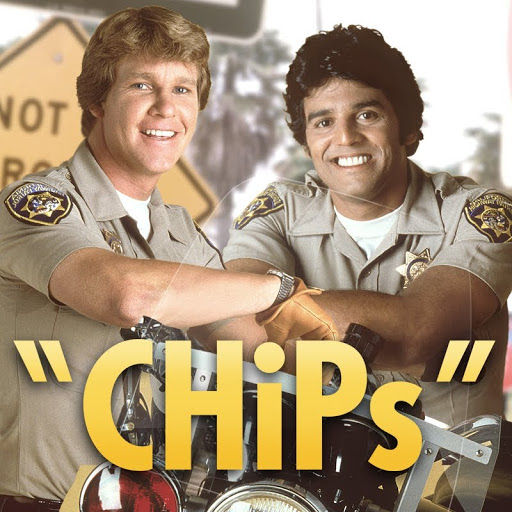
Late Night Retro Television Reviews: CHiPs 1.1 “Pilot”


Welcome to Late Night Retro Television Reviews, a feature where we review some of our favorite and least favorite shows of the past!  On Mondays, I will be reviewing CHiPs, which ran on NBC from 1977 to 1983.  The entire show is currently streaming on Freevee!

When I was trying to pick a show to review after finishing up Nightmare Café, Jeff suggested that I go with CHiPs, a very 70s show about the adventures of the California Highway Patrol.  I agreed after he showed me two episodes that involved a roller disco.  I mean, how could I resist?

Of course, we won’t get to the roller disco for a while.  That happened at the start of season 3.  Instead, we’re starting at the beginning, with the pilot.  The year was 1977.  Jimmy Carter was president.  Jerry Brown was the governor of California.  And two cops on motorcycles were about to roll into history….

Episode 1.1 “Pilot”

(Dir by Paul Krasny, originally aired on September 15th, 1977)

The pilot for CHiPs doesn’t waste any time in introducing us to our two main characters.  When we first see officers Jon Baker (Larry Wilcox) and Frank “Ponch” Poncharello (Erik Estrada), they’re on their police motorcycles and chasing after a stolen sportscar.  The chase being on the freeway and then eventually leads into Los Angeles.  Unlike the live police pursuits that we regularly see on television, this chase is unique in that there aren’t any other police officers involved, other than Baker and Ponch.  Maybe that’s the way that cops did things in the 70s but it does seem like Baker and Ponch would have had an easier time of it if they had some backup.  As it is, they don’t catch the thief but Ponch does crash his motorcycle.

Sgt. Joseph Getraer (played by Robert “father of Chris” Pine) is not amused to learn that Ponch has damaged another motorcycle.  The pilot wastes no time in establishing that Baker is the responsible, good cop while Ponch is the wild cop who takes risks and is always in trouble with the brass.  In fact, Ponch is on probation because of all the disciplinary reports that have been written against him.  Baker insists that Ponch is a good cop but it does seem like Ponch does manage to frequently crash his motorcycle.

Apparently, Larry Wilcox and Erik Estrada did not get long while they were co-starring on CHiPs.  That’s not surprising.  That tends to happen on a lot shows.  What is interesting is that, even in the pilot, neither one of the actors seems to be making much of an effort to even pretend to like the other.  Whenever Estrada flashes his big smile or dramatically looks up to the heavens, Wilcox looks like he’s having to use every bit of his willpower not to roll his eyes.  I always point out when two performers don’t have any romantic chemistry.  CHiPs is an interesting case where there isn’t even any friendship chemistry.  At no point, during the pilot, do you get the feeling that either Baker or Ponch would really be that upset if the other was reassigned to some other part of the highway patrol.  Even in the scenes where Baker defends Ponch as being a good cop, Larry Wilcox seems to be delivering the lines through gritted teeth. 

As for the episode itself, it really is standard 70s cop show stuff.  The stolen cars are being smuggled in a moving truck and, eventually, Baker and Ponch spot the bad guys on the highway and, after a chase, they catch them.  Of course, before they do that, they deal with two accidents (one involving a glue truck and another featuring a woman trapped in an overturned car and yes, Ponch does get her number) and Baker orders a kid on a bike to pull over so he can give him some advice about riding in traffic.

As I said, it’s all pretty standard.  But that doesn’t matter because, from the first minute we see them, the motorcycles are extremely cool and so are the scenes of Ponch and Baker weaving in and out of traffic while pursuing the car thieves.  Baker may be dull and Ponch might come across as being more than a little flaky but no one is really watching for them.  The pilot is all about celebrating the idea of driving fast on the highway and basically reminding the world that you don’t have to follow the rules, even if you are the one who enforces them!  If you don’t want to join a car theft ring, you can always just get a badge and a motorcycle.  Either way, it’s ton of fun!

For all of the episode’s obvious flaws, it was still easy for me to understand why this pilot led to a series.  Motorcycles are cool!  Will they still be a cool after 100+ episodes of CHiPs?  That’s what we’re about to find out.