October Positivity: A Distant Thunder (dir by Donald W. Thompson)


The 1978 film, A Distant Thunder, opens with a group of people confined in what appears to be a high school gym.  They have cots to sleep on and not much else.  They have been informed that they have a choice to make.  They can either agree to take “the mark” and declare their allegiance to the United Nations and Brother Christopher or they can be executed.  They have a day to decide.

Many of the people are willing to go to their death rather than get the mark.  But Patty Myers (Patty Dunning) isn’t so sure.  Her friends and fellow prisoners encourage her to refuse the mark but Patty says that she doesn’t know if she can stay loyal to a God who would allow so many bad things to happen.  One of her friends asks Patty to tell the story of how she came to be a prisoner of UNITE, the UN’s secret police force….

A Distant Thunder is a sequel to 1972’s A Thief In the Night and the first twenty minutes of A Distant Thunder is made up of flashbacks to the previous film.  Once again, we see how Patty had a dream about waking up to discover that her husband and all the other Christians in the world had mysteriously vanished and now, the UN was in charge of everything.  We even get the phenomenom of flashbacks within flashbacks as Patty remembers the times that she remembered her former life.  A Thief In the Night ended with Patty being tossed over a bridge by her friends, Jerry (Thom Rachford) and Diane (Maryann Rachford), just for Patty to then wake up and discover that her husband really was missing and her dream was coming true!

Once A Distant Thunder finishes up its recap of the first film, it follows Patty as she hides out on a farm with her friends, Wenda (Sally Johnson) and Wenda’s little sister, Sandy (Sandy Christian).  While they hide out, the world around grows more and more hostile.  There are wars.  There is a plague.  Brother Christopher announces that everyone will be required to have a special form of identification if they want to buy products, receive government food, or even get healthcare for their children.  Eventually, Brother Christopher announces that the identification is no longer optional.  People can either get the mark or they can face execution.  Wenda, who goes from being a nonbeliever to being a Christian, is determined to not get the mark.  Patty is more conflicted.

At a church-turned-death house in Des Moines, Patty, Wenda, and Sandy wait for their time with the guillotine and also their chance to make their final decision….

A Distant Thunder was made by the same people who did the first film and the majority of the first film’s cast returns for the sequel, which provides a nice sense of continuity between A Thief In the Night and A Distant Thunder.  Unfortunately, A Distant Thunder never quite reaches the fever dream intensity of A Thief In The Night.  A Thief In the Night worked because its imagery often captured the stark horror of an intense nightmare.  A Distant Thunder is a much more talky film and, as such, it exposes the defecencies of the largely amateur cast.

That said, there are a few moments where A Distant Thunder matches the first film’s atmosphere of paranoia.  As with the first film, A Distant Thunder benefits from having been filmed in Ames, Iowa.  Seeing the forces of UNITE invading the actual heartland was surreal in a way that the film never would have been if it had been set in a large and familiar city.  The scene where Patty and Wenda first see the guillotine is also effectively done.  It’s a frightening sight, all the more so because it’s standing in front of a fairly innocuous-looking church.  Seriously, people make fun of guillotines now but, as devices of punishment, they pretty much radiated the promise of a bloody death.

That said, the film is done in by its slow pace and its less than convincing performances.  Still, A Distant Thunder was enough of a success that it led to a sequel that I’ll look at tomorrow.

Late Night Retro Television Reviews: Gun 1.4 “All The President’s Women”


Welcome to Late Night Retro Television Reviews, a feature where we review some of our favorite and least favorite shows of the past!  On Tuesdays, I will be reviewing Gun, an anthology series that ran on ABC for six week in 1997.  The entire show is currently streaming on Tubi!

This week, Robert Altman!  This will be good …. right?

Episode 1.4 “All The President’s Women”

(Dir by Robert Altman, originally aired on May 10th, 1997)

When it comes to the fourth episode of Gun, I have to admit that my expectation were high because this episode was the only one in the series to be directed by Gun’s producer, Robert Altman.  The story, about the womanizing president of a golf club, sound like it would be right up Altman’s alley and allow him to engage in the social satire for which he was best-known.

Unfortunately, the episode itself just isn’t that good.  In fact, it’s the worst episode of Gun that I’ve seen so far.  Watching the show, it’s easy to see that Altman directed it.  There’s several very Altman-like moments.  The show’s plot and its characters all tend to mirror Altman’s trademark obsessions.  That said, for all of Altman’s strengths as a filmmaker and a satirist, he was also a bit self-indulgent and this episode is basically 50 minutes of Altman patting himself on the back and bragging about how clever he is.

The film takes place at a golf club in Texas.  After the club’s president is bitten by a rattlesnake and then accidentally shoots himself in the foot while trying to kill the snake, Bill Johnson (Randy Quaid) is elected as his replacement.  Bill is friendly but shallow, a businessman who is all about prestige and showing off his wealth.  While his wife (Daryl Hannah) spends her time researching real-life presidents, Bill is having an affair with the former’s president’s widow (Jennifer Tilly) while also flirting with his new secretary (Dina Spybey).  Meanwhile, another former lover (Sean Young) is now his attorney while Sally Kellerman plays Jennifer Tilly’s mother and continually warns Bill to stay away from her daughter.

Bill is shocked to discover that someone is sending packages to the women in his life.  Jennifer Tilly receives the gun that was used to shoot the rattlesnake.  Darryl Hannah receives the magazine.  Sean Young receives the bullets.  If you can’t already guess that this is going to end up with Bill in his underwear on the 18th hole, being menaced by a woman carrying a gun, I don’t know what to tell you.

This episode just falls flat and it’s largely the fault of the cast.  Randy Quaid, at the very least, has a Texas accent but he’s not a convincing lothario.  The women all butcher their accents, with the majority of them sounding more like they’re from Georgia than Texas.  Most the cast goes overboard with their quirkiness while Altman directs in a meandering fashion that robs the episode of whatever satirical impact that it might have had.  It’s just a boring episode, regardless on the nails-on-a-chalkboard accents and all the overacting.  Watching this episode, I was reminded of why I usually can’t stand anthology shows.  They just seem to bring out the worst in everyone.

Next week, Kirsten Dunst guest stars.  Did Gun bring out the worst in her?  We’ll find out!

The Rangers Wil Be Playing The Diamondbacks In The World Series!


Congratulations to the Arizona Diamondbacks for winning the NLCS!  They beat the Phillies in Game 7 and I’m actually really proud of them.  Just like with my Rangers when they were playing the Astros, the Diamondbacks were the underdogs.  A lot of people wrote off their chances with the Phillies took the lead in the series.  But the Diamondbacks never gave up and never stopped fighting and they won Game 7 with a score of 4-2!

Not only did both the Rangers and the Diamondbacks prove the naysayer wrong but they also saved us from having to sit through another Phillies/Astros World Series.  I’ll be cheering for my Rangers but I’m still happy for the Diamondbacks and all of their fans!

Go Rangers!

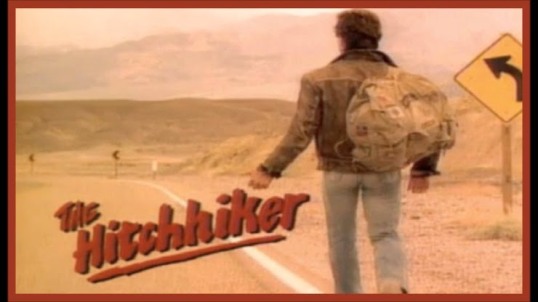
Horror On TV: The Hitchhiker 6.2 “Tough Guys Don’t Whine” (dir by Jorge Montesi)


Let’s give some credit to whoever came up with the title of tonight’s episode of The Hitchhiker!

In this episode, Alan Thicke plays a skeevy movie director who likes to pretend to be a tough guy.  When he hooks up with the girlfriend of a genuine tough guy, the director discovers that he’s not quite as streetwiswe as he thought he was.  The Hitchhiker doesn’t seem to have much sympathy for anyone involved.

This episode originally aired on September 28th, 1990.

October Hacks: Sleepaway Camp (dir by Robert Hiltzik)


So much attention has been devoted to dissecting and discussing the ending of 1983’s Sleepaway Camp, that I think people tend to overlook the bigger issue.  This film is the biggest argument against summer camp over filmed.

Seriously, don’t send your kids to camp!  Don’t get a job working at a camp!  Don’t live anywhere near a camp!  If someone tries to open a camp near your home, gather together a posse and run them out of town!  If you discover an abandoned camp within one hundred miles of your home, set the place on fire!  Camps are bad news.  They attract bullies and tragedy and murder.  If there’s anything that I’ve learned from watching the horror movies of the early 80s, it’s that summer camps mean trouble.

Consider the camp in Sleepaway Camp.  Even before the murders start, the place comes across as being a prison camp.  Seriously, I’ve seen a lot of summer camps in a lot of slasher films and it’s hard to think of any of them that look as shabby and dirty as the camp in Sleepaway Camp.  None of the campers appear to be happy to be there.  No one is allowed to leave.  The campers are divided into two groups, the bullies who rule the place like mini-tyrants and the poor kids who spend the entire summer being beaten up and taunted.  Not even the counselors are worth much.  Counselor Meg (Katherine Kamhi) is best friends with the camp’s main mean girl, Judy (Karen Fields).  Meg is the type who tosses a camper in the lake, just because Judy tells her to.  Meanwhile, the owner of the camp is named Mel (Mike Kellin) and he’s just an old perv who doesn’t want to bothered with anyone’s problems.  What type of horrific world is this?

And then, let’s consider some of the murders at the camp.  The skeevy camp cook get scalded with boiling water.  (It’s debatable whether the cook actually dies or not.)  Kenny, one of the camp’s bullies, get drowned while playing a canoe-related prank.  Another bully is stung to death by bees.  That’s just three of the many deaths here and yet, the camp never closes.  It never occurs to the camp’s owner to send anyone home.  It never occurs to anyone that maybe they should send the campers to another camp.  None of the deaths lead to an increased police presence nor does it lead to any changes with the camp’s schedule.  None of the campers appear to be particularly upset by all the deaths.  It’s a disturbing world.

Everyone who dies at the camp earlier picked on Angela (Felissa Rose), an introvert who ends up getting targeted by Judy.  Angela’s cousin, Ricky (Jonathan Tiersten), is very protective of Angela and, as a result, he becomes the number one suspect.  As the film’s ending reveals, the truth is something much different.  The film ends with a justifiably famous shot and it does stick with you as the end credits role.  It’s tempting to read a lot of meaning into the film’s ending but I imagine that’s giving the filmmakers a bit too much credit.  The film was made for 1983 audiences who were looking for a shock, not 2023 cultural critics.

Even before that ending, though, Sleepaway Camp is a bit more creepy than the average 80s slasher film.  The killer is relentless and ruthless and it’s disturbing that the victimized campers are played by performers who are close to the age of their victims as opposed to the usual 30 year-old who played teenagers in these type of films.  The scene with the curling iron is something that I can only watching through the fingers that I’m holding in front of my eyes.  It’s not a great film by any stretch of the imagination but it does definitely capture the feel of being at the worst summer camp imaginable (seriously, one can hear the flies buzzing and even smell the stale order of stopped-up plumbing) and it does stick with you after you watch it.  It’s nothing to lose your head over, it’s just too bad no one told that to the campers.

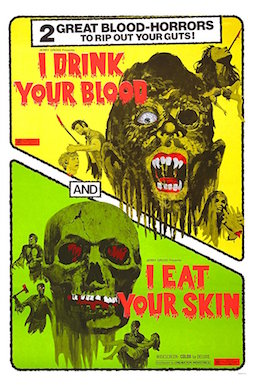
The TSL Horror Grindhouse: I Drink Your Blood (dir by David E. Durston)


Put yourself in the shoes of the townspeople in 1971’s I Drink Your Blood.

Here you are.  You’re minding your own business.  Life isn’t great because of the economic downtown.  Your town is nearly deserted and is basically full of empty buildings.  In fact, it seems like there are currently more construction workers around then townspeople.  The workers are working on the dam.  Maybe a dam will help the area.  Maybe it won’t.

The sexist construction workers are kind of a pain but then, things get even worse when a bunch of hippies show up.  Led by the mysterious Horace Bones (played by dancer Bhaskar Roy Chowdhury), these are not your typical (if annoying) peace-and-love hippies.  These hippies have more in common with the Manson Family than they do with the commune folks from Easy Rider.  They are a remarkably diverse group of hippies.  Some of them are young.  Some of them are older.  Some of them really enjoy attacking other people.  Some of them are just along for the ride.  For his part, Horace is really into Satanism and human sacrifice and he encourages his followers to feel the same way.  Has anyone nice ever been named Horace Bones?

When the cultists assault a local girl named Sylvia (Arlene Farber), they are confronted in the abandoned building in which they are squatting by Sylvia’s grandfather, Doc Banner (Richard Bowler).  They proceed to beat up the kindly doctor and they force him to take LSD.  Sylvia’s younger brother, Pete (Riley Mills), get revenge by injecting the blood of a rabid dog into several pies and then selling them to Horace and his hippies.  Almost all of the hippies eat the pies and soon, they are foaming at the mouth and rampaging through the countryside, infected by and spreading rabies.  One of the hippie women ends up having sex with all of the construction workers, which leads to the rabies spreading even more.  Soon, it’s hippies vs hardhats as the fights happening across the real world are repeated in small town America.  Of course, there’s no police around to break up the fights and, thanks to the rabies, everyone is fighting to the death.  Heads are ripped off.  Electric knives are used to carve more than just food.  People are set on fire.  Blood is definitely drank.

Only one hippie didn’t eat the pies.  Andy (Tyde Kierney) was never a big fan of Horace’s Manson-like tendencies and he pretty much draws the line at human sacrifice.  Andy flees from Horace’s world and finds himself with Sylvia, Pete, and Mildred (Elizabeth Marner-Brooks), the owner of the local bakery.  The four of them struggle to survive in a world that has literally gone mad.

I Drink Your Blood was, not surprisingly, controversial when it was first released.  It was one of the few films to be given an X-rating for its violence as opposed to its sexual content.  It is definitely violent, though it’s really nowhere near as graphic as some of the R-rated horror films that have come out over the past few years.

I Drink Your Blood is a classic grindhouse film, one that takes a fairly ridiculous premise and works wonders with it.  The crazed hippies fighting the far more blue collar construction workers stand in for the fanatical soldiers in America’s cultural wars, with innocents like Sylvia, Pete, and Mildred caught in the middle with Andy.  Director David Durston mixes horror and satire with a deft hand, suggesting that the rabies is ultimately just allowing people to show their true selves.  I Drink Your Blood is an underground classic and thematically, it’s portrayal of a rabid world is just as relevant today as when it was first released.

Evil Obsession (1996, directed by Richard W. Munchkin)


11 models have been murdered in Los Angeles and Margo (Kimberly Stevens) fears that she could be next.  She’s been receiving threatening notes and feels as if someone is watching her and her boyfriend, Bill (Michael Phenicie).  She hires a private detective (Mark Derwin) to protect her but it might be too late because Homer (Corey Feldman), the man who has been sending her the notes, has already enrolled in the same acting class of Margo.  After Bill turns up dead, Homer is assigned to be Margo’s new scene partner.  Is Homer moving in for the kill or is someone else responsible for the murders?

This mix of erotic thriller and horror was one of those movies that used to show up on a late night Cinemax in the 90s, where it could be watched by teenagers who kept one eye on the screen and one eye looking out for their parents.  Corey Feldman starred in a lot of these films and in this one, he gives a twitchy and occasionally funny performance as the nerdy Homer.  Homer is the most obvious stalker imaginable and it’s hard to believe that Margo, who is so concerned about being stalked that she’s hired a private detective, would not look at Homer and immediately realize that he was the culprit.  Feldman overacts but he at least provides the film with the energy that is missing from the performances of Kimberly Stevens and Mark Derwin.  Even better is the performance of Brion James as the autocratic and pretentious acting teacher.  Watching him, I got the feeling that James probably could have based his performance on any number of Hollywood acting coaches.

Retro Television Reviews: Fantasy Island 3.20 “Nona/One Million B.C.”


Welcome to Retro Television Reviews, a feature where we review some of our favorite and least favorite shows of the past!  On Tuesdays, I will be reviewing the original Fantasy Island, which ran on ABC from 1977 to 1986.  Almost entire show is currently streaming is on Youtube!

This episode features a trip to the past and a surprisingly good turn from Peter Graves.

Episode 3.20 “Nona/One Million B.C.”

(Dir by Earl Bellamy, originally aired on March 1st, 1980)

This week, we have another episode of Fantasy Island in which a somewhat effective fantasy is matched with an incredibly dumb one.

The dumb fantasy involves two women (Phyllis Davis and Jo Ann Pflug) who want to go back to a time when men took care of everything and women didn’t have to do anything.  They’re sick of all that women’s lib stuff!  Mr. Roarke explains that their fantasy is rather vaguely worded and then sends them back to the time of dinosaurs and cavemen.  (Of course, dinosaurs and cavemen didn’t exist at the same time but whatever.)  After the two women are nearly killed by a Claymation dinosaur, they are taken in by a tribe of cavemen.  Since their modern clothes were ruined in all the excitement, they are given fashionable fur outfits to wear.  Despite the fact that they’ve gone back to One Million B.C., the new animal skins outfits have built-in bras, showing that the cave people were more advanced than anyone realized.

Anyway, living in a cave sucks but, fortunately, it turns out that tribe’s leader (Neville Brand) is actually just Mr. Roarke in disguise.  Just as the cavemen find themselves in a battle with another tribe of cave dwellers, Roarke reveals himself and ends the fantasy.  Yes, it was dumb.

The other fantasy was significantly better.  Ned J. Scott (Peter Graves) is a former Chicago cop who is now blind but still obsessed with finding the whereabouts a missing actress named Nona (Joanna Pettet).  Roarke gives Scott one of his magic potions, which briefly returns his ability to see.  Fortunately, Nona is on Fantasy Island, being held prisoner by a knife-wielding pimp (Edd Byrnes).  Scott saves her from the pimp, encourages her not to be so critical of herself, and reunites Nona with her family before losing his eyesight once again.  Nona, having fallen in love with Scott, declares that she loves him whether he can see or not.  They leave the Island together.  Awwwwww!

The second fantasy had its flaws, not the least of which was that Nona certainly got over being a sex slave in record time.  But, almost despite itself it still worked.  A lot of that is due to Peter Graves.  Graves, who we normally think of as being something of a stiff actor, gives a very emotional performance here and the viewer never doubts for a second his love for Nona.  Graves especially does a good job in the scenes where Scott realizes that his vision is starting to fade and that he will soon be blind again.  He gives a fully committed performance, one that elevates the fantasy.

Finally, this episode features one brief scene of Roarke and Tattoo banter.  (Roarke and Tattoo banter used to be one of the show’s trademarks but it was rarely seen during the third season.)  Roarke tricks Tattoo into thinking that he’s just taken an invisibility serum.  It’s a bit cruel but at least they were speaking to each other again.

Horror Scenes I Love: Anthony Perkins In Psycho


Poor Anthony Perkins!

Anthony Perkins did not start his career as a horror icon.  A talented young actor, Perkins started his career on Broadway and eventually, he started to appear in films.  From the start, he was usually cast as nervous young men, the type who awkwardly smiled and struggled to talk to people.  Perkins was promoted as a romantic lead, with the Studios and his agents making sure that Perkins was regularly photographed dating Hollywood starlets like Natalie Wood.  As witty off-screen as he was nervous on-screen, Perkins was a popular figure in Hollywood.  He received his only Oscar nomination for his performance as a young Quaker in 1956’s Friendly Persuasion.

Perkins’s entire career changed when Alfred Hitchcock cast him as the seemingly timid motel owner in 1960’s Psycho.  Perkins was reportedly Hitchcock’s first choice for the role, with Hitchcock saying that he felt only Perkins or Dean Stockwell was capable of bringing Norman to life.  Perkins was not nominated for Best Actor but the role pretty much defined him in the eyes of many.  Perkins spent the rest of his career trying to first escape the shadow of Psycho and then eventually embracing his status as an icon of horror.

Perkins’s performance has been imitated so many times that there’s a tendency to forget just how good he is in the role.  In this episode, Perkins-as-Norman discusses his mother with Janet Leigh.