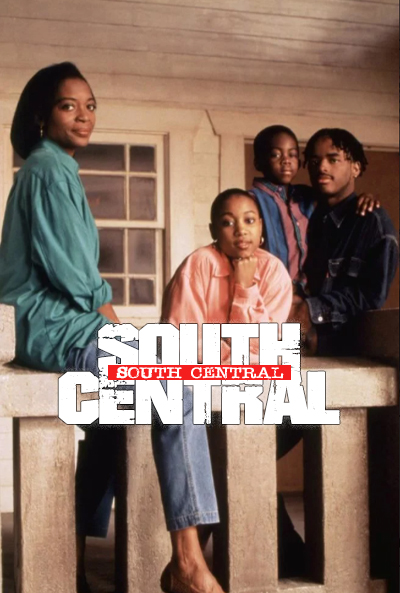
Retro Television Reviews: South Central 1.7 and 1.8 “Gun”


Welcome to Retro Television Reviews, a feature where we review some of our favorite and least favorite shows of the past!  On Thursdays, I will be reviewing South Central, which aired, for 10 episodes, on Fox in 1994.  The entire show is currently streaming on YouTube!
This week, Andre gets a gun!

Episode 1.7 and 1.8 “Gun”

(Dir by Stan Lathan, originally aired on May 24th, 1994)

I’m not a huge fan of the song Amazing Grace.

Okay, allow me to clarify.  I know that it’s an important song.  I know that it’s a song that was at least partially written as a protest against the Atlantic slave trade.  I know that it’s a song that means a lot to many people.  But I have to admit that I cringe whenever someone starts singing it in a movie or on a TV show because it’s always sung in such an overwrought manner and it usually indicates that the program is about to take an extremely heavy-handed term.

I point this out because the first 30 minutes of Gun features Tasha singing Amazing Grace several times around the house, once while a police helicopter hovers over her house.  My first instinct was to cringe but actually, upon watching a second time , I realized that the scene with the helicopter is a powerful moment.  Tasha sings not only in defiance of the police but the helicopter’s spotlight briefly turns her front porch into a stage.  After six episodes of Tasha continually being told to sacrifice, it was nice to see a rare episode in which Tasha actually got a moment of triumph.

The majority of this two-part episode centers on Andre.  Just as Tasha has spent six episodes being expected to constantly sacrifice for the family, Andre has spent six episodes trying to come to terms with the death of his brother Marcus while living up to his mother’s expectations and also trying to pursue a relationship with Nicole.  In order to see Nicole, Andre has been riding the bus and, as we’ve seen, he’s gotten mugged, beaten up, and continually harassed for his troubles.  This episode, Andre takes two things with him on his latest trip to Nicole’s.  One is a pack of condoms, which leads to Nicole telling him that she doesn’t want to see him again unless he can figure out how to articulate how he really feels about her.  The other is his mother’s gun, which he tucks in the waistband of his pants and which he flashes when a guy starts to give him and Rashad trouble.  Rashad is excited about the gun, announcing that he and Andre now have “juice” and treating it almost like a toy.  Andre, who has actually lost a family member to gun violence, is more serious about it, telling Rashad that he would like to use it on the people who killed his brother.  (Of course, while Andre and Rashad stand in the house and handle the gun, Deion stands silently in the background, taking it all in.)

One interesting thing about this episode is that Andre’s mentor, Ray, is nowhere to be seen nor is he mentioned, even when Joan grounds Andre for forgetting to pick up Deion.  Given the fact that Ray was last seen realizing that Joan will probably never love him the way the he loves her, it makes sense that Ray might need a break from the Mosely family but it also means that there’s no one, outside of his family, for Andre to talk to, with the exception of Rashad.  At the Ujamaa Co-op, Bobby attempts to reach out to Andre and Rashad, telling him that he heard they had trouble on the bus and warning them about young men carrying guns.  As well-intentioned as Bobby is, both Andre and Rashad are too young and immature to really understand his message of building up the community as opposed to destroying it.  As opposed to Ray, who sometimes seemed too distant from the realities of life in Andre’s neighborhood, Bobby understands what is happening in the community but his insistence on trying to view everything in idealistic terms makes him ineffectual as an authority figure.

(If anything, Earl Billings’s perpetually annoyed Mayo Bonner, who trusts no one, seems like he might be the wisest of the older men on the show but his bad-tempered comments are mostly just played for laughs.)

Days later, Joan agrees to allow Andre to go to the High Life Party being held at the Co-op.  Andre knows that Nicole will also be at the party and he wants to give her a letter that he’s spent the last few days writing and re-writing.  While Joan and her next-door neighbor Sweets go through Andre’s bedroom and discover not only his condoms but also a first draft of the letter that he wrote for Nicole, Andre meets up with Nicole at the Co-op and ruins everything by once again flashing his gun at a guy who rudely steps in front of Nicole.  Nicole leaves, even though her best friend Candi, who has taken a sudden interest in Rashad, refuses to leave with her.  Andre chases after her and, on the bus, he tells her that only carries the gun for protection.  Nicole says that her parents were right about Andre and refuses to talk to him for the rest of the ride.  After Nicole gets off the bus, Andre tears up the love letter that he was going to give her and realizes that he will probably never see her again.

Yep, just another not-so happy ending on South Central!  That said, it was also a realistic ending and the show deserves a lot of credit for having Nicole react realistically to Andre’s aggressive behavior.  She freaks out when she sees that he has the gun and all of his excuses (and they are just excuses) cannot fix the damage of that one moment.  And Nicole is totally in the right.  What if the guy at the party had a gun?  What if someone on the bus had a gun?  Carrying a gun for protection is one thing and certainly, Andre has had enough bad things happen to him on this show that one can understand why he would feel like he needs some sort of protection.  But, at the Co-op, there was no threat.  Andre showed off the gun just to intimidate someone else.  I would have dumped Andre too.

This was a powerful episode.  In the end, Andre swears that he’s never going to carry another gun and watching it, the viewer hopes that he’s telling the truth but also knows that life is never as simple as one might hope.

Next week: we finish up South Central!

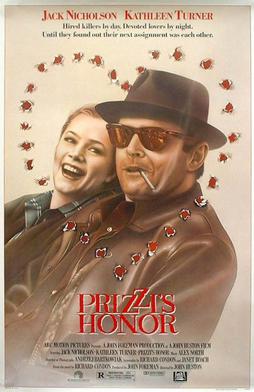
Lisa Reviews An Oscar Nominee: Prizzi’s Honor (dir by John Huston)


First released in 1985, Prizzi’s Honor tells the story of Charley Partanna (Jack Nicholson), a blue collar guy who lives in Brooklyn and who is a hard-working hit man for the Prizzi crime family.  Charley is the son of Angelo (John Randolph), who is the right-hand man to the family’s elderly but still ruthless Don (William Hickey).  In the past, Charley came close to marrying the Don’s daughter, Maerose Prizzi (Anjelica Huston), and he is almost as much a member of the family as the Don’s two sons, Eduardo (Robert Loggia) and Dominic (Lee Richardson).

While attending a family wedding, Charley meets and is immediately infatuated with a woman named Irene Walker (Kathleen Turner).  Later, when Charley is sent to California to kill a man who robbed one of the family’s Vegas casinos, he is shocked to discover that the man is Irene’s husband.  Irene swears that she didn’t have anything to do with the casino theft and, after a whirlwind courtship, Charley and Irene get married in Mexico.  What Charley doesn’t know (but eventually discovers) is that Irene is herself a professional killer.  While Charley and Irene try to balance work and love, Maerose conspires to turn the family against Irene and win Charley back.

Directed by the legendary John Huston, Prizzi’s Honor is pitch black comedy about two hard-working people who kill for a living.  (The film’s big set piece is an extended sequence in which Charley and Irene’s attempt to pull a job together goes wrong in every way and they end up arguing about their relationship while dragging dead bodies from one room to another.)  Though Prizzi’s Honor was released long before the series premiered on HBO, the film feels almost like a companion piece to The Sopranos, full of mobsters who are not as clever as they think they are and who struggle to uphold the old ways in an increasingly complicated world.  Particularly when compared to the gangster who populate a film like The Godfather, the Prizzis are defined by their pettiness.  If Don Corleone epitomized wisdom and honor, Don Prizzi epitomizes someone who holds onto power solely for power’s sake.

Prizzi’s Honor is one of those films that probably seemed a bit more revolutionary when it was first released than it does today.  At this point, we’ve seen so many films about hired killers who have quirky conversations while carrying out their work that the mix of violence and dark humor can feel almost like a cliché.  As well, there are certain parts of the film, like the opening wedding sequence, that feel as if they go on for just a few minutes too long, as if John Huston himself was not always comfortable with the balance between the dark drama and the comedy of mob manners.  That said, Jack Nicholson, Kathleen Turner (who gives a performance worthy of the great femme fatales of film noir), Anjelica Huston, John Randolph, and especially William Hickey all give strong enough performances to hold the audience’s attention and the film’s finale cuts to the point in such a way that it leaves you reconsidering everything that you’ve previously seen.  Prizzi’s Honor has its flaws but Nicholson and Turner have such chemistry that the film’s ending sticks with you.

Prizzi’s Honor was nominated for 8 Oscars, including Best Picture, Best Director, Best Actor, and Best Supporting Actor for William Hickey.  (Oddly, Kathleen Turner was not nominated for playing Irene.)  In the end, it only won one Oscar that year, for supporting actress Anjelica Huston.  The Oscars that year were dominated by a far more convention love story, Out of Africa.

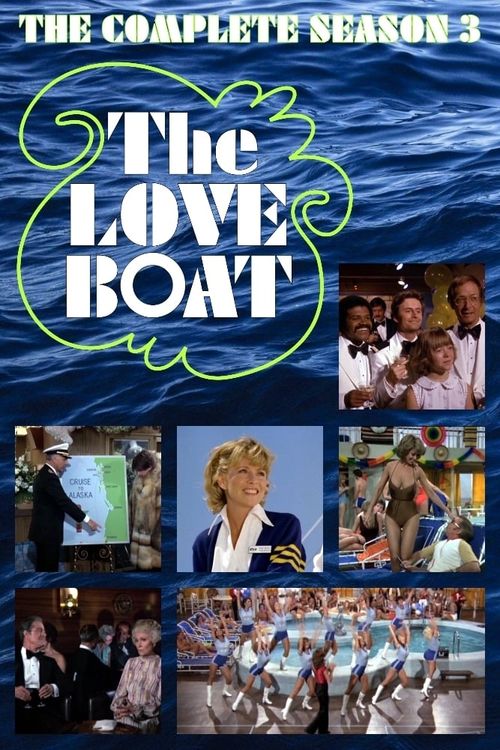
Retro Television Reviews: The Love Boat 3.7 “The Reunion/Haven’t I Seen You?/Crew Confessions”


Welcome to Retro Television Reviews, a feature where we review some of our favorite and least favorite shows of the past!  On Wednesdays, I will be reviewing the original Love Boat, which aired on ABC from 1977 to 1986!  The series can be streamed on Paramount Plus!

This week is all about mistaken identity!

Episode 3.7 “The Reunion/Haven’t I Seen You?/Crew Confessions”

(Dir by George Tyne, originally aired on October 20th, 1979)

After discovering that a guy that he went to high school with in Oakland is now a published author, Isaac decides that maybe he should spend the cruise writing a novel of his own.  The other members of the crew encourage him to try his hand at being a literary genius because, seriously, how hard can it be?  (Gopher suggests that anyone can be a writer!  Okay, Gopher….)  Isaac attempts to write a western, just to discover that he can’t get past the first two sentences.  He then tries to write a romance and can’t get past the first two sentences.  Finally, he attempts to do a science fiction novel and can’t get past …. well, you get the idea.

Finally, Isaac realizes that his mistake is that he’s not writing about what he knows.  Instead, he starts writing a book about life on a cruise ship!  (There’s a bit of an inside joke here as The Love Boat itself was inspired by a “non-fiction” book written by a former cruise director.)  Unfortunately, the rest of the crew soon recognizes themselves in Isaac’s writing.  Doc is offended at being portrayed as a sex-crazed womanizer who rarely practices medicine.  Gopher is upset to discover that the fiction ship’s purser is a klutz named Muskrat.  Julie is upset at the character of the “perky” cruise director.  Only Captain Stubing seems to be truly supportive of Isaac.  Upset that his friends are upset, Isaac rips his book in half.  Guilt-stricken, the rest of the crew decides to support Isaac and they start giving him ideas for his novel.  For instance, Doc Bricker tells Isaac that he served in the U.S Navy after medical school, adding yet another piece of the puzzle to the enigma of Adam Bricker.

The novel-writing storyline, I liked.  I could relate to it because I’ve noticed that people are always willing to support your literary ambitions until they realize that you’re writing about them.  I kind of hope that Isaac will keep writing.  Knowing The Love Boat, though, I know this is probably one of those things that will be forgotten by the next episode.

As for the other storylines this week, they were okay if slight.  Don Knotts plays a shoe salesman named Herb Groebeck who looks just like a television start named Devon King.  At first, Herb keeps correcting everyone about his identity but, when he’s approached by Marla (Julie Newmar), he decides to pretend to be Devon for a while.  Marla reveals that she has a baby and she says that Devon is the father, the result of a one-night stand in Las Vegas.  Herb, having fallen in love with Marla, asks her to marry him.  Marla suddenly reveals that she’s never actually met Devon and that she was lying about him being the father because she wanted a husband who could take care of her baby.  Herb says that’s okay because he’s not even Devon King.  Marla and Herb share a good laugh and leave the cruise as an engaged couple which …. I mean, is this really a relationship that’s really going to last?  It’s pretty much built on lies.

Speaking of lies, Laurette Ferot (Jane Wyatt) has boarded the boat so she can be reunited with her long-missing husband, Gilbert (Jean-Pierre Aumont).  Laurette and Gilbert were married in 1939 but the Nazi invasion of France tore them apart.  Laurette was taken off to Denmark.  Gilbert vanished and was presumed dead.  Laurette has spent the last 40 years looking for Gilbert.  Unfortunately, the man who shows up on the cruise is not her Gilbert.  Instead, he’s a former member of the French Resistance who befriended the real Gilbert in a concentration camp and who fell in love with Laurette as a result of listening to the real Gilbert talk about her.  When the real Gilbert died in the camp, the fake Gilbert assumed his identity.  Having survived the war, the fake Gilbert came to America and made millions as a lock manufacturer while also looking for Laurette.  Laurette is surprisingly forgiving of Fake Gilbert and even goes through with the ceremony to “renew” their vows on the ship.  Laurette marries Fake Gilbert and they leave the ship together.  Jane Wyatt and Jean-Pierre Aumont both gave heartfelt performances but this storyline, involving concentration camps and Nazi cruelty, felt a bit out-of-place when partnered up with stories about Isaac writing a salacious book and Don Knotts pretending to be an action star.  It was a bit too serious for The Love Boat format.

Overall, this episode was uneven but genuinely well-acted.  Just as last week’s episode gave Fred Grandy a chance to show off the fact that he actually could act, this episode gives the spotlight to Ted Lange and Lange, again, proves himself to be capable of more than just making drinks and pointing.  I hope his book was best seller.

Here’s The Second Trailer For The Hunger Games: The Ballad of Songbirds & Snakes


To be honest, I’m not really sure that we need a film version of the prequel to The Hunger Games.  The first two Hunger Games adaptations were excellent but the two-part conclusion was a bit of a bore.  The only thing that really set The Hunger Games apart from any of the other YA dystopian adaptations out there was the presence of actors like Jennifer Lawrence, Donald Sutherland, Woody Harrelson, and Philip Seymour Hoffman and none of them are going to be in the prequel.

That said, everything gets a prequel nowadays and The Hunger Games: The Ballad of Songbirds & Snakes is due to be released in November of this year.  So, for all of you who were like, “I wish I knew more about President Snow’s youth,” have at it!

Here’s the just-released second trailer:

The Sinister Covers of Sinister Stories


In 1940, a new pulp magazine appeared on newsstands.  Sinister Stories published “weird” stories, featuring cultists, monsters, and woman in distress.  Unfortunately, the  stories proved to be too sinister for many readers and the magazine was canceled after only three issues.  However, the covers live on.

Here are the three covers of Sinister Stories:

by Harry Fisk

by John Coughlin

by John Drew

Music Video of the Day: Steam by Peter Gabriel (1993, directed by Stephen R. Johnson)


Steam was the second single to be released from Peter Gabriel’s sixth solo album, Us.  Buoyed with this memorable music video, Steam reached number ten in the UK and number one in the U.S.

When asked about his vision for Peter Gabriel’s video for Steam, director Stephen R. Johnson said he wanted to cram as many things in possible and he certainly did that.  Johnson also did the video’s for Gabriel’s Sledgehammer and Big Time and, as with those two videos, the special effects and visuals were so outrageous that a lot of viewers probably missed that they were very subversive and sometimes disturbing.

(As for Gabriel, he said it was simply a song about a relationship where the woman was cultured and well-educated while the man was less intellectual but was also more street smart.)

Enjoy!