4 Or More Shots From 4 Or More Films is just what it says it is, 4 shots from 4 of our favorite films. As opposed to the reviews and recaps that we usually post, 4 Shots From 4 Films lets the visuals do the talking!
Today, the Shattered Lens honors both the birth and the legacy of the great filmmaker, Akira Kurosawa! It’s time for….
4 Shots From 4 Akira Kurosawa Films
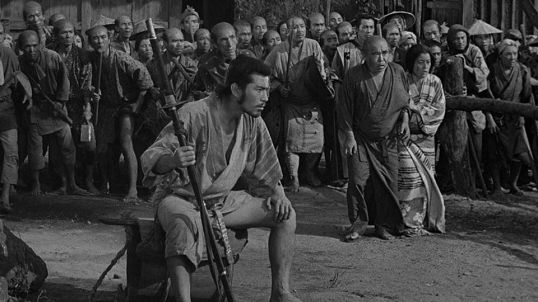
Seven Samurai (1954, dir by Akira Kurosawa, DP: Asakazu Nakai)
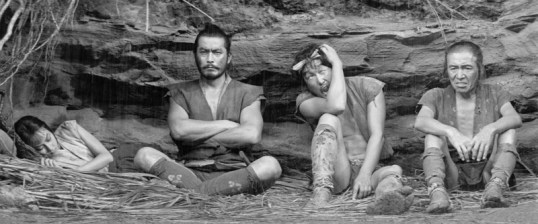
The Hidden Fortress (1958, dir. by Akira Kurosawa, DP: Kazuo Yamasaki)
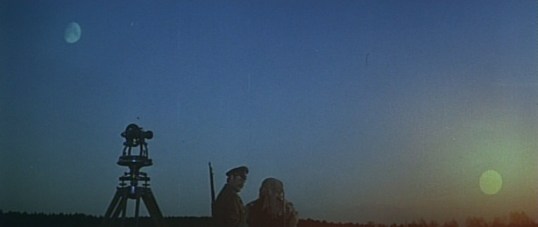
Dersu Uzala (1975, dir. by Akira Kurosawa, DP: Asakazu Nakai)
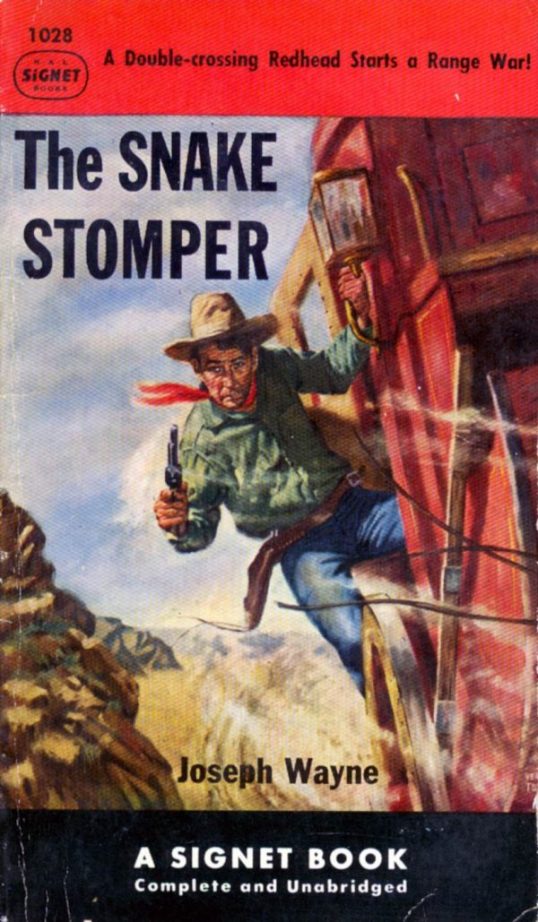
Dreams (1990, dir by Akira Kurosawa, DP: Takao Saito)
Chris Morrell (John Wayne) is an honest cowboy who keeps an eye on Nina (Shirley Jean Rickert), a little girl whose Indian mother died when Nina was just a baby. When oil is discovered on land that belonged to Nina’s mother, Nina is offered $50,000 for the land. Because Nina is only eight years old, her legal guardian will be responsible for taking care of the money. Chris and Nina set out to find Nina’s father so that he can sign the guardianship papers and make Chris into Nina’s legal guardian.
When outlaw Sam Black (Yakima Canutt) decides that he would rather be Nina’s legal guardian, Chris sends Nina to a ranch owned by his old friend, Bud Moore, while he defeats Sam and his men. At the ranch, it turns out that Bud Moore has died and the new ranch owner is another outlaw named Vic (Jack Rockwell) and Vic wants Nina’s oil claim for himself. What Vic doesn’t know is that Nina’s father is one of his ranch hands.
For a 52 minute programmer, there’s a lot going on in ‘Neath The Arizona Skies. There’s actually too much going on and, with that short of a run time, it feels as if more than a few important plot points were glossed over, like how Chris came to look after Nina in the first place. John Wayne is stiff but likable as Chris while Yakima Canutt does his usual double duty as both an outlaw and a stuntman. There are a few good action scenes, especially when Chris runs off Sam’s gang for the first time. Sheila Terry plays Wayne’s love interest, who has to be first convinced that Chris isn’t actually an outlaw. As Nina, Shirley Jean Rickert is energetic but you’ll quickly get tired of her yelling, “Daddy Chris!” whenever anything happens. This isn’t one of the best of the 50 poverty row films that Wayne appeared in before Stagecoachmade him a star but, even in this film, there are still hints of the screen presence that would later become Wayne’s trademark.
Welcome to Retro Television Reviews, a feature where we review some of our favorite and least favorite shows of the past! On Thursdays, I will be reviewing City Guys, which ran on NBC from 1997 to 2001. The entire show is currently streaming on YouTube!
This week, Chris meets a princess and L-Train becomes Mr. History.
Episode 4.8 “Kodak Moment”
(Dir by Frank Bonner, originally aired on October 14th, 2000)
Chris, Al, and L-Train are standing at a newsstand when a blonde (Kristen Miller) with a fake British accent runs up and kisses Chris.
“Do you always kiss strangers?” Chris ask her.
“I do if they’re cute,” she replies.
“Wooooooooooo!” the audience replies.
My immediate reaction was to assume that Chris was being set up by a human trafficking ring and that he would soon be finding himself in Hostel-style situation. And, to be honest, I didn’t really have an objection to that because Chris is a pretty stupid character and, considering everything that has happened to him over the course of the last four seasons, it’s kind of hard to see what else was really left for the show to do with him. He’s served his purpose so why not use Chris as a cautionary tale?
However, it turns out that the blonde is actually Princess Sarah, a member of European royalty who just wants to lead a normal life but who can’t get away from the paparazzi. Poor thing. Who cares? Anyway, Chris and Princess Sarah go on a date but then Chris sees Sarah kissing another man and he decides the best way to react is to work with Al and L-Train to get a picture of the princess that they can then sell to the press. But then Princess Sarah puts on a fake mustache so she can sneak onto campus and explain to Chis that the man was her ex-boyfriend and she was just kissing him to say goodbye. Chris forgives Sarah but he forgets to call off Al and L-Train. Al sneaks into Sarah’s hotel room and takes a lot of pictures. Chris learns a lesson about privacy and I get a migraine. To escape the paparazzi, Sarah returns to the UK because, as we all know, the British tabloids are notorious for respecting the privacy of the rich and famous.
(If Sarah were played by a British actress, this episode would perhaps be a bit less annoying. But the fake accent on top of all the usual City Guys foolishness just makes the whole thing unwatchable.)
Meanwhile, Jamal, Dawn, and Cassidy try to catch a ghost on camera. Ms. Noble eventually joins them. It’s meant to be a parody of the Blair Witch Project. It turns out that there isn’t really a ghost at Manny High Instead, there’s just Ms. Noble and the janitor playing a practical joke on the students. What? Didn’t Ms. Noble just get married? Why isn’t she on her honeymoon?
This was dumb. Let’s move on and meet Mr. History.
Episode 4.9 “Meet Mr. History”
(Dir by Frank Bonner, originally aired on October 20th, 2000)
Ms. Noble remembers that she’s supposed to be a teacher so she assigns everyone a research report. The students have to track down an old person and interview them. Chris and Jamal don’t know any interesting old people so they turn in an interview with Jamal’s fictional Uncle Jesse. Ms. Noble is so impressed that she arranges for Uncle Jesse to appear on a local television show. Uh-oh. Time for L-Train to dress up like an old guy and go on television! Of course, L-Train is in no way believable as an old guy so everyone ends up getting yelled at by Ms. Noble. Chris, Jamal, and L-Train attempt to apologize to the producer of the television show but end up getting their apology broadcast to the entire city. The show presents the apology as being the right thing to do but there’s no way that Chris, Jamal, and L-Train aren’t going to get mugged the next time they get on the subway. The entire city of New York now believes them to be a bunch of …. well, jerks! (As well all know from the mock trial episode of City Guys, jerk is the worst thing you can call someone in New York.)
Meanwhile, Dawn and Cassidy go into business with Al and it goes about as well as L-Train’s glowing basketball idea. No one on this show ever learns anything!
Amy Winehouse. Her talent is missed more with each day that passes.
This beautifully shot video takes place at a funeral. What’s being buried? Amy’ heart, after another failed love affair. Originally, the video made this clear by featuring a close-up of the tombstone, announcing that Amy had just buried her heart. After Amy died in 2011, that shot was cut from the video. That’s an understandable decision and I think it actually adds an extra hint of mystery to the video. That said, I’ve always wondered if that’s the same decision that Amy would have made if she had some sort of say in the matter.
Someone is passing counterfeit bills on the Mexican border and the government thinks that it might be Doc Carter (Earle Hodgins), the manger of a traveling medicine show. Working undercover, Treasury agent John Wyatt (John Wayne) joins Doc Carter’s medicine show as a trick shooter. John discovers that Doc Carter is a quack and the miracle cure that he sells is 90% alcohol but that Doc Carter isn’t a counterfeiter. Instead, Doc Carter is being framed by his former partner, Curly Joe (Yakima Canutt). When John tries to tell the Mexican authorities about Curly Joe is doing, he discovers that Curly Joe has framed him as well!
This was the last of the B-programmers that John Wayne made for Monogram Pictures and it was the only one of Wayne’s films to be directed by Carl Pierson. As he did in almost all of his early B-pictures, John Wayne gives a tough but likable performance. He’s the most cheerful undercover agent that I’ve ever seen. The action scenes are rudimentary and Pierson was obviously not as creative a director as some of the other filmmakers that Wayne worked with early in his career. Carl Pierson was no Robert Bradbury. But the medicine show angle does bring a different angle to the story, with Wayne getting to show off his trick shooting skills and Earle Hodgins providing comedic relief with his miracle cure. Of course, John has a romance with pretty Linda (Marion Burns), who is Doc Carter’s daughter and who is also known as Princess Natasha.
Though it may not be one of the best of the 50 movies that John Wayne made before getting his star-making role in Stagecoach, Paradise Canyon will still be appreciated by fans of both the Duke and the simple but entertaining B-westerns of the past.
Welcome to Retro Television Reviews, a feature where we review some of our favorite and least favorite shows of the past! On Wednesdays, I will be reviewing the original Love Boat, which aired on ABC from 1977 to 1986! The series can be streamed on Paramount Plus!
This week, I learned that there’s no way to escape the Bradys!
Episode 2.6 “Mike and Ike / The Witness / The Kissing Bandit”
(Dir by Allen Baron and Roger Duchowny, originally aired on October 21st, 1978)
This week, The Love Boat continued to be a floating HR nightmare as Newton Weems (a very young Billy Crytsal) donned a mask and spent his nights running around the ship and kissing every single woman that he came across. Fortunately, Newton’s such a fantastic kisser that no one demands that the police be alerted. Unfortunately, with every woman on board eager to get kissed, that means that no one is reacting to the lame flirtations of Doc, Gopher, and the Captain. The Captain decides that the best way catch the Kissing Bandit would be to use Julie as a decoy. If I was Julie, I would point out how reasonable I was about the Captain’s uncle and demand more money. Instead, Julie allows herself to be kissed and soon, she’s in love with the Kissing Bandit as well.
However, Newton eventually realizes that he’s actually in love with another passenger, Roberta (Laurie Walters), and that he doesn’t have to wear a mask to be romantic. Though this disappoints his biggest fans (played by Nancy Kulp, Pat Carroll, and Sharon Acker), it does make the rest of the crew happy. It seems like the Captain should be worrying more about running the ship than hitting on every woman who comes aboard but I guess big luxury liners pretty much run themselves.
While this was going on, Isaac was reconnecting with his old friends, Lenore (Marilyn McCoo) and Mike (Billy Davis, Jr.). When they were younger, they used to perform on street corners for spare change. Now, Mike is an executive vice president and he’s so work-obsessed and stuffy that his own son (Todd Bridges) thinks that his father doesn’t love him! Fortunately, things work out in the end. Mike realizes that there are things more important than business. Ted Lange gets to show off his dance moves, though it’s hard to forget that Isaac once accused another passenger of being a sell-out for doing the same thing.
Finally, Frank McLean (Robert Reed) is taking a cruise so that he can avoid testifying in a murder trial. He is spotted by Suzanne (Toni Tennille), who knows Frank from the old neighborhood. At first, Frank denies even being from New York but, eventually, he tells Suzanne his story. Suzanne falls for Frank but she has a secret of her own. By Love Boat standards, this story is fairly dramatic but it ultimately fails because there’s not a hint of chemistry between Reed and Tennille. In fact, Robert Reed looks even more miserable after he falls in love than he did before.
The 1983 film, 10 to Midnight, opens with LAPD detective Leo Kessler (played by legendary tough guy Charles Bronson) sitting at his desk in a police station. He’s typing up a report and taking his time about it. A reporter who is in search of a story starts to bother Leo.
“Jerry,” Leo tells him, “I’m not a nice person. I’m a mean, selfish son-of-a-bitch. I know you want a story but I want a killer and what I want comes first.”
It’s a classic opening, even if Leo isn’t being totally honest. Yes, he can be a little bit selfish but he’s really not as mean as he pretends to be. He may not know how to talk to his daughter Laurie (Lisa Eilbacher) but he is also very protective of her and he wants to be a better father than he’s been in the past. He may roll his eyes when he discovers that Detective Paul McAnn (Andrew Stevens) is the son of a sociology professor but he still tries to act as a mentor to his younger partner. Leo may complain that the criminal justice system “protects those maggots like they’re an endangered species” but that’s just because he’s seen some truly disturbing things during his time on the force and, let’s face it, Leo has a point. When one of Laurie’s friends is murdered, Leo is convinced that Warren Stacy (Gene Davis) is the murderer and he’s determined to do whatever he has to do to get Warren off the streets. “All those girls,” Leo snarls when he sees Warren, his tone letting us know that his mission to stop Warren is about more than just doing his job.
Warren Stacy is handsome, athletic, and he has good taste in movies. (He’s especially a fan of Butch Cassidy and the Sundance Kid. Just don’t try to trick him by saying Steve McQueen played the Sundance Kid.) Warren is also a total creep, the type of guy who complains that a murder victim “wasn’t a good person,” because she trashed him in her diary. When Leo takes a look around Warren’s apartment, he finds not only porn but also a penis pump. (“It’s for jacking off!” Leo yells at Warren, enunciating the line as only Charles Bronson could.) Warren is also a murderer but he’s a clever murderer, the type who sets himself up with an alibi by acting obnoxiously in a movie theater. Warren strips nude before killing his victims, in order to make sure that he doesn’t leave behind any evidence. (This film was made in the days before DNA testing.)
Leo knows that Warren is guilty but, as both his gruff-but-fair captain (Wilford Brimley, naturally) and the D.A. (Robert F. Lyons) point out, he has no way to prove it. When Warren starts to stalk Laurie and her friends (including Kelly Preston), Leo decides that he has no choice but to frame Warren. But when Warren’s amoral attorney, Dave Dante (Geoffrey Lewis, giving a wonderfully sleazy performance), threatens to call McAnn to the stand, McAnn has to decide whether to tell the truth or to join Leo in framing a guilty man.
10 to Midnight is a violent, vulgar, and undoubtedly exploitive film, one that features a ham-fisted message about how the justice system is more concerned with protecting the rights of the accused as opposed to lives of the innocent. And yet, in its gloriously pulpy way, this is also one of Bronson’s best films. It’s certainly my personal favorite of the films that he made for Cannon.
Director J. Lee Thompson and Charles Bronson were frequent collaborators and Thompson obviously knew how to get the best out of the notoriously reserved actor. Bronson was not known for his tremendous range but he still gives one of his strongest performances in 10 to Midnight, playing Leo as being not just a determined cop but also as an aging man who is confused by the way the world is changing around him. Stopping Warren isn’t just about justice. It’s also about fighting back against the the type of world that would create a Warren Stacy and then allow him to remain on the streets in the first place. Interestingly, though Leo doesn’t hesitate when it comes to framing Warren, he is also sympathetic to McAnn’s objections. Unlike other Bronson characters, Leo doesn’t hold a grudge when his partner questions his methods. Instead, he simply know that McAnn hasn’t spent enough time in the real world to understand what’s at stake. McAnn hasn’t given into cynicism. He hasn’t decided that the best way to deal with his job is to be a “mean son of a bitch.” Bronson and Andrew Stevens, who had worked together in the past, have a believable dynamic. McAnn looks up to Leo but is also conflicted by his actions. Leo may be annoyed by McAnn’s reluctance but he also respects him for trying to be an honest cop. Their partnership feels real in a way that sets 10 to Midnight apart from so many other films about an older cop having to deal with an idealistic partner.
One of the most interesting things about the film is Leo’s relationship with his daughter, Laurie. Over the course of the film, Leo and Laurie go from barely speaking to bonding over liquor and their shared regrets about the state of the justice system. When McAnn first meets Laurie, she’s offended when McAnn suggests that she takes after her father. But, as the film progresses, she comes to realize that she and Leo have much in common. (To be honest, I related quite a bit to Laurie, especially as I’ve recently come to better appreciate how much of my own independent nature was inherited from my father.) Lisa Eilbacher and Charles Bronson are believable as father-and-daughter and they play off of each other well. The scenes between Laurie and Leo give 10 to Midnight a bit more depth than one might otherwise expect from a Bronson Cannon film. Leo isn’t just trying to protect his daughter and her roommates from a serial killer. He’s also trying to be the father who he wishes he had been when she was younger. He’s trying to make up for lost time, even as he also tries to keep Warren Stacy away from his family.
As played by Gene Davis, Warren Stacy is one of the most loathsome cinematic villains of all time. Warren’s crimes are disturbing enough. (Indeed, the surreal sight of a naked and blood-covered Warren Stacy stalking through a dark apartment is pure nightmare fuel.) What makes Warren particularly frightening is that we’ve all had to deal with a Warren Stacy at some point in our life. He’s the sarcastic and easily offended incel who thought he was entitled to a phone number or a date or perhaps even more. As I rewatched this movie last night, I wondered how many Warrens I had met in my life. How many potential serial killers have any of us unknowingly had to deal with? Warren tries to strut through life, smirking and going out of his way to let everyone know that he knows more than they do but the minute that Leo turns the table on him, Warren starts whining about he’s being treated unfairly. During his final, disturbing rampage, Warren yells that his victims aren’t being honest with him, blaming them for his actions. The film deserves a lot of credit for not turning Warren into some sort of diabolical and erudite supervillain. He’s not Hannibal Lecter. Instead, like all real-life serial killers, he’s a loser who is looking for power over those to whom he feels inferior and for revenge on a world that he feels owes him something. He’s a realistic monster and that makes him all the more frightening and the film all the more powerful. Warren is the type of killer who, even as I sit here typing this, could be walking down anyone’s street. He’s such a complete monster that it’s undeniably cathartic whenever Leo goes after him.
How delusional is Warren Stacy? He’s delusional enough to actually taunt Charles Bronson! At one point, Warren informs Leo that he can’t be punished for being sick. Warren announces that, when he’s arrested, he might go away for a while but he’ll be back and there’s nothing Leo can do about it. (The suggestion, of course, is that Warren will be back because he committed his crimes in California and all the judges were appointed by a bunch of bleeding heart governors. Warren may not say that out loud but we all know that is the film’s subtext. Some people may agree with the film, some people may disagree. Myself, I’m against the death penalty because I think it’s a prime example of government overreach but I still cheered the first time that I heard Clint Eastwood say, “Well, I’m all torn up about his rights,” in Dirty Harry.) How does Leo react to Warren’s taunts? I can’t spoil the film’s best moment but I can tell you that 10 to Midnight features one of Bronson’s greatest (and, after what we’ve just seen Warren do, most emotionally satisfying) one-lines.
The title has nothing to do with anything that happens in the film. In typical Cannon fashion, the film’s producers came up with a snappy title (and 10 to Midnight is a good one) and then slapped it onto a script that was previously called Bloody Sunday. Fortunately, as long as Bronson is doing what he does best, it doesn’t matter if the title makes sense. And make no mistake. 10 to Midnight is Bronson at his best.





 Through the Shattered Lens