Film Review: Ted K. (dir by Tony Stone)


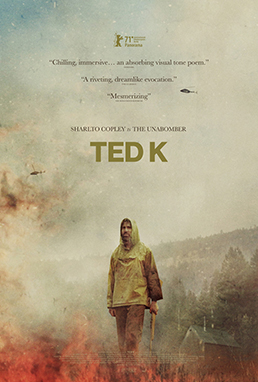
Ted K. is a film about a man who lives in a cabin in the Montana wilderness.  The man was a child genius who attended Harvard University when he was only 16.  He worked briefly as a professor but, in the early 70s, he started to retreat from society.  He moved into a tiny cabin, one that he had previously built with his brother.  The man’s name is Ted Kaczynski.  He would later be known as the Unabomber.  As of today, he is known as prisoner #04475-046 at a Colorado supermax prison.

When Ted K. begins, Ted (played by Sharlto Copley) has been living in the cabin for close to ten years.  He is usually unshaven and unbathed.  He loves the wilderness but he hates all evidence of technology.  He screams at jets as they fly overhead.  When a group of vacationers ride their snowmobiles across his property, Ted responds by breaking into their house and taking an axe to their snowmobiles.  Ted carries on an inner dialogue with himself, talking about how technology and progress are destroying the world.  He also talks about how he can’t handle the idea of ever having to take orders from a woman.  Ted hunts a rabbit and then thanks its spirit for giving up its life so that he could eat.  I’ve never quite understood people who do that.  Is the spirt of the rabbit supposed to be happy that its body is getting eaten just because the schmuck who shot it offered up some halfass prayer?

Sometimes, Ted goes into town and he calls his mom on an old payphone, one that regularly steals his coins.  He usually calls to demand money because Ted is incapable of holding down a job.  Ted yells at his mom, blaming her for his lack of social skills and sexual experience.  Ted swears that he will never again speak to his brother.  Later, Ted calls his brother to beg for money and swears that he will never again speak to their mother.  When he’s not in front of the payphone, he can be found buying tools at the local hardware store.  He also sometimes goes out so that he can peep through windows and point his rifle at anyone who he sees.  He gets especially upset when he sees a man and woman about to make love.  Little seems to anger Ted more than knowing that there are actually happy people in the world.

In short, Ted Kaczynski is a loser, an incel who is bitter about having never been able to get his once promising life together.  He hates everyone, with the exception of the always-sympathetic girlfriend who pops up in his fantasies.  Every loser needs someone or something to blame and Ted challenges his self-loathing and his sexual frustration into rage against modern society.  When he first appears in the film, Ted has already made his first bomb.  As the film progresses, he starts to send his bombs out.  Some, he mails.  Some, he leaves sitting in front of computer stores and university buildings.  Eventually, he becomes the most wanted man in the country but Ted has an offer to make to the authorities.  If they just let him publish his manifesto, he’ll call of his reign of terror….

Ted K tells the story of Kaczynski’s life in Montana, often using passages lifted straight from Kaczynski’s journals to illustrate his inner thoughts.  It’s an interesting film because, on the one hand, it’s clearly sympathetic to Kaczynski’s feelings about technology.  The film starts with a slow motion shot that makes the snowmobiles plowing through Montana wilderness look like an invading, faceless army.  Shots of blissful and silent nature are contrasted with shots of lumber mills, airplanes, and humming electrical wires.  On the other hand, the film never makes the mistake of trying to turn Kaczynski himself into a heroic character.  Ted is a creep from the minute that he first appears and he assures us in his own words that his main goal is to get revenge on a world that he feels has rejected him.  He’s a misogynist who alienates everyone that he meets and who tries to hide his insecurity behind a projected air of arrogance.  There are a few scenes in which Ted lowers his mask just enough to reveal his loneliness and that he’s someone who is incapable of understanding how communication works.  He desperately wants to be able to talk to people and have someone in his life but he doesn’t know how to do it.  His natural awkwardness gets in the way every time.  Ted turns his anger out on the world.  He may claim that he’s angry with what technology had done to society but the truth of the matter is that he’s angry at a world that has passed him by.  Retreating to a cabin to seek enlightenment is charming when someone is in their 20s but far less impressive when that person is nearly 40.

With a two-hour running time, Ted K runs a bit long.  The film’s final 30 minutes seem to move slowly, largely because we already know how the story is going to end.  That said, Sharlto Copley makes Ted into a compelling character without ever making the mistake of trying to make him sympathetic.  Director Tony Stone and cinematographer Nathan Corbin gives us some truly striking shots of the Montana wilderness.  (At the very least, one can see why Ted would view it as being a potential paradise.)  Blanck Mass provides a wonderfully ominous score, one that puts the viewer straight into Ted’s mind.  Ted K deserves credit for both its refusal to idealize Kaczynski and also its attempt to understand just what exactly causes him to take the actions that he did.  It makes for a valuable study of a man who has influenced terrorists on both the Left and the Far Right.

Incidentally, I once took a philosophy class where the TA was a huge Kaczynski fan.  He suggested that everyone read the Unabomber Manifesto and “judge it by what it says, not what the author did.”  I couldn’t get past the first paragraph.
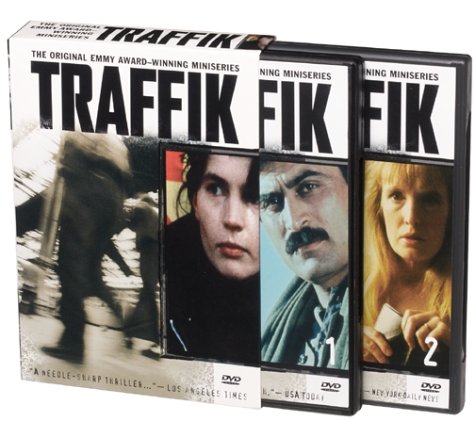
Miniseries Review: Traffik (dir by Alistair Reid)


First aired in 1989 and running a total of six episodes, Traffik is a British miniseries that takes a look at the War on Drugs.

British minister Jack Lithgow (Bill Paterson) has negotiated a treaty with Pakistan.  The UK will send increased aide to Pakistan if the government will crack down on the heroin trade.  In theory, it sounds like a good idea.  Pakistan will get extra cash while joining the effort to stop the flow of heroin into Europe.  In reality, it harms the poor farmers in Pakistan.  After soldiers destroy his village’s poppy fields, Fazal (Jamal Shah) is left with no way to support his family.  He travels to the city, where he gets a job with drug lord Tariq Butt (Talat Hussain).  It’s a job that Fazal has to take in order to feed his family but it’s also a job that puts his family’s safety at risk.

After the heroin in processed in Pakistan, it is smuggled into Europe by men like Karl Rosshalde (Juraj Kukura), a German businessman whose company is a front for his operations.  When two German police detectives (Fritz Müller-Scherz and Tilo Prückner) arrest Jacques (Peter Lakenmacher), one of Karl’s couriers, it looks like Karl might finally being going to prison.  However, Karl’s British wife, Helen (Lindsay Duncan), proves herself to be just a ruthless as he was when it comes to running his operations.

Even with Karl on trial, the drug trade continues.  The heroin that is processed in Pakistan and smuggled through Germany eventually ends up in the UK, where it is used to by Caroline (a very young Julia Ormond), the teenage daughter of Jack Lithgow.  When Caroline runs away from home, Jack searches the streets and back alleys of London and, for the first time, he starts to understand the futility of Europe’s war on drugs.

If Traffik sounds familiar, that’s because it served as the basis for Steven Soderbergh’s 2000 film, Traffic.  When I watched Traffik this week, I was actually surprised to see how closely Soderbergh’s film stuck to the plot of the miniseries.  The only difference, beyond shifting the action from Europe to North America, is that Soderbergh replaced the farmer’s storyline with a story involving Benicio del Toro as a Mexican policeman.  That’s a bit of shame, actually.  Traffic is one of my favorite Soderbergh films but it is a bit cop-heavy.  The people who actually do the day-to-day work in the drug trade, as opposed to the drug lords, aren’t really represented in Soderbergh’s film.  As the British miniseries shows, people like Fazal end up working in the drug trade not because they’re evil but because they literally have no other choice.  It’s either work for someone like Tariq or starve to death.

As I mentioned earlier, Traffic is one of my favorite Soderbergh films.  Considering that I usually find Soderbergh’s films to be hit-or-miss, it’s actually kind of remarkable just how effective Traffic is.  The original miniseries, however, is superior to the film in every way.  Some of that is because the miniseries has six hours to explore its world whereas Soderbergh had to cram a lot of incidents into 147 minutes.  Beyond that, the miniseries succeeds because director Alistair Reid takes a straight-foward, no frills approach to telling his story.  Even at his best, Soderbergh has a tendency to be a bit pretentious.  Even though Traffic deals with real-life issues, it never allows you to forget that you’re watching a film.  Traffik, on the other hand, tells its story with an almost documentary-style immediacy.  One need only compare the scenes where Bill Paterson searches for Julia Ormond in Traffik to the scenes where Michael Douglas searches for Erika Christensen in Traffic to see not only the differences between Reid and Soderbergh’s style but also to see why Reid’s more gritty style works better for the story that’s being told.  Whereas Soderbergh can’t resist framing Christensen with a blonde halo when she’s finally rescued by Douglas, Traffik leaves little doubt that Ormond has been through Hell and that, even if she does eventually beat her addictions, she’ll be carrying the scars of her experience for the rest of her life.  Whereas Traffic ended on a note of hope, Traffik ends with the realization that there is no perfect solution.

Traffic and Traffik are both good looks at the destructiveness of both drug abuse and the efforts to treat drug addiction as a crime.  Both are worth watching.

4 Shots From 4 Films: Special Andy Warhol Edition


4 Or More Shots From 4 Or More Films is just what it says it is, 4 shots from 4 of our favorite films. As opposed to the reviews and recaps that we usually post, 4 Shots From 4 Films lets the visuals do the talking!

On this date, 94 years ago, Andy Warhol was born.  Today, we mark this occasion with….

4 Shots From 4 Andy Warhol Films

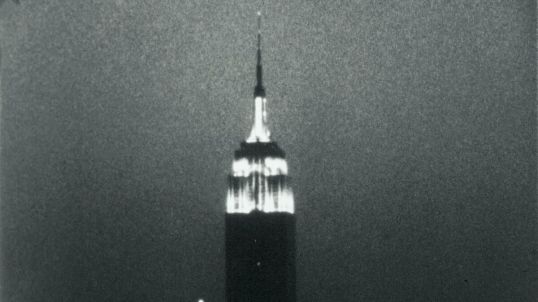
Empire (1965, dir by Andy Warhol)

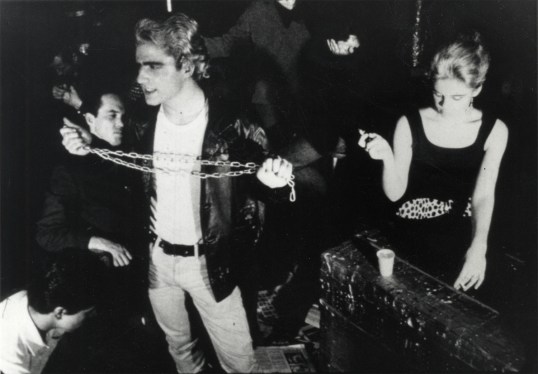
Vinyl (1965, dir by Andy Warhol)

Poor Little Rich Girl (1965, dir by Andy Warhol)

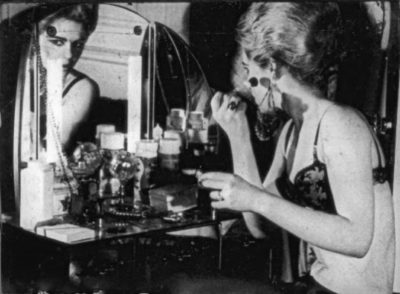
Chelsea Girls (1966, dir by Andy Warhol and Paul Morrissey)

6 Classic Trailers For Umberto Lenzi’s Birthday


This week’s edition of Lisa Marie’s Favorite Grindhouse trailers is dedicated to Umberto Lenzi, who was born, on this date, in 1931.  Lenzi was one of the most prolific of the Italian directors who came to prominence in the 60s, 70s, and 80s.  A craftsman at heart, he directed films in every genre.  Admittedly, he was never quite the critical favorite that Argento, Margheriti, Deodato, Bava, Fulci, and Soavi were.  That’s a polite way of acknowledging that Umberto Lenzi was responsible for a few very bad films.  But he directed some good ones, as well.  Even if he’s not as acclaimed as some of his contemporaries, I think every Italian horror fan has at least one or two Lenzi films that they will happily defend to the grave.

Today, in honor of Lenzi’s life and work, here are 6 trailers for 6 Umberto Lenzi films!  These trailers, by the way, could be considered NSFW so watch them at your own discretion.

  1. Spasmo (1974)

I will be the first to admit that I have shared this trailer quite often on this site.  What can I say?  I just love the way everyone keeps going, “Spasmo!  Spamso!”  Spasmo is giallo, one with the a plot that will keep you guessing.

2. The Tough Ones (1976)

Though Lenzi is probably best-remembered for his horror films, he also directed his share of violent, French Connection-inspired crime films.  The Tough Ones is a good example.

3. From Corleone to Brooklyn (1979)

From Corleone to Brooklyn is another one of Lenzi’s crime films.  While Corleone is a town in Sicily, there’s little doubt that the main purpose of the title was to trick people into thinking that this film was somehow connected to The Godfather.

4. Eaten Alive (1980)

Eaten Alive was one of the many cannibal films that Lenzi directed.  This is actually one of the better examples of that rather icky genre.  It’s certainly superior to Lenzi’s own Cannibal Ferox.  Ivan Rassimov as Jim Jones turns out to be perfect casting.  The trailer below is actually an edited version of the original trailer.

5. Nightmare City (1980)

This was Lenzi’s best-known contribution to the zombie genre.  Uniquely, for the time, Lenzi’s zombies were fast and clever.  The film was not acclaimed when it was originally released but it has since been cited as an influence on many recent zombie films.  This is probably Lenzi’s most effective film as a director, even if the ending will probably have you rolling your eyes.

6. Nightmare Beach (1989)

Finally, in one of his final films, Lenzi brought together the spring break genre with the slasher genre.  There’s some debate over how much of this film was directed by Lenzi and how much by a mysterious figure known as Harry Kirkpatrick.  When I reviewed this film and mentioned the controversy, the film’s star, Nicolas De Toth, replied that Lenzi was definitely the one who directed.  As he would definitely be in the best position to know, that’s good enough for me!

Music Video of the Day: What We’re All About by Sum 41 (2002, directed by Marc Klasfeld)


In this song from the soundtrack of the 2002 Spider-Man film, Sum 41 plays upside down, in the best tradition of Spider-Man fans everywhere.  Along with keeping an eye out for clips from the film, also watch out for Slayer’s Kerry King, who shows up to remind everyone what rock is all about.  As someone who grew up with an MTV that played music, I miss the music videos that always used to be released to promote movies.  I always enjoyed the mix of performance footage with the most kinetic scenes from the movie.

This music video was directed by Marc Klasfeld, who has directed music videos for literally everyone.  Don’t even think about becoming a rock star if you can’t get Marc Klasfeld to direct at least one music video for you.

Enjoy!

The Boy Who Drank Too Much (1982, directed by Jerrold Freedman)


“He wet his pants on my mother’s rug!”

That’s what happens when you’re the boy who drinks too much.

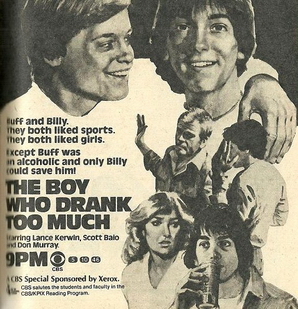
In this made for television social problem film, a young Scott Baio plays Buff Saunders.  Buff is a high school student, a star hockey player, and an alcoholic.  He drinks because he grew up with an alcoholic father (played by Don Murray) and he learned early that drinking could make him feel confident whenever he was feeling insecure.  When Buff’s drinking gets out of control and he starts getting into fights, blowing off school, and seriously injuring himself, he is sent to a rehab center, one that is out of town so that the hockey team doesn’t find out that he’s an alcoholic.  His best friend, Billy (Lance Kerwin), rides the bus every day so that he can be there to support Buff but Buff’s own father cannot bring himself to come down there.  At first, Buff refuses to admit that he has a problem and won’t even speak up in the group meetings.  Eventually, even Billy starts to get tired of Buff’s attitude and his refusal to admit that his drinking has gotten out of control.  When Billy says that he’s not going to spend his birthday watching Buff sulk at rehab, Buff is forced to take a look at what his life has become.

The Boy Who Drank Too Much was basically an after school special that got the primetime movie treatment.  Scott Baio was in a lot of these movies, which is one reason why it is sometimes tempting to laugh at them today.  Baio was never really a bad actor but he was one of those actors who came across as being smarmy even when he was supposed to be playing a sympathetic or sincere character.  That’s especially true in The Boy Who Drank Too Much.  Even when Buff finally seems to be serious about controlling his drinking, you still never believe his sincerity.  When he apologizes for all the harm that his drinking has caused, he still seems like he’s waiting for the chance to grab the flask that he’s hidden somewhere in the room.  For the most part, though, that works for the character.  Baio’s playing an alcoholic who, for the majority of the movie, just tells people what he thinks they want to hear to get them off his back.

The movie does a good job of showing how a problem like alcoholism can be passed down through the generations.  Lance Kerwin and especially Don Murray both give good performances as the two people closest to Buff.  Murray appeared in and helped to produce a lot of social problem films like this one and it’s obvious that his heart was really in his performance here.  Ed Lauter took a break from appearing in every single Charles Bronson film to play Kerwin’s father and the lovely Toni Kalem, who was one of the most underrated actresses of the era, appears as well.  For a television production that’s trying very hard to be socially relevant, The Boy Who Drank Too Much isn’t bad.

Book Review: Justin Perry: The Assassin by John D. Revere


About a month ago, as I continued to make my way through the paperbacks that I inherited from my aunt, I read five short paperbacks about a character known as Justin Perry, the assassin.

Who is Justin Perry?  As was explained in the first book in the series, 1982’s Justin Perry: The Assassin, Justin’s name used to be Roger Johnson.  He was raised in a world of wealth and privilege, the son of a general and a socialite.  Like his father, Roger enlisted in the army.  He ended up in Vietnam and, when he saw a friend of his get blown up the Viet Cong, Roger discovered that he had it in him to be a very savage and efficient killer.  Back in the States, Roger was hailed as a hero.  He married the beautiful Bambi and they had a son named Roger, Jr.  But then, Bambi was murdered by a commie spy and Roger went mad.  A mysterious figure known as the Old Man recruited Roger to work as an assassin as the CIA.  Now known as Justin Perry, the assassin lives to kill the nation’s enemies and to have sex with every woman he meets.  Seriously, that’s all he does.

The book not only gives us Justin’s origin story but also presents us with a rather sordid adventure in which Justin Perry tracks down a Nazi collaborator in Europe.  It’s while on that assignment that Justin discovers the existence of SADIF, a secret organization that we know is evil because its acronym sounds a lot like SADIST.  His pursuit of SADIF leads to several over-the-top torture sequences and also the discovery of a huge conspiracy, one that involves almost everyone that Justin has ever known.  We also discover that SADIF has infiltrated the Church and that Josef Mengele is now working as a gardener at the Vatican.  (As an Irish-Italian-Spanish Catholic, I would be offended it wasn’t all so stupid.)  None of it makes much sense but, to be honest, I’m not totally convinced that the Justin Perry books weren’t meant to a parody of sex-obsessed pulp fiction.

When I say that Justin Perry is sex-obsessed, that is literally all that he seems to think about.  He gets an erection when he kills a man.  Every woman that he wants automatically wants him (and, apparently, they’re all into S&M to boot).  One sexual encounter is ruined by an attack by an assassin, which leads to not only Justin’s masochistic lover killing herself with a knife (and getting off on the process) but also Justin obsessing over the fact that some of his sperm ended up on a hotel room floor.  Justin, in fact, is so hypersexual and so obsessed with proving himself sexually that it’s hard not to wonder if maybe he’s killing people because he’s trying to kill something about himself that he doesn’t want to accept.  I haven’t even gotten into the weird torture sequence where Justin and his friend, Bob Dante, are threatened with being sexed to death by a group of SADIF nymphomaniacs and a feet-licking chauffeur.

Actually, I have a feeling (or maybe it’s a fear) that I’m making this book sound more interesting than it is.  Despite all of the insane things that happen, the prose itself is actually fairly dull.  If one takes the book seriously, it’s a celebration of a sociopath.  If one takes the book as being satirical, it’s still just one joke repeated over and over again.  What is interesting is that the next four books in the series were even stranger and I’ll be reviewing those over the days to come.  For now, let’s just be happy that Justin Perry: The Assassin never made it to the big screen.

Guilty Pleasure No. 58: Robot Jox (dir by Stuart Gordon)


In the future, the world has been ravaged by a combination of nuclear war and infertility.  The face of diplomacy has changes as well.  Instead of wasting time with negotiations, treaties, or lengthy wars, countries now settle disputes through giant robot combat. 

In fact, robot combat is the most popular sport in the world!  The men who sit inside the head of the giant robots and who push the buttons that make the robots do their thing have all become national heroes.  They’re even more beloved than the robots that they control.  America loves Achilles (Gary Graham).  Russia loves Alexander (Paul Koslo).  Every fight is observed by hundreds of spectators sitting in the stands.

That becomes a problem when Achilles and his robot accidentally fall backwards and land on top of the stands.  Not only does this mean that Russia will claim ownership of Alaska but it also kills a lot of people who were only there because they thought they would get to watch some good old-fashioned giant robot combat.  Achilles is so upset that he announces his retirement.  He leaves robot combat camp and walks around the most depressing, dreariest city imaginable.  It’s hard not to notice that the city is full of signs imploring couples to have as many children as possible.  The humans would seem to be on the way out, regardless of what happens with the giant robots.

Fortunately, Achilles’s retirement only lasts for a day or two.  Once he learns that he’s going to be replaced by Athena (Anne-Marie Johnson), Achilles returns to fight Alexander.  It could be that Achilles is in love with Athena.  It could also just be evidence that it takes a lot more than a nuclear war to wipe out misogyny and Achilles can’t handle a woman controlling his robot.  Who knows?  Achilles is determined to redeem himself but Athena still wants her chance and it turns out that there is a double agent who is giving information to Alexander and the Russians!

Featuring a plot that was apparently made up on the spot, 1990’s Robot Jox is about as silly as a movie can get.  Several scenes are devoted to showing Athena and the other young robot pilots going through their training and it’s hard not to notice that none of it actually has anything to do with sitting inside the head of a giant robot and telling it what to do.  Instead, they do a lot of physical stuff, which makes no sense because piloting a robot would be a mental task, not a physical one.  But it gives the film an excuse to put a bunch of toned 20 year-olds in skin tight outfits and that was probably the main concern.   As for the double agent subplot, there’s only two possible suspects and it’s not difficult to guess which one is guilty.  The actors, for the most part, go through the motions though Michael Alldredge has some good moments as Achilles’s trainer and Paul Koslo is a blast as the maniacally evil Alexander.  In the future, it’s just not enough to destroy a man’s giant robot.  You have to laugh about it, too.

But, to be honest, Robot Jox is one of those movies that is so extremely silly that it’s impossible not to kind of like it.  The special effects may be on the cheap side but the robots themselves are actually fairly impressive and it’s hard not to smile at the sight of them stiffly walking across the combat area.  The film’s finale features not only a giant chainsaw that is stored inside the crotch of one of the robot’s but also a bizarre and impromptu trip into space.  I’m not really sure why the robots flew into space but it really doesn’t matter.  No one is going to watch Robot Jox for a coherent story.  This is a film that people watch because they want to see giant robots fighting.  And, on that front, Robot Jox delivers.

Previous Guilty Pleasures

  1. Half-Baked
  2. Save The Last Dance
  3. Every Rose Has Its Thorns
  4. The Jeremy Kyle Show
  5. Invasion USA
  6. The Golden Child
  7. Final Destination 2
  8. Paparazzi
  9. The Principal
  10. The Substitute
  11. Terror In The Family
  12. Pandorum
  13. Lambada
  14. Fear
  15. Cocktail
  16. Keep Off The Grass
  17. Girls, Girls, Girls
  18. Class
  19. Tart
  20. King Kong vs. Godzilla
  21. Hawk the Slayer
  22. Battle Beyond the Stars
  23. Meridian
  24. Walk of Shame
  25. From Justin To Kelly
  26. Project Greenlight
  27. Sex Decoy: Love Stings
  28. Swimfan
  29. On the Line
  30. Wolfen
  31. Hail Caesar!
  32. It’s So Cold In The D
  33. In the Mix
  34. Healed By Grace
  35. Valley of the Dolls
  36. The Legend of Billie Jean
  37. Death Wish
  38. Shipping Wars
  39. Ghost Whisperer
  40. Parking Wars
  41. The Dead Are After Me
  42. Harper’s Island
  43. The Resurrection of Gavin Stone
  44. Paranormal State
  45. Utopia
  46. Bar Rescue
  47. The Powers of Matthew Star
  48. Spiker
  49. Heavenly Bodies
  50. Maid in Manhattan
  51. Rage and Honor
  52. Saved By The Bell 3. 21 “No Hope With Dope”
  53. Happy Gilmore
  54. Solarbabies
  55. The Dawn of Correction
  56. Once You Understand
  57. The Voyeurs 

What Lisa Marie Watched Last Night #221: Drawn Into the Night (dir by Bill McAdams, Jr.)


Last night, Erin and I started to watch a film called Drawn Into The Night on Tubi.  Erin abandoned the film after 10 minutes but I stayed for the whole thing!

Why Was I Watching It?

According to the film’s description on Tubi, the film was about a cop who goes undercover in a high school in order to investigate the disappearance of three cheerleaders.  I love film about undercover high school cops and I figured that Erin would enjoy critiquing whether or not the film was an accurate representation of the high school cheerleader experience.  Anyway, Erin stopped watching after 10 minutes but I stuck with the film because I feel guilty whenever I stop watching a movie before the end credits start.

After the film was finished, I did a little research and I discovered that Drawn Into The Night (which Tubi claimed was a 2022 release) was actually a heavily edited version of a 2010 film called A Lure: Teenage Fight Club.   Teenage Fight Club was a little over 90 minutes long.  Drawn Into The Night had a running time of 67 minutes.  Just judging from the reviews that I read of Teenage Fight Club, it would appear that a lot of nudity and excessive violence was edited out of the film that became Drawn Into The Night.  That’s fine by me.  I love a good thriller but I’ve grown a little bored with violence for the sake of violence.

What Was It About?

After three high school cheerleaders mysteriously disappear, a detective named Maggie (Jessica Sonneborn) goes undercover as a high school student.  She joins the school’s field hockey team and makes a quick frenemy out of spoiled Brittany (Augie Duke).  An invitation to a rave turns out to instead be an invitation to be forced to take part in a teenage fight club, where the fights are to the death!

What Worked?

The film was short.  That may sound like a back-handed compliment but, after sitting through countless films that rua over two hours despite not having enough story for 30 minutes, it was kind of nice to see a film that wrapped everything up in 67 minutes.  Of course, some of that is because this was a heavily edited version of a longer film but no matter.  It still worked!

The film had some nicely atmospheric shots of people running through the night, often being pursued by an inbred hillbilly.  Some of those scenes had a dream-like intensity to them.

Augie Duke gave a good performance as the hilariously self-centered Brittany.

What Did Not Work?

Because of the way the film was edited, there were several continuity errors.  One character, in particular, is seen in one location just to be show up in a totally different location one jump cut later.  I’m going to guess the original version of the film included a scene of her arriving at the different location.  In the edited version, she just appears to teleport from place to place.

Maggie going undercover would have been more interesting if not for the fact that all of the high school students already appeared to be in their 20s.  Despite the fact that three cheerleaders had mysteriously vanished just a few days previously, none of the other students at the school seemed to be the concerned about it.  At my high school, if someone popular was kidnapped, people definitely would have been talking about it.

The identity of the main villain seemed to come out of nowhere but I am, once again, going to assume that’s because of how this version of the film were edited down from the original version.

“Oh my God!  Just like me!” Moments

One character has asthma and you better believe that I was cringing when she was trying to catch her breath while running away.

I did sneak out to a few all-night parties when I was in high school and I usually did ruthlessly critique the type of car my older friends drove so I could definitely relate to Brittany.  But I’m happy to say that I was never forced to take part in a teenage fight club.

Lessons Learned

When there’s a kidnapping spree going on, don’t accept invitations to parties in the middle of nowhere.