The ghosts are back! It’s a little early for Halloween, of course, but there’s nothing wrong with getting started early.
Enjoy!
The ghosts are back! It’s a little early for Halloween, of course, but there’s nothing wrong with getting started early.
Enjoy!
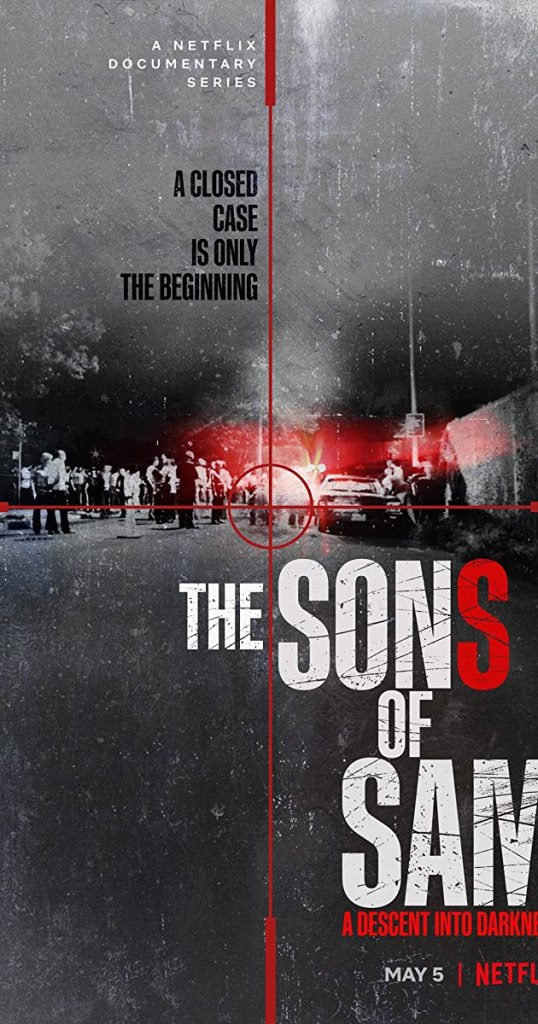
For a little over a year, from July of 1976 to August of 1977, New York City lived in fear of a killer.
Carrying a .44 caliber handgun, this killer — or, some thought, killers — preyed on the young. Though one victim was shot while walking by herself, the rest were all gunned down while sitting in parked cars, often while kissing at the end of a date. It was said that the killer’s main targets were young women with dark hair, leading to a run on blonde wigs and dye jobs. While the media originally called him the .44 caliber killer, he wrote two letters in which he requested to be known as the Son of Sam. He was one of America’s first celebrity serial killers, a dark force who moved through the night and inspired nightmares.
When he was arrested, the fearsome Son of Sam turned out to be a rather goofy-looking postal worker named David Berkowitz. Berkowtiz confessed to all of the shootings, with the initial story being that he believed he was ordered to do it by a dog named Sam. Even at the time, though, there were doubts as to whether or not Berkowtiz acted alone. Some witnesses claimed that they had seen more than one gunman at a few of the shootings and the pudgy Berkowtiz didn’t look anything at all like some of the early sketches that had been released on the gunman. Were the witnesses just confused or was Berkowitz a part of a larger conspiracy?
Journalist Maury Terry believed that Berkowitz was a part of a bigger conspiracy. He dedicated his life to trying to prove that Berkowitz was a part of a Satanic cult. Terry claimed that the cult was not only responsible for the Son of Sam murders but he also claimed that they were connected to everyone from Charles Manson to Arliss Perry, a 19 year-old college student was brutally murdered in a California church. Eventually, Terry wrote a book about his investigation and his theories. The Ultimate Evil was a best seller during the Satanic panic of the late 80s but Terry’s conclusions were never taken seriously by the NYPD. Even after Berkowitz himself gave Terry a televised interview in which he said that he wasn’t the only gunman, the case remained closed. Terry spent the rest of his life obsessing on his theories and with that obsession came a litany of self-destructive behavior. Terry died in 2015. Berkowitz remains in prison, claiming to be a born again Christian. The murderer of Arliss Perry apparently committed suicide in 2018 after DNA linked him to the crime. Among his possession was a copy of The Ultimate Evil.
Sons of Sam: A Descent Into Darkness is a four-part Netflix docuseries about the Son of Sam murders and Terry’s investigation. Featuring archival footage, interviews, and Paul Giamatti reading excerpts from Terry’s work, the documentary details not just Terry’s theories but also the way his relentless quest to prove them took over his life. We hear from detectives and reporters and Maury Terry’s ex-wife. There’s also plenty of footage of Berkowitz, both from his initial arrest and his subsequent interviews.
The documentary itself clearly believes that Berkowitz was a member of a cult and that he worked with other gunmen. Myself, I came away from the series unconvinced. Some of the evidence that Terry uncovered was indeed compelling. Particularly when it comes to the mysterious Carr brothers, two shady men who Terry believed were involved in the shootings, it’s hard not to feel that Terry was right to feel that there was more to the story than was officially accepted. Far too often, however, one gets the feeling that Terry allowed himself to be motivated more by what he wanted the evidence to show than what was actually there. The attempt to connect Berkowitz to Manson especially feels vague. As is the case with most conspiracy theories, we’re expected to consider only the evidence that confirms that conspiracy’s existence while ignoring anything that might suggest an alternative solution. We’re asked to believe in a conspiracy that could apparently take out everyone except for the one journalist who was very publicly trying to reveal its existence. At times, the Cult is portrayed as just being a bunch of maladjusted losers and, at other times, they’re at the heart of a massive drug, pornography, and human trafficking cartel. Terry’s own conception of the cult and their plans seems to change as each new piece of a “evidence” is uncovered. Finally, as happens with many conspiracy theorists, Terry refuses to accept the simple truth that coincidences are a huge part of life.
When Berkowitz finally does give an interview to Terry, it’s hard not to notice that Berkowitz allows Terry to lead him to the answers that Terry wants to hear. Instead of answering Terry’s questions immediately — as someone with firsthand knowledge should presumably be able to do — Berkowitz instead waits until Terry has offered up enough details for Berkowitz to know in which direction Terry wants the answer to go. Often it seems that Berkowtiz is just agreeing with what Terry says or simply answering Terry’s questions by rephrasing them. Berkowtiz isn’t particularly clever or slick about it, either. One gets the feeling that, by the time the interviews happened, Terry had allowed his obsession with the case to cloud his instincts as a journalist.
Terry’s obsession is the most compelling part of the series. Much as with Michelle McNamara’s I’ll Be Gone In The Dark, Sons of Sam works best as an examination of how one person can become so obsessed with exposing the darkness that they allow that darkness to take over their lives. At times, Terry is described as almost being an Ahab-like figure, obsessively pursuing the prey that he insists is somewhere waiting for him. Much as how McNamara obsessively pursued a version of the Golden State Killer who didn’t actually exist outside of her own theories, Terry spent the final decades of his life trying to expose a conspiracy that may not have actually existed outside of his own mind. His obsession may have been self-destructive but, the series argues, his motives were sincere
As you may have guessed, my feelings about Sons of Sam are mixed. Maury Terry is a compelling figure, even if his theories don’t really hold together. I guess the ultimate lesson of Sons of Sam is that, eventually, every conspiracy will get its own Netflix series.
by Will Hulsey
Get him!
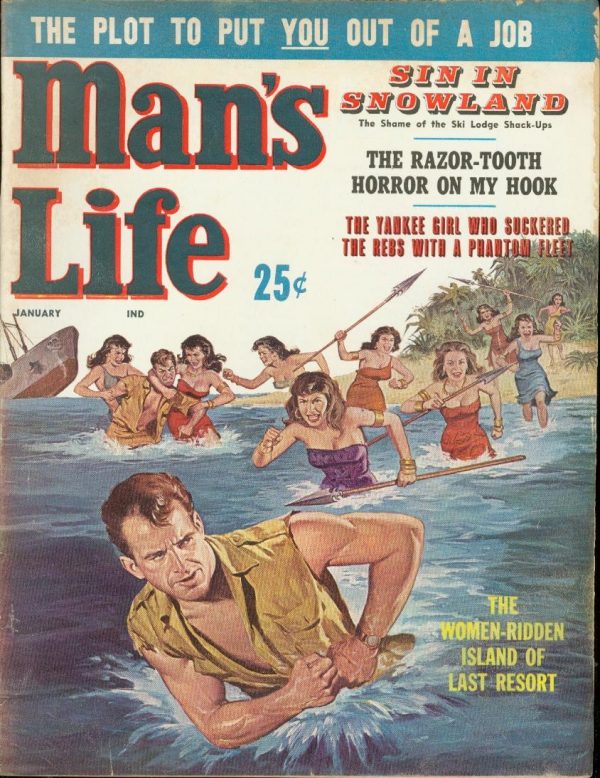
This is from 1961 and there’s no way those two men are escaping from “the women-ridden island of last resort.”
Natalie Imbruglia is back, with another song to listen to late at night when you’re deep in thought. And she’s brought a video with her!
The choreography for this video was done by Gregory Haney and Alex Sarmiento!
Enjoy!
Here on the Shattered Lens, the love for Batman is very strong. There are too many Batman related articles to fully list, but for a good start, go with Ryan’s Which Way Forward for the Batman Franchise.
This isn’t so much a review for Batman as it’s just me looking back on the film.
I spent the Saturday Morning of June 24th, 1989 standing on a line that snaked around the white walls of the Sunrise Multiplex Cinema in Valley Stream. Thankfully, by the time I arrived, there were only a few people there. Most of them were my friends, so we were close to the door. The following year, the Sunrise would go down in history as being the only movie theatre I’ve ever known with metal detectors after a shooting around the release of The Godfather Part III prompted tighter security. Before then, anyone going into the theatre had a free run of the place. From that incident to the theatre’s shutdown in 2015, you always had to pass the metal detectors.
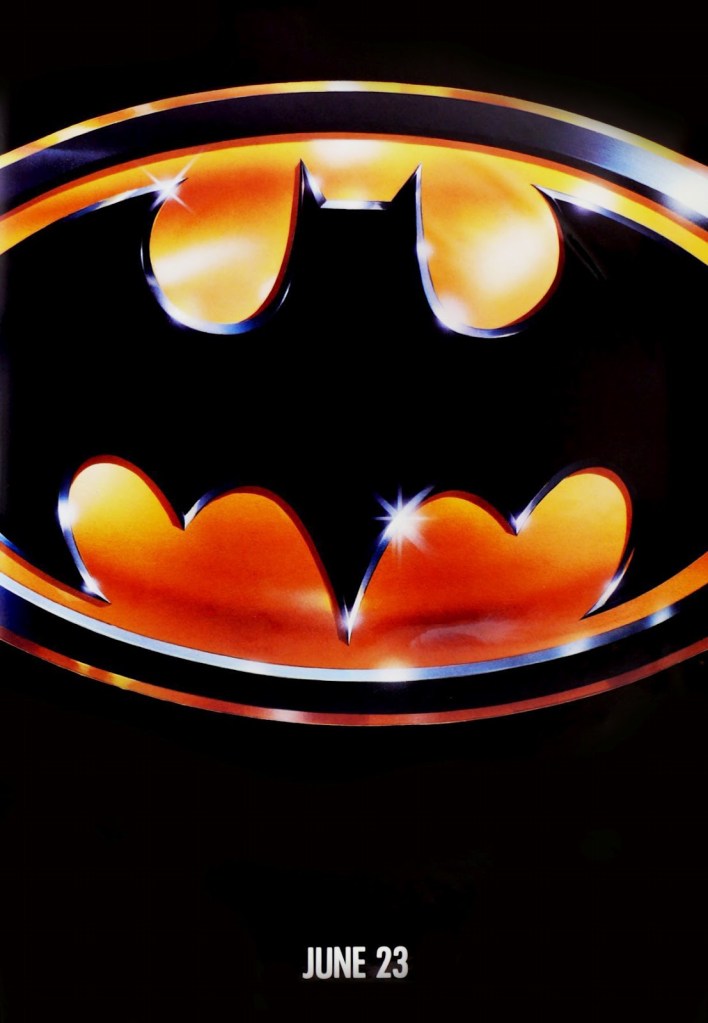
You knew Tim Burton’s Batman was going to be something grand when they first put up the posters in bus stations. The character was so well known that the poster was simply a black and gold Batsymbol with a date – June 23. In my neighborhood, the poster lasted a week before the bus stop’s glass was broken and it was stolen. This was how mad people were for the film. Although merchandise was already available, it moved at an incredible pace. For a film made before pre-Internet, the buzz was just amazing.
“Okay, Everyone, we know you’re looking forward to seeing the movie.”, came the announcement over the theatre’s loudspeaker, which caused a few murmurs from everyone. It was a smooth, business like voice, probably from someone who had never even heard of The Caped Crusader. “We’re going to open up the doors and we want everyone to proceed to the ticket booths in a nice, orderly fashion.”
I was 14 at the time. Batman was the first movie I ever saw without my family. My parents, a cop and a bartender, saw so much of the worst of NYC that they figured the best place for me was home. Still, since I was among friends they knew, I gave me a pass. It was a big deal. My friend Pierre and I had a plan, along with the 4 others that came with us. We’d head in, make for the ticket booth and go right in for our seats near the back right side.. No refreshments were necessary, since we could all go eat at the mall later on after the move was done. To make sure I didn’t miss anything, I had already read the novel for the story beforehand.
Anyone close to the door could see the theatre workers as they approached, keys in hand. The layout of the Sunrise was such that after stepping through the front door, you could cut to your immediate left or right down a open path to separate ticket booth. As the door unlocked, was pushed open and secured, someone from near the middle of the line decided it was time, declaring in a loud scream.
“Batman!!!!!”
It was madness. Utter madness. Bodies piled into the theatre in a mad scramble for the ticket booth. On the way there, I was shoulder blocked and fell to the floor. I instantly curled into a ball to keep from getting trampled, wondering if my parents were right about not letting me out. ‘Here lies Lenny…”, my epitaph would read. “…he died at the movies after being let outside on his own just once.”
Thankfully, I was scooped up to my feet a few seconds later by one of my friends.
“Go on! We’ve got your tickets! Head for the ticket guy, we’ll meet you there!” he yelled over the crowd passing us on sides.
“Okay!!” I’d been to the Sunrise tons of times, so I knew it well. I moved through the crowd, bypassing the concession stand, which was already developing a line of its own. I thought they were going to go in without me and leave me there. I don’t know they did it, but within a few minutes of reaching the ticket taker. most of my group caught up, tickets in hand for all of us.
The actual experience of Batman was a packed crowd with almost non-stop talking throughout. After all, the audience was made up of teens and DC fans that that were ravenous for anything Batman related. Superman had about four films by the time Batman premiered. I think the only real time the entire audience hushed was near the beginning when we first see Batman grab the one robber and they ask him what he is. After that, the crowd pretty much erupted in applause.
Of course, that line would become famous and reused over the years, such as it was with the WB’s Supernatural.
Even before the film was released, the buzz for Batman was immense.
Batman focuses on Gotham City, a grand town with a great deal of crime. Reports are coming in of a mysterious vigilante figure resembling a giant bat that’s taking down random criminals. Crime in Gotham is run by Boss Carl Grissom (Jack Palance, City Slickers), with his right hand man, Jack Napier (Jack Nicholson, The Departed). After discovering that Napier’s spent some quality time with his girl, Alicia (Jerry Hall, Urban Cowboy), Grissom sets him up so that he’ll be caught by the cops. Things don’t go as planned, and after falling into a vat of chemicals, Napier is reborn as The Joker. Can the Dark Knight defeat this new menace?
For me, one of the most interesting elements of Tim Burton’s Batman is how Jack Nicholson was the main draw for the film. Nicholson stands front and center in this film. If any real eyebrows were raised, it was over casting Michael Keaton as the Dark Knight. Keaton and Burton worked together on Beetlejuice, so there was some chemistry. However, when the announcement for Keaton being cast in Batman, most people were pretty skeptical. Keaton was known for playing more comedic roles, and playing the Batman required a more serious attitude. However, I’ve always felt that comedians are the most shocking when they take on a serious role. Some examples of this are Patton Oswalt in Big Fan, Robin Williams’ Academy Award winning performance in Good Will Hunting and most recently, Adam Sandler in Uncut Gems. I feel that worked for Keaton, and most viewers underestimated what he could bring to both Bruce Wayne and Batman. As Wayne, Keaton seems a bit subdued. As Batman, he’s a little scary simply because he doesn’t quite look like the kind of individual who would roam the streets at night dressed as a bat. My parents would later argue over Batman’s drop of Jack Napier at Axis Chemicals. I thought it was a situation where he just couldn’t hold on to him. My parents’ viewpoint was that Batman deliberately did it. We never really know for sure, but it did seem a little convenient that Batman couldn’t hold on to Napier. Overall, Keaton’s Batman plays second fiddle to Nicholson’s Joker, who also had a some sway in the design of the nemesis for the film.
Batman’s cast also includes Kim Basinger (L.A. Confidential) as Vicki Vale, Robert Wuhl (Bull Durham), Billy Dee Williams (Nighthawks) and Pat Hingle (Sudden Impact) as Commissioner Gordon, The cast is pretty perfect here, without anyone really falling out of step. Batman stories would grow more serious by the time Nolan would step in, but for the 1980s, it was just fine.
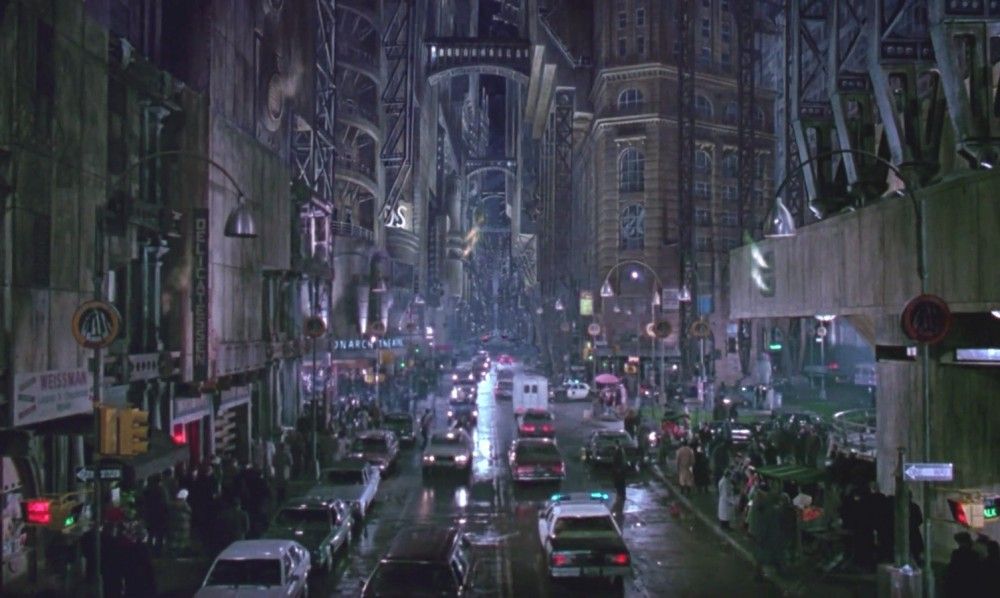
Anton Furst would win an Oscar for Best Art Direction for his design of Gotham City, which was for its time, quite dazzling. On par with some of the designs from Blade Runner and The Crow, Furst’s rendition of Gotham was dark and brooding, compared to the more modern backdrop of Batman Begins. In addition to Gotham’s look, Furst also helped design the Batmobile, which was based off the Chevy Impala (another Supernatural connection). When the film was released on home video, my family caught sight of the Batmobile up close on the street as it delivered VHS Copies to a video store in Manhattan. Although he died some years later, Furst’s work on Batman remains an influence on both the comics and future installments of the movies.
1989 was also a big year for Danny Elfman. His score for Batman would earn him a Grammy, and the main theme would become a definitive one for the Caped Crusader throughout the early 1990. Shirley Walker would build on the theme with her music from Batman: The Animated Series. It was also something of a surprise for Prince. With songs like Trust, Electric Chair and Vicki’s Waiting, Prince’s Batman Soundtrack is full of great hits that you really wouldn’t think would fit in a story like Batman. Still, they manage to do just fine, and even elevate scenes like the Joker’s entry in the Gotham Museum and the Balloon Parade.
Batman is not without a few problems. It gets a little long in the tooth in the film’s second half, particularly in the scenes leading up to the Monarch and Bruce losing his parents. It’s not a terrible slowdown, since it has to set the tone for some of the more spectacular fights later on. It could have been edited just a little tighter. Additionally, when compared to some of the modern versions, 1989’s Batman can feel a little bit dated (to me, anyway). That’s more of a nitpick, or where you stand on the Batman universe as a whole. Everyone has their favorite adaptation on the Caped Crusader.
Burton and Keaton would later reunite in 1992’s Batman Returns, and the franchise on a whole would take a different turn with Joel Schumacher’s takes in 1995’s Batman Forever and 1997 Batman & Robin.
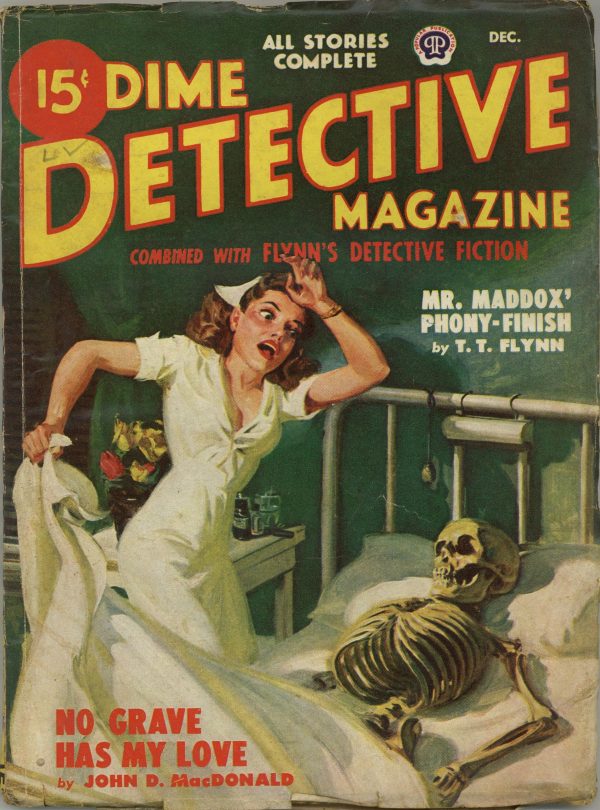
This is from 1948. That would probably make me scream and faint too so I’m not going to pass any judgments. This cover was done by Norman Saunders.
Free Britney!

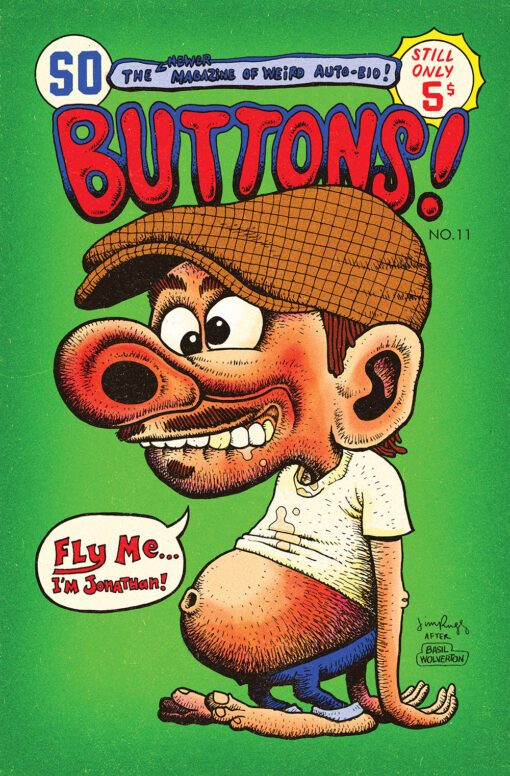
View original post 696 more words
4 (or more) Shots From 4 (or more) Films is just what it says it is, 4 (or more) shots from 4 (or more) of our favorite films. As opposed to the reviews and recaps that we usually post, 4 (or more) Shots From 4 (or more) Films lets the visuals do the talking.
115 years ago today, Billy Wilder was born in what was-then Austria-Hungary and what is today Poland. Having started his film career as a screenwriter in Germany, Wilder fled to the United States after the rise of Hitler. (Many members of Wilder’s family would subsequently die in the Holocaust.) He went on to establish himself as one of the great studio directors, a filmmaker who could seemingly master any genre and whose films were often distinguished by an irreverent wit and a welcome skepticism when it came to accepting any sort of conventional wisdom. He made the type of films that could only be made by someone who had seen humanity at its worst but who also understood what people were capable of at their best. Wilder made dramas that could make you laugh and comedies that could make you cry. He was a master filmmaker, one whose work continues to influence directors to this day.
Today, in honor of Billy Wilder’s legacy, the Shattered Lens presents….
4 Shots From 4 Billy Wilder Films
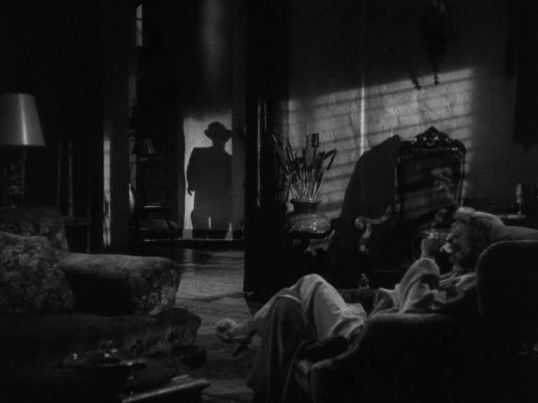
Double Indemnity (1944, dir by Billy Wilder, DP: John Seitz)
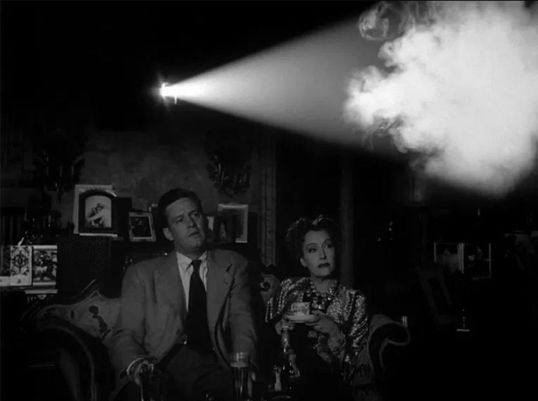
Sunset Boulevard (1950, dir by Billy Wilder, DP; John F. Seitz)
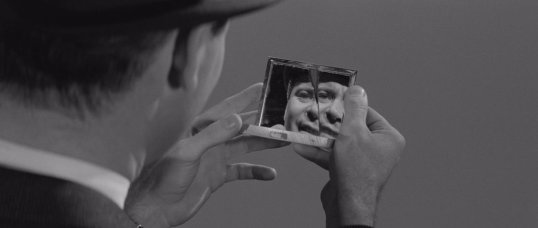
The Apartment (1960, dir by Billy Wilder, DP: Ernest Laszlo)
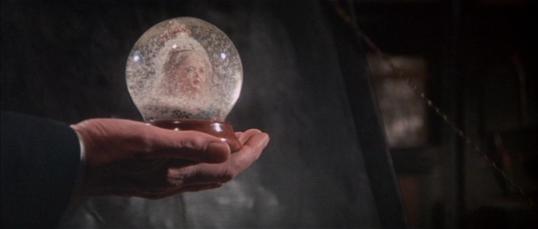
The Private Life of Sherlock Holmes (1970, dir by Billy Wilder, DP: Christopher Challis)
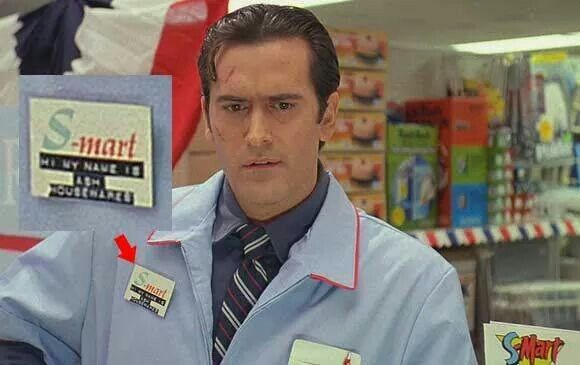
Today is an unofficial holiday for everyone who loves a good cult film because the one and only Bruce Campbell is 63 years old today! Whether he’s battling Deadites or making a cameo appearance in a Coen Brothers film or just being himself, it’s impossible not to love Bruce Campbell. In many ways, he epitomizes everything that people love about the movies. He’s a good actor, he’s a good storyteller, and — perhaps most importantly — he’s smart enough not to take himself too seriously.
In honor of Bruce Campbell’s birthday, here’s one of his best moments. From Army of the Dead, it’s the Battle of the S-mart. Hail to the king, indeed.
 Through the Shattered Lens
