Film Review: She’s Out of Control (dir by Stan Dragoti)


Creepy movie, this is.  Creepy, creepy movie.

The 1989 film, She’s Out of Control, tells the story of Doug Simpson (Tony Danza, showing why he never became a movie star), a radio manager and the single father of two daughters.  When Doug goes out of town, his girlfriend, Janet (Catherine Hicks), gives 16 year-old Katie Simpson (Ami Dolenz) a make-over.  When Doug leaves, Katie is awkward and wears braces and thick glasses.  When he returns, she’s lost the braces, she’s switched to contacts, and every boy in the neighborhood wants a date with her.  Doug freaks out.

And listen, I get it.  I know that the point of the film is that parents are protective and I know that when I first started to develop and get noticed by boys, certain members of my family freaked out as well.  (Of course, I was a little bit younger than Katie, who is portrayed as being the most absurdly sheltered 16 year-old of all time.)  And I also understand that this film is not only a comedy but also an 80s comedy and, on top of that, an 80s comedy starring Tony Danza.  So, I’m willing to accept that Doug’s reaction had to be exaggerated a bit for the joke, as it is, to qualify as being a joke.

But seriously, Doug freaks out so much that it’s just really creepy, not to mention a little bit insulting to teenage girls in general.  Katie loses her glasses and her braces and suddenly, Doug is incapable of seeing her as being anything other than some sort of hypersexualized vixen.  Doug goes from being protective to being rather obsessive and, since the film is told from his point of view, that means that, whenever the camera ogles Katie, it comes across as if Doug is ogling his own daughter and …. I mean, yeah, it’s pretty icky.  The film’s title may be She’s Out Of Control but that’s never an accurate description of anything that Katie does over the course of the film.  Instead, the only person who is truly out of control is Doug but he’s out of control to such an extent that it’s hard to watch him without hearing the voice of Dr. Phil in background, saying, “I’m a mandated reporter so I’m going to be makin’ a call as soon as the show is over….”

Speaking of everyone’s favorite unlicensed TV doctor, Doug starts to see a psychologist who is an even bigger jackass than Dr. Phil and that’s probably a good thing.  Not only does Doug clearly need some mental help but it also allows the film to introduce Wallace Shawn as Dr. Fishbinder, the pompous author of a book that deals with how to raise an unruly teenager.  Shawn is one of the film’s few good points.  He plays Fishbinder as being such a self-important little weasel that he’s always entertaining to watch.  Fishbinder encourages Doug to be strict and warns him that, if he isn’t, Katie will be pregnant in no time.  Definitely, don’t let her to go to prom.  “That’s where 87% of teenage girls lose their virginity!” Fishbinder exclaims, news to which Tony Danza responds by mugging for the camera like an extra in a Roger Corman monster film.

Katie has many suitors over the course of the film, some of whom are more memorable than others.  Dana Ashbrook (who played drug dealer-turned-deputy Bobby Briggs on Twin Peaks) is the rebel with a heart of gold.  A very young Matthew Perry is the spoiled rich kid who is only interested in one thing.  An even younger Dustin Diamond (you might know him better as Screech Powers on Saved By The Bell) pops up as a kid who gawks at Katie on the beach.  And while Doug comes across as being a jerk for most of the film, one can understand why anyone would be upset at the thought of Dustin Diamond coming any parent would be upset by the thought of Dustin Diamond coming anywhere near their daughter.

In the end, the main problem with the movie is that it asks you to sympathize with Doug Simpson but he’s so obviously overreacting to every little thing that you quickly grow tired of him and his worries.  Of course, it doesn’t help that he’s played by Tony Danza, whose eyes often seem as if they’re on the verge of popping out of his head.  Danza wanders through the movie with a perpetually shocked expression on his face and it gets old after a while.  By the time he’s forcing his daughter’s friends to listen to songs from his old vinyl collection, most viewers will be done with him.  It doesn’t help that Doug is described as being some sort of former hippie protester type.  It’s hard to think of any other boomer actor who would be less convincing as a former hippie than Tony Danza.

She’s Out Of Control is a forgettable and, quit frankly, rather annoying little film.  However, it has achieved a certain bit of fame because it was one of the film’s that Roger Ebert consistently cited as being one of the worst that he had ever reviewed.  You have to keep in mind that Ebert was a film reviewer for over 40 years and during that time, he reviewed a lot of movies that he disliked.  He even published at least three books devoted to negative reviews that he had written.  Considering the amount of bad films that Ebert watched, the fact that he specifically cited She’s Out Of Control as one of the absolute worst films that he had ever sat through …. well, it was enough to encourage me to actually watch the film when I came across it on Starz.  And, in this case, Ebert was right.  It was pretty bad.

She’s Out Of Control is a dumb movie about dumb people doing dumb things.  The key word is dumb.

The Films of 2020: The Vast of Night (dir by Andrew Patterson)


The Vast of Night opens with an announcement that we are about to watch the latest episode of something called Paradox Theater.  While the fact that what we’re watching is supposed to be a television show never directly ties into the plot, it’s still a clever little twist that pays homage to old anthology shows like The Twilight Zone and The Outer Limits.  It’s appropriate because The Vast of Night tells the type of story that one might expect to see on one of those old shows.  It’s the story of two ordinary people confronting the unknown.

Taking place in New Mexico in the 1950s, The Vast of Night tells the story of two friends.  Everett Sloan (Jake Horowitz) is a teenage disc jockey at the local radio station.  Fay Crocker (Sierra McCormick) is a switchboard operator.  The opening scenes of the film are devoted to Everett and Fay walking around the local high school.  Fay has a new tape recorder, which was apparently considered to be something of a luxury item in the 1950s.  Everett is full of advice.  They’re both immediately likable and their friendship is enormously appealing.  They’re the type of people that I would want to be friends with if I ever found myself living in the 1950s.

Everett goes to his job at the radio station.  Fay takes her seat behind the switchboard.  She listens to Everett’s show, which is suddenly interrupted by a strange audio signal.  Fay starts to get calls from people reporting some sort of strange phenomenon in the sky while Everett asks if anyone who was listening to the show can identity the origin of the signal.  An unseen man named Billy (played, in a wonderful voice-over performance, by Bruce Davis) calls and explains that he used to be in the military.  He tells Everett a story that, at first, seems impossible to believe but, as the night goes on, becomes more and more plausible.

Filmed in my home state of Texas, The Vast of Night is triumph of atmosphere and good writing.  This is an independent film that makes brilliant use of its low-budget, using unknown (but talented) actors and just a few locations to tell a story that grows progressively creepier with each passing minute.  Making his directorial debut, Andrew Patterson keeps the story running at a steady and involving pace while collaborating with cinematogrpaher M.I. Litten-Menz to fill the screen with shadowy images and tight close-ups that work to keep the audience off-balance.

There’s an authenticity to The Vast of Night, one that would probably not be there if the film had been a big budget studio film.  Despite the opening declaration that we’re just watching an episode of a TV show, the characters in The Vast of Night feel very real.  Whether it’s Billy saying that he never told his story to anyone because he figured they wouldn’t believe him because of the color of skin or the character of eccentric old Mabel (played by Gail Cronauer), telling her strange story in the most comforting tones possible, the film is full of little details that bring the story to life,

It’s an entertaining film, one that builds to a somewhat unexpected climax.  The story and the characters stay with you after it ends.  I look forward to seen what Andrew Patterson does next and Sierra McCormick deserves to be a big star.  Watch the movie on Prime.  It’s good.

The Films of 2020: Athlete A (dir by Bonni Cohen and Jon Shenk)


By now, we all know who Larry Nassar is and what he did.

Nassar was the USA Gymnastic Team doctor, the guy who worked with some of America’s top gymnasts.  For several years, he was the guy who you would see standing in the background of televised gymnastic events, including the Olympics.  If any of the gymnasts were injured during a competition, he was the man who television audiences would see running out to the mat.  He was the man who both viewers and gymnasts were conditioned to see as being a protector.  In the documentary Athlete A, there’s footage of Nassar kneeling down beside an injured gymnast while a commentator assures the people watching at home that there’s no reason to be worried.  If anyone is going to know what to do, the commentator explains, it’s going to be Larry Nassar.

In 2015, USA Gymnastics cut ties with Larry Nassar, citing “athlete concerns.”  In 2016, the Indianapolis Star broke the story that two gymnasts had accused Nassar of sexual abuse.  (Despite the accusations, Nassar still received 27% of the vote when he ran for his local school board that same year.)  When Nassar was arrested in 2016 and put on trial, more gymnasts came forward.  It is currently estimated that there are over 265 identified victims of Nassar’s abuse and an infinite number who may never be identified.  After Nassar pled guilty to charges of possessing child pornography, he was sentenced to 60 years in federal prison.  After pleading guilty to seven counts of sexual assault against minors, Nassar was given a state sentence of 175 years.  This was followed by an additional state sentence of 40 to 125 years when he pled guilty to three more assaults.  At the time of his sentencing, the judge said, “I just signed your death warrant.”  At the time, I remember being more than a little worried that Nassar would attempt to cite those words as proof that the judge was biased against him and that he would request a new sentencing hearing.  Of course, that’s exactly what Nassar did.  Fortunately, that request was denied and Larry Nassar will die in prison.

Athlete A is hardly the first documentary to be made about Larry Nassar and the USA Gymnastics sex abuse scandal but it is the first one to truly explore how a monster like Larry Nassar was not only able to thrive but also why he was shielded by the very people who should have been protecting his victims.  As the documentary shows, USA Gymnastics is a brand and it’s champions — especially it’s female champions — are expected to be the perfect ambassadors for the brand.  That means following orders, winning gold medals, and not complaining.  Despite all of the footage that we see of various commentators rhapsodizing about the special relationship between the gymnasts and their coaches, the gymnasts themselves are treated as just being a commodity that’s valuable as long as they can keep winning medals and keep bringing money into USA Gymnastics.  Once they can no longer win, those coaches no loner have any use for them.

At the legendary Karolyi Ranch in Huntsville, Texas, young girls were separated from their parents and trained by Béla Károlyi, a strict taskmaster who had no hesitation about slapping a gymnast who he felt hadn’t done well.  Into this harsh environment came Larry Nassar, a seemingly dorky and friendly guy who claimed to only be concerned with the health and the safety of the gymnasts.  Nassar would assure the gymnasts, most of whom had yet to even reach puberty, that everything he was doing was for their benefit.  Some of them, he abused for years, from the moment they came in for their first check-up until the day that they finally retired from competition.   And, when many of the gymnasts grew older and realized that what Nassar was doing was not okay, they would discover that no one was willing to listen to them.  Though the first complaints agaist Nassar were made in the 90s, it wasn’t until 2015 that anything was done about him.  In fact, parents were often lied to.  As is recounted in this film, the president and CEO of USA Gymnastics, Steve Penny, assured at least one gymnast and her parents that he had forwarded their concerns about Nassar when he had done no such thing.  Though Nassar’s trial got the majority of the coverage, Steve Penny would also be arrested and charged with deliberately tampering with evidence in order to protect him.

As I said a few paragraphs ago, this is hardly the first documentary about what went on behind the scenes at USA Gymnastics.  It probably won’t be the last.  But this may be the most important one because, through heart-wrenching interviews with Nassar’s victims, Athlete A shows how a man like Nassar was able to abuse young girls for years while those who should have been protecting the athletes were making the decision to look away.  Some of the most powerful moments in the film come from the contrast between the reality of what was happening and the way that USA Gymnastics presented itself in public.  The doctor who was supposed to take care of the athletes was a monster and the coaches, who were presented as being strict but caring, were his enablers.  Everyone wanted to benefit from the success of the athletes but no one was willing to stand up for them.

Athlete A is not easy to watch.  It’s a harrowing documentary but it’s also an important one.


The Films of 2020: All The Bright Places (dir by Brett Haley)


https://www.youtube.com/watch?v=6nRX2bSGjMI

All The Bright Places tells the story of two teenagers in Indiana.

Violet Markey (Elle Fanning) is pretty, popular, and secretly very depressed.  She’s still recovering from the death of her sister and her friends aren’t being particularly helpful.  (At one point, her boyfriend asks how much longer she’s going to be depressed because she’s “been this way for a really long time.”)  Violet lives in a nice, comfortable home and probably has a bright future ahead of her but she can’t communicate how she’s feeling to her parents (Luke Wilson and Kelli O’Hara), who are dealing with their grief in their own ways.

Finch (Justice Smith) is a student who is viewed, by his classmates, as being something of a freak.  Unlike Violet, who holds back her emotions, Finch doesn’t hold back his feelings and, as a result, it’s gotten him in trouble.  If not for a somewhat sympathetic principal (Keegan-Michael Key), Finch probably would have been expelled a while ago.  As it is, he’s on probation and he’s running the risk of not graduating.  Finch lives with his sister (Alexandra Shipp).  Their parents are pretty much not in the picture.

One night, Finch happens to see Violet standing on a bridge and thinking about jumping.  From that moment, an unexpected relationship begins.  Though Violet is, at first, hesitant to open up to Finch (or anyone else, for that matter), Finch continues to try to talk to her.  Eventually, for a class, they’re assigned to do a report on the wonders of Indiana.  Soon, they’re going from location to location and Violet is slowly starting to enjoy life again while Finch encourage her to open up about her feelings and to once again start writing….

And, at this point, you’re probably thinking that this just a typical YA film, one that’s only distinguished by the fact that, instead of having a manic pixie dream girl, it has a manic pixie dream guy.  That was certainly how I felt during the first third of this film.  However, All The Bright Places is too smart of a film to settle for telling such a simple story and Finch is too complex of a character to be dismissed as a trope.  Even as Violet gets better, Finch’s own behavior grows more erratic.  (In fact, it could be argued that this film’s greatest contribution to the cultural discussion is its attempt to seriously explore what would cause someone to become a manic pixie dream person in the first place.)  When events conspire to cause Violet and Finch to be separated, it leads to tragedy.

It’s a sweet-natured and poignant film, one that sensitively explores depression and mental illness.  It’s also a film that understands how, when you’re a certain age and even if you’re not also having to deal with burdens of depression and anxiety, almost anything can seem like the end of the world.  It takes its character’s seriously and it doesn’t pander to its audience with any shallow promises about how things are magically going to get better once they graduate high school and head off to college.  At the same time, it’s also a very life-affirming film, one that encourages us to celebrate life and experience it while we can.

Elle Faning and especially Justice Smith give two achingly sincere and touching performances.  I was especially impressed with the work of Smith.  Smith plays up Finch’s intelligence and his curiosity about the world while, at the same time, also showing why Finch’s attention might occasionally be a bit overwhelming.  I look forward to seeing what he does in the future.

The Films of 2020: The Binge (dir by Jeremy Garelick)


America, in the near future.

Due to a rise in crime coupled with an economic collapse, a new moralistic government has taken power.  All drugs and alcohol have been banned …. except for one day of the year.  On that day, anyone who is 18 years old or older will be able to drink, smoke, inject, and snort anything that they want.  This is the annual …. BINGE!

Okay, so does this sound familiar to anyone?

The Binge is a mix of The Purge and Superbad.  Three dorky high school students (played by Skyler Gisondo, Eduardo Franco, and Dexter Darden) want to take part in their first binge but it’s not going to easy, largely because they’re not actually cool enough to have been invited to any of the big Binge parties.  Unless they can find a way to sneak into the legendary Library Party, they’re going to miss out on all the fun and they’re not going to get laid.

Vince Vaughn, meanwhile, plays the high school principal who, at the start of the film, exhorts his students not to binge so hard that they end up getting horribly disfigured or bring any sort of shame on the reputation of their school.  However, when he finds out that his own daughter has snuck out of the house and is taking part in the Binge, he hits the streets and ends up binging himself.

And listen, The Binge gets off to a good start.  It opens with a Morgan Freeman sound alike narrating a short film about how much better life in America is thanks to the Binge.  Yes, it’s totally ripped off from The Purge but let us give the film some credit for at least admitting that it’s not exactly an original idea.  The short film is followed by a scene of Vaughn standing in a shabby high school auditorium, explaining to his students why binging is not a good idea and he goes through all of the classic horror stories that teenagers have been told through the years to keep them from indulging.  Vaughn comes across like some sort of demented gym teacher in this scene and it’s genuinely funny.

Meanwhile, throughout the high school, the students share stories about what they’ve heard life was like before the Binge.  Someone talks about how people used to do keg stands just for someone else to ask, “What’s a keg?”  Another student talks about how her mother claims that there used to be a show called Sex and the City, in which the characters would have sex and drink pink alcohol.

Those early scenes are funny but the rest of the film doesn’t live up to them.  Once the Binge begins, the film becomes just another raunchy high school party film and, to be honest, it’s a bit dull.  It’s also hard not to notice that, for a bunch of people who have apparently never drank or done drugs before, some of the characters handle getting drunk and stoned surprisingly well.  You would also think that, if you could only drink or do drugs one time a year, some people would at least try to be a little bit creative in how they did it.  Instead, it appears that everyone learned how to binge by watching old episodes of Saved By The Bell, California Dreams, and 90210.  With the exception of one drug-induced musical number that occurs about halfway into the film and a pretty amusing contest to see who can snort the most coke while doing the best Pacino imitation, everyone’s just so boring.

This is one of those comedies where people randomly screaming is often used as a substitute for any sort of real wit or clever dialogue.  The main characters are so poorly defined that you really never care whether or not they’re going to get laid, get stoned, go to prom, or get into college.  I appreciated any movie that satirizes prohibition but The Binge, much like the students that Vince Vaughn warned about at the start of the film, fails to live up to its potential.

The Films of 2020: The Lost Husband (dir by Vicky Wright)


The Lost Husband tells the story of Libby (Leslie Bibb).

Libby had a good life.  She lived in a big house in the suburbs of Dallas.  She had a handsome and loving husband named Danny (Kevin Alejandro).  She was the proud mother of two wonderful children, Abby (Callie Hope Haverda) and Tank (Roxton Garcia).  But then, one day, there was a car wreck.  Abby was injured and now walks with a limp.  Danny was killed.  And Libby was left a widow and a single mother.

When she loses her home, Libby and the kids try to live with Libby’s chain-smoking mother, Marsha (Sharon Lawrence).  Largely due to the fact that Marsha is a terrible human being who resents her daughter, that doesn’t work out.  Instead, Libby ends up moving out to a farm that’s owned by Aunt Jean (Nora Dunn).

Jean is plain-spoken but far kinder than Marsha.  She lives in a house without a television or a dishwasher.  Amazingly, she does have indoor plumbing.  Still, despite not having many modern luxuries, Jean proves herself to be a far stronger and far more caring person than Marsha ever was.  She not only gives Libby and her children a home but she also encourages Libby to work on the farm….

What?  Well, okay, maybe that doesn’t sound like Jean is doing Libby a favor by making her do physical farm labor but actually she is.  When Libby goes to work, she meets the handsome and single James O’Connor (Josh Duhamel).  James is the farm manager and, of course, he’s got some tragedies of his own that he’s still struggling to deal with.  Though James is at first skeptical as to whether or not Libby is ever going to be able to handle working on a farm, he’s impressed with her determination.  He also bonds with Tank and Abby and even goes as far as to teach Abby how to beat up the local bully….

And right now, you’re probably thinking that this is another silly Nicholas Sparks adaptation, the type of movie that’s perhaps destined to show up on Lifetime in another year or so.  Well, the film may very well play on Lifetime at some point in the near future but there’s still much more to The Lost Husband than just a romance between two troubled souls who work on a Texas farm.  The film is more concerned with Libby’s struggle to come to terms with the loss of her husband than it is with the possibility of her finding a new one.  Yes, James is a great guy and he looks like Josh Duhamel but this is a film that understands that Libby has to take care of herself first.

The Lost Husband is not really a movie that will take you by surprise but it’s still a gentle and sweet-natured film, one that has a good heart and is often sincerely likable.  Leslie Bibb and Josh Duhamel are both believable as two people who are still struggling to recover from their own pain but who still haven’t given up on the idea of finding some sort of happiness.  One thing I liked about the film is that it treated both Libby and James with respect.  Though Libby is not a natural-born farmer, she’s not portrayed as being some sort of spoiled city girl, either.  (In other words, she may not be excited about milking a cow but she still does it without accidentally getting a face full of milk.)  Meanwhile, James may be skeptical about Libby working on the farm but, at the same time, he’s not particularly rude or resentful about it.  Libby and James are both allowed to be adults, which is something of a rare occurrence in films about city girls returning to the farm where they grew up.

The Lost Husband is a nicely done romantic drama.  It’s not a film that’s going to change your life but it will definitely hold your attention if you happen to watch it on a rainy afternoon.

The Films of 2020: 7500 (dir by Patrick Vollrath)


7500 is about one man, sitting in a locked room and trying to prevent a disaster.

Tobias Ellis (Joseph Gordon-Levitt) is an American pilot who lives in Berlin.  From the minute we first see him entering the cockpit of the plane that he’s going to co-pilot from Berlin to Paris, he seems to be someone who has his life together.  He moves with the confidence of someone who knows how to do his job and who doesn’t have a single worry that anything could go wrong.  His girlfriend and the mother of his son, Gokce (Aylin Tezel), is a flight attendant on the plane but they both go out of their way to keep things strictly professional whenever they’re working.  In many ways, they seem like the perfect couple.  I’ve flown a lot and I would feel totally confident if I saw Tobias and Gokce working on my flight.

However, shortly after the plane takes off, things go terribly wrong.  Terrorists attempt to break into the cockpit.  Though Tobias is able to force them out and lock the cockpit door, he’s stabbed in the arm while doing so.  His co-pilot is also injured and quickly loses consciousness.  Now, while suffering from blood loss, Tobias has to fly the plane with one arm and negotiate with the terrorists, who are threatening to kill passengers and flight attendants (including Gokce) unless Tobias unlocks the door and allow them to enter the cockpit.

It’s an intense film.  With the exception of some airport security footage at the start of the film, all of the action takes place in that cockpit.  For the most part, we know only what Tobias knows.  We don’t know how many terrorists there are on the other side of the cockpit door.  We don’t know how serious they are when they threaten to start randomly killing passengers.  We also don’t know if Tobias is going to be able to safely land the airplane.  We certainly hope that he’ll be able to land it and the rules of Hollywood have conditioned us to expect a happy ending but, from the beginning, it’s established that 7500 is not a typical Hollywood action film.  Just because Tobias and Gokce are a likable couple and both are doing their best under the worst circumstances imaginable, there’s never any guarantee that they’re going to survive.

A lot of how you react to this film is going to depend on how much you like Joseph Gordon-Levitt.  He’s on-screen for the entire 92-minute running time.  We see all of the action through his eyes and we watch as he goes from being soft-spoken and confident to being increasingly desperate and emotional.  Gordon-Levitt gives a bravura performance, perfectly capturing not only Tobais’s fear but also his innate professionalism.  No matter how bad things get (and they do get pretty bad as the film progresses), he never forgets that everyone on the plane is depending on him to get them safely to the ground.

The film takes an interesting turn when Tobias shares a few moments when a younger terrorist who seems to be ambivalent about what he’s doing.  I wasn’t quite expecting that but it was a nice touch and Omid Memar did a good job of playing the character.  Ultimately, though, 7500 works best as a showcase for Joseph Gordon-Levitt and he delivers.

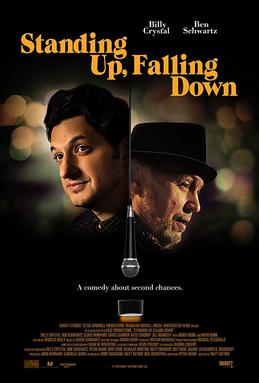
The Films of 2020: Standing Up, Falling Down (dir by Matt Ratner)


Having failed to achieve his dream of becoming a comedy superstar in Los Angeles, 34 year-old Scott (Ben Schwartz) returns home to Long Island.  How bad are things for Scott?  Consider this:

When he left for Los Angeles, he left behind Becky (Eloise Mumford), despite thinking that he was in love with her and despite her asking him to stay.  While he was in L.A., he purposefully chose to not respond to her attempts to get in contact with him because he was determined to move on with his life.  Now, he’s back and he’s wondering what could have been.  As for Becky, she’s now an acclaimed photographer and she’s married to a surfer named Owen (John Behlman).

All of his old friends are now married and have families and don’t really have time to hang out with a 34 year-old who is still struggling with adulthood.

When Scott returns home, he moves back in with his parents.  His mother (Debra Monk) spoils him while his father (Kevin Dunn) barely says a word to him.  Scott announces that, even though he knows he needs a job, there’s no way that he’s going to go to work at his father’s lumberyard.  His father says that’s not a problem because he wasn’t planning on offering Scott a job in the first place.

Scott’s sister (Grace Gummer) is also living at home and is stuck in a less than glamorous job but she’s dating Ruis (David Castaneda), an extremely charming security guard who is loved by everyone who meets him.

And, to top it all off, Scott has developed a rash of some sort in his arm!

In fact, the only positive development in Scott’s life is that he’s made a new friend.  Marty (Billy Cyrstal) is a bit older and he’s an alcoholic but he also has the best weed and he’s full of good advice.  On top of that, Marty’s also a dermatologist and is willing to just give Scott the medicine for his arm free of charge.  Marty becomes a bit of a mentor to Scott.  Of course, Marty has demons of his own.  His first wife committed suicide and his second wife died of stomach cancer.  His own son refuses to speak to him and won’t allow him to see his grandson.  Marty’s drinking isn’t the quirky character trait that it first appears to be.  Instead, it’s what he does to deal with the pain and the guilt that he carries around with him every day.

Standing Up, Falling Down is an occasionally effective and occasionally awkward mix of comedy and drama.  As a character, Scott can occasionally be a bit hard too take.  It’s one thing to have trouble accepting the fact that you’re getting older while it’s another thing to be in your mid-thirties with the maturity level of a 13 year-old.  At times, Scott seems to be so helpless that you find yourself wondering how he survived in Los Angeles for as long as he did.  Fortunately, Ben Schwartz is an appealing actor and the film doesn’t make the mistake of trying to idealize Scott’s lack of direction.  You find yourself sincerely hoping that Scott will finally manage to get his life together, even though you know he probably won’t.

The big surprise of the film is Billy Crystal, who gives a genuinely good and complex performance as Marty.  Like Crystal, Marty is a bit of an attention hog and occasionally seems a bit too satisfied with his jokes.  However, the film also explores why someone like Marty always feels the need to be “on.”  The best moments in the film are the ones where Marty quietly considers why his life has reached the point that it has.  In the film’s quieter moments, there’s a lot of sadness in Crystal’s performance.  The scene where he unsuccessfully tries to get his son to talk to him is absolutely heart-breaking, all the more so because Cyrstal downplays the scene’s potential for sentimentality.  Right when you’re expecting schmaltz, Crystal instead holds back.  With just the slightest change in his facial expression, Crystal immediately tells us everything that’s going on inside of Marty’s head.  It’s a truly good performance.

Standing Up, Falling Down is a low-key, occasionally effective dramedy.  Not all of it works (I could have done without Scott harassing his sister’s co-worker at the pretzel place) but it has a good heart and an unexpectedly great performance from Billy Crystal.

The Films of 2020: The Way Back (dir by Gavin O’Connor)


Jack Cunningham (Ben Affleck) used to be a star.  When he was in high school, he was a brilliant basketball player.  He led his high school, Bishop Hayes, to multiple championships.  Everyone expected Jack to have a bright figure but …. well, times change.

Decades later, Jack is a construction worker.  He spends every night at the neighborhood bar.  He wakes up every morning with a hangover.  He starts his day by drinking and he ends it by passing out.  He’s separated from his wife, Angela (Janina Gavankar), and he can’t even enjoy a nice Thanksgiving dinner without everyone getting on his back about his drinking.

When he gets a phone call from his old high school, he’s shocked to learn that he’s being offered a job.  The school’s basketball coach has had a heart attack.  Father Devine (John Aylward) wants to know if Jack would be interested in filling in for the rest of the school year.  Though at first reluctant and perhaps not wanting to be reminded of the future he once had, Jack eventually agrees.

The team, it turns out, is not particularly impressive.  The school hasn’t gone to the playoffs since Jack graduated and basketball is such a low priority that the team only has 6 players.  When Jack takes over, the team that has only won a single game.  The team is undisciplined and so used to being losers that they can’t even imagine what it’s like to be a winner.  You know what type of team I’m talking about because, even if you weren’t an athlete in school, you’ve probably seen a movie or two about underestimated high school teams that, under the leadership of a new coach, ended up shocking everyone by making it to the playoffs.

Working with assistant coach Dan (Al Madrigal), Jack struggles to turn the team into winners.  He’s a strict coach and, at first, the students resent him and his methods.  When he kicks one of the best players off the team for showing up late to practice, everyone thinks that Jack’s gone too far.  However, when the team actually starts to show signs of improvement, the team and the school rallies around their new head coach….

Of course, Jack still has his problems.  He’s too quick to lose his temper.  He curses a bit too often.  Despite caring about the team, he’s still weary about getting too close to them.  He’s emotionally damaged as the result of an abusive childhood and the death of his son.  A winning season isn’t going to magically change that.  However, Jack’s main problem is that he’s still an alcoholic.  To the film’s credit, it doesn’t try to sugarcoat Jack’s addictions.  Jack doesn’t magically become sober just because he’s found a purpose in life.  Even when he briefly cuts back on his drinking, the temptation is still there.  And when Jack finally does end up returning to his neighborhood bar and has too much to drink, the film is honest about the consequences of his actions.

The Way Back took me by surprise.  It started out as a well-made but rather predictable underdog sports story but it takes a turn during the third act and reveals that it’s actually a character study of a well-meaning but immature man who cannot escape his demons.  The film is honest about Jack’s problems and, to its credit, it doesn’t pretend like there are any easy solutions.  It’s going to take more than just coaching his team to the playoffs for Jack to make peace with himself and his past.  The film ends on a note that’s hopeful yet ambiguous.  Jack has a long way to go and you’re not totally convinced that he’s ever going to truly complete his journey.  But, at the same time, you’re happy that he finally got a chance to do something good with his life.

Ben Affleck was the perfect choice to play Jack and he gives the best performance that I’ve ever seen him give.  Affleck has been open about his own struggles with alcoholism but beyond that, it’s easy to see Jack’s struggles as a metaphor for Affleck’s own up-and-down career.  Like Jack, Affleck won a championship when Argo won the Oscar for Best Picture but it sometimes seems as if he’s struggled since then.  His directorial follow-up, Live By Night, was a critical and commercial failure.  His turn as Batman was appreciated by some but ridiculed by others.  When he stepped down from directing The Batman, he was the subject of the same type of uncharitable gossip that follows Jack as he coaches his team.  In the role of Jack, Ben Affleck gives a poignant, vulnerable, and honest performance.  He’s willing to be unsympathetic.  He doesn’t shy away from showing us that Jack, even at his best, can be a massive fuckup.  And yet, he holds onto our sympathy even while Jack does some very stupid things.  It’s Affleck’s performance that elevates The Way Back from being just another sports film to being something far more touching.

The Way Back may not be quite strong enough to be called a great film (though it’s certainly a good one) but Ben Affleck gives a great performance.

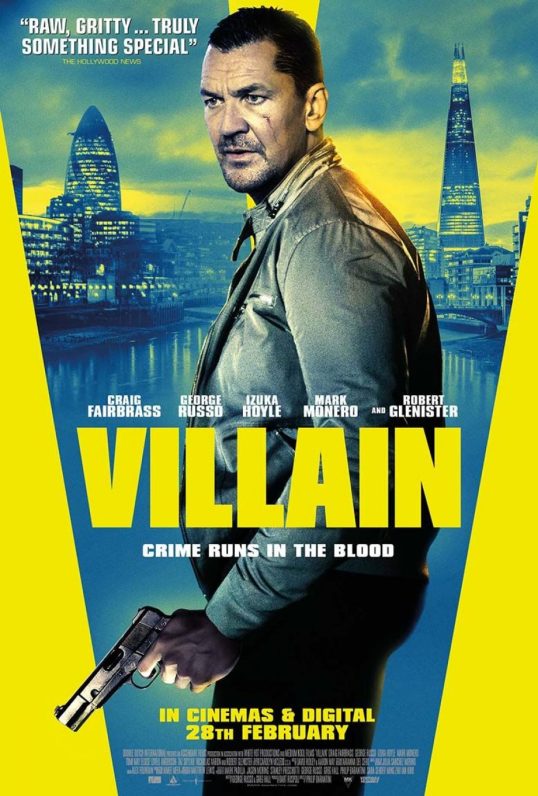
The Films of 2020: Villain (dir by Philip Barantini)


Villain is a British gangster movie.

What that means is that there’s a lot of blood and violence but, at the same time, there’s also quite a few scenes of peopled drinking tea.

It means that the dialogue is full of the casual use of the type of profanity that would get you kicked out of a store in America and yet, because all the f-words and the c-words are delivered with British accents, they still somehow sound, at least to an American ear, rather refined.

Being a British gangster film means that the good gangsters live in a tiny flat while the bad gangsters hold meetings in their poshly decorated sitting rooms.  It means that we get at least a few scenes of an aging gangster walking around London after having just been released from prison.  It means a subplot about the ownership of a pub and at least a few talkative junkies.  It means lengthy scenes of threatening dialogue, the majority of which are ended by sudden outbursts of violence.  It means gray overcast skies and downbeat endings and at least one dance scene.

As you may have guessed, Villain is not a particularly original film.  It’s well-made and some of the actors are good and it’s hard not to respect the film’s dedication to being as grim and downbeat as possible but there’s very little about Villain‘s story that will surprise most viewers.  Even the scene where the bad guys taunt the main character by asking him if he’s some sort of “villain” is expected.

Craig Fairbrass plays Eddie Franks,  Eddie is a career criminal who, having just been released from prison, is determined to go straight.  Despite the fact that daughter tells him that “everything you touch turns to shit,” Eddie is convinced that he can turn his life around.  All he wants to do is stay out of trouble and manage his family’s pub.  Of course, we know that there’s no way that’s going to happen.  After all, no one ever makes a movie about someone getting out of prison and then not being drawn back into a life of crime.

Eddie’s problem is that he has a brother named Sean (George Russo) and Sean has managed to get in debt to Roy and Johnny (played, respectively, by Robert Glenister and Tomi May).  Roy and Johnny are always mad about something and they’re definitely not people who you want to owe money too.  They want the pub and they want their money and if they don’t get it, both Eddie and Sean are going to end up in a hole in the ground.

While Eddie is trying to figure out how to deal with Roy and Johnny, he’s also trying to pick up the pieces of his life and make amends for the past.  He tries to reconnect with his daughter, Chloe (Izuka Hoyle) and he visits with an old friend named Michael (Mark Monero).  Eddie wants to be a good citizen but the world just seems to be conspiring against him.  It all leads to a downbeat conclusion, as these things often do.

Villain is a well-directed film and Craig Fairbrass has just the right look and manner to play the haunted Eddie.  Even though you can pretty much guess everything that’s going to happen to Eddie, you still hope the best for him because, as played Fairbrass, he just seems to be so achingly sincere in his desire to rebuild his life.  Unfortunately, as well-made as it is, Villain doesn’t really do anything new with the gangster genre.  It’s a bit too predictable for its own good.  That said, as familiar as it may be, it gets the job done well enough.