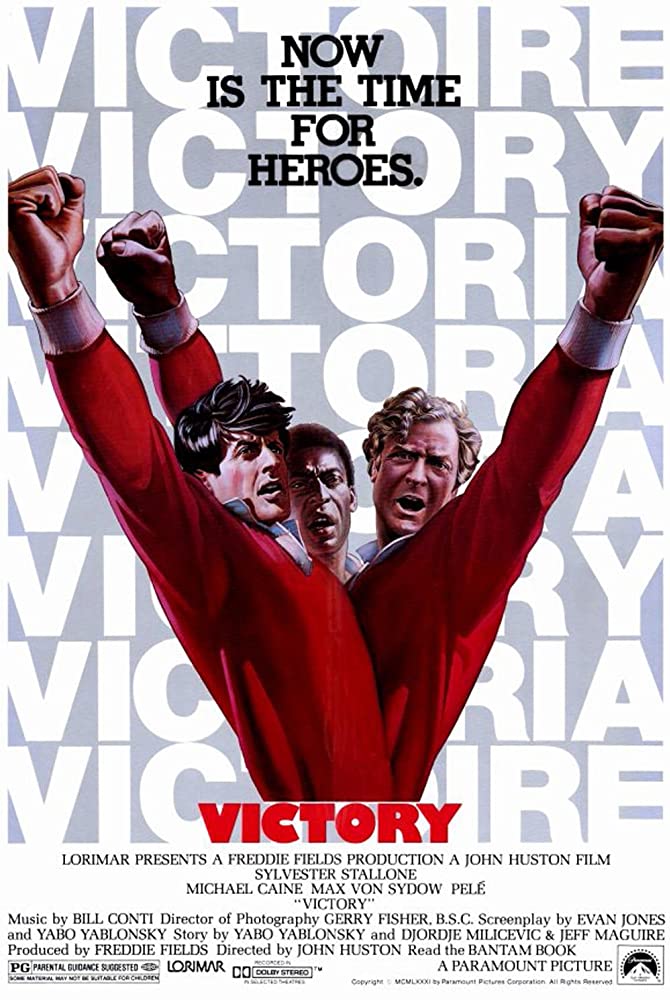
Escape to Victory (1981, directed by John Huston)


In 1942, during the height of World War II, Nazi Major Karl von Steiner (Max von Sydow) is surprised to discover that professional English footballer John Colby (Michael Caine) is a prisoner of war in France and that he has formed his own soccer league with his fellow POWs.  Seeing a chance for a propaganda coup, von Steiner arranges for a team led by Colby to be travel to occupied Pairs where they will play a match against the German national team.

Colby agrees, on the condition that it be a real game and that the teams not just be made up of officers.  At the insistence of his senior officers, Colby also allows an American prisoner named Robert Hatch (Sylvester Stallone) to serve as the team’s trainer.  Hatch is plotting to use the match as a cover for his own escape.  When it appears that there’s a chance for the entire team to escape during the match, Colby and his team are forced to choose between defeating the German team or making a run for freedom.

I think that, for most people, that wouldn’t be too difficult of a decision to make.  If I have to choose between escaping a POW camp or winning a match, I’m going to go down the tunnel and do what I have to do to make it across the English channel.  In the movie, though, it’s a matter of pride and I think Michael Caine is probably the only actor who could make such a conflict feel credible.  Though Stallone got both top billing and a romantic subplot with a member of the Resistance, it’s Michael Caine’s movie all the way through.  From the minute he demands to know “what the bloody hell” is going on, Michael Caine owns Escape to Victory.

Escape to Victory is an old-fashioned war film.  Think of it as being The Great Escape with tons of soccer kicked in.  Fans of the game will probably enjoy seeing legendary players like Pele and Bobby Moore cast as the POWs who make up Colby’s team.  The movie has some slow spots but it’s ultimately a rousing adventure, featuring good performances from Caine, von Sydow, and Sylvester Stallone.  It’s interesting to see Stallone cast as someone who isn’t automatically the best player on the field.

The film is based on a true story, one that sadly did not share this film’s happy ending.  In 1942, a group of Ukrainian POWs played an exhibition match against their German captors.  When the POWs won the match, the Germans responded by executing the majority of the players.  The true story of the Death Match (as it was later called) was told in 1962, in a Hungarian film called Two Half Times In Hell.
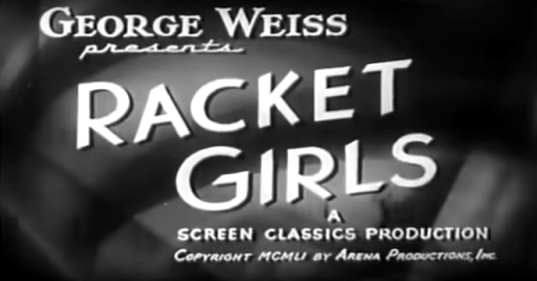
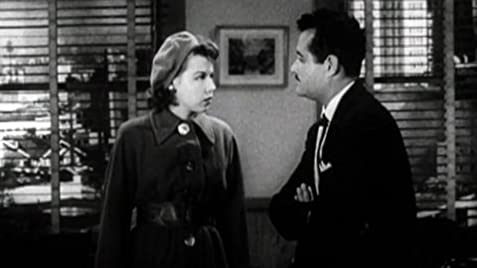
An Offer You Should Refuse #12: Racket Girls (dir by Robert C. Dertano)


The other night, I watched the 1951 film Racket Girls with a select group of friends.  We get together every Saturday night and watch a movie.  Usually, the movie’s pretty bad.  (For instance, we watched Disco Beaver From Outer Space one night.)  Still, I think Racket Girls might be the worst film we’ve seen to date.

Racket Girls tells the story about how the mob infiltrated the sport of professional wrestling.  Umberto Scali (Timothy Farrell) and his little friend Joe (Don Ferrara) make their living managing female wrestlers but it turns out that the wrestling hall is really a front for all of Umberto’s illegal activities.  We’re told that there’s a lot of illegal activities going on but we don’t really see many of them.  Anyway, Umberto borrows too much money from Mr. Big and then he gets the police mad at him and it looks like it all might lead to a bad end for Umberto and his little friend Joe.

Or maybe not.  Who knows?  This movie is only a 67 minutes long but it’s next to impossible to actually follow the plot.  To be honest, I found the complete lack of background music to be more interesting than the plot itself.  It gave the film a strangely existential feel.  There’s no music.  There’s no entertainment.  There’s just a lot of wrestling and bullets.

In fact, I’d say that the film is 75% wrestling, which …. well, I guess whether or not that works depends on whether or not you’re a fan of grainy professional wrestling footage.  I’m not a huge fan, though I’ve seen some good wrestling movies that were smart enough to explore the real people behind the outsized personas.  In Racket Girls, no one really has a personality and no one has a persona either.  There’s a lot of overhead shots of a wrestling ring and we hear what sounds like a crowd cheering even though we never actually see them.  It’s actually a bit of an odd effect.  It makes the wrestling scenes seem positively surreal.  I kept waiting for that strange radiator woman from Eraserhead to step out in the ring and start singing, In Heaven, Everything Is Fine….

Anyway, the film does make a legitimate point about mob’s influence in professional sports.  Umberto, it should be noted, doesn’t appear to be a very smart gangster.  That’s his downfall.  Still, if you enjoy watching movie featuring tough guys in black suits threatening each other …. well, this film probably still isn’t for you.  I mean, a few of the actors playing the gangsters have got the look down but no one’s particularly convincing.  It’s like a community theater production of The Sopranos or something.  It’s like they remade Scarface with Justin Bieber.

As I watched this film, I found myself wondering whether or not Ed Wood was involved because the film just feels like an Ed Wood production.  Also, it should be noted that Racket Girls was produced by George Weiss, who produced several of Wood’s films and that star Timothy Farrell appeared in at least 3 Wood-directed films.  Ed Wood’s name doesn’t appear anywhere in the credit but I swear, this film has his finger prints all over it.

I’m probably making Racket Girls sound more amusing than it actually is.  This is an incredibly boring movie.  My friends nearly abandoned me about ten minutes into the movie and that hardly ever happens.  I had to beg them to stay and watch the rest of the film.  (I told them that there was a cartoon coming up that featured the first appearance of Bobba Fett.  That was the same line I used to keep them from abandoning me two years ago when we were watching The Star Wars Holiday Special.)  This is an offer that you can refuse.  In fact, you should refuse it.

Previous Offers You Can’t (or Can) Refuse:

  1. The Public Enemy
  2. Scarface
  3. The Purple Gang
  4. The Gang That Could’t Shoot Straight
  5. The Happening
  6. King of the Roaring Twenties: The Story of Arnold Rothstein 
  7. The Roaring Twenties
  8. Force of Evil
  9. Rob the Mob
  10. Gambling House
  11. Race Street

Music Video Of The Day: Crackerbox Palace by George Harrison (1976, directed by Eric Idle)


Yes, this video was directed by Eric Idle of Monty Python fame.  Idle appears in the video, as does Neil Innes.  (Innes plays several roles, including the woman pushing the carriage at the start of the video.)  This video was shot on the grounds of Harrison’s estate, Friar Park (which was also known as, you guessed it, Crackerbox Palace).  The video made its debut on the November 20th, 1976 episode of Saturday Night Live.  SNL, that week, was hosted by Paul Simon and featured both Simon and Harrison as the musical guests.

The name Crackerbox Palace was originally used as the name for the Los Angeles estate that was owned by Lord Buckley, a comedian who was admired by Harrison and whom it was felt that Harrison physically resembled.  Harrison wrote the song after meeting Lord Buckley’s former manager, George Grief.  Harrison also payed homage to Blazing Saddles in the song, repeating Madeline Khan’s famous line of “It’s twoo, it’s twoo” during the instrumental breaks.

This whimsical video reflects Harrison’s sense of humor (not to mention Idle’s).  Harrison, with his reputation for being the spiritual Beatle, never seems to get enough attention for his sense of humor.

Enjoy!

Striking Distance (1993, directed by Rowdy Herrington)


Thomas Hardy (Bruce Willis) comes from a huge family of Pittsburgh cops.  He used to be a homicide detective but then his father (John Mahoney) was murdered by a serial killer and his cousin (Robert Pastorelli) jumped off a bridge after Hardy turned him in for being crooked.  When Hardy insisted that the serial killer who murdered his father and countless others in Pittsburgh had to be a cop, he was kicked out of homicide and reassigned to the river patrol.

Two years later, Hardy drinks too much and spends his time floating up and down the river.  He’s got a new, younger partner named Emily (Sarah Jessica Parker) but not even Emily can snap him out of his funk.  It’s not until the serial killer starts to strike again — this time specifically targeting people from Hardy’s life — that Hardy starts to care about police work again.

Striking Distance is a good example of a thoroughly mediocre film that bombed at the box office but was given a new lease on life by HBO.  During the 90s, it sometimes seemed as if there wasn’t a day that went by that HBO didn’t air Striking Distance at least once.  I guess it makes sense.  Bruce Willis was a big name and Sarah Jessica Parker did eventually end up starring on one of HBO’s signature hits.  Still, it seems like they could have found a better Bruce Willis film to air.  When critics in the 90s complained that Bruce Willis was an ego-driven star who wasn’t willing to break out of his comfort zone, they weren’t talking about Willis’s appearances in films like Pulp Fiction or 12 Monkeys or even Die Hard.  They were talking about movies like Striking Distance, where Willis smirks his way through the film and spends more time making the camera gets his good side than actually developing a character.

The most interesting thing about Striking Distance is that it manages to be too simple and too complicated at the same time.  There’s no mystery to the identity of the serial killer or why Hardy is being targeted.  There’s also no depth to Hardy and Emily’s relationship.  As soon as they meet, everyone knows where their relationship is going to head.  At the same time, the movie is full of red herrings and unnecessary characters.  Hardy comes from a family of policemen and it seems like we meet every single one of them.  Tom Atkins, Dennis Farina, and Tom Sizemore all show up as different relatives.  They don’t add much to the movie but they’re there.  Andre Braugher, Timothy Busfield, and Brion James also all show up in minor roles, to no great effect beyond providing the film with an “It’s that guy!” moment.

To the film’s credit, it has a few good chase scenes, though the novelty of everyone being in a boat wears off pretty quickly.  Striking Distance is a mess but everyone who had HBO in the 90s sat through it at least once.


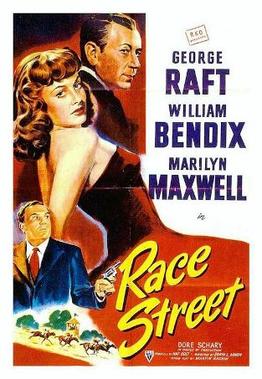
An Offer You Can’t Refuse: Race Street (dir by Edwin L. Marin)


The 1948 film noir, Race Street, tells the story of what happens when the mob comes to San Francisco.

Led by the ruthless Phil Dickson (Frank Faylen, who you might recognize as Ernie the Cab Driver from It’s a Wonderful Life), the mob is looking to move in on San Francisco’s bookmaking rackets.  Dickson wants all of the bookies to pay him for protection.  Of course, he knows that he’s going to have a hard time convincing some of them to go along with his plans so he comes up with the brilliant idea of making an example of one bookie.  He sends two of his men to talk to a small-time bookie named Hal Towers (Harry Morgan).  They tell Hal that he can either pay Phil or he can suffer the consequences.  Hal says that he’ll suffer the consequences so they promptly through him down a flight of stairs, killing him.

When Hal’s best friend, nightclub owner Dan Gannin (George Raft), discovers what has happened, he swears that he’s going to get revenge.  Even after Dickson’s men abduct Dan and give him a brutal beating, Dan remains committed to getting justice for Hal.  Lt. Barney Runson (William Bendix), who has been Dan’s best friend since childhood, tries to convince Dan to let the police handle it.  He even tries to get Dan’s sister, Elaine (Gale Robbins) and Dan’s mysterious girlfriend, Robbie (Marilyn Maxwell), to convince him to back off but Dan won’t hear of it.  Of course, because this is a film noir, Robbie has secret of her own….

Race Street is a low-budget noir that only has a running time of 79 minutes but still somehow finds time to sneak in a few musical performances from Gale Robbins.  When the film first started, I have to admit that I wasn’t expecting much.  George Raft seemed bored with his role and William Bendix’s opening narration didn’t fill me with much confidence.  However, it didn’t take long for the film to win me over.  Harry Morgan, for instance, brought a lot of wounded dignity to his relatively small role and his monologue before his murder is surprisingly moving.  Frank Faylen was cast against type as the evil mobster but it worked.  Seeing the normally amiable Faylen threatening to kill people was a good reminder that not all monsters look like monsters.  Some of them look like the friendly Bedford Falls cab driver.  As befits a film noir, the film is full of ominous shadows and sudden bursts of violence.  The scenes where Hal is murdered and Dan is beaten both stand out as being perhaps a bit more brutal than one might expect a film from 1948 to be.

Race Street is a minor noir but aficionados of the genre should enjoy it.  This is a short and no-nonsense film that gets the job done.  It’s an offer you should not refuse.

Previous Offers You Can’t (or Can) Refuse:

  1. The Public Enemy
  2. Scarface
  3. The Purple Gang
  4. The Gang That Could’t Shoot Straight
  5. The Happening
  6. King of the Roaring Twenties: The Story of Arnold Rothstein 
  7. The Roaring Twenties
  8. Force of Evil
  9. Rob the Mob
  10. Gambling House

Music Video Of The Day: Tommy Gun by The Clash (1978, directed by Don Letts)


“I was saying us rock ‘n’ rollers are all posers and egomaniacs, but we know that terrorists are as bad, or worse than we are. They definitely love to read their own press… I know they dedicate their life to a cause, but they’re always posing for pictures.”

— Joe Strummer, on Tommy Gun

It’s always hard for me to listen to The Clash without also thinking about the way that Johnny Lydon dismissed them as not being a real punk band.  (Lydon was fond of pointing out that Strummer was a diplomat’s son and that he had previously been in a “pub band” before getting involved with punk scene.)  Johnny may have had a point about The Clash never really being as working class as they claimed to be, though that didn’t stop him from collaborating with members of the band on a few projects after The Clash broke up.  Still, I’ve always liked The Clash’s music.

Tommy Gun was the band’s take on international terrorism.  When it was first released, there was some controversy over whether the band was pro-terrorism or anti-terrorism.  As with many of The Clash’s songs, it could be read both ways.  It was The Clash’s first top twenty hit in the UK, peaking at #19.

This video was one of the first of many to be directed by Don Letts.  Some sources say that this was the first video that Letts shot for the band, though Lett’s video for The Clash’s White Riot was actually released before the video for Tommy Gun.  I don’t know how true that is but I do know that Letts went on to direct several videos for both The Clash and Mick Jones’s Big Audio Dynamite.

Enjoy!

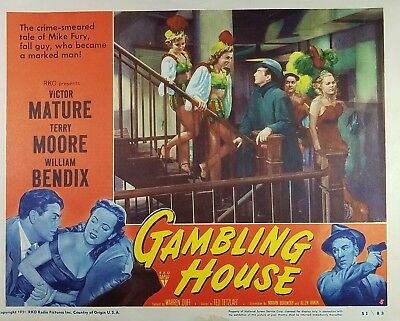
An Offer You Can Refuse #10: Gambling House (dir by Ted Tetzlaff)


The 1950 film noir, Gambling House, begins with the aftermath of a murder.

A man’s been gunned down in an illegal gambling house.  The murderer is gangster named Joe Farrow (William Bendix) but Farrow has no intention of going to prison.  Fortunately, another gambler was wounded during the shoot out.  Marc Fury (Victor Mature) will survive his injury but he might not survive being a witness.  However, Farrow sends his gunmen to make Fury an offer.  If Fury agrees to take the rap for the shooting, he’ll not only live but Farrow will pay him a good deal of money.  Fury agrees because …. well, what else is he going to do?

Fury is arrested for the murder.  He pleads self-defense and he’s acquitted at the trial.  So far, so good, right?  However, there’s always a complication.  First off, there’s the fact that Farrow wasn’t exactly being honest when he promised to pay Fury.  Farrow has no intention of giving Fury any money.  In fact, now that Fury has been acquitted and the case is officially closed, it might be more convenient just to have Fury killed.

The other problem is that Fury’s trial brings him to the attention of the Immigration and Naturalization Service.  The INS takes a look at Fury’s record and they discover that he’s not Marc Fury at all!  (I know, it’s a shock.  Who would think that a name like Marc Fury would be fake?)  It turns out that his original name was Marc Furiotta and he was born in Italy.  His family came to the U.S. when Marc was a child.  Marc always assumed that he was a citizen but it turns out that his parents were never naturalized and therefore, Marc is in the country illegally!  INS wants to deport him.  Marc wants to stay in the United States.

Fortunately, Marc will have a chance to try to convince a judge to let him stay in the United States, despite his lengthy criminal record.  Until his hearing (or until he makes bail), he’ll be detained at Ellis Island.  Marc soon finds himself stuck on Ellis Island, presumably right underneath the base of the Statue of Liberty.  (I know the Statue of Liberty isn’t actually on Ellis Island but the imagery just got stuck in my head while I was writing this review and I’ll be damned if I’m going to take it out.)  He’s surrounded by earnest immigrants who can’t wait to become American citizens and that awakens his own patriotic feelings.  He also meets a social worker named Lynn (Terry Moore) and he falls in love with her.  When he appears before the judge, he explains that he can’t put into words why he wants to stay in America.  He just know that he does.   Awwww, what a wonderful story …. oh wait.  He’s still got Joe Farrow trying to kill him, doesn’t he?

Gambling House is an odd film.  Actually, it’s something like three different films at once.  On the one hand, it’s a low-budget film noir, with menacing tough guys and a morally ambiguous hero and an outwardly respectable villain who is actually a member of the mob.  On the other hand, it’s an earnest legal drama about an immigrant who comes to love his adoptive country.  And then, on the other hand (that’s right, this movie has three hands), it’s a romcom where cynical Marc ends up falling for idealistic Lynn.

That’s a lot for one, low-budget 90-minute film to carry on its shoulder and sadly, Gambling House struggles to balance all of its different elements.  It gets off to a good start, with Victor Mature delivering all of his lines with a scornful disdainful for anyone who looks at him.  And the scenes with William Bendix as the mob boss are effective.  But none of those scenes seem to belong in the same movie with Marc waiting on Ellis Island and Lynn explaining why she wants to help people become citizens.  In the end, this is a film about many things but none of those things are really explored in that much depth.

Though this is a adequately directed and acted film and this is one scene, in which Marc looks at the New York skyline from the holding cell in Ellis Island, that achieves a certain visual poetry, this is still an offer that you can refuse.

Previous Offers You Can’t (or Can) Refuse:

  1. The Public Enemy
  2. Scarface
  3. The Purple Gang
  4. The Gang That Could’t Shoot Straight
  5. The Happening
  6. King of the Roaring Twenties: The Story of Arnold Rothstein 
  7. The Roaring Twenties
  8. Force of Evil
  9. Rob the Mob

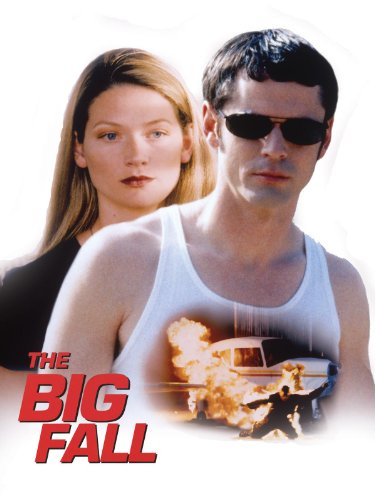
Cinemax Friday: The Big Fall (1997, directed by C. Thomas Howell)


Directed by C. Thomas Howell!?

You read that right!  After spending years as a straight-to-video mainstay, C. Thomas Howell finally stepped up from just starring in these films to directing one.  Of course, Howell still stars in The Big Fall as well as directing it.  What better way to make sure that your star takes your direction than by casting yourself in the lead role?  It makes sense.  The end result is a lot better than anyone would probably expect it to be.

Howell plays Blaise Rybeck, a self-described “private dick,” who works in modern Los Angeles with his protege (Sam Seder) and his secretary (Kathy Griffin, whose role is thankfully small).  Rybeck talks and dresses like a hard-boiled, 1940s P.I., right down to wearing a trench coat and a fedora while delivering his lines in a Bogart-style rasp.  The decor of his office is straight from the 40s as well.  Despite this, the movie takes place in modern times, with people using cell phones and bungee jumping off of bridges.  That no one comments on how out-of-time Rybeck seems to be indicates that Howell knew exactly what he was doing with his directorial debut.  The Big Fall is a tone perfect send-up of the neo-noirs that Howell spent most of the 90s appearing in.  His direction shows far more wit than you might expect from the star of Soul Man.

Rybeck is hired by sultry Emma Roussell (Sophie Ward) to find her brother.  It turns out that her brother has gotten involved with a bunch of extreme sports-obsessed bungee jumpers.  (This film attempts to do for bungee jumping what Point Break did for surfing and it actually succeed because the bungee jumping scenes are pretty damn cool.)  It all has to do with a criminal named Axe Roosevelt, played by the great Jeff Kober.  Of course, it also turns out that there’s more to Emma than meets the eye because this is a noir and there always is.

As a director, Howell does a good job of spoofing the material while still playing it straight enough that the movie doesn’t just become one big inside joke.  Jeff Kober and Titus Welliver are great as the bad guys, Sophie Ward is sexy as the femme fatale, and C. Thomas Howell keeps things moving both in front of and behind the camera.  This is an unexpected straight-to-video gem.