3000 Miles to Graceland (2001, directed by Demian Lichtenstein)


Five thieves show up in Vegas to rob a casino.  The casino is also hosting an Elvis convention so the criminals all dress up like Elvis before trying to pull off their heist.  Since one of the criminals is played by Kurt Russell and Russell famously played Elvis in a made-for-TV movie, it’s a meta joke.  The worst of the criminals is played by Kevin Costner because, in 2001, Costner’s career was dead in the water and he was trying to reinvent himself as some sort of badass character actor.

As a result of a shootout and series of personal betrayals, Russell and Costner are the only two thieves who survive the heist.  Kurt Russell ends up taking all of the money for himself and running off with single mother Courteney Cox.  (Yes, Cox’s then-husband, David Arquette, does have a small role in the movie.)  Costner pursues them, killing anyone who he comes in contact with until it all leads to one final shoot out.

3000 Miles to Graceland is a stupid, stupid movie that was made at the time when every director was still trying to remake Reservoir Dogs and The Usual Suspects.  If you need any proof of how bad this movie is, just consider that it is one of the few Kurt Russell films to never develop a cult following.  There are people who would jump into the mouth of a volcano if Kurt Russell told them to and even they won’t watch 3000 Miles to Graceland.  Even the worst 90s crime films have at least a few people willing to defend them but 3000 Miles to Graceland has been abandoned on the ash heap of crime film history.  Despite having a once-in-a-lifetime supporting cast — Christian Slater, Bookeem Woodbine, Kevin Pollack, Jon Lovitz, Howie Long, Ice-T, and even Paul Anka — 3000 Miles to Graceland has never even received a direct-to-video sequel.

Why is 3000 Miles to Graceland so forgettable?  The heist storyline has been done to death and this film doesn’t bring anything new to the genre.  The only new wrinkle that 3000 Miles to Graceland brings to its familiar story is that the thieves are all dressed like Elvis and that gets old pretty quick.  The other problem is that Kevin Costner is miscast as the psycho villain.  Michael Madsen could have handled the role.  So could Tom Sizemore or Woody Harrelson or just about other actor out there.  But Kevin Costner, who first found fame as a sort of modern-day Gary Cooper, never seems comfortable playing a cold-hearted sociopath.  He makes up for this discomfort by trying too hard.  Comparing his performance here to his more nuanced turn as another criminal in A Perfect World shows just how miscast he was in 3000 Miles To Graceland.

Fortunately, better things were ahead for almost everyone involved in this movie.  Kevin Costner has recently returned to playing the type of roles that made him a star to begin with and Kurt Russell has become an American idol.  Fortunately, 3000 Miles to Graceland is remembered, if at all, as just an unfortunate detour in their otherwise distinguished careers.

Music Video of the Day: Take My Breath Away by Berlin (1986, directed by Marcello Anciano)


Take My Breath Away was written by Giorgio Moroder and Tom Whitlock after the producers of Top Gun realized that they needed a romantic scene between Tom Cruise and Kelly McGillis and that they would need something other than Danger Zone to play during it.  (Originally, the love scene wasn’t in the finished film but when test audiences said that they would like to see one, Cruise and McGillis were brought back to quickly shoot one.  McGillis had dyed her hair for another film, which is why the scene itself is shot in silhouette.)

The song was originally offered to The Motels but it was eventually recorded by Berlin.  (Terri Nunn, the lead singer of Berlin, was one of the contenders for the role of Princess Leia in Star Wars and would have been cast in the role if, for some reason, Carrie Fisher hadn’t worked out.)  Like most of the soundtrack-related music videos of the 80s, the video for Take My Breath Away is a mix of clips from the film and clips of the band performing.

Enjoy!

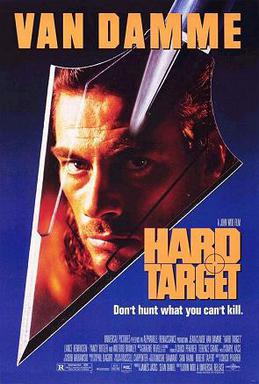
Hard Target (1993, directed by John Woo)


Nat Binder (Yancy Butler) has come to New Orleans to track down the father who she hasn’t seen since she was seven years old.  What she doesn’t know is that her father has recently been kidnapped and killed for sport by a wealthy hunter and Most Dangerous Game enthusiast named Emil Fouchon (Lance Henriksen).  After a homeless veteran named Chance Bourdeaux (Jean-Claude Van Damme) saves her from a group of muggers, Nat hires him to help her track down her father.  This turns out to be a good decision because Fouchon is sending out his private army to track down Nat and Chance is Jean-Claude Van Damme.

Jean-Claude Van Damme has never gotten as much respect as he deserves.  Even though most of his action movies were low-budget and often not very good, Van Damme was still a better actor than some of the other B-action stars of the 90s and, unlike most of his contemporaries, he could actually do most of the things that he did in the movies in real life as well.  Though Van Damme may have sabotaged his career through cocaine abuse, it’s not a surprise that most action fans would welcome a Jean-Claude Van Damme comeback far more than a comeback by someone like Steven Seagal.  Hard Target features Van Damme at his best, emphasizing his athleticism and contrasting his earnest acting style with the more flamboyant villainy of Lance Henriksen, who also brings his best to the role of Emil.  The film also features Wilford Brimley, bringing his best to the role of Bourdeaux’s uncle.  Van Damme, Henriksen, and Brimley all at their best?  How could anyone turn down Hard Target?

Hard Target was the first American film of director John Woo and he proves himself to be the perfect director for the material.  With Woo, every scene becomes an operatic set piece and it’s impossible to worry about any plot inconsistencies when Van Damme is gracefully jumping out of the way of bullets and missiles.  Woo turns the material into a live-action comic book and, even if it’s not as good as his Hong Kong films or later American films like Face/Off, it’s still undeniably entertaining.

Hard Target is Van Damme’s best film of the 90s.  Watch it on a double bill with Surviving The Game.


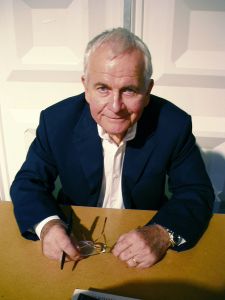
Ian Holm, R.I.P.


The British actor Ian Holm passed away yesterday.

When the news was announced, almost every story mentioned that he played Bilbo in The Lord of the Rings trilogy and it is true that he was a great Bilbo.  Even though he didn’t go on the quest, he brought a lot of heart to the film and the character.  Though his screen time may have been brief, he made you understand why Frodo and all the other Hobbits would feel such loyalty to him.  He was the ideal Hobbit.  He final scene in Return of the King brought tears to my eyes.  How could you not love him?

Holm, however, was in a lot of other films.  He was one of those extremely memorable character actors who, sadly, I think was sometimes taken for granted.  He was also one of those actors who seemed so distinguished (at least to American audiences, who tend to have a rather stereotypical view of anyone who first found fame as a Shakespearean actor) that it’s easy to overlook that he could also very funny.  Watch him in The Fifth Element.  Watch him in Brazil and Time Bandits.  It’s hard to imagine anyone other than Ian Holm in those roles.

The other Holm role that many people mentioned when they heard of his passing was his role as the evil android Ash in Alien.  Indeed, he was perfectly menacing in Alien.  If you believe Ridley Scott, Alien and Blade Runner take place in the same universe, which means that Ian Holm was the first actor to play a Replicant.  He did a great job of it.

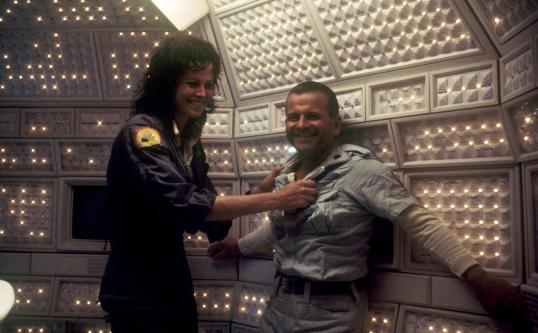
I want to end this tribute with a picture of Ian Holm and Sigourney Weaver on the set of Alien.  I like this picture because they both look like they’re having a lot of fun.  Even in his humorous roles, Holm tended to play characters who were, if not outright neurotic, definitely very serious-minded.  And Alien is a remarkably grim movie.  So, it’s kind of nice to see both Ripley and Ash smiling between takes.

Rest in Peace, Ian Holm.

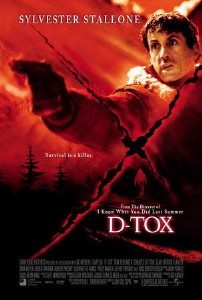
Cinemax Friday: Eye See You (2002, directed by Jim Gillespie)


Today, now that he’s received a second Oscar nomination for playing Rocky Balboa, directed several Expendable movies, and reemerged as an icon of American pop culture, it’s easy to forget just how bad Sylvester Stallone’s career was going at the start of the 21st Century.  After appearing in a notable series of flops and going unrewarded after his attempt to reinvent himself as a serious actor in Cop Land, Stallone was in danger of fading into irrelevance.  While Arnold Schwarzenegger was preparing to run for governor, Stallone found himself facing every former star’s nightmare: a career in direct-to-video thrillers.

Eye See You comes from that period of Stallone’s career.  It’s basically a slasher film, except that the victims are all middle-aged alcoholics instead of nubile teens.  Stallone plays FBI agent Jack Malloy, who hits the bottle pretty hard after his girlfriend is murder by a serial killer.  After Malloy attempts suicide, his partner (Charles S. Dutton) sends Malloy to an isolated rehab clinic, one that caters only to cops on the edge.  Unfortunately, the serial killer follows Malloy to the clinic and, when a sudden blizzard hits, the killer starts to pick off all of the cops, one-by-one.

Eye See You (which was originally called D-Tox until someone finally realized that made the movie sound like it was about a robot learning how to be human) is really bad.  Jim Gillespie also directed I Know What You Did Last Summer and he brings out all of the usual slasher tricks but they’re less effective when the people being stalked are adults who should have enough common sense not to split up when there’s a killer on the loose.  The film tries to throw in some of The Thing‘s paranoia and it also tries to duplicate The Shining‘s sense of isolation but none of it really works.  The Thing was set in an arctic research facility while The Shining was set in a hotel that was specifically closed in the winter because of the risk of blizzard.  There’s really no logical reason for Eye See You‘s rehab center to be located out in the middle of nowhere except for the fact that the film needed to get Stallone and the other cops isolated.  Even if you accept that the rehab center needs to be away from civilization, why build it in a location that is certain to get regularly hit by life-threatening weather?

The film is full of great character actors but it wastes them.  If you’re going to have Tom Berenger, Robert Patrick, and Kris Kristofferson all in the same film, one of them should turn out to be the murderer!  Instead, they’re just there to die and it’s hard not to resent a waste of good actors.  For his part, Stallone seems to be mentally checked out, as if he knew during filming that this wasn’t going to be his comeback vehicle.

Fortunately, even after appearing in films like Eye See You,  Stallone was able to eventually make a comeback.  As has often been the case in his career, he did it by taking matters into his own hands and bringing both Rambo and Rocky Balboa back to theaters.  The Expendables films, while hardly being high art, served to remind people of why they liked Stallone in the first place and Creed reminded everyone that Stallone actually can act when he has the right script.  Fortunately, Sly was saved from spend the rest of his career appearing in direct-to-video films and I’m glad.  Direct-to-video is the perfect place for Steven Seagal but Sylvester Stallone belongs on the big screen!

A Scene That I Love: Daria Nicolodi and David Hemmings in Deep Red


Deep Red (1975, dir by Dario Argento)

Today is Daria Nicolodi’s birthday so what better time than now to share a scene that I love from Dario Argento’s 1975 masterpiece, Deep Red?

Now, this might seem like a strange scene to love but you have to understand it in context of the overall film.  (And yes, the scene is in Italian but surely you can figure out that it’s a scene of two people flirting.)  Deep Red is often thought as being merely a superior giallo film but it’s also, in its way, a rather sweet love story.  David Hemmings and Daria Nicolodi may investigate a murder but they also fall in love and the two of them have a very sweet chemistry, which is fully displayed in this scene and which elevates the entire film.  Deep Red is a giallo where you care about the characters as much as you care about the murders.

While making this film, Daria Nicolodi and Dario Argento also fell in love and they went on to have a rather tumultuous relationship.  Personally, I think that Argento’s most recent films are underrated but it’s still hard to deny that the ones that he made with Nicolodi have a heart to them that is missing from some of his later work.

So, in honor of Daria Nicolodi and her important role in the history of Italian horror, here she is with David Hemmings in Deep Red!